Conversation with Luke Cook
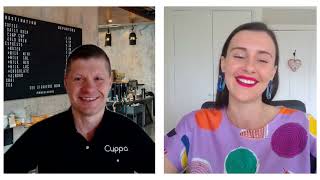
Jessica Hickman, founder of Bullyology, spent three and a half years being bullied in the oil-and-gas sector in Darwin, which led to PTSD and physical collapse. Nearly half of Australian workers experience workplace bullying. Her second book introduces a four-zone behavior model and a "5 L's" toolkit to help leaders and bystanders become upstanders.
Chapters
Welcome to Cuppa Dot TV. Good to see everyone in the chat room this morning. Please give us a big hello as you enter the chat room for this Tuesday morning. I agree with you, Jane. It's supposed to be spring, but it's still chilly everywhere. Hello, Ashley. Hello, Cindy. Hello, Maria, Nick, Liam, and all the rest of the crew. Now, before I kick it off, I just want to acknowledge the traditional custodians of country throughout Australia, and I want to recognise their continuing connections to lands, water, and community. I pay my respects to them and to their cultures and to the elders, both past, present, and emerging. Well, are you an upstanding leader? That is today's conversation, and I'm very pleased to bring in my special guest who's back again, Jessica Hickman. Can you please pop in and give everyone a warm welcome? Hello, Jess, how are you?
Good morning, Cookie and the Cuppa family. It's wonderful to be back. Thanks for asking.
And I'm glad you have brought the brightness to today's show, my friend. That lipstick, you look like you should be off a Kiss commercial.
When you roll out of bed, the pink lipstick is always the winner. Makes anything bright.
I'll keep that in mind next time I get out of bed not feeling too bright, okay? So we'll never— you never know on Kapa, you never know what I'm going to turn out with. But I'm so glad that you're back on, my friend. It has been a while since you've been here. Now, bullying and being an upstanding leader, I just want to kick it off. We have heard your story before, but I think it would be good just for you to add a little bit of context about what happened to you that has led you on this path today.
Yeah, great. Um, so look, I launched my business Bullyology after suffering extensive bullying and harassment for 3 and a half years. I was working in the oil and gas industry up in the top end in Darwin, and unfortunately, the more successful I was in my role— I was rolling out culture programs, working in the mental health space— and unfortunately, I had a bullying manager, my HR manager, in in charge of human resources and people and culture, but he had a very strong bias, um, that women should be seen and not heard. And I was basically trying to be silenced for 3 and a half years, and the more success I had, the more traction the programs had, I was winning countless awards for my work, and unfortunately I suffered extensive bullying and harassment, which started with subtle job threats around my visa, setting unrealistic work tasks, to then more physical bullying, throwing a folder at me, publicly berating and swearing at me, and which ultimately led to me collapsing and burning out at work in June 2017. And that was really the catalyst for my work, realizing that bullying and harassment is insidious and toxic And I didn't realize the psychological, physical, and emotional effects until I physically burnt out and reflected on my experience of suffering gut health problems, migraines, aches, pains, sleepless nights, later diagnosed with post-traumatic stress disorder. And yeah, so that was really why I decided to use the experience and the adversity to shine a light on bullying and harassment, which we know is the elephant in many conference rooms and workplace, and go on a mission really to highlight how toxic it can be. But more recently, really working to proactively educate leaders on how workplace culture impacts not only their business success and productivity, but also their reputation. And we see time and time again, more recently in Australia, that people are getting in big trouble for allowing toxic cultures to happen. But more importantly, good people are suffering because of negligence. And we all expect to have— I believe we all have a right to wake up, go to work, do what we do and we love, but leave psychologically, emotionally, and physically intact. And unfortunately, every day Australians are just suffering.
So, you know, you've raised some very good points there, and thanks again for sharing that. And thanks again for going on this quest and journey because it is so important. You know, bullying and the effects of bullying, like you said, impacted all parts of you— your mind, your body, everything. And I suppose my question to you is, after experiencing that— and I still can't believe that was from your HR director, by the way— but to experience that, Do you think that in Australia we're doing enough around this topic area, or do you think we've just got so a long way to go?
Look, the answer is simply no, because people contact me day in, day out suffering in workplaces and often working for like charities and not-for-profits where—
Oh, which one?
—you know, it's all smoke and mirrors that we believe that they are doing great cause. And so it is frustrating, but let's just look at the last few years. When I launched my business 5 years ago, It is an uphill battle in any business, especially a business where you're challenging the status quo and knocking on doors of big corporations and asking them to shine a light inward. But it sounds terrible, but in recent times, unfortunately, we've had a lot of bullying and harassment in the media. While it's confronting, it's also quite exciting for someone that's in a business like mine because finally we're having reports commissioned into our parliament or having to look under the hood of, you know, the organization and business leaders of our country. And it is confronting and upsetting that those business are happening even though we know they're happening. So in Australia, we have got such a long way to go, and that's why in my book I talk about it's not going to change overnight, and that's why I'm focusing on the rest of my life and like my leadership and the legacy, but also it's going to be a generational change and we are starting to see emergence of people speaking up now. And we'll talk a little bit about the generations and some of the observations around that, but in short, are we doing enough? Absolutely not.
I'm keen to hear in the chat room if any of our audience today have experienced bullying in the workplace before. If you're vulnerable enough to share that, please put it into the chat room today. But we're here to talk about your launch of your second book, right? Your first book, The Bullyologist, was all about breaking the silence of bullying, and this one, which I love, is all about talking about the upstanding leader and how to develop a speak-up culture inside your organisation. Yeah, show us that book. We've got it on screen as well. We'll put that up very shortly. But I was just going to ask you, what are the differences between The Bullyologist and The Upstanding Leader, and what inspired you to want to write this book?
Yeah, um, great. So look, the first book really, uh, The Bullyologist: Breaking the Silence on Bullying, is exactly what the title said. I had documented my bullying for 3 and a half years, burnt out and collapsed at work, and I wanted to share my story really to highlight how toxic bullying and harassment is. And really, that was, um, you know, a great way of me just sharing my story, and that's how I built momentum around the topic and subject. And I've been lucky enough to work with, you know, hundreds of industries and workplaces across Australia and beyond, and I started to find some common trends. Unfortunately, we're always going to have bullies and perpetrators of injustice and people they prey on and target, but I realized there was a massive issue with bystanders. So throughout rolling out this workshop time and time again, I realized that power and influence around change was educating those bystanders, the everyday people in business that see the toxic behavior and makes them feel uncomfortable, sometimes stand by, walk by, or accept it because that's the cultural norm. And I found that time and time again that sometimes people had awareness of what was happening because it made them uncomfortable and they witnessed it day in, day out, but they defused responsibility. And they didn't have capability or training to know where to get help or how to speak up. So I realized in my workplace that I reported the bullying 32 times. Wow. Yeah, 32 times. I had mixed promises, you know, told that they would deal with it, defused responsibility, and multiple leaders turn a blind eye or just, you know, put it in the too hard basket. And it took, it took a collapse and a burnout and leaving to actually, for me to realize how detrimental that is. So in my new book, I realized that leaders in Australia are struggling. They are really good at their job or trade, and that's often why we get promoted, right? Because we're confident human beings and skilled, but then they're expected to know how to manage complex human beings And as we've seen in the last couple of years, you know, human needs, you know, we need extra help at work. We are feeling isolation, loneliness, depression, anxiety. Yet people are given the title of leader, leaders, and expected to manage, you know, complex human beings, be good at their job, and successfully lead. So I realize that sometimes leaders become bystanders or diffuse responsibility because they feel overwhelmed, or they simply haven't being given the tools to understand the complexities of a toxic workplace and how detrimental it can be. So understanding that and researching what's widely known as the bystander effect, I realized that let's not accept this as the status quo in Australia. Why not focus on what I call the upstander effect, which is switching the pendulum from bystander behaviors to upstander behaviors with a toolkit and a leadership guide on how to create thriving workplace culture. And I road tested it for like 2 and a half years now, the concept in industries, got feedback from leaders, and then packaged it all up in a toolkit and a guide to help people thrive at work.
What are some of those upstanding behaviors though that we can instill in the community as individuals? Because, you know, we've got a few people on the chat room now. Maria said she was bullied by my 'Manager went to HR who dismissed my complaints. They didn't want to deal with it. I left the organisation.' Jane wrote, 'Fortunately, I have not experienced bullying personally, but witnessed several younger people in one department bullied by a female manager, of all people. She was climbing the corporate ladder and did very well, but I think she left a trail of despair behind her.' So for someone like Jane, what are some of those sort of bystander sort of behaviours and tendencies that we need to start shifting and changing?
Yeah, yeah, and look, step one is to assess whether you have got a bystander culture in your workplace. And one of the models I've developed in the book is I realize that people typically fall into four categories in the workplace. The first one is unconscious, where we're caught up in our everyday doing more, being more, achieving more, and we're actually unconscious of how our words and language and behaviors affect others. Especially if we're suffering ourselves, and we can actually be kind of negligent, or, you know, we can behave in a certain way that we don't actually know that our words are influencing others. Or you've got people that are so concerned with their ego, and like was just mentioned, climbing the corporate ladders, they kind of take no prisoners, and they're unconscious, and they're just, you know, self-serving and egotistical. And the second zone really is uncomfortable, where people are aware of what's happening yet, um, haven't got the capability or know how to help people. And the third zone, um, in the bystander zone is avoidant. So people are unconscious, uncomfortable, or avoidant. And then the fourth zone is being an upstander. So the first step really is for people to have a look at the book and assess, right, where is my workplace and where do I sit with regards to the bystander versus upstander zone? And from there, then you can, um, establish some steps to to be an upstander. And I've got 5 steps in the book which really unpack how to be an upstander. And the first one is— they're very simple, but things we forget to do. The first one is to look around your environment, scan your environment from a third-party perspective, and observe some of the conversations, relationships, interactions, and dynamics of the workplace. Are people feeling comfortable, open and receptive to share their authentic truth? Do you personally feel comfortable to actually ask for help? And so by observing the environment, that's the first step in understanding, is it toxic or, you know, warm, inviting and accepting? Step number 2 is to listen. So when we are caught up in the busyness, and I speak about leadership in the book, but anyone can be an inner leader. And we forget to consciously listen for cues, listen to our environment, and we just get caught up in the busy. So an example I give in the book is, um, I'm— when my husband comes home from work, I'm constantly like, I was writing my book, looking at my laptop. He's wanting to share some stories from his day, and it wasn't until this one day he came in and told me something quite confront him from work, and he realised that I was simply hearing the words he said but not actually acknowledging his feelings, emotions, and connecting and consciously listening. And I realised, wow, we all get caught up in the busy, on our phone, scrolling and typing, that sometimes we miss opportunity to deepen relationship. And that made me reflect on my workplace when I was struggling and people were busy and diffusing responsibility. I felt unseen. Like people didn't care about my voice. So step number 2 is to consciously listen in your environment and actually deepen rapport and relationships and find out if people are really doing okay or if they're struggling. Step number 3 to being an upstander is to listen and to learn about topics that make you uncomfortable. So often bullying and harassment is the elephant in the room Businesses traditionally would commission me to come in and talk to their team as a reactive response. We've got toxic culture, people are struggling, compensation claims are rising, and we need you to come in and talk about the facts of bullying and harassment. So being an upstander is to lean in and learn about topics that make us uncomfortable. If we look at the #MeToo movement, Black Lives Matter, even, you know, the Brittany Higgins' March for Justice, that opened up another conversation where people were actually leaning in to learn about these topics and think about how they can use their voice for good. So what's equally important as learning is unlearning, and this is always a big one because we all grow up in households where we are programmed with belief, language, and thoughts. Often I see people in the workplace get themselves in trouble because they use banter, which can be sexist comments, racist slurs, or use like gender-specific or even pronouns. Okay, recently I've seen a lot of people getting in trouble because they've got unconscious bias around pronouns. So sometimes we need to focus on, right, what do I need to unlearn? And how could some of my toxic language, behaviors, and beliefs be impacting others. And then, you know, equally important, I talk about being a leader. So the book The Upstander Leader isn't just written for people with a, you know, a fancy job title or in a leadership role. I talk about being an upstander leader, walking the talk, practicing what you preach, and leading by example. And look, It's in a nutshell, but the fifth step to being an upstander is love, which is really interesting. That's interesting. Yeah, it gets a big response. Look, I do a lot of work in construction and male-dominated industries, so as you can imagine, when I say, you know, and it's important to love, people go, what, love? So I'm not talking about the romantic sense you have with your husband, wife, partner. I'm talking about love as in caring, compassion, and kindness. And what I realized through researching for my book and talking to a lot of people is, as human beings, our number one desire is to be loved. Yeah, when we're born, you know, by our parents and caregivers, through into starting school, making friends, developing our peer network, to going into teams, joining sports group or musical theater, wherever you're into We all want to be accepted, seen, heard, valued, ultimately loved. But what happens is when we become adults and then we step into the workplace, which are often ultra-competitive environments, and if we're not receiving feedback, if we're not feeling valued, that's when isolation, loneliness, anxiety, and, you know, and the depression creeps in. So this whole chapter talks about heart-centered leadership, but understanding our innate characteristic and, you know, desires is to be seen, heard, and valued. Yeah, through my research and unpacking this time and time again, people realize, yeah, that's why I'm lacking at work, that's where I'm not feeling accepted or seen, heard, and valued, and that's why I'm struggling to succeed. They're the 5 channels. So can you just say those 5 again?
So it's look, listen, learn— sorry, look, listen, lean—
you go. Okay, look, listen, learn, lead, and laugh. Amazing, amazing. I call them the 5 L's, and throughout the book, look, there's over 40 activities to help people observe and unpack these in detail. And sometimes it's just a simple step as, you know, walk around the workplace on a listening tour and just actually listen for how people are really doing. Listen if they're struggling, they open up, their body language closes down when you walk towards them, or they're open and receptive. So like there's small things that really impact workplace culture and all of them are tried and tested.
And I'm guessing a lot of the time if people are feeling like they want to get something out, but they don't know how to say the words. I remember Oscar Trimbole, deep listening expert, said that we speak at 150 words a minute, but we think at 900 words a minute. So I think as leaders, we need also not try and butt in or offer opinions until we actually get really what's going on with them out. Sorry for that banging noise, everyone. The people are in the back of the shop trying to fix it up. I don't know if you can hear it. Are you there still, Jess? I'm here. Can you hear me? Yeah, I got you. I got you. I just want to make sure that we— has anyone frozen? Just tell us in the chat room. I can see Jess there. There we go. I've got you back. We're all good. We're all good. And the KAPA crew, just make sure that the volume levels are down on your side because there seems like there was a few people hearing some additional feedback there as well. But Jess, just going back to that point, again, just reiterating the fact that, you know, those 5 key areas for all of us to be able to take on, is that for every individual in the organisation? And if we do see someone that is being bullied, what do you suggest we do?
Yeah, look, and today, if you see someone being bullied and you haven't gone through, you know, the methodology and picked up the book, you know, Advance as an Excess Sandra, the one thing I say to people is that conversation can save a life. And simply, when I was suffering bullying, I felt so alone. I was made— my confidence, um, was— and my self-esteem was beat down to the point that I was made to believe it was me, the way I was operating, you know. Was I, you know, being too flirty, as I was told, because I was caring for people? So like, I was really self-conscious about the words how I look. And so one day a colleague came to me and said, hey, I've seen what happened in that meeting today and that's not acceptable. Have you ever thought about calling the EAP, Employee Assistance Programme? Because I've really noticed, you know, you're not yourself. But also, have you ever looked on the website, the internal website, to look up bullying and harassment? I've observed it and I think this is happening to you. That moment of someone acknowledging my suffering but also letting me know that it wasn't about me potentially saved my life. I was in a really, really dark space, and that then led me to, you know, build the confidence, look at the policies and procedures, but also call the EAP number and for the first time seek mental health support. And so, look, it can be as simple as shining a light in the right direction. And you don't have to have all the answers, but, um, signposting someone to get help is the biggest support you can do. And it's underestimated how, like, how that can potentially save a life.
That is, uh, such good advice there. And Maria said, that's exactly how I felt and was made to feel in her situation. And And I think, what was the stats that you gave us last time? Like, how many people have experienced bullying in the workplace?
Yeah, so almost half of Australians will suffer bullying at least once in their working career. So I always say that if you're fortunate enough to have not suffered bullying right now, great, but I can guarantee someone you love, care about, you sit next to, will be suffering or, you know, will need you to signpost them to get help. And often, like for me, I felt like I was well equipped. I worked for the youth service in the UK, I was running workshops on bullying from youths, and it took me a while to actually accept that as a confident adult doing a good job, I was actually being bullied. I had no idea where to get help in the workplace. So that's why on the Bullyology website I've compiled, you know, heaps of resources, downloadable fact sheets, even for parents to have conversations with their kids about being an upstander. It's such a reactive conversation, and we only— sometimes when we're struggling, it can be really hard to, like, gather up lots of information. So that's why I always encourage people to be proactive and have that toolkit, you know, tucked in the back of your mind so you can just signpost someone when they, they need the help.
That is so good, and we'll make sure that everyone gets access to your website as well. But I'm keen to ask you to you, my friend, about, you know, where do you want this to go and what's your vision and hope for it for you personally, but, you know, where do we get to as a society as well?
Yeah, that's a really good question. So look, my goal is to influence the next generation of leaders. Unfortunately, at this stage, we have got a lot of people that— I'll just put my book at the back there— we have got a lot of people that are suffering and we've got a lot of bad behaviors. And if we look at Parliament as an example, are we going to change Parliament overnight? The answer is probably no. But what I'm working to do is influence the next generation of leaders. And by 2030, research is saying that we will have 75% of millennials in the workforce. So a lot of work that I'm doing and unpacking in my book is looking at the generational split, um, you know, from baby boomers out to Gen Zs, and there's a lot of conflict at the moment where people are saying, you know, there's a lot of myths around Gen Zs and millennials. But what I am finding is they've grown up in the era of social media, the movement era. They're seeing Me Too, March for Justice, Black Lives Matter, you know, even climate strikes. And they're realizing what they want to put up with at work. And we have got a lot of organizations that are losing good people because they're not valuing culture, they're not valuing sustainability, They're not valuing, you know, nurturing and loving their employees, and people are jumping ship. So I'm working at the moment with organizations to create that generational change so they can actually understand and value and listen and hear what their employees want and build sustainable, upstanding cultures that last the legacy of the organization. And, you know, through time and time again and decade and generation, that they can actually sustain good people and people are not leaving.
It's such a good point. And again, I'll reiterate another conversation where I had an Indigenous elder, Paul Callaghan, and it's not about necessarily about profits, but it's what we're setting for our future's children's children's children that we should be thinking about as a society. And this is one part is about how do we become more of an upstanding leader in our society in general and ensure that bullying is put to where it needs to be, and that is not anywhere near the workplace or in society in general. So, Jess, I'm so glad that you've come in. This morning and being able to share that. Just before we go, if anyone's got any questions, just put them in the chat room now. We can go over time a little bit, but I've got one question to ask you. You know, every time that we do a cuppa, we usually ask the guest, you know, what is the one conversation or one thing that an individual should do straight after this session?
Um, look, the easy thing would be to buy the book and be an upstander. But look, I would love people to actually just take a moment after this conversation and just go inward and really have a bit of a self-observation. And I like to encourage people to kind of scan their body, think about how they feel at work, and really observe where some of the tension points sit within their body. Because what happens when we're struggling or operating in an environment that can be quite toxic or challenging, whether at work, at home, We seem to hold a lot of tension in our body, and that ultimately caused my burnout in class. So, you know, if you walk away from the conversation today and just take a moment and just do a self-observation and go, how am I really feeling? I think that could be— before we can impact our outer world, we need to really manage our inner world. So I think that would be my number one takeaway today and what I'm going to do today as well.
Fantastic. Well, Jess, I just want to say thank you so much for joining us this morning for a cuppa. Sorry for any background noises, everyone, but I just really do appreciate every word and every bit of advice that you've been able to give today. And yeah, let's lead an upstanding leadership culture in our organisations as well. Jess, thank you so much, mate. Thank you, Cookie. Thank you everyone for joining us here for a cuppa this morning, and please make sure that you do join us on Friday. We have the incredible Mitch Wallace coming back in there to cuppa. We're going to be talking about pretending is painful, so please make sure that you join us then. This is Cookie signing out for your Tuesday morning, and we'll see you on Friday. Bye!
More from Jessica





Breaking the Bystander Effect: Transforming Workplace Culture Through Awareness and Action 🤔

Refilling Your Cup: Insights on Self-Care to Prevent Burnout with Dr. Jo Braid 🌟



Combatting Cyberbullying: A Parent's Guide to Protecting & Supporting Youth Online

Recognising Burnout: My Personal Journey & Warning Signs | Dr. Jo Braid's Burnout Recovery Podcast

Leading the Change: Out with Toxicity, In with Upstander Cultures for the Modern Workplace