Jessica Hickman discussing ‘working-from-home bullying’ and supporting teams through connection
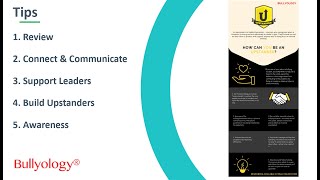
In a Connect Tribe virtual meeting, host Nat and bullying expert Jessica Hickman explore the rise of workplace bullying in remote and hybrid settings. Jessica defines bullying as repeated, intentional, health‑harming behavior and highlights how working‑from‑home amplifies anonymity, mis‑interpreted emails, lack of body language, and blurred home‑work boundaries, creating a fertile ground for abuse. She shares personal experience of being bullied via humiliating emails and sabotage, and outlines five practical actions: review policies, connect and communicate regularly, seek support for leaders, become an upstander, and raise awareness. The upstander model is explained as peer‑to‑peer intervention that does not require confronting the bully directly but involves referring to policies and offering support. Jessica then moves to boundary‑setting, describing assertiveness (win‑win communication), learning to say no (overcoming people‑pleasing), and safeguarding a “third space” between home and work (rituals like showering, changing clothes). Nat adds observations on frontline leaders, performance management, and the need to adapt KPIs and expectations to the new virtual reality. Both discuss Stephen Covey’s circle of control/influence/concern, urging participants to focus energy on what they can control and expand their influence, using the framework to reduce anxiety about uncontrollable factors such as border closures. The session ends with a call for community participation, sharing of resources via LinkedIn and Trello, and a reminder to practice boundaries, say no, and engage in the tribe’s upcoming spotlight events.
Chapters
Welcome everybody to today's Connect Tribe meeting. We're excited to have everyone joining us on this lovely Wednesday sunny day. Uh, Jess is dialing in from beautiful Bondi Eastern Suburbs area. I'm here in sunny Newcastle, Newcastle, New South Wales area, so very close to the vineyards. In the Hunter Valley. It's just a shame that we cannot frequent the vineyards at the moment. So, a fair few tribe mates dialling into the call. Remember, the chat box is there for each of you to make comment on. Remembering when you're entering into the chat, make sure you select in the drop-down box that all panellists and attendees can see what you're chatting about. Thanks, Emma, our beautiful guest panellist from last week. She's kicked off the chat box for us today.
Yeah, we've got two new people on today, Jules Yana and Melissa, two lovely friends of mine that are doing awesome work in different organizations. Jules is actually— Nat, I was telling her about some of the work that you do in the community service. So Jules works, and she's really busy at the moment, she's placing people and supporting support workers into disability positions and jobs. I think I've got that right, but thank you so much to Melissa and Jules who have actually circulated this around their workplace. So amazing, we appreciate the support and welcome.
Yeah, absolutely. What we do know about some community services is that particularly with workforce, we've got a client here at Perform HR who's a community service provider and they're expecting their workforce to double in the next few months of what what they'll need to resource them. So, yes, a much-needed service recruitment into— for support workers. So, who have we got on the call? We've got Nigel back again. Hi, Nigel. Hi, Georgia. Regular returners of the tribe. Thanks for joining us again today. Bonnie's back from Perform HR and Lindell. Nice to see you again. We'll get started very soon. We'll just wait for a few more tribemates to jump on the call. Interesting to hear from the tribe how they're tracking this week with their wellbeing and their connection. So feel free to add any comments into the chat box. Welcome back, Lindell. I know Lindell spent some time with her daughters doing her vision board from week 1. So, um, I know that was a good activity in the Fogarty House back this month. Are you ready, Jess? Shall we kick off the meeting?
Yeah, I'm happy to kick off.
Okay, welcome everyone to the tribe. I'd like to begin by acknowledging the traditional custodians of the land that we come to meet upon today. We pay our respects to Elders past, present, and emerging, for they hold the stories and traditions of Indigenous Australia. We must remember that under the concrete and asphalt, this land was, is, and will always be Aboriginal land. I don't know whether any of the Tribemates have seen, but there's been some beautiful imagery going around how the earth is healing as a result of the people being more at home. And so I think that's a really— when we talk about acknowledging our Country, I think the wellness of the land is definitely starting to appear. So, this week's feast is really a chance to recap on our intentions from last tribe, particularly around the 5 ways to wellbeing that Emma kindly shared with us. We also noticed some themes that were emerging in the chat last week around bullying. So, we are very fortunate to have a bullying expert, the Bullyologist, Jessica Hickman, who's going to share with you today about what it means to be an upstander and share some of her own experiences. Skills and knowledge on that topic. We'll also be talking about setting personal and professional boundaries and some— giving you some tips about where to focus your energies there. And then we'll finalise the tribe today with talking about our circle of concern, circle of influence, and circle of control. So, just a reminder, what is Connect Tribe all about? So, Connect Tribe was really a masterclass that Jess and I formed together back in 2019. That we've now moved into a virtual capacity through the tribe meetings. Today is actually— we're super excited— today is actually the first month celebration of the tribe. We have now been going for one month.
Woo!
Which is amazing. And we've now got more than 70 people that have connected through tribe, and those numbers are growing. So, thank you individually for your contributions, and also thank you for sharing the Connect Tribe with your colleagues and people community. We really value that. So, just as a bit of background for those that haven't met myself before or only know one of the two of us. So, my personal background, I've been an executive for people and culture for a long time. I'm going to give away my age. For over 20 years working in learning and development, organisational development, and community services predominantly. I'm the head of partnerships at PerformHR. PerformHR are an outsourced HR consultancy group that really are very strong when it comes to community and to working with our clients to ensure the best outcomes for their staffing. Jess, do you want to give a quick bio about yourself, introduction?
Yeah, I'm— so yeah, I'm Jess, I'm the founder of Bullyology and Upside Academy. Created my business, it's coming up to 3 years this year in September— October. So it's been a bit of a ride and a journey, but prior to that, my main work has been in the learning and development space. I've also worked government and public-private sector, running teams and in a few leadership positions. So it's been interesting. So thank you.
So what did we do last tribe? For those that weren't part of it, we had our beautiful guest, first guest panelist, which was Emma from Minds That Work, who was brave and showed courage to— and we had a lot of empathy for Emma as she stepped up to deliver a presentation on mental health essentials. One of the tribe challenges that Emma set last week was around the 5 ways to wellbeing. And you can see those represented there in the diagram. Those 5 ways were connection, keeping learning, taking notice or being present— that's the term Jess and I use—
giving.
Remember, we're in a time where we've got to give before getting. It's definitely that manifesting. And then being active. So, we've talked about that a lot in past tribes around sense of wonder, being— investing in both your active mindset and your active wellbeing, physicality. So, we really thank you, Emma, for your contributions last tribe. We'd be keen to hear from the tribe mates if anybody had any wins when it comes to any of those 5 areas of wellbeing or they're focusing at the moment in any particular line. Emma also shared with us about the fight, flight, and frozen response and the impact of stress when it comes to our own mental wellbeing and how that can negatively impact our mental ill health. And what some of the costs are associated with that. Anybody that missed out on Emma's presentation last week, you can access that on the LinkedIn group or the Trello board. If you're not sure how to get to that, just reach out to Jess or I at the end of this presentation, and we're more than happy to share it with you. So let's kick off with our first topic of interest, and I'm going to hand over now to the delightful Jessica.
Thank you, Nat. So I thought it was about time that I shared a topic that is very close to my heart, and the reason why I decided to create my business Bullyology was from my own workplace experience of suffering bullying. So when we think about bullying, often we associate it with school bullying, but unfortunately it doesn't end at the school gate, and it does— it is prevalent in organizations community groups, family networks, and I just don't think there's enough conversations around this topic, particularly around what's going on now with the pandemic. Something that's really showing up in the interactions and the organizations I work with is the emergence of working from home bullying. So we all know what's happening in the world right now, but what seems to be hidden is this working from home bullying. If you happen to see my recent post about me now adapting to my new norm really enjoying time in my fluffy slippers working from home and just thriving. But for everyone, um, this isn't the case, particularly for people that suffer bullying, whether it's in and after the office, harassment, and unfortunately the rise in domestic violence. So this topic is something that we need to discuss. And so workplace locations and the change of office and team dynamics now has really increased anxiety and stress. So we are moving into a bit of a medical crisis around this, which can be extremely frightening. So I've got a definition here of workplace bullying, but as a whole, bullying is repeated, it's intentional, it is health-harming behaviour that damages the individuals, whether it's the physical, psychological, or emotional well-being. And so workplace bullying is something that's very personal to me, and For me, in my instance, yes, the bullying happened with interactions within the workplace, but something that often happened was humiliation by email and sabotage of work. So what's happening right now is working from home issues can increase anxiety and misinterpretation of emails regarding advice and policies. There's a real danger within the new work conditions of the isolation, which is now creating a climate where bullying can thrive and making it harder to pick up. This is mainly because teams are now out of sight, unfortunately out of mind. Yes, we all miss the human connections, the body language, and the reassuring social interactions and circles that the team dynamic and environment can provide for us. So fortunately, we are adaptable animals, human beings, and we are learning to adapt to this. But bullying can often be hidden, and we need to change quickly and positively if we need to motivate a clear way forward. So by this I mean, you know, the clear to thrive in, in the workplace, and our new norm has really highlighted how toxic behaviors are unseen and how they are damaging our connection to self, others, and the organisation. So moving forward, please. So the main problem that has been arising in the conversations that I've observed, and I've tried to narrow it down to some of the ones that are consistent and repeated. So what we're having now is a misinterpretation of emails. This is easily done, and for me personally, if I read an email, I can misinterpret it very easily, particularly from a client who is quite distressed right now. So something to be mindful of when you are communicating with your teams or whoever by email right now, are you showing empathy and kindness in the way you're articulating your message? Sometimes it can be easier to pick up the phone, and I think that's where, how we can communicate how we're feeling. Isolation and loneliness is obviously intruding our rational thinking, and this can cause a miscommunication. Also, the lack of body language and human connection also causes some issues within the workplace in the new norm. And also heightened emotions. When we are feeling this way, we are often deflecting our fears and anxieties onto others, whether it's conscious or unconscious behaviors. And also there's frustration with the sheer scope of the new working challenge— working from home challenges. So frustration as in we're probably not adequately set up with the ergonomics. For me, I really felt this yesterday. I had 4 interviews to do and my Wi-Fi was playing up, so I was feeling highly strung and stressed, and so I had to be really mindful of how I was articulating my message when I was coming from this stress response. And also a lack of training and clear processes, particularly around the new norm. Everyone's trying to navigate their way, and so it's also to be mindful that people people really don't know how they're meant to operate right now. And also then assuming it's business as usual. So we talked about this, I think it was 2 webinars ago, when we talked about Maslow's hierarchy of needs, where sometimes organizations are getting themselves in trouble because they're communicating messages of business as usual and sales targets, and they're not really being particularly empathetic to how people may be feeling or what they're going through right now. And also there's no firm work boundaries. So as we go through this call, we're actually going to focus on this topic of boundaries and how we can set boundaries for ourselves and others. So something I'd like people to be mindful of and to remember, particularly if you're in an organisation capacity or a leadership position, think about how you're managing complaints in the new structure. What I have observed is complaints are being pushed down to non-urgent because they're dealing with other matters. This only adds to the anxiety of stress of the person that is actually making that complaint or concern. I particularly was one of these people that when I reported my bullying 32 times, um, it was mixed and poor results, and I was often put onto the too hard pile. So that obviously, um, added extra stress and anxiety. and also it's important to look at revising reporting guidelines, particularly around bullying and harassment, mental health, or if there's a toxic workplace culture or issue. With regards to this, and particularly if your, your line manager or you as a leader operate with an open-door policy, there's this barrier now that we're really facing. So it's communicating with your team and your colleagues to let them know that you have an open door, an open Zoom, whenever they need to chat, and really look and educate yourself on the new way to report things and the guidelines. Also, you know, again, handle the complaints immediately. And then again, Maslow's hierarchy of needs, which I think is so important right now in my everyday interactions and how I assess my interactions with other people, really checking in with them to see where they are on Maslow's hierarchy of needs. Are they still in the space where they feel that their safety and their physical health is compromised? So maybe they're unable to thrive and progress in a conversation about work structure or training or interventions when really they're stripped back to the basic needs. Also be aware of insensitive emails. They can cause distress, distrust, and a breakdown within the organisation. So more importantly, you know, be curious, empathetic, and caring, particularly around family dynamics as well. Working from home people are really struggling with limited resources, which adds extra stress. And what you are going through at home, you know, there's this big connection, and I hate it when people say a work-life balance because I really think that the two go hand in hand, and I don't really know right now that we've got that balance between the two. So really be mindful of what's going on in your home environment or your friendship or family group, how this is impacting you, and maybe then how that impacts how you operate or engage with colleagues. Who may be threatened. And something I observe all the time, particularly around bullying, is sometimes people don't know they're displaying bullying behaviours. And we see this when I work with leadership teams who are under high stress and pressure and often got the weight of the organisation on their shoulders. So that leads on, on to the next slide, which is some tips. So I've narrowed it down into 5 things that we can do to, and there's plenty more that we can do to make sure that we are keeping to the front of our mind how we are showing up and how we are actually managing our interactions. And one of them is review. So review the mechanisms within your organisation, check out the policies and procedures, and if you are, I know a lot of people on this call are running teams and organisations, So something to be mindful of, and me and Nat have had a chat about this, that we both noticed within the space of HR as well, that we need to really look at how we are operating from performance management and be flexible during these times. Yes, your teams are needing to, you know, fulfill their role, but maybe right now they're unable to do that to the full capacity, so It's all about communication, which leads on to the second one, connect and communicate. Really check in with individuals on how they're doing and that consistent communication with teams. I'm a big fan of welfare checks, and when I work within an organisation, something we do is go on leadership walkarounds, and particularly in construction, we walk around the sites and everyone's uptight thinking that they're having a productivity or a safety check, but often it's, I'm just checking in, how's the family, how are you doing? So we still need to be having these conversations that we would be having over a coffee or at the kettle or kitchen over lunch. The next one is, I'm such a big advocate for this because I've learned my own lessons, particularly being in a leadership position. So I didn't get help because I felt that I needed to be strong for everyone else leading the team. So who's supporting leaders right now? If you're on this call and you are leading a team, who are you checking in with, being vulnerable, asking for help? And it could be an external organisation. I was quick to refer everyone to an EAP, an Employee Assistance Programme, and the mental health helpline, but didn't really get the help I needed myself. So you have just currently gone through a massive organisation restructure and I commend you for that, but who is supporting you? So I think it's so important, and if you're on this call and you work within a team, check in with your business leaders and have this conversation with them. Be courageous and remind them, and you know, they will be thankful for it. Sometimes it doesn't matter what position we're in, we need someone that's going to have our back, and that leads me on to being an upstander. So within the work that I do with Bullyology, and particularly the Upstand Academy, my online platform, We go into organizations and we build upstanders. So what does this mean? So an upstander is someone that is an asylum bystander. So we build capability across all levels of the organization with skills and tools to teach people how to have early intervention and prevention conversations, and so it doesn't fall on the leaders at the top. So it is around peer-on-peer support and mentorship. So some of the tips for being an upstander could be just being there as a friend. You don't have to confront the bully, which people often think that they need to do. You can refer someone to the policies and the procedures. So I can see someone just popped up and said, what does an upstander mean? So the upstander is the opposite to a bystander. So a bystander is someone that stands and watches what's going on. So I'll give you an example of this. When I suffered my bullying, there was a lot of people in the workforce that knew exactly what was going on, would see the toxic relationships, would see, you know, all the abuse that was going on, but turned a blind eye. And at the time, I really didn't understand why people were allowing this to happen. So what I realized is that they weren't— it wasn't because they're bad people, it was because they really were frightened and fearful for their livelihood. But there was an individual who reached out to me and gave me the mental health helpline, told me where to get the policy and the procedure, and really guided me into my path of getting help and healing. That is what I call an upstander, someone that doesn't stand by the sanza. And so my— within Bullyology, I've got an extensive program with how you can be an upstander, and I've got even though you probably can't see it great here, some tips and tools on easy strategies that you can do to be an upstander, and I think I'll share this on the LinkedIn and the Trello board with a more in-depth conversation, but maybe we can dive into that in future webinars a little bit more on the capability of being an upstander. And then the last one is awareness, so awareness on these topics, so even being on this webinar today, I class you as being an upstander, you want more for yourself, you want to build your awareness on certain topics and do good in the world. So awareness starts with investing in self and training, and I think what is prevalent right now and so important for the leaders on this call is don't put the brakes on your investment in coaching and training and education around mental health, bullying, harassment, building a thriving workplace culture, because right now your teams are craving the next step, and that's making sure that they now feel connected, supported, and their psychological needs and safety is met. So I think that we're in an interesting time now where people may have a little bit more time and craving leadership to provide that for them. So overall, this topic of bullying, and, you know, I could talk all day on this, and I've got multiple programs But be mindful of how some people are feeling, and that is, you know, the new layer of working from home bullying and using emails. And also, I think it's important to just quickly brush upon cyberbullying. I know everyone is feeling heated at the moment, and I've been observing how people are interacting on news or people's statuses that have different opinions. So good people become cyberbullies because they are triggered. So just be mindful of all of your responses and how you're showing up right now. And if you want more information on this, reach out to me and I'll actually share lots of resources on the TRALAW on LinkedIn group on the topic of bullying. But it starts with setting boundaries, and I think that leads us nice and apt, unless you've got anything, some observations.
Yeah, some observations I'd share with the group is particularly around frontline leaders or first direct line leaders, particularly here at PerformHR, and we know that organisational ecosystems have been very impacted by the operating environments that they all find themselves into. What you can see in that sort of state is when people's need to supervise people directly day-to-day has shifted because people are now working more virtually, there can often be a disconnect for the frontline leader about, well, what is my productive work once you take away the people supervision? And what is my contributions or responsibility? And some of the negative impact of that can be that they then start to highlight people's deficiencies as a way to show their productive worth. And that whole— I'd like to point, Jess, around performance management, because I think performance management in our current operating environment is very different to what we have traditionally seen and don't require a new approach to make sure that all those factors that you were talking about are taken into account. And whether it comes to boundaries, particularly we've seen lots of organisational design impacts, so those that were operating in more team-based structures have adapted more quickly when it comes to the new— [FOREIGN LANGUAGE] —where others who are more bureaucratic have struggled a bit more. And that is particularly relevant for leaders when it comes to boundaries, both personal and professional, because your job as a leader is what we call boundary riding. So, with boundary riding, the leader's job is to really make sure that the values and the purpose of the organisation and vision are still held strong when it comes to decision-making and how people are spoken to or spoken with. And also, I think it comes back down to that empathy layer. Again. So, because without boundaries, you actually then fall into a laissez-faire type of organisation where there's no rules and it's really just chaos reigns. So that would be another topic for another day. But yeah, I think what you've raised is highlighting a few things when it comes to— so really, my job today is to talk to you around personal and professional boundaries and how to create them for yourself. It's often a tricky A tricky topic. It's something I think that you always have to actively work on within yourself. I don't think you ever master it fully. One of the top ways to create boundaries is to be assertive. And often boundary setting and boundaries within yourself is really related to your own self-worth and your own self-value. So we often see people who are struggling with self-worth or self-value really have very limited boundaries and find it hard to create or sustain them. So, when we talk about being assertive, really that's the win-win communication style. So, being assertive is when you show great empathy, you also show strong emotional intelligence. So, assertiveness is that win-win approach to operating. So, it's something you definitely want to step back and always think, am I being assertive in this situation? The opposite to that is when we see aggressive communication style, which is often summarised in "I win, you lose." We often see those as those bulldozer type of personalities. So they just bulldoze through and create what they want and need in a dominant way. We often sort of see in workplaces and in our professional life passive people. So that victim style of mentality. So that style is usually summarized in, "I lose, you win." So they give away their personal power. And the last style that you can commonly see in workplaces and in community is that really formidable one, the passive-aggressive style, which is an "I lose, you lose." And sometimes you might see that it's sometimes that sniper type of personality, which is usually someone that's very good at bullying, in that they hit you from the side without you even knowing that they're coming. They're very covert in how they approach things. But being assertive really is just that practice of being empathetic that we've sort of spoken about a few times in the tribe. And also using the 'I' statement— 'I feel when you'— is a really good technique when it comes to being assertive. The second one to create personal boundaries is to focus in on learning to say no. So I am— I confess that I am a reformed people pleaser. It's something that I actually have to work really hard at. So Oprah Winfrey once described it as the disease to please. And I often refer to that and think about that because it is a bit of a disease. Because often when you're overpleasing, you're not serving yourself and others very well and not turning up enough. So really, when it comes to learning to say no, something to build into your practice is it's okay just to say no. Sometimes we then, if we have that disease to please, we then justify our no by overthinking it and giving all these reasons and get caught up in that thinking, overthinking, when it comes to why we said no. So, sometimes just a simple no, and no, it doesn't work for me right now, or I appreciate what you're saying, but I would like to look at that later, is enough. We don't have to overthink it. The next point there around creating boundaries is around safeguarding your spaces. I think that's particularly relevant in our current operating world. Just shared before, some people have found themselves, you know, sharing an office with several family members or working in a bedroom and so there's that blur between my home life and my work life. There's a really cool Australian guy, thought leader called Dr. Adam Fraser who you might like to check out. I had the pleasure of working with Adam several years ago. Adam talks about what we call the third space. So, he talks about with safeguarding your space it's really important that we get that space between our work life and our home life. So typically in a normal sort of operating world, we would get that space maybe on the drive home from work, so, or the public transport home. That would be that time that we can decompress and have that mind shift to close off the day and start our new personal life at the end of the day. So So my question to the tribe is how are you creating that safeguard between your spaces now that you're working from home more or you've got more blurred boundaries? So some of the techniques that you can employ in that space that I've used over the years is to have a shower or a bath, change your clothes at the end of the work day. Another thing a great psychologist once said to me is just to get a face washer or a warm face cloth like you do get on the airplane, when the plane's about to land and freshen up your face. Just some sort of symbol or structure that could signify to you it's time to change lanes. And the last thing that we will recommend there for creating boundaries is also— it can be tricky and it's something that will continually get tested, and it can even get harder if you're coexisting with someone that may be experiencing mental ill health or trauma. So, if that's happening for you, we would encourage that you may need extra support when it comes to boundary setting. So, I— we would always recommend that you reach out for further support with that. So, Jess, anything there you'd like to add on boundaries before we move on?
Not on boundaries, but I would like to answer a question that's popped up in the chat box, and it wants me to elaborate on what I meant around the performance management. Really, really, this came out of two conversations I've had this week where two clients have complained and asked me the question on how can they get rid of their employees— well, one of them— because they weren't, they weren't achieving or thriving in their role, and they've been on a performance management plan. So my, my question right now is, are you being empathetic as a leader? Into the changed circumstances, and have they been given the opportunity really based on fairness on how they would usually operate? So just really advising them on to maybe practice a little bit more empathy and kindness in their leadership right now. And performance management, and Nat, you can jump in at any point from an HR perspective, is really an art that needs to be done, I would say, face-to-face. So you can use empathic and kind body language and really create a safe, nurturing space. And something that I work on with leaders as well, particularly around bullying, and the question that pops up with new emerging leaders is, 'I'm really nervous around performance management because I could be perceived as a bully.' And, you know, performance management is something that is a big topic as well that we look at— the good, the bad, and the ugly— and how we need to conduct that conversation So with the breakdown of the face-to-face right now, it's something that's a work in progress that you need to consider how you can effectively do that in a safe way to, one, protect yourself and also protect your organisation and psychological well-being of the person receiving that feedback. So that's what I meant around that. I hope that makes sense. Yeah, well answered.
I think performance management is really a capability skill set within itself. We at PerformHR have been talking about performance management in the current world a lot, and I agree with you, Jess, it's around how do we adapt that maintaining emotional intelligence, but also recognising that the way people are working has shifted, and are you judging people's patterns of behaviour on the old world or the new world or a combination in between? And sort of how do you create a structure when you're doing your performance management still being compliant, but also building into the new way we communicate with people as well. I think— so my point on performance management was also it's definitely a space that needs adjusting at the moment and needs to be adaptable. So if you are in those situations, I would challenge you to think differently about how you're doing it, but also maintain compliance. I mean, that's the That's the number one. But I think it's also to be fair and reasonable. What I was sort of getting at with supervisors, sometimes people get that they focus outward to deflect that they don't actually know what they're doing within their own working life. So I pick up on your point there, Jess, around goal setting and KPIs or OKRs, whatever system your organisation uses. Have those been renegotiated between the employer and the employee, considering the operating context did shift and that's possible in the current world? So I think that, you know, there's sort of things that— I like your summary there, it's a work in progress, because it definitely is.
And I think just on that, one more thing is people that usually could slip through not doing a lot in an organisation where they particularly look busy chatting around the office, office, there's a big highlight on them now as you separate and work from home. It's a real highlight on competency of what you can actually do. So I guess that people are also feeling inferior and concerned about their own job, maybe because they don't have the skills or knowledge to operate externally. So that's something that's popping up for a lot of people as well.
Yes, it's definitely a big performance support and management is definitely a big nugget to unpack. Okay, we'll keep moving on. So the other last topic we wanted to talk to you today is around a favourite theorist of ours, Stephen Covey, the 7 Habits of Highly Effective People. Habit 1 was all around being proactive, and one of those elements of being proactive is to focus your energy and what you— on what you can control and influence. And you can see in the diagram there that sometimes we get caught up in that circle of concern, which is things that are outside of what you can control. And I think when COVID first occurred, definitely most of us were flung out into that circle of concern area through fear-based decision-making or ambiguity or the volatility of what was occurring. And so we were saturated with news and social media, and we saw things like economic downturn, and supply, workforce shortages, and lots of government activity. But now as we're moving through and we start to normalise our operating rhythms and have it really adapted to what's occurring, it's timely, and we do this through the Connect tribe and through your own activities, is to focus in on what you can control, which is sort of your behaviour, how you interact with people, which we've spoken a lot about today, what you say and do. How you set up boundaries. But it's also the blue bit, which is the most important bit, is that how can you focus on your circle of influence? Because that really— influence level is a space that where really you can build your proactivity and minimise your reactive responses to certain situations or people in general. So, our tribe challenge this week is where will you focus your energy on? So, we encourage you even now, if you've got a pen and paper with you, to jot down the circle of control, circle of influence, concern diagram. And just start to populate and think about where will you focus your influence energy this week. You know, or you can put down what happens in a normal typical day for you. Where are you spending your time at the moment? If you're spending your time a lot in that circle of concern zone, it might be time to challenge your thoughts around that and your actions. And start to think, "OK, well, how can I rebalance that and focus more in on my circle of influence?" Which would be the wellbeing that Emma talked about, the 5 ways. That's a really great place to start in there. Think about your Maslow's hierarchy of need that we've shared with you before. And also with your circle of control, think about, "Well, what is it? How could I change my own behaviour when it comes to how I operate?" So I'd be interested to hear from the tribe through the chat box at the moment whether anybody's got any thoughts about that, what they're going to challenge this week for their circle of concern, circle of influence. The other thing you could do with this diagram, which is particularly useful if you're experiencing working with a difficult person, or you might be experiencing a difficult situation at the moment, is to use the circle of— I use this in my coaching with clients. Use the circle of control, circle of influence diagram to populate what's happening at the moment. And then sort of step back from that so you can have a really good lens on the actual situation that you've put on the paper and what positive step you could take as a consequence of what you've observed from that insight. Jess, do you have any thinking around the circle of influence, how that relates to you?
Well, I can speak from experience of today. So I started my day a little bit rocky today. I woke up and seen an article that was just shared from Wales about how everything may be closed until Christmas. So what I did then, going into a spiral of thinking, oh my goodness me, my wedding is in Australia in October. Are the borders going to be closed? That's 70% of my wedding that will not be able, including my family, to come. So what I did go into was, you know, the circle of concern and the uncontrollables, which were borders. And so I really then had to ground myself and say, okay, so what can I influence right now? What can I control? I just need to focus on my health, my well-being, and also start to make strategies if that did occur. But really stressing myself out about the borders and really the unknown was serving me and so I could strive throughout my day. So once I shook that off and had a nice coffee and a workout, I'm feeling a lot better. But I guess this is something that I do every day now, not just now and again. I really look at what I can control and influence throughout that day, and I'm only human, so it was a sharp reminder when I reviewed and caught up on what we were going to talk about today, even though we planned it yesterday, that I have to re-remind myself myself. So yeah, it's different every day. Absolutely.
So really the key message in this is that proactivity, if you focus in on that for your influence and what you can control, it will actually grow. And so your concerns will become more— you'll become more resilient to them, essentially, if you focus in on that circle of influence, circle of control. So God bless us Steven Covey, who's no longer with us. He was on to some magic dust there. Okay, wrapping up, Jess.
So once again, we've, we've come to the end of our Connect Tribe weekly webinars. So thank you so much. We've actually been working behind the scenes and we've got a lineup of amazing panelists and guest speakers, which is really amazing. Like Nat said, we've been connected and spoke to over 70 people in the short space of 4 weeks, and so it's amazing. And what we're thinking of introducing as of next week, with thanks to everyone on this, on this group, on the tribe, is really shining a spotlight on our tribemates. So there's people on here that are willing to jump on for a spotlight at the end of these conversations and share some of their learnings and findings and how they're going. And once again, if you are interested in sharing a topic and running a session, we would absolutely love that. So thank you so much to our new members that have joined today. I will follow up with an email connecting you to the LinkedIn group and the Trello board, and everything we've discussed today and further on articles for your own research and knowledge. And we will share that. And what we try to do is just give you a little bit of an insight onto different topics, but encourage you to dive deeper in your own time. So Nat, once again, thank you. Thanks, Jess.
It's been a good tribe today. We've covered some heavy topics, such as bullying, but done it in a really proactive way with the follow-up. So again, if you'd like to be a tribe mate and join us the spotlight night. We have some member of this call particularly in mind for next time. We'll get a reach out after this. We would love you to participate and join us. Big shout out again to Emma from last week. It meant a lot, Emma, to both Jess and I that you did that. So we can't—
We've had amazing feedback. So thank you, Emma.
So thank you so much from all of us. Have a great Intention week where you focus in on what you can influence. Keep working hard on your boundaries. It's okay to say no. And if you have any feedback or would like to get in touch with Jess and I, please feel free to do so. But check, check in with the LinkedIn group and continue to join us for the Tribe. Thank you so much, everybody. Have a great day. Thank you.
Bye.
More from Jessica





Breaking the Bystander Effect: Transforming Workplace Culture Through Awareness and Action 🤔

Refilling Your Cup: Insights on Self-Care to Prevent Burnout with Dr. Jo Braid 🌟



Combatting Cyberbullying: A Parent's Guide to Protecting & Supporting Youth Online

Recognising Burnout: My Personal Journey & Warning Signs | Dr. Jo Braid's Burnout Recovery Podcast

Leading the Change: Out with Toxicity, In with Upstander Cultures for the Modern Workplace