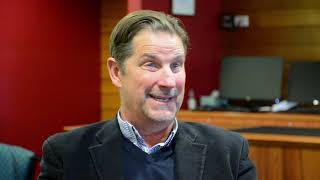
In this interview, speaker and educator Jessica Hickman discusses with David Waddell, CEO of Orange City Council, the council’s recent focus on transforming workplace culture. Waddell explains that historically the council emphasized technical work without formal leadership training, leading to staff being thrust into roles without support. To address this, the council introduced the Future Focused Leaders program, providing both structural and emotional training for emerging leaders, and emphasized breaking down departmental silos through weekly cross‑department emails, social events, and collaborative projects like Future City. Communication efforts now highlight council achievements (e.g., footpaths, roads) to improve public perception. Looking ahead, the council plans a community strategic plan, a new council election, continued Young Professionals Group activities, and an ideas program to capture staff innovation among its 550 employees. Waddell also shares personal strategies for managing burnout, such as surfing, playing bagpipes, family time, and maintaining open dialogue with directors. The conversation underscores the importance of empowerment, transparent communication, and well‑being in building a thriving, collaborative public‑service environment.
Chapters
Hi, I'm Jessica Hickman and I'm a speaker, educator, and author. I'm really excited to have been working on the workplace culture with Orange City Council for the last 6 months. Today I'm going to be discussing with Dave Wardell, the CEO of Orange City Council, some of the reasons why he decided to invest in workplace culture and really what is important to him with creating a thriving workplace culture at Orange City Council.
It always occurred to me at Orange City Council in the last decade as I as I watched things unfold, that we didn't really talk about leadership, we didn't talk about culture, we just went to work and we did our work and we were really technical. We did our work well and that's all we ever talked about. We put people in leadership positions with no training at all. That's unfair. We put people in leadership positions in a very, let's say it, a boring way. You might do a Cert IV, Certificate in Leadership, but we never really talked about it. So what I wanted to do was we changed things so that we empowered our staff. If we were gonna make you a leader, for example, talking about leadership, then you would get some training, you would get help, but not just structural help, you would get emotional help in doing that role. And that is a cultural change, and I'm hearing that from staff that it's become quite a valuable thing. Hey, I'm not just getting thrust into stuff. I can talk, I can break down barriers with people. It's okay to be slightly vulnerable about about these things. It's okay to say, "Hey, I'm new to this. Can I get a bit of help, please?" So that's kind of where it came from, you know, and myself going into the CEO role, my first CEO role, you know, I was acutely conscious that there was no one there helping me. You know, no one saying, "Hey, Dave, do you need a hand?" So it's a difficult process. That was one of the things. The other thing was this thing about Partially the community being so hard on local government. You know, every time there's a bloody pothole, "Nggnngn." A lot of that was just all we ever heard. And then you look at what we do, 95% of it's fantastic. And trying to change the culture so we're telling people the good stuff we do. And you'll see the communications work we've been doing is all about saying, "Hey, we built more footpaths, we built beautiful roads, we did all this good stuff." Switch it round. Sure, we make mistakes, but let's accentuate the good stuff we do. And that leads into, let's show that we're all part of one team doing one thing, which is looking after the beautiful city of Orange.
So really what you decided to do is break down some of the silos at Orange City Council and cross-department networking. So how have you found that that's really gone? Has it benefited the organisation?
Oh, I mean, there's little things we've been trying to do. The weekly email is just an attempt to try to gather up everything that everyone's doing, not just sort of corporate stuff, and and get that message out. I mean, the barbecues we're doing are kind of an attempt to mix staff. I'm trying to get cross-divisional teams together to work on projects like Future City. Getting out there and seeing staff, I think, sends quite a strong message that, you know, we do care, the directors do care about footpaths, you know, just simple things like that. I think, you know, if you work in a childcare, for example, it could— you could pass a year without having any contact with the Director of Planning or the Director of Engineering. So I think it's really important that we get out to make sure that everyone knows you're not just part of that team, you're part of the big team— airport workers, that sort of thing.
So what really has your attention this year and what are some of the projects or opportunities that Orange City Council will be working on?
Yeah, well, this year we'll get the new council in September, so that's going to be— that's going to be a change and it'll be change is good and we'll get some new councillors on. Orange is sort of stepping into a new era and we're trying to build ready for that new population. So I think the community strategic plan where we go out to the population and say, what do you want us to do? Where do you want the city to go? That'll be a good opportunity for all staff to get involved. So it's a good opportunity to rejig, get democracy going, And, you know, if they want footpaths, well, our job is to build footpaths, not to go and build something else. So it's a good exercise in resetting all of us going, "Okay, our job, we need to go over this way." And if we do what the people want, then that's our job. We'll, of course, get the rest of the leaders going through the Future Focused Leaders program. The Young Professionals Group will keep going. I'm quite keen to get an ideas program going. So with 550 staff, I haven't quite thought how we do it, is to get their ideas up. So some sort of program where people can feel free to get their ideas up, and then we'll give those people time for the good ideas to, to focus and maybe develop those ideas. So that's something I'm really keen to do. In the run to Christmas is find a mechanism to do that.
So what feedback have you had since we've been on this cultural journey together and rolling out the Future Focused Leaders program?
Oh, look, I think the no-brainer one is meeting people you just wouldn't meet normally. Managers, supervisors meeting people from other areas has been a really good exercise. I think, I mean, I was just talking to one of the guys that went through the program, just being able to talk about your fears and your lack of confidence about being a leader with other people people who are going through the same thing seems to be a common theme, just taking time out to talk about it, which was what I always suspected. We just don't talk about it. You know, when I was given my first management job back in the day, you know, some director just said, "Hey, you wanna be a manager?" And I went, "Yeah!" That was it, you know, and I was just thrown into it and it was scary. So no one ever really said, "Hey, come over here, I'll show you how it's done." I don't want people to have to go through that quite frightening experience and that fear of failure. You want a culture where people feel they can have a go, feel they can bring their own ideas to things. People are scared to. 550 staff, I bet you there's some fantastic ideas out there. If you've got a culture where fear is king and people above them are saying, "Oh, I'm not interested." That's just hopeless. It's got so much power in 500 people.
So really what we found in our work together so far, not just at Orange City Council but across the Central West, is that there's really a level of burnout, and that really comes from, you know, drought to bushfires to a global pandemic. So Dave, in your experience as a leader, what are some of the things you do to manage your well-being and avoid workplace burnout?
Yeah, well, I go surfing, play the bagpipes. I don't know, you know, family comes into it. You know, I don't— you probably notice I don't work, you know, 6 in the morning till midnight. You know, you've got to have a balance. I mean, and you hear that all the time. It's hard sometimes. I do, do emails at night and all that stuff, but you know, you really have to do work, and then go home, and then cut it. That's always what I've done, and somehow been able to do. Yeah, I go surfing, I play with the kids, you know, get the dog. It's pretty simple stuff. It's just a balance. I'm also pretty good at, if something is worrying me, I'm quite good at talking to my directors about it. I don't sort of keep it, keep a lid on it. So out there, you know, that's one of the key things, you know, problem shared is a problem halved. Don't just stew on things, I think is quite critical as well.
With regards to some of the young professionals, if there is people, and there are, that want to develop themselves, that maybe not in a leadership position right now, what are the opportunities at Orange City Council? We've got some programs coming up. What do you see that we could do to develop those leaders?
Well, I mean, yeah, it's a tough one. A lot of people think that you have to wait for the person above you to to die, pretty much, leave or die. It's not true, you know, you can go in a technical sort of career or you can go in a management career, so you have to look around, you have to maybe do some more study and head that way and then come up that way. You know, you don't have to just sit there and just go linear on it. We've got a huge training budget, use it. Don't just wait till 3 months to go and then go and do some boring you know, local government course. Go and do something different. You know, you just, you know, if you're not happy with what you're doing, that also helps. You might go and do a different, totally different type of thing and end up somewhere else. You have to be proactive with managing your own career.