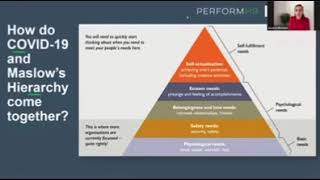
In this presentation, the speaker maps Maslow's hierarchy of needs onto the challenges faced by organizations and employees during the COVID‑19 pandemic. He explains that the immediate focus is on meeting basic physiological needs—health, safety, ergonomics, food, shelter, and fresh air—followed by safety concerns such as job security and access to government support. The speaker stresses the importance of leadership communication that conveys hope, clear messaging, and personal support to help employees feel valued and safe. As the crisis stabilises, attention should shift to psychological needs, addressing isolation and loneliness, before progressing to esteem and self‑actualisation. He cites the Australian Consultancy Network’s outreach to clients, offering readiness to support when organizations are prepared to move beyond basic needs toward thriving environments in the "new normal."
Chapters
I'll explain what I mean by this. So anyone that's familiar with Maslow's hierarchy of needs, if you are not, it's a big topic to discuss in a couple of minutes and in a short call, so I encourage people to go away and do their own research. What is fascinating to me is where we are right now and where organizations really need to currently focus, particularly around a pandemic. So at the moment, every organization is busy working on securing their team's well-being, so they're safe, well, and continuing to meet commitments and business goals and objectives. So a lot of effort is going now into technology needs, logistics, work health safety, and making sure that people are comfortable in suitable chairs and ergonomics. We are clearly dealing with the basic needs of Maslow's hierarchy. So if you look at Maslow's hierarchy of needs, which is on the screen now, what you will see is now we're going through a pandemic, which means that we are stripping back to the basic needs of survival. So if we look at the physiological needs of an individual, so we need to make sure that we are safe, well, we're feeling warm, we've got a house, we've got food, we've got water, and even fresh air, which is now being compromised due to the virus. So if we think about how people are feeling, especially employees within organizations right now, we're in survival mode. So yes, employees, individuals, business owners, leaders, whoever, and now particularly not able to strive to full capacity. I think we're moving past that now, we're starting to settle into our new norm. So as we move through that, we then start to look at safety. So now jobs and employment is being compromised, people are unfortunately losing jobs, having reduced hours, days cut back, however that may show up for you or people you know, love, and care about. So safety needs. So we're still in that space now and waiting on government grants and trying to find out what we're eligible for. It's frustrating. People are highly stressed. So my answer would be right now is just focusing on hope, focusing on communication, communicating the right messages, really conveying your stance as a leader of how you want to show up, how you want to personally support your employees. Business will return to normal. It may be a new normal, but right now is your leadership or your individual support for friends, family. You're really being called to commit to others, to make them feel valued, safe, and make sure that their physiological and safety needs are met. As soon as we're moving past this now, we're now going to be moving more into the psychological needs. So if we look at isolation and loneliness, And Emma can share more on this as we go through the session. But now quickly, organizations are going to be having to look at how they support the psychological needs. So what we've seen, and personally I've seen, is right now people are maybe putting the brakes on spending money on coaching facilities, facilitation training. And I know that I do a lot of work with the Australian Consultancy Network, and something that we're doing there— NAT— we're doing this as well, is reaching out to clients, customers, and people within our network and just saying, we are here for you when you're ready, and, and really showing up of how we can then move from the basic needs to supporting psychological needs, so then we can go into the esteem and then self-actualization, actualization even, and really create thriving environments again where we are settled into our new norm and really supporting people as we move through this transition.