Regional Development Australia - Business Leaders Breakfast with Jessica Hickman
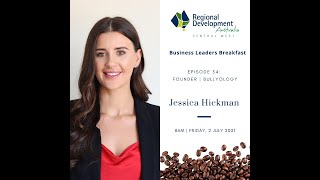
In this Zoom‑based Business Leaders Breakfast, host Sam interviews Jessica Hickman, the Welsh‑born founder of Bullyology, about her eclectic career, the bullying she endured in a fly‑in‑fly‑out oil and gas project, and how those experiences led to the creation of Bullyology. Jessica outlines the core tools she promotes for healthier workplace cultures—peer networks, proactive communication, empathy, and clear ethics—while emphasizing the Upstander movement that converts passive bystanders into active change‑makers in both workplaces and schools. She describes her cyber‑bullying workshops with Central West schools, the importance of recognizing the bystander effect, and the restorative approach to conflict. The conversation shifts to the impact of COVID‑19 remote work, highlighting boundary‑setting strategies and the need for trust‑based leadership. Jessica shares how co‑working space The Hive helped her embed in the Central West community, cites inspirational figures (Michelle Obama, Benny Brown, Richard Branson), current reading (Bill George’s Discover Your True North), and personal habits. Looking ahead, she envisions a generation of Upstanders across regional industries and schools, and provides contact details for businesses to engage with Bullyology. The interview blends personal narrative, practical advice, and a forward‑looking regional vision.
Chapters
Good morning everybody and welcome to this week's RDA Central West Business Leaders Breakfast. We're doing things a little bit differently this, this week. We're coming to you through Zoom and with me as our special guest is Jessica Hickman, the founder of Bullyology. Jess, welcome to breakfast.
Thank you so much for having me.
It's awesome to have you here. You've really made some really positive waves in the Central West over the recent couple of years. I thought you'd be a great person to come in and have a chat and to through the Business Leaders Breakfast. But for those that don't know, you've got quite a diverse history. You've worked in local council, oil and gas, construction. But can you tell us a little bit more about your career journey and what led you to the Central West?
Yeah, absolutely. So, people will tell by my accent, I'm actually from Wales. I came to Australia 8 years ago now, and that was a career break, which obviously I never went home. I just loved it. The minute I arrived in Australia, got off the plane, I just knew I was going to stay. But prior to that, my background, I started off in local council actually. I've always had a drive and an interest in social impact. I remember my first volunteer role was when I was 14 and it was helping with homelessness and deprived youths. So I started my career in council and found myself in a leadership position really early actually. I think I got my first management position at 20. So I had great mentors and support around me, and I was running youth drop-in centres in deprived areas in Wales. And I was doing that of an evening actually, because it was after-school programmes. And so I found myself in another management role. I was office and regional manager for a construction company, so worked my way up there and was actually travelling across different oil and gas projects in the UK, running an admin team. So I was actually 23 and I was like, right, okay, I've just studied my Youth in Community, I think I want to move into that full-time, but with jobs in Wales at the time, so I decided to go on a career break for 4 months. I found myself in Australia and yeah, I haven't gone back since, for a visit obviously. And yeah, it was in 2013, '14 actually, I got a call offering me a role and it was a people and culture role on an oil and gas project in Australia. So it was a dream come true for me. I was backpacking around, got offered this amazing role, and it was in Darwin. So I found myself on a plane to Darwin, and yeah, and that's really where my journey began. Found myself on a large oil and gas project there where there were 7,000 to 10,000 workers, and I was working for a subcontractor there. Amazing opportunity, but also one of the most challenging experiences of my life. Which liked me.
Can you tell us about the challenges and I guess what triggered then your experience and what led to kicking Bullyology off?
Absolutely. So my role there was amazing in the beginning, um, but something I learned pretty quick in the industry, particularly fly-in fly-out industry, males in construction, there was a real, um, mental health or mental ill health pandemic with a lot of unfortunately suicides in the industry. So So I realised that my role looking after youths and nurturing the wellbeing and the holistic side I could bring into the construction environment and develop programs around mental health, made a lot of partnerships in the community. So I became quite successful in my role. I found myself being able to get funding, develop these programs, create support, found myself in front of the Minister, nominated for Northern Territory Young Achiever. So outwardly my career was at a massive highlight, But behind the scenes, 6 months into my role, when we just started to get a bit of momentum, I had a new HR manager and my life drastically changed. So for 3 and a half years, I actually suffered intense bullying and harassment as a female sitting around a table of 8 men. All, like, 7 of them great, but really suffered extensive bullying, harassment, which I did actually report 32 times to corporate. And it was, it's the industry, toughen up, this is how it is here. And yeah, and I kept kept on, you know, momentum, momentum, doing more, working longer hours, 60, 70 hours in the industry, looking after everyone else, filling everyone else's cap, but eventually I ended up collapsing at work in June 2017 with workplace burnout, stress, and just fatigue, just constantly on that hamster wheel trying to do more, working in a toxic environment but not really speaking up So that really led me on my mission and I realized who's asking the leader are they okay when they're looking after everyone else and led me to launch Bullyology actually and yeah go on my mission to raise awareness about how toxic cultures really impact not only the people of the organization but also the top line. Last thing that people want to do is end up in a courtroom or neglect in the wellbeing of employees that they end up psychologically, physically, and emotionally damaged, which I found myself in a really tricky spot.
And it's been a challenging 12 to 18 months for managers with COVID and people having to adapt. But what are some of those tools and techniques that you try to convey to workplaces to help foster that positive workplace culture? Because that's been one of those common themes that's come through all these Business Leaders Breakfasts importance of supporting staff and having them as an important structure and backbone of your successful business?
Yeah, absolutely. So I think for me, one of the fundamental things that helped me personally was finding a peer network that I can actually talk to and support. So a lot of work that I do in organizations is creating that support, coaching conversations, helping people be proactive in the conversations, because often employees or employers wait till it's reactive, till someone needs to use the EAP number or goes off on sick because of a toxic culture. So really I'm trying to flip it on its head and go, how can we be proactive? How can we start these conversations so we can recognize the signs, early intervention, so people can mitigate risk? And that comes with a lot of conversations around mindfulness, resilience training, helping people understand what a good culture looks like and what a toxic culture looks like. So I work in partnership with organizations to support the leaders of the organisation, but fundamentally then drive communication two ways up. So listen to the people, find out how they're actually feeling and see how we can actually support them. So there's a couple of things that really create a thriving workplace culture: communication, leaders that show empathy and authenticity, having strong ethics and guidelines, but also making sure that we're creating an environment that is supporting diversity, inclusion, and equality, and understanding that every human has different needs. And I've definitely seen that in the Central West after moving out here last year and looking at how people— super resilient, people are so resilient here, from, you know, bushfires to drought to global pandemic, and now people are losing items due to the mice plague, and I'm just like, oh gosh. So it's really understanding that people have a different level of capability to manage different life circumstances. So strong leadership and cultures really comes from valuing the employees as individuals, and it's not really a one-size-fits-all approach.
No, that's important. Yeah, that's really good advice. You almost need an individual management plan for each of your staff because they have different skill sets and different ways that you can get the best out of them. One of the things associated with Bullyology is I believe you're starting to create a, what you're trying to call, a generation of upstanders. Can you tell our listeners and the viewers through Facebook what you're trying to achieve through that?
Yeah, absolutely. So throughout my work, um, I've been in business 4 years this September, so I've done a lot of research. I've been able to travel internationally and work across industries, schools, sporting environments, and what I've really found is unfortunately in organizations and schools and whatever context, there's always going to be bullies and people they target, but what I've really found is there's power empowering the people, and that's really empowering people to move from bystanders to upstanders. So what happened in my instance of bullying was I looked around and gone, how can good people allow this to happen to someone else? How can they just stand by when someone's being publicly berated, sworn at, have things thrown at them? But what I realized was they were actually bystanders. And they didn't know how to stand up, support the person, report the bullying, or there's just not enough education and awareness to help people stand up. So with regards to upstanders, it's not just on bullying, harassment. What we've seen recently is a swell of movements: Black Lives Matter, MeToo, you know, even people are empowered about the climate. So what we're seeing, and particularly with the next generation of leaders or people across the Central West, you know, in schools, I'm seeing this swell of an empowerment where people want to be changemakers and champion change. So really it's harnessing that education to help people be custodians of the workplace and school culture, and that comes with education and training, and that's a proactive report and approach. So I want to work with leaders who are futuristic, that want to start now before it ends up, um, you know, someone being damaged or their reputation or being sued because they allowed this toxic behaviour to swell. And really with the Upstanders is challenging unconscious bias as well, and since moving to the Central West I've been working with a couple of clients just to simply modernise mindsets and change some archaic behaviours and language around 'this is the way we've always done it' or 'I've always behaved this way' or 'when I was an apprentice this was the way I got treated.' We're living in a very different world now and those behaviours don't stand anymore, So yeah, it's just really empowering people to be upstanders.
Yeah, absolutely. And I also believe you've been doing quite a bit of engagement with local schools focused around cyberbullying. You know, it's quite a prominent issue that a lot of students are dealing with at the moment. But can you tell us a little bit about your approach with students and what you've learned through that experience so far?
Yeah, absolutely. So when I was at school, and that wasn't, you know, years and years, it wasn't like 50 years ago, and yourself, Sam, Bullying ended at the school gate, so we hoped that people would go home and have a safe haven and a family support wrapped around them. But what we've seen now with technology— so many benefits, but also bullying never stops, and kids are addicted to their phones, and there's just no that, that break from it. So what we're seeing is a rise in anxiety, depression, um, addiction with youth, particularly living in Orange, um, and the Central West. What I've seen is There are some problems, as we all know, around youth mental health, and a lot of it comes down to, yeah, can be cyberbullying. So what I'm trying to do is educate youths to support one another and create strong peer networks. Again, the Upstander movement goes across workplace and schools, so I've been working with local schools here to develop internal upstanders. So prime example, one school I've just worked with, I've been working with the Year 12 prefects and they've been going through my workshops around how to be an upstander, how to recognise the signs, but also support their peers. And then on Wellbeing Day, they co-presented with me and we delivered the Upstander Movement over a 2.5-hour workshop. And from there, we had a swell of younger students raise their hands, say that this is what they've experienced, recognise the signs, because often it's diffused responsibility, whether it's adults or youths, there's a thing called the bystander effect, and the easiest way to describe this, Sam, is if we're driving down the highway and someone has broken down, if there's one or two people that has helped that person, we go, "Ah, someone else will deal with it." So in a bullying instance, whether it's school, workplace, or online, we think, "Oh, do I really want to get involved with that? They'll be all right. Someone else will see and deal with it." And unfortunately, I've learned in my work that the more people that see it the less likely they are to stand up and raise awareness and a voice. So it's really educating people about the bystander effect so we can recognize it in our own personal work environments or school environments and understand that maybe that person needs help. And it doesn't have to be challenging the bully or the person making a racist comment publicly, but it can actually be supporting and reporting that, um, through the right steps to make sure that that behaviour is challenged, particularly with kids and bullying. You know, sometimes comments are made flippant online, uh, and we're quick to jump on and cancel a person in this culture, but often with kids, they may not know, um, that that be—
they—
bullying and racism is learned behavior, right? So I'm not the type of person that, you know, in my programs that rules out the bully. I believe in a restorative approach that we can help educate people what's right and wrong and give them guidance to support them.
Yeah, absolutely. Now we're going to change tack and change pace and hit you with the fast 5 just to learn a little bit more.
Okay.
3 dream dinner guests and why.
Okay, Michelle Obama. I just, I read her book Becoming and love the way that she focuses on social impact prior to even becoming the First Lady. She's done a lot of work in Chicago. I actually had the opportunity a couple of years ago to go to work in schools in Chicago it was frightening, you know, there was guns, we were getting tacked down, so I love her and her approach. The second one is probably Benny Brown, are you familiar with her work? She's a researcher and she spent a lot of time looking at courage, shame, authenticity, and like how leaders should show up. And the other one is probably Richard Branson, I'd love to sit down with him and get some mentoring on how to create a global brand that lasts decades. So they're my three, and there's heaps more.
I'm sure it sounds like a good night out for sure. Now, current book you're reading or TV show you're binge watching or movie you saw?
Okay, current book I'm reading is a book called Discover Your True North by Bill George, and there's actually a field book, and it's a leadership book about finding, um, certain pillars in your career that have fundamentally shaped your values So that one is a great one, I'm on a journey going through the Field Book, recommend that to any business leaders.
We'll put the link up to that one after this morning's chat because that could have good insights.
Yeah, that's a really good one. I'm actually in a book club with other leaders around the world and we're working through the Field Book together and being vulnerable and sharing our obstacles, so it's a great one. I'm binge watching a program called Yanga on Stan, it's really interesting, so it's American. A woman is 40 years old, she's just come out of divorce and come back and wants to get back into a career in publishing, but there's such discrimination around age. She poses as a 26-year-old and gets the job straight away. So I'm always looking at watching stuff going, age discrimination is real, hey? So that's something I'm binge-watching at the moment and looking how that's playing out. So yeah, there's what I'm reading and watching.
All right, and hidden gem of the Central West? So if you've got visitors coming to the region, somewhere you like to take them, show them, or something that you think is a bit of a hidden gem in the region?
Yeah, well, my hidden gem— it's not a hidden gem, but something that blew me away was Food Week. I was just blown away by hospitality and all the businesses working together, non-competitive, and creating just an environment that's amazing. Cafés, I would always go to Grandstone and Anything Grows. And it was actually Anything Grows that I met Matthew when I first moved here and he gave me your number, Sam, and that's how— that was the first person I ever met and he was just great with trying to introduce me to people, so that would always be my go-to.
Now we've got a good selection there, a couple of crackers for sure. Now, one meal you could eat every day for a year?
Vietnamese spring rolls.
Yum, yep, I could agree on that one. Local business leader that you've met in the Central West who's really inspired you? Inspired you thus far?
Without a doubt, Dave Woodall from the council. So when I sat down with Dave last year and I talked about my mission with the Upstander movement, he talked about his mission with Orange City Council, and we aligned in our mission, and he believed in my vision. I wanted to execute his vision, and I think that he trusted me, and, and we've had some great results with the council. So without a doubt, I've learned so much about Dave and how he operates and runs his team and is authentic. So I think that he is probably the most inspirational leader I've met in the Central West for sure, ever actually.
Nice shout out for Dave Waddell. We had him on at the Business Leaders Breakfast earlier this year, so we'll make sure we give him a plug after this morning's chat. Now finishing up this morning, we've got a few more questions, Jess, but now with everyone working from home as a result of COVID have you seen that a change in, I guess, people's behaviour and workplaces needing to adapt, and has that changed how businesses have engaged with you?
Absolutely, so working from home is actually— there's pros and cons. Like, for parents, the flexible work options have been great and has allowed people to actually, you know, work around different hours, but that's dependent on the company and whether they're not the micromanaging company 'Cause I've also seen the flip side where companies, some of my clients last year was saying to me, how can I make sure that my client, my staff are working 9 till 5? How can I monitor them? Should I put a system on to check? And I'm like, no, a strong leader trusts. As long as they're executing the job, whether they do it in 4 hours in the morning or late at night when they put their kids to bed, we need to adapt and understand that people are, living, working in shared office with their husband, their wife, their kids, or whatever. And so I think that there's definitely been a rise, but also blurred working hours. I'm seeing an extra level of fatigue and residue where people are expected to do more, be logged on, and not got that boundaries or that close off between home and work. And even if you're working in town in Orange, you've got that drive home or that kind of trigger for your mind. So a couple of strategies I do working from home is I get up, I get ready, I have my morning shower, my morning coffee, um, I listen to a podcast as if I was on a drive to work, get into my work schedule, but at the end of the day I always shower and change, so I've got like that cue for my mind to be right, family time, check in, because otherwise I can be working till midnight and there's just no cue for personal time, that's where burnout happens and I've been there, Yeah, no, I think, I think you're absolutely right, that separation between work and home is one of those challenges that we need to grapple with.
Now, talking about working arrangements, I believe you work out of The Hive in Orange, which is fantastic co-working space. What has that meant for you as a new person to the Central West and your business? And I guess, what were some of the triggers for you making the move to the Central West?
Yeah, so I'm not in The Hive full-time at the moment because when I first came here The Hive was amazing. I met so many people and Pru at The Hive introduced me to so many people. I actually do business with a lot of people out of there. Great hub to hire rooms. I've run training there. I've even had some of the schools come to The Hive for a different setting, so that was fundamental for me. I'm spending, prior to COVID right now, a lot of time at clients, so I've been running workshops out of the art gallery, the botanical gardens, so I'm kind of like a moving part at the moment, but yeah, it's been fundamental. I think for me, when I moved to the Central West, the unknown, I didn't know what I was coming into, would my business thrive, succeed. Prior to that, I was living in Sydney and started doing everything online, and we actually moved that year for my partner's job, so it was one of those things, I was like, let's just do it. So I've pushed myself to meet people, and yeah, I go to most networking events and try to put myself into as many kind of situations as possible, but the community have been really open and accepting, so my business is doing the best it's ever done, living locally, having impact in the local community, I'm sleeping in my own bed every night rather than traveling around the world in hotels, and my perspective on life has massively changed. If I can go to work and come home and have impact and support people where I live, and help them thrive. Like, it's been the best decision for me, so no looking back.
Well, definitely the right mindset. Now, you're a motivational speaker, and I know you've done lots of speaking engagements over the journey, but what's one of those key messages that you try to leave with your attendees? And I guess, yeah, what's a piece of advice you've received from a mentor over the journey that's really stuck with you?
Okay, so if I'm doing a talk to individuals, I've written a book called The Bullyologist: Breaking the Silence on Bullying, and that was really sharing my story of burnout to healing. So my message to individuals who are going through a tricky time at the moment, wherever it feels like, we can actually find a gift in the adversity. So I choose to use my experience to thrive. So through that keynote and on my book right in there, I help people heal from the journey, but when I'm delivering to businesses and business leaders, which is my core focus, I really need them to know that fundamentally the people are their biggest assets and human capital will help them thrive and succeed. So I give out these bands when I do my workshops and I get people to commit to action, but also get people to make a commitment and an upstander pledge. Why are you an upstander? How will you be a changemaker and how will you support others to thrive? Because I think that as a community we need to be having these conversations and empowering our next generation. So yeah, that's kind of my core messages. My advice from a mentor, really, probably my parents. They've been my biggest advocate and support on the other side of the world, suffering a really terrible time at one point, and I said I'm going to launch a business and they Business isn't easy. I've had so many knockbacks, as you know, and even last year my work disappeared and I was like, I've been building my brand and business for 3 years and they're just like, dust yourself off, like learn from it, dust yourself off and grow. So I think that whenever I'm faced with adversity now, I'm kind of a bit weird. I'm like, mm, what can I learn and grow from adversity? And I found comfort in being uncomfortable actually, because that's where my growth happens. I listened to a talk last week with the founder of Thank U, the brand, and he said, "Get out and stay out." And I love that because it's get out of your comfort zone and stay out of your comfort zone. And I'm always trying to push myself to grow, impact more lives, and support more people. So yeah, that's kind of what I'm living by.
Really good gems in there. And I have heard that, be comfortable with being uncomfortable because that's when you start pushing, keep pushing, and keep pushing. Now we're coming towards the end of this morning's chat. It's great to have you on, as I said. But look, what's your forecast and what's your, looking into the crystal ball, where can you see your business and the region going over the next 12 to 18 months?
Absolutely. So I feel like I'm just literally scratching the surface for the Central West. So I'd love to be in, my dream and vision is to create a generation of upstanders across industry and schools. And so hopefully I'm in every school in the Central West, the programs are, my dream is that I, I go in and I empower people to lead change, not just go in and leave. So I want to create an army of upstanders across the Central West that are leading cultural change, that are going to empower people. So yeah, I'm tapping into a lot of industries at the moment. I'm working with local government, mining, manufacturing. So yeah, I'm reaching out to business leaders and my core focus is supporting the business leaders thrive for now and the future. So yeah, I'm really excited.
Yeah, absolutely. You've definitely been getting some really good traction in the region, delivering some important workshops. But look, before we finish up this morning, what's the easiest way for local businesses, viewers and listeners this morning to engage with you to learn more about Wooliology, your journey and to be able to—
Yeah, so my Wooliology website is just about to relaunch. We took it down last week and we're just working on new programmes based on feedback from the Central West. But the easiest way right now, my website is jesshickman.com, and in the next week the Bullyology one will be up, but if you just search jesshickman.com, you will find me. I'm on Instagram, Jessica Zoe Hickman, LinkedIn, Jess Hickman. Search Bullyology and you'll find me. And I got a podcast, just search my name and I'm just—
Look, we'll put all the handles up, we'll put all the links up after.
Thank you.
Cheers. Great opportunity for local businesses to really learn more about the importance of workplace culture and giving them a few tools that they can put into practice in their local businesses. But look, thank you very much. You've left me inspired for a Friday morning. Have a great day, everybody. Have a great weekend. And we'll see you next time on the RDA Central West Business Leaders Breakfast.
More from Jessica





Breaking the Bystander Effect: Transforming Workplace Culture Through Awareness and Action 🤔

Refilling Your Cup: Insights on Self-Care to Prevent Burnout with Dr. Jo Braid 🌟



Combatting Cyberbullying: A Parent's Guide to Protecting & Supporting Youth Online

Recognising Burnout: My Personal Journey & Warning Signs | Dr. Jo Braid's Burnout Recovery Podcast

Leading the Change: Out with Toxicity, In with Upstander Cultures for the Modern Workplace