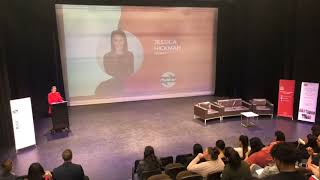
In this live presentation, Jessica Hickman shares her personal experience of severe workplace bullying, detailing the physical and psychological abuse she endured, the fear that kept her from leaving, and the broader impact such behavior has on organizations—including reduced productivity, damaged reputation, increased sick leave, and low morale. She explains the role of bystanders, why they often stay silent, and urges proactive intervention. Hickman describes her transformation from a victim to an entrepreneur, founding the anti‑bullying consultancy Bullyology, leveraging personal branding, social media, and community support. She outlines her holistic healing journey—mindfulness, meditation, essential oils, and work with healers—that informed her advocacy. Currently, she is writing a book covering school, online, and workplace bullying, and has partnered with an anti‑cyberbullying platform, launching global tours and collaborations with schools, NGOs, and community groups to promote bystander action and documentation of incidents. The talk culminates in a call for leaders to foster empathy, stop bullying, and empower bystanders as a life‑saving force.
Chapters
If you do stand out in school or the workplace, and I look around the room and there's so many high achievers in here that are going to do so much social good, there are going to be people in your community that are jealous of you. And it is tough, but I wish I knew this sooner because all I was was in a victim mindset of why me, why me, why me. When I decided to turn that round last year I decided this isn't going to break me, this is actually going to make me. So I know we talk around how bullying can affect an individual and families, relationships, health, but it's important for the young entrepreneurs in the room to understand how it can affect an organisation. So productivity is a massive one. Future leaders, if you allow bullying to take place in your organisation, it will affect your productivity. Also your reputation. So if you are a leader or someone in the workplace that allows bullying to happen, that reputation sticks. It's not a good reputation to have. You want to be a leader that has empathy and really puts a stop to bullying behaviour. It affects the sick leave. That goes hand in hand with the productivity. When I decided to unpeel the mask on this person that I created after I left the job after my hospital admission. I decided I couldn't do it anymore. I left in fear. And when I decided to speak out about my bullying online, create videos and raise awareness, it was a massive shock to a lot of people that knew me in that industry. What do you mean? You were such a strong female representing other people. Even the people, the strongest people, can be suffering behind the scenes. We see all these celebrities online Leaders, business leaders, and we all suffer our own battles, no matter how we look on the outside. Everyone has got stuff going on. So that was a really important message for me. So how you look and show up can be different to how you're actually feeling. And within the organisation, if bullying does go on, morale is extremely low. People became anxious to be associated with me. My colleagues could all see what was going on. My bully was sometimes physical. He'd throw a file in my face, he'd lock me in an office. One time another manager had to restrain him from running to my desk because he believed I was talking about him. People could see this going on and I would think, why isn't anyone helping me? Why are these people not helping me? Now I have the knowledge to understand why. They were bystanders. They were frightened for their livelihood. They had jobs, families, cars, houses, everything to pay for. They didn't want to help me because they didn't want to become a victim. Now I understand that, I have the compassion for them. But what I would like to say to people in this room is, you may not— I don't think anyone in here will be a bully, but if you are a victim, I hope you have a helpful bystander nearby. And if you do see this going on, be that bystander. Listen to the victim, help them, report them. Because a bystander can be a massive relief for someone and you could actually save a life. So why did I stay with the organization? People say, "Just why didn't you leave?" I was fearful. This country, Australia, was my home. If I walked out of that organization, not only would I lose everything that I tried to achieve, I was frightened someone I cared about would lose their life. So what I do now— so I made the decision when I was laying in that hospital bed that I would use this excuse to leave. I would say I have female issues and I need to go back to the UK for treatment. In a male-dominated environment, no one wanted to ask me what my female issues were. I was like, thank you, this is a savior. So I left and I went back to the UK, and I'm so traumatized from my bullying and the fact that I thought that this company owned me, would find me, would— my bully would kill me. It's crazy what 3 and a half years of programming and self-worth and self-esteem does to you. I decided to move to Sydney, and this was last September, and I lived in fear and secret for 3 months. I still pretended to people I used to work with that I was in the UK. And I went to an inspirational life coach called Tony Robbins, and someone mentioned him yesterday, in September. And day 1 of this conference, I sat in the audience a victim of bullying, and I decided that I will not use that circumstance to determine my future. I didn't want to be a victim and live in this victimhood for the rest of my life. I wanted to move from victim to, to be a thriver, and I knew that I could help people with my story and message. So I stayed awake for 2 days, crazy, writing, and I had this surge of energy, and I thought, I'm going to open up conversations around bullying. I'm gonna help people. And I, then I came up with Bullyology, which is my company, and I thought, I am the bullyologist. No one in the world calls themselves the bullyologist. And that's a tip for entrepreneurs as well. Branding is everything. And I broke through my fear and I put a LinkedIn post up and a Facebook post and an Instagram post talking about being a bullying victim and how it was gonna help me. And the support I received, changed my life. I now opened up conversations, and I never imagined I would create a company. I didn't know anything about business. I was on the other side of the world, but all I knew is I had a, a passion and a fire in my soul to help other people, and all the rest fell into place. So what's next for me? So I'm writing a book, and it's about to launch at the end of the year, the year, this will talk about my personal experience, school bullying, online bullying. I've partnered with a lot of excellent people in this space that have helped me write this book and put it together. I also talk about holistic healing, how I found meditation, mindfulness, essential oils, how I spent time in Bali with a healer, of how I really decided to heal my life. Um, and I won't talk too much about that now, but the book gives a big insight, and that's a massive part of my life now, of managing my mind and state to succeed in life. So I've built Relationships Global. I've partnered with a company that have got an anti-cyberbullying platform. Two months ago I was in the US doing a tour, which is pretty exciting considering I was in a hospital bed just a year ago. What a difference a year makes. And at the end of this month I'm going on a 6-week tour of the US and the UK launching an anti-cyberbullying platform, working with schools, NGOs, community organisations, women's groups, men's groups, and what I'm trying to do is raise the message globally that it doesn't matter whether you're at school, online, a parent, a teacher, a community worker, we're all vulnerable to suffer bullying. So it's important that if you do, you be a helpful bystander, you document what is ongoing, dates, times, facts, witnesses, because this really was serious for me, and it's also helped me write my book. 3 and a half years worth of diary entries and evidence has really put me in a place where I could report my bullying and obviously use it to thrive. So, is business easy?