Upstander Leader Series - Michelle Bowditch
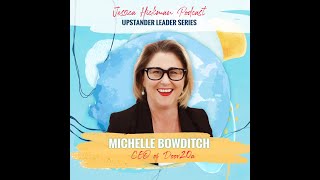
Michelle Bowditch, founder of Door 28, describes being bullied by a former business associate who copied her website and launched a sustained social media campaign against her. She shares how breathwork, meditation, and close friends helped her recover, and how she now leads with kindness and asks people "how is your heart?" as a way to build stronger teams.
Chapters
Hello, Michelle. Hey, Jess, how are you? Thank you so much for agreeing to chat to me today.
You're welcome. I'm excited to be here, and, um, it's been great watching your journey and all that you do for the community, so thank you.
And thank you, it's been, uh, I really appreciate it and everything that you do. I think we originally connected on Instagram, and from there I had access to your newsletter Recently you shared in your newsletter, thank you for giving a promotion to Bullyology and my work, but also you shared a very personal story about how bullying has impacted you in your career and business. So I wanted to, um, have a chat today and really find out a little bit more about you, Michelle, what you do, and really, um, talk a little bit about your bullying experience and how you really harness that to be a better leader.
Thanks, Jess. Well, thank you. Um, so I have a business called Door 28. It's a tech consulting Business. So I work with women in small business and leaders to create and find the right tech tools and platforms within their business to create efficiencies. So it's only 2 years old. It is a fairly young business, but before that I was in the corporate world for 30+ years. So I started off in the wine industry in event management, and then from there I moved into an executive assistant role supporting at CFO and CEO level. So, um, the journey has been fun. Um, you know, through that, through my journey of life, I, you know, have 3 beautiful children, um, all teenagers, and, uh, then went through a messy marriage breakup about 14 years ago, which I shared in my, um, in my newsletter today. But I think, you know, we as women and we as leaders, you know When bullying enters our world, I don't think we're ever ready for it, Jess. I don't think we expect it because, you know, I come from quite an old-fashioned family where, you know, the values that my grandparents and my parents taught me, you know, the word bullying never existed when I was growing up. So I think the first circumstance or the first incident, if that's what we call it, when it happened I have to tell you, like, it blew me for 6. So, um, the individual, um, that it happened with, like, we— I thought we were close business associates, um, to be honest. And what had happened is, is that months leading up to it, I had business associates reaching out to me and saying to me Mish, um, X is copying your website. She's quoting you, um, with no acknowledgement of me. She's launched a new website, it's got all your information on it, you know. And this had gone on and I just kind of slid it under the carpet. Mind you, this individual, we had— we, we would speak once a week, um, and anyway, it got to a stage where, um, they went out and did an advertising campaign and had copied pretty much a lot of my IP. Um, and then, and someone rang me and said, you actually have to do something about this, Mish, because, you know, that's, that's not right. And I was like, okay. So I actually picked up the phone because we'd been speaking every week, um, because we'd formed— we had a business relationship and then we became personal friends. And I picked up the phone and didn't call me, didn't answer. Then I sent her an audio text because I'm a big audio text person, and you know that, Jess. I love to communicate because I sometimes find text messaging can be, uh, the message can get mixed up. So it's, it's great to hear people's voice. So then I sent her an audio text, and I kept watching this campaign go out in the marketplace, and I actually got furious. So then I sent her an Instagram message, um, just saying, hey, you know, what is going on? Why have you copied? And for me, from the first dot, there was no aggressiveness, there was no anger. There was just confusion from my side. So what happened next week was the thing that just ultimately blew me out of the water, and this is when the bullying started. Um, I actually, before I reached out to her, I did reach out to two of my closest friends and said, how do you manage this? You know, I don't want to get lawyers involved, but you know, what do I do? I considered her, you know, a great friend. Um, And they said, look, you know, handle it the way that you handle admission, and, you know, reach out. You know, you're a very personal person, you're a great communicator. So then what happened is, is that then from the Instagram message, the messages started coming back to me, um, in the way of, how dare you, you're wrong, what are you accusing me of, and they were repeated messages both on social media and also in emails. And then private numbers started calling me.
Hmm, okay.
And the abuse that happened from such a simple thing that could have been sorted from a phone call blew me out of the water. I then started having anxiety attacks, um, I got very emotional. It affected my mental health, um, and it didn't stop, um, for— it went on for a period of 3 months across different communication platforms. And I just— at the beginning, I allowed it to happen, Jess. Um, the torment, the words they used, the swearing, um, the accusations.
So can I just stop you there? Yeah, ask a curious question. When you say they, um, did the bully recruit people? Oh, okay, so it went from one person to a triage of people within their, within the organization? Yeah, okay. So, and then how, sorry, how did that make you feel when it escalated from one to more people? Did it heighten the experience, or was one person enough?
I was confused because initially I blamed myself. I said, did I do something wrong? Like, because I went back to the thing of not the actual thing that they had done, but had I offended them on a totally different level? Like, I, I blamed myself initially saying, did I say something wrong to them? You know, I'd only seen these individuals a couple months prior to this starting, and I'm going— so I retraced my steps, and I blamed myself for it.
Um, so just, just sorry for anyone listening, um, this is how this often happens, uh, in a bullying incident or case, that you are broken down to believe that you are the person at fault. And I can definitely resonate and relate to what you're saying because over my 3-year-plus period of bullying, over time I started to believe that I was the person that was in the wrong. And they were very skilled at making me feel— my self-worth went, I felt inadequate, and I also spent all night with the anxiety retracing my steps. And it sounds like that started to happen for you also, Michelle.
Yeah, the anxiety was out of control, and what it saw me do is I'm, I'm naturally a confident person, but what I did is I started to step back So I would avoid seeing them in public or coming, being confronted with them, because I just didn't know how to handle it. Um, so, you know, for me, that became this person that would, you know, get up on stage and talk to 500 people, or, you know, create magic in a room when people enter it. I became this introvert and this person that didn't want to go to particular events. Or, um, so Then the next thing that happened is that then they obviously blocked me on all social media platforms, and I was like, what the— like, so then, you know, it got to a point where after a week of not sleeping, one of my girlfriends said to me, you've let this— like, it went on for months, and they said, this is ridiculous. First of all, you need to go get help. And then you need to go see a lawyer.
So can I just ask you a question around— you've mentioned a couple, and for anyone listening in, some of the effects of bullying can be psychological, emotional, and physical. So I've heard you say that you started to develop anxiety and a lot of fear. Can you just tell us a little bit about how did anxiety present for you?
Oh my gosh, so tightening of the chest, you know, quite emotional, very teary. Um, you know, the, the, the— my diet was not great, so, you know, I would have elevated times of the day if I read something that was related to both of us within the industry. It would just like— my heart rate would just go out of control, and I sometimes couldn't feel like I was breathing. And, and I was constantly my tone of voice was racing quite fast, like when I would speak. So my girlfriends— I'm really lucky that I have some incredible close friends, and they would see that, um, you know, like I would ring, uh, the people within my business, um, and I had to disclose that to them because I actually had to go back to my business, that, you know, my team, and say to them, can we retrace the steps of what happened? Because, you know, this is the thing, I was double-taking my steps and I was questioning what I had done. Did I allow them to, you know, did I say to them that they could use my IP? Did I, you know, had I said something wrong? Did I offend them? There was this constant questioning of what I had done wrong. And then when I would question that, that's when the anxiety would just go out of control.
And can I ask you a personal question around how, how do you feel right now when you're actually talking about this topic?
I feel— look, you know, there's no tears and I don't think I'm out of control. I, I feel sad that a beautiful friendship broke down. And, you know, since this has all happened, and obviously time does heal you, um, I since have found out that there was something going on in their lives um, that I was the brunt of something else that was happening.
Well, I think that's completely, um, interesting to understand because often people believe that they're bullied because they're incompetent or they're weak or they're not good at their job. But what I've learned throughout my work with Bullyology and reflecting on my personal experience, often people get bullied because they're highly competent, they're intelligent, they're emotionally intelligent, and Often people, um, bully them because they admire them or are jealous of them or want to be them or want to copy their IP or unable to come up with their own creative solutions. And it sounds very much so that you were bullied because of your confidence.
And because that is correct, that is correct. There was a jealous— look, you know, it has been revealed after time that they were very jealous um, and, you know, as well as them having their own issues going on in life, that was the jealousy. Is it— it's like, how can she achieve that in such a short time? How can—
how—
why is she allowed to do that? You know, and the thing is, is that, you know, I always talk about community over competition because I honestly believe that, you know, as women in, in business and also in leadership, we have to be there to create a beautiful community. We have to be there to fix it fix each other's crowns when the crowns are crooked. And we shouldn't push people down, um, and we shouldn't, you know, bully people in circumstances that they're just the, the brunt of a raw deal, or however you describe it. So I feel I'm certainly stronger. Um, I've had a couple other small minor incidences in a bullying frame, and I think I've got stronger. Um, and what I've done now is is that I haven't taken it personally. And I think when you first are involved in a bullying incident, you do take it personally. What did I do wrong? Could I have done it better? And it's that a personal attack on you as an individual, not on the business. And obviously I've now got protection around my business in certain ways, but as small business owners, we don't know that. But from a personal perspective, you know, my confidence was shot. I was questioning everything I did, you know. I was double retaking moments that had happened in, in the period before this had happened, going, did I do something wrong? Do something. So, you know, there was a subsequent— oh, sorry, there was another incident that happened a few months later that was totally unrelated. And, you know, the perception of social media versus the reality of what is actually happening is there is such a wide gap. And, you know, for your listeners, Jess, is I would say, you know, social media is there to create something beautiful. It's not there to go and attack or question or be jealous or, you know, we, we have these social media platforms because we want to communicate. And in my business, my 3 C's are community, connection, and collaboration. So not in any of those are we talking to fight with people, to push people down, to bully people, because it isn't fair. We as individuals don't deserve this. Um, and you know, I'm certainly stronger, um, and it took me a long time to just put a simple newsletter out. And when I was sitting down with the team and we were writing that, there was actually a lot of emotion attached with it. And I think when your emotion is released, it's like this weight's being lifted off your shoulder. So from a health perspective, mental health perspective, massive improvement. Anxiety is not there around it. Every now and again there's a flutter in the heart or there's a tear in the back of the eye, but the anxiousness that was happening— because I'm able to manage it, because what I now do is I'm not blaming me.
I think that's really powerful what you're saying there, Michelle. And really, um, it sounds like there's been some— a lot, a lot of lessons learned. And what I can gather often, um, is people often become stronger because of the bullying experience. And if anyone is listening who is going through this within their workplace or dealing with it as a business leader, um, there is actually light at the end of the tunnel, which is really hard to see at the time, particularly when your reputation's being damaged, your name's being dragged through the mud. But it sounds like the principles you've created within your business really stem from your experience earlier on that can now shape and shift of how you want to show up as a leader and who you want to become.
And it was really funny, earlier this year I was, um, going to a corporate workshop, um, and I knew these individuals would be there. But what I did before, because I was nervous— this is the first time that I would see them face to face um, and it was really interesting. What I did is I put, you know, a barrier and the tools around me to support me, that I would turn up to be the best version of me, that I would have the strength and the confidence that I wouldn't break down and I wouldn't look at them and start crying or having an anxiety attack, um, that I was able to, you know, show up to be the best version of me. And one of the things I did was, um, my business coach as well as a really beautiful friend, you know, I said to her, if I feel I need to call you before I walk in the room, can you be available for me? And of course, you know, you— I drove into the car park and all of a sudden the emotions just overcame me, the tears started falling. So I picked up the phone, I went, right, I'm not going to be defeated, I can do this, we've worked so hard on this. And I picked up the phone and immediately the tears stopped, my level of anxiety and the way my heart was racing stopped. And I just said to her, "Lou, I'm here in the car park." And she's an expert in that area. So she was able to bring me back to a position of providing that confidence and instilling in me that I've moved past it. Um, the scar is still there on the heart. I think it'll always be there. I don't think you can ever get rid of it. It's not, it's not something that you can kind of put a Band-Aid up on it or, you know, put a stitch in it and it's fixed and it's done, or throw it. It's, it's always going to be there, but it's how you, as a woman, um, or as an individual manages that situation. So, you know, I had that resource and that tool available to me. So then, you know, within the space of 7 minutes— it was a 7-minute conversation in the car park— I got out, you know, yes, I had my red dress and my red lipstick on, and, you know, that power suit, and, you know, red was always my color, but I see now, see it as a power color and a strength color for me. Um, I was able to walk into that room And the funny thing about it is, is that like I just felt invincible, like I was the strength that I had. And it was funny because as soon as she laid con— these individuals like eye contact on me, they left. They left the event.
Wow.
So it was like they had had the fear in them of seeing me in the flesh.
And then you overcome that. That's very powerful. And what I'm hearing, and for the listeners, is the fact that you were able— the tips and hints and support you were able to wrap around you, and you got a coach and friends. And I think that's so fundamental to the success. And I can definitely reflect on the people that were there to wrap support around me. And I can, I can remember Excuse me, early on in my launching of Bullyology, when someone from my old company would look at my LinkedIn, I remember one day I actually vomited with fear. And it's so interesting now that they look at my LinkedIn all the time, they know what I'm doing, they ask people about me and I just go, "Hah!" And it is, it's not about revenge, it's not about retribution, it's about education and awareness, about becoming the bigger person and really using your experience to influence others. I think there's just such power in you as a human and people as a human that are able to actually turn that experience into education. And I think, you know, it sometimes becomes a gift in using that to really shine a light on the topic and overcome.
And I think that, you know, we aren't, our DNA isn't, We aren't— it isn't built in our DNA to be a bully. No. And, you know, I had never been innocent, like, growing up. It never had— like, that word didn't exist. But now with social media and human, human, um, human traits and the way we behave, bullying has just elevated to a different level. Um, and I just think that, you know, One thing I did do actually, Jess, is that, you know, meditation for me is a big thing now, and breathing exercises. And, and it's funny because I have, um, uh, been working with a chiropractor, um, about my breathwork and obviously where I breathe between, um, between my upper chest and my stomach. And that meditation, that breathing mechanism, was also part of when I was sitting in that car park thinking I was going to fall into a million pieces. But, you know, the coach was able to— okay, Mish, what breathwork have you done? What meditation have you done? Okay, let's do it. So, and everyone, you know, it's like the choice of exercise we make, that we have so much choices in the way we exercise and keep healthy. I think it's also with regards to, you know, what choice you make to support yourself through when bullying does come into your life. So So whether it be going on medication if it's so extreme, to versus seeing a psychologist, or whether it is just meditation and yoga. I think when you are a victim— and I don't know whether victim is the right word, but when you—
I prefer the word target.
Target. Yes, I like that word. When you are a target, you have to get support. You can't do it alone. You have to go, and however that support mechanism looks for you and suits you, you have to acknowledge that you do need support. Because the thing is, is that if you don't, then, you know, for months I was living in a really uncomfortable, unhealthy way because I allowed it to overtake unnecessarily, whereas I could have gone and got support earlier. Um, and you know, at the end of the day, lawyers did get involved, um, unfortunately, and all my IP that was being used was removed everywhere. So, you know, I had an outcome from a business perspective, but then the outcome from a personal perspective took a hell of a lot longer. Yeah. And as I said, I don't— I honestly believe that you can't ever be rid of being bullied. Um, it'll be there and it will affect you. I think, you know, it's going to be there, but it's how you manage it. And when you're in that— when you know that you're— how do you overcome a circumstance if that person stands in front of you again? You know, if you meet that person, like if you run into that person in public, what mechanisms have you got so you don't fall in a heap, that you don't start crying, that you don't get into an abusive situation or out of control situation? Like, how do you individually manage that? And I think, yeah, for your listeners, if there is anyone out there, you know, get help, get support, even if it's just telling one friend. Yeah, because if you keep it up inside of you Imagine how you must be— and I was, I was exploding inside. It was like I was like, you know, stuffing things into a canister or a jar and it was overflowing, but I kept pushing it in. And if you don't let it out or talk or seek professional help, then it is at some point that glass jar is just gonna explode and shatter everywhere and there's gonna be pieces everywhere.
Like me, I ended up collapsing in the workplace where I had a physical event where I was so burnt out. So this is really great information and thank you for sharing. I will capture all of these tips and hints and meditation, mindfulness, breathwork. I still suffer anxiety. Some days I can wake up and just be anxious for no reason, but, or I can recall something and the body remembers. And sometimes I can be perfectly in a great mood, then all of a sudden my body shudders and shakes and I break out in a rash. So it's important for listeners to understand that bullying does impact the whole person, teams, organizations. And if you could give one or two words of wisdom to leaders listening to this podcast who may be working in an organization where toxic culture is really tearing it apart, what tips would you give to leaders?
Oh, firstly, kindness is king. I actually now, when people come to me on the Attacking Method, or they— I can sense that they may be wanting to bully someone, is I go back with kindness, because kindness does kill. Um, and I also think is, is it sometimes if someone does attack you in an unhealthy way, instead of asking, why did you do that, take a step back, because I honestly believe that there's something going on in their world. That is making them behave in that way.
Yeah.
So just offer kindness. And, you know, I start a conversation with many people now, instead of, 'Hi, how are you?' I say, 'How is your heart?' Oh, how beautiful is that? Yeah, it changes, you know, because you imagine someone walking into a room so fast and it's like, 'Oh, I want to kill that person. I'm really angry with that person.' And then all of a sudden you go 'Hi Jess, how is your heart?' They stop so quickly in their tracks and they go, 'What the hell? Who is this woman? What is she talking about?' And they go from having this, this tense, aggressive behavior to kind of going down 10 notches and going, 'Oh, you want to know how my heart is?
Oh, okay.' That's so powerful. Thank you for sharing. So you've got lots of tips and hints, and thank you for your, um, you know, being brave and true and sharing your truth with us today. So for anyone listening, uh, where can they find you and what's coming up next for you?
Oh yes, okay, so on LinkedIn it's Michelle Bowditch, or Instagram, which is my preferred platform, and it's Door 20A. Um, connect with me and there's a link to, um, join the newsletter, which I know you love, Jess. Yes, what's coming up for me, we've just launched the Australian Admin Awards, which is the first of its kind. I'm an advocate in the administrative space on a global basis. And, you know, in Australia, we don't recognize and celebrate people. And for me, you know, the bullying journey emphasizes again that we need to celebrate, we need to recognize everyone, not on your title, but based on who you are and the skills and superpowers and the amazing things you do to the business. So the Australian Admin Awards are open. Um, you can pop across to our website, which is australianadminawards.com, um, and nominations are open to the 14th. So go out, nominate your admin superstar. Celebrate them, whether you're the receptionist, the office manager, the EA, the PA. It's not based on title, it's about you. And I love celebrating people because I believe every human being deserves to win. Um, so that is my— that's what's happening at the moment. Um, but yeah, just connect with me. You'll put the links in the show notes. And I'd love to hear from anyone. I love, um, audio voice messages, which you know. So instead of sending me a text, send me a voice message. And I'd love to hear your voice because that's how it creates your personality and the connection piece. So yeah, thanks.
Thank you so much. And I just wanna say that sounds a great initiative. And I do believe that the admin heroes are very underappreciated in some workplaces where they, I've worked in admin positions and in HR and often we would scoop up what I'd call the shit or come behind and have to like put out the fires of what's happening. Yeah.
They are the magicians of the business. They've got the glue ready to stick everything together. And they've always got, the solution to the problem before the problem occurs.
And they always execute. And I've been lucky enough to work with some amazing people, virtual assistants and people that support me in my business success. Thank you so much for sharing your story again, and I love your kindness message. And I will be checking in on people and asking them how their heart is, so I'll let you know how that goes. And, uh, for anyone listening, I will drop the links to Michelle's Instagram, LinkedIn, website, and newsletter in the link. Thank you, Michelle.
Thanks, Jess. Have a great day.
More from Jessica





Breaking the Bystander Effect: Transforming Workplace Culture Through Awareness and Action 🤔

Refilling Your Cup: Insights on Self-Care to Prevent Burnout with Dr. Jo Braid 🌟



Combatting Cyberbullying: A Parent's Guide to Protecting & Supporting Youth Online

Recognising Burnout: My Personal Journey & Warning Signs | Dr. Jo Braid's Burnout Recovery Podcast

Leading the Change: Out with Toxicity, In with Upstander Cultures for the Modern Workplace