Upstander Leader Series - Philip Donato, MP
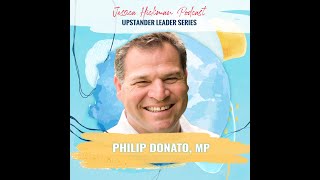
In this Upstander Leader podcast episode, host Jessica Hickman interviews New South Wales MP Philip Donato. Donato recounts his unconventional career trajectory – a pastry‑chef apprenticeship, 22 years in the police force (including as a prosecutor), and a surprise election win in the 2016 Orange by‑election that thrust him into state parliament. He describes his first days in the historic NSW Legislative Assembly as overwhelming, noting the "bear pit" atmosphere, partisan dominance, and a culture of bullying and ego‑driven banter that he finds disillusioning. Donato argues that the Westminster system gives the governing party disproportionate control over agenda, debate, and the Speaker, limiting fairness for backbenchers. He calls for a cultural shift led by senior officials to curb harassment and improve decorum. The conversation then moves to Donato’s community work in the Central West, especially his mental‑health initiatives: the monthly free "Mr Perfect" men’s health barbecues, a publicly‑distributed services toolkit mailed to 40,000 households, and personal stories of how these programs reduce isolation. He highlights the importance of collaboration among service providers and the need for better access to mental‑health resources. Finally, Donato offers advice to emerging leaders – to back themselves, seize opportunities, and recognise that academic results (e.g., the HSC) are not the sole path to success. The interview blends personal narrative, critique of parliamentary culture, and concrete community‑focused actions.
Chapters
Thanks so much, Phil, for agreeing to chat to me on the Upstander Leader podcast.
No problem, Jessica.
As you know, I'm currently writing my second book, and really, since moving to the Central West, really want to capture some feedback from leaders who are, I believe, upstanders, who believe in speaking up for the community, are passionate about mental health, and many other things.
Yeah, No, well, thank you for having me and inviting me onto your program, and great to be able to provide some feedback and information, I suppose, that might be of use and tell you a little bit about myself, I guess, and my story.
Yeah, and really, that's a great lead-in. So how were you in Parliament? Was that almost always a dream for you?
No, I'll be honest and say no, it wasn't a dream. It wasn't like I left school wanting to get into politics and went on a pathway to get into politics. Quite the opposite, actually. When I left school, I left school in 1990, so over 30 years ago now, and I went to university for a year. Didn't really like what I was doing at university. I dropped out after a year and started an apprenticeship. And that was in the early '90s, and at the time interest rates were— we were going through a recession. It was very hard to get work. Interest rates were like 17%, 18%. And the economy was really, really slow. But I knew that I didn't want to study anymore. I wanted to get out and start working and make my way in the world. So I got an apprenticeship and did that for about 3 or 4 years or just under 4 years actually, until I sort of worked out what I wanted to do. And so that was terrific. I actually did a pastry chef apprenticeship in an Italian bakery in Sydney. Oh wow. Yeah, it was a family, my cousin's husband owned the business at the time, so I had a bit of a foot in the door, I guess. And as I found out, it's not what you know, it's who you know often, isn't it?
Yeah.
A lot of the times. But so I did an apprenticeship for that time and then realized that was probably something I didn't want to do for the rest of my life. And I then joined the police force, and that was in about 1995 I joined the police force and was in the police force for the next 22 years, working both in Sydney and also in regional areas, and did a whole range of different roles. But predominantly in the last sort of 15 or 16 years of my service, I was a police prosecutor.
Wow.
So working at the courthouse across the road here, but courthouses across the state, representing the police in court. And then an opportunity came up in 2016 to run at a by-election here in Orange, and I put my hand up and had a crack. And, you know, because I was someone who was sitting back thinking, you know, I think we're missing out, we're not getting our fair share. There's a lot of things I necessarily wasn't overly enthused about what the government was doing at the time. And I thought, well, you can either sit on the sideline and throw rocks or you can try and get in there and effect some change from within. And the timing was right, opportunity presented itself. And I had a crack and got elected.
Yeah. Were you shocked?
I was.
I was.
Because to get elected, I mean, it was going to be a Herculean effort. That's what Ray Hadley said to me. I got interviewed by Ray Hadley before the election. He said it's going to be a, you know, a 24% margin is what the National Party held the seat by. And, you know, that's unheld, you know, it's unheralded to sort of win with a margin so big. And I know I didn't expect to win. I was very, very surprised to win, but I was lucky. And in life sometimes you get, you know, things just go your way sometimes and the planets aligned. And I was lucky and worked hard as well during that time, but, um, and was elected. So I had to resign from the police force. I'd actually taken long service leave during the campaign of about 6 weeks, and I went door knocking and did all that sort of stuff every day. But I was planning to come back to work on the Monday following the election, which is on a Saturday. And then because the election result, because it was so close, there was only 55 votes in it.
Oh wow, I didn't realize.
Yeah, yeah, so there was like 8 days of counting and recounting and votes going missing and recounting again. So we didn't actually get the result for about 8 days later, but So I actually went back to work on the Monday and back into— actually doing a police prosecutor's course in Sydney, a senior advocate's course it was called. And I was down in police headquarters doing that for that week. And it was like, you know, unknown as to what was going to happen. And ultimately then I got told, you got to win the election, they got to declare it, you need to come back to Orange and you've got to effectively resign immediately because you can't be employed by the state and be a member of parliament at the same time.
So how did you feel when you heard that? Was there a level of mourning the job loss, or was it like just excitement?
Yeah, excitement, I think. I mean, I'd had 22 years in the cops, which was a good run, and I enjoyed my time in the cops, no doubt. But like anything, I think everything's got a time. And I was probably getting to the stage in my police career where I was looking for a bit of a change and doing something different. That's the reason I put my hand up to run anyway, because I thought even if I don't get elected, it might create some other opportunities as well. So, but it wasn't the way I envisaged I'd resign from the police force, you know, because I got elected to Parliament. So I quickly had to send an email to my boss and, you know, hereby tender my resignation effective immediately as a result of being elected to Parliament. Mixed emotions, but no, it was exciting. It was a new opportunity, so I was excited about it.
Yeah, and how was your colleagues? Was there a lot of banter around that? Were they shocked?
Yeah, I think we all were shocked. Well, I'm the first member of our party, the Shooters, Fishers, Farmers Party, elected to a lower house in any parliament in Australia. So we had 2 members in the upper house in New South Wales at the time. We had 2 members in the upper house in the Victorian Parliament, and we also had 2 members in the upper house in the Western Australian Parliament. But we didn't have any lower house or house legislative assembly seats where you're a local member of an electorate.
Yeah.
So I was the first one, so it was a bit of a shock, a bit of a surprise, a bit of an unknown. We didn't really, you know, know what to expect.
Feeling your way through.
Yeah, yeah, yeah. But yeah, we were surprised and we were shocked, no doubt. But on the back of me getting elected at the last election in 2019, we also got another 2 seats Yeah. From Murray, which is down Griffith to Nillakoon.
Yeah, yeah.
And also Barwon, which is—
The Murray River.
The Murray River, yeah. And also Barwon, which is far west of the western part of New South Wales.
Yeah.
We've grown from myself to now having 3 members in the lower house, the New South Wales Parliament. And we've got 5 members between the 2 houses in New South Wales. So, you know, we've had— there's been some challenges. And obviously when you grow so quickly, Sometimes that happens, but that's been good. It's been, it's been a really great journey so far.
Yeah, good. So how was your first experience when you visited Parliament for the first time?
Yeah, overwhelming, because, you know, you see it on TV, and I can still remember the day I got sworn in, and which was the first sitting day of the new year. So although the election was in November, there was no Parliament sitting there until February the following year. Which is when you get officially sworn in. So the day—
So was it 2016 you got elected and then 2017? Yeah. Okay.
So when I got sworn in during that Christmas, New Year period, Mike Baird, who was the Premier, resigned. Troy Grant, who was the leader of the National Party, Deputy Premier, he had to resign because of the pressure internally within the National Party. So there was a new Deputy Leader and a new Premier. So question time, just before question time is when new members get sworn in. So it's a— it's the House is full of people in terms of all the members, and the gallery is usually full of lots of people that meet, and there's a lot of press there as well, a lot of media. It's like, who's this guy from Orange who's come from nowhere and somehow got himself elected? You know, that was the sort of the banter and the story. And when you get sworn in, you've got to walk into the chamber And so I just remember standing at the door and you've got to walk up to the Speaker and then you take your oath and you sign the book and you then take your seat where you sit in Parliament. And I just remember, and the chamber is very small. I don't know if you've been to the New South Wales Parliament, but it's a really small—
Not yet.
Yeah, it's a very— you should come.
I'll take you up on that.
Yeah, yeah, it's a very small chamber. It's based on the old— it's the oldest Parliament in Australia, the New South Wales Parliament. It was the original Parliament for Australia, but it's very small, very confined, based on the UK sort of House of Commons type arrangement, Westminster system, all that sort of stuff. So it's a very confined, close space where you have 93 members sitting very, very tight, tightly. You can hear everyone banter. And then, so I remember looking in and Troy Grant was across from me, like 5 meters away, and he saw me standing at the door and he winked at me.
He gave me a wink.
Cheeky wink. And I just sort of nodded my head. And then, you know, you had Gladys Berejiklian, who was the new Premier at the time, and John Barrow, and all these people that you've seen on TV who you've never met, but you know, you think, oh geez, you know.
And everyone's got an opinion of.
And everyone's got it, yeah, yeah. And then, and then I came, and then the Speaker calls you in. So, you know, so you walk in, and I got, and everyone was heckling. Oh, all the government side were heckling me. Like, not that I could hear what they were saying, but But they're just like— and then Labor were heckling them because it was like they were heckling them because they'd lost the seat. So I walked into this uproar of noise and people just heckling each other. Not so much directed at me, but just at each other.
Just into the—
just banter.
The bear pit.
Yeah, into the bear pit. That's right, they call it the bear pit. And I walked up to the Speaker and I took my oath and signed the book and then took my seat. And then where you sit on the crossbench, you sort of sit at the, on the, you know, if you can imagine the chamber's like a horseshoe.
Yeah.
So you sit at the top of the horseshoe top thing. And I remember sitting there in my seat and I'm just looking around and seeing everyone there and the environment and I'm thinking, how the hell have I ended up here? You know, how did this happen?
Like a pinch me moment.
Yeah, yeah, yeah. That's never really, rarely have you in life do you sort of experience those sort of things, but that was That was one of those times I did. Anyway, ever since then I've just got stuck into it and it's like anything, you get used to things and once you're in the role for a while and you start feeling comfortable in what you're doing and what you need to do and you know who's who and you sort of feel your way through and now it becomes almost second nature.
Yeah, so when you went into that, thank you for telling me that story, I find it so interesting. So obviously when you went in you had some ideas about what you wanted to change or your purpose or your values or your why. So, you know, when you go in there all fresh-tailed and, you know, bright-eyed, have you been let down at all by the experience?
Yeah, I have. Often I'm very disillusioned about the process. I mean, you go in there wanting to better your society or your local community and ultimately the state, but you soon realize that the big parties, the major parties, especially whoever's in government. And it doesn't matter who's in government, right? But they control the agenda, the government, because they've got the numbers. They can gag debates, they appoint their own speaker. So it's all biased towards the government of the day. And you cop that, right? You understand that that's not a level playing field. There's no justice in there, right? If you go in there thinking everything's fair and equal, you're wrong. It isn't. The system isn't fair, and often I've introduced bills, my colleagues have introduced bills, the opposition introduced bills which are really good bills for the state or for your local community, but because it's not a government bill, the government won't support it or they'll just vote it down. And they come up with all these different excuses, but at the end of the day, it's because it's not their own bill and they don't want to see someone else other than themselves get credit.
So it's just a political ego game.
Yes, yes, yes, yes. Which is very disillusioning. You walk in there thinking, you know, I want to do this, this, this. I want to lobby for this, this, this. We need these things in our community. We're missing these things in our community, or we've got a high need for these things in our community. And, you know, if you introduce legislation, the government won't support it just out of principle. And that's disheartening. But we've also been able to get some great outcomes. And the best way to do it is ultimately hold the government to account and you just call them out and embarrass them into doing things. You highlight an issue and you just make enough noise about it that they start getting a lot of pressure and they have to eventually do something to be seen to be doing something.
Yeah.
Yeah.
Well, we are seeing a lot of things around the government being called out, especially around bad behaviors. And I know in my business, Bullyology, I spend specialize in anti-bullying. So I find it so frustrating sometimes watching the people lead our country act this way.
I know, I know. It's the behavior in Parliament, especially in Question Time in the New South Wales Parliament. I can't speak for other parliaments, but from my experience, from what I've seen, is atrocious. You wouldn't get away with that behavior in any other workplace in the state or even probably the nation. You know, they've actually got a, I think Prue Goward, or there's actually someone doing a review on work on bullying and harassment in Parliament at the moment.
Yeah.
In the New South Wales Parliament.
Yeah.
But, you know, it's rampant.
What needs to change?
Well, it needs to be a cultural change.
Yeah.
And the culture of it, the culture of Parliament is, you know, it's very partisan. So you're talking about individuals with high egos a lot of the time.
Yeah.
Who are in positions of authority or if they're in government ministers or whatever, and they just seize any opportunity to try and belittle anyone else because they want to score politically over, be seen to be putting that person in their place or whatever it is, just political egos. It's not the place to go if you can't take criticism. That environment. Like, it's, it's a pretty toxic environment.
Yeah, it is.
You've got to be able to have a thick skin and just almost like water off a duck's back. Don't let it worry you.
So that's, that's really a valid point that I want to talk about. So toxicity in government. So when you first stepped into government, was you armed with that layer of resilience, or do you have to build it over time?
I think, yeah, that's a good question. Um, Look, I was always, I'd like to think, I suppose coming from my background, I was in the police force and you cop a lot of slack in the police, whether it be from members of the public or whatever. So I was probably, I had good background to prepare me for that. So I was used to that and I'm not someone who's easily offended. Maybe that's to my detriment, I don't know, but I'm not an overly sensitive person. Yeah, okay. I didn't sort of take it to heart, you know, and actually individually, when you think about it, or when I think about it, individually most of the members are all really good people individually, right? But collectively, they can be a pack of assholes. Yeah, okay, yeah. They almost feed off each other in that sort of bullying schoolyard mentality. So when you've got a group of them together, that's what it's like. It's almost like being back in the schoolyard.
Yeah.
Where you've got a big gang of bullies who feed off each other. Individually though, you pull them aside, you can have a conversation. They're quite civil, they're quite amicable, they're quite reasonable. But collectively, I don't know how to say it, but they're a pack of assholes.
Yeah.
Right? So I just, I don't know. I just sort of don't let it worry me. If I call them, if I've got to call someone out, I'll call them out or, you know, but I think the best way is just not to show that they're getting to you.
Yeah.
That's in my opinion. Just smile at them and walk away or laugh at them, you know, just sort of grin at them or give them a cheeky wink or something like that and walk away, you know. Because if you engage them, you sort of can't win because you've got this pack of people just shouting at you.
Just looking for a bite.
Yeah, yeah, yeah.
I think it's interesting what you say because whether it's— it's interesting that you've been in male-dominated environments, right, from police force to parliament, and a lot of work I do is construction. And what I find is this pack mentality where they say it's banter. And what we're seeing now is people are getting emotionally harmed because this banter is crossing over to damage people's mental health.
Yeah, it is. It is. And you can see people, some people who don't necessarily take it that well, it does have an impact on them. You can just tell by a person's body language and their demeanor that they're not handling that criticism well.
Yeah.
Um, so, you know, some people I suppose some people may have a natural level of resilience to it. Some people may have to build it up.
Yeah.
Like anything and learn to deal with it. And some people maybe can't deal with it.
Yeah.
And I think, like I said, that the behavior and practices in Parliament wouldn't be allowed to operate in any other workplace in the country. You know, the bullying and the sledging and the banter. Yeah. You know, but—
But also we've got the sexual harassment. And is that, without putting you on the spot on specific cases, have you seen it in, is it very visible that women are treated differently to men?
I don't think so. Not that I've seen.
Okay.
Yeah. I haven't seen any sort of sexual harassment type incidents in Parliament. Not to say it doesn't happen, but not that I've been present or seen that. If anything, they do go out of their way to try and maybe You know, we often get emails from Parliament about, you know, especially during COVID about welfare from the Parliamentary— the Manager of the Parliament. He'll send out emails checking on welfare. But in terms of between politicians, often once you get into that chamber, it's almost like open slava.
Yeah, okay, so whether it's man or woman, it doesn't matter.
Yeah, that's right. But I think there's a bit of an unwritten rule. I think most of the blokes probably don't go as hard on the women as what they would on other guys.
Okay. Yeah.
In terms of banter in the chamber. And it's never ever, that I've seen, it's never ever personal. It's not a personal attack.
Yeah.
But yeah, it's a tricky one. And obviously there's been things happening in Canberra and—
In the media.
In the media that's played out. But honestly, I haven't, in the New South Wales Parliament, I haven't seen that occurring.
Yeah, well, that's good to hear at least. Yeah, so I do think there needs to be a long way to go. So what can we do to be upstanders? And if— so if you do see something happening that kind of crosses the line with, you know, ethically, hmm, this is crossing from political banter or, you know, slang into really, you know, discrimination or sexual harassment, what can be done? What is—
yeah, I think Well, you've got to call it out, obviously, if it happens. But you also got to, I think, like I said earlier, it's a cultural thing. So I think, you know, like it's something that's very difficult to just affect change overnight. Yeah, absolutely. It's going to take time and it's got to come from the top, right? So it's got to come from the Speaker and the government. They're the ones who really have to set the example and lead.
On that.
And at the moment, I don't think it would matter who was in government, what party's in government, but I think the government's got to set the tone.
Yeah.
And the Speaker, who's appointed by the government, it's one of their members, they've got to set the tone as well and ensure decorum and fairness and, you know, that humility, or, you know, really call out any bad behavior that they see as a Speaker. Like, they're like the referee of the Chamber, you know, but often because they're one of the government, right, they give their side a bit more leverage.
Yeah.
As opposed to if the other side.
Yeah, interesting.
So that's what I said earlier, there's no fairness or equity in the situation. It's a really unbalanced, unfair sort of playing field.
Yeah.
But you just gotta learn to live with that. I mean, that's just the way it is. I think with the number, that's just the way the Westminster system is, you know, the government of the day has numbers, they control the agenda, they control who the Speaker is, they control how things operate. And yeah, it's just going to take— I think it is changing. Like, you know, obviously things happening in the media, we're hearing about what happened in Canberra.
Yeah. So that was the Brittany Higgins March. Yeah.
So I think slowly things are changing, but I mean, I try and make an effort as a member of parliament that you know, not to engage in that sort of conduct.
Yeah, you know, I guess as long as you're like, you're pretty, you know, people recognize you as an upstander, leader in the community, very ethical, will speak your truth and call out bad behaviors. But I do think you're like, obviously you're right, but I think it's a generational change. And that's why I'm spending a lot of time now working in public and private schools to really start to create that cultural change. Because what I am seeing is the behaviors are learned. It was interesting, I was running a workshop at school locally, and we talked about this behavior, and they said, well, if someone— and, you know, they talked about our Prime Minister— is acting like this, well, isn't that our leader?
Yeah, yeah, yeah. It doesn't set a good example.
No. And I just thought, oh, that's very interesting to know.
Yeah, yeah. Well, so often we get— we used to before COVID but we used to get a lot of schools come to watch Question Time.
Okay. Yeah.
And it's, you know, a lot of primary schools or high school kids, but— and it's like We're setting a really bad example.
Absolutely.
The conduct of how this chamber operates and the banter that's going on here is really unacceptable behavior to be showing these kids who are going to walk away from here thinking, well, it's okay for them to do it.
Yeah.
And it's okay for us to do it.
It's alright.
It's such a bad example that—
Absolutely.
That is set.
Oh, definitely. Bullying, harassment, discrimination, racism, all the stuff I see at schools is often learned behavior from parents. Parents or family and obviously the media and our own social media.
That's right, that's right.
So tell me about your work in the community. I know you're doing a lot of work around mental health and you're super passionate about that. What drives you? Why are you passionate about mental health?
Yeah, well, not long after I got into this role, you know, the amount of people I was talking to, constituents and issues coming in the community that were being informed about, the people, you know, not having the services or the resources to be able to go and see or who to go and see or what's available out there. There was a lot of people in Orange experiencing mental health issues or problems, and we just didn't seem to have the services or the resources here. Yeah. And then obviously there's been, unfortunately, quite tragically, there's been a, you know, a number of suicides over the time that I've been the local member that I've been made aware about as well. And that's really, you know, not only devastating to the family, but devastating the community as well, because in a regional town like Orange, where it's almost one degree of separation. You know, if I don't know somebody, I'll know someone who does know that person.
Yeah.
So everyone sort of has a relationship or can appreciate or get an understanding or knows, you know, someone who's been affected in this way. So I saw it as a real area that we weren't really doing enough to address, you know, at a government level. So I started talking about it in Parliament and asking questions in Parliament and then Um, got the Mr. Perfect Barbecues going, which is a monthly men's health free barbecue. Actually, there's one on this Sunday.
Okay. Give a plug.
Cook Park.
Cook Park. Yeah. Okay.
The first Sunday of the month.
Yeah.
Uh, between about 11 and 2 PM.
Yeah.
Free barbecue for men's health. Um, and, uh, we've been doing them most of the year. We had to stop a couple of months during COVID but yeah, but, um, this will be our last one for this year, but They've been really, um, you know, really insightful in terms of the number of men that we've had turn up at these barbecues. You know, we've had up to 100 men turn up at some of these barbecues. Wow. And really great discussions and networking and building of relationships and people just sort of talking and, and you know, you don't have to have an issue to come to the barbecue. You can just be, you know, someone who might be interested in that space.
Isolation and loneliness.
That's right.
You know, I think, from working in construction. We had people living on campus and moving to new areas, and we've got the mines in town. A lot of people from outside of town come, and sometimes it's nice to change from just going to the pub and having beers because that's the way to socialize. So just do something different.
So we had, um, I had one particular gentleman, he was, he was in his 80s, and he used to come every month. And he, he used to— he was, he was on his own, he didn't have any family. He's he lived alone and was fairly well lonely and isolated.
Yeah.
And that used to be the highlight of his month, coming out to these barbecues. And he used to just sit in the corner, he'd bring his chair and he'd sit there and he'd stay for the 3 hours.
Yeah.
And he'd have a couple of sausages and, you know, whatever. We'd have a bit of a chat. He'd talk to other guys, other blokes would go and say g'day and how you going. And the first, I'll never forget the first time he came, the very first one that we held, he came along and we spoke and he was in tears. His partner had died recently and he was alone and didn't have any family, didn't have any friends, didn't have anyone. Oh, and yeah, really sad.
Yeah, really sad.
And, uh, he was there and when he left he said, you know what, that was the best, this is the best day I've had in, I can't remember how long, right? And he, he was coming every month up until COVID, then we had to stop for a couple of months, but And every month he was getting better, like, you know, he'd enjoy coming, he was talking to more people, he was becoming more engaging, and you could really see the improvement in his mental health, you know, just by him getting out and interacting and not having that isolation.
Yeah.
You know, like you spoke about, because that's really, you know, it can be really hard, especially during COVID Yeah. A lot of people haven't been able to see their families or travel or— Yeah.
It's been really difficult. I just think that's just It's quite simple, right? We're going to set up here, come along, have a chat. And I just think that message is the power of just connecting with like a neighbor or someone you know that lives at home. I think COVID did highlight that a lot, but I think that we've definitely forgotten that a bit now as we get into the busy.
Yeah, that's right. That's right. So, um, we've got one this Sunday, then we'll start them back up probably in February for next year. But, um, you know, so that was— so the mental health side of things was, was something that was born out of necessity. Yeah, okay. For our community because there wasn't really a lot of conversation about it publicly.
Yeah.
And we were getting so much inquiry and so many people coming to speak to me about issues they were having finding services or getting help.
So, yeah, there was one person—
So it became an issue, we thought, well, we've got to do something to address this.
Yeah, someone, well, one person said to me they tried to get hold of an EAP, but there was like a 14 to 16 week wait time and they just couldn't wait. And I was like, wow. Yeah, there's definitely a gap in need.
Yeah, like to see a psychologist or a psychiatrist, you know, good luck. Yeah, trying to see a psychiatrist anytime soon. Yeah, so difficult. And, you know, we had so many people just not knowing where to go, and that's one of the reasons why we put out the toolkit, because that has a list of— it's almost a directory really, of what services are available and their contact details, a bit of a summary. About each different organisation, because there's so many people and groups doing so much work out there, but people didn't know about it.
Yeah.
So it's about coordinating and linking in with that, so, and giving people something that they can put in their top drawer, and if they need to refer to it, they can turn to it, and hopefully take a lot of the, you know, anxiousness out of trying to know where to go.
Yeah, and I think with stuff like mental health, you know, bullying, harassment, there's a lot of people doing stuff, but I think that when I first moved to the Central West, It wasn't about competition for me because the problem is so extensive. It was about collaboration.
Yeah, yeah, for sure.
And I think that it's going to be so important for people just to put their heads together and think about how can we really put attention to some of the big issues because there's a lot.
There is, there is. And you're right, collaboration, because a lot of the other agencies who rely on government funding don't really collaborate much because they compete for the same pool of money.
Yes, for sure.
So it's all about trying to distinguish yourself or be a little bit different to the others or, you know, we're not going to necessarily necessary for people over there because, yeah, we want our books. So that was a little bit of the reason as well behind that. Um, but it was more about providing people an opportunity to know where to go to as a directory and a coordination of services. And yeah, um, you know, because a lot of people just didn't know what was out there.
Yeah. And they came through everyone's letterbox, which I think that sometimes people don't know where to go, but when they come to you—
yeah, yeah, yeah. So I was mailed out to every electorate. Every mailbox in the electorate, so there's like 40,000 of them sent out across the electorate. So yeah, look, the feedback's been really good. Spoken to a number of people who've received them in the mail and they've, you know, some people have already said, look, we've used it, or we know someone who's used it. It's been really good.
Well, thank you for chatting to me today. I know I've asked you some big questions. I'm going to ask you one more.
One more.
If there's any, you know, young leaders or emerging leaders listening to this, what is one piece of advice you would give to your younger self?
Oh, one piece of advice I'd give my younger self. I reckon just to back yourself and have a crack. Yeah, like everyone's got an element of self-doubt. Yeah, that's natural, I think. Yeah, you know, there's always that natural, oh, I don't know about this, but I think just, just back yourself and have a crack at things. Embrace opportunities that come up. Yeah, because you never know what can happen from that. Yeah, and I think often, I think most people, uh, you know, they're very humble or modest and they might think, oh, I don't know if I can do that, or if I'm up to that level, or— yeah, but, but have a crack because there's only one way you'll find out.
Yeah, and that's to have a go.
So that would be my advice.
Yeah, well, that's great advice. And I know a lot of people that contact me are kiddies doing their HSCs at the moment. They think their life is over.
No, it's not the be-all and end-all. HSC.
You dropped out of university, you've done multiple careers, so I think it's just good advice.
Yeah, yeah, no, that's right. The HSC is not the be-all and end-all. Like, yeah, certainly do your best, and if you know what you want to do straight out of university, then that's great. But a lot of kids leave uni— or leave school, sorry— not knowing what they want to do at university still. They might have an idea, but they're not really set on it, and often they'll go to uni, they might change courses, and But yeah, if you don't get the HSC results that you necessarily want, that's not the end of the world.
No.
There's so many pathways to get to where you want to go.
Yeah.
It may take a little bit longer or a bit more work, but it's achievable.
It is. Yeah. Well, I never thought at 28 I would create my own business after suffering bullying. That was never my plan. So you just got to find strong mentors, get people to support you.
That's right. And just embrace opportunities. Yeah, because doors, doors will open and, you know, sometimes people go, "Oh no, I'm not interested in that," or, "I don't want to do that," or, which is fine. But occasionally something will, an opportunity will present, you think, "I'm going to have a crack at that." Yeah. And you never know what can happen. You know, if I didn't decide to run, I wouldn't be elected, I'd still be prosecuting over at the court there.
Yeah.
You know, which is, which is, which is fine. But, you know, I embraced an opportunity and, you know, and just seize the moment and back yourself, back yourself.
Back yourself. Thank you for that advice.
No worries, Jess.
Thank you. Thank you.
More from Jessica





Breaking the Bystander Effect: Transforming Workplace Culture Through Awareness and Action 🤔

Refilling Your Cup: Insights on Self-Care to Prevent Burnout with Dr. Jo Braid 🌟



Combatting Cyberbullying: A Parent's Guide to Protecting & Supporting Youth Online

Recognising Burnout: My Personal Journey & Warning Signs | Dr. Jo Braid's Burnout Recovery Podcast

Leading the Change: Out with Toxicity, In with Upstander Cultures for the Modern Workplace