Upstander Leaders Series - Lawrence Breen
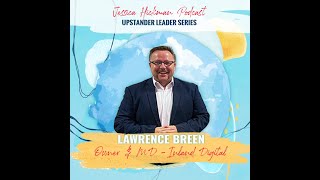
In this episode of the Upstander Leaders Podcast, host Jessica Hickman interviews Lawrence Breen, owner and managing director of Inland Digital, a managed print and document services company based in the Central West of New South Wales. Lawrence shares the evolution of his business from its origins as Canon Office Machines to the rebranded Inland Digital, describing how the company shifted from selling hardware to providing managed technology solutions. He discusses the profound impact of COVID‑19, explaining how the team quickly adapted operations, maintained essential service status, and used daily communication and weekly check‑ins to sustain morale. Lawrence recounts his personal leadership journey, from an early failed venture and a chance entry into the photocopier business through a council contact, to acquiring the company in 2006 and rebranding it. Influential figures such as Doug Sloan and Richard Branson are highlighted as role models for client‑centric service and people‑first culture. He outlines his support network—family, friends, and two business coaches (one strategic, one personal)—as essential for navigating the loneliness of leadership. The conversation moves to Inland Digital’s core values (integrity, passion, drive, innovation, respect, unity), the process used to define them, and a systematic recognition program that surfaces value‑aligned behavior in monthly meetings. Incentives, including company retreats (e.g., Phuket, Hamilton Island) tied to collective goal achievement, are described as tools for cohesion. Finally, Lawrence reflects on his biggest lesson: failures are opportunities, and a culture of trust enables rapid learning and innovation. He looks ahead to 2022‑2025 with ambitious transformational goals for the business.
Chapters
Hey, good morning! Welcome to the Upstander Leader Podcast. I'm Jess, and I'm really excited. I have got Lawrence Breen with us today. Um, if you don't know Lawrence, he's the owner, managing director of Inland Digital, an award-winning business. He is Are you born and bred Central West or have you lived here all of your life?
Yeah, that's, that's right, Jess. Yeah, born and bred in Canowindra and only moved to Orange about 15 years ago, so there you go.
Yeah, great. I'm really, um, actually, just tell us a little bit about your business, Lawrence. You're going to do a better job than me.
You're right. Thanks for the introduction, and it's good to see you again, Jess. So Inland Digital are a managed print services and a managed document services company. Our business was previously known as Canon Office Machines way back in the day, and we would typically sell photocopiers and printers to organizations sort of 25 years ago, but that's now morphed into, into much more, which no doubt we'll end up talking about. But essentially, we go into organizations, be it government or commercial, and we help them be better at what they do by using technology.
Yeah, beautiful. And we actually met, was it in January? You reached out to me and thankfully asked me to run your company retreat down at Mudgie, and we had some fun.
Yeah, that's right. Actually, you know what, I think it was probably even— no, it was in January because we did the kickoff in February up in Mudgie. And yeah, it was good. It was a, it was a nice day night. Yeah, it was good fun.
Yeah, it was good. It's always good to get away from the office, and I think that it was really interesting because obviously I moved to the Central West last August and then started to work with some small, medium, and big businesses. And really, that was the first time my trip to Maji, but also, uh, really to see a leader take their team in the Central West away and just spend the weekend getting out of business and kind of out of the, the head and more into like the well-being, how we are as individuals. So I just want to say that was Really powerful.
It was good. It's the first time I've done it for a kickoff. We'd normally do it in town, but I just think after the year that we had, and you know this, and some of the challenges that we had, it was just a good opportunity to get away, do the work, and then have a nice social night and come home the next day. So yeah, thanks, Jess.
Yeah, no, it was so good. And what I was really interested in learning about, and you mentioned last year we thought it was probably going to be the worst year in business, but then obviously 2021 happened, and as we're seeing now, this new strain and just it's impacted businesses and leaders and really we were just chatting offline about how people are feeling right now. So before we get into your background, you know, how has COVID impacted your business and you as a leader, Lawrence?
Yeah, thank you. You're right, so you know we thought last year was a struggle but I actually think, and I've just met with all of my team and we've done our annual reviews and so forth, I actually think, you know, this year in some ways has been a lot harder, even though we knew what to expect from last year. But overall this year it's been, you know, how much longer is this going to go on for? And obviously it sounds like there's another strain now. But look, we had to adapt quickly to help our clients, which we did, and we were in that technology space, so that wasn't too hard to do. But I think the real key was to shore up our team, go, that's okay, you know, we're, we're going to keep the band together, we're going to get through this together, and we're going to be more for our clients. So we just had to change the way that we did things internally and externally. As, as a leader, interesting, and I know we spoke about this before, but when something like that happens, you just go right straight into fix-it mode. Let's make sure that we're all all comfortable and we know we're going to get through this together and you just deal with things. It's not until you get to the other side of it you look back and reflect and go, actually, that was, that was really tough. Yeah, it's a good question.
Yeah, very tough. And I think, Daphne, being in the services industry as well and technology, and I know some of your staff travel around the state, and so how was that impacted? Were they still able as an essential— were you an essential service? Yeah, okay.
Yeah, so we work a lot with New South Wales Health, legal and accountancy firms who are all essential services, and they need to be able to capture information from the cloud or print or digitise information. So we were fine. We obviously had to get permits to travel into different areas, because be it Western Sydney or all the way out to Condobolin, depending on what areas were in lockdown, we had to follow process. So it's a, you know, we spent so much time just making sure we were compliant and, and safe. Um, yeah, it just, it, it took a long time to ensure that.
Yeah. So even with the growing business, because I know that you are growing year to year, the fact that you have to have all this extra stuff, which is legislation or policy on top of workload, right?
Yep. Yes, right. Yeah.
How did the staff adapt? Was it a level of anxiety at first, like a lot of businesses, or pretty much let's get it done?
No, they did, because it was the unknown. So some feedback that we just got from the staff, which was nice, was with communication happening almost daily, and then every week we'd have a one-to-one just to check in with how things were going. Everyone was pretty calm, but as well as that, they all stepped up, you know, "Are you aware of this? Did you hear about this? I've just heard about this." Making sure that we're all— and looking after each other and checking in with each other, which was really cool. But just making sure we were doing what we said we were going to do.
Yeah, I was talking to one of your staff members the other day and they said, "Oh, it was our first full team meeting back," and we were all like, "Yeah, woo, we're back!
We're back together!" And I'm like, "That's nice." We've certainly all learned how to use Teams and Zoom well now, so there's nothing better than getting everyone in the room and doing that collaboration.
Great, yeah, it's been a challenging year, and to be honest, I think that it's going to move into the next year as well, but there's that level of resilience and really that open communication, which I think is powerful across teams.
Yeah, yeah, very, very true.
So how long have you been Managing Director and owner of Inland Digital, and really, where did your career start? Did it start in the tech space? What is your leadership journey?
Ah, thank you. So actually, no, I am— my wife and I started our first business at the ripe old age of 21, and that went well for 3 or 4 years, and then we failed, which was a lesson on its own. So after that was working in the— working for a council swimming pool, managing a council swimming pool, And a gentleman, his name is Doug Sloan, he's a lovely guy, I still stay in touch with him, called into the local council swimming pool and he said, "I don't suppose you're in the market for a photocopier?" So that was 24, 25 years ago. We became friends. This business was owned by Canon Australia directly, and an opportunity came up because Doug was moving down the coast to apply for a role in sales. I always loved tech, I always loved pulling the VCR apart or the toaster apart and trying to get my head around how it works, but I wasn't real good at putting it back together.
I was going to say the opposite to me, I'm like tech, ugh!
But I was able to get a job working for the business when it was owned by Canon as a sales rep, and then the opportunity came up in 2006 to acquire the business. Which we did, and then we rebranded to Inland Digital some 6 or 7 years ago to what we are now. We changed our business offering, so it's certainly been a journey.
Yeah, wow, that's powerful, isn't it? And really great leadership lessons. Like, I think that when I'm working with schools and young people, as you know, they often go, 'I don't know what my future holds.' And like, you can start somewhere but then emerge through an opportunity or an influence that walks in your life.
Yeah, that's right. That's exactly right.
Yeah. So, um, with regards to people that have influenced you, is it Doug who is probably the biggest influence in your life, or there are other people?
He was definitely a big influence, um, because I was also able to spend 3 or 4 months with him training on the road. And, you know, he's just a— he's just a gentleman. For anyone out here in Orange, they'd all know him. And the way he did business and looked after clients is certainly something we've tried to do in our business. But do you know a leader that I really admire is Richard Branson? I just love the way that he goes about running business, and it's always, you know, his staff or his team, I should say, first, and then find a problem and work out how to solve it and have fun doing it. I just I— anything I hear about that guy is just awesome. I think he's an incredible leader and does things the right way.
Yeah, that's so true. Um, I love Richard Branson, and you know, he always does everything around workplace culture and value people and really listening to the people as well. I think that's great.
Yeah.
Um, yeah, I love looking at the work of Richard Branson and many other people.
Yeah.
So I know that you're very active in the space of developing yourself as a leader. And I think one of the times we first met, we were talking about thought leaders, and you've done a lot of work, um, around your own personal development and goals. So really what I want to know is, um, what is next for you as a leader? Do you have any plans, or do you have a support network that you can lean on? Because being a leader is actually very lonely, making all the decisions, particularly in the world we're in now. So how do you get support and grow yourself?
Yeah, that's awesome, thank you. Um, family first for me, okay, so they keep me grounded, um, and, and they're supportive. But, um, I also have two guys that I work with, two business coaches that I work with. One, one that typically, um, is helping us with the growth of our organization and communication and team building and and strategy for the long game. And then another guy who's actually more of a personal coach. So when I start talking to him about business, he goes, 'No, no, let's get back to you. What are you doing?' Um, you know, 'What are you reading? What are you learning? Check this out, have a look at that.' So I think it's really important, um, to surround ourselves with people that do ask the hard questions. And, uh, sometimes those discussions I have with those two gents can get quite warm but it's done for the right reasons. If we're sitting in a room with people that go, yeah, that's great, you know, well done, pat you on the back all the time, you're in the wrong room. So I've got an amazing family, I've got some really awesome friends, and a couple of incredible business coaches to help with that.
Yeah, wow, I love that. And I think it's so important because what often we can do, and I've fallen into this trap before, we're so focused on business that sometimes we feel fatigue, as Lee does. Or a couple of weeks ago, I was just so burnt out because I was just going on that hamster wheel, telling all my clients, you know, look after your well-being, do this, but then pushing myself, writing my book. And it came to a point where my coach went, one minute, time out, what are you doing for yourself? And it really— I was like, oh yeah, because sometimes your family can tell you, but then you've got that coach that you pay to go stop.
That's right. You know what, you know, you sometimes you're going to get a kick in the pants, but it's actually refreshing. You know, you leave there going, okay, it's not too bad. Sure, it's a bit of Groundhog Day at the moment, but let's focus back on our strategy and what we're trying to do. So yeah, it's great. It's really good.
Yeah. And I think that's a really great leadership lesson because often people could fall into a trap of, is it ego or comfort where they go, right, I'm in a leadership role now. I'm owning a business. I've got where I need to be. Be and just, you know, stay stagnant, not kind of pushing themselves to grow. Yeah, that's definitely not you.
Yeah, thank you.
Great. So I know that you've got really strong personal values, but I know from working with your team and you that company values are equally as important. So tell me about your company values, what they are, and really how did you decide to come up with them and how do you live and breathe them as a team?
Yeah, thank you. So firstly, our values are integrity, passion, drive, innovation, respect, and the big one, unity. In 2018, we all worked together as a team, so there's 14 of us, to work out what our values are and how we're going to present them and how we're going to ensure that we live them. So we've all given each other permission to make sure that we're always living our values internally or externally. And it's really good, some of the feedback, and I've been pulled into line, you know, that doesn't really align with our values for different things that I've said, which is fine. I actually think it's really good. But one, one thing we do in our monthly team meeting, it sits at the top of our— well, almost at the top, we've got OH&S first, but the second thing that we talk about is we recognize someone living one of our values and we call it out. It's anonymous, but with one of our systems that we use, you can just capture it on the phone. You can go, "Jess, integrity for ABC," and we actually read those out at the team meeting, and it's just really uplifting. So everyone takes in turn reading them out. So we measure it, we track it. We all know what gets measured gets done. Our guys do it anyway. It's part of the culture, and anyone that joins our business, it's a very long hiring process, but, um, they do it anyway. But it's really cool when we, when we call that out in a monthly meeting.
Wow, I love that. So just to recap, not only do you allow people and feel comfortable to be called out as a leader, which is powerful, right? Because obviously culture starts at the top and allowing that space, but also really recognizing one another. And I think there's— it's great when a leader gives someone recognition, but when your hears give you recognition. I think that is a power in itself.
Yeah, yeah.
I love the one passion as well because that's not a typical, um, like if I were— if I work with organizations, typically they do say stuff like safety or respect, um, but really passion, which is interesting that people can actually bring their whole selves and be passionate about what they do, where ideas and innovation are created.
Yep. Yeah. And they're putting them on the table every month. We've got, you know, we've got young people that have come through our business that have given us ideas within 6 months of being with us. You know, hey, why don't you think of this? Have you thought of that? It's just, it's gold. So yeah, it's really good. Really good.
And that's all good because what you need, you know, people that are, let's say, young are really kind of coming in that generation of tech. So they've probably got, no offense, a lot more ideas about how things can operate. And I'm only saying this because I know you and your team.
They do.
Really, the stuff they come up with, which is exciting.
Yeah, no offense taken, you're spot on.
Yeah, no, and that's it. When you've got people who want to champion for your business and come up with ideas, that actually makes your job easier as a leader, do you think?
Yes, absolutely. Yeah, look, we're, um, I know this is cliché, but we're all on the same team. We all just have different jobs to do, but you know, we're all striving for the, for the same goal of transforming business. That's our mission, that's our purpose, that's why we come to work, and Yeah, when you got everyone doing that, it just makes it easy.
And I know that you work with incentives, right? So you have— what was it? If you reach this— so they're all aligned with the business goals, but not only reach the business goals for me as a leader or the business, but we get to go on a company retreat or we get to go away with our families, which I think is a different mindset.
Yeah, yeah, it works well. And once again, one of our values Sometimes you hear of lots of businesses, they'll have different silos. So we've got 3 departments in our business. We've got sales, administration, and service, all equally as important as one or the other. But sometimes you'll hear about a sales culture in a business where it's just the sales guys that get to go away, or the service guys get to do this. But no, we set a goal together at the start of the year, and if we achieve that, we do. We all get away. We We were lucky enough to spend 4 days in Phuket with the team a couple of years ago and their partners, and we just had an amazing time. Funnily enough, the year we came back after that, we had more great ideas and more drive. Yeah, it just works well.
So where is the next company retreat? Has that been released yet?
Yeah, Hamilton Island. So we're— yeah, so, and the year's not done, but we're striving for Hamilton Island this year. Yeah.
Oh, that's great, you're on track. Beautiful.
Yeah, it'd be great.
Great. So thank you for sharing some lessons learned with us and some of your back end of your business. As a leader, I'm really interested in your career journey. What would you say your biggest lesson learned is?
Um, failures are actually opportunities, and I know it hurts at the time when it happens, but You know, when you look back on it retrospectively and realize what happened, it's an opportunity to grow and be better. If you're not failing, you know, and I know this is in Richard Branson's stuff, but if you're not failing, you're not trying hard enough, you're not pushing hard enough. So, it's okay to fail. You just get up and you go again. Always add value and deliver more than you promise. Probably the big lessons. Yeah.
Yeah. And I guess that comes with trust, right? Trust in your people that they can actually innovate and fail and fail fast, dust themselves off and try again. I think a lot of people don't feel they can come up with ideas or projects or, or try things because they're fearful of, you know, rejection or being berated for failing.
That's right.
If that is a really strong presence in your business, Yeah, yeah, thank you, Jess. No worries. Well, what is next for you and the team? How is it looking for 2022 and beyond? Are you looking at Christmas going, break?
Yeah, yeah, look, yes, funnily enough, we've just had this downtime, but, um, we're all looking forward to having, having some time off for Christmas. But 2022 and beyond, uh, for us is, is around, as I mentioned before, transforming business. So We look at the opportunities with our current clients and new clients that we want to work with, and we want to be transformational, not transactional. So we've been doing a lot of work on that and how we can be more for our clients and continue to grow into the future. So we've got some pretty lofty goals for that in '22, '23, '24, and '25.
Yeah, and hopefully I see the team standing it up in Hamilton on Instagram soon.
Oh yeah, oh yeah, we're all looking for that. One of the guys has printed some photos and put it around the office, so it's in the kitchen, it's at the top of the stairs, it's everywhere. So it's, um, yeah, we're certainly striving for it, Jess.
Yeah, powerful. And I know that you've got your values everywhere, you've got your goals, so they're very much lived and breathed.
Yeah, that's it.
Thank you so much for spending some time chatting to me today. I'm looking forward to following your journey, your leadership journey, but also supporting your team, 2022 and beyond. So thank you.
Thank you, Jess. Great to see you again.
Yeah, bye.
More from Jessica





Breaking the Bystander Effect: Transforming Workplace Culture Through Awareness and Action 🤔

Refilling Your Cup: Insights on Self-Care to Prevent Burnout with Dr. Jo Braid 🌟



Combatting Cyberbullying: A Parent's Guide to Protecting & Supporting Youth Online

Recognising Burnout: My Personal Journey & Warning Signs | Dr. Jo Braid's Burnout Recovery Podcast

Leading the Change: Out with Toxicity, In with Upstander Cultures for the Modern Workplace