Female Founder Stories: WeeCare and DropLabs
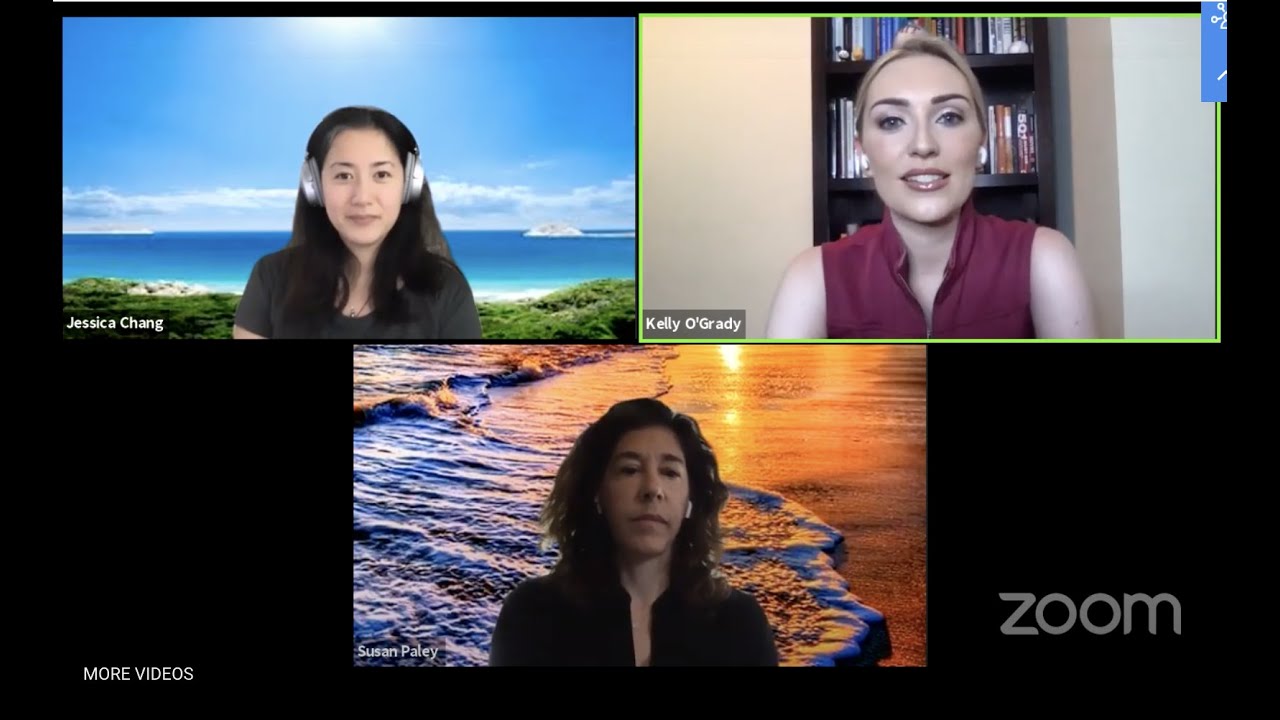
In this .LA Female Founders Series interview, host Kelly O'Grady talks with two Los Angeles entrepreneurs. Jessica Chang explains how her personal experience with a pregnant‑related childcare crisis sparked the creation of WeCare, a marketplace and "business‑in‑a‑box" platform that connects families with home‑daycare providers and helps providers launch and manage their own centers. She describes early market research, the supply‑demand imbalance, the difficulty of proving a concept as a female founder, the importance of female investors, and the need to pivot from building new daycares to first supporting existing providers. During the COVID‑19 pandemic, WeCare added a Fever Free health‑check feature that kept 90 % of its partner daycares open. Susan Paley shares the story behind Drop Labs, a tech company that adds an immersive haptic layer to audio so users can "feel" sound through their feet. Drawing on her background as the first CEO of Beats by Dre, she discusses the moment she decided to leave corporate life, the science of mechanoreceptors, and the vision to make digital content 3‑dimensional again. She details the technical and manufacturing challenges of integrating precise haptic hardware into soft‑goods like shoes, the need to work within existing supply‑chain practices, and the broader applications in gaming, VR, movies, and accessibility for the deaf community. Both founders reflect on the supportive LA ecosystem, the evolving role of women in tech, and advice for aspiring entrepreneurs: embrace change, seek supportive networks, and act on the itch to build.
Chapters
All right. Good morning, everyone. Welcome to the first of .LA's Female Founders Series. I'm Kelly O'Grady, .LA's chief host and correspondent and head of video. So for those that have attended one of our events before, you're likely familiar with our mission at .LA. But for those that are new, I'll just take a second to highlight our focus. So it's no surprise that the past couple of years, LA has seen the development of an extremely vibrant tech and startup ecosystem across a number of industries. So that's where we come in. Dot LA is a multimedia news and events company with a mission of shining a light on the innovation in this very quickly growing community. So a couple quick housekeeping items before we jump in. I know it's boring, but we'll get it out of the way quickly. So audience engagement and questions are highly encouraged. So please pop any questions that you have in the chat function below, or Q&A function. So these These interviews are going to be really quick, but I will try my best to get to them. So also, playback of the event is going to be posted on our website by the end of the day. So if you love this and you want to watch it again or share it with someone, you certainly can. And if you're enjoying the content that we put out, please make sure to subscribe to our daily newsletter. And finally, if you have any speaker, company, or topic suggestions for future events, please contact our Director of Events, Annie Burford. Annie's going to pop her email in the chat for you, so if you want to reach out to her you'll have that. Okay. So let's jump in. Female founder stories. I think it's really easy to see so many successful entrepreneurs in the news, in the LA community and say, wow, they have it made. I wish it were as easy for them or for me as it is for them. Or maybe perhaps you have an idea, but you don't know where to start or when's the right time to take a leap of faith and focus on that passion full-time. But I mean, the reality is, right, even the most successful entrepreneurs start at the beginning and went through all of the pain and agony as well. But it's really easy to forget that, right, when we just see the success. So that's the point of this series. I'm gonna interview 2 fierce female founders today from WeCare and Drop Labs. It's gonna be about 15 minutes each. So really, really quick, but we are going to go rapid fire through their journeys. So first up, we have Jessica Chang of WeCare. WeCare is the easiest way for teachers new moms and caregivers to start and manage a successful home daycare. So Jessica, thank you so much for being here. And it looks way nicer where you are than where I am.
These great virtual backgrounds, they really hide everything in the back. I've got kids' toys.
Well, you never know. It looks really, really nice. Okay. So let's, let's jump in here. Speaking of backgrounds, Sorry, bad pun. But you have a background in finance and private equity, which is normally perceived as an extremely stable and desirable industry. What was the aha moment for you that inspired you to leave and start your own company?
It was actually when I got pregnant. And specifically, you know, WeCare is about early childcare. And when I ended up getting pregnant, A lot of friends gave me advice on finding childcare, and I took up on their advice. And they were like, look, we have the secret sauce, and the secret sauce is you need to look at childcare, and you've got to get yourself on those lists right now. Every single one of my friends probably told me the same thing. And I was like, wait, you know, I don't even know the sex of my baby, don't even know when they're going to be born. Am I going to just put TBD? And that was, that was the thing. They were just like, no, you got to do it now. So when I started to actually tour a lot of the daycare options, I was actually really surprised that many of them had like a year to 2-year waitlist.
Wow.
And then the cost was like $3,000 a month. And I actually sat down with my husband and I was like, well, if I'm going to sign up for these and I've got like a 1-year waitlist, literally when I have the baby, I'm going to have to take more days off because there's not going to be a childcare solution for us.
Hmm.
And that actually really challenged because I was like, even if I have a stable job that I really love, I'm gonna have to decide between work and my family. And that was really hard for me because as, as someone that really cared about my career, I was like, why can't I have both, right? It seems really unfair. And that's actually how WeCare got started was my Passion point of saying that this shouldn't be a problem, right? Why do women have to face the brunt of these issues when you decide that you want to have a family? Why do we have to make that choice? And why is it so hard? Like, there shouldn't be a year to 2-year waitlist. The cost shouldn't be like thousands of dollars a month. And if I'm facing that pain, what is every other person facing as well? So that was really the aha moment. It's like, look, I've personally felt the pain and it's something that affects almost every single family. And it's been like that for the last 30 years. So we've got to be able to do something.
Yeah, that's absolutely nuts. Like $3,000 a month, a year to 2 years. I mean, it's almost like thinking about your kid's college future already at that young age. But also incredibly admirable. That, you know, out of that was born this thing of, I'm gonna help women do both. So tell me a little bit about what We Care is and how you went from that problem to coming up with the idea.
Yeah, so there was kind of a middle step in between. And the middle step was actually, you know, I really couldn't understand why there was such an over-demand and a dwindling supply. you would feel like in every economics, like market and demand and supply equal out over time, but it never did. And so I felt that there was a lot more to learn. And through my search, and I was pregnant, so you've got to be reminded that when you search, you end up digging pretty deep. I ended up actually becoming a preschool owner and operator. I decided that if I was going to really understand and suggest something that I think could fix the problem, I've got to really truly understand the problem on both sides. And it took me running 3 preschools to really understand the inherent nature of what was happening in early childcare. So WeCare was actually founded as an early childcare marketplace. So on one side of it, we wanted to be a one-stop solution for families, right? And this is about actually finding— making it easier to find daycare options. But also enrolling in that daycare option and then also managing that experience afterwards. And that could be, you know, hey, look, my, my child has 8 weeks of vacation for preschool. What am I going to do in between? Or even, I've got a variable schedule because I'm a nurse that works 12 AM to 8 AM. Who's going to take care of my child during that period of time? And On the flip side of it, we wanted to be a business-in-a-box solution for providers. If you've seen some of the stats, like preschool teachers generally get paid $20,000 to $30,000 a year. They're probably one of the lowest-paid industries out there, and these people are taking care of our kids. They should be paid like saints. I think a lot of families realize that now, especially working from home and having to take care of their children. Oh my gosh, yeah. But it is, it's really unfair. So we decided that we were going to empower them to actually start their own daycares, or empower the providers that couldn't really manage their own daycare to actually continue on with that. And that meant we were going to be a business-in-a-box solution for them. So we take care of everything on the back end so they can actually focus on being great providers, caring for your kids, and making sure that they have the best years of their lives.
I think that's a really astute way to look at things, right? That these people are taking care of your children and they're only making $30,000 a year. That's absurd. I'd love for you to walk us through, okay, so you have the idea for WeCare, but that's oftentimes just half the battle. You can have an amazing idea, but then when it comes to the execution, So what were some of the challenges that you faced turning your idea into a reality, especially as a female founder? I'm curious.
Yeah, it was pretty difficult in the beginning because you've had to— it wasn't just the idea. You had to be able to show that you can actually do these things. Are people actually going to take your advice? Are they actually going to pay for that advice too? And, you know, what I think really mattered in the beginning was there was an actual hill that you had to step through. So I, you know, a lot of my male entrepreneurs that I knew, it was so easy. They could just talk about an idea. And people were willing to buy in that they had future value while, while they were talking to females, it was most about, can you prove that idea out? So it was definitely a lot, a lot more difficult. But I think this is where the female— the other side of the spectrum matters, like the female investors, right?
Mm-hmm.
And to be honest, we had great early investors, and they were invested in our pre-seed, and they were female investors, and they could understand and relate to the problem. And they were like, yeah, I've gone through that myself, or I've got friends that are going through that myself. I know it's an A-name problem. And guess what? Females, for every family, we control the financial budget in our household. So if you can reach us, like, that's it. You've opened up the window. And it was a powerful story for them. And they were willing to be like, look, I'm going to give that opportunity because we think we should support that female So that really helped. So that was one, is like the first few investors that we had were female investors. And I think the other part that I would say is like an interesting story is just like when we were pitching our next round, we went up to San Francisco, Silicon Valley, like everyone else does. And we actually had— we would speak to investors and you knew that Like, certain investors just got it because they're like, yeah, this is hard. And then others were just like, I don't understand why childcare is hard to find. And you would just sit there and be like, thank your wife. Thank your wife. And it'd be funny because they'll come back and be like, oh, my wife actually told me it was really, really hard. And so I should talk to you again. And so there's definitely roadblocks, but I think our community is changing, and people are looking to female entrepreneurs as they're adaptable, they're agile, they know how to go over hurdles, and they're in general just better founders and executors too. So there has been a shift. You know, when we raised money, even just 3 years ago, we raised money 3 years ago, it was a little bit hard, but Now I've seen a lot more female entrepreneurs and a lot more female investors willing to invest too.
Yeah. When you describe that experience of pitching your idea and having to prove that there was value versus some of your male counterparts, I've heard that theme come up a lot in friends that are starting companies and interviews that I've done. And I think you're right. It's having more females on the other side of the the table, but also, you know, more and more companies that are successful like yourself showing that women can do the same as men when it comes to companies will hopefully be a step towards making that stigma. So thank you for being a trailblazer for all of us. A question that, or rather a point that I've heard you mention before is this idea of change not equating to failure. So, right, so a lot of founders struggle when they're forced to change their idea or path for some reason. So could you expand on your philosophy regarding agility and perhaps share an example that comes to mind from your own experiences?
Yeah, it's 100% okay to change. I think sometimes what ends up happening is like you'll have an idea and you'll— and that was us too— like, and you'll go out to prove it. And what you'll find is that your original idea was probably far from where you'll end up being. And that happened to us. In the beginning, we were all about starting new daycares because the supply was low. So we're like, if that's the case, then we should start daycares. And what we quickly realized is when you're opening up a marketplace, you have to pick one side of the equation. Either you build up demand, so you need to have supply, or you build up a ton of supply to get demand, either of which we didn't have when we started. And what we realized is that we also had to service existing daycares. And we had to build up that supply to attract the demand. And as you attract the demand, then you can build new supply to meet that demand. And that was what— it was a realization for us. And I think when we started to do it, we started to see that trend. And we had to change and pivot our strategy. We had to change our product to meet the new marketplace. And I think that was a great change because if we didn't do that, I don't think we would be in the same position now. And so my advice to people is like, everything that you've done in the past, it's like sunk costs. You can't change the past anymore, but you can change the future. So Either you change and you have a company and you have a chance to succeed, or you don't and you have nothing, right? So we can't just think about the past because we've got to be able to move forward. And that's what it's like. You've got to look at the data and you've got to be able to make pivots or changes to adapt to what the market wants.
Yeah, I appreciate you emphasizing that point because I think that that's something that everyone's going through right now. especially with COVID Now, a lot of folks are having to change their ideas, and sometimes that can feel like, oh, I didn't achieve the goal that I set out to do. But really, thinking about it as you set out to achieve a successful venture, and that might look something different than what you initially thought it would be. So speaking of viruses like COVID, this isn't the first time that you've actually faced a financial crisis or virus, is it?
No.
So any learnings that you have From that experience that can help our viewers?
Oh yeah, that's probably a good mention that we've also adapted to this as well. So I personally went through SARS, and then also I was in finance when the financial crisis hit. And so there was, I think what the most important things that I learned was that you have to, there are macro issues that You can't really change, and they're going to affect everyone. But there are things that you can have control over, like what am I going to do with my company? How do I pivot to a new normal? And that's what we kind of did early. So we saw that COVID was probably going to come to the US, and it was going to be very similar to what I experienced with SARS when I was in Beijing pretty Like when I was younger. And as a result, we ended up launching a feature to help our daycare stay open. And 90% of them did stay open throughout COVID.
Wow.
So we launched a health check called Fever Free that essentially allowed our families to do temperature checks and also symptom checks and for the providers and their families to do the same. So everyone was getting their fevers checked and their temperature checks at home, and it led to— it eliminated essentially any potential exposure of them going to the daycare and getting their health checked at that time. And by doing so, we were actually saying like, hey, if you're sick, you're staying at home, and we know that we could track that. And it allowed people to not bring COVID into their daycares. So 90% of our daycares felt safe enough to stay open throughout COVID, which helped out a number of essential workers, especially for the City of LA. We actually partnered with the city. And at the same time, we've not had a single case of COVID exposure at our daycares. Like, no one actually passed COVID to our daycares.
Wow, that is so impressive that you guys were able to pivot so quickly and that you were able to help, I mean, immensely in this time with, you know, all the essential workers still having to go to work with having kids at home. So before we end, because if you can believe it, we're actually running up on the end of our 15 minutes already, I just wanted to ask any final thoughts that you have that we didn't touch on that you'd love to leave our viewers with?
I think for everyone, it's especially for females, like Have an idea, just go do it, right? There's nothing really stopping us. Like, even I had kids when I founded We Care, and I left a really nice cushy job too. So I think that's important. Just like, if you're very passionate about it, there are people that are going to believe in you, and there are a lot of female entrepreneurs now in Los Angeles that are willing to support you and open up art networks to you as well. So don't be afraid and really just go do it.
Well, I think that that's a really poignant point to end on. Thank you, Jessica, so much for your time today. The takeaways that I have from our session are find those female entrepreneurs that can believe in you, believe that you are able to bring that value to the table. Don't be afraid of change. It doesn't equate to failure. And if you have an idea, what's stopping you? Go do it. You were pregnant when you did it. So if you can do it, you know, we can, we can definitely take that risk. So thanks so much, Jessica, for joining us.
Thanks again.
Okay, Susan. So we have next up Susan Paley of Drop Labs. Susan is the founder and CEO of Drop Labs, and it's a first-of-its-kind tech company on a mission to enable the world to feel sound from the ground up. So Susan, thank you so much for taking the time and joining us today. Oh, Susan, you're muted. There we go.
I'm grateful to have taken advantage of WeCare because that was something that was so desperately needed. And I almost think that all these people who are home, like all these men, They have a much better understanding of what we go through on a daily basis. I think this has been a big eye-opener for a lot of people. It's hard. It's hard balancing all this.
Yeah, I mean, I personally don't have kids, but I know a lot of my colleagues do. And it's certainly— it's been transformative to see everyone in the household getting involved in that, being teacher and nurse and such. So listen, you also look like you are doing way better than I am in terms of your background. So looks lovely there.
Oh yes. Jessica and I coordinated. She did daytime, I did sunset.
Perfect.
I love it. So let's jump in. We've only got 15 minutes here and I want to hear your story. So every founder has a different journey to how they started their venture. You were the first CEO of Beats by Dre and you held a number of positions before creating Drop Labs. So You know, similarly to what I asked Jessica, what was the aha moment for you that led to starting it?
I just started Drop Labs. So I was— when I was at Beats, and again, I think everyone's entrepreneurial journey is different. I'm a little bit older. So, you know, we didn't— you know, today everyone wants to be an entrepreneur. I think it wasn't as prevalent when I was starting out my career, but you really start to understand how you're wired very quickly. Like, do you need to move quickly? Do tons of meetings drive you crazy? Like, you know, and there's like a level of like a pace you're looking for, a level of innovation, your comfort, you know, your comfort level with white space, which is really why I think I jumped out of Harmon to go work at Beats. And then when Beats had reached a certain critical mass and I had adopted my son, and this is kind of the whole female work-life balance, right? There are times where you can lean in and there's times where you need to lean back, right? And it's just, it's never— you're going to swing on a pendulum. And so that was a moment when Beast was at that critical mass. I needed to lean back and spend some time with my son, which, you know, was wonderful and really important. And then, but I was in, you know, you always keep your hand in technology and I was always intrigued by what this inventor had created. And I knew there was kind of a moment where This was a really innovative application of audio. And we felt that there was a moment that it needed. And I also, you kind of know in your gut, like when you're ready to jump in again, because it's an intense journey. And so you have to be ready for it. And, you know, I was talking to some founders yesterday and there's that moment where you just have that itch and this feels right. And so we jumped in and raised money for it at the end, beginning of '16. And that's when all the work begins. So you can have the vision and then you get into it and it's, it's tough. It's, you know, developing anything, whether it's, you know, a new innovative model for daycare, whatever you're going to do, you need to know that it sounds really sexy, but once you're in it, it is a tremendous amount of work.
Well, I appreciate you starting off the conversation that way because I think that is Something that really resonates with me about, you know, at different points in your life, you're going to be focusing on different things. You're going to need to have to put your energy and attention into it. Sometimes it's your career, sometimes it's your family. And it somewhat dispels this notion that, oh, you can do everything 100% all at once. And so I personally really like that philosophy that you shared. It certainly resonates. I'm curious, you know, can you walk us through— you had that aha moment. You know, tell us a little bit about how you spun up Drop Labs and actually what it is that you do, because I, I think it's so fascinating and so innovative.
So what we actually do is we add an immersive layer to media experiences. So imagine the experience of being at a concert, being at a club, being at a movie, which is all very timely now since there's no concerts till '21. It's that feeling where you feel all that energy from sound in your body. And it's really how we're physiologically wired. And so people think so much about audio as what you hear through your ears. And yes, you hear. Hearing is a deliberate act. I can choose to listen to someone or not. When you actually feel sound, it is a sensory aspect. It's, it's your sense. Like, you just, you feel all of it. We're physiologically wired to take all this information into our sensory system. We have these things called mechanoreceptors, which are actually wired to different vibrational frequencies. And It's one of the most— it's so compelling because it feels so natural. So when you do this thing, which is talking about an audio A/B, listen to music through a pair of headphones and then add this immersion layer that we deliver through your feet. And it's like your whole body becomes a speaker cabinet. And so you're really resonating. So people try it and then, you know, it adds a totally new dimension for movies, music, obviously for VR, for games. And so again, as we're stuck inside and spending so much time on screens like this, we are sentient beings. We are meant to feel. We are meant to connect to things. And so in a lot of ways, this is connecting you back into your body.
Yeah. Oh my gosh. So hearing you describe that, that takes me back to some concerts that I've been at where like you feel that beat in your body and then you know that your hearing is actually going and you're— it's way too loud. You're going to suffer for it later. Or if, you know, you're watching, I think it was maybe 1917, and the explosions of what you're seeing on screen, it's not just something that you hear, it's something that you feel. So that is really interesting of how you're able to connect that experience and really enhance it with the technology. So I'm curious, once you had the idea, there of course is a number of components to execution, right? There's everything from raising money to working with your team, to design the tech. And so because of your experience at Beats by Dre, you, you had your foot in this, this audio, this audio world. So what was the process like of working with your design team to craft the vision, to take that tech and say, oh my gosh, there's so many ways that we can, we can apply this?
Usually when you're in a development process, you think you're developing one thing for one application, and then oftentimes the other applications, which are potentially bigger businesses and The actual inventor of this technology really saw this as a music enhancement, which it absolutely is.
Yeah.
But the real business of this is gaming.
Okay.
And so, you know, and also VR and movies, which again, because the world has changed, our development process, and, you know, took a long time because you're looking at merging these different technologies, right? So we have all this tech that's done with consumer electronics. So I think in some ways looking back, there was a little bit of hubris, like, That's the really hard part. Integrating this into soft goods like a shoe, that should be really simple. Like, it's not that hard to manufacture a shoe. Well, that's where we were kind of wrong. It's like when you start to understand that, like, what we develop is in 3D and CAD and microns and very precise, and the shoe industry is really a cut-and-sew industry that's been having the same production processes for many, many years. And the integration of those 2 manufacturing processes and what the supply chain needs to look like, was incredibly complex. And I think the big learning is that we figured we could come in and introduce all these new processes into the shoe factories, and they all wanted to become more tech savvy because they thought they could charge more money for what they were creating. And then you realize trying to get people to change their behavior, especially like in China, in manufacturing, like that is just a giant boulder you will push uphill forever. And so you need the path of least resistance. So you've got to get even more creative, more innovative. In how you're looking at the integration and manufacturing and production of your technology so that you're asking a vertical industry to not change anything they've ever done. Just do it the same way you've always done it. So it's very seamless. So you get really smart on— and when I say get really smart, it means you make a bunch of mistakes. You get smarter to figure out how you're going to make this kind of seamless integration.
Yeah, yeah, I am. That actually reminds me of something that Jessica was saying, right? That at the beginning you have one idea, and as you're, you know, you're the man who spun up this tech, it's for audio, and yet it can change along the way. There's so many different applications that this technology can have, and I want to dive a little bit deeper into that. So I mean, this isn't just a shoe company, right?
It's Yeah, we're a tech company.
Potentially, yeah, it's way more than that. And the potential for expansion beyond footwear in regards to how consumers experience sound is quite vast. So what impact and sort of new wave are you hoping to usher in with this technology?
I'm hoping this becomes a ubiquitous way to experience digital content, which is not going away. We're spending more time on screens. That's not gonna go away. Even when COVID goes away, we'll still be completely wired to get all of our consumption is on screens anyway. So I'm hoping that this becomes really part and parcel of like, this is integrated, whether it's shoes and your shirt, it doesn't really matter, right? It's just, it's wiring up your sensory system for, because most of what we're ingesting from content is 2-dimensional and we are 3-dimensional beings.
Yeah.
So we don't really care where this technology lives. And again, it's sound for immersion. And then what's interesting is that it's also sound for utility. Sound is information. So if you think about gaming and you think about the fact that, like, if you're playing a first-person shooter game, you need to feel and anticipate where the enemy's going to be. So if sound is one data input that goes in, as well as what you're seeing visually, but it's also what you're sensing, right? And so if we can help enhance that, then, you know, it's a big win.
Yeah, that's fascinating to think about playing. I mean, I struggle when I play that type of game, so it's my fiancé's greatest frustration now that he's just quarantined with me. But being able to feel that, there's so many dimensions that can enhance that experience and make it more real. I'm curious if there's any application when it comes to folks that are are hard of hearing, you know, experiencing this, feeling it rather than just hearing it.
Yeah, we actually went to the deaf community very early on in the development, and there's a guy named Antoine Hunter who runs International Deaf Dance Festival, and he was critical in the early stages of like— we said to him, listen, you're going to be more sensitive to vibrational input than we are. We need you to help us tune this to make sure sure that it feels the right way. And it's like your experience. And it was, for him, it was transformative because now he can actually use this to dance and have all of his dancers be able, instead of going to a speaker and trying to memorize a vibrational pattern on a speaker for music, he can feel the music in his body. And doing a lot of work also with some deaf gamers. And so just really, that's kind of part and parcel of what this is. There are so many extensions. And so many people that can be served by this, that it's— to your point, it is really a development platform. And the people that we partner with and the applications that we develop will really sort of inform where the technology goes.
Yeah. I mean, that story that you just described has me tearing up a little bit of being able to, you know, for him to be able to experience dance and sound that way.
He was actually doing this really amazing thing where he put the shoes on when he was testing, and he has like his psych-up song, which is I'm Every Woman, and he started playing it, and he said, there's a piano.
Oh my gosh.
You know, so just those kinds of moments. We also had, um, an investor who, uh, put some seed money in who was pretty disabled and was not able to walk without assistance. And we put a track on for him. He said— and I gave him a demo, and then he said, would you play My Baby by the Platters? And I was like, of course, you know, older gentleman. And I put it on and I looked over and he was crying.
Yeah.
And so it's, it's feeling. It's getting people to feel, to connect. It could be that concert that was like your first concert that you loved so much, and playing the music for that and transporting you back to that concert. And really, it's— the shoes are kind of magic. Like, what we're trying to do is enable magic so that people can have their own experience with them. And it's really with the tech, right? It's really feeling things and connecting to things in a different way than you're used to.
Yeah, I think that this is such a unique and excellent example of how magical, as you put it, tech can be. And I think being a part of the LA ecosystem and seeing all of these companies come in, I think, you know, sometimes you're like, oh, tech, it's a black box. But this is something that is so, so wonderful in movies, concerts, you already feel that way. And this is just going to bring it out at such a new level, which is really exciting. Last question for you before we hit on time. You're a female founder that is working in the audio space, the gaming space, which is obviously normally very male-dominated. So I'm curious what doors, if any, maybe there weren't, felt closed to you and how did you break through them?
I think you're always breaking through doors. Wait, this is working out. Ashi, can you turn the water off?
It's the audio of our home.
It is the audio of our home.
So I think it's definitely hard to break through. You're always trying to break through doors. Gaming is a tough door to break through. And it's not even as much being a woman. It's such a big business, and trying to let in, like, new products and, like, that aren't proven, that don't have massive install bases, like, sort of working through that. Because of my background, it's, you know, and I have a long history with working with entertainment companies, so that was a little bit simpler. But yeah, gaming's a— it's a tough business. It's a big business, and you need to go in, and it's also being incredibly clear about what you need.
Mm-hmm.
Right, because you need any— this is for anyone doing any kind of biz dev or trying to break into any kind of partnership— really articulate what you're looking for, because people are inundated. And you— because what you really want is a fast yes or a fast no. You need to drive people to like, I need this from you, this is how, and this is what I think the benefit is to you, and this is what I'm looking for. From, from you as a company. And that's the clearer you are on that, the better you're— the easier the doors are going to be open, or they'll shut really quickly. And then, you know, you go on to the next one.
Right. Any, any final thoughts that you wanted to leave our viewers with that we didn't get to before we head out for the day?
I think the one amazing thing about LA, and I know that's something just because this is .LA, and thank God you guys exist and we're so happy.
Thank you.
There was a, like, when there was a lot of hand-wringing up in Silicon Valley about diversity, it was really interesting. I looked around my company and I thought, wow, we have a lot of women here. We have, like, a ton of different people from different ethnic backgrounds. Like, and it's really, LA is so inherently diverse in terms of, like, the people that it draws from so many different places. And so I think there's— it's kind of amazing where— I think the companies that you see in LA have so much more diversity than what you think about up in Northern California. And that's kind of the magic, right? Like, you're going to have so many points of view around the table just by hiring in LA. And the depth of, you know, of technical expertise and just of experience in different industries, it's really kind of magical to really recruit and bring people in from this community. And so it's It's been wonderful to really build a company here.
Yeah. Well, I certainly agree. It's my pleasure to be able to cover these stories too. I want to thank you so much for your time today. I really appreciate you being here with us. And I think the takeaways for me, thinking about our conversation, are one, at different points in your life, you're going to have to prioritize different things. But when you feel that itch, Like, that's the right time to step back in. You know, there's— in an industry that is really vast or male-dominated or whatever, you need to be very clear about what you're looking for. Get that yes very quickly or that no so you can move on. And yeah, I think that also, I mean, this was just a personal takeaway for me. You're doing amazing things with your technology, and I can't wait to see what you brought to so many different industries.
Thanks.
Yeah, you know, we gotta, we gotta get them testing. Um, but, but thank you so much to you both, Jessica and Susan. 2 very incredible founder stories, incredible companies in very, very different spaces. And I think that that is the beauty of LA and women entrepreneurs making a difference. So thank you so much for your time.
Oh, Jessica, I love what you're doing.
Oh, love what you're doing, Susan. But don't tell my husband.
All right, thank you so much, ladies, and thank you for our— to our viewers.
More from Jessica


Founders exchange: Creating community for working moms with Jessica Chang of Upwards

Jessica Chang of Upwards on Solving the Labor Shortage through Democratizing Child Care
Jessica Chang raised $22 million to build WeeCare, the largest childcare network in America
How She Got on PBS and How it Exploded her Business with WeeCare's Co-Founder Jessica Chang
Building the Largest Childcare Network in the U.S. with Jessica Chang of WeeCare

Upwards on PBS NewsHour | How a tech startup is making quality, affordable childcare accessible.