Jessica Chang raised $22 million to build WeeCare, the largest childcare network in America
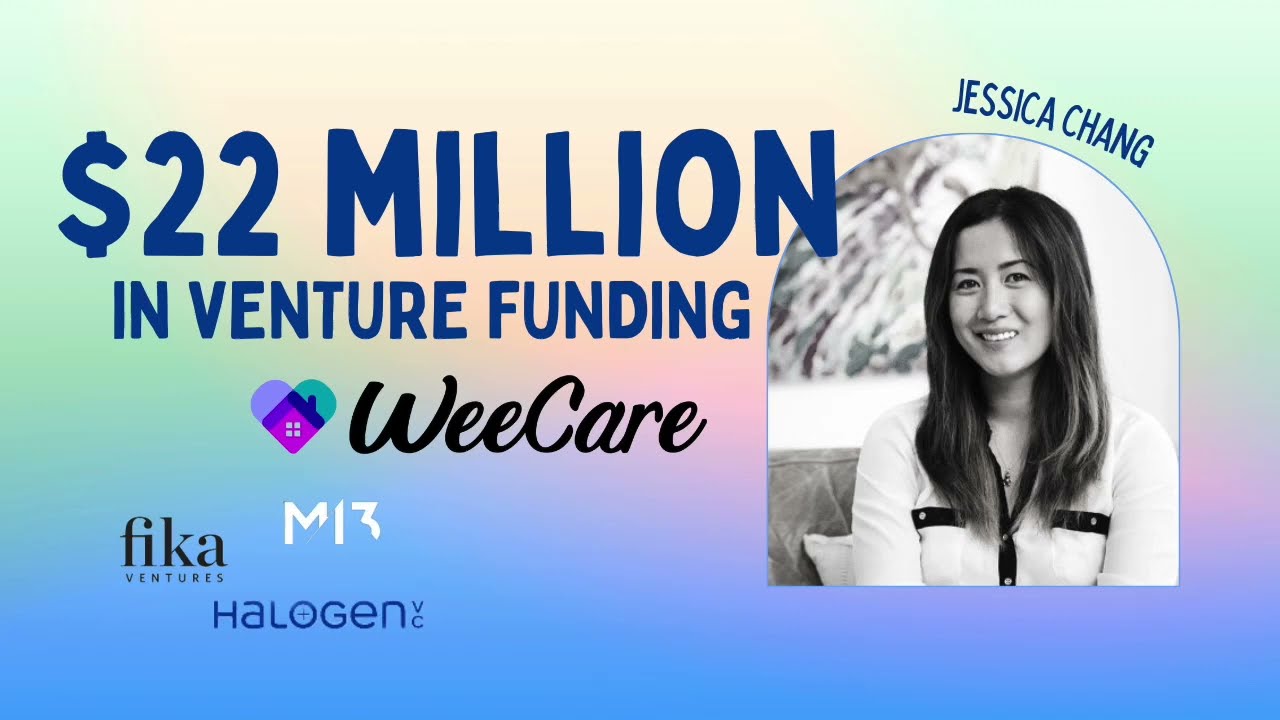
In this episode of The Future is Female, host Ruffin interviews Jessica Chang, CEO and co‑founder of WeCare, the largest childcare network in the United States. Chang shares her personal journey—from a psychology and early‑childhood‑development degree, through finance and operations roles, to becoming a mother who struggled to find affordable, convenient childcare. She describes the dual pain points families face (high cost, inflexible hours) and providers endure (thin margins, low wages, operational challenges). WeCare’s answer is a two‑sided marketplace that partners with employers and government to subsidize childcare for low‑income families while offering a “business‑in‑a‑box” platform for small, often home‑based, providers. The conversation covers the company’s origins in 2016‑17, early focus on licensed home daycares, community‑first launch in low‑income California cities (Riverside, Inglewood, Compton), and rapid scaling to over 65,000 providers nationwide. Chang explains the financing approach—mission‑aligned venture capital, targeting female and impact investors, and the perseverance required to secure early funding. Revenue comes from employer subscriptions and government contracts, allowing the platform to subsidize families while paying providers fairly. Milestones include serving 300,000 employees, partnering with Fortune 500 firms, and becoming the first California tech company to receive state funding for administering childcare subsidies. The interview also touches on the brand name (We‑Care for “wee kids”), team building, and the inspirational role of investor Eva Ho. The episode ends with a call‑to‑action for listeners to access the platform via weecare.co and explore California subsidy eligibility.
Chapters
Hi everyone, welcome back to The Future is Female. This is your host, Ruffin. Today I'm chatting with Jessica Chang, the CEO and co-founder of WeCare, the largest childcare network in America. Jessica, the mom of 2, has dedicated her career to solving the childcare crisis. Prior to co-founding WeCare, Jessica was the COO of Affinity China, a principal investor at Macquarie Capital, and VP of Marketplace at RadPad. She's a graduate of UC Berkeley and a preschool owner herself. So excited to share our conversation. So let's get started. Hi, Jessica. Welcome to the show. So excited to meet you today. Do you want to start off by just sharing a little bit about who you are and the business that you are working on?
Yeah, hi, I'm Jessica Chang. I'm CEO and co-founder of WeCare. WeCare is on a mission to solve childcare for all, and what we really mean by all is those that truly need childcare, the single moms out there, those that if they don't have childcare can't get out of poverty, to childcare providers that are just trying to get by who do one of the hardest things out there and get paid one of the least amount of money. We've created a marketplace where we work with employers and government to help them create a childcare benefit program or subsidy program that really helps their employees and low-income families to pay for the cost of the childcare. On the other side of our marketplace is our network of small childcare providers where we help them run their business with the business in a box solution and really let them focus on childcare and making the money they deserve while we focus on the operations of their business.
Amazing. Before we get into a little bit more about the WeCare business that you've built, can you tell us a little bit more about your background, what you started your career in, and then basically how did you end up starting this company?
Yeah. Funny enough, when I was in college, one of my degrees was in psychology, in early childhood development. But I spent a lot of years in finance and in operations afterwards, and really returned back to this later on when I actually had my first child. And I was one of those individuals that was affected, and I couldn't find childcare for my child, and it led me to a path of really trying to discover why. I had to leave my job because of it. And, you know, the other background of myself that really makes it interesting is that I've, on the other side, have also been a preschool owner and operator. So not only am I a parent, but I've also operated schools before and really understand from a childcare provider side what's really lacking in this space to kind of support childcare providers to thrive and continue to be in childcare.
Very cool. Can you tell us a little bit more about the pain points you saw on both sides from being a mother as well as from running a preschool?
Yeah, really from the family side of it, childcare is really not affordable. The average cost on childcare is about $1,200 to $1,500 a month. Sometimes it is literally more expensive than rent, and in more than 50% of states, it's more expensive than a community college. And so really, for a lot of families, it's not affordable, and it's also not convenient, right? The average childcare service is really offered for a parent that works 9 to 5, right? But as you know, many parents have very different work schedules. Some people work on weekends. Some people have second or third shift where they can't actually utilize the traditional childcare model, right? So for families, it's about affordability and convenience. On the provider side of it, the childcare providers, many of them are great caregivers, but they're not great operators. So a lot of times when they're running their own business, their margins are really, really tight. And if something happens like COVID, it ends up being really detrimental to them where they actually have to shut down their business. On top of that, the average preschool teacher gets paid $20,000 a year. That's not enough money to support themselves, let alone do one of the most important jobs out there. Wow.
Can you share a little bit more about how WeCare addresses those pain points and how your company is doing things differently?
Yeah, I think it really comes down to what our mission has been from day one, which is how do you make child care accessible for all. And that's really led us from a vision standpoint to really focus on those that can make a difference, which are employers and government. One of the things that we really push for is the ability for employers to subsidize the cost of child care on behalf of their employees and for us to work with with government to create subsidy programs for low-income families. In both cases, it really subsidizes the cost of childcare for those families, and it really helps them, for example, pay maybe 1/3 of the cost or no cost at all so that their family can actually have childcare and therefore they can go to work, right? But on the same side of it, when you have employers and government subsidizing the cost, not only does it help families pay for it, But it also makes sure that providers actually make the money they deserve. They're still paid in whole, and that allows for actually childcare providers to stay in the industry longer.
Incredible. I'd love to go back to just like the very beginning of WeCare. Can you share like, when did you first come up with the idea? And then what was like your first step in getting the business going?
So the idea really came to us probably around 2016, and really the first step to get there was actually operating preschools. When I was operating them, that's when I realized a lot of the problems, not that families were facing, but also what providers were facing as well. And, you know, the first things that we did when we started We Care in 2017 was we went around and asked a lot of childcare providers what they wanted. We asked them what their pain points were. We visited preschools, home daycares, even asked nannies and babysitters, what do they need? But then turned around and also asked families too. And I think it was really coming down to helping us really see where the opportunity was, and that was actually with a licensed home daycare provider. We saw that as an opportunity where the provider could make 3 times more than they could as a preschool teacher, while the parent could actually make 40— I mean, pay 40% less for childcare. And it was a lot more convenient because it was located in residential settings. So in the beginning, when we first started, it was really focused on a solution that made sense, and that was Driving that home daycare element.
Very cool. How did you get your first customers on the platform and in the community?
Yeah, so, um, again, and I keep saying this because I harp on like, this is what keeps our company moving every single day. And this is what keeps every single employee in our company excited about what we do is comes down to mission. So when we first started, we actually helped individuals start their own daycare, right? And we strategically wanted to go to regions that were the most affected, right? If you think about this, like a preschool teacher making $20,000 a year, most likely they're actually living in the neighborhoods that need the most access to childcare. And we wanted to help them actually improve their own community. It's unfair, for example, if you were a nanny, right? And you're going to all these rich neighborhoods to help out families with their children. But when you go back to your own home, everyone in your community is suffering because they don't have access to childcare. So what we did in the beginning was we actually helped these individuals start their own daycares in their neighborhoods. the neighborhoods that needed it the most and really wanted to see that impact from day one.
Where were some of the first cities that you launched the business in?
Riverside in California, which is really like a lower income to— and lower middle income area. Inglewood, Compton, And those were the ones that we were the most excited about because we can see the difference that it made.
Amazing. And since your launch, how has the business like changed over the years and where else have you expanded to? So we're nationwide.
We have over— there's a lot. We're nationwide and have over 65,000 providers in our network. And that has been really amazing to see because you're really— what you realize right from the start is that childcare is an issue in every state, regardless if you are in a rural to middle income to suburban to urban area, childcare is an issue for everyone. What's been really pivotal is that after COVID, what we realized was that the brunt of issues shouldn't just be burdened on families and childcare providers, right? Like, it actually should be a responsibility of the public, and that meant employers and government. So I think the biggest change for us is really understanding who can make the largest impact, and that was employers and governments that really had incentive to, to do so, right? Like, if you actually help individuals have childcare, they can go to work. That helps the employer, that helps the economy. Everyone wins. Yeah.
And are the majority of your providers still like at-home childcare providers? And then also curious, are there any like requirements that providers have to have in order to be able to come on and start that business through your platform?
Yeah. So our network has, is still to this day small childcare providers. We service in-home daycares, also nannies and babysitters. And why that's important, because we want to service the person that's giving care and making sure that they make the money. I think really to that point, it's like many of our, like I would say over 90% of our providers have been with us from day one, right? And they continue to stay with us because we're really trying to look out for their best interests. When we bring in employers, we're also thinking on that same level too. We're bringing employers and specifically that are affected the most. They're essential workers, the people that make hourly wages. Those are the people that we want to service. And we really target areas that generally people overlook: the Midwest, the Southwest, the Southeast, right? The areas where this is where middle America is. And we continuously strive for that.
I'd love to know how you have financed the company from day one and how you've continued to finance it through where you are today.
I think when it comes to childcare and the issue that we're trying to solve, which hasn't been solved to this day, it's a big commitment, right? So we knew that this wasn't something that could easily be solved. So we, when it came to financing, we went straight to strategic investors. We knew this was something that you had to put in the effort. It wasn't just low-hanging fruit, and you had to put in that sweat equity to it. You had to have people that understood the problem and people that wanted to talk to families and talk to providers and guide them through. So from day one, we were funded with venture capital, and we continuously are funded by venture capital. And I think what we've been very focused on is making sure when we think about strategic capital that they're aligned with their mission too, right? Sometimes people think like, oh, childcare is not sexy. Well, it's not sexy, right? Like, it's not sexy compared to an NFT or Bitcoin or something, or ChatGPT, right? But it's something so needed that has an effect on every single working family, right? And so when we look for our investors, we look for people that are mission-driven, that really want to make change and make change to the 99%. We want to elevate the middle class, for example, and to do so, you really have to give them access to essential benefits like childcare.
How have you gone about finding those investors and how did you approach the first investors?
I would say we went to a lot of investors and we, right from the start, knew the people that we wanted to target. We looked for female investors. We looked for investors that invested in mission-driven companies. And we reached out to them. We looked on connections on who might know them, and we asked for referrals, right? Like, can you introduce me to this person? And this is exactly why. So I think what the beginning was actually quite hard because it's not a sexy story, right? It's not like, oh, is this the— is this gonna be the ChatGPT out there? We were trying to solve a problem that is really hard to solve. And so there was a lot of nos before there were yeses. But when there was a yes, it was exactly the investor that we wanted. You know, I think at the end of the day, like, when you first go out to investors, be ready for 100 nos before you get a yes, right? Just because someone says a no doesn't mean that You give up and say, like, you know, that's it, right? I think every time that someone says a no, I always kind of go back to them and ask, what was the reason for the no? Because I want to learn and understand what you're seeing versus what I'm not seeing. I think what I've learned throughout the process is, especially in the beginning when you're raising that pre-seed or seed round, is Really that conviction. It's not what you can put on paper, but what you really can express to them. And they— and in the beginning, right, you have no revenues, you have an idea, and there's a lot of risk. What is that investor basing that investment on? It's the people that are going to run the company and make it happen. Are they passionate? Do they have that conviction? So the more that you can showcase that, the more important it is for them.
Amazing advice. My earlier question I wanted to touch on, so you've obviously created many jobs for people across the country, which is amazing. How does your company make money for your business?
Yeah, the great part about it, we make our money now from our employers and the way that we service government contracts, right? So And we're like, for our families and our providers, we really try to give them the best service, right? And so that really allows us to leverage those that can pay to pay and really help those that can't pay to continue to thrive.
Amazing. And then curious if there's anything exciting coming up for your business in the next year, something you might want to share.
I think for us, like, we are so excited about this year. Like, last year we serviced over 300,000 employees in the US and partnered with Fortune 500 companies, and we'll continue to do so. And we're going to be excited when we hit that millionth employee. And in 2022, we were— we became the first tech company in California to be state— sorry, in California to receive state funding to administer childcare subsidies. That's an— to us, that's an amazing feat, and we are really looking to showcase what we can do as a tech company to really help deliver subsidies faster, more efficient, directly to the people that need it. We did a lot in 2022. We grew significantly, and we're excited about that difference that we can make because We want to make a difference, and we want to make a difference to the people that need it the most, whether that is families that's trying to get out of poverty, or women trying to advance their career and need childcare, or to that child who, you know, recent studies have really showcased. It's like if they have that early childhood education, they're 50% more likely to graduate from high school. All of these are great things, and it's— I think this year is going to be a pivotal year for employers and government to make the change, and we are here to take that journey with them.
That's incredible. Um, would also love to know about the name We Care, how you came up with it, what the meaning is.
Yeah, so obviously the care part is important, but the we part is actually for for wee kids, right? Little kids. So that's really how we came up with the name. Actually, my co-founder Matt did. And it just made— there was a fun play to it, right? But it's easy if you think about it, what it means. We care for little kids, right? And so that's actually how we came up with the name. There was definitely many iterations to it, but this one stuck to us. This was Meaningful, and there was a pun on the word.
Since you brought up your co-founder, can you tell me a little bit more about how you guys think about team, how you've built out the team over the past few years?
Yeah, we've been like lucky in the beginning, you know, us 3 co-founders, me, myself, Matt, Jesse, when we came together, we were on this mission to solve childcare. I worked with Matt previously. Matt brought on Jesse. Jesse's mom was actually an elementary school teacher, so he knows what it feels like for an underpaid educator. And when we got together, like, we brought in a lot of people that worked with us in the past, right? Knew why we were passionate about it. And as we grew the team, we really focused on people that wanted to join us on the journey of solving childcare, right? So when times were tough, like during COVID when every single child was at home and we didn't know who could stay open, our people stayed and we worked hard to get through that stage. And the only reason why was because they believe that this, like, just because times are tough, this is the right reason to stay. This is the right mission to believe in. And if we don't solve it, who will?
Yeah, amazing. As we start to wrap things up, first, where can people find WeCare and learn more about the company?
Yeah, so we have an app, but we also have a site as well. It's weecare.co. When you go download the app, it's WeCare, W-E-E-C-A-R-E. Amazing.
And as always, I will definitely plan to link all of that in the information. And then my final favorite question Jen, can you share a female founder, investor, or leader that inspires you and a little bit about why?
You know, one of the, you know, I will bring in an investor on this one because this person meant a lot to us right from the start. And that would be Eva Ho. She is a partner at Fika, a founder of Fika Ventures that's LA-based. And she believed us from day 1 because she believed in our mission. She saw how passionate we were. We literally came to her with pen and paper, and she's been on that wild ride with us from the ups and downs and has really been a solid rock for us for— or I guess the words— through thick and thin. Yeah.
Amazing. Well, thank you so much for joining the show. It's so great to learn a little bit more about your story and hear more about the WeCare business.
Yeah, there's only one more thing that I would add is, oh yeah, you know, for those that are especially in Southern California, if they're looking for access to childcare subsidies, we are actually offering for the state of California. So if they go on wecare.co/childcare They can see if they qualify for some subsidies for childcare.
Amazing. Well, that will absolutely be included in this as well. So thank you so much.
Thank you again and have a great day.
Thank you so much for listening to this episode of the Future is Female podcast. If you're a fan of the show, make sure to subscribe, rate, and leave us a review. See you next time.
More from Jessica


Founders exchange: Creating community for working moms with Jessica Chang of Upwards

Jessica Chang of Upwards on Solving the Labor Shortage through Democratizing Child Care

How She Got on PBS and How it Exploded her Business with WeeCare's Co-Founder Jessica Chang
Building the Largest Childcare Network in the U.S. with Jessica Chang of WeeCare

Upwards on PBS NewsHour | How a tech startup is making quality, affordable childcare accessible.