Founder to Venture: Lessons from Both Sides of the Table - Jess Lee + Gené Teare
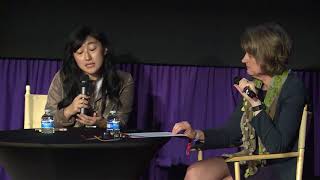
Jess Lee went from founding Polyvore, which sold for $200M after raising $22M, to becoming a partner at Sequoia Capital. She talks about what VCs actually look for in founders, how Sequoia builds its culture through apprenticeship, and why she started Female Founder Office Hours to help other founders navigate fundraising.
Hi, everyone. Welcome. My name is Shanae Thier and I'm head of content at Crunchbase. And it's great to be here with Jess Lee, who is a partner at Sequoia Capital. So, to kick off, you know, Jess and I met fairly recently at the Grace Hopper conference. It's a conference that has around 15,000 female engineers who attend the conference.
And.
And at that conference, we presented from Crunchbase's side the Women in Venture report. I do a lot of reporting off of the Crunchbase data set, looking at female founder trends and also looking at the women in venture side of the table. And what we found is the very first report we ran about two years ago, and when you looked at the top 100 firms, about 7% of investing partners are women. For the top 100, we redid the study 18 months later, which was last October, for Grace Hopper, and the number had shifted 1%. So Jess is a part of that stat because Jess had joined within that time frame. So what I'd love to know from you, Jess, is you are the first female investing partner at Sequoia Capital. This is a firm that was founded more than 40 years ago. In the 70s. There have been female investing partners for Sequoia in China. There have been women on the team who are not investing, who are partners on the team. So does this feel significant for us in the industry? It feels significant. Sequoia is one of the most storied firms. For them to finally have a female investing partner on the US team, yes.
It does feel significant. It's interesting. I've never had a job before where I felt like so many people were rooting for me to succeed. I feel like when I was a founder, when I was working on Polyvore, the only people who cared were maybe my mom and our employees and our investors. But it's been really amazing to feel both the challenge and the burden, as well as the incredible support from people throughout the ecosystem who want to see women flourish in venture and in particular at Sequoia. So that's actually felt kind of amazing.
And has that been true? You know, when I look at venture and I look at the industry, you often feel like it's an industry where, when you read some of the stories, people are butting elbows. People are Type A, they're aggressive, they're out there, they're looking for the startups. Does that support something that Sequoia gives you within the firm? I feel like there's a very strong mentorship and a strong support system within the Sequoia firm which is part of its success. So has that been your experience?
Yeah, that's definitely been my experience. I think when I was thinking about whether to go into venture at all, as well as whether, you know, what firm might make the most sense, part of what I was looking for is what I always look for through any career decision, which is the opportunity to learn and make an impact, as well as just go where the great people are who are really awesome that you want to learn from. And that's why Sequoia jumped out to me. I thought, if I'm going to learn the art of venture capital, I'd like to learn it from some of the best people in the industry. And Sequoia's had tremendous returns consistently over its decades of existence, which is pretty phenomenal. And that's through generational transfer of leadership. Right. It hasn't been one person in charge the whole time. So there's something special there. Maybe I was like, maybe it's culture, maybe it's the team, maybe it's the way it's the art or the knowledge, I don't know. But it's getting passed down from generation to generation. So that was something I was looking for. And now that I've been there for a little over a year, I can definitely say it is the culture. And it is a special sauce. Like, there's.
What is it about the culture?
Yeah. So, you know, it's interesting if you look at maybe what Don Valentine did when he started the firm 45 years ago, he called it Sequoia, which is a tree that lasts forever, not Don Valentine Capital. And so I think from the very beginning, there was this idea that this firm would exist for a long time and go on. The other thing he did was he made the choice of LPs. So the majority of Sequoia's LPs are actually foundations and endowments. So you kind of get this sense of like, yes, we're capitalists and we're looking for returns, but those returns actually go back and pay for, like, college tuition, which is unusual. And it is actually something that gets talked about. I think one of the public stocks from our portfolio fell a little bit. I remember Roelof came and he was like, that was worth about 20 scholarships at Stanford. He was just like, actually said that. Right. So it really does make a difference to feel a little bit more of this mission as you do your work. And then the third thing is definitely the generational transfer. Right. At some point, Don Valentine said to Michael Moritz and Doug Leonel, here, Are the keys to the kingdom like you run it Now I am stepping back and that's happened multiple times at Sequoia and there's a huge focus on it being an apprenticeship and a team sport. It's all about teaching and learning. So I've had the privilege of shadowing a lot of the other partners at board meetings that you know, are seven years further along than I would be if I started investing now.
Right.
To see that interaction, to get invited, it was just, there's shadowing, there's one on ones every week. Like, it feels like the way you would run. It certainly feels like the way that I ran my company. Trying to think as a founder, trying to think about how to grow and empower the employees at Polyvore. So that same mentality, I think in culture is part of why Sequoia has stayed successful.
So one of the things that you've done is you are pushing for change within venture and you founded along with a number of other female gps, female founder office hours. So do you want to tell us what that is and how that's been? I think it's a fairly new project.
So going back to the theme of feeling supported in venture, there's not that many women partners in venture. I think according to your study, I think it was the top 100 firms. There's maybe 34, I think. Was that the right number? Female partners?
Yeah, it's a little higher. I think it's around 50 something.
But that's actually a small enough number of women to fit in a conference room or it's much smaller than this auditorium. So it's actually. Although that's sad that there's not that many, maybe the upside is that we can get together pretty easily and arrange that. So that's part of what happened, I think in maybe July of last year, Aileen Lee threw a dinner. She was one of the first, I think the first female partner at Kleiner and then started her own firm, Cowboy, and is very active in seed. She pulled together a dinner with women partners and from there we started talking about what can we do to help with women in tech. And I had an idea for quite a while of like, hey, I would like to do this female founder office hours thing. Because when I was a female founder trying to raise money for a company targeted at women, I ran into the problem of, you know, the 93% of venture capitalists are male. And to tell them like, hey, imagine this app where you can shop all day long. It's really amazing. A lot of them Were like, oh, that sounds terrible. Why would I want that? So I just, I thought, hey, what can we do to offer support, right? Whether it's almost like a support group because it's lonely being a founder, right? It's even lonelier when you look around. You don't see anyone who looks like you. So support group, mentoring network, like, how can you generations of FEMA found who are a little bit further, like, pay it forward to the next generation and then third, access to friendly VCs who are going to give you advice, right? Advice and tips. Not like in a pitch meeting, which is very high stress. So we said, hey, let's try this out. I got 10 women to sign up, 10 VCs signed up on the spot. And we put together our first event, sort of our MVP event, if you will, in November of last year. And then, since then, it's grown. We've have five events planned from the beginning of the year till April and probably more coming in New York.
New York.
Yeah, New York. Two more in San Francisco, Louisiana, Boston, possibly we're talking about Seattle. But it's been really amazing to see the flood of support from other female partners as well as male partners. And to just see these gatherings of 100 women founders getting together and helping each other actually solve problems as well as getting access to the sort of inside baseball on how to pitch. Because I found that very mysterious when I was a founder and there weren't a lot of people to talk to about it other than besides other founders and then potentially other investors. But then I was always scared of the investors. So. Yeah.
Okay, well, I want to go back a little bit to your founder story because you studied computer science at Stanford in I think, early 2000s. So what was the experience like studying computer science then? Because we often hear how in a inhospitable those environments were to women. Was that your experience?
There were very few of us. I think the year after I graduated, the CS department T shirt was like six stick figures of dudes and one stick figure of a woman. And that was just like statistically accurate. So I remember being one of very few women in computer science, but, you know, I remember.
So was that hard?
Yeah, it was hard, but at the same time we were very just focused on the work and the projects. And I had my little group of other people in CS and my project partners were all with. There was another woman who was far better than me than in computer science, and then a guy. And I think because we were together, the two of us women, I didn't feel like I didn't belong as much.
Got it. Okay. And that was. You graduated around 2004. So do you think going forward to the department today, do you think it's changed for women or do you think we're sort of in the same boat ten years on?
Yeah, I mean, I think it's definitely moving in the right direction. I think the numbers are up. We still have a long way to go though. Okay.
You then joined Google and what was interesting to me is you joined on the product side, not you didn't join on the engineering side. So why did you join Google? Why the product side? What were you looking to do? And I look at your career and I think Google must have been a fundamental stepping stone for you.
Yeah, for sure. That's absolutely correct. I was going to be an engineer. I mean, I killed myself at Stanford pulling all nighters trying to get this computer science degree. And I was all set to become. I actually signed an offer to be a engineer at Intuit and I had my life planned out. And then I got contacted by the recruiters at Google. They told me about this thing called a product manager, which I'd never heard of before. And I just remember as I went through all those interviews with all the different PMs in the group, I just kept thinking, wow, these people are really smart and amazing and I feel like I could learn from them. Now I'm getting a little bit torn. What do I do? And I remember I was very, very confused and I actually spoke to one of my interviewers about it. It was Marissa Mayer who started the Associate Product Manager program at Google. And I said, what do I do? I don't know if I want this job like I was supposed to be an engineer, which maybe isn't the best thing to say in an interview, but, but she was very kind and she said, when I look back on all my choices where I had to pick between some difficult challenges, I always tried to pick the one that was the more challenging path, the one where I would grow and learn the most. And maybe that would be my advice to you. So I really thought about it and I thought, well, okay, if that's true, then I should probably take this PM thing that I've never heard of and at least all these smart people will be there that I can learn from. And you know, if I fail, at least I'll have learned and grown in some way. And that piece of advice has stayed with me throughout the years in pretty much every career decision where I'm pretty much always Signing up to do something that I don't know how to do and I'm not sure if I'll figure it out, but as long as you have great people around you to help like that, that often ends up being a good choice.
And then you did a crazy thing. You joined a two person startup, Polyvor, three person startup, Polyvore. And you joined initially your story is interesting how you joined as you liked the product, you were giving feedback or criticism and then somehow from that you jump, you know, why did you make that move? That seems like not a great choice.
Yeah, you know, my parents were not happy with me leaving Google. But what happened was Polyvore was started by three ex Yahoo engineers who came up with this idea for people to mix and match products, to create outfits and art. And it was all kinds of different things being created by the Polyvore user community. And I was one of those users and I really love the product. So I wrote in to complain about it because I'm a PM and I had some complaints and productive suggestions. And then they wrote back and they said, hey, why don't you just come work here and fix all this stuff yourself? So I thought about it and yeah, I remember thinking, wow, this might be really crazy, but how rare is it to find a product that you actually absolutely love at that early of a stage where you can make an impact? And again, I was going through all sorts of like, oh, should I do this or not? And I decided to do it. And I remember I had a conversation with Jonathan Rosenberg, the VP of product at Google, and he said, I don't know what this thing is that you're going to, but don't worry, you can always come back. And I was like, oh, you're right, Google hires like 100 people a day. Maybe they would take me back. And that sort of freed my mind to realize like when those once in a lifetime opportunities come along, you know, you should take them, you should bias towards that because sometimes the other path you can actually go back to. So I did it and I started and I was the first PM and I started to code and fix all the things that I had been complaining about. And then we just kept growing and growing from there and eventually fast forward, at some point the founders came to me and they said, we've always thought of you as a founder and you've always acted like one. So we are gonna start calling you a founder and we're gonna give you some of our shares and you're gonna be a founder going forward. And I was like, oh my God, you can do that. And that's just one of the most generous things that anyone's ever done. And it's very, very unusual in Silicon Valley. And, you know, how far in was that?
Was that a couple of years or.
I think it was a couple of years in. But, yeah, that's always meant the world to me. And I really believe, like, you know, you have to pay it forward as well. Right. You just. Yeah, it just is such an incredible gift. Yeah.
So you spent eight years at Polyvore, you became the CEO, you got the founder status, you obviously busted your gut for the company from everything that I've seen. And you eventually sold, I think it was, to Yahoo for 200 million in 2016, and the company had raised 22 million. So by all counts, that's an incredible exit. But you've said that you didn't feel good about that exit at the time, but have come to sort of reassess that over the, you know, since then. So why didn't you feel good?
Well, you know, it's funny, I think there's this thing that we do in Silicon Valley, the myth, the like myth of like, everyone needs to IPO and create a gabillion dollar company, and if you haven't, you're a failure. And I remember I was watching an episode of Silicon Valley as I was negotiating this transaction, and some guy walks in and talks to the main character, is like, oh man, I was such a hot company that I sold for like $200 million. I remember I was like, oh my God, that's me right now. It's crazy, but it really is kind of a myth because the truth is, starting a company is so hard and it's almost irrational to do it right. The odds of success. And I've seen the odds now I've seen on the other side of the table, like what the Sequoia portfolio looks like. And that's one of the best portfolios of all time. Just the odds of you being that, you know, billion dollar outcome, the odds are really low. And most companies just run out of money or lose steam or don't make it. And so there's this myth that you have to and you have to be the one. But at the end of the day, some companies are better off as business units inside of another company. Some are better as lifestyle companies. And it really, all that matters is whether you have made the impact in the world that you care about and whether you've taken care of your team. And I just, it's so it's so weird now to be on the other side of that and have felt. Gone through all those, those gyrations and feeling, feeling that way. But I do remember I was very, very scared when it happened to the point where like, I wasn't really sure how my team would react. Right. Like we. I've been working on this transaction for nine months. It was like having a second secret life that I couldn't tell them about. And we ran a very transparent culture. So to hide my whereabouts and what I was doing and pretend to be sick when I was flying to New York for an M and a meeting was just a major, major tax. And then at the end I wasn't sure how they would react. I felt like, oh no, maybe, you know, I. Maybe they all expected to be every single person. It was 125 people and I.
Big company. It's a fairly for startup.
Yeah, yeah. And I thought they would all be mad. I wasn't sure if I was gonna get booed. So the night before we printed out all these packets with like what the acquisition would be worth to each person and I hand wrote notes on all of them because I was so worried people would be mad. I was like, maybe if I do this little gesture, it'll mean something and people will know how hard we worked on this and that it's all okay. And then when I told the team and it was such, there's a whole other story behind that day, it was really crazy. But when I told them, I remember people started cheering and then I just started crying because I was so surprised and overwhelmed and it was just such a crazy eight, like seven and a half year journey at that point. And then another year and a half at Yahoo. I mean it was just, I mean there's nothing else like it. Right. It's just, it's crazy. But yeah, it took me a long time to realize that it actually was a great, it was a great outcome and I'm very, very proud of the team that we built.
And did the investors feel it was a good outcome?
Yeah.
So across the board. And it sounds like being a founder, you know, I'd love to understand, you know, what does it take to be a successful founder versus a successful VC now that you're on the other side of the table? And you know, from what you talk about when you were a founder that it sounds like it was incredibly hard. I don't know if you were on your own battling a lot of things as a founder, but I'd love to know you know, your advice for founders, what does it take? And then on the VC side, what does it take to be a strong vc?
So I think there is one trait that's important regardless of almost like what job you do, but is very consistent with founders and with VCs, and that's actually grit on the founder side. You just, your identity becomes interwoven with the company's identity, right? It's such a big part. It consumes so much of your brain power, your cycles, your, like, personal life gets consumed. It's. You have to be. And then every bump in the road with a company, some of which is completely out of your control. It could be that Google dropped your SEO, that happened to us, right? It could be that the market crashes, like you just can't control half of it, but you feel every single bump in the road. And to be able to get through all that pain and keep going and keep getting up after you've been knocked down, I think it requires a lot of grit on the VC side. The interesting thing is it's not that same existential feeling of like, I am the company, because your fortune is spread out across maybe a portfolio of companies. But the weird thing is you don't control what goes on at any of those companies in any serious way. Like, you have a lot of influence on the founders and you have a board seat and you can shape things, but at the end of the day, it's up to the founders, right? And so the hard part is managing your psychology around not knowing if you're good at your job for like seven years, every day at Polyvore, I knew, okay, today I did well or I didn't do well and the company's moving the right direction. But with because startups, as a vc, I feel like you're measured in large part by your returns, but you're not going to know what your returns are for the seven to 10 years that it takes to build a very successful company. So just that. And markups don't count. Because valuation, in my opinion, because valuation is just funny VC math, in my opinion. Like, it really is. So, you know, just being able to keep going when you're not sure. And all you do know is you get the data points on which companies have not survived. So you know which ones have, like, shut down sooner than you know which ones are going to be great. So I think that requires its own sort of grit. Just, you know, I think most overachievers or smart people are used to, like, feeling like they're doing a Good job. And in this job, I just. I'm like, I don't know, ask me in seven years. So that's interesting.
Yeah. And you said you've done. I mean, since you've joined, it's been over a year now. You've done around two deals, I think, and you obviously help with more portfolio companies. So also your odds are they're sparse. You know, it's two deals, which means you're spending a lot of time, as we all know, saying no to people. So that's also misgive you. Shivers, I guess. Yeah. Yeah. Okay, so I'm going to open up to the floor because we have a few more minutes, but I have one final question, which is how did Sequoia find you? So what was the process? Did you apply? Did you put your name in a hat? Did they approach you? Like, what was the process for joining a firm like Sequoia?
You know, I think it takes a long time, I think, to find a partner, and I think every firm does it differently. But I spoke at a conference at Goldman Sachs conference. Like, maybe I think in 2013, potentially. No, no, earlier than that, may have been 2010. And I spoke and nobody came to my session because I think maybe Snapchat was in the other room. And so everyone went to that session and said, except for, I think one of the partners of the KoI, for some reason came to my presentation and then talked to me afterwards. And then a few years later, he reached out again and was like, and this was Roelof Botha. And I remember, I was like, oh, Sequoia reached out. Maybe they want to invest in Polygon. Oh, my God. I was really excited. And then we had lunch and he was like, you know, maybe you should leave your company and become a venture capitalist. I was like, this is the worst lunch ever. And I was like, I don't want to be a vc.
I'm a builder.
Why would I do that? Right? And I was like, politely like, oh, thanks for that was very kind of you.
What?
I just left. But then after the company wound down, they reached out again. And I had just, just joined Yahoo at that point. So I was like, look, I can't, but I'd love to spend a day. They offered you, hey, do you want to just spend a day with us and see what it's like to be a venture capitalist? And I was like, free day at Sequoia. Sure. So I went over and that's when I first saw what it might be like to be on the other side of the table. And to hear founders pitch their dreams and their hopes and their ambitions every single day is such a privilege. And then I remember I got into a bunch of fights with the other partners that day because I didn't agree with them on some of the decisions. And in hindsight, I was clearly wrong. But I think just that camaraderie and experiencing what the team might be like helped. And then I couldn't do anything at that time because I made a commitment to Yahoo and I didn't feel like I could just leave my team two months after joining. And then fast forward a year. Yahoo was going to become part of aol and I decided that's not what I wanted to do. So I went back and eventually that's. So it was quite a long history with the firm.
Yeah. Okay, great. Yes. I want to open it over there.
Hi.
Hi.
How are you? My name is Chenzy and I'm the founder of Fitnessphere. So we are a marketplace for artists and right now we have 20,000 users and we have more than 500 listings. With one simple click, you can book the artist, which you love. And I am. Right now. We want to expand the team. I want to know how to involve with your future events because I really wanted to learn from other female entrepreneurs. Like, I totally understand, like in the beginning, so lonely and all those hassles, I really wanted to like, what's the process to be a part of the events in the future.
Yeah, so just, just go to femalefounder.org I bought that domain in September. Can you believe nobody owned that domain that was still available? I bought it. And we have a sign up form there for just anyone who's interested who's a female founder to sign up for one of the events. There's one happening February 22nd, so very soon. So just, just, just sign up there. And we try to match people to the VCs they want to talk to. But even if you don't get matched, it's still worthwhile to come because you get to meet 100 other female founders who are working on their own brilliant ideas and you can build that support network. Yeah.
Hi.
Hi.
My name is Raja Weiss. I'm the creator of Spot Idol. And it's a platform where idols and people grow, have fun and profit. Our mission is to build up as many idols as fast and as high as possible. And both you and your organizations are idols and me and many people here and in the world. Thank you for that. My question, I have one question for both of you. So for Jeannie, my question is of the top VCs, part of the top VC partners, top 10, maybe. What percent of the partners are black?
Good question. I don't know that number, but I will say we just printed on Crunchbase a list of black men in VC and black woman in vc. They weren't lists we created. It was people who were out there in the industry who wanted to know the stuff. So we do have the list, but I think in the top, very slim, but I don't have the number to hand.
Okay.
And my question for you, Jess, is at what point do you feel absolutely certain that you will invest in a company?
Oh, that's a good question. You know, you have to have a certain level of conviction. So it varies. So far, it has varied. Maybe the way that we always break it down is we're looking for daring founders who can go the distance. Because it's a long distance. It's a long marathon in a very large market. And I think that's the thing that as a founder, I never thought enough about was the market side, Right? Like, I was trained as a pm. So I thought about, what's the problem? What's the solution? And I would think about product market fit. And then I didn't think enough about is this market a good market to go after? So I actually end up. That's one of the biggest things I've learned at Sequoia over the last year is how to analyze markets, look at the competitive landscape and see not, is this solution a good solution for this problem? It's, is this problem a big enough problem worth solving? So that's a part of the equation. But for me, I tend to. I tend to look for people who have gone, like, there's this metric I think about called distance traveled, right? Like, what's your distance traveled? Right. And do you have a high slope? Are you able to learn quickly on the job? Because there's, like I said, constantly being asked to do things you've never done before and then picking yourself up when you failed and then keep going on. So those are some of the things I most look for. Does that answer your question?
Thanks, everyone. Thank you to Jessie. That was great.
More from Jess

Sequoia Partner & CPO Jess Lee: What Great Founders Do Early and How AI Will Change Consumer Apps





Sequoia's Dannie Herzberg and Jess Lee on Building an Enduring Firm | Upfront Summit 2022


How Do I Exit and What Happens Next with Justin Kan, Jess Lee and Mike Marquez

Creating B2B2C Marketplaces Lessons from Wonolo - Jess Lee, Sequoia; Yong Kim, Wonolo

"Lessons Learned in My Startup Journey" at Founders Embassy's Borderless Summit 2018
