How to Validate Product Ideas Quickly | Jess Lee
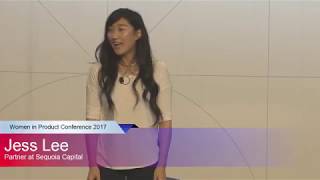
Jess Lee, who built Polyvore and now invests at Sequoia, shares how she validates ideas fast across roles: fake-door testing at Google, keeping products simple, and treating your organization like a product. She also tells founders how to pitch bold visions and what investors actually care about.
But my name is Jess. I'm a partner at Sequoia Capital. And the talk I was planning to originally give was how to validate product ideas quickly. But I kind of wanted to change my topic to be a bit more interesting for this audience. So what I'm going to talk about today is lessons from being a PM to a CEO to a vc. So I'll walk you through a little bit of my career path and some of the lessons I learned along the way. Because what I realized is that being a PM and all the basics of product management has applied to every single stage of my career. But before I go on, real quick, is it possible to get the right slides up? There's no mysterious voice from the sky, so I'm going to assume no. And I will take out my own slides here to side reference. Okay, well, real quick, just my background. I'm originally from Hong Kong. I moved to the US when I was 17 to study computer science at Stanford. My first job was as a PM at Google. It was a great place to learn about product management as a PM for Google Maps. And then after that, oh yes, there we go. Sorry, I thought, ok, phew, I have my slides. So after Google, I became the co founder and CEO of Polyvore. We were acquired by Yahoo in 2015 and now I'm an investor at Sequoia, focused mainly on the consumer space and a little bit of my personal details. I love drawing, I love manga and anime, and I love bacon. So let's start at the first place where I started to work, which was Google. So after studying computer science, I decided to not take the engineering path and instead be a PM at Google. I joined the APM program where I got to learn and grow a lot by sort of being thrown into the deep end and starting to PM and lead. There were two big lessons that I learned at Google around two key PM lessons that I've taken with me throughout the rest of my career. The first is you really have to delight the user. And at the time the product that I worked on was Google Maps for the desktop because this was pre smartphone and two of the things that were really powerful about the product were how simple it was and how delightful it was. So on the UX side it was a very, for the time, innovative drag and drop interface. And remember this was pre smartphones so there was no zoom, tap, pinch that we're all used to. It was a draggable, zoomable, clickable map on the desktop using Ajax technology, which was very innovative at that time. So The UI was interesting and delightful, but at the same time, Google always did a really good job with the algorithms, with the back end, with the data. So we never sent people or we very, we tried our best not to send people off of cliffs or into the wrong driving direction. So getting both of those things right is really critical for product management. But at the end of the day, you really have to delight the user. And that was a big lesson that I learned at Google. And part of the way you do that is by keeping the product as simple as possible. The other thing I learned was culture. One thing that's awesome about Google is that it has a culture of very empowered engineering teams. And in particular, I had one team, it was the My Maps team, where we created this sort of little bubble off to the side where the engineers were super, super involved in the day to day operations of that product. They were sitting in on the usability research, they were chiming in on exactly what the product features would be. And the reason we were able to create this bubble is because we, to be honest, it was not a project that management seemed to care about a lot. So we had a lot more autonomy and control. But just getting that team super, super involved in the decisions of the day to day made that team work far more productively and far, far faster than any of the other teams that I worked with at Google Maps. So those are sort of the two lessons that I took with me. The next stop in my career was someone showed me this amazing product called Polyvore. And what it is is it's a similarly drag and drop kind of tool where you can create outfits and then share them. It's all about fashion and shopping. And I wrote in to complain about the product. I was a very early user who wrote to the founders with some suggestions and they wrote back and said, hey, these are great suggestions. Why don't you just come and fix all this stuff yourself? Why don't you come join us? So I started as the first PM at Polyvore. And there, without the resources of a company like Google, I learned two really important lessons. Three really important lessons. The first is that everything is the PM's problem, right? You don't have IT support to help you. You don't have cleaning staff to magically wash the dishes overnight or take out the trash, like everything is a PM's problem. So it was a humbling experience, but it was amazing. I learned a lot about different areas. I learned about ad sales because I was the one picking up the phone. I learned about marketing Because I was the one who wrote the blog in the early days and I learned just enough about each of those areas to hire the next person to run that department in a more skillful way than I was. But it was just enough to be dangerous. The other two lessons are, without the fire hose of Google traffic to help me grow the product, you really, really have to go back and find that kernel of delight. What is the thing that makes your users so happy that they want to tell their friends? They literally take their phone and show their friends, hey, check this out. That moment when you first saw a Snapchat filter, for example, and then the one with two people and you had to show it to your friend. How do you create that? Because when you do, you've created a moment of word of mouth delight. And that is the secret to organic growth. You can growth hack as much as you want. You can figure out ways to spam through social. Those are also valid tactics. But at the end of the day, you have to have delighted users. The other thing that we didn't have the luxury of at Polyvore was time. When you're at a startup, you're in a race against the clock. We didn't have AdSense or AdWords printing money in the basement to fund the whole company. They so we had our VC funding and it was always on a clock. So because of that, we learned a lot of tricks about how to save time. My favorite one is one we called fake door testing, which was going to be the original topic of the talk. And what that is is you just pretend a feature exists. It's like you put a fake door on a wall and then see if people try to open the door and if they do, that means they want the feature and then you build it. So lots of little tricks like this to figure out, like, should I even build this? I don't want to waste time. So after a few years at Polyvore, I eventually stepped into the CEO role. And this is a pretty unusual journey. But what happened was a few years in, the three male co founders, Johnning Hu Guang Weiyuan and Pasha Sadri, who are amazing, amazing people, they came to me and they said, hey, we've always thought of you as a co founder. You've always acted like one. So we would like to make you a co founder retroactively. I said, can you even do that? And they said, on top of that, we would actually like to give you some of our shares in the company, our founder shares. So that came out of their own pocket it's like an incredibly generous thing to do and it's always meant the world to me. But that's how I kind of ended up as a co founder of Polyvore. And then a few years after that I became CEO. And CEO is a different role, but luckily a lot of the product management lessons still held true, because like I said, the really great PMs know everything is their problem. And you're kind of like a mini CEO if you're a great product manager. And so if you've been a mini CEO, that's very helpful to becoming an actual CEO. But what changes is the scope of the problem you're trying to fix. Your product is no longer just the product, your product is actually the organization. Right? How do you design the best possible organization, the best possible culture, and team you to produce the right product? Your customers are no longer just your users, but they're also your employees. How do you create processes and put out vision in a way that works, that serves your employees? A common thing that I've seen is maybe you as the founder are super comfortable with stretch goals. Ridiculous stretch goals. Because you own a lot of the company, you feel pretty stable in your position at the company. So you're super, super comfortable with stretch goals. But what you don't realize is that those goals are not for you, they're for your employees. You have to think about how are your employees incentivized? What do they care about? So that's a little bit of a mind shift to go from thinking just about the users to thinking about the users and the employees. The other big lesson I learned was that mission and culture really, really matter. That's part, a huge part of the product that you're designing at your organization as a CEO is the mission and culture. Because you can't always control your metrics, you can't always be guaranteed to be winning. Startups are roller coasters. They go up and down and in the downs. Mission, culture, great people is what keeps people loyal. That's what keeps them sticking around for just that little bit longer to see how it goes. Because they love their job, they love the people they work with, and they believe in the mission. So that's something to really, really think about in the CEO position. The other big thing you learn is that you have to go up a level. As I mentioned before, everybody wants to be empowered. So as a PM at a lower level, you're obviously in all the details. You want everything that's going on and you want to be very specific about it, it should be this way or that way. But when you move into a higher role, even a VP or a director, you have to not specify the solution. You have to get specific about the problem that's being solved, right? So if you see someone like an engineer or a PM that reports to you doing something that you would do differently, you shouldn't tell them do this differently. You should think about what in their decision making framework, what information was missing that led them to a different conclusion than you would have done, right? And then that is articulating the problem, not the solution. Maybe you didn't explain that one of the company philosophies is keep the product as simple as possible, so that UI decision should have been the other way, not that way. Maybe you didn't explain that these are the three user Personas we need to go after and this one is the most important versus this one. So really, really think about how to define the problem, not the solution. Polyvore was acquired in 2015 and there I moved back into a VP role at a very large company. I was the VP of product for the lifestyle products. We joined at an interesting time in Yahoo's life. We, let's see, right when we got there, there was a round of layoffs and then there was the announcement that Yahoo was going to be acquired by somebody and then we didn't know who it was for nine months. That's a difficult environment to step into, especially when you're coming out of a startup. But again, I went back to that lesson of empowered teams do better work. So what we did is we created space inside of the company with very few resources to do fake door testing, to do innovative new apps. We actually shipped four apps inside of Yahoo that probably none of you have ever seen, but they were under, were not Yahoo branded. And they gave us the opportunity to see do people want this concept? Do they want this concept? And then from that we were able to launch one app, which was Cabana for Tumblr. We also were able to move very quickly in launching Yahoo View, which is if you go to view.yahoo.com, you can watch Scandal and it's free instead of paying for it through Hulu. It was a partnership with Hulu and we actually shipped that in 49 days, which is not like from start to actual launch was 49 days, which is not an easy task, but really works when you have a very empowered team who is excited about the mission. So after that I am now, as of November of last year, I'm a venture Capitalist at Sequoia. This has been a pretty big transition. But again, the lessons of product management have really helped me here though. The customer is actually the founder, right? Our mission is to serve the founder, to build great companies and the LPs. And again, I've learned that mission and culture really matter because I think the reason Sequoia has been successful for 45 years, which is a long time. 45 years of tech is a very long time. It's actually because of its mission and culture. So the mission being we help the daring build legendary companies. And something that maybe not a lot of people know about Sequoia is that the vast majority of the LPs who give us the money to invest are actually great causes like the Ford foundation or the Stanford Endowment. So that's a little bit of what keeps me excited. But on top of that, the other reason I moved into venture is because as a female founder working on a product, targeted women. When I was a founder, you know, you're pitching 93% men and you're trying to explain to them, my product is awesome because it will help you shop all the time. And then many men are like, that sounds like my worst nightmare. So it's natural to want to invest in things that you understand where you're the youth. So I moved into venture because I wanted to help change the ratio. But I also think it's a competitive advantage, right? There's a. I think women drive a lot of the economy. We control a lot of the wallet. We control social. To be honest, all of social, I think is actually follows where women go. So that's part of why I ended up deciding to go into venture. One thing that's very different though, is the high number of type 1 decisions versus type 2 decisions. So most of the product decisions you make are usually type 2. You can change your mind after you've made them, right? Like you can ab experiment, you can unlaunch a feature, you can hire someone and then move them somewhere else or fire them. Venture is not like that. Every investment decision, you can't uninvest in a company, right? So thinking that way is a bit of a shift. And with that, I kind of wanted to just leave two pieces of advice because I think, I suspect many of you are great PMs and are great, many CEOs and may eventually want to become founders or CEOs. So just two observations and sort of pieces of advice that I would want to share. One, I've noticed that a lot of female founders and I've seen this more in female founders versus male founders when they're pitching is know your customer, right? You have to know that your investors, what they care about is massive generally. And the way the funds work is massive upside, not downside protection. They're more worried about can your company become the next $1 billion company? Versus am I going to lose this $10 million investment? Because in the life of a 10 years of maybe a fund, that's not what moves the needle. So I've noticed that a lot of female founders, when they show their financial projections, they say even with the most conservative estimate, I will still be at $100 million in revenue. Whereas they just show the conservative case where I've noticed that a lot of men walk in and say, here is my case for getting to a billion dollars in revenue. And you know, it is wildly optimistic, but they don't even say it right. And the problem is women founders are not like 50% of the pitches. So when you're looking at the data as a vc, you see tons of billion dollar projections and then a lot of $100 million projections. So just for those of you who are going to go out and pitch, I would just remind you to think about that. Know your customer and pitch the vision. Be bold, kick ass and come to the founder side. And after you're done with that, come to the venture side. So that's my other big piece of advice. You know, if we really want to change the game for women in tech, we need more people, we need more women founding companies, we need more women VCs, backing companies, and would love to see all of you out there in the startup ecosystem. Thank you.
More from Jess

Sequoia Partner & CPO Jess Lee: What Great Founders Do Early and How AI Will Change Consumer Apps





Sequoia's Dannie Herzberg and Jess Lee on Building an Enduring Firm | Upfront Summit 2022


How Do I Exit and What Happens Next with Justin Kan, Jess Lee and Mike Marquez

Creating B2B2C Marketplaces Lessons from Wonolo - Jess Lee, Sequoia; Yong Kim, Wonolo

"Lessons Learned in My Startup Journey" at Founders Embassy's Borderless Summit 2018
