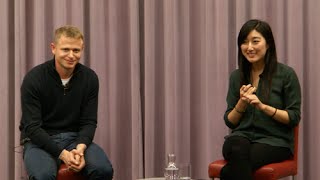
Jess Lee earned the CEO role at her startup by naturally taking on product and recruiting while cofounder Pasha led engineering. As the company grew, sales, finance, and operations reported to her. She spent far more time recruiting and building the team than she expected, and had to delegate product work despite being introverted.
But the transition to CEO is a big one. And the statistics are most people don't make it successfully. I don't want to jinx it, so knock on wood. But you really, in a way that I haven't seen in my venture career, taken to the role. Could you tell us about how it's different and a little bit about, did you want the role and now that you're in it, how does that change your world?
Well, so one of my co founders and I, Pasha, we have always done a lot of the leadership together, and we sort of found our natural niches for what we were good at. Peter gives me too much credit. I think I am one of the users of the site. I like to shop, I like fashion. So I think about the product that way. But what Pasha's brilliant at is designing, architecting systems and thinking about the feedback loops and just sort of the way the product works from a systems design perspective. So I think the combination of those two things is really the soul of what made Polyvore's product take off. In terms of the transition, the way we'd always split responsibilities was he was responsible for engineering. I was our product manager. But he's also a brilliant product guy. But as we started to add more people to the team, we added a sales team. We added finance and people, operations, recruiting. It just naturally fell to me that those people just ended up reporting into me and engineering was reporting into him. And so as we grew and the other parts of the company grew, became more of a natural transition. And it's exactly what Peter was referring to. It's about the company becomes the product. Not just the product, the website or the app. And we realized, both of us, Pasha and I, that the role of the CEO was shifting from being less about just building the product, but building the team that builds the product. And so that naturally became more my purview. I was always recruiting for us, so it felt like a pretty natural transition. And we discussed it and we decided, all right, let's do it. But I never went into poly for ever expecting this to happen.
Yeah, it's an interesting thing, which Jess makes the comment. She's like, well, I wasn't looking for this. If I could be simple about it. There are kind of two types of people that come to the role of CEO. Those that want to be CEO and those that, if you will, earn the title. And I think founders, inherently, when they're founder, CEOs, earn the title because they took the initiative. But it's a red flag for us as Venture capitalists. When someone shows up at our office and says, I'm really ready to be a CEO, so I'm looking for CEO opportunities, I'm like, well, that's great, because you're going to adverse select into the broken companies that are looking for a CEO. And there was something very natural about Jess evolution to the role because it sort of was happening as a course of how she was scaling inside of the company. And the ambition to be a CEO can be a dangerous thing. But I actually curious, as you think about now that you're in the role, how's it different than maybe your role was before and what's been unexpected about it?
Well, you know, I think the role of the CEO definitely changes as the company gets larger. Right. And I went into this assuming, like, okay, there's a set of things we need to do in the next, I don't know, at least a year, maybe two years, three years that I think I can do. I think I know how to do these things or I can learn some of them. But I also went into it thinking, like, there may be a point at which I might not be the right CEO anymore. Like, maybe taking the company public requires a different sort of person. So I definitely went in with it that way. So I agree. You don't want to just be like, I don't have to be the CEO. It's about what does the company need and what are you actually good at. And this was sort of the right period for me. Things that have been unexpected. I thought I would be able to spend a lot more time working on the product in addition to doing a lot of the other duties that's turned out to be not the case. I spend so much of my time recruiting and meeting and thinking about architecting the right team to get what we need done. So that's been a little bit surprising. As a control freak, it's been difficult sometimes to let go of some of the product responsibilities. I was the VP of product before that. But we have an awesome pm Rachel, who It took us a while to figure out how to delegate, how to let things go, but I think we've. We've gotten that down. So that's been surprising. Oh, the amount of external stuff that I have to do has also been a little surprising. I'm more of an introvert by nature, so having to do that is not the most natural thing, but it comes up a lot, so it's something you just sort of have to push and do.