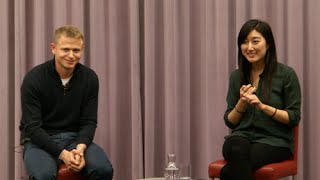
Jess Lee argues that inaction is worse than imperfect action for leaders: CEOs should prefer making directional decisions even with incomplete information. Intelligence can impede decision-making through overthinking, causing paralysis that spurs internal politics; by contrast, frequent decisions (accepting some mistakes) keep teams aligned and avoid gridlock. The talk emphasizes speed, decisiveness, and the CEO’s role in providing direction.
The other thing is, I think you need to start with the assumption that it is better to move in a direction versus not to move at all, right? So if you have one vector, one person wants to go this way, other vectors this way, and you're not moving like that is the worst state to be in, like a state of inaction. At least it's better to go in that direction somehow. Like, so I think we have that understanding. So when we get into a gridlock, it's like, okay, we have to solve this because the worst possible thing is to continue to be arguing about it forever.
This thing. Jess Right. One of the traits of successful first time CEOs and actually one of the death knells, is decision making. A lot of times people come to the role of CEO because they're smart. Everyone in this room is smart, does well, likes to think about complex problems. Making a decision is something different. And intelligence can at times be an enemy for decision making because there's always what if? And CEOs that freeze in decision making very quickly create politics on our team because if they can't decide, the team says, well, I have to use different means of influence because I'm not getting any direction from the CEO. And at times you say, look, I'm the CEO, I don't know if I want to pick. But it turns out, just as Jeff says, if you don't make a decision and give them direction, then those problems will bloom into something much worse. And so it's the old there's comments from field generals and generals at war saying better to make 100 decisions and have 51 be right and 49 wrong than to make one decision a day. And I think that absolutely is true for a CEO, because you just never have enough information neither.