6:19
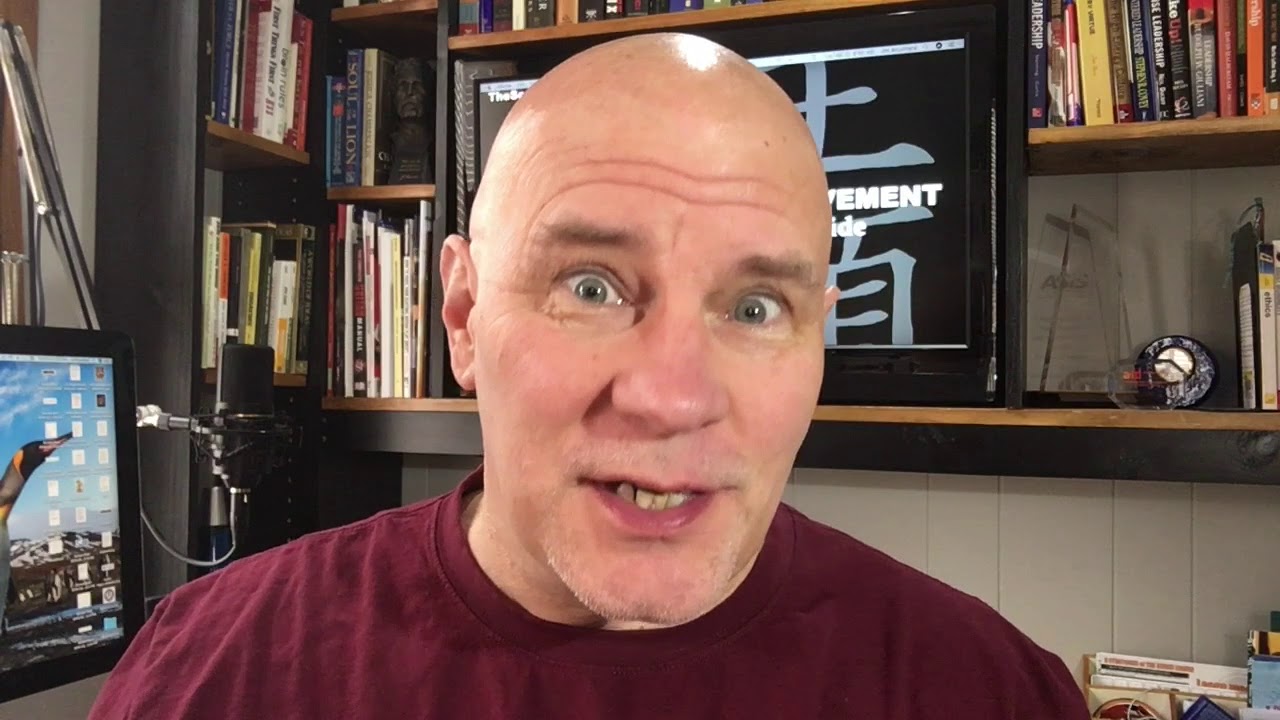
Jim Bouchard argues big goals fail without realistic planning. Break them into single steps, assess your material, emotional, and spiritual resources for each one, and identify distractions before they derail you. A compass needs a map.
Jim Bouchard argues big goals fail without realistic planning. Break them into single steps, assess your material, emotional, and spiritual resources for each one, and identify distractions before they derail you. A compass needs a map.
I get asked about goal setting a lot, and just yesterday one of our Sensei Leader Movement members from our LinkedIn group, Shama from Papua New Guinea, asked me if I could send her a short video on goal setting. So I figured, why not just open the camera and let's get to it. All right, I started off by bashing big goals. Let me explain. Problem is, lots of people set big goals and lots of people fail to achieve them. And there's tons of information out there about goal setting, and I'd say probably most of it centers on some form of the big goal. The problem with the big goal is most people set a big goal only based on emotion. They don't sit down and analyze whether they have the resources or the willpower to see, see it through to the finish. Hopefully I'm going to offer you a little bit different perspective today. Now there's nothing wrong with emotion, and there's nothing wrong with the idea of a big goal, as long as you keep it in perspective, that you use it to charge your emotional juices. Think of it like a compass. It's going to keep you moving forward. But if you're going to accomplish anything real, you've got to break it down. So let's do exactly that. Now, the first place most people start again is some kind of a to-do list. They sit down and they brainstorm out a bunch of tasks. Well, a to-do list may as well be a wish list. All right, you got to make sure you're taking those items from the to-do list and carving them into your schedule. Sometimes it's a one-off, Sometimes, and these are the most important ones, they become disciplines. Now, to a martial artist, a discipline is the cultivation, the development, and the practice of meaningful and purposeful habits. These are things you're going to do regularly. You're going to do them whether you want to or not. You're going to get yourself up in the morning even when you don't feel like it, and you're going to do these things. And these are the items, these are the tasks that are really going to propel you forward towards your goal. Now even that's not enough. You've got to take each discipline or even your one steps and you've got to decide whether, first of all, whether you will do it. And I'm very serious about that. Take a breath, sit back, and really analyze it and say, is this something I want to do, truly want to do? Is this something I'm truly willing to do? Because without that willpower, forget it. The next step is whether you can do it. Now this means really analyzing your resources, and I believe you need to do this in 3 major areas of your life. You've got to understand whether you have the material, emotional, and spiritual resources to complete that step. Now material is pretty easy. You're talking about whether you have the money or the, or the equipment that you need in order to perform that step. Do you have the emotional resources that you need? Now these are still fairly tangible. First, first of all, do you have the support of the people around you? Are people encouraging you and helping you? Do you have a support network to help you get to that goal? The next part of emotional is what we talked about a few minutes ago, that willpower, that drive, the level of confidence that you have in order to accomplish the one steps and eventually your big goal. And then finally, spiritual. Now that can be religious, but I don't really care one way or the other. I'm not talking about it in a religious sense. If that's what it means to you, fine. But when I'm talking about spiritual, I'm talking about a connection to something bigger than myself, something outside ourselves. Does that goal have value and meaning in the lives of other people? Whether it's a one-step or discipline, you have to analyze each step along the way with those considerations in mind. Do I have the emotional, material, and spiritual resources I need to move forward to take that next step towards that eventual big goal? Now, if you don't have the material, emotional, or spiritual resources you need to take that one step or embed that discipline. Don't worry about it. All you need to do is break it down a little bit further. How are you going to develop those resources? How are you going to get what you need to move forward? That becomes your immediate first step. Now there's one more important step. This is the secret, if you want to call it that. Most people try to avoid it, and most experts don't even talk about it because you don't always want to think about the negative. But better that you do this before you take your first step. Think about the distractions and the detractions that are going to keep you from accomplishing your goal or any step along the way. Better to address those things early. So it is healthy to imagine the worst possible scenario and try to figure out how you're going to address that along the way. That's how you minimize problems before they become disasters, and that's how you're able to weather the storm and the challenges that you're inevitably going to come up against as you set out towards this big goal. Now, having said that, really, there's nothing wrong with a big goal as long as you keep it in perspective, as long as you don't let your emotions run away with you, and you think about the whole process rationally and break it down into its component steps. That's exactly what Lao Tzu was trying to teach us 2,500 years ago when he said, "Every journey of 1,000 miles begins with a single step. Well, I can tell you from experience that the rest of the journey is just a bunch of single steps too. And if we're going to be successful, that's where we need to place most of our focus. Well, I hope you enjoyed that. And Shama, thank you so much for asking that question and inspiring this video. Please send in your questions and your comments all the time, and I'll do my best to respond to them. Sometimes it turns into something like this. Sometimes it turns into a workshop. And really quickly, I just want to bring your attention to the fact that by the time this video is up, we probably have already launched our Patreon page. We're moving a lot of our services to Patreon to give access to more people. So come on over and visit Patreon, check it out, see what we're doing there, and see the benefits that you, you'll get by becoming a Sensei Leader Movement patron over on Patreon. And if you're not involved with the Sensei Leader Movement yet, all you need to do to get involved is come over to thesenseileader.com and subscribe there. Doesn't cost anything, and when you do, you'll get free access to our online edition of the Sensei Leader book. As always, I so appreciate any, any time you spend with me, and I appreciate the opportunity to share these ideas with you. I'm Jim Bouchard, founder of the Sensei Leader Movement.

Why AI-Only Customer Service Is Failing Customers | Danny Snow on Keep It Human







