How do we continue to do business during the COVID lockdown?
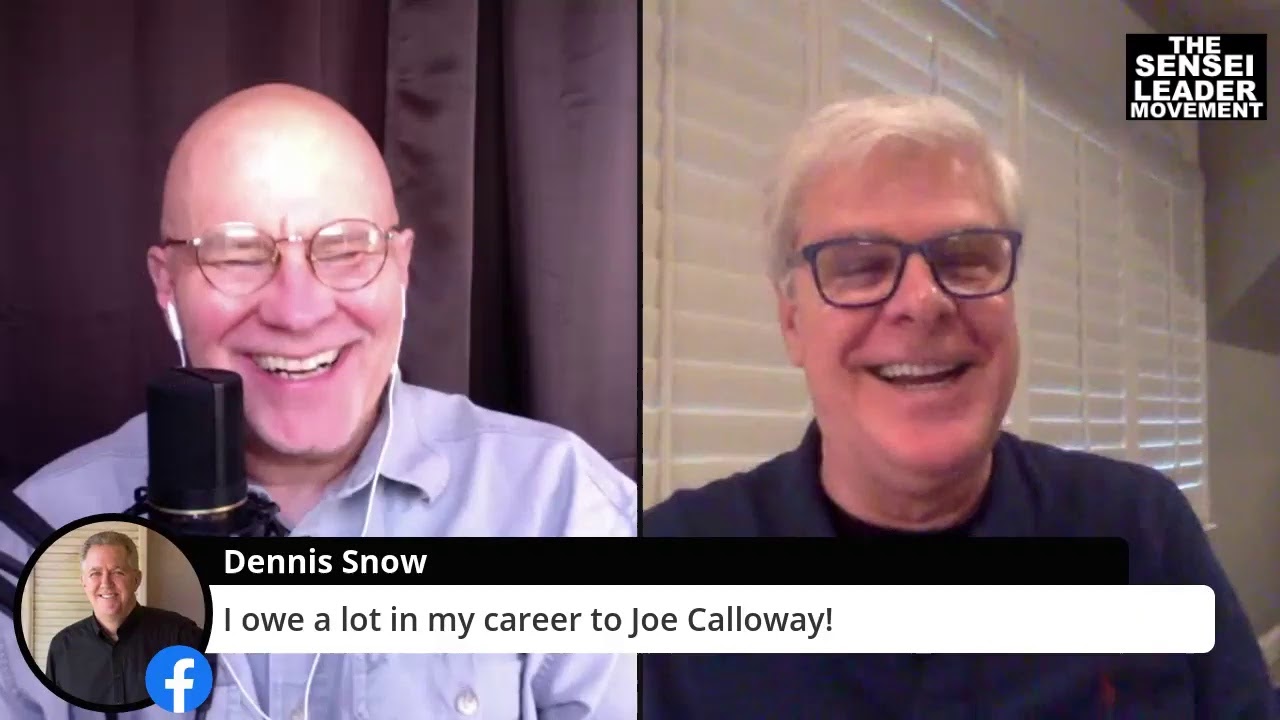
Joe Callaway and Jim Bouchard discuss how speakers and small-business owners can survive the COVID lockdown. They recommend reaching out to clients with free or discounted services, sharing customized videos, and prioritizing relationships over sales. Small daily actions and emotional intelligence matter more than big pivots.
Chapters
All right, Jim Bouchard here from the Sensei Leader Movement, and we've got a real special guest today, my dear friend and mentor Joe Callaway, who we're going to bring on in just a couple of minutes. Meantime, I'm gonna— I don't usually like to make apologies for things like this, but if you've been following our streams, I don't usually read from a script, but I wanted to choose my words very carefully today, so I hope you'll bear with me just for a couple of minutes. And, uh, I'd like to share some thoughts with you. First of all, usually like to start our live streams with a little light heart and a little humor, uh, but I gotta admit I really struggled with this one. You know, like many of you, I'm trying to find the balance between keeping my business afloat yet not wanting people to think I'm uncaring, obtuse, or, or worst of all, trying to exploit anyone's fear. You know, when I originally committed to doing a live stream to address this problem It was largely responding to concerns I'd been hearing from my friends in the speaking, training, and event management business, but it hit us early, and for many of us, it brought our businesses to full stops within just a few hours. But we're not alone, and we're hearing from different people every day—restaurants, massage therapists, hairdressers, and retailers—many of whom have been deemed non-essential and saw all their businesses grind to a halt. Have you had to lay people off, call creditors, If you had to tell people who depend on your business that you're going to have to put their services on hold for a while, these are all difficult conversations. And of course, most of us have been on the other end of those phone calls as well. For the record, I'm having a real problem with anyone's business being labeled non-essential. You know, being the work that feeds your family and your employees, it's plenty essential to you and the families of your employees. So at any rate, hey, nobody asked for this. None of us asked for this. And as the situation got worse, I found myself getting impatient with people marketing to me You know, didn't they realize I was trying to brace for the worst? I have to admit, I gained a new appreciation for the people selling survival rations and rubber gloves, I'll tell you that, but I found myself getting tense with people pitching lead generation or social media advertising tips and miracle marketing plans and so forth. I peaked out when a very nice young woman pitched me on LinkedIn for one of those monthly wardrobe subscriptions. You know, I thought, how could you be trying to sell me a $250 fashion plan when I'm trying to figure out how to pay my mortgage, right? Potentially no revenue over the next, next several months. How can you be hawking fashion advice when people are worried about life and death? But you know, that's when it hit me. She's in the boat the rest of us are in, that many of us are, right? She's seen her business dry up, I'm sure. She's seen her regular clients cancel. She's worried about how to pay her bills, maybe how to keep her home and feed her family. Now, there are two distinct sides to this situation. There are people who have been laid off, and there may be more coming. Government aid is supposed to be on the way, but there are already problems with that, and for micro-businesses and solopreneurs, there's a lot of uncertainty as to what might be available, and right now, nobody really knows when. At the same time, there are people who are still working, and others whose businesses are suddenly thriving, still others who are fortunate to have some, some reserves, and that's good, but here's the strange twist. I tuned into an emergency webinar by a group of social media marketing agencies the other day, And they said beauty product clients are doing record business. Of course, so are the guys selling survivor— survival gear, right? But the point is, some people are still spending money. And many of us have incredible resources that can really help people right now. We can help them use this time to learn, to grow, and discover new talents. We have resources that can help people more effectively from home, protect their data identity as the predators come out, help people stay healthy and active through this mess, eat properly, take care of their mental health and well-being. So how do we let people know about these services? Should we be actively marketing? Should we preserve— how do we preserve our relationships with current customers and clients and prospects, especially those who are really strained right now? What should we be charging, if anything, for our services right now? And if we are, should we be feeling guilty about it? Are discounts really a help, or do they look exploitive? These are all questions we need to address, and we need to do it now. So anyway, when I decided to put this stream together I thought that one of the people in my life would provide some real insights in this area would be Joe Callaway. Joe's a renowned speaker, coach, trainer, author, and business consultant. He's a dear friend. He's one of my most trusted mentors in the speaking business and in life. And while this session was inspired by my friends in speaking, I'm sure Joe's insights are going to be useful to anyone, no matter what kind of business you're in. Listen, this is an open forum. As always, please share your questions, comments, and ideas in the chat area. We'll do our best to address those and recognize as many as possible. Okay, let's welcome please my dear friend and mentor Joe Callaway. Joe, thanks so much for doing this with us today.
Jim, this is— man, it is always such a pleasure to talk to you, whether it's in front of other people or not. So I'd— and especially to be on your show, I'm just so happy to be here.
Well, you know, like I said, I mean it from the heart, you've always been one of my go-to people, uh, and I've always— you've always struck me as just a calming presence and someone who demonstrates leadership, you know, even in tough situations. This is a tough one, and it's interesting because over the past few days, we've been, we've been talking with a lot of people who are right up against it, and yet still run it. But like I said, originally we were going to speak just to the, to the other speakers and trainers, but this is, this has expanded way beyond that. What, what do you think? What are your personal, what's your personal take on it? I'm sure it's evolving, right, as this is happening.
Yeah, well, you know, that's an interesting point right there. I've never been in any situation that seems to be in such a constant state of unfolding and evolving, uh, because every day, obviously, you know, you get up, you look at the news, and there's a new hotspot or there's now a tremendous amount of excitement about a test that can tell you within 5 minutes whether you've got, what is it, the antibodies or— Right, right, right, right. Yes, and I mean, that's significant. I'm gonna probably tend to wander today on tangents. No worries, no worries. Just as things occur to me, but there's a guy on CNBC And I'm sure some of the folks that are with us right now follow Jim Cramer. He's a stock guy, right? He's got a show called Mad Money. Really dynamic, really interesting. And he said that the people that are betting that this is, you know, doomsday, he said, you're betting against science. He said, because What we're doing is we are unleashing all of the scientific minds and power and innovation. All of it is focused on this coronavirus, COVID-19. He said, don't bet against science in this country because it can make things happen really quickly. Now, I'm not saying that to tell anybody that I think it's all going to be over in a few weeks. I don't. But that makes a lot of sense to me. And it is, when you look at the larger context of the situation, that's hopeful to me to think that, man, you turn science loose on a problem and some things are going to happen. And I think we're starting to see some of that.
I'm so glad you went that way, actually. Alex chimes in, she said, wander away, Joe. I forgot to tell you, she's in the back handling the comment stream. She does a great job with that. But anyway, um, yeah, a lot of people have been responding to these worst-case scenarios, and it's interesting because I know— I understand, you know, I used to work in media. We live in a soundbite world, and, uh, you know, there's nothing new to the idea that if it bleeds, it leads. So you're going to hear the worst possible things. Yeah. And frankly, that's what we're more interested in listening to, all of us. It's just the way we're wired. But anyway, Dr. Fauci came out, Dr. Bricks Camp, all these people have been saying don't worry about those worst-case scenarios. Dr. Fauci said it exactly, said that's the what the model is telling us would happen if we weren't doing anything, right? And like you said, there's amazing things that are happening that we don't hear about every day. He said it's going to fall somewhere in the middle, but in his experience, and he's, hey, he's worked on every pandemic in our lifetime, and he said it never goes to that worst-case scenario. We're working on it, right?
I read a post the other day, actually it was the post of an article that a guy had written. This is a, uh, a data guy, and he said, he said, given what we're doing right now, my model shows that there will be 3 to 3.5 million deaths. He said under any scenario, under the best possible scenario. Uh, well, no, he said there is no scenario— excuse me— where there will be— where there will not be millions of deaths. And then he put— stopped his sentence and then said none. There are no scenarios where there will not be millions of deaths. Fauci is saying, you know, you can't say for sure, but it looks like 100,000 to 200,000. And just this morning I got an email from a guy who's a professional odds maker. He works for a company that insures like hole-in-one tournaments and stuff like that. And he said— he's also a world poker champion— he said, if a man tells me, or a woman tells me something, and that they are 100% certain of it, and somebody tells me that they think this is what's going to happen, but they can't say for certain, he says, I'm going to go with the one that says they're not certain. The people that say this is the way it is, period, are usually wrong. Right. Fauci will say there are a lot of variables, but it looks like— and the second he puts it that way, he's got credibility with me.
Exactly. Yeah, no, exactly. Hey, thank you, Dennis, for posting that. Dennis, make sure to put your contact information up and we'll pop that up too, because Dennis Snow, for those of you who don't know, and go in our archives— oh, Dennis, I didn't see that right there. Yeah, he did a great stream with us the other day. Uh, hey, Dennis, right? And, uh, Dennis has got some tremendous resources to help people, you know, all the time. But right now too, how to deal with your customers, how to deal with folks that are angry. Thomas, let's bring Thomas in for just a second, then we're going to get— I promise you guys, I know we've seen some questions, we're going to get to the business side of it too, but Uh, Thomas, thanks. And Thomas, thanks so much, man. You've been such a supporter here. I really appreciate you popping in all the time. Uh, son-in-law has serious medical condition other than virus, has to go to the hospital, feels he won't come back further, won't see my daughter, wife. He will, he will. And I, I hate to— I hope that doesn't sound Pollyannish. And Thomas, knowing what you're going through, no, he will. Uh, you know, there are a lot of precautions being taken right now, right? But, uh, I saw a beautiful thing the other day, Joe. I don't know if you saw this. It was a video that went around of a newborn baby. And of course, you got to protect the newborns from the virus. And a grandpa who had not been able to be in the, in the delivery room, and they were— he was viewing the child through a window. The child came home, and there, you know, there's ways to make contact like that, right, that still preserves some safety. And in one way it was sad, but in the other way, wow, you know, it was amazing that people took the time and tried to make that connection. So Joe, hang— I mean, Thomas, hang in there. Uh, we're, we're gonna, we're gonna get through. And I, I don't know, Joe, can we even say that enough? I mean, and that's not to diminish the people that, you know, that are suffering, the people that are going to die. We can't diminish that. But most of us are going to make it through, and we're going to, we're going to arrive on the other side of this in good shape, right?
A couple of people have, um have said to me that I seem really calm about this, and why was that? And I flashed back to, golly, 20 years ago, a good friend of mine, um, asked me— she said— she's about 10 years younger than me— and she said, Joe, what would you say is the best thing about getting old? She didn't say older, she said old. This was 20 years ago.
Oh man. Well, that's because you got that distinguished gray hair early, right? Yeah. Yeah.
She said, what's the best thing about getting old? And I thought, and I said, you know, what pops in my head is that in life you go through, we all go through really terrible stuff. And you'll say, you'll be in the middle of a just awful situation. And you say, well, this is it. This is it. The crap has hit the fan. It's all over. And then 3 years later, after you survive it and you pick up and put the pieces back together, you say, oh no, no, this is it. Yeah, this new thing. Oh, that other thing was nothing. This is what's going to take me down. I said, and after you go through a few of those, or in some of our cases, a bunch of those, you start getting it that, yeah, this is awful and I don't see the solution right now. And I know I'll get through it because I always have. Uh, and it's not because I'm so smart, it's because we all get through it. And, and like you, Jim, I don't mean— oh my gosh, the last thing in the world I want to hear right now is a bunch of cheerleading from anybody, really. That Uh, that just doesn't do it for me. And I don't mean to sound rah-rah on that. I'm just talking from experience. I, I know that individually and as a society, we truly do get through this stuff, uh, and we pick up and move on. And then we look back on it and say, holy cow, what the hell was that?
Yeah, no, I hear you. And sometimes that, that you know, I'm going to say it, hyper, hyper-positive cheerleading, especially. Yeah. Uh, and, you know, and I don't want to pick up— I know they all have their own, their own, uh, perspectives too, but absolutely right. For me, it was a couple of the celebrities that chimed in from, uh— all right, I'll name one, okay? The Madonna thing in the bathtub with the weird music. I, I didn't get it, and I'm sorry if that sounds insensitive, but I just didn't get it. I thought that just struck such a, such a weird tone, you know, to, to be in that scene, right, of such luxury when people were really struggling and dealing with some of the issues we're gonna, we're gonna start talking about, right? How do I keep my business alive? How do I keep, you know, how do I pay the bills? How do I, uh, handle my creditors? How do I handle those people who are telling me, uh, that they don't need my services right now or they can't afford them right now? Those, those are all, man, when you're just sitting there going, hey, yeah, I'm sitting in my million plus mansion and everything's great. Oh, so I'm so thankful I have time to read. I'm saying screw you.
Yeah, yeah, there's another thing to read, the letters for my creditors. I was just going to say Randy's on here with us. Great perspective from Randy.
Yeah, it's easy to believe the first time we've gone through something. Uh, it's the first time in it. Yes, and Dove, our friend Dove Baron with his psychological background, psychiatric background, he talked about that. We do tend to personalize these things. It's natural. But the other thing is, yes, when those of us who, if it sounds like we're a little tougher skinned, it's because we've been through these things. Joe knows my story. I mean, I was a drug addict that tried to kill myself, that, you know, been broke a couple of times. So does that mean I'm not hurting or that I'm not scared? I'm not anxious about it? No, of course not. I am. And I'm having my moments. I just try to close the door when I have them, right? But the thing is, you know, have your moment, vent, and then get back to business. I mean, we have to keep moving forward here. We can't, we can't let this stop us, right?
Yeah, I agree. And, you know, thinking about business, I had an interesting conversation the other day with— and this is a little bit similar to something that you and Dov were talking about a couple of days ago— but it's a guy that's the CEO of a pretty good-sized company a couple of thousand employees. And he's— the previous CEO was a larger-than-life, very inspirational type guy. This guy is more of an operations, down-to-earth. And he said, I just wish— he said, I'm sending out a livestream to all of our employees. He said, I just wish I were like— and he named the previous CEO. And that I were more motivational and more inspirational. I said, dude, you are so the right person in the right place at the right time because you are solid. Yeah, you never say anything that's not based in reality. In fact, you're calm. I said, you are exactly the voice that people need to hear right now. Don't try and be like anybody except who you are. And the thing is, it's also perfectly okay to be inspirational and motivational. I mean, it's fine. There's lots of different ways to be an effective communicator. But I flashback on a senior VP with an airline that I was working for. I'll never forget, he came out on stage. He was speaking to a huge group of employees. He had a broken leg and he sat down in a chair. Put his crutches down, and they were cheering him. They gave him a standing ovation when he came on stage. He said, sit down, you're not going to be clapping very long. He gave them— revenues were down, their budgets were going to be cut, everything that they wanted they weren't going to get. I mean, it was awful for 20 solid minutes. And he finished and got up to go off stage, they gave him a standing ovation. And afterwards I asked one of the employees, and I knew what they were going to say, but I had to ask. I said, so what's with the standing ovation after nothing but bad news? Um, and excuse my French, but the employee said, because there's no bullshit about that guy, right? We all know where we stand. Yeah. Uh, we all know what's going on, and he never lies to us. And, and I try to have that attitude as odd as it might sound, with myself. Oh yes, yes.
And with your family. Because I'm a one-person business.
So I try to be my own best leader that I can be.
Yeah. No, you hit it on all cylinders there. And you know, people, and yes, you're right, Dov and I talked about this a little bit. I'm hearing it's my own fault because of the branding that we have. But we emphasize that word inspire. But it doesn't have to be the grand speech. One of the most inspirational things people are doing right now, and here's one of the places I think you can really communicate with your clients and customers right now. Just reach out and ask them how they're doing. Right? Just have a human conversation. And people so appreciate that you're just paying a little attention to them. And Dennis is chiming in, right, with how creative families and businesses are getting with communication. That's one of the big ones. Right? Just show people that you care. I mean, you know, you and I are always preaching about compassionate leadership. But that's— but now, the tide has turned a little bit. And Interestingly, this morning. Last night, we all went to bed and there was still some hope that parts of the economy would start opening up again in April, and I didn't have a problem with us shooting for some sort of goal like that, but now, as things changed, it's adjusted a little bit, and they're saying, "We're going to be pretty much locked down at least through April." Now, all of a sudden, I heard some people coming on and saying, "Okay, I could weather a couple of weeks, but now, I've got to start getting the message out." Right? How would you— talk about it with speakers because, you know, that's our world, but other businesses can benefit from it too. What are you doing, or what do you think we should be doing to reach out, maintain those contacts, and maybe even as the weeks start to drag on here, maybe do a little bit of business without being insensitive?
Well, I'll give you a concrete example that I actually posted online in a couple of places of something that I first did after 9/11. When the speaking business— it was a very— it was a different situation than this, obviously, but meetings were canceled, travel was canceled. It was a big, big blow, right? Yeah, yeah, they, they were scared to death. And it was, it was just like now in that a ton of speakers had a ton of meetings canceled, a ton of things that were on the books. And I think the most powerful 3 words may simply be— the most powerful 4 words— how can I help? Yeah. What I did with my clients back then, I targeted at, I think it was 20. I picked 20 clients that I had done more than one job with. And my approach, this is not the right way to do it. It's just the way I did it. I always go really, really deep. I know Dennis does this, Randy does this. I want to know everything I can possibly know about my client. So what I did was I touched base with, with all of them and said, what are the 2 or 3 messages that you want your employees to hear more than anything else right now? What are you saying? I'll give you a specific example. There's a manufacturing company and they said, we're still open for business. And what we've got to do is triple focus on product quality as always. But we want our deliveries to be faster than ever. Mm-hmm. We really got to get that through the whole organization so that everybody is supporting our ability to do that. Great. Well, I made 3 or 4 short videos and I did this for every client. For this client, one of the videos, it was like this. I said, hey, this is Joe Callaway and it's good to see you all again. I saw a lot of you at your fall convention back last October. And since then, of course, the world has changed dramatically. Well, I know that Susan, your CEO, has been telling you to really focus on delivery. And I also know that your customer survey showed that they think that rapid delivery is the number one priority that they want to see from a vendor. It's not price, it's dependability. So I think you guys are right on target by focusing on quality and delivery because it's going to lock you in with your customers more than ever. It's going to take you deeper with your customers. And when word of that gets around to the people in their industries, you're set up to get more new customers. So hang in there, keep making those deliveries on time. I'll talk to you again later. Boom. It was like a minute and a half video. I made a little handful of those and sent them to my clients and said, use these any way you want, no charge, no fee. And so a bunch of my clients showed those to their employees. The key was they were super customized for each client. And my phone started ringing and they said, hey, we'd like you to do another set of videos and we want to pay you, or we want to go ahead and book some stuff for later in the year because these videos were so helpful.
Yeah, I couldn't agree more. And we've been, you know, part of, you know, the response we've been getting from this livestream is, is validation for what you're saying, you know. And I couldn't agree more. We've got to pay attention to what people need, what they're asking for, and try to respond there. You know, we've gone way off course. One of the most popular live streams we did, we talked about when Tom Brady— well, he picked a hell of a time to do it too, didn't he? He went down to Tampa Bay on St. Patrick's Day, which is, for New England fans, that's a double whammy. But we got on, people just wanted a break, and we got on and talked about that. Now, we did talk a little bit of business, but you know, that's, that's the thing. We've got another great speaker and leadership expert. Randy Pennington just chimed in. Randy, make sure you put up your contact information too, because there it is. Yeah, what can we offer? You know, that's interesting. This was kind of a sidebar. Alex goes to a person to do eyebrows, right? And that's one of those luxuries that people are pulling back on. And of course, when Maine declared, that was one of the businesses that were declared non-essential. So they just shut her down. I mean, she didn't have a choice. And what was interesting— and she's going to come on and do a live stream, this person. Miranda is her name. Really nice, really cool person. She's going to teach me how to do my eyebrows on a live stream. Okay, now, but here's, here's the thing. Here's why that's important, right? When I heard the story, I said, wow. I said, she could be coming on because people are at home, people need their hair cut, they need their brows done, whatever the case may be, and we don't know how to do it. Right now, I know the fear, and we're hearing this from different places. Well, if I give away too much, my customers aren't going to come back. I say no, absolutely not. They are going to be dying for, first of all, to have your professional touch, right? And same thing with the speakers and the trainers right now. I don't think you can give too much away right now. What's it costing you anyway, right? And if people can use that, you're really cementing that relationship, if that makes sense. But that leads us to a tricky one. Um, people have been asking about discounting, and I've been going through this too. I've had people that have approached me, and you know, I, I've been resistant to do online coaching, but I've started to do it before the virus hit, and people have still been approaching me for that. And in response, I know everybody's tight, so I've been offering discounts. And I don't want that to look exploitive, but I know if somebody can pay and they're willing to, that I'm grateful for the business, and I'm also more than happy to offer the discount. You know, I don't need a whole lot to get me through this. Like a lot of people, we'll get by. That's not a problem. But a little bit is always appreciated. So I don't know, what's your take on that, Joe? I was really interested in hearing what you might have thought about that.
Well, my approach has always been for 35 years in this business, and I've been very fortunate. This business has been really, really good to me. And my approach— and I'm not at Listen, if anybody ever tells you, here's the way you have to do this business—
Well, you helped me avoid a few of those guys.
That's the stupidest thing I ever heard. In our business, the speaking, consulting, advisory, coaching business, there's a thousand ways to do it. Mine is just one of them. But my approach has always been to be relationship-oriented versus transactional, right? And during a time like this, I throw my— and I'm not advising other people to do it, I'm just saying that's the way I did it— I throw my fees out the window, right? And if a client says to me, listen, we're worried about scraping up enough money to keep people from having to lay them off Right. And we would do a Zoom meeting with you, but we don't have any money. And again, this is not what somebody else's answer should be. My answer is it doesn't matter.
I'm with you 100%.
Let's talk about what you need to do and do it. If you don't have any budget for it, I totally get that.
We'll worry about it later. Do it.
Yeah. And that has never, ever failed. Yeah, in making me money over the long run. And people say, but I need it now. I totally get that. There's an old saying, don't step over dollars to pick up nickels.
Alex often quotes you on that one.
And the dollars are in the relationships. Yeah, yeah. The nickels are in the day-to-day transactions.
No, I couldn't agree more. And sometimes when people worry about that too, And I've seen a couple. I gave away a couple of coaching sessions to people I know are not going to pay me later, you know what I mean? But first of all, who cares? What's the risk, right? And the, and the other part of it is, yeah, I could have used the money, but that's okay. Um, they're not going to do business with you anyway, you know what I mean? And that's what I've been trying to share with people. If you've got some folks that are in there and they're grabbing, you know, all your free stuff, or even if you feel they're taking advantage of you there, Don't worry about it. I'm with Joe 100%. Give, give, give right now what you can, right? And if they don't do business with you, well, they wouldn't have probably anyway, right?
Yeah, the other school of thought, and I get it, is— Nice stuff. Yeah, exactly. It's perfect, Jennifer. There are people that say, no, no, no, Joe, you're totally wrong because What you're doing is devaluing your service. If you give it away, then it's not worth anything. Well, it's worth what people can make of it, right? In my world, that's just stupid. What I did was add more value to my relationship, and they came back and they never quibbled about my fee. They said, we remember what you did for us. And you're a bargain at your full fee.
Hey, and you know what too? It's interesting because again, given the circumstances now that we're hearing people from so many different businesses and industries going through this, you never know. First of all, you never know what an impact. We're blessed to be in a business where people do tell us when we make an impact on their lives. Not always, but very often people will tell us, "Thank you so much." I had one, Joe, I was going to share with you anyway. Uh, just a couple of months ago, before the, you know, the crap hit the fan, I was doing a conference out in San Diego, and this woman I had spent, I don't know, maybe 10 minutes with at a previous conference— this was the second time she'd been with me— and I'm getting emotional thinking about it. She ran up and gave me a hug, and she said, 'You saved my life.' And I said, 'Get out of here, I spent 20 minutes with you,' you know. And I, I really thought she was just being gracious, you know. And she told me what had happened, and, and, you know, it kind of went all the way in. And the reason I'm bringing that up is not that I'm not trying to make myself out grand here, but you never know. The point of that story is that it was just 20 minutes, you see. Now, you could be, you could be doing hair, you could be doing brows, you could be doing, I don't know, whatever it is, and you share some time online. You don't know the state of mind of the person that you're connecting with at the time. And maybe just that little bit of attention, that little bit of caring could literally save somebody's life, could keep them from being despondent, could keep them from, you know, spinning out into depression. And, you know, and I know that too from, you know, some of the volunteer work I do. You don't know. And, and for the work, you know, Joe, geez, you know, I've said this to you before, there's been times when you've said things, a couple of words made all the difference. There's people that have come in and out of my life for 5 minutes that have changed my life and literally saved my life at times. You never know, right, what that small gesture, what that little bit of time will mean. So, you know, reach out and give. The value— oh my God, well, what's the value keeping somebody from, you know, spinning into a state of depression or taking their own life? I mean, that's incredible. You never know what you're going to do. Anyway, I didn't want to get long-winded on that. It was just—
yeah, well, I was just gonna throw this in, Jim. Another view of this is one, to To help other people is great. I think one of the, one of the great reasons to exist and one of the most satisfying things that anybody can do is to quite simply be useful and feel useful. And going through what we're going through, I think more than ever for some of us, It's really constructive to the night before, you know, when we go to bed, to think, how can I be useful tomorrow? When we get up in the morning, how can I be useful today? And I, I'm not really a change the world guy. I don't look at it that way. Well, yes you are. Focus really small. How can I be useful with just what's right in front of me? And do you know Sometimes it means I can't think of anything useful for the world. I'm going to go out and weed. I'm going to weed the yard. Yeah. And I come back in and guess what? I feel useful. I'm not saying that solves the problems, but it's an empowering thing for me. And the more empowered I am, the more I can get to solutions.
No, absolutely. And that's why, too, we did a thread the other day. Um, oh yeah, no, Alex, blow your own horn. This is interesting. For those who don't know, Alex is our executive director here at Black Belt Mindset, but she also does— she's a fitness trainer and she's done this business for a long time. That's actually how we met. We told you the story. She was my weight trainer when I was boxing. Yeah. And, uh, at any rate, and you know what, and a little aside, then I'm going to brag about Alex. I was going to dress up a little more for today, but today we also found out that L.L. Bean is diverting a bunch of their manufacturing to producing masks. And we're hearing these stories all over the place. I mean, that's tremendous leadership, tremendous thing. So I wanted to wear one of my L.L. Bean shirts, you know, in honor of them today. And yeah, Alex teaches these classes at L.L. Bean, uh, and she's been doing them online. And I'm telling you, it's blowing up. They're incredible. And they just— people just want to be connected, right, Alex? I mean, it— I've listened into a couple of her, of her classes. It's, it's just fantastic. They're all working from, you know, different places. And, and tomorrow morning— tomorrow afternoon, we're actually going to have, uh, one of my masters, Master Mark Shui, the cane master, the original cane master. He's going to come on and talk about his virtual dojo and some things you can do. So no, Alex, blow your horn. That's, that's right. Absolutely. Oh my God, I thought Joe was ready to say something really profound and I waited.
Oh no, I was thinking about how cool Alex's class was.
There you go. I know it wasn't just— we've been saying maybe she should just go on and do them, open them up. That would be, that would be a lot of fun. But yeah, maintain the connection, maintain the contact with people. I mean, that's one of the greatest things you can do. And like I said, because we are, we are talking about how to keep your business going anyway, um, you know, I don't think there's anything better you could do. And One of the things, and I'll admit this is one of the things I've struggled with, try not to get frustrated with somewhat of a lack of response to some of the stuff you're putting out there if you're sharing openly. You know what I mean? People are busy. And remember, we've been at— it's strange, we're locked down, but really mentally and emotionally, we've been at 90 miles an hour here for 3 weeks straight. And just now, finally, I think today I've seen a little change of pace once people decided this is going to last at least through April. All of a sudden there's a change of tone and people said, okay, now we're going to shift gears, we're right in for the long haul. So people will appreciate you reaching out, absolutely.
Yeah, and I think one of the cool things is to— well, one of the helpful things is for all of us to work on this way of thinking. I used to stand in front of audiences in any business, and I would say, in your business, think about next year in your business, your industry, the economy, what's going to happen next? And there would always be at least one person that would raise his or her hand, and I'd call on them, and they'd say, I don't know. And I'd say, boom, that's the right answer.
Pliny the Elder, the only certainty is uncertainty.
You know, it's funny, many, many years ago, the guy that at that time was the CEO of Boeing said, we do forecasting, uh, we do tons of forecasting, uh, and we plan our manufacturing accordingly. He said, our forecasts are always wrong. Yeah, that doesn't mean we stop forecasting. We're always planning and thinking about most likely scenarios and what may happen. But we know that there's going to be stuff come from out of the blue that's going to, going to upset the apple cart. Yeah. The trick is, to what extent can we be okay with uncertainty? Um, and that's hard. Gosh, I don't know of any mental switch. I don't think that's a decision that you can make. That you could say, okay, from now on I'll just be okay with uncertainty. It's a long process.
In fact, ironically, that's one of the webinars we're working on right now because that's one of the questions. And one of the great gifts I learned as a martial artist, you know, how do you, how do you prepare for, how do you become more comfortable with uncertainty is the way we phrase it. Exactly. And it's by training and it's by exposing yourself to it. You know, earlier you mentioned after 9/11 and how much uncertainty there was there and how we, we We worked our way through that, and that's why we're more comfortable with that uncertainty now. So those of you who are going through it for the first time, yeah, and I know that it sucks to even say this, I can't believe these words are coming out of my mouth, but it's, it's a blessing, you know, because you're going to be stronger as long as— but I'm, you know, I'm not one of these lollipops guys, you know, oh, every failure is a lesson. But yeah, bull— if you wring the lesson out of it. So this will be a blessing if you wring that blessing out of this situation. If if you can keep yourself positive, if you can keep going, right? And make sure that, make sure you do make yourself stronger through this.
You know, another thing, and this is about perspective, there are a lot of different metaphors for this. You and Dov talked about it. You used the flashlight metaphor. The way it struck me, and I love this, the way I first heard it was you can drive from Maine to San Diego all at night in total darkness, and all you need to be able to do is see 200 feet in front of you. Amen. And you can get 2,800 miles across the country seeing 200 feet at a time. I love what, what Randy just said.
Yeah, I always quote something similar from, uh, uh Angelo Dundee, who worked with Muhammad Ali, right? That's my world. And he'd always say, you always plan for a fight, but you never fight with a plan. You know what I mean?
And then of course you go back to Mike Tyson, who said, everybody's got a plan until what, right?
So you get punched in the face, right? There it is. Yeah, yeah. Well, we were joking, right? That's how we got so pretty.
But you know what, for, for those of us though, that— and I know this isn't everybody listening, but a lot of us are solo practitioners. We have our own business. We're in speaking, consulting, or we do eyebrows, or we do whatever. If ever you have been thinking about— and, and I think most of us do to some degree or another— you've been thinking about, you know, I need to tweak my business. Yeah, I need to either add to it or That's kind of the default approach is to say, what else could I be doing? It's also really useful to look at it the other way and say, what do I need to stop doing? Instead of doing these 5 things, maybe I should narrow it down to 2 things. Maybe I should do a different thing. Um, if ever you were going to rebrand and reposition, now is a really good time. Time to be thinking about it because the world's going to start over in a lot of ways, uh, you know, a few weeks or months from now. It's going to be like somebody's going to say go and we're all going to be out of the chute. And it really is a chance to get a new start on your business and to, to reposition yourself in the minds either of your present target market, or maybe come up with a different target market. But my God, a lot of us do have— I'm doing that right now, Jim. I'm thinking through a lot of my stuff and thinking, do I even want to do that anymore? I've always kind of had an itch to do this. Well, now's the time maybe to try it on. And I'm not saying that's for everybody. It may be the time for you to absolutely double down.
Of what you're already doing. But it's good to take the inventory, right? And you've talked to me about that.
That's a great way to look at it. Take the inventory.
And how many times have you told me, that's funny 'cause I was laughing when you were saying that, because how many times did I fight you about doing more online? You know, you would say, "You could do more online." And I never, 'cause I like handshakes and hugs. I like to be in the room. And we were listening to you before this hit. We had planned a 6-month rollout for online stuff. We squeezed that into about 2 weeks, right? And that's what we're talking about. Those are some of the adjustments you can make. It wasn't easy. It wasn't easy, but boy, did I learn a lot in these last couple of weeks, right? Oh my gosh. What we're doing now. Oh, here's my buddy Jeff. Jeff's an old friend from high school. Yeah. Oh my God.
Yeah. Jeff just nailed it. That's perfect.
Yeah. Thanks, Jeff. And he's in finance, so I'm sure he's taking it, you know, My brother is the same way, right? The business is grinding to a halt there, but yeah. Yeah.
Well, I do think that if ever you're gonna stretch and take inventory and rethink what you're doing, I just, I mean, you couldn't— Why not now? You couldn't come up with a more perfect time to do that. And there's, golly, there's tons of stuff available. That can help you think that through, that you can read, books that you can get. There's just, oh, the resources are endless.
You're being very humble right now, and appreciate it. But your books, particularly, I think in this situation, and I'm thinking particularly of Be a Category of One. Did I get the title right?
Yeah, Becoming a Category of One.
Becoming a Category of One. And the one you just released, I'm sorry, I had it It's not on this shelf, it's on the— in the other room.
What is the leadership mindset?
A leadership mindset, because so many people have been— let's— I'm gonna— no, screw it, I'm not gonna be delicate about this. One of the interesting things in the leadership space is this has been progressing is— and you know I've preached this for a long time— there's a— anybody can make you a manager, only the people you serve can make you a leader, right? And these are the situations that really reveal the truth behind that statement. And you know, that's not something I'd love to claim that. It's, you know, it's developed from a lot of other people's ideas. But now we're seeing those managers really struggling. The people that didn't pay attention to emotional intelligence, didn't pay attention to interpersonal skills, and they got away with it, right? They got away with it because they were producing results. And you can do that now. And how many times have you and I both said this to people? That works till the poop hits the fan. Then all of a sudden, you know, how are you going to inspire people when things are tough? I love that story you told earlier about that person who just went out and told people what the situation was, right? And so, here's where it is. So, why not at this time? No better time. I'm sorry if you got caught off guard. Fine. But now is a great time if you've got some time on your hands to get into those, you know, do something to develop yourself. Get into those emotional intelligence areas, get into those interpersonal skills. And, you know, yeah, I'm just going to reinforce what you said. What better time than now? It's not too late.
And, you know, another thing, just from a self, how am I handling this perspective? One thing that you can do is just a very simple but confrontive exercise is the easy thing is to say, Well, the non-confrontive thing is, what can I do to make the situation better? Given that you can't wave a magic wand and solve the problem. But what can I do? One step. Right now. Today. What can I do to make it better? And then flip that and say, okay, if I were going to make the situation worse, What would that look like? How would I behave? How would I think? What would I be saying to people if I were going to set out to make it worse? And for a lot of us, we look at that list of how to make it worse and we go, holy cow, that's what I'm doing.
Yeah. Yeah. And you know what? Oh man. The worst thing most people could do if they want to make it worse is nothing. Yeah. Just do nothing. I agree with you. You know, one step. And again, that was just a blessing of, you know, my life in martial arts. We learned that you don't, you don't get, you know, you don't show up at the dojo and get black belt your first test. You know, there's a reason, there's a series of steps, there's a series of ladders. What's Lao Tzu? I love to quote Lao Tzu all the time, and he said famously, every journey of 1,000 miles begins with a single step. The flip side is the rest of the journey is a bunch of single steps as well. Like you said, that idea of seeing a couple hundred feet in front of you, that's what you need to do. Identify, work the problem. It's easy to get overwhelmed in this situation, isn't it? Especially with the news that we get.
I was talking with a speaker the other day, it's a coaching client of mine, and we came up with some things that she could do to take action immediately, just to take action. And she said, okay, my only problem is She said, tell me how this is going to solve my overall problem. I said, oh gosh, no, I don't, I don't know that it will solve your overall problem, but it will make things better. Yeah. Because you will have taken constructive action during the day. And at the end of that day, it's funny, my oldest daughter, 18, uh, I came in the, it was the day I was weeding the yard. And I came in, I'm dirty and I'm sweaty, and she said, good job, Dad. I said— her name's Jessica— I said, Jess, this has been a good day. And you know what makes it a good day for me? And she kind of rolls her eyes, she says, I know, if you've been productive. I said, exactly. And today, by gosh, I pulled me some weeds. I was productive. But honestly, at the end of any day, that's my favorite feeling. It's like I was useful today. I was productive today. And maybe it didn't solve my overall dilemma, but my gosh, I was productive.
Yeah. Oh no, absolutely. And isn't it great validation for your family leadership as a parent that your children are actually quoting you?
Well, my good friend Marty Grunder, who owns the uber-successful Grunder Landscaping, right? Right. He puts it this way. We both are on the same page. He said, if your employees aren't making fun of you for saying the same stuff all the time, you're not an effective leader.
There you go.
It's like when the, when Marty gets up in front of his people, nobody says, oh gee, I wonder what Marty's going to talk about. They know what Marty's going to talk about because there's a handful of values that guide that company. Now Marty's also very innovative. And he's always talking about new stuff, but he's always talking about the fundamentals. Yeah, the fundamentals that get him there. I mean, you're the master of knowing the power of fundamentals. No, I hear you.
That's, you know, again, that's a great lesson from martial arts. It doesn't matter how fancy a technique is, if you can't punch or kick, none of it works, right? You always have to go back to the basics, always. And, you know, I'm reminded of one time, uh, actually more than one time, but I remember this particular time one of my instructors came to me. He was working with the little guys, you know, the 3 to 6-year-olds, my favorites, you know, the little dragons. Yeah. And he said, how many times do I have to show these kids the same damn thing? I said, oh, that's an easy answer, until they get it. You know, I said, and even then, this idea of discipline, as we talk about, it's the creation and the practice of a meaningful and purposeful habit. And so, you know, that's why I'm not a big fan of action steps. The action steps are necessary, but action steps can be one-offs, you know, and that's good. Some of them, right? A discipline is something you're going to embed in your life and in your practice. And what I'm really hoping for too is, you know, all the things that we're talking about— somebody said this, and this is going to sound trite, but I'll bring it back. Um, somebody was joking— Jeff Dalton, dear friend of ours, one of the great people out there in the Agile leader movement right now. And he's— as a joke, he said, wouldn't it be nice if after this is all over, people continue to wash their hands and, right, sneeze into their elbows? And I said, yeah, that's, that's the whole point, you see. These simple things that can be acts of caring, or they could be acts of just, uh, politeness, you know, uh, and some grander things that we need to embed into our lives. We need, right, we need to practice them on a regular basis. Some are every day, some are every week, some are once a year, but that That's what a discipline is. And we need to carry the good disciplines we're going to embed through this chaos. We got to take them with us afterwards.
That makes me think of one of my favorite ideas. I talk about this in a couple of my books. I talk about it a lot in The Leadership Mindset that you mentioned, which is to do this. And I would offer this as a practice for everybody. One, once things get back to the new normal, you can do it. But for right now, if you could, if you could come up with what are the 3 things that if I do those 3 things every single day from now till we come out of this, it will— I'll just put it very generally— it will make things better. It will make my life better. It will make me better. 3 things. And when I say that, people say, well, okay, what are the 3 things? I don't know. You've got to come up with your 3 things. Thank you. Because your 3 things will be different than my 3 things. I know one of my 3 things right now is to read a minimum of an hour a day in business development. And I've got a stack of books that I'm making my way through.. And I'm usually making it more like 2 hours a day that I'm reading. That's one of my 3 things. But it's that almost ritual habit. I know that those 3 things will make it better. No, absolutely. I'm going to do those 3 things without fail.
Absolutely. And you know, and you're right, you've got to pick those things. It's interesting because remember back when we used to actually be in the room with people and speak in front of an audience and things like that.
I have a faint memory.
Well, the last time that I had the honor to do that, it was in front of a group of leaders. You know, these people were all executives and managers and whatnot. And one of them asked me actually this question. He said, you know, Jim, you know, we're absorbing a lot at this conference. How do we make sure that we take this home and we actually do something with it? Now I turned around, I said, You're a leader. That's your job. That's not my job, you know. But I did say this, and it reinforces what you just said. I said part of the problem is, and we, you know, we've all been there, we've all gone to conferences, and we come out of there with that big giant canvas bag full of stuff, right? All kinds of great ideas, 200 things that we're going to get, you know, we're going to put to work. And then we find that when we clean our closet 3 years later, and right, and haven't done it. So I agree with you. Pick, I said pick 1, pick 2, pick 3 things from this conference and do that. Then go back to the bag later.
You know, one of my favorite testimonials was a nationwide construction company, their annual leadership conference, about 80 top leaders. And after it was over, the CEO wrote me and he said, we always come home from these things with 80 things to do, and we pretty much just go back to work. Yeah. He said, you made us come up with— and I had him do it from a company level, from a department level, and then as individuals. So 3 different sets of 3. What are the 3 things that the company has to get right every day? What are the 3 things that my department has to get right every day to enable the company to get their 3 things? And then what are the 3 things that I as a leader have to do? He said, now we're focused on 3 things instead of 80 things, right? He said, and it's made all the difference in the world.
You can't, you can't focus on anything. I've looked, there's a book I'm looking at, I can't remember who wrote the thing, Brain Rules, which is fantastic book for anybody in business. And this guy in plain English described how the human mind works. And one of the chapters in there says multitasking is a myth. We don't do it. We can shift our attention quickly, some of us, from one task to another and give your full— but yeah. And Joe, I can't think of a better way to wrap things up for today. Folks, we'll be on for a few more minutes. If you have questions or comments or anything and you'd like Joe to respond, please type them in now. If you're watching on the replay—
one last idea—
oh no, we're going to get more than one, but I want to make sure people know, on the replay, if you're watching on the replay, we'll still respond to you. If you got a question for me, you got a question for Joe, or a comment or an idea you share, just, just you know, either message us, Joe@jocalloway.com, Jim@thesenseileader.com, or put it in the comment streams. We're always looking for that. You can comment in the replay stream as well, and we'll do our best to get back to you. But yeah, brainrules.net. Yeah, OK. Yeah, Joe, go ahead, please.
Yeah, our buddy Randy Pennington, he's got a different take, and I think he's right. I think it could be a little bit of a setup to say, when I use the phrase the new normal, Randy's approach is to say there's not going to be a new normal. There will only be a new next. There you go. And there will always be a new next because to say the new normal, actually, that makes it sound like— I know, I hate—
I hate— I hate that term. I hate that term to death. Again, maybe just because of my life experience and my experiences in martial arts.
Yeah, that was a misstatement. There is no new normal.
There's always a new next. Exactly, exactly. The new normal is, hey, just wait for the next mess to happen. Exactly. That's what we've got to get prepared for, right? Listen, I want to make sure people—
I didn't want to leave that one not cleaned up.
No, absolutely, folks. You gotta, you gotta get in touch with Joe Callaway. Um, I can't speak, I can't speak highly of him enough. I know that's bad grammar, but I'm struggling because I'm emotional about it. Joe has been such a, such a dear friend. I wish we, I wish we had more time to spend, you know, in person, but that's, that's what happens. Um, it's nice that we have this technology. Uh, you know, you were, uh, you came along as a blessing, um, when we first started getting the speaking business. You've been nothing but a blessing ever since, and And, uh, works both ways, my friend. No, I appreciate you saying that, but I'll tell you, you've got so many great things to offer people. And go to— I know he's not going to do the commercial, so I will for him— joecalloway.com. And go there. And if nothing else right now, yeah, like you said, I'm with you, Joe. I— if I don't read an hour a day, I feel guilty. And you've got some tremendous books. I've got them all, so I know a lot of it. Go ahead.
Yeah, well, for a lot of us, there's absolutely no excuse not to read now because for a lot of us, we've got— Lord knows we've got the time, right?
Amen. And I'm going to do a quick plug here for if you, if you're not a member of the Sensei Leader Movement yet, you know, it's our first level is free. It always will be. It's SLM Live Online. No, I'm sorry, that's the wrong one. Here we go. Don't pay any attention to that man behind the curtain. S-L-M, joinfree.com. And that's how you get access. You'll be in the stream for, you know, different events like this. Uh, there's preferred rates on coaching, there's a lot of downloads that are included with that membership. And right now, while this is going on, the second tier, our Black Belt membership, usually $29.95, right now it's free. I think we put that up through the end of May, and we may be extending that depending on what happens the next, next couple of weeks here. But, uh, perfect time to get on there. The Advantage to the Black Belt level is that we do a live call, and we've got one coming up next week for members. And those are interesting discussions, and that's what they are. I don't, I don't like to lecture. Those are discussions, and we share a lot of ideas, and that's what it's all about. That's what, you know, that's what we founded Sensei Leader Movement for, is to give you an opportunity to get together with great leaders. And we're going to keep bringing great leaders like Joe out to you. So stay in touch. I mean, that's, that's the way to do it. It's that easy. And I, I want to thank— go ahead.
I want to thank Dennis Snow for that remark. Dennis says he owes a lot in his career to me. Well, for the last few years, it's been because a company will be deciding between me and Dennis, and when they look at me and look at Dennis, they always pick him. Yes, he owes a lot in his career to me. Oh man.
And yeah, oh, as we wrap it up too, let's thank the folks that chimed in. Dennis Snow, absolutely wonderful guy. Lessons from the Mouse is one of his books. Tremendously— I think Dennis was at the Leadership Challenge too, which you co-wrote with somebody else. And let's see who else chimed in today. Randy Pennington, let's pop him up there. Great quote that he shared. Yeah, Randy's a great guy. Again, terrific guy in business and leadership. I'm so blessed to have this network of people. And of course, Alex Armstrong behind the scenes there. She's our executive director here. And I don't know, Susan, is Susan a friend of yours? They always pick Dennis.
Is she giving you a good season? Right. Dennis's career strategy is if they say, well, we'd like to look at some other people, he says, Joe Callaway's great, go look at him. And they always come back to Dennis.
You don't know, he might be in there stealing your, your links or something. There you go. Thank you so much for being with us today. And I, I, you know, always, you're a regular guest on our podcast too, and I hope, I hope we'll do some more of these coming up.
I hope so too. Thank you, Jim. Thank you, Alex.
All right, thank you so much, Joe. Really, really, really appreciate everything you're doing.
More from Jim








Why AI-Only Customer Service Is Failing Customers | Danny Snow on Keep It Human


