Is It Unpatriotic to Take Paycheck Protection Program Money?
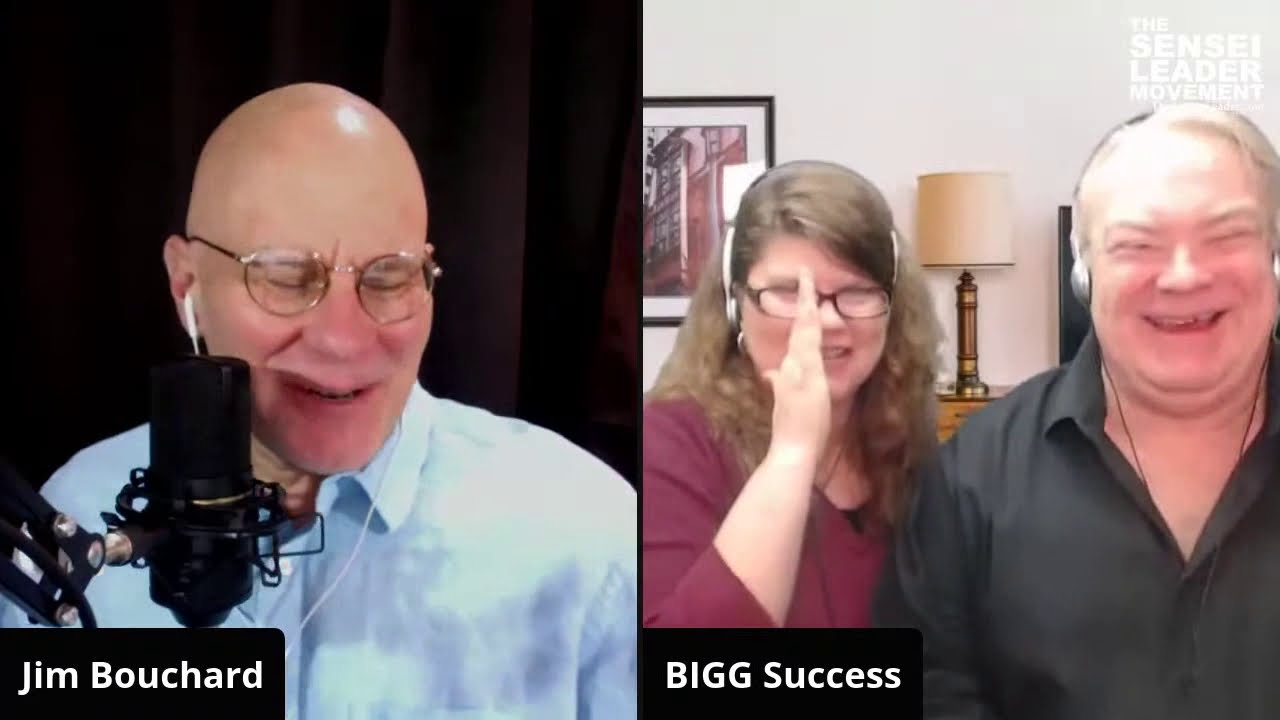
In this April 13, 2020 livestream, host Jim Bouchard talks with business consultants George and Mary Lynn (founders of BigSuccess.com) about the U.S. government's COVID‑19 relief programs, especially the Paycheck Protection Program (PPP) and Economic Injury Disaster Loans (EIDL). The conversation covers the moral hesitation some entrepreneurs feel about taking government money, eligibility rules for solopreneurs and self‑employed individuals, how to navigate banks and SBA‑approved lenders, the mechanics of loan forgiveness (payroll, rent, utilities) and the potential for loans to become grants. Practical advice is offered on cash‑flow management while awaiting funds, dealing with vendors and creditors, and maintaining customer engagement. The hosts also promote their Sensei Leader Movement membership and encourage a mindset of small, actionable steps, activity‑based goals, and staying connected with clients during the pandemic.
Chapters
We have got another great stream for you this afternoon. This is so cool, my friends George and Mary Lynn, the Professor and Mary Lynn, coming at you all the way from Chicago. I think we're a little windier than you guys are today, but anyway, a couple of housekeeping things just before we get, get going with George and Mary Lynn. Uh, first of all, make sure if you haven't already make sure that you use this link right here, okay? It's a Bitly, SLM Black Belt Free, okay? Join the Sensei Leader Movement right now. Our Black Belt level, normally $29.95, is free, and you got to use this link to get in there. You'll get all kinds of cool stuff like our monthly call that we just did. We've got, uh, ebook bundle there for you. That monthly call is live, and we've had some great discussions, so you want to get involved with that as soon as you can. Lots of other things too, but you can go there and find out all about it, okay? So without further ado, I'd like to bring two of my favorite people in the whole world, or one of them. There she's back again. These are the folks that founded BigSuccess.com, and they're just terrific people. We always have a good time we're together, and George and Mary Lynn are expert consultants in the business world. And I, I really, well, I wanted to have them on anyway, but when I saw them post a blog and an audio on is it unpatriotic to accept the EIDL and the PPP? That just really piqued my interest because, you know, people have been talking about that, and I know you guys have a pretty strong opinion on it. Take it away.
Oh, all right. Well, and just so you know, because you were talking earlier about the Sensei Leader Movement membership and how it's such a great deal, I mean, I got in and I'm a black belt already. I So I highly encourage folks to get in on this because it's great. We get wonderful messages from you about leadership that not only helps with our organization, but also helps in our personal lives. So I'm excited to be a member, to be a black belt.
You are a black belt. That's it. All right.
As we started through this whole thing, Jim started to talk with small business owners, our clients, and there was kind of this underlying theme with some of them. You know, there are people who are just desperate for money from anywhere. I think there are people who wonder what the ramifications may be of taking the money on their future finances. But then we ran across this strain of people who the underlying current was, I feel like I'm being unpatriotic if I take this money because right now today, I don't really need it. And you know how we are as small business owners, you know, I mean, like the thought of taking government money is sort of like fingers scratching on the chalkboard.
Exactly.
You know, we just, we just don't want to do that.
And a lot of people are saying they never have before, right? I mean, we fall in that place for sure. Yeah. Yeah.
But I think the thing is, you know, like I read today, they just declared that it's a national disaster in all 50 states. That's never happened in the history of our country. So we are living through unusual times. We can't just keep— we can't keep the same mindset that we've always had. And expect to come out good on the other side.
I couldn't agree with you more. And listen, if you're, you're watching on the live stream and not on the replay— well, actually, even on the replay, post your comments and we'll make sure they get to George and Mary Lynn. But right now, if you're watching live, I see quite a few people are joining us. Hey, show us your hearts and your likes and all that stuff. And also make sure you post your comments, your ideas, your questions, because these guys know what they're talking about with this stuff. So let's, let's pivot into some of that, because a lot of confusion over which loan Am I eligible for, especially with the solopreneurs and the self-employed people, right? Yeah, I had, I had one question that just came in just a little while ago too that I wanted to— we can start with this. And actually, someone said, um, if I remember exactly how they put it, they had taken some time off from their consultancy to go back to college, and so last year, uh, didn't show any income at all.
Yeah.
And then they were wondering, can I— am I still eligible for EIDL or for the PPP? And I believe a lot of that has to do with expenses if they had kept the business going somewhat, right?
Yeah, and also you may find that there's kind of a rule that says if you started up or maybe started back up, once again, we're always advising people just go talk to your banker because they're the best source of information on this. But if you started up by February 15th, you may still actually be able to get some money. So there is money out there, but mainly they're basing everything on what happened in 2019.
So yeah, and that's for PPP, right? The EIDL, you go right to SBA, right?
Yeah, you do. So, um, you go straight to them. And but, but I will tell you, even then, start with your banker because they can help you figure out which one is better for you. And, and also what you'll find is that, uh, that, uh, EIDL money, um, it, it, uh, it's going to come from the government, but you may be able to get an express loan, like a bridge loan, from the local bank.
Yeah. And I'll go on record by saying I am not a financial advisor, nor do I sell financial products, and you shouldn't listen to me at all. I'm just, I'm just giving you the stuff that I'm, that I'm hearing across the transom. We've been actively, you know, researching, trying to find stuff, but it changes every day right now.
Yeah, it really does. And I mean, just like, well, one of the questions we, we got was, um, if I take the money, I don't really feel like I need it right now. There are others maybe who need it more than me. Am I hurting them by taking this money? And our advice—
well, I was just going to say, we love that. We love that question because business owners are so thoughtful of other people. I mean, right? You get into business because you want to help other people. You want to solve problems. And so you don't want to create a problem for somebody else by taking money if you feel like you don't need it.
Right.
And that's great sentiment. And that's wonderful thinking. But on the other hand, you need to think a little bit differently in this situation.
Yeah. You know, if you talk through it, as we started talking with them more in depth, I mean, you know, we don't know what's going to happen in the next 30 days. And so to just have an opportunity to get money and not only that, but, you know, this money, you know, being in business for so many years, you realize I don't think I've ever seen a loan that did not require any collateral. I mean, maybe, but I mean, a loan of any significance that doesn't require any collateral, that doesn't require a personal guarantee. That's pretty unusual for us as small business people. And then no fees. You know, and then the possibility that it can turn into a grant. It's just something that as we counsel people, it's like, look, you know, what if a major client doesn't pay? What if, you know, start running through the what-if scenarios and you quickly realize, no, it's not being unpatriotic to get to take this money. It's actually could be helpful to your business. You may actually need it.
Right. Absolutely. Hey, we've got Dante. Dante Vespignani, thanks for chiming in. Always appreciate your support. He's a dear friend of ours as well. And Dante, make sure you put your contact information there too, because as people start to dig out of this, Dante, uh, gets people involved with franchise businesses. He does a great, great job with that. So, so Dante, let's, uh, let's— he says EIDL hasn't paid anything yet, 4.4 million applied last week.
Wow. Yeah, I think that, you know, they've turned this whole program around in less than 2 weeks, it seems like. Um, and so I, I think we've got to be a little bit patient You know, I guess the first round of the individual stimulus checks is hitting the mailbox or the bank accounts today. And I think that, you know, we've just got— if you've been— the process is like anything else. You apply for the loan, you wait to get approved, and then you wait for the money. And I think at this point, if you've applied for the loan, you've done what you can do. You've just got to wait. Of course, always follow up.
And congratulations to you, Dante, for taking that step. So now it's just a— now it's just a waiting game, right? Right. So unfortunately, we don't have answers on when that money will arrive, but you know that they're trying to get it out there as soon as possible. Otherwise, everybody's going to go under, right? So what's the point of, you know, allowing people to apply for the loans and then nobody ever gets it?
So, well, and hopefully there's actually going to be another round of even more money, which is another part of the answer to this question: should I take it even if, you know, I feel like others are more worthy? There's probably more money coming because there almost has to be.
But that does lead to, um, and I'm— that does lead to a question though. A lot of people like Dante are saying, wait a minute, I've applied, I'm waiting for the money, I need it now, what do I do? And so this is where you try to put off vendors that you can, um, you know, just stall, do what you can until that money arrives, right?
And of course you want to let people know that you've got money coming. So, right, and of course you— yeah, exactly right, you want to make sure you get in touch with, with creditors and whatnot. And many many have been as accommodating as they, as they can be. But Marilyn, this goes back, you know, to something you said too, this, you know, this idea of worrying that you're taking it from someone else, you know what I mean? And, you know, yeah, I'm impressed too. I mean, that's, that's something to consider, but it seems that a lot of the bigger players got to that trough pretty damn early. So I don't know how much guilt small-time entrepreneurs should be feeling about that.
Zero.
Yeah, right.
I mean, that's really what we feel is like— I, I agree with you, Jim. There were, there were some carve-outs, it seems like, um, which are, you know, maybe questionable. But the thing is, it's still overall a pretty darn good program, and it's like I said, it's the best loan program I've seen, um, my years in business. And so, uh, I think that the, that the idea of feeling guilty is misplaced.
Yeah. George, is Mary Lynn scooching you in closer? Yeah, we didn't want to lose That handsome.
I was taking her literally.
Oh my goodness. The other thing is, you know, that idea that, you know, when is it actually going to show up? And I don't know, I had some pretty strong opinions about that. It seemed like there was a lot of congratulations, self-congratulations and chest thumping when this, this bill passed, and then they got out of Dodge, right? But I think, but I think we have to be maybe a little more patient with them than they are with us when we're a little late filing our our paperwork or making payments on taxes, right? I mean, there's very little forgiveness from the other side, but I think we, we have to be more magnanimous, right?
I, I, yes, I would agree with that 100%. I think that, uh, you know, some of the bigger banks were, uh, what, what we heard is some of the bigger banks were really like kind of just shutting down the program while at that time community banks, we were having clients, and I've got every banker we've done business with calling us wanting to make these loans to us. So I think some businesses were seeing the, at least, you know, we want you to participate in this, while others weren't.
Yeah.
And I think if you're one of those who weren't, you just got to keep trying. There are lenders out there who are interested in making these loans. But you're absolutely right, Jim. I think that, you know, when you look at how quickly things have developed, it's really, for government, it's pretty amazing. You know, I'm not a huge big, I'm not a big government guy, But for government to do what it's done in the time it's done it is, frankly, I've been a little bit impressed with that. Now, you know, the proof is in the pudding, right? We got to see how they deliver because we can talk about doing it. That's one thing. But at least to get to this point, I think they've done a pretty good job. And is it the end? You know, is it the— do we need more? Absolutely. There's going to have to be more. But, you know, it's a good start.
No, I'm with you, and you know, you know I'm not a big government person. Yeah, but the, the idea is that, you know, this is one of the ways that we can all work together through government. And as far as we know, I know there's a lot of talk about forgiveness and grants and whatnot, but we're still not sure how that's going to shake out, you know, whether every business will take advantage of that. So I'm looking at it this way: when you take these loans and you're going to pay them back and you're going to pay them back with interest. It's modest interest, but you're going to pay it back with interest, and that's going to do nothing but increase, right, the availability of funds for the next challenge that we face if we face this again, right? And hopefully the infrastructure will be in place. Alex is working behind the scenes for us as always, and she's bringing in some questions from text too. All right, looks like this one came in. Yeah, this is a— a lot of people are asking about this one. Which is the best option? I know there's a lot of opinions, right, for solopreneurs without actual payroll expenses, EIDL or PPP. Do you guys have an opinion on that?
You know, I think once again it's hard to talk in generalities about this stuff. You really get down to your level. And so to really advise them, our advice is simply just talk to your banker. If you don't have a banker, start asking the fellow business owners who do have, you know, a banking relationship and see if you get a referral. Um, but generally speaking, so far it's kind of hard to see how this program is of huge benefit to those who are solo entrepreneurs with no employees, unless you're making a lot of money. If you're making a lot of money, you know, if your Schedule C is showing a nice profit, you can get 2.5 months worth of that profit paid in the form of this loan. And for the Paycheck Protection Program, that's why we call it PPP. I hear you. But you can get 2.5 months of your profit profit paid right now through the government, and that may turn into a grant.
Yeah, and as always, like, make sure if you're watching this on the live stream right now with us, you know, share your comments. Oh, here's Alex. Share your comments, share your questions, share your ideas too, share your experiences. What have you guys been exposed to out there in trying to process these loans? Because I tell you, I'm hearing everybody have a different experience. And one of the big ones too that I wanted to ask you about was this: people are— so sometimes small businesses have, you know, they have active checking accounts, but they might not have borrowed, especially if they don't have brick and mortar. These days, a lot of businesses have no brick and mortar. They're online businesses, they're consultancies, they're things like this, they're selling information products, so they don't have the need to borrow. And that's been challenging because we've heard a lot of reports that banks, uh, particularly the bigger ones, are servicing— and I understand if they make more money from them, but they're servicing their big borrowers right, first, rather than the people who just, you know, because that's how they make their money, is loaning money, right?
Well, yes, and who can blame them, right? I mean, right, that's what you said, that's where their money is. And, and I guess I would say, I think this, this is also a good time for us to think about our banking relationships and the fact that if you are banking with a big bank, you know, that loan decision probably in normal times, that loan decision is probably made 1,000 miles away. Would you rather bank with them, or would you rather bank with somebody who's going to take your loan request to the committee and, and kind of talk you up? You know, I mean, who's actually going to be kind of become kind of an internal advocate for your loan? Um, I think we should look at this because community banks serve a huge, hugely important service in our communities. They got decimated in 2008 for not doing anything wrong, and now is an opportunity for them. You know, they're stepping up to the plate right now., and we should, we should help them with that.
And there are some conveniences that the larger banks offer that smaller banks don't. That just is a fact. But that doesn't mean that you can't, as a business, bank with both, you know, right?
Right.
You can, you can, you can have your larger bank for some of those conveniences, but then also make sure that you've got a smaller bank that you're, that you're supporting, and then they can support you too. Because I'll tell you, during these times, we've even had a hard time with our larger bank actually getting through to talk to somebody.
Oh yeah, amen.
A simple business function that we wanted to do, didn't even have to do with a loan, but we were able— but the smaller banks were calling us.
Yeah.
So, you know, and the credit unions— no, we're a little biased because we do a lot of work with credit unions, credit union associations, but we do that work with them because they've been so fantastic and they're such great leaders and they've really been stepping up. Well, I can't say enough about our, our friends in the credit union area. Another one that's come up, this is This is an interesting challenge. Uh, people who have reached out to their creditors, like I said, a lot of them have been accommodating, either, uh, offering payment holidays, uh, deferred payments. They might still accrue interest and whatnot, but they're pushing the payment schedules back through. I've heard 3, I've heard 6 months with some, some creditors if they're big enough to handle it. So that's, that's pretty impressive. But here's, here's the dark side of it. We've also heard that people who have accepted those terms, their credit score is dropping. Is this something that you guys have an opinion on, or—
well, my opinion would be, I had not heard that one before, so, uh, but I guess I would tell you my opinion is if, if it drops, it drops. It's going to have to. Um, you're not alone.
Yeah, is that going to be weighed into, you think, the decision?
I think so. It's going to happen, you know. I mean, I'm not saying it won't hurt your credit, credit rating, but, you know, I think what, you know, what, what most times bankers will do in situations like that is they'll say, hey, you had a little rough patch here, what was going loan, write me a letter, you know. And so you may just, along with your loan application, just write a letter. What I would say is, down the road, if you do need to borrow money, just make it clear to your competitor, hey, we went through some rough times during the whole coronavirus thing, and, you know, it impacted how we dealt with things. But on the other side of it, we ended up paying our vendors 100% of the money. Yeah, we owe them. And so, you know, we, we are a good credit, and we take, we take credit extension seriously.
I imagine it's going to be a big asterisk right next to the year 2020.
And we thought there was the big one next to 2008, right?
Yeah, exactly, exactly.
I had two of these in a row here, so it's really kind of funny.
I know, it's terrible. Here's Alex, got another question that came in. Uh, I'm hearing that the max loan from EIDL will be $15K even for large businesses. Are you hearing the same thing?
See, I don't have those details, so I don't know on that.
Yeah, those are moving targets, aren't they?
Yeah, I think so. You know, I think what's really important too, right here, I guess what I need to say is sometimes it doesn't make sense. Like, I remember reading that, that it was $15,000, but then I clicked on a link on that same site and it said, um, that the amount you can get as a bridge loan from, from a bank while you're waiting on your EIDL loan was $25,000.
Right, right, right.
I don't know. I mean, I think, I think right now, once again, talk to your banker because they've got all the details because they have to have all the details.
Yeah, no, it's, it's crazy. And I think that's something people really ought to think about as well, is don't get addicted to the constantly changing updates. And I've noticed also, and, and this is part of the reason I wanted to have you guys on too, because you're such a calming influence in this space. And there have been people that are jumping on and capitalizing, and they're, they're not business consultants, they're not accountants, uh, some of them are just, you know, I shouldn't say it just, you know but they're direct marketers. They were in a whole different business until this week, and all of a sudden they're, you know, SBA loan experts, right? Now, I appreciate them sharing the information.
Sure.
And the best ones— and there have been some very good ones too— the best ones are saying, look, you know, I shot this video 4 hours ago and it's changed since then. Yeah, we wake up to a different world every day. So we got to kind of turn off that, that noise, I think, a little bit, right?
Well, and even just— I'll give you an example— the PPP program for solo entrepreneurs, self-employed, etc. The, uh, the, uh, period when that— when those loans were being— when you could apply as one of those people, um, was— I believe it was actually, uh, last week sometime, um, the 10th maybe. But the point is, um, it was like a week after every, you know, corporations, etc., business— businesses that were incorporated could file, but there was no clear understanding as to why they had to wait a week. Um, you know, I think that it's different in the sense that, you know, they're also bringing in the, the net profit that they're earning. But it's really just unclear to me. So, so you've got information that, that there's pieces of information, but you never can seem to get the full story, uh, which is why once again we just end up settling with Cardiobanker.
One of the worst ones I heard was the $10K grant at first when people were applying for that, right? Yeah. And this is Alex's chiming in about this one too, right? Somebody else brought something in. Yeah, please make sure you share your comments, share your questions, and, uh, we'll pop them up here and we'll try to address them the best we can. If you're watching on the replay too, like I said, share your comments, share your ideas there as well, because what we'll do is we'll make sure they get to George and Mary Lynn, or we'll try to get them to the right, to the right sources if we can. Okay, so even after the program is, is live, we can still do that. Yeah, that 10K thing, you were supposed to apply for it when it first came out, right? And it looked like it was 10K, 10K. Then a couple days later it came out that no, it's up to 10K, okay, and that you had to request an amount. Only problem being on the original online form, and this was from a good source, yeah, there was no place to put the amount.
Yeah, well, once again, I think this is just the speed at which they're trying to get this stuff out, um, I will say this, I think when we look at it is even if it doesn't end up like, like with the PPP, even if it doesn't end up being a grant, yeah, talking about 1% money, think about that, 1%. I've never seen 1% in my life. It, we probably, you know, in 100 years will be the next time this repeats itself, one would expect, right? So I hope we don't live long enough to see that. Yeah, it's a 1% loan with no payments for 6 months. Now the interest will keep accruing, but it's accruing at 1%. And you have to pay it back in 2 years. And ideally, you pay it back, if that were to be the case, with another loan. But the thing is, it hopefully turns into a grant in the meantime, and you don't have to worry about it. It's just an influx of capital in your business for which you never have to repay. And that's, in my world, that's a pretty good deal, right?
What are some of the, what are some of the, um, uh, what do you call it, items that will revert it to a grant? I know payroll was, if you, if you keep people on, the amount that you pay them turns into a grant, right?
Yes. And so what— yeah, yeah, go ahead, Jim.
No, no, I don't know what the other ones are.
The others are like rent or mortgage and then utilities, those kinds of things. And in theory, what they're saying is it's 2 months of payroll and then a half a month of those other— it's 2 and a half months of payroll. 2 of that 2 and a half is to pay your payroll. The other half is actually to pay for, you know, rent or mortgage, utilities, and those kinds of actual hard— kind of hard costs. And so that's what they're trying to do with this program is get some of those other costs in. But I mean, you and I know in a typical business, you know, payroll is probably 50% at max, right, in most businesses. And, you know, maybe as low as 20%. So there's a whole lot of other costs in there that aren't being accounted for at this point. So that's where I say they've got to do something to provide more relief.
Yeah, you know, You opened a whole bunch of cans of worms there. And one of the things, though, I mean, without, without going spinning off into a political debate, I think one of the ways to look at this as well is instead of just bailing it— because there, I guess there were some propositions put forth that, that consider these alternatives, that they would just inflow monies, let's say, to the power companies directly, right, or to utility companies directly, uh, effectively a bailout. But This way, by putting it out on the front lines, and we— if we take advantage of this, right, that's what we're going to be using the money for, for rent, for utilities, for payroll, right? So it, so it does have, you know, a cumulative effect along the way. And I think one of the best things is just— I don't— I like this better. I— if, if we're still thinking, you know, is it unpatriotic to take this, uh, I'd rather have the money in my hand and then feel good about paying my bills rather than a grant that goes to the power company, and then all of a sudden we don't know what's going to happen. Do I still owe that money? This is back there, you know what I'm saying? Yeah, I can imagine the nightmare that would happen with that.
Well, and I think, Jim, almost— I think one way to look at this is it's similar to eminent domain in that the government basically took potential sales away from people by shutting everybody down. And so that's, that's one way of thinking about it. Now here's the thing, like kind of a general rule of thumb is that a business should hold about 1% of sales in— or I'm sorry, 1 month's worth of sales in cash. Yeah, that's if you can't find a number for your industry, you know, we'd rather, we'd rather actually look at your industry and see what the number should be. But it's generally speaking a rule of thumb to do 1 month worth of sale— worth of sales. That's what you hold in cash. Well, the government's shutting people down completely for that, so that means essentially The government's wiping out the, the cash of every single business in the country, and somehow, some way, we've got to recover from that. And I think the attempts that they're making, you know, it's like when— it's like starting a business, right? We try something, it works or it doesn't work, we adjust, and then we try something else, right? I think it's kind of similar to that.
Absolutely. Hey, and thanks everybody for popping in and out of the stream. You guys have so appreciate the support you've been giving to our streams. Make sure you put your comments, your questions up. We've got another one that just came in. Alex is bringing them in from— she's seeing more streams than I am too, so sometimes she just transcribes and then we put it. For the sole proprietor, how do they determine how much money you can actually get? Probably nobody knows this, right? Will they approve bigger businesses first? I'll worry they'll run out of money. Well, they just, you know, they'll print it or borrow it from China, right? That's the greatest irony in the whole thing.
Between the federal government and the Fed, there's no shortage of money at this point, right?
Yeah, and the government doesn't seem to have a problem borrowing money, do they?
So no, they don't.
Yeah.
Um, and so I guess my understanding is that if you're a sole proprietor, you're— take your Schedule C, and let's just— I won't try to create numbers— take your Schedule C, divide that by 12, multiply that by 2.5, and that's about what I think you could expect to get. Because what they're essentially saying is your profit from that business is like your salary. And so you get 2.5 months worth of salary. And as to the bigger banks first, or the bigger companies first, this is primarily supposed to be limited to 500 or less employees. Where the sneaky part came in was— and I mean, it's okay— but they said that, you know, it could be 500 per location. So for some of the chains, it's 500 less than 500 employees per location. Um, but it's supposed to be first come, first serve. Now, you know, you can trust that or you can't, but the thing is, these are all things we can't control, right? We can't control whether they take a large company ahead of us. We can't control, you know, what order we, we are placed in. All we can control is getting a hold of our banker and talking, talking through it with them and seeing what kind of loan we should try to apply for and how much.
And that leads to another, I think, another one that, uh, It's kind of interesting. Do people have to go to the bank they already have a relationship with, especially again, so many businesses these days, that relationship's nothing more than a checking account or a savings. Can they go to any bank? Can they go to some of the larger ones or some of the online banks instead of going right to somebody they've already had an account with?
They can. Like, for example, Kabbage has been— Kabbage with a K. They've been actively promoting that we're taking these kinds of loans. I think the challenge you find is they have been so— banks have been so inundated that in many cases some of them are starting to say, hey, look, if you don't already have a banking relationship with us, we're, we're not accepting new clients at this point in time. So I think it's best to start with your banker if you can, but if you can't, there are plenty of other options. Now, the only, the only caveat to that is they've got to be an SBA-approved lender. So that's really the first, the first question I think you should ask your banker when you get them on the phone is, hey, I just want to make sure that you're an SBA-approved lender for the EIDL or bridge loans or for the PPP.
Why don't we— why don't we change it? We're going to change the tack a little bit, okay? Because you guys have so much valuable information to offer to business people and entrepreneurs. We're going to see an end to this at some point. Yeah, I don't know, May, June, July, August.
Yes.
Yeah, depending who you're talking to, make bets.
I'm sure you guys are already starting to strategize. What's the best ways for some small businesses to start digging their way out of this mess once we get some movement again?
It's a great question. You want to start?
Well, I mean, obviously, I mean, all you can do is just kind of deal with what's in front of you right now. And, you know, a lot of folks are just dealing with worry and anxiety. And one thing that we've been encouraging people to do is, you know, don't try to look 3 months ahead because we don't— you just don't know what it's going to look like 3 months from now. You don't know what it's going to look like a week from now. So really, in order to help calm your nerves and to try and, you know, stay sane, just what are some small actions that you can take today as things are coming at you? So is it that I need to call this one vendor today and You know, ask, "What, what can you do for me?" You know, right now, considering what's going on. Maybe that's one action you can take. Maybe it's, I don't know—
And the customers, right? Staying in touch with your clients and customers, because a lot of them, you know, they're facing the pinch too. I mean, we've certainly seen that where people had to pull back. Of course, fortunately, because we're not moving widgets, you know, it doesn't hurt me to say, "Look, you're going to keep your coaching program going." You pay me when you can, if you can. But like I said, there's no widget behind that.
So, well, and I also think that, um, like, like, watch the big companies because some of them are doing— actually, first of all, you know, I'm not a huge fan typically of big companies, but, you know, some of them have been doing some pretty patriotic things, for lack of a better word. I mean, we've seen some of the best rise to the top in this situation.
Yes, we have.
But I would also say there's a tendency, I think, in situations like this You know, we talk about socially distancing, but, but, you know, make sure that you're not socially distancing your business from your customers. You know, just encouragement for your customers, just like social media streams. You need to have kind of a constant stream of things that are just encouraging, uplifting. And, you know, I think that it's so important for them to see you and for you to be putting up billboards all over the internet that are free right now. That's a great use of your time and it doesn't cost any money. And that's one of the things I think you should be doing.
Alex is challenging one of our friends, Jeff McCluskey, to share. Yeah, Jeff, share some information if you have. He comes from the investment and insurance perspective. Yeah, Jeff, come on and chime in. Um, if I knew how to do it—
I've—
this next step I got to learn on StreamYard. I could just invite you on here and we'll pop you in too, but we'll get to that in future streams. Now, I like what you're saying, and Marilyn, you know, that's absolutely really, you know, the black belt perspective is to just put one foot in front of the other. But it seems, if I'm hearing you right, wow, especially for small businesses, we got to shift. We've been taught for eons to think about 5 years out, 10 years out. Right now, a lot of, especially as this continues to go on, a lot of these businesses are exhausting their resources that were set aside for the 5-year plan, for the 10-year plan. We do just have to think about what's right. What's that great saying about You can drive across the country 200 feet at a time, right? I think that was our friend Joe Callaway that shared that story, right? Just as all you have to do is see where the headlights can illuminate, right?
Yes. Yeah. Well, and there's actually sciences behind that. So in terms of entrepreneurial science, you're starting to see, you know, if you're, if you're a high-tech venture capital, you know, you're going for venture capital, you're that kind of business, biotech, life sciences. Costly startup, you need a plan. But for a lot of us, we really kind of need to form our plan on the fly. And what it really amounts to is just starting to try things, and then seeing what happens. And, you know, as, as one of our coaches says to us all the time, experiment, measure, evolve. And that's really the key, I think, right now is just to keep, like you said, Jim, baby steps forward, see where they take you. And if it's, if it's a go, Push it. If it's not go, can you tweak it? And if you can't tweak it, try something else.
You know, I love to quote Lao Tzu. What do you say? Every journey of 1,000 miles begins with a single step. And every, every, the rest of the journey is a bunch of single steps too.
Yeah, exactly. And when, and when the future is really unclear and you can't set those clear results goals, you can always set activity goals.
Oh yeah, yeah, yeah.
And that's really, I think, something that we're not often taught either, is that the activity goals, and then as we perform those activities, we start to see what those activities, what What results do they generate? And now we can start setting activity— or I'm sorry, results goals.
And then you can celebrate those small victories, right? Every little thing you accomplished. I think that's critical to people's mindset right now. You see, we're so overwhelmed with what we can't do. But every small victory, everything you can accomplish right now with whatever resources you have, man, that's big. That means something.
Absolutely.
And what's been amazing too is just watching entrepreneurs and small business people figure out ways to make sales online. So whether it's, can I Can I turn a product or an experience into something that I can offer online for people to buy? Or can I ask for tips? Or just email and message my customer base and offer them coupons to be able to use when things open back up. So there's all kinds of ways to still be working on sales, whether it's, you know, can I get a sale right now and put something out there and tell people to buy now? Or is it something that I can tell, hey, I could just keep telling people now they'll be able to buy this in the future. Just, you know, stay in touch. Like George said earlier, stay in touch with your customer base. They want to know how you're doing. Let them have a peek behind the curtain and, and, and just kind of get to know you a little bit better. This is a wonderful time to really connect with people because we're all going through our own difficulties and so we can relate to each other more. So this takes the, you know, merchant-customer relationship and brings us together as a family. So these are real opportunities to connect with people in ways that you haven't before. So be creative and let— use this time to be innovative, because that's why people get into business in the first place, because they're innovative and they love people and they love coming up with ideas. And a lot of times you get in business, you get bogged down by the, oh, I gotta do paperwork, I gotta do So here's a chance to really just allow that creativity to spark again and really connect with people.
Oh, that's really good advice. You think we're past— because at first, and this is probably a good way to start wrapping things up, but, um, you know, for a couple of weeks there, a lot of, a lot of advisors were just issuing stand-down directives. Don't try to sell, don't market, people are worried about other things. You think we're starting to come out of that, especially as they're starting to talk about lengthening this lockdown even past May?
Yeah, I think we are. I think you still have to be careful because you don't want to seem insensitive. I still think that, you know, I think those of us, like, you know, with what you do, Jim, with what we do, we tend to give away a lot for free anyway. I think that—
probably too much.
Well, yes, I understand that sentiment, but I think for a lot of real-world business owners, that's really a strange concept. But if they think about it, it's not a strange concept. I mean, think, for example, we've sampled stuff. We've sampled food from restaurants for years, you know, or from the bakery or whatever, you know, they'll give you a little sample. And the idea is to help you, you know, make you want it, right?
How many free pins do you have?
I've got a whole room over here.
But I think what we constantly are counseling our bricks and mortar businesses, especially now, is, you know, you've got to get online. And you've gotta find ways of creating content that truly creates value in the lives of the people of your community. And then those people will become great customers the more they come to know you, like you, and trust you.
Love what you guys are saying. Absolutely love what you guys are saying. You've given me a lot of hope. I think you've given a lot of people a lot of hope, right? Mary Lynn said, "Put one foot in front of the other, just keep going," right?
That's right.
That's what we need to do.
That you've been doing with all of your, um, so many leaders, wonderful leaders that you've been talking to on a daily basis. And it's just incredible. And we, we get to learn so much from you, um, both online and in your, uh, social media spaces, and then also, uh, back in the, uh, Sensei Leader Movement membership area where we get even more insights from you. So it's really wonderful.
Well, thank you for that. Mentioning that. We'll put that up one more time. And yes, and absolutely come on to the Sensory Leader Movement right now, the Black Belt level, which also includes, in addition to a lot of other benefits, but it includes a monthly live call. It's bit.ly, okay, forward slash. I always do a forward slash with the bit.lys. And then SLN Black Belt free. And we want to make sure, you know, you— there's a lot of resources you can access with George and Mary Lynn. It's BigSuccess.com. And they've got one of the best podcasts going. That's, like I said, we give away too much. I don't, I can't believe that that isn't a subscription podcast. That every time I listen to it, you know, I learn something new and it brings value.
So thank you very much.
But of course, that's what you guys are pros. You guys have been at that for a while. You were pioneers.
Yeah, we've done over 1,000 shows now. So we've been at it for a while.
Oh my God, it doesn't seem possible, does it?
One foot in front of the other, Jim. A lot of talking.
Let's have you back on sooner rather than later this time.
Yeah, yes.
George and Mary Lynn, the Professor and Mary Lynn, thank you so much. Thank you.
More from Jim








Why AI-Only Customer Service Is Failing Customers | Danny Snow on Keep It Human


