Jon W. Hansen - Leadership & keeping the supply chain moving!
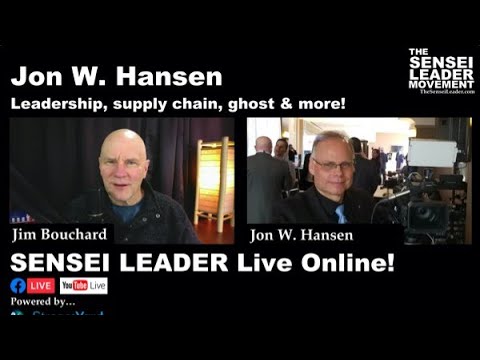
In this livestream interview, host Jim Bouchard talks with procurement veteran Jon W. Hansen about the cascading effects of the COVID‑19 pandemic on global supply chains and the broader business environment. Hansen cites IACCM survey data showing a rapid rise in reported disruptions (27% → 78% within weeks) and explains why everyday consumers have not felt major shortages, highlighting the elasticity of modern logistics that kept food, medicine and PPE largely available. He discusses the risks of over‑reliance on low‑cost‑country sourcing—especially China— and the emerging debate over reshoring or hybrid sourcing models, noting the cost trade‑offs and the need for a more relational, trust‑based buyer‑supplier dynamic. The conversation then shifts to remote work, where Hansen points to a 60% productivity boost but warns of potential downsides such as longer hours, reduced creativity, and the need for intentional in‑person touchpoints. Finally, the two explore governmental responses, using Quebec’s optional school‑re‑opening and Canada’s emergency financial aid as case studies of balanced, citizen‑centric leadership, while also touching on the tension between public health measures and civil liberties. Throughout, the dialogue is interspersed with light banter and a promotion for the Sensei Leader Movement’s free Black Belt membership.
Chapters
Another amazing guest, and sorry we're running just a tad late today. The electrons didn't want to cooperate. So without further ado, I'm going to bring on one of my dear friends and mentors. I know I say that a lot, but I'm really blessed with all these great people in my life. And he's coming all the way from Canada. We used to do a show together where we would argue across the border, and I hope we'll do a little of that today. So all the way from the Great White North, and I'm going to let him tell you a little bit about himself because I don't even— I can't fill his resume. And John Hanson, bonjour!
Hey Jim, great to be— great to be sharing these virtual airs. You brought back some great memories of the, the show The 49th Parallel. And I always say this, Alex was the voice of reason, and we did have some interesting dialogues. The most memorable for me— I don't want to go too much of a tangent was when we had— what was it, Hardhead Larry or Billy or whatever?
Oh my God, yeah, yeah.
I, I think somebody threatened to burn down your house. That, that was— remember that?
He was fantastic.
Something like that.
Yeah, that was after 9/11. We got into some political stuff. And also, always, if you're, uh, coming in, coming on the replay too, uh, share your comments, share your ideas. If you're on the replay, we'll make sure that we get questions to John if you've— if you direct them to him, and we'll answer them directly if we can. If you're live, Come on into the conversation and we'll pop your comments up on the screen. That's from Facebook Live and YouTube. So, all right, John. So one of the things, one of the reasons, one of the many things that you're an expert in, you spend so much time in procurement and you're an international speaker in that topic. And people are very, very concerned about the supply chain right now. Can you give us your insights? What do you think's happening? Should we worry? Should we take some precautions? What should we do?
Well, you know, and this is the thing, just to give a quick background, I've been in high tech for more than 35 years in procurement, not that much shorter of a time. And so I've seen the evolution of the practice and the technology behind it. So, you know, there's a depth of scope here. And one of the things that I'll start off by citing statistics, the International Association of Commercial Contract Management, IACCM, I was on the call with, with him, the CEO, and one of his top executives. And they had done a survey of their 70,000 global members. And in March 6th, they asked, "What degree has COVID-19, the pandemic, disrupted your supply chain?" And at the time, about 27% of the organizations who responded said, "Yes, we are experiencing some form of disruption." A few weeks later, they did a follow-up survey, and that number grew to 60%. And then about mid-April, a third survey, again a follow-up to the previous two, reported that 78% have been disrupted in some way or another. So when you hear that, all of a sudden you're wondering, are we going to have food shortages? Are we going to have shortages on the shelves? Well, number one, don't go out and buy a lot of toilet paper. You don't have to. It's all there. And I say that tongue-in-cheek, but let me create a perspective for your listeners that provides a reality of just how supply chain permeates our everyday lives and the importance of working in some of the key areas. And then I'll touch on some of the more challenging areas. I would hazard a guess, whether you agree with social distancing and self-quarantine or not, one thing is certain. Any efforts to implement that would not work if we did not have the ability to very easily and very simply access entertainment, access internet, order groceries online, order goods online. And so what that tells you is, is that because we are not in a predicament where we can't get what we need, whether it be food, whether it be medicines, whatever else, because we are not in that predicament, the social distancing measures have worked to the degree that they have. And again, you're not getting into the merits of it or not, just to digress, I live in the the province of Quebec, who's just made the announcement that they're sending the kids back to school on May 11th, starting at the elementary level, right? And they're responding to the majority. They're responding to the majority who are saying it's time to get back in. And, you know, it's an interesting survey, uh, and again, I want to get too far off— interesting survey, but, uh, Quebecers have a life must go on attitude, and that this is just part of life and part of risk. And, you know, we've hibernated enough. However, in the government's wisdom, which I appreciate and respect, those who are less inclined to venture out, who still want to social distance, aren't penalized if they don't send their kids to school, uh, because they're making the online courses available. So I think there's an intuitive thing, and, and got there simply because what it shows is, is the elasticity and the responsiveness of supply chains. Not only that it affects all of our lives, but ultimately it enables us to carry on a degree of normalcy, whether it's an old normalcy, a new normalcy, or a yet undefined normalcy. So when you hear the numbers of disruption, you then now say, okay, it's not affecting me on the frontline basis. Where does this disruption potentially work? Now I wanna wade through the fear factor As you know, a couple of weeks ago, I wrote an article a little bit longer on the fact that the disruption of supply chains and the focus on treating COVID could interrupt the treatment of other ailments and illnesses. And there was very much a fear saying that if we can't get to doctors, if we can't get the medicines we need to treat heart conditions and diabetes and things like that, the mortality rate indirectly related to the COVID potential interruption of the supply chain would be— well, we haven't run out of any medicines at this particular point. Time. And again, that's where I want to get the broader perspective of the fact is, is that these interruptions have had very little impact on the average citizen. And that's a great testimony to the resiliency of supply chains. Now, that doesn't mean that there aren't difficulties happening. We know, for example, that when it first started surfacing in China, that there were fears from everywhere from the NHL saying we're going to run out of hockey sticks to automobile manufacturing plants closing down. But again, I ask on a very practical level, for the average citizen, how much, how many of you have gone without? So the breakdowns in chains have not reached to the point of a critical mass where anyone in the general populace is going out with whatever they need. So that's the perspective you have to look at. Now, the resiliency, in certain cases, they're being stretched. Now, many people have talked about the PPE shortages. You know, the story came out of Canada, that orders in China for, for, for, uh, the PPE products were being hijacked on the tarmac as countries are sending people with briefcases full of money, uh, buying it and, and rerouting it indirectly from the rightful place to the other. We know what happened in the U.S. with regards to the measure of the Korean War Act where, what was it, the, uh, General Mills or no, uh, General Motors plant in Indiana was forced to convert its plant production to these masks. And without again getting into political elements, is there a shortage or isn't there a shortage? Frontline workers will tell you that, and there is some exposure. On the other side, I walked into the local grocery store or the pharmacy, and I was able to get masks. Now, were they the N95? No. But the reality is, is that outside of those acute areas like frontline medical staff, outside of those acute areas, you're not really going to see a shortage or an impact in any real-life practical way. However, as this continues to develop, we're going to find out how truly resilient our supply chains are. And more so, I would suggest, after the crisis, because it's projected— a New York Times article talked about the fact that many, they call it zombie businesses or sunken industries, Jim, uh, who were on the cusp of going under or can't take the financial strain. Many upstream suppliers will be gone, uh, different industries will be certainly changed dramatically. And that's where I think the real test is going to come for supply chain, is finding new sources of supply. Now let's expand in the overall strategy, uh, because one of the issues with supply when China went down If you remember the SARS outbreak, it had certainly a serious impact on China, but as the New York Times article reported at that time, that many years ago, China was really producing sneakers and t-shirts. They weren't going to ruin the world if we didn't get sneakers and t-shirts. But now China is, because there's been an aggressive low-cost country sourcing strategy, and we've put all of our sourcing eggs in one or two proverbial baskets, one of the main ones being China. For all ranges of goods. Yes, there are a lot of risk in there because we now have to look at it and say, for example, in France and even in Canada and different parts of the world saying, we have to repatriate or shore some of these supply chains to domestic capabilities. Easier said than done because, again, the whole reason low-cost country sourcing was ideal is that you get cheap labor and low costs. How do you repatriate that to Canada and the US when the cost of these goods are much higher? So there's got to be a balancing act, and some are calling perhaps a hybrid. But I will say this, the greater challenge for supply chain, challenge in terms of businesses and the economic impact and the reverberations from this will occur after this immediate pandemic crisis has passed.
Well, you opened a lot of cans of worms there, you know, and one of the things that's very critical, like you said, uh, our dependency on China for production of some of these goods, particularly electronics. So it's very interesting that, you know, there's kind of an intersection of, of, uh, chaos here where we've increasingly become more dependent on electronics, especially for communication now. And, you know, we're seeing a lot of industries, you know, my industry, I mean, your industry, speaking industry, came to a dead stop, and then all of a sudden, within a few days, a 180-degree pivot for those of us who could, to go online and to open up virtual events and do things like this. That's just a small, small portion of what's out there. I mean, how many new, how many industries have over the past few years adopted much more sophisticated means of, like you said, nourishing that supply chain, getting goods and services to where they need to be on time, all serviced through electronics, right? All serviced through communication devices. And so for that, for us to be that dependent on the Chinese for those— I know, uh, South Korea produces a lot as well. I'm also seeing that it seems that some of the other, uh, I'd hate to say underdeveloped because a lot of it is our own fault that we've kept them out of the, you know, try to stifle competition. But we're seeing it pop up in Africa, for example, now where they're starting to say, hey, let's, let's get involved in this, maybe we can produce it. And they're you have a lower cost of labor and whatnot, but there's still going to be some time to ramp up just the physical production, right? And like you said, repatriating several companies. Didn't Sony pull back from China themselves? Their Japanese manufacturing is coming back. I heard— I thought I heard a story about— well, but it's going to take time for that.
Well, I hadn't heard that specific story, but I think what's happening now with the fluidity of the situation is, is that there's a lot of speculation as to what will happen, how it will happen, the redirection of these new channels. And that's why I go back to saying it's a complicated issue that will have to be addressed. You know, when you're in the middle of a crisis, what you do is you make work what you have. And there has been some surprises and there has been breakdowns, but in reality, uh, it's going to be the new business landscape and things are going to change within the procurement world, within the supply chain world. There's going to be a greater consideration in terms of the relationship between suppliers and buyers is going to move more and more. And it has been at times at a glacial pace, but more and more it's going to move towards a relational versus transactional type of interaction, being that a transactional is how can I get it at the best cost?
Right.
Where relational is you take into consideration everything from end to end, including DSO. Day sales outstanding are very important to suppliers because that's how they paid. And in the past, payments and whether or not there was supplier liquidity was not as important as it should have been. The transparency throughout the chain was not necessarily the same. I think we're going to see gradual improvements in that area and certainly plug those gaps, but it is not— again, I think the most challenging times in many ways will be beyond this crisis, and then when those new chains of supply get set up, what will the cost be? And ultimately, at the end of the day, And supply chain touches every part of our lives. You know, you see somebody with a phone, that's gone through supply chain. You see somebody with a bag of groceries, that's gone through. I mean, ironically, when the crisis first emerged out of Wuhan and they were talking about closing down plants, auto plants overseas, the biggest fear at that, those early days, and I'm talking about February,, with stores running out of inventory, not because of what was happening because of a virus overseas, but because of the protests with regards to a pipeline running through British Columbia and the protests disrupting rail transport and not being able to deliver things. So, I mean, what we're seeing here is obviously the, the, the latter is elevated, uh, in terms of impact than, than the former, but the reality is supply chains are, in generally speaking, they have to have an amount of elasticity and a responsiveness that is best proactively structured than reactively structured. And I think that, you know, these are some of the important lessons that are coming in.
Well, you know, and I'm glad you touched on the fact that, you know, we need to shift— well, we need to shift— we've been champions of it for years. That's what our business is built on, is that the relational types of transactions instead of, right? You know, we deal with one another as human beings. And yeah, I agree with you. I think there's a lot more movement. I hope we're on our best behavior after too, because people in a lot of ways have been forced— it's ironic that we've been forced apart physically, right? And trying to connect electronically. And I'm hearing story after story from leaders who are saying it's actually caused them or given them opportunity to reach out more directly to people. Now, it's still not the same as being in the room, but, you know, and I do believe you're absolutely right, especially when it comes to supply chain and direct sales, that people need to think of that, of these relationships more. Well, I know the words keep circling, right? We have to look at doing business relationally instead of transactionally. The transaction's there. I mean, that's built into the process. You You can't escape it. But the more that we can trust one another, and like you said, it's, you know, we can look at low cost. How can I get this quicker, cheaper, faster? Or can I depend on you? And can I depend on you to be responsive if there's, if there's a problem, right?
Well, and that's, that's true. And that leads into, see, you've now have two paths of direction here, and I want to touch on both because I think it's important. Let's look at the remote working side and the permanent impact that's going to happen. I'll touch on that momentarily, but I used to speak very often at conferences, and it was actually quoted in Forbes article about the emerging 3D supply chain. And I talked about the I-35 bridge collapse in Minnesota, and I'm sure we all remember that tragedy. And one of the interesting things about that is that when that occurred, besides rebuilding the bridge, because it was a major artery obviously between the Twin Cities, they also wanted to honor those who who had lost their lives. And what the, the state did is they abandoned their normal purchasing or procurement protocol and went towards what's known as an open book framework, a relational framework. And then they shared the risk openly and costs were open because they were doing something, employing an architectural technique that no one had done previously. So what they had to do is throw out the book on the way they did things. To respond to the crisis, and the bridge was built in record time, on budget. The very next bridge project, when there wasn't a crisis behind, ended up being late and over budget. So the question that you raised, Jim, which is very good, and I'll get on the remote working part in a moment, is that our memories tend to get short once the immediate pain has passed.
Sadly.
So the real sticky Yeah, that's true. It's human nature. So the real stickiness here is going to be what lessons have we learned and will it, if we have a viable alternative or hybrid alternative to a sole country sourcing strategy, what will that look like? And will we have the will and the desire to follow through as the pain diminishes into being an old memory? Now, One thing that I do think will stick, which is going to change the dynamics of the way we work, and this is key. Prior to COVID-19, HBR, Harvard Business Review, did a study and reported that 30% of all organizations had a remote working strategy. That doesn't mean that 30% was all working at home. They had a strategy and had some working from home. Now we have all moved to the remote strategy. We're all working remotely with this, the social distance and the self-quarantine. And so the question that I'm often asked is, to what will this change? Like, once it passes, will people go back into the office? In the procurement world, and there are multiple surveys, obviously, and so you have to balance all of them, but one reported a 60% increase in productivity through remote working. Now, the reality of that is, and you know what, you and I don't want to give us away, we talk about this often, we're old guys, we've been around, uh, you know, the face-to-face meetings and whatnot and shaking hands and kissing babies and doing all those things that you do through interaction. The reality is, is that when you work remotely, and there is a downside I'll get to momentarily, but when you work remotely you don't get the rate of interruptions that you do when you're in the office. You don't have the stop and go, you don't have the distractions. And so people are able to work more efficiently, more effectively. Now the downside, and I'm gonna put aside for a moment the kids being home because, you know, realistically speaking, and I've been in that transition.
Yeah.
Uh, you know, I've got a noisier staff now before, you know, with the interruption. I can't tell you how many times I've been on calls with top executives and no more the old angry or I'm bored, what can I do? But the reality is, is when life returns to normal, we now know that we can work efficiently. And progressive companies, astutely pointed out, Jim, are the ones who are actually accelerating their engagement because of the remoteness that's creating a whole new sense of connection. So I think that that 30% will dramatically increase, especially given the nature of technology. The downside And this are the— this is going to be the detractors, is when you work from home, you don't tend to have the framework of hours of I punch in here, I punch out here. You don't have the rigidity of time. And so one of the concerns are is that people are working more hours than they would have had they been at the office, which may be great for the company's perspective, but you still have to now be self-managing in terms of balance. You have to be able to get up and stretch your legs, be able to walk away and have lunch away from the system. But in reality, the fact remains is even with those downsides, I think we're going to find a lot of people who are going to be looking and, and organizations saying we can work as effectively at home as we could in the office. We don't need all the office space, we don't need all the overhead and the cost. There's going to be a ramification from that because remember There is a, a chain of both intended and unintended consequences to everything that happens. So what happens if the remote workforce becomes a reality, 60%? What does that do in changing the dynamics? What impact will that have on highways where you won't have as much traveling, where the only traffic I have to navigate in the morning is to make sure I don't step on one of the kids' Legos going down the stairs? Uh, you know, what will that do in terms of car sales, automobiles? Those are things that we don't know yet and have calculated, but the remote working environment, I believe, is going to be the most pronounced beyond supply chain, but business in general pronounced change that we're going to see as a result of this.
No, I agree with you all the way down the line there, and it's interesting because, and you touched on it, the idea is balance. There's going to be a balance. We probably weren't utilizing remote work to the degree that we could before, and I'm going to talk about balance, but both externally and internally, because you touched on that as well. You know, for the organization, yes, it does mean sometimes there's going to be some— there are going to be some efficiencies. One of the interesting pieces of research though, yes, the productivity's gone up with remote work, but we're not far enough along. Early studies into this showed that there may be a decline though in innovation and creativity, only because there's a certain dynamic that happens when we're in the same space together. That's very difficult to replicate online, even as sophisticated as we're getting with some of these platforms. We can come close, but it's not quite the same. So, I think there is going to be a balance between— and a lot of organizations do this. Our friend Jeff Dalton, who's one of the champions in the agile world, they've been doing this for quite a long time in agile leadership, where most of the work is remote, but then they very deliberately make sure that they're in the same room once a quarter, twice a year, whatever that organization structure supports. Internally, you just hit the nail right on the head. And it's fascinating because, right, you're right, those of us who have been doing this for a long time, wasn't really much of a transition. You have kids, so that's a little bit different, but you know, you have kids anyway, they're just not there all the time, right? And when people are starting to deal with this, the phenomena of working those long hours right, which is not everybody's cut out for. I know you and I kind of enjoy that, but in and amongst that, spending the time, the flexibility of time, I really appreciate that, where maybe your day changes, maybe you are getting up a little earlier and working, and a little later you're going to work a little later, but somewhere in the middle you're taking 2, 3, 4 hours to really spend quality time with the kids. Uh, so, you know, there, there may be a shift. There are some jobs that are sensitive, you know, time sensitive, obviously,. But there are many, many jobs that would allow that flexibility. And so, those are my thoughts on it. Before, you know, we're trying to stay lunch-friendly. You know, we could talk all day on all these things. I want to make sure we switch over a little bit too. Let's have some fun. Let's talk about some politics, political leadership. I know, you know, like the United States, my heritage is French-Canadian too. So, I know, especially in Quebec, right, very much independent-minded people. As you've been talking about. United States and the— and Canada, both founded by fiercely independent people who want to maintain that. And then all of a sudden, we're thrust into this world where the mayor of a town of 250 people is coming out with executive orders and edicts, right? And my thought on it— and I'm going to be quiet and listen to you— my thought on it is this: I've had very few issues with a lot of the, um, let's say, instructions, guidance that's come down from some, you know, because I, you know, I have enough faith in the system to say most people that are governing— governing, not ruling, hopefully— are considering all the options, they're weighing the options, that's what we pay them for, and bringing us out the best information they can. So you take something like the distancing and the masks and whatnot, or arbitrarily which businesses are being allowed— I hate that word— allowed to open or not, based, you know, based on what? Um, it should be based, or hopefully it's based, more on their ability or their capacity to be able to respond and operate safely, not so much on, uh, you know, the social distinction between, let's say, a massage parlor and a spa, right, which maybe have the same functions but have a different connotation in people's, people's minds. So anyway, as we're trying to make this shift, and now it's, it's reached critical mass. I mean, people are out there protesting, and I don't know, I haven't I haven't followed it deeply enough in Canada yet. I know there were some rumblings about prohibiting protests. That's happening here as well, and to me, that strikes at the very core of it. That's one of our fundamental rights, granted not by government, by nature, by our nature as human beings. You know, I'm a John Locke fan, but with that going on and the pushback going on, do you think there's a balance here? What have our leaders done right? What have our leaders done wrong in response to all this? Is it too much? Are we starting to enter— is Orwell's worst nightmare coming true.
Well, okay, well, first of all, let's step out. I'll keep it more localized. Let's talk about the Quebec government. And the reason why I'm starting with them is that under the circumstance— and remember, is Canada's epicenter, much like New York is in the U.S. We have more cases, uh, even though Ontario has a much bigger population, uh, the, the, the rate of death has it won't get into the numbers and, and, and the discrepancies that come up, the, you know, the false negatives and all these things. One of the things started with the government, like, is that again, let's go back to this returning to school. The government listened to the public, and the public said 60% or so, 60% said we want it, we want to start living again, uh, and open things up. Yet there is you know, almost half who are, we'd rather stay hunkered down until this thing passes. And there's even a petition going around Montreal where they've had a quarter million signatures saying we want to keep the schools closed. But government's attempt to do this was to be in sync and in tune with its population. And so what they said is, we are going to open the schools on May 11th, but it is optional for you if you want to send your children, your own good judgment. And I want to touch on that for a moment, of your own good judgment, is that if you don't feel comfortable sending your kid, we will make the resources available online as we have been, so they will not be penalized. Now think about that approach for a moment, because what it does is it removes the divisiveness of saying you either, either be here or you've got to be there. So take it as simple as me. I wear a mask when I go outside. I'm going to be 61 this year. I wear a mask simply because it makes me feel comfortable if I'm going into a grocery store. Outside of that, you know, I mean, you know, I pretty much stay in because I work from home to begin with, but I'll go out jogging and respect social distancing. But I do that not so much just for myself, but respecting the other person. And I think what the Québec government has done well is that they've looked at it as the whole and have been able to try to come up with a balanced approach. Not that they're trying to please everybody, but they're trying to leave the power of decision in the good hands of the people. And, you know, now some people say, well, you know, masses don't deserve or have the ability to make intelligent decisions. And we do see people doing dumb things all the time, but that, that's outside of a pandemic that happens. So what the Quebec government, I think, did well was that. Now let's go across Canada, different provinces. You know, Ontario has a whole different approach. They're closed down to next year. Uh, wow. There were police cars on the schools. There were police cars, uh, on the border. Remember, this is a border between provinces that you can cross without even thinking, and they had a border to see what's going in and what's going out. But again, there, there is an element of that where it wasn't an Definition is it's a direct or guidance. So I've never felt that I was being dictated or my rights were being violated. I think that's the key. So that— let's look at an old perspective. And of course, the Government of Canada and, and what's his name, Trevor, who does that show at night in the U.S.? Yeah, you know, he took over from, uh, I don't know. He did, he did a, a tongue-in-cheek thing about Canada, you know, what are you trying to do, one-up America? Because the Canadian government, and as much as they had difficulty within the first couple of weeks, few weeks of the crisis hitting and people going home, being laid off, uh, put a couple thousand dollars in everyone's bank account. Because what they thought from a national standpoint was that we'll leave each province to decide how they're going to approach this. But right now, at least in the short term, we have to at least send something out to people to help them get through this period. They issued orders that landlords couldn't throw tenants out if they couldn't pay the rent, for example. Hydro said they were not going to cut off anyone's power. So there was, I would say, in a very disorderly situation, there was an orderly approach to it. Is there agreement across the board? No. Is there moments of heated debate? Yes, of course. People are wondering, but what's interesting is, is those debates go to the bottom of what exactly are we dealing with here. And I think the greatest level of frustration is the contradictions we're hearing from one day to the next of wear a mask, don't wear a mask, wear a mask. This many people are dying, mortality rate. Oh wait, there's a a false negative of 30%, meaning 30% of the people who supposedly took the test and don't have the virus actually did have the virus. We don't have numbers going out. And I think what, what I did from my personal standpoint is I stopped following the story after a couple of weeks intently. I'll check and see what's going on, but you move yourself back and get some perspective. So we don't know what we're dealing with at this point, but I think you have to Ultimately, a government is there to serve its people, and you ultimately have to give the people, to a certain degree, some good judgment latitude to be able to decide what's right and what isn't right. And if you are going to keep businesses closed, uh, you've got to have a clear plan as to how you're going to get by that. And you also have to be able to recognize that you, you can't be keeping people closed and not have money coming in and not have the infrastructure to support such a decision. So, so that's from a Canadian perspective. Uh, I think that, you know, there have been people have been affected, but certainly I, I get a general feeling that there's a more of a, a, a cooperative attitude than a contentious one amongst the, amongst the citizenry. That's just my take.
Well, that's— I, I think that's a wonderful place to wrap it up too. I was Brace to go and, you know, offer some very, uh, pointed and, and clinical criticisms of our— some of our, you know, government officials here. And but you know what, I think let's, let's leave it with that for today. Uh, that's a nice place to leave it. Uh, and, and I appreciate what you're saying, that, you know, there's a vast difference. Our societies here in the West were founded on, on, uh, governments governing, not ruling, which was the great departure from from the European model, right? We're not subjects to rule. We created governments to serve ourselves. You know, you just said that. I think it's a beautiful way to say it. So yeah, let's, uh, how cool is it to be able to say this? Let's look to Canada for their example. This is— they're providing a great example of leadership. It's a pleasure to say that. Hey, listen, just before we wrap up too—
oh, Canada!
Go, oh Canada!
And by the way, just as a side note, we have a, uh, we, we We won the NBA championship last year. Just saying. Well, I'm not saying anything more.
Did you have any Canadians on that team? I'm just asking. That's— it's like us with hockey.
We did at one point. Yeah, we do. We, we, we, we do. We, we, we have Boucher and a couple of good Canadian kids there.
Good.
You know, so, yeah, but, you know, hey, listen, it's like NHL hockey. There used to be 90% Canadians. Now it's an international flavor. So I guess that's part of it. Part of it all, but at least the name is Canadian.
Hey, before we say goodbye to John, we're still, if you're watching this before, before May 31st, 2020, we're still offering our Black Belt level membership in the Sensei Leader Movement. We'd love to, to have you involved. We're connecting leaders all over the world. We have members now as far away as Africa, as far south as South America, Argentina, a lot of people in the Caribbean Islands, Canada of course, UK, all over the world. And it's really, you know, a remarkable network. All you need to do to get involved right now, the Black Belt membership is free. And the special thing about the Black Belt membership, you're going to get an ebook bundle and some online courses, self-study courses, but we have a live call every month too for the Black Belt members. It's usually $30 a month or so. And right now, just sign— it's a Bitly link to go there, SLM Black Belt free, and sign up and take advantage of it. And yes, it does. People have been asking, it stays free as long as you stay active. We're not jacking the price up after the COVID crisis. Okay, so you join now and it's free as long as you stay active. And John, I didn't see you on the membership rolls. We got to get you on there. We need you.
I saw the link.
There you go. Hey John, thank you so much. Hang on with me after, after we finish up just to say goodbye. Really appreciate you being on and sharing your wisdom. And, and, uh, and like I said, if you're watching on the replay, which you will be now as soon as we disconnect this. Please share your comments still. We'll get them to John. You can just put @JohnHansen if your comment's directed to John. We'll make sure it gets to him. Okay, John, thanks so much. You're the best.
As always, it's great to share these virtual airwaves with you, Jim.
Well, you helped me get involved in it in the start, so this was really— it's really cool. There we go.
Great.
More from Jim








Why AI-Only Customer Service Is Failing Customers | Danny Snow on Keep It Human


