Live from Nairobi! Nana Wanjau - Founder of Power Women International
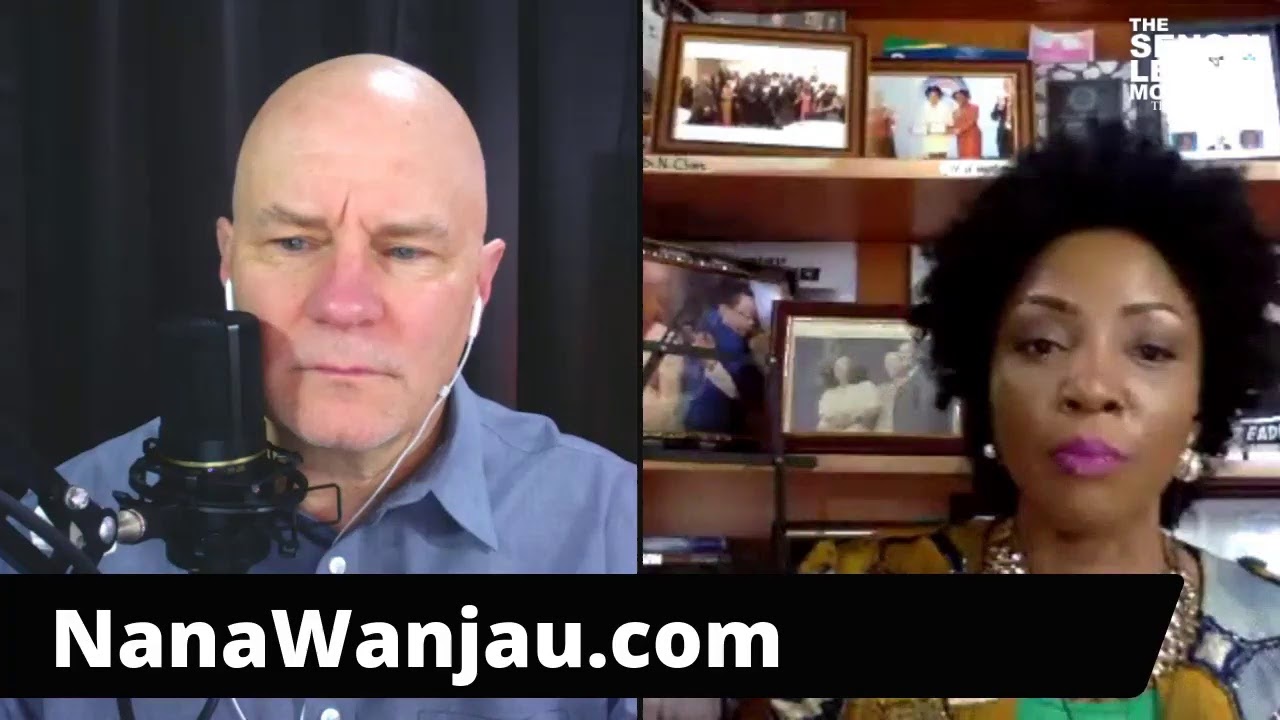
In this live‑stream interview hosted by Jim Bouchard, Nana Wanjo, founder of Power Women International and co‑creator of Branding Beyond Borders, discusses her dual passion for women’s empowerment and global networking. She outlines Power Women International’s work supporting ostracized widows in Kenya—building homes, facilitating school re‑enrollment, and partnering with Rotary clubs. The conversation moves to the Commonwealth Business Women Network’s COVID‑19 response, including fundraising for the Samburu Girls Foundation, soap distribution, and appreciation gestures for frontline caregivers. Nana shares how Kenyan entrepreneurs are adapting to the pandemic: shifting production to masks, using lockdown time for capacity‑building webinars on presentation skills, trade‑readiness, and human‑centric leadership. They explore mental‑health initiatives, stress‑reduction sessions, and the importance of supporting women‑led, standards‑certified businesses. The dialogue highlights the need for African manufacturing, participation in free‑trade‑zone policy discussions, and the role of online platforms (BrandingBeyondBorders.com, nanawanjau.com) to connect women across the Commonwealth. Jim reinforces the principle that leadership is sharing, promotes upcoming Sensei Leader Movement events, and emphasizes resilience, flexibility, and courage as essential traits for leaders during crisis.
Chapters
What a day we've got for you today. This is amazing. It's Power Woman Day. We've got 3 amazing women leaders to bring to you today on this live stream.. And I'm so glad to first welcome one of my dear friends and our partner in the Sensei Leader Movement in Africa, all the way from sunny Nairobi, Kenya. Today we have the amazing Nana Wanjo.
Nana, so glad you pronounced it well.
It's so good to see you today.
It's so good to see you, Jim, as always.
But we have to start with our traditional weather report, right?
Oh yes. And by the way, it is always beautiful and sunny in Nairobi. And today, no exception. Beautiful, sunny, clear blue skies.
I'm just going to keep that image in my head as we talk.
What's your weather report, Jim?
Well, the sun was out when I first got up, but now it's cloudy and getting ready to rain.
Sunshine to you, as usual.
There you go. Listen, why don't we start up? I'd like people to hear about, you know, first about Branding Beyond Borders, but also about Power Women International and how you got that started and what the mission is. I think that's just a great story.
Oh, wow. Well, I have always been very, very passionate about two things. Women and global networks. So somehow everything I, I engage myself in has to do with women, and it has to do with connecting with the rest of the world.
Yeah.
So Power Women International, um, we support ostracized widows. We build homes for them, we take their children to school, we have capacity building programs. This is the way we actually execute our mission. And I know, Jim, that's what you've— over the years, you've really known about me, you know, in terms of Power Woman International and the Ostracized Widows. Um, a lot has been happening in the background since our last conversation. Um, we build these homes, and we are very, very grateful that just in January, we were able to hand over a home to a widow in an area called Mpeketoni. I know you may not know that, it's in the coastal region of Kenya. Um, and now we begin the process of reintegrating her children back in school once all this COVID-19 situation is over. So the groundwork is still happening, and I partnered with Rotary across the country. They are the project managers on the ground, and therefore our work has been able to move more smoothly, deliberately through the partnership of various Rotary clubs. Yeah. And then my second passion, I said, is global networks, you know, connecting with the world globally. And hence came in Branding Beyond Borders. We connect minds globally. We— Jim and I, this is the platform we engage in, and we've been working at bringing Jim into Africa, into Kenya specifically, and it's gonna happen very very soon. But beyond bringing the likes of Jim into Kenya, we've also been working with Jim to ensure that we take our own Kenyan leaders to, to other platforms, you know, to the US, to Europe. So it's actually a cross-pollination of ideas from one continent to the other.
That's something I know we've talked about that a lot, and You know, the idea that leadership isn't exclusive to any culture, any age. It's certainly not to a position of authority, right? We should display leadership at all levels. And there's been a lot of leadership. I mean, what you just talked about, it was providing that home for that ostracized woman. I mean, during the COVID-19 challenges, we're seeing a lot of leadership step up from all levels, from all places. You know, it's just been, it's been great. I mean, really. What are some of the— some stories from Africa that have been going on? Some people have been stepping up unexpectedly, maybe.
I will also add on to the Commonwealth Business Women Network. Yeah, uh, I am the chairperson of the Kenyan chapter and also, uh, the Commonwealth Business Women Network region lead Africa. Yeah, now To answer your question about what, you know, are people stepping up, it's very, very interesting that calamity emergencies do bring humanity back to the fore. And that's what we are seeing on all fronts, not just the government taking the lead, right, but private sector, non-governmental institutions, and individuals. I'll take an example of the Commonwealth Business Women Network. Immediately this COVID-19 started unfolding in the scene, a team of the membership got together and rallied towards raising funds for the Samburu Girls Foundation. This is a foundation, a school that houses girls rescues girls from early marriages and FGM. Um, so because, you know, soap and sanitizers, especially sanitizers, they are quite expensive in this region and not easily accessible, but soap is even more effective. So the Commonwealth Business Women Network got together and started raising funds, and the soaps have now been distributed Dr. Kulei sent me some photos of the soaps being distributed to the girls and to the villages around. Now, Samburu is about 7 hours drive from Nairobi, so it's really in the outskirts. It's not in the city center. It's really out there, you know, in, in, in the villages, right? So this is Nairobi businesswomen getting together to raise funds for girls and women in a region totally way out of reach. And this has been happening across the board. I have seen Rotary, for example, because I'm a past member of the Rotary Club of Nairobi East, also in the forefront of reaching out, especially to frontline workers. Majority of obviously of the frontline caregivers are women, as you may be well aware. And they took a very interesting approach. They wanted to appreciate the frontline caregivers, nurses, doctors, whether it's in the hospitals or at home or, you know, because we also have areas that were segregated by the government to quarantine people who were coming from Europe or the US. They had to do a quarantine, self-quarantine for 14 days in designated areas. They were taking them flowers, flowers to say we appreciate you. And then there is something called hotspot. I mean, there is so much that is happening around, and that's why I said humanity comes to the fore when we are caught in such emergencies.
You know, you always, every time we talk, you bring me to tears somehow. The things you're talking about are so inspirational. And that's one of the topics that keeps coming up around here the last couple weeks. A lot of leaders are asking, you know, what can I do to inspire people? And of course, we bring that on ourselves by having that name so prominently on all our branding, right? Inspire, Empower, and Guide. But The point being that sometimes the most— you know, it's not about a grand speech, it's not about some huge gesture, it's about the things you just talked about. I mean, to bring the— just to bring flowers to show some appreciation, right? Yeah, so that's so important. And I agree with you 100%. These things, they bring out the best and the worst in people. And, you know, unfortunately on the news we hear so much of the bad, we don't hear enough of the good. I think that's part of the reason we're so committed to doing these streams and sharing these stories, because Those are the things that inspire us. Those are the things that really touch our hearts and help us think about what can we do, right? What can each of us do?
Yeah, yeah, yeah. And let me say something that really touched me during the time of collecting funds, the women contributing and looking for where to buy the soap from. One thing that was very, very clear was that we must buy soap from women-led organizations so that we are able to support women. And we did that. But something else that, you know, really touched me was that it was not just a question of buying the product. They also made it very clear that we— they needed the products to be, um, you know, certified by what we call here Kenya Bureau of Standards. Oh yeah, because as you may understand, we also do have fake products, uh, in, in, in the market. But they were very clear that they wanted one, the, the business must be run by a woman so they will buy the soap from the women, and they must be certified because we must— we cannot take fake products to be used by the less fortunate just because we can. No, we cannot do that, right? Right. So we, we called it— somebody, you know, said This is service above ambition, but it's also integrity above expedience. I quoted that and I said, this is exactly how we need to operate in life. Service above ambition and integrity above expedience.
Alex, I hope you caught that. Please post that up if you hear that. Alex just brought in a question from text, which I think you just addressed in a large way. You know, how are the entrepreneurs in Kenya handling challenges? And please, yes, share your comments, share your questions, anything you'd like to share your ideas. What are you guys doing? What's some of the stories that you have? And anything you'd like to, to share with Nana, just put it in the comment stream. You do have to be on the originating post, so if you're listening on a— or watching on a shared stream, just click on that, on that stream, and you'll be brought over to my Facebook page, and then you can share your comments, or the YouTube channel as well.
Okay, so yeah, um, Alex is, um— let me just also chip into Alex's question on how are entrepreneurs in Kenya handling the Well, your friend Darshan actually just—
Darshan Chandria, he shifted some of his production over to masks, right? I think.
Yes, yes, that's, you know, uh, that is what it takes, you know, a mind shift, uh, moving with the changing times and still being relevant, right? Uh, so turning the entire factory into now manufacturing masks because now Kenya has reached a point where We must wear masks when we move out of our homes to go shopping, grocery shopping, to feel, you know, you must wear a mask. It's a requirement and there's a fine to it if you are stopped by the police and you don't have a mask, you are actually fined. But I also noticed something that we are doing extensively as entrepreneurs, as businesswomen, that's really, really powerful. Um, we— before COVID-19, the businesswomen in the Commonwealth Business Women Network had arranged for a trade mission to Canada in April, end of April, and another one Rwanda, uh, to coincide with CHOGAM, the Commonwealth Heads of Government meeting, in June. These are no longer happening. So what do the businesswomen, the entrepreneurs do in the meantime? They came up with the idea that let's use the lockdown to develop ourselves and our businesses. How do you do that and where did that come from?
Right.
We were actually having this discussion a few days ago. One of the challenges during— while setting up the trade missions, one of the challenges we found was that businesses were not ready to trade internationally, right? Ready in terms of, uh, presentation skills, as simple as that. How to pitch your idea. Exactly what are you looking for when you, when you go on a trade mission? Packaging. So a lot of the business women entrepreneurs were actually cut off because they couldn't meet the criteria to trade internationally. And we said, why don't we use this opportunity, this lockdown, to build capacity for the business women and entrepreneurs? Two, two fronts. One, the entrepreneur herself, the business woman package her presentation skills, public speaking, how to pitch your idea, the business itself. Does it meet the standards? Is your business even ready to trade locally, let alone internationally? Is it registered properly? Do you have the right certification? So those programs have already started. What we are doing here, Jim And now this has become the new normal. Women are online.
No, I'll go explain that reaction in a minute, but go ahead.
It's become the new norm, and it's become the new normal so fast. Yeah, you know, that they are not waiting for— let's wait and see what happens after COVID-19. No, the entrepreneurs locally are saying we are all home under lockdown. There's nothing greater than personal development. That's your biggest asset, right? So we know that some of us were cut off because our businesses did not fit certain criteria. Why don't we use this time to begin a series of training that will equip women to be trade ready? And this is already happening on the ground.
Yeah, that is so perfect. And the reason I had that reaction, in fact, we're designing a webinar, should be out in another week or two. There is no new normal. Be flexible, adaptable, because, you know, we've talked about this before too. That idea to be flexible, adaptable, and comfortable with uncertainty, you know, these are very old ideas. And so, you really just reinforced that. It's that, you know, instead of letting this stop us entirely, You know, what can we do? Let's take stock of what can we do right now. Let's adapt to that and let's move forward. I just laugh because, you know, when I hear the new normal, I said, well, you weren't paying attention. The great, right, the great masters wrote about this for centuries, for eons, right?
Yes, but we've not— many people have not implemented. I mean, this forum, you and I, we are always on this forum. And interestingly, This what we are calling new normal, that new— I was having a discussion with the entrepreneurs, the business women, about just late January, early February, that because we are now going to trade internationally around the Commonwealth, all of us must equip ourselves to be on this platform. This was just a month ago, you know, when we were saying that it's now mandatory that we must all be on this platform. A month later, we are forced, or rather most are forced, into this environment.
Yeah. Here's another good question that came in. What are, what are the women-owned organizations that are selling these products? How can we support them?
Ah, how can we support them?
Obviously by purchasing their products, right?
That's by purchasing. Yes, as we, as, as we already demonstrated, we did. But there is also the element of capacity building. A gym. And I feel that you can be quite a resource, Jim. As I said, most of these businesses are not ready to even trade locally, let alone internationally. So there is a lot of capacity building opportunities that can support these business women— governance structure, human resource. Like now we had, uh, let me see, is it Rose who had a whole session on human Resource. Yes, it was Rose Nginga. She hosted an online forum on managing human resource during this time.
Ah, yeah, yeah, yes.
You know, go ahead. I'll take my own example, and I was in that session learning like everybody else and taking notes, and I said, I'm in real estate, my background, you know, and real estate is one of those sectors that are taking a huge hit, especially, uh, office space but also residential, because the earning power is reduced. And we are already getting calls from tenants who will not afford to pay at least the full rental, and we are renegotiating rent. That's one angle. But there is also the staff that we have to lay off at this point. How do we handle that in terms of human resource while maintaining dignity for our employees? Because this is a temporary situation. So we had a human resource, uh, hosted by Rose session on really how to manage your, your, your human capital during these challenging times. So there's a lot, Jim many ways we can support the business women to build their businesses in terms of capacity, in terms of leadership. Jim, you, you, you are big on human-centric leadership, and I think this is the time that we need to call on human-centric leadership. And probably if I can convince you, our next call with you would be to speak on human-centric leadership and how leaders can actually be that at this point in time.
Absolutely. Let's, let's do that. You can, you can interview me for that one. Yeah. Because we've done that before. It was very enjoyable. But I'm glad you hit, and you hit some of those points that, you know, we would emphasize. For instance, one of the things we, one of the questions we keep getting around here the last couple of weeks is, you know, how can I, how can I be more resilient? How can I prepare myself to be more resilient, more courageous, more confident? When things are like this are happening? And one of the responses that I keep saying is, you're doing it right now. I mean, we do need to train, we need to prepare, we need to share. Leadership is sharing. A leader shares, right? And that's what the folks in your organization are doing, right? If they're sharing their experience, they're sharing their training, that, that's key. That's beautiful. The thing is, for everyone to remember though, what, what's happening now, we can, we can prepare ourselves, we train, we can try to anticipate things, but again, be flexible, be adaptable, be comfortable with uncertainty, but also take advantage of this opportunity. We're going to have other challenges if we're blessed enough to live long enough, right? We've— those of us who are long in the tooth, we've lived through a couple of these in our lifetime, similar situations. Each time you go through this is where you're tested. That's the opportunity. I remember a bumper sticker we did some years ago, it said, "Celebrate adversity." It's your opportunity to become the person you might not have ever imagined without it, right? And that's the story. So take stock. One of the things, one of the pieces, if I can share advice, and I always do that hesitantly, but advice would be this: celebrate the small victories. It's hard in the middle of something like this when there's so, you know, so much information, so much bad news, so much prediction of gloom and doom, and so many challenges. All the challenges you just mentioned, especially entrepreneurs are going through, you know, that businesses have literally stopped. A lot of our friends in the speaking world, we've been talking about this. Our businesses came to a full stop a few weeks ago, right? Just, just gone. But those are the challenges that if we embrace them, right, and we, we purposely learn from them and we adapt and we find other ways to to learn and to grow. That's, that's what's going to strengthen us going forward. And those are the things that we need to share with others. Like I said, as your, as your leaders are doing in your organization, I mean, that's, that's, they're already doing the number one thing I would, I would say they should do: share their experience and their wisdom with one another, right?
There is another survival mechanism that actually starts tomorrow. The businesswomen, Commonwealth businesswomen, will be implementing is called Releasing Stress and Anxiety. Yeah, during this time, and it's going to be led by Zippy Chada. Zippy Chada. This became obviously quickly apparent that this situation, this lockdown unable to go to work, unable to earn, the anxiety of whether tomorrow I'll be able to pay rent or school fees, even if the schools open. Um, the, the, the, the anxiety that comes around with the inability to provide for your family is causing a lot of mental stress and anguish.
Yes.
Um, and with that also comes a whole lot of problems. We are also seeing, um, a lot of abuse, uh, you know, gender-based, gender-based violence, physical, sexual, uh, it's rising because of, you know, mental anxiety, mental illness that, you know, and we are beginning to address that since from tomorrow. And I have already signed on to the first, to the first group, because I had my son tell me, Mom, chill, chill, everything will be fine.
Well, you know, absolutely, that's true. And that kind of answers this question that Alex brought up too, you know, what kind of training do women entrepreneurs, you know, that you just, you again, you just addressed that. Um, yeah, the chill thing. And we did, we did post, uh, somewhere on the stream, if you go to Oh, I'm going to do the, do the thing wrong. Let me see if I can find the— oh, there it is. If you go to this, uh, this link, bit.ly/slm-live-online.com, there's the archives. This, this program will be there for replay, also be on YouTube. And we did one on meditation practice. I shared my meditation practice, and we're going to do a couple more of those. People seem to enjoy that, um, so we'll do another one coming up. But it's very simple, and there's some free resources there for you. Um, we can, we can do that do that for your organization too if you'd like sometime. But oh, that would be one. Yeah. And please, hey, share, share your links, share your comments, uh, share your questions, anything you'd like to address with Nana. We'll be on for a little while longer. Um, we usually do these for about a half hour or so, but there's no rules. We can go longer if you're, if you're willing. So, uh, yeah, make sure you come in and share that. Make sure you're on the original stream in order to do that. If you're watching on a shared stream, just click on the, on the video itself. That'll take you over to to my Facebook page, my personal Facebook page, which is Black Belt Jim on Facebook, and, and you can get in on the conversation. Here's another one. Let's see, uh, what's this? Tritium might be a great resource too. Oh, okay. Um, Tritium provides services for healthcare providers to connect with their patients is what Tritium does. But they're— and thanks for putting that up, Alex, because let's give them a little bit of a of a salute to, because Tridium is an amazing organization. They create— I'm going to say create software, but it's really more than that. It's a platform where people in with mental health and behavioral health issues can connect on a very deep level with their providers, and there's resources so they can do things online before a visit, for example, to get them a little bit ahead in the treatment cycle. So there's a lot of cool things. So thank you, Tridium. And they put out their platform for absolutely free for health— for healthcare providers through July. Sorry about my throat. This is not corona, this is allergies. So tridium— tridium.com with two U's— if you are a healthcare provider and you're interested in their resources. Okay, here's another one that came up.
By the way, Jim, you said something that has triggered good news. You know, in all this, we must look for the silver lining, and this morning, Kenya woke up to some good news, and that was that Kemri— Kemri is the Kenya Medical Research Institute— Kenya Medical Research Institute— that they had developed COVID-19 test kits. Oh yeah. And mass testing is going to start. So when you said that, I was about to say I could send you a test kit from Kemri.
Yeah, believe me, We'll probably need some around here.
That's really good news. And you know, a clap for Kemri. Thank you so much.
Since it's only Alex and I here at global headquarters of the Sensei Leader Movement, we're in pretty good shape. But hey, we should be testing. Here's one, Rachel. I am enjoying the session, cheering on the great work that the Commonwealth Business Women Network is doing in Kenya under the leadership of Nana.
Right. Oh, thank you. Thank you so much.
There you go. Thanks for sharing that, Rachel. Amazing. So how is— how are you facing— you know, I'm glad you brought that up because I know that you and your husband both are involved with real estate and you have rental properties and things like that. A lot of people we've been hearing from are dealing with that issue, right? I know here in the States there's been a freeze, and a few countries are not reporting that— a freeze on foreclosures, a freeze on mortgage forbearance and things like that. Which helps because, right, you said it a few minutes ago, someone stops paying the rent, you still have the mortgage to pay as the landlord, right? So we have to address these all the way down that chain, right?
Well, the government, um, I'll call on to one of my assistants, Nyo Kabi, to give me the, the real, um, update on taxes, but we have received relief from the government in terms of tax, tax relief in different areas, exactly what you have just said, including VAT, including mortgages and loans extensions and so on. I'll get the exact tax relief, I'll read them to you just quickly when they come in, but that was one of the first steps that our government, President Uhuru Kenyatta, uh, you know, actioned. And it's— and I received my, my tax communication from the taxpayer just telling me that I have received certain reliefs from the government. So yes, we are, we are getting relief, but obviously, uh, we still have to buckle the belt to ride this wave, especially those of us in the real estate construction industry. That's one of the sectors that has been hard hit. Obviously, there's no construction going on right now, and we, you know, a delayed project has its own ripple effects, you know, in the long run.
Exactly.
That's— so we are going to start to, to see this unfold the next 12-24 months, the reality and gravity of the situation is going to be revealed then. Hence the reason that there's a lot of anxiety and a lot of mental stress. But as you said earlier, Jim, it is things like this that make us who we are at the end of the day. So we will run through this.
Yeah, and that's another— there's another question coming in too that I think will help us address that too. Bricks, thank you so much. Bricks Insurance, really appreciate all the encouragement and for the support you guys have been giving us for these live streams. And we've got a full day of it too. At 10 o'clock, we have Ellen Voie from Women in Trucking, amazing leader. And we're going to talk about how important and give some salute to the truckers who are really, really keeping us going, right? I mean, they're our lifeblood bringing us our food and supplies. Here's another one. Pauline, thank you so much. Really, really appreciate again all your support. And here's the question. How does human-centric leadership help business? It's exactly what Nana just talked about. You know, there, we always have to pay attention to the technical aspects of running a business, right? And Nana, you know, we created this, this character of the evil manager, right? There's managers and there's leaders. And the difference being, as Admiral Grace Hopper said, you manage things, you lead people. Both are important. Both are important, you know. But management is not leadership. Leadership focuses on the human aspects of our lives and of our practices, our businesses, and especially with some of the conditions that Nana was just describing. We've got to look past, we've got to look past the economics of it, as hard as that is to do right now, and we've got to focus on people, right? You mentioned layoffs, and Dov Baron and I did a show the other day, and we both talked about this. I've been encouraging people, before you lay anyone off, please give us a shout, because one of the things, there's lots of alternatives that can happen. Now, I'm not saying you might not have to lay people off at the end. You might have to. But what we found with some organizations is if we can get them to do an all-hands meeting, get everybody together, everybody from the CEO to the janitor, and tell them the situation you're facing, tell them exactly what's going on, right, in confident, clear terms, and then just ask, what do you think we should do? What solutions can you guys bring forward? And what we found that the organizations that are doing this, a couple of them that we know about now, ended up, they planned for layoffs, didn't have to lay anybody off. Some people were ready for retirement or getting closer. They self-selected out. Others said, we'll take a pay cut. We'll work fewer hours. We'll do whatever it takes to pull together to make sure everybody, everybody's still working. And that's particularly important as people are shifting and working from home as well, right? Can you shift people and work work from home. And that's another one we should really touch on. We've, we've had a couple of questions come in where people were saying, I'm really, there's no reason for me to be in the office. I can do my work from home. But my boss is saying, no, you got to come back to the office now. We're doing some, some adjustments to make that happen. And, you know, that's a difficult question. All I'm going to say is to the leaders and the managers, take a good look and understand people's concerns., and you may look at somebody as healthy, right, you say that person's healthy, they're vibrant, they're young, whatever the case may be, but they may be in close contact and concerned about caring for an elderly person, or a person that has some medical conditions that makes them more vulnerable, uh, they may have children at home and they don't have daycare providing anymore, right, babysitting providing anymore, so these are the things we need to consider. The simple solution is look at the human side of it first. Look at the people first. Because I'll tell you what, this is, this is where we separate the leaders from the managers. And we've seen this over and over again now. If you haven't earned the trust, respect, and loyalty of your people, and as Stephen Covey said, building that emotional capital, right? When you do that, those people will stick with you through times like this. If you're treating people like widgets, they're not going to come back when this is over. There's going to be plenty of opportunity when they're over. And yes, Alex, thanks for putting this up.
And I think obviously this calls for very innovative ways of dealing with challenges, unprecedented ways. We gave some of our staff in real estate options because of the uncertainty of the coming months, you know, whether we'll be able to retain them, uh, you know, as employees. And one of the options we give them is, if you are able to move from your current, uh, residence where you are paying rent, we move you to one of our, uh, real estate properties where you will not pay rent. Oh yeah, yeah, because we do have some properties that are empty. So because we are discussing how do we retain you, um, uh, on the long run, and one of the options we gave them is let's give you accommodation.
Yeah.
So that you don't pay rent and it becomes, you know, now we begin to see possibilities of how I can serve you and you can still serve me.
Exactly, exactly.
Those are really unprecedented ways of dealing with situations. And I have— I saw back on human-centric leadership, um, Susan Njeri was discussing farming a few days ago and how it is so hard to, to get qualified, decent, honest staff in her farm. And the solutions that were coming through were really about what we are talking about— connecting with individuals on an emotional level, understanding their challenges. Sometimes it's not that they are— they don't want to work. If you get to sit with a person and understand beyond work who they are, the challenges they are facing at home with their families, you will begin to empathize and, you know, give that employee even an extra day off so that they are able to, you know, cater to their needs. And they really appreciate, and when they come back, they want to serve you. And so this is the work.
They'll work twice as hard. They will work twice as hard.
And I learned this from Susan and Jerry, who was giving us, um, you know, some feedback on how she handles her staff. It's human-centric leadership.
Exactly, exactly. I want to put up your website again. And people have been asking on the side too, how do you get in touch with, with us to, you know, to facilitate some events. And we're going to do some online events too, coming up very soon, specifically for our friends in Africa and Kenya, Ghana, and some other parts of Africa. But get in touch with Nana. And here's her, here's her website, brandingbeyondborders.com. And, you know, she's, she's our representative. Nana is our person over there. Well, I shouldn't say representative. You are, you are the queen. You are the empress of the Simply Leader movement. So please share your comments, share your things, and give— I keep forgetting I'm supposed to say this. I went to the webinar. I should know to do this. Give us your likes and your hearts and all those things. It makes us feel good. We really appreciate that.
I think the website that would be more appropriate is nana nanawanjau.com, because it has all the links to Branding Beyond Borders, Power Women International, the Commonwealth Business Women Network. So I think that, you know, nanawanjau— www.nanawanjau.com.
We're going to put it right up here. Why didn't you tell me about that one?
Well, there's always something new.
I want to make sure we're promoting you properly. There we go. How's that?
Let me share something that's manifested lessons that we are learning out of these— the challenges, the uncertainty. Um, we have realized as businesswomen, as entrepreneurs— and I was, you know, speaking to a very good friend of mine, Dr. Catherine Masitsa. She was saying that we've, we've heard it several times Africa has enough resources to cater for its needs and beyond. We've heard it in theory, we've heard it in theory, but almost most of the majority of us are realizing the reality of that statement in this situation where we depend on, uh, China and the Western world to supply us with every raw material. We— they take the raw material, supply us back with finished goods. And the conversations that have come up, the lessons, is that we need to get into manufacturing as businesswomen. We need to get into manufacturing. The conversation of the Africa Free Trade Zones that has been going on almost at the top leadership has finally dawned onto us as businesswomen, as entrepreneurs, that this Africa Free Trade Zone conversation needs to happen like yesterday, because if we are going into manufacturing and we want to trade, intra-African trade, a lot at our government level in terms of structure, in terms of capacity building, in terms of digital space, needs to be done and needs to be done urgently. So those are the lessons we are learning as businesswomen that we, we, we need to step up our participation of these conversations at that level. We are always talking of sitting on the table, entering the room where policies are being made, but these are the lessons that have brought that to reality and with an urgency. We need to manufacture our own products, add value, to food chain. I mean, Africa agriculture is our backbone, and the majority of farmers are women. So add value to our, uh, you know, agriculture produce and manufacture and get into manufacturing. There are institutions that are already doing this, like the Kenya Association of Manufacturers, uh, already doing a good job. Kepsa is already doing a good job. Up. But I think those who have not been in the forefront have realized that we need to get into the bandwagon and drive it faster. Those are lessons we are now, uh, picking up. And conversations such as this are happening everywhere to ensure that, one, we are connecting with the greater Africa as as businesswomen, as entrepreneurs. We are connecting for the sole purpose of learning, sharing experiences, and sharing lessons. Yeah, exploring possible opportunities, uh, to engage in business. These are conversations that have become at the center of businesswomen and entrepreneurs in Kenya.
That's what it's all about. Absolutely. I can't think of a better way to wrap it up. And And you stay with me a little afterwards. We have to visit for a couple minutes, but let's, let's finish things up. If you have any last minute comments or questions for Nana, please just pop them in the comment stream and we'll get to them as we close out here. And Nana, I can't thank you enough for your leadership, and I appreciate what you just said. And I would just add this, it all start— because people always ask me, how do you get started? How do you embrace these ideas? How, you know, uh, and a lot of times, because we do a lot of work work with women's organizations. RISE here, which is a healthcare leadership organization for women. The NAWIC, National Association of Women in Construction. We just became actual members of Women in Trucking. And it's interesting because sometimes when people bring up the differences and we get into a workshop setting, almost everything that is brought up, I'll say, "Yes, men feel that way too." Culturally, we've kind of created these stereotypes. And I think that's what we really need to do. Nana, that's what you're doing. That's what all the women that are coming on today really have done. I love Judy Hoberman we've got coming on tomorrow, Walking on the Glass Floor. She doesn't even talk about a glass ceiling anymore, right? Walking on the glass floor. You know, it's about, it starts with a choice for all of us as human beings. It starts with a simple choice. You can, within the scope of your talents and abilities, you can do anything you wish as long as you start with a choice and you make the step to go forward. Then we have to look at the resources we have. And decide what that first step is. But that's all it is. We have to make that choice, and that's what courage is all about. Courage is not the absence of fear, right? Wasn't it Mandela said courage is not the absence of fear? I say absence of fear is stupidity, right? It's facing our fears and taking that step forward and, and doing what you need to do. So, Nana, tell us again how to get— well, we're going to do nanawanjo.com. I'm going to put that up again very quickly about your other, other activities there and, and how you know, how people should get in touch with you there?
Other activities in Kenya or as business women and women in the Commonwealth?
And, and yes, because I'm going to mess the names up.
I know, I know, I know. Um, we— the way we work is the business women, um, in Nairobi, the business women across the counties, the 47 counties of Kenya. There's something we widely say, um, in our conversations, in our interactions, in our development, is obviously we leave no one behind. And that comes to us naturally as women because we give birth to life, we are nurturers. And when I say we give birth to life, we give birth to both the girl and the boy child. So we leave literally no one behind, including the boy child. Um, and when we are raising funds or developing ourselves, we are also always looking at what are we doing for the woman on the grassroots. Um, the case study I shared earlier about the Samburu girls, sending them, you know, soap during this time, that's just one of the things we do on the ground. And the things I do are intertwined Power Woman International looks after women on the ground. Um, we are— is it, uh, 2 months ago we were in an area called Kajiado, uh, 2 months ago— no, 3 months ago, because that was the end of December— where we had a Christmas giving in support of widows. We took them food, we took them clothing, and we had a fellowship church service with them. So they are connected. We deal with women who own businesses, run businesses, build capacity at that level. At the same time, we connect with women, people with different abilities, and youth on the ground level so that we rise together.
Absolutely.
Branding Beyond Borders— Jim Bouchard— is where we are now connecting Women online, opening networks through the— throughout the Commonwealth with you, connecting with you, bringing you to build capacity for the women in, in Kenya, but not physically. Even on these platforms, I'm going to engage you to ensure that we have a forum for business women that we can take through human-centric leadership, which is so essential during this crisis. And many, many more, Jim. They are all interconnected. Yeah, but as I say, www.nanawanjau.com, um, the links are there to all the forums.
And this is a good question, kind of to wrap things up too. Um, what, what kind of work are you and Nana doing to get— well, Nana just talked about a lot of it. Um, we've been trying for some time to bring Sensei Leader Movement physically to, to Kenya and other parts of Africa, and we will We will be doing that. We're, you know, we got setback. What we say in martial arts is knock down 7 times, get up 8. We've only been knocked down twice so far, so we've got plenty to go. And yes, we'll be doing— in fact, Nana and I are going to talk about this quickly after this show shuts down. We will be doing online events immediately, immediately. And we'll be addressing that. And the one thing I'd like to say though, it's all about sharing. That's what it is. I mean it. When people press me to summarize leadership in one idea, it's this one: leadership is sharing. A leader shares. The Sensei Leader Movement was founded to support and develop human-centric leaders all over the world at all levels. And we really, we really take that mission to heart. That means, for instance, if I'm doing a presentation or doing an online event, it's not, hey, I don't like lectures and I've never gotten paid extra to get through a slide deck. Okay, so it's all about, it's all about sharing ideas. It's a forum, it's a network where we can come together, support one another, and help us all become better leaders. That's what it's all about, and that's at the heart of our event. So, we'll be bringing some events to you very, very soon. I'm really looking forward. And Nana, you know, I so appreciate that, you know, I appreciate our friendship. I appreciate everything that you've done for us so far and going forward. Forward. And, uh, it is a blessing that we have this technology so that while we can physically be in the same room right now, which I look forward to— we had a lovely dinner, didn't we, in Boston?
Oh yeah, I still have beautiful photos.
I was with, I was with two of the most beautiful women on the planet in Boston. We were eating on the, on the sidewalk, right, in a little cafe there, and people were— other men were looking at me with jealousy, and I really enjoyed that. That was a lot of fun. Thank you, Dante, for sharing that thought. Dante, Dante Vespignani. In fact, Dante, you got to put— make sure you put your website up, your links, when you, when you share comments here. Really appreciate, always appreciate your support and encouragement. And Dante connects people with business opportunities in the franchising. Yes, in fact, Nana, he's one of the folks, um, some time ago we talked about, uh, Dante sharing some, some ideas for for franchises, uh, internet, because he works with international franchises that we can talk about getting people started in all over the place. Kenya, here. And, uh, there's— this is from Alex. That's a good place to wrap it up. Thank you, thank you so much for sharing this time with us.
Thank you, it's been wonderful, and I look forward to engaging you with our business and entrepreneurs here in Kenya.
It will be happening. It'll be happening within days. We're gonna, we're gonna talk about that right now. Thank you so much, Nana.
Thank you.
Appreciate you.
Love you, Alex.
More from Jim








Why AI-Only Customer Service Is Failing Customers | Danny Snow on Keep It Human


