Mental and Behavioral Health – Keeping people connected…
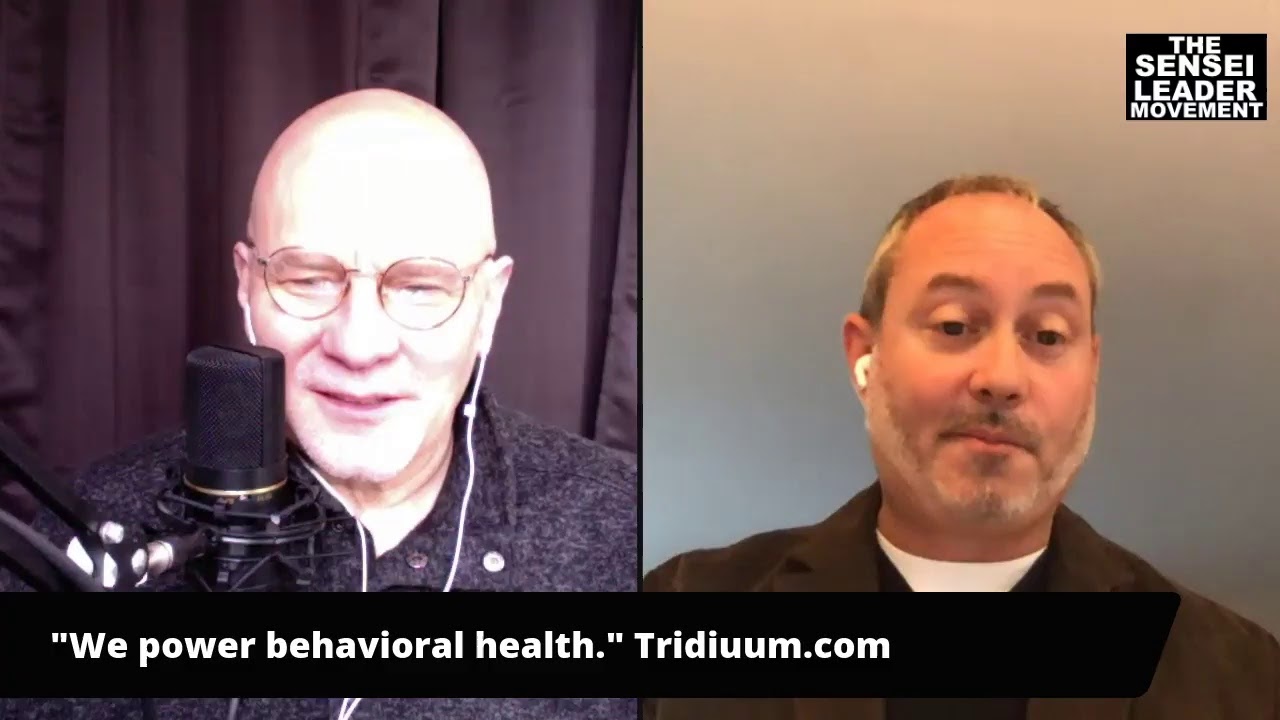
In this live YouTube interview hosted by Jim Bouchard, guest Mark Redlis of Tridium (also referred to as Tritium) discusses the company’s digital behavioral‑health platform and its rapid COVID‑19 response. Tridium’s software acts as an operating system that connects patients and providers, surfaces clinical concerns, and now offers free virtual video‑session capability to individual behavioral‑health providers through July 31 2020. The conversation covers early data showing spikes in anxiety among college students, depression and grief among children (ages 5‑17), and a looming risk of PTSD. Mark explains how the platform supports younger age groups (5‑8 years) via parent‑mediated tools, and how Tridium is preparing to aid frontline healthcare workers. Jim and Mark explore broader leadership themes—purpose, kindness, burnout, and the importance of small, compassionate actions—while fielding live audience questions about COVID‑specific behavioral‑health concerns, parental guidance, and resources for providers. The hosts also promote related community resources (Sensei Leader Movement, free leadership webinars, and a Black‑Belt level program) and encourage listeners to stay connected, practice self‑development, and support one another during the pandemic.
Chapters
Well, I've got to stop saying we've got another amazing guest coming up because all our guests are amazing, and we've had such a, such a great run. And just a little quick update, in just a second we're going to bring on Mark Redlis from Tridium, and he's going to talk to us a lot about how to keep people connected if they have mental and behavioral health concerns, and his company Tritium has just launched an amazing initiative that's in full throttle right now, and it's really a testament to how you can keep business flowing through, through the lockdown, especially as we just heard that's going to be at least extended through April. But we got to keep smiling, right? We got to keep, we got to keep moving, got to keep our legs moving. That's what it's all about. Leaders see what needs doing and they do it, and that's exactly what, what Mark and his team are doing. Just a quick update on a couple of the live streams we've got coming up. You'll see on SLMliveonline.com all the streams that are going to be coming up and the replays of the streams that we've, we've done. Uh, we don't put the football live streams up there, just the leadership and business ones. But at any rate, uh, later this afternoon we've got somebody very dear to me, the cane master Mark Shui. He's one of my martial arts masters, one of my most treasured masters. Uh, he's the one that I studied cane fighting with, and he's going to come on. He's a yoga master as well. He's going to come on to show us a little bit how to relax, take care of ourselves in, in mind and body. And, uh, and he'll talk to you about his virtual dojo that you can you can attend and actually do some martial arts online while we're locked down. So, and then tomorrow, one of the best speakers in the country, David Lee, expert in human resources and employee relations, and he's going to come on and we're going to talk about courage and perseverance and how to help you folks through this situation. All right, so without further ado, we got to bring on Mark Redlis. Mark, coming at us from sunny Pennsylvania this morning. Keep talking, we're not hearing you yet, but we keep, keep talking. I know we just went through this before the program, right? Let's keep talking, see if that comes on again. Not yet. There we go, he's going to adjust some things.
All right, we're good.
There we go, there we go.
It flashed over, it dropped from all my audio, so that's that. I'm okay. So I mean, I was, I was actually mostly nervous due to, due to following Kane fighting. I thought that was a tough start, so don't know where to go from there.
That's right. As long as the giant coronas didn't attack you and get into your system there, right?
Yeah, exactly. I'm okay.
So, all right. This is so cool. Mark, why don't you start off? Tell us about— and you know, Mark was with us on Walking the Walk. Alex, if you would post that up for us, that would be really cool, the link to Walking the Walk, his episode, because you provided a lot of great insights. But let's catch people up on what Tridium is doing. Tell us exactly what you do anyway. And then that initiative that you just launched. I think that was just fantastic.
Yeah, so Tridium is a digital behavioral health outcomes platform, a software company. We power behavioral health interactions between our— or I should say between patients and providers. So our software sits in health systems. It sits between patients and providers during their clinical interactions and therapy sessions. Yeah, it does lots of things, supports their kind of therapeutic bond between that patient and provider. It also surfaces issues that present from a data standpoint from the patient to the provider and calibrates those appointments. So there's lots to unpack there probably as we go, but you know what we, what we just announced, what we just offered is that we had pulled some things up in our product roadmap, and last week we offered up to individual behavioral health providers around the country the use of our product along with the virtual video session to session between patients and providers for free during COVID as a response through July 31st. We just know this is really serious and we certainly want to support patients and providers getting to see each other during this time because it's going to be really challenging. So we've had a fairly overwhelming response in the last week. More than 2,400 or so providers are in the process of getting ready to start with us.
Oh, that's nice. You know, sometimes it gets lost in the noise, right? I mean, there's been so much bad news going on and so much— and I understand that. I used to work in broadcast media, and you know, it's the old adage, when it bleeds, it leads, that's for sure. And somehow we, I mean, we have to blame ourselves.
Yeah.
We're wired to be more fascinated, it's a survival mechanism, we're wired to be more fascinated with what's dangerous than, right, with good news that doesn't immediately impact us. But having said that, man, it's just amazing, there's so many great companies stepping up. Yesterday I had my LL Bean shirt on because LL Bean had just announced that they were shifting some of their production over to making masks, You know, what you guys are doing at Tridium is another great example of this. I mean, there's so many great entrepreneurs that are stepping up and filling this void. And to me, like I said, that's one of the definitions of leadership. Leaders are people who see what needs doing and they do it. And nobody asked you to do this. Nobody told you you should, you know. And the other reason I'm highlighting you today is because even from small-time entrepreneurs up, people are struggling with, should I be marketing? Should I be selling my products? Can I give things away? Is that, does that look like it's exploitive? And I don't believe it is at all. And what you've just done, especially because we talked about before the show, we'll get into, right? That this need to connect providers with people with these issues is gonna be very acute as this thing extends and we're isolated, no?
Yeah, as we were talking about in kind of the pre-show conversation, from our larger enterprise, you know, customers and partners, which tend to be either large practice groups or health systems, everybody is actually kind of projecting that the surge from a mental health perspective, and this is up and down the, I would say, the street here, I would say 2 to 3 weeks away, especially given the extended order or the suggestion to continue social distancing through the end of April. So I think that, that obviously has an echo effect for families that are frankly stuck at home. Who isn't right now? And, you know, parents and kids that aren't used to being together.
Yeah, it's all good for 2 weeks, right? It's all good for 2 weeks. But after that, it starts.
Yeah.
Yeah.
What's the saying? I can do anything for 2 weeks. Well, we're going to have to do the— I can do anything for 45 days.
So that's what it's going to be. It's so funny you say that because when I was— when I still had the dojos going, you know, it's funny because Several times parents pressed me for my secret, right? They said, how are you so patient with these kids? How? And I said, well, I've got a secret, but it's not going to work for you. And one, one day, this one mom, she pressed me and pressed me and pressed me. I said, look, I'll tell you, but it's not going to work for you. You can't use it. She said, no, just please tell me. I'm at my wit's end. I said, okay, here it is: 1 hour. And she looked at me, I said, what do you mean? I said, I can put up with any human being on this planet for 1 hour. After that, all bets are off, and I'm only seeing your kid for 1 hour.
So there it is.
Listen, we got a lot of people on the stream right now. Please make sure you chime in and ask, ask questions, post your comments, post your experiences, or any ideas that you have, you know, to help us. This is all about sharing. We're not here to lecture. Oh, actually, here, here's a cool, cool question that just came in too. Pop this up. Alex, thanks. Alex works behind— well, she's the executive director here at Sensei Leader Movement. She's also working the comment stream, and she'll post. If you're bringing in things by text or other means too, and you're listening that way, uh, just shoot a, shoot a message to Alex on any of those platforms and she'll pop it in. And here's one, here's a question that came in: What are the behavioral health concerns you're seeing unique to COVID-19? Well, you just talked about the fact that we're, you know, we're in a state, uh, and many states are imposing pretty strict lockdown, uh, I'm going to use the word loosely, guidelines, right? Some states have even announced now that they'll be arresting people if they're not, if they're not honoring some of these things. So, uh, that isolation is going to get acute in a hurry, right? And that's different than what we've seen before.
Yeah, so, um, it's interesting. So I was on the phone with a child psychologist last—
oh, we lost your audio there. Keep talking, we'll bring you— we'll get you back on here. When I worked in broadcast, I remember an engineer that I had that He always said, you can't tell the electrons what to do. I think you're back.
I think I'm back too. I'm just trying to make sure my ears are back. So, but it's coming back here.
Can you hear me now?
Yep, I can hear you.
There you go.
Hear you now. Sorry about that.
No worries.
Must be Bluetooth anxiety. So, but I think, you know, the conversation before I cut out there from an audio perspective was around what's unique to COVID-19 as far as what we're seeing. It's really early, but we are gathering data. We typically have a typical day. We support nearly 11,000 unique patients every day and more than 6,000 therapists. So we have a good sense of what population data looks like. If I were to break it into pieces, first, I would say anxiety amongst college students. So, so think 18 and up and obviously adults. And, and there's a host of reasons for that that you can see. But Anxiety is more pronounced and has gotten more significant. We also work with a significant youth population, so think pediatrics, all the way down to age 5 with our products. But, you know, think about the core kind of age 8 through 13, and they're actually age 8 through maybe 17, I should say, and they're dealing with depression. They're grieving. They have a real sense of loss. And I was that it was first kind of brought to my attention in an anecdotal conversation, then the data rather supports that. So I think that that's, that's somewhat of what, what we're seeing right now. Um, you know, there's obviously danger, and we would expect, or I think it's not a giant leap to think that PTSD will be a major affected, um, you know, presenting issue, you know, after all this.
I think you're, I think you're right. That's one of the things we've been talking about on almost all the streams. Uh, you know, what can each of us do, show a little bit of self-leadership. And you know, we've been preaching, uh, you know, we're stepping outside the professional realm for a second, but just to reach out to people, right? Just to reach out to folks. And I saw some cool incentives and initiatives, I should say. And, uh, yeah, again, I don't know how, how much this is going to cause a problem, but we heard stories about people just walking up and down the street and yelling into, into windows from a safe distance, "Hey, how you doing up there?" You know, "Is everything going cool?" Because particularly elderly people. And you said, you know, we live in a college town here, and some of the kids are here, right, that are away from home, and they're in apartments and whatnot around. And we've noticed, try to wave, try to wave, try to say hi, right? Engage a little bit. And certainly with this technology to reach out, so those things all would help, right?
Yeah, I think, I think obviously the technology is a facilitator, but it doesn't replace, you know, just reaching out and being kind to one another. I think that's, that's a real big part of this. And doing very kind and small things. I've heard some great stories just in the community here outside of Philadelphia. I think those stories are happening all over, all over the country, just trying to support small businesses and small business owners, because that is, is going to be really obviously very challenging coming out of that. We, you know, we're all thinking about those folks too. We get to do our job and get to work very hard and make an impact right now, but so many people are really sidelined. And I think, you that will show up in all the kind of behavioral health data as things go forward.
You know, it's interesting you bring that up, and I'm going to share this story because maybe other people have the same experience. Uh, I had a little bit of a freakish moment yesterday. I went to give blood, and one of the things, one of the things we come across as we age, right? Apparently since the last time I gave blood, my veins have changed somewhat, and they couldn't, they couldn't get a good, uh, insertion. And I remember leaving there and thinking, oh my God, I said, how useless do I feel right now? Now, if I'm feeling that way, I'm sure there are a lot of people that are feeling that way for any number of reasons, you know, that are sitting home. So I'm glad you brought that up. That's a—
yeah, there's, there's a lot of frustration. And, and, and, you know, as, as jobless numbers also, uh, kind of mount, um, and the reports last week weren't so good, and obviously the forward report for April doesn't look so good, um, I think you're also— we're also concerned about folks going without health insurance and some of those things hitting the books. And you start to see that as an echo effect through the system, that folks that really need care, that were kind of reliant on their health insurance to help support getting care, whether that's medical or behavioral. Yeah, all of those things are factors in what people are are kind of swirling about right now.
If you're watching, uh, on someone else, if someone's sharing the stream with you, um, just make sure, just click on this, on the actual broadcast, and then you'll come over to the comment, uh, stream so that you can participate. And please do, please share your comments, share your questions, share some ideas that you guys have. Alex is bringing in some more stuff, uh, that's coming in. Do you want some throat tea? Sure, Alex, I'll take some throat tea. And Mark, for the record, this is not COVID, this is, uh, This is springtime in Maine.
A lot of us are having allergy attacks, so yeah, I'm among them.
So Alex just brought in another question that came in on text. Uh, how are you serving the younger age groups, 5 to 8 years old, and how can parents help them?
Well, um, probably I can unpack that question into the, into the two parts, those two questions. So, um, our products, we supported not just 5 to 8 year olds, but, you know, kind of the pediatric, what we'll call pediatric, which is typically going to be 5 to to 17 in our world. We supported 85,000 kids last year with the product, and the product is a little different for the 5- to 8-year-olds. It's typically actually delivered to the parent. The parent is a proxy in that particular area. So that maybe answers the second question a little bit, which is, how can parents help the younger kids? They have to talk to them.
Amen.
I think that— I don't mean that as flippantly, but I think many of us have kids doing virtual school right now or some form of that in the mornings. And then their afternoons, especially as we have springtime weather and a lot of rain, they're kind of cooped up and they're playing video games. And we're guilty of this. You could go your whole day and not really talk to your kids because they're pretty self-sufficient with their virtual schoolwork. And then they roll to video games. And then before you know it, it's dinner time. And frankly, everybody's talked out because everybody's on Zoom all day and really don't want to talk to one another. So I think that's, that's a real, a real thing. So making time like dinner time right now would be good with your 5 to 8 year olds and, and talking to them about this is a historic moment. It's not a great historic moment, but there are things to observe and also ask them how they're feeling. So I'm Oh, we cut you—
you cut out again. But those are great thoughts. While you're getting your audio back, those are absolutely great thoughts. And I'm going to echo that because again, we're singing such harmony, Mark. It's been such a pleasure to get to know you because, uh, and I did comment on this, some of the things that we learned, that I learned in the dojo working with kids. And I did a live stream on that and people have been asking about that. I didn't have that in the, uh, SLM, uh, uh, live online page yet, but it will be by the end of today. And, and I echo everything you just said. Absolutely. This is a wonderful opportunity to spend some real quality time. And I like the fact that you said it's a historic moment, maybe not a great one right now, but you know, this, this is one of these moments when these kids get through this, we're going to pull together, we're going to help one another out. And when we get through this, they are part of history because this is going to be a triumphant moment. Lynn Breon has another one. Did we get—
by the way, if you don't mind, I'd like to just follow up on the 5 to 8-year-old focus. Absolutely. Some of us have adult, adult children, and that in some ways is harder to do as far as having the conversation.
They process more, right?
Well, they're processing more and they have higher anxiety consistent with that data I talked about a little bit ago. I have an adult daughter who's married and is in Florida right now and has been for a while and will be for a while longer. And the two of them, you know, are concerned about their work. They, they they left New York before it got crazy, but they're, they're from Brooklyn. And the concern was, you know, are we going to learn anything from this? So they were getting very kind of thoughtful about what do we do coming out of this? Like, how do we learn as people? And I think that's a really interesting conversation for all of us to be having with each other. But your adult kids or teenagers are really curious because they, they see this as something we've done to ourselves. At least that's what I'm observing. So I think that's a really interesting conversation to be having with people right now.
That is interesting. Yeah, no, and I like the idea though of, you know, what are we going to bring forward? And to me, you know, I've been preaching about civility for a long time, or loss of civility. And hopefully we, you know, by and large, by and large, even though you hear bad stories once in a while, uh, people have been behaving pretty well. We're, you know, let's be a little more patient with each other. Let's carry that forward. Lynn Brion has chimed in. Lynn, I have to mention too, he's one of the, one of the real, just a giant in the leadership space. And his website, go ahead and Lynn, put that up again, leadershipphalanx.com, and his podcast, Burden of Command, which, Marc, you'd be a perfect guest for that, by the way.
Oh, wow, great, thanks. And so, nice to meet you, Lynn, through a message.
Well, and Lynn does, he's a veteran himself, and he does a lot of work supporting military folks and veterans. So I like you mentioning PTSD. I think folks are severely underestimating the psychological trauma on top of all the obvious exhaustion that our healthcare providers are and will be facing. You got some thoughts on that, Marc?
Boy, we sure do. So we're working right now behind the scenes, and there'll be more to come on this in the next 10 days. I wish it was today, but we've had active conversations about our platform being used to support support providers, meaning actually providing support to the frontline folks that are dealing with this. That is a real situation here, that exhaustion and folks just kind of just losing steam in delivering this at this kind of unsustainable rate. So we are working on that, and that's something to to follow with us. I think there's going to be some pretty exciting announcements about that.
That's terrific. Alex, thank you for the tea. Awesome.
Let's see.
Looks like we've got a— do you know this person, Kelly? Great.
Yes, I do know Kelly. Yeah. Yeah.
Cool.
Awesome.
Kelly, nice to meet you. Is she part of the Tridium team or somebody you know?
She's definitely connected as far as that. So, yeah, she—
nice.
Yep, yep.
Nice. Thanks for chiming in, Kelly. And again, share your comments, share your suggestions, or just, yeah, pop in and say hello. I mean, that's always nice too. That's one of the things that we found. Um, here's an interesting phenomenon. You know, we do a lot of these programs that are focused, right? And we're going to do plenty more of those. But I've learned that, um, from time to time, probably every 4th or 5th broadcast right now— and one of the ones that we did the other day was when Tom Brady— I've been talking about— so Tom Brady decided to go to the Buccaneers, right? On St. Patrick's Day, which for New England people, that was a double whammy. I mean, St. Patrick's Day is our, our holiday. He picked the perfect timing. Anyway, I just went on and started a live stream just really for fun, uh, put my Pats, uh, shirt on, and, and we were just talking football. So we're not going to talk leadership, we're not going to talk business, we're just going to talk football. And boy, we had like 200 people on there. I was going to be on for 5 minutes, we're on for an hour and a half. And people just need— they just need that break, right? We just need to be talking about something normal once in a while now.
No, we do. And I think the idea that the pace that we're at right now is a little bit— he's just a student, so— but the pace that all of us are on right now, and we are— we pale in comparison to folks dealing with this on the front line. We obviously don't have the exposure to COVID that folks on the front line are dealing with, both psychologically and physically, the exposure that they're dealing with. But we were remarking the other day, I was saying to my chief product officer, how we were all, we were all reacting to the fact that we felt more efficient in this, in this climate. We're all used to working at times remotely. So this is more like, you know, start playbook, you know, alpha. And, you know, we kind of work like this at Tritium. It wasn't, wasn't too challenging, but, but the efficiency breeds this like 8 to 6, 8 to 7 nonstop work. Guilty. And yeah. Yeah, right. More than half of our staff is, is not— I'm sorry, more than half our staff has children under 6 or 7 and several of them, and they have to share the load with their, their, their husband or wife that are at home also trying to do work. And, and they're, and they're trying to keep up with this kind of new, new norm, as you said at the top. So that's not really a sustainable, you know, 10-hour-a-day, no-interruption standing at your computer, sitting at your computer. For 45 days in a row, 45 days in a row. But it's just not, it's not probably a way to go. So we have to figure out ways, you know, this goes back to Sensei Leader and, you know, trying to create environments where people can thrive in their lives, not just, not just do great work and burn out while they're working for the company, which is, which is an easy trap.
No, it is an easy trap. And it goes back to, you know, one of the great truths about leadership. You know, leaders are people who are trying to get people to be productive. Let's— you can't skirt around that. I mean, that's especially in business. That's, that's your job as a leader. You're trying to get people to be productive. But at the same time, you know, people perform at their best— I always say this every, every time I speak— people perform at their best when and only when, A, they know their leaders care. Again, you guys are a great example of that. When their work has meaning, and when they have a chance to learn, grow, and develop. And Those 3 things right now, it can be an amazing opportunity. First of all, that sense of purpose. And I think that's what drives a lot of us, right? You said, when you said that 8 to 7 thing, yeah, and I know better. And I've been in that trap myself, right?
Yeah, yeah.
And it's, it's looking for that sense of purpose. At least I'm doing something, right? Yeah, we can get addicted to that busyness, which I think can be a problem. And the opportunity to learn, grow, and develop. Well, for a lot of people, And we've been hearing this from a lot of folks that, you know, some of us are just on 10 trying to catch up with things. For us, it was trying to get online, more ramp up our 6-month plan into 2 weeks, right? That kind of thing. You guys rolling out that new, new, uh, product stream. But then there's an equal number, if not a greater number, of people who all of a sudden find themselves with a lot of free time on their hands. If nothing else, just the drive time that they normally would have.
That's right.
And I think there's no greater opportunity right now, and There's so many resources available to get online. We certainly have a lot. Join SL— I'll put that link up in a minute. Join Sensei Leader Movement free, and you get a lot of, a lot of access to materials that'll help you grow. Use that downtime to be productive. And I'm not trying to be trite, but read, you know, listen to podcasts, do something to, right, to move yourself forward. You'll come out of this in a better position.
I think there's an opportunity to learn, you know, that drive time for me, or travel time. I flew a lot before this. I'm a huge Audible subscriber.
Yeah, yeah.
Amen.
Dashboard University, right?
Yeah. Yeah. And podcast consumer. I read a book a week. I still do it right now. I'm reading a book a week. So I think people just getting themselves invested in forwarding their own kind of self-development, personal development is a really great opportunity right now. But you have to get out of your own way. And untether from the machine a little bit.
So that's hard for us that are workaholics, isn't it?
Yeah, for sure, for sure.
And you've seen, you know, you've been in business a long time, you've seen these ups and downs.
So, well, not that long, uh, Jim. Geez, I'm only 27.
Oh, okay. Yeah, that's right.
You used to be able to say that. I remember.
Hey, these days you can have your own truth, right? Isn't that the way Right?
Trying to.
So that's your truth. Your truth is fine. Alex just brought up another good one. Speaking of burnout, what resources are available for frontline healthcare professionals right now?
Wow. There, there is a lot, there are a lot of companies in our space that are publishing, you know, information as far as support and help goes. There's a lot of mobilization that isn't there yet, but will be soon in the next again, week, 2 weeks, 10 days, that, that isn't just tritium-related, but folks that are mobilizing care support for frontline workers. A lot of it's going to be free or donated, I would suspect. So help is coming. I know that's a terrible— but there's obviously lots of online things. We could probably put some things up in the show notes of this to share with folks afterwards. I could take that as a to-do with my team.
Oh, that'd be very cool. Yeah, we'll put that up. We'll put it on the replay page too.
And Yep, you can share it with anybody you want.
So absolutely, along those lines, like I said, you know, and I've always struggled with this being self-promotional, but the, you know, plain fact is we worked very hard to put a lot of great resources up and make them available. So slmjoinfree.com, come on there. And, you know, these resources, they're all the time. It's not just a response to the virus, but we do have a couple of webinars that we did specifically for that, how to lead through this this type of thing. We did a great live stream with, uh, my dear friend and colleague, uh, Dov Baron, the other day, uh, author of Full Monty Leadership, among other terrific books. And we talked a lot about that. You can get that replay. But what— get into the program. Just get into, uh, join the program right now. Actually, our Black Belt level, which is normally $29.95, is offered free. And we're not going to go back and charge you later on when this is over. If you join free now, it's free for as long as you stay active.
Wow, that's amazing.
Yeah, but come on, and that's where the conversation happens. The reason I'm pushing the Black Belt level is because every month in our, our call for April is coming up next week where you get on a call. That one's going to be a free-for-all. You just come on, we'll be talking about these things. What are you dealing with in leadership? But I don't care if you're a shift leader, I don't care if you're a shift leader that's laid off or you're the CEO of a large company. We all face very similar issues from a human-centric perspective and We're going to talk about those things and help each other manage them. It's a conversation, not a lecture. So make sure you get on there and take advantage of those, those resources that we have.
Jim, just kind of building off of the leadership side, I'd love to talk a little bit about that and seeing leadership develop during this time amongst team members and, and kind of what we're seeing in other, you know, with other organizations. I get to be part of multiple CEO roundtables and we've been really active and sharing kind of best practices with one another. And, um, you know, that I, I'm, I'm so impressed with so many folks inside of our company taking ownership and leadership. Um, and I think this goes back to that vitality of purpose. They, they feel very empowered by, by this idea that I am going to save a life, you know, and, and in mental health, mental health workers do save lives, lots of them, you know, get ahead of things with patients that are contemplating suicide or so deeply depressed that that combined with whatever medical condition exacerbates it and, you know, they pass from that. So we're on the back line of this supporting those folks that are on the front line delivering care and supporting these folks. And it's incredibly empowering. And so just to share to other folks out there working with, you know, with teams of people, whether those are partners of yours or, or they're, you know, employees of yours, you know, creating space for them to shine and feel vital is vital to not only the business right now, but as we come out of this, because there is going to be a new, a new mode of operation coming out of this. It's not going to be the same.
I couldn't agree with you more. As far— well, That idea of staying connected is critical, right? We're hearing that all over the place, and I like that you're doing that and recognizing small victories, right? Even the smallest contribution. But what you said, something extremely interesting right there, that you have this sense of purpose, that you're, you're involved, you're connected, uh, you recognize that you're on the back line, not the front line, but everything that you do at Tridium, everybody pitches in at Tridium, has a part in saving lives. And the only thing I'm going to add to that is So does the clerk at the 7-Eleven. And here's why. Somebody might come in, especially now, very tense, very nervous. You might not know that that customer suffers from PTSD or something like that, very depressed and maybe on the edge. And a small act of kindness, just how you treat that person, is a beautiful act of leadership. And that speaks to something. I think the biggest question we've been having, I've been joking, it's our own fault because of You know, the words we chose to brand ourselves with— Inspire. Empower. Guide. I mean, those are words we live by. They're very carefully chosen. But that's our frontline branding message as well. And everybody's asking, leaders at all levels are asking, "How do I inspire the people I'm working with?" All I can say is, if you're looking for, you know, that grand speech, don't worry about it. The most inspirational thing you can provide is your example. And attention by reaching out, by showing people that you care. And think about this, you know, and Mark, I'm sure you've had this experience. I've had in my life many times someone I met for 5 minutes and just shared a few words with me, and I've carried that forward. I can, I can cite easily 5 or 6 examples right off the top of my head of a short encounter like that where someone inspired me for the rest of my life, you see. And someone I never, never even met again, never even had any contact with again. So you never know. Stop looking for that grand speech. If you can make the grand speech, well, go for it. Martin Luther King keeps coming up in these conversations. You know, well, very few of us are going to make the "I Dream," "I Have a Dream" speech.
Yeah, no question about it.
But if you read his life, he's more inspirational in meetings with 12 people that were enemies, right, and were able to bring them together and bring them to a common cause. So look for that. That's the advice we've been giving. Inspiration should be commonplace, and most effective leaders have that capability. That's what we need to think about.
I think inspiration paired with kindness during this time is also really important. I don't know what you just said that made me think about this, but, you know, obviously, we're not all together right now. There's not a lot of physical interaction, and you have Zoom and FaceTime and things like that. But, but, you know, I think back probably now 15, 16 years, my dad— I was having a really tough time and I had stopped by the house, um, and, uh, he wasn't there, but there was an envelope on a table. And in the envelope, well, it just said Mark on it. It was a white legal envelope, and in it there was just a sheet of his letterhead, and in it it said, you are the best, love Dad. And that's all that was in there, um, in that. And I carry that envelope with me in my briefcase backpack. It is so tattered, that message that's in there. But that gesture, like, I'll take that with me the rest of my life. And we have the opportunity right now to send a note, a short note to each other that is extraordinary, that can touch somebody's life today, make their whole day by just being thoughtful, not just amongst our companies, but each other, and I think it just, it struck me like, boy, getting a message like that today would be amazing.
I think it was Joe Callaway. Alex, was it Joe Callaway yesterday that said, and I'm going to post this up, especially if you're dealing, because a lot of people are wondering, you know, how do I maintain communication with my customers, my prospects? Am I being invasive right now, you know? And again, we're crossing some lines. A week ago, we might have said yes. Now that we're looking at at least a lockdown for April, things have changed a little bit, but Joe had a wonderful idea and it's how he reaches out to folks, and he talked about this after 9/11, the three most powerful words, you know, how are you? Just a short message, how are you? And then shut up and wait for a response, right? Because that is, it's an act of caring. Here's a cool one, Edward Camerata, even a simple act, random act of kindness can change somebody's life, right? Exactly. I mean, again, you don't— I, uh, one of the things that we keep talking about around here, um, these ideas that we talk about— inspiration, right? Courage, compassion, people put the wisdom— people put these things in an elite place, and they shouldn't be. They should be commonplace. They're disciplines. We need to just practice them, right? And Edward, I love what you're saying there. And a random act of kindness— wow. We talked earlier about, you know, just walking down the street and waving, saying hello. That means a lot right now. That just means a lot right now. And hopefully that's one of the things, like your daughter was concerned, right? Can we bring that forward afterwards? Can we embed these?
We're gonna need to because there's challenges on the, you know, on the horizon again, I'm sure.
So yeah, particularly, yeah. Because of your business experience, I don't know, I don't I don't remember ever asking you this, if you've been through this, but a lot of people are concerned, and this speaks directly to mental health issues, because people, some businesses have had no choice, although I'm gonna say this again, if you're thinking of laying people off, please give us a shout. There's a lot of alternatives, and we can share a lot of case studies with you. There are some things you can try first, let's say that. I'm not saying you might not have to lay people off, but there's things you can try first. But that's a horrible experience if you've never been through it. If you have to fire somebody or lay somebody off, it's horrible for the person doing it. It's horrible for the person that's being done to. And like you said earlier, you, you kind of alluded to this, that's going to create some issues mental and behavioral-wise.
Yeah. I mean, people have anxiety about all that right now, right? I mean, that's, that's if you were in an industry, I mean, obviously anything travel-related, tourist-related, or if you're supporting those industries, you know, revenue is traveling towards zero right now.
Right. Restaurants, events.
Tough.
Yeah, yeah.
So we're, you know, we— that's why we're anticipating the surge, and I think that's why our partners are anticipating such a surge in demand for their services, you know, 2 weeks out, 3 weeks out, because those effects will start to— you're going to go through those stages of grieving as a human, and then and then things get kind of ugly from there.
So, well, let's circle— as we're wrapping things up, let's circle back to that and talk about, uh, again, why don't— because people have been joining on and coming and going, so let's talk one more time about exactly what Tridium is doing.
Yeah, right.
And the services you provide. I'm going to put up your website so people can get right in touch with you here.
Yeah, so Tridium, uh, so Tridium, we are, uh, a software company, but we are a digital behavioral health—
you keep saying that, you're selling yourself short.
That's You're much more of a software company. So while people are like, do you guys deliver care? I just want to be very clear about what we do and what we don't do. So, so we power behavioral health through digital, digital product, digital platform. In many cases, you can think of us as an operating system for behavioral health. That's probably one of the best ways to think about it. But we, we help identify and surface what patients are feeling through our products that interact with the patients. And that's typically before or during an appointment with a provider. And that provider could be everything from a counselor and therapist to social worker to psychologist to psychiatrist. So all of that is kind of in our realm. And I think we support right now just under 11,000 patients a day, different patients every day. And close to 6,000-7,000 providers that are supporting those patients. So it's a very busy, active platform. And I would tell you what we offered last week, which Jim alluded to, is— so we brought up our virtual product and it will be video activated. We'll be able to do video sessions on our product starting April 17th. That has been offered to all individual behavioral health providers in the United States for free through July 31st to help support you and your patients during these times so you can maintain those relationships and actually hopefully supercharge them and get some of the things you're going to miss when you're not face-to-face with them. So that will be— that is today. You could start to enroll today. We've had more than 2,400 providers already take advantage of this. And we're excited about, obviously, being responsive through the next bit of time.
Marc, I'm going to say it again. I'm so impressed. I mean, it was such a blessing. I don't even know how we got connected. I mean, sure, Alex had something to do with this. But it's been such a pleasure to get to know you, and I've just been so impressed with you and your team. And the fact that, again, I want to highlight this, because so many businesses, and you're, you know, among the best of the best, have stepped up and, you know, got innovative and you weren't afraid to just get out there and move a product out there. And for you to do that, you know, you got to make a living too. And for you to put that out there right now for free, I think that's a huge gesture. Really appreciate what you're doing for us and for our community.
Well, we're happy we can do something. I think that, you know, going back to the top of it is thank you very much for saying all that. We really appreciate that too. But It does feel awesome to be vital at a time where vitality and your response is kind of the measure of everything. So we're just trying to be helpful and impactful, and I think we already are, and we're obviously looking to do that more.
Hey, thanks so much for being with us today, Mark, and we'll have you back again soon, yeah?
Thanks, Jim. Thank you so much.
All right.
Thanks, everybody.
More from Jim








Why AI-Only Customer Service Is Failing Customers | Danny Snow on Keep It Human


