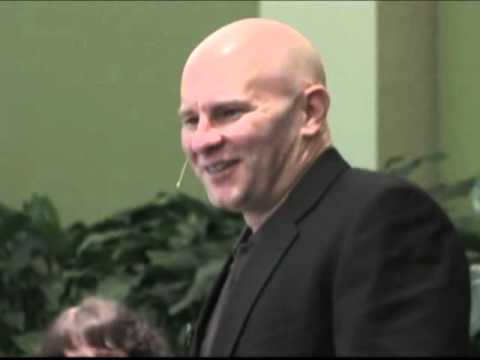
In this motivational keynote, Jim Bouchard outlines the "Black Belt Mindset," emphasizing discipline, focus, perseverance, and constant self‑improvement. He argues that true discipline begins with a decision to act, and that mastery is achieved through relentless basic practice, illustrated by a story of Master Yamazaki who repeatedly sends his student away for three‑year periods of fundamental training. Bouchard stresses the importance of a beginner’s mind, curiosity, and finding passion even in mundane tasks like washing dishes, suggesting that passion is not a destination but a continual process. He connects these principles to effective leadership, encouraging audiences to adopt an ongoing, never‑ending pursuit of perfection in personal and professional life. The talk concludes with a call to book Bouchard for corporate, conference, or campus events.
Chapters
Ho! Black Belt mindset means discipline, focus, and perseverance. It means having the courage and confidence to face life's challenges and take action. We live in a crowded, noisy, fantastic, but very loud world, right? If I want to concentrate on the task at hand, I've got to turn off all that noise and allow myself to be mindful. It means dedication to constant self-improvement. It means excellence, whether you're washing dishes or you're in the corner office. People are always asking me, "How do you become disciplined?" Not being the nicey-nicey motivational guy, here's what I say: Decide to do it. Pull up your pants, Turn your hat around and get to work. All right, sounds a little simplistic, but that's where it needs to start. And to me, and this is where I'll get on my soapbox, if we can just transform some minds to that idea, that the whole idea behind discipline is just making a decision first, then we can start to take the first step. The principles behind Black Belt Mindset are universal. The application is unique to each individual. Exactly. I won't even go further. He said, "Do the best you can." Right? That you can. You measure yourself against who? Yourself. Right? That's why I customize each presentation to suit your organization or conference mission. I incorporate your unique vision and culture and deliver a message that each person in the audience will be able to put into practice immediately. But how do we develop this mastery? How do we develop this willingness to learn? How do we develop this proficiency? How do we develop this excellence? A few years ago, I had the great pleasure of being at a martial arts convention. There was a guest instructor there, Master Yamazaki. Master Yamazaki is the sword master, Imperial Sword Master to the royal family of Japan. His family has done this for generations. What Master Yamazaki did— he didn't speak very good English, so he did this a little bit through an interpreter. I'm going to do my best Master Yamazaki impersonation in a second. Here's what he said, and they always told these stories with 3 years in between. So the first step, he said, the student came to the master, "How do I become a master?" He said, "Oh, 3 steps. First one, basic practice." Okay, basic practice. "Now go away." Sends him away for 3 years. He's practicing, he's practicing, he's chopping people's heads off and this and that. He says, "Come back in 3 years." He says, "Okay, master, I'm ready for the second step." I want to be a sword master. What's the second step? What do you say? Basic practice, right? It's always 3 years. I don't know why, it just is. Sends him away for 3 years again, right? Comes back in 3 years, master, I'm ready, I need the final step. What's the final step? Master Yamazaki got his Japanese accent going, he said, more basic practice. Like a Nike, just do it. You think like a black belt. You're more innovative, creative, and productive. You're curious, and you approach each day with beginner's mind. If we can get that process happening, we're asking questions of ourselves and of other people, then it's a constant activation process. We live a life that's curious and engaging. You understand how to develop authentic power and how to share that power through effective leadership at all levels. A lot of people will tell you this, All you need to get ahead, all you need to be successful is passion. If we put a plate on the table here, I would say, "Put this plate down and look at it. Can you eat passion? Can you fill that plate with passion? Will passion pay your bills?" You see, so I have a little different attitude about that. Yeah, let's find the passion, even if I'm doing something that's mundane. And in the old temples of Japan, what they did was this: If someone wasn't very satisfied with their lives, there's a little trick. They give them a job to do, okay. Someone has trouble accessing that passion, they give them a job to do. You know what it is? What do you think it is? Chopping up boards? Playing with swords? No. There's one thing you guys probably do every day and it's endless because every time you eat with that beautiful plate of passion, there's something left over there. Washing the dishes, exactly. If you can be happy, if you can find passion washing the dishes, you can find passion in anything. There it is, see? Because it's not a destination, once we remove ourselves from that idea that it's a finish, that there's a finish line to it, then that's it. Then at any moment— and just think about this for a second, you don't have to say it out loud, you can if you want— if you can embrace that idea of constant self-perfection, you can enjoy that moment, you can access that moment at any time, What does that do to any process you're engaged in in your life? Whether it's life or business or anything else. You see, just chew on that for a second. Think about that. So perfection is not a destination. It's a never-ending process. Thank you. Book Jim Bouchard for your next corporate, conference, or campus event. Call 800-786-8502. That's 800-786-8502. Think like a black belt.