2020 PRSA PAG Virtual Summit Keynote - Incivility and Indecency: The Greatest Pandemic of All

Jim Lukaszewski argues that incivility is a global pandemic causing permanent invisible wounds. He identifies 30 "enemies of decency" like humiliation and bullying, then offers five concrete actions: speak up, adopt ethical philosophy in your institution, name offending behaviors, support decent leaders, and detoxify language.
Chapters
Hello.
It's my privilege today to introduce our keynote speaker, Jim Lukaszewski. Jim considers incivility and indecency the world's greatest pandemic. He's one of America's most visible corporate go to people for senior executives when there's trouble in the room or on the horizon. And as America's crisis guru, Lukaszewski is known for his ability to help executives look at problems from a variety of sensible, constructed and principled perspectives. He's known for taking a business approach rather than traditional PR strategies by teaching clients to take highly focused and ethically appropriate actions. He believes that all questionable, inappropriate, unethical, immoral, predatory, improper, victim producing and criminal behaviors intentional all ethical, moral, compassionate, decent, civil and lawful behaviors are also intentional. The choice is clear and always yours. Lukaszewski has written 14 books. His newest book, the Decency the Leader's Path to Building Integrity and Trust with co author Steve Harrison, was published by McGraw Hill in March 2020. Jim first served as a PIO during his service in Minnesota state government from 1974 to 1978. He was an assistant press secretary for former Governor Wendell Anderson and is Deputy Commissioner of the Minnesota Department of economic development. From 1988 through 2009, he served as a civilian advisor to U.S. marine Corps Public affairs, and in that capacity he also participated in the Brigadier General Selectees Orientation Course for seven years, at one point having coached nearly every active duty United States Marine Corps general, he has lectured and done seminars for all branches of the US Military. He's lectured at the Defense Information School and speaks frequently to a variety of PIO organizations. His writings on crisis management, being a trusted strategic advisor in leadership recovery, are so extensive that wherever you study public relations on the planet, you will likely see, hear, or view some of Lukaszewski's ideas. An active member of PRSA since 1974, in 1994, he was appointed the PRSA National Board of Ethics and Professional Standards. In 2015, the PRSA National Board appointed Jim Beps Emeritus, and he remains an active but ex officio member of beps. It is our great pleasure to introduce Jim Lukaszewski. Welcome, Jim.
Thank you very much. Delighted to be with you. Actually, I've been a member of this section since 1990, when it was only public affairs that it became public affairs in government. And for a while, maybe still is, it was public affairs, government and the military. So I've been here a long time. I'm actually the third recipient of the Lloyd B. Dennis Award, which the Section awards not every year, but for service to the section and also service to PRSA nationally. And I just want to. Just a moment about Lloyd Dennis. He was an amazing guy. He was a senior communicator for the Los Angeles Water District. And if you ever saw the movie Chinatown with Jack Nicholson, it's an older movie, but you see it around a lot. It's the story of the politics of water in California. And it's a very, very interesting and intense movie. Anyway, the reason I mentioned is because he really wanted to get something important done by the section. And he managed to write a book or get a book written, which is actually still available. And listen to the title. This was published in 1995 by Public affairs in an era of A Communicator's Guide for Business, Government and College. And just goes to show you that no matter how things change, they kind of like, stay the same. But a bunch of us were authors of various chapters and you can still get the book for 175 bucks on eBay if you're really dedicated. But it was a really interesting project and really set us apart from the other sections by publishing a book. Anyway, this is really an amazing program today because we're talking about this concept of incivility and indecency as a pandemic. Next slide, please. And there were actually multiple pandemics in the United States and around the world today. And you'll notice I list the coronavirus as number two, because the coronavirus is not going to get everybody. It's going to get only about 80% of us. And it's going to. It's going to be serious, and we don't know how long it's going to take and all the rest of it. But incivility and decency are in a far larger pandemic, and that's because indecency and incivility affects all of us at some point in our lives. And. And for many of us in many points of our lives. I think that I classify. Sexual harassment is also in the pandemic category. It is unbelievably ubiquitous and a problem we're going to have to address at some point down the road. We're starting to address it now, but you're just getting started. But what I wanted to point out was, and talk about. Next slide, please, is this process of indecency and instability in two parts. The first, I want to talk about this business of it's a pandemic and the fact that we're all going to be victims of this or we all actually are victims as you'll see as we talk this through. And actually, by what I understand of the two other pandemics, this notion of instability and indecency actually is more pervasive than both of these other pandemics combined. But, you know, the last bullet read, the indecency pandemic is, you know, the pandemic of instability, indecency, humiliation, vengeance and permanent irreversible victimization. This is really a serious problem. And so I'm taking this sort of dramatic approach to it because it's difficult to talk about it as a subject matter, I found, because it's just difficult. And we're not really talking about what this is all about. Today's program is about what the pandemic of incivility is all about and why it matters so much. Next slide, please. The second part, second half of the presentation. We're going to talk about what we're going to do about it and what you are going to do about it. And we're going to do about it as well. Sort of the way out, so to speak. But this is not talked about that. Well, that importantly. But I've got a structure for you to consider because as I said, all of us have been subject to these issues, this business of instability. Next slide, please. I want to tell a story. This is Helio Fred Garcia. I know many of you must know Fred. He is really a legend in our business, based in New York when he has activities all over the world. He has a new book coming out which is really related to what we're talking about today even. It's called Words on the Power of Incendiary Language and How to Confront It. It's going to be out, I think, in about seven days around the last day of this month, of the first day in July. It's a really powerful book and I'm going to talk about it for just a minute. But notice what I've said about the book and it's actually published on the COVID It's a mandatory reading and guidebook for every journalist, business school legislator and elected official. Important institutions in our society and culture have the affirmative responsibility to stand up and speak out against the users and use of dangerous language. And the reason I want to extra from this book is because as Fred was writing and he was sending me sections of it, and I've known fred for about 35 years. When he sent me the preface, I was absolutely stunned because I'd known him for all these years. I had no idea what was happening to Fred. And his story is very much related to what we're talking about today. And then I'm going to tell you a story about myself, which I've never told anybody. Okay, new slide, please. Let's see. Let's go back for a second. What I want to talk about. I'm actually going to read this to you because it's so interesting. This is a part of the preface to the book. Okay, so this is really Fred talking. He begins this way. I am an immigrant to the United States, an American by choice. I chose to be an American because of all the places in the world, and I've been fortunate to have visited and worked in dozens of countries on six continents. This is one of the few places where your birth certificate circumstances do not determine the rest of your life. And with a national aspiration still at work, and still a work in process that encourages us to be our better selves, I've been able to build a good life here. I married a wonderful person, and together we've raised two remarkable young women. I graduated from two of the finest universities in the land, and I'm a professor at both. I work with or for some of the best companies on the planet. I pass as an American. I carry with me all the manifestations of white privilege. But it wasn't always that way. When I arrived from South America as a young child, I was different. I was different from all the other kids. I was an easy mark. I was scrawny, with an unpronounceable name, a heavy accent, and a very weak command of the English language. I was a group of the others, the outsiders, you might say. And I was a target. I was tormented for years by a pack of boys who saw me as an opportunity to feel superior. I was constantly held, told to go back to where I came from. What began with taunting and insults and name calling metastasized into physical violence and sexual humiliation. I was beaten. I was held down by boys who took turns urinating on me and then running off and laughing. More than 50 years later, I carry scars around my eye where I was kicked with a heavy boot. And now that I no longer have any hair, many of the scars are noticeable, especially the top and back of my head where I was hit with sticks, with rocks and, and at least one instance, a brick. I also carry scars on my soul. I've had what many would call a very successful career in our profession. But in my seventh decade, I still have a visceral fear of being alone with men with whom I don't have a relationship of authority. I avoid Sporting events. I don't hang around with groups of men. I have only a handful of male friends. My. My therapist advises me that more than 50 years after the assaults, I still suffer from a form of post traumatic stress disorder. I'm still the cowering little boy terrified of bullies. When I was 21, I became an American citizen. I took an oath affirming that I would protect and defend the Constitution and service the nation. I've done so. Most of my career has been a form of overcompensation for being inarticulate and a powerless child. And then there's those scars on my soul. Something to think about. Something to think about. We're going to talk about this now. My story, it's a little different, but you get the idea here. I'm nine and a half years old. I'm working on. It's a Sunday, actually, in the morning. And I'm in the workshop my dad had helping him fix things. Okay. And so we're working at this. And he hands me something to work on and I mess it up. I don't know what I did, can't remember what the thing was. But he turned to me at that point in time when I messed it up. And he looked at me and he said, you jackass. Now I'm nine and a half years old, so I don't really necessarily gather the impact of what's happened to me. But then we go upstairs to lunch and we sit at the lunch table with my mother and three sisters, and he talks about what we were doing in the workshop because they asked about it. And then he used that phrase again. He called me a jackass. I have to say, when you want to talk about scars on someone's soul, this was just the beginning of scars on my soul. But this is kind of what we're talking about today. It's not kind of. It is. It's this intentional. This intentional behavior that occurs in our society. In fact, it occurs in all societies, and it occurs to all of us. I have to believe that something we're talking about, all of you are thinking about, hopefully the things in your life that you've never told anybody about that really are the scars on your soul. It's the physical, intellectual violence that these. These circumstances cause. Next slide, please. And I want to start from the perspective of what I believe, because I think this will be helping you put it in perspective from what you believe. Okay, You've heard this first part a bit already. I believe that misbehavior all misbehavior is intentional. I've been working in this field for 42 years. And you know the list as you see it and you heard it read earlier. All questionable, inappropriate, unethical, unconscionable, immoral, predatory, improper, victim producing and criminal behaviors are intentional. And an older teenager or an adult makes the decision to cross a line into this area. And if they're not caught, not exposed, not otherwise revealed, they'll cross that line again and again and again. By the same token, good behaviors are intentional. All ethical, moral, compassionate, decent, civil and lawful behaviors intentional. We choose to do these things. They don't really happen automatically. It's almost a choice really, every single time. It just absolutely is. And the bottom line of this line of thinking, from my perspective, is the choice is always clear and always yours. I'm going to talk about how this gets muddied up in most cultures. I get arguments about this choice is always clear and always yours. But unethical behavior does not happen by accident. And some of it's very egregious. I mean, Volkswagen altered 800,000 automobiles and they initially blamed it on six guys going to one of their factories on a Saturday morning and fooling around. Well, when we take that on the task of by order of management to alter these devices that measure environmental impact at the level of 800,000, it takes everybody in every factory and the total management commitment to getting this done. This was a major choice. There are other companies that I could name, but we'll leave it at Volkswagen for this district exercise. But the choice is essentially always yours. And we'll talk about why so many people just go along. Next slide, please. There is another. There is a class of behaviors I refer to as unconscional behaviors which I believe are intrinsically unethical. These are behaviors, actions, decisions by those that vilify damage to me. Read the list. Dismissed. Humiliate, cause, needless, but intentional pain, express anger and irritation. Bullying, negative, insulting, disrespectful, disparaging, tone deaf behavior, no empathy. These are behaviors that are prevalent in our society. I actually, I'll show you a list in a minute of a full list of these which I call the enemies of decency. And you know what? I believe these are intrinsically unethical. But they're not unethical in our code. They're not unethical in any code I could find on the planet. But these are the issues that really are tearing our culture apart right now. Next slide, please. I have to say I always want to point this out. Your mother was wrong about one thing. And what we're talking about here is the fact that when you were five years old and the first time somebody screamed at you or something like that and it upset you, and you went and talked to your mom about it, she said, well, don't worry about this. It's six in stones that'll break your bones, but names and words will never hurt you. Many of you have heard this phrase. Now you're six years old and you're going to school, and you leave school in the afternoon to go meet your mom, to go home, and there's some person you don't even know in the playground who's shouting at you, demeaning you, humiliating you, and you realize that this wonderful thought by your mom is a lie. And for the rest of your life, you're going to know that this is a lie. And it's really what we kind of want to talk about here. Victimization by humiliation, in a way, is worse than death. Because if you do get a broken bone or you survive an attack, so to speak, you will heal. But there are going to be scars. There's going to be things that are visible in these circumstances. But when it comes to humiliation, it's a different category altogether. Next slide, please. Some words, as it says here, cause irreparable permanent injuries. And that's really what we're talking about. Indecency is about incivility. And these other enemies of decency, you know, essentially are words and behaviors that harm, maim, damage, and destroy the spirit. But if you look down a little further in this slide, there are no scars, no bleeding, no broken bones, no bruises, no outward evidence that there's ever been a problem. Right? You're going to be suffering these alone, and they last a lifetime. You can break an arm, you can be beaten up, but you'll heal from that. And generally, you know, it goes away. But unlike that, unlike physical violence, this is intellectual violence. This is private violence. And only you know what you're suffering. And you know it has a toxic impact. It rarely kills, but it permanently maims you. And I have to believe that everyone in this audience. That's the bottom note there. Am I missing anyone in the audience? We all suffer from these things, and many of us still do and will do going forward. Next slide, please. Here they are. This is the complete list of the decency enemies tools in alphabetic order. I always like alphabetical order. Just take a look at these for a second. And I bet you can check off, you know, a half a dozen at Least if not many parts of the list from your own life experience. These are the things we have to nullify and work against as we move through this process of understanding and combating indecency and incivility. Okay, next slide, please. During the presentation, I'm going to have these slides come up. We're not going to look at them a lot. You're going to have this presentation. It's part of the package for your attending. And you'll have all these slides. These are the definitions for these 30 enemies of decency. Next slide, please. The opposite of civility and decency, as slide says, is incivility and desperation. Desperation, okay, desperation. And we're as a country, we're sort of suffering from this right now. Next slide, please. We're suffering from this epidemic, this pandemic of bullying in our culture. And these essentially are the bullies behaviors. Now, the thing about bullying is this. A lot of people look at bullying and think about the violence of it. But studies, a lot of study of bullying, the bullying by lots of credible organizations. And bullying is really only about 4 to 6% physical, but it's like 95% verbal. This is the powering part of bullying. Think about bullies in your life. We all have them. Some of them may have beaten you up, but most of them just are insulting. They're angry, they're demeaning, they're disparaging. They work to humiliate and vilify, and then they whine about it when somebody complains. Okay, these are word weaponizing strategies. And this is just a part of the process of understanding what is happening to us in these attacks on civility and incivility. Next slide, please. The question really is, how does this execute it? We're seeing it every day. We have the behavior in the previous slide, but this is how it's done. These accusatory adjectives, these messy, insulting characterizations, we hear these sometimes in the news. We hear them in private venues, we hear them at work, perhaps, but this is a process which you kind of wonder if there's a school for this, but not aware of one. Except that our culture teaches these behaviors and accepts those behaviors. And we have to recognize that this is what's at work here and we have to begin dealing with it. But I want to make one more point before we go on. And that essentially is that the phrase that says, what's the point? And the point of talking about this is the realization that leaders and smart managers know what's happening. Those who vilify, those who demean those who are bullies know they're doing it. This is a choice. And you might say, well, you know, he got a temper, he's a little crusty some mornings. These are intentional behaviors. And if they're not essentially dealt with by being exposed, we'll talk about this in a minute. They get away with this and they keep doing it and we just suffer. Okay. It's very interesting the pattern that sees. Because I work in these situations where we try to work on these circumstances, and this is part of the pattern that I recognize. Even in crisis situations. The thing that makes the. One of the things that makes a crisis a crisis is the fact that at some point in time, somebody in a position of authority or power steps over a line and maybe they actually do it privately, although that's pretty hard. And you all these things to sort of head fake us, to not realize that behavior was intentional to begin with going forward and caused more damage than you can possibly count. And here's the other thing. Once caught, when the truth comes out, it's interesting. You know, there is an admission quite often, but most of the time, executive misbehavior is a great process of self forgiveness. But eventually the truth comes out on these things. And even if it does, it doesn't necessarily, doesn't necessarily stop the problem. But if we know what the pattern is, which is what I'm talking about, it will help us fortify ourselves to do what has to be done to get our lives together. Okay. This is a phenomenon that's occurring. This intentional neglect and avoidance of civility, decency and ethics is justified. Every day we make excuses for people and how they behave. I gave a couple of examples. We've sort of learned. Not sort of, we've learned to sort of live with this stuff, but it still is just as painful and it's still just as invisible when it goes forward. And I would just make one other comment in this vein because we're going through the pandemic process right now and we've also gone through other similar tough situations. And there's always somebody who advocates, as we've seen, something called a balanced approach. And this is extraordinary. It's like, I mean, I would say this is completely misunderstandable or unable to be understood because the balanced approach essentially says that, you know, we're going to essentially allow some lives to be taken or some health to be sacrificed so somebody can open a drugstore. Right. I call it, we're stretching. Balanced approach right now means exchanging death for a dividend. Okay? This is just utterly ridiculous. And at the very beginning of the pandemic, you may remember this, I mentioned I worked for many important companies. Still do. But in the early part of the pandemic, when the Congress and the state legislatures were providing trillions of dollars, there was these enormous warnings from business people in particular who said essentially, be careful now. Be careful now, because we don't want to have a cure that's worse than the disease. Okay? This is like eight weeks ago, and now we have practically 130,000 dead. We have 300,000 people who are suffering. What could be worse than that? But it's so interesting how we make alibis that persist in giving us trouble and keeping us in trouble and not dealing with it. I want to turn to that point right now, so please change the slide. How do we do this? How do we defeat decency as enemies? Start talking about five of the most important things you can do. The first one is to speak up. The number one enabler of unethical and unconscionable behavior is the silence of those who are afflicted and the silence of those who see it and know about it. And we enable people to behave this way unconscionably simply because we don't call it out. We have to start calling it out and saying that essentially there's more appropriate behaviors in our culture than this, and you have to stop it. 2. Work within your own organization. This includes your home, your church, the institutions you belong to, to adopt an ethical philosophy. I talk about this of searching for ideal behavior in everything that is done. And this is also one of my bedlock beliefs, this concept of ideal behavior. It's actually the philosophy of two American philosophers from the last century, Will and Ariel Durand, who a married couple who specialize their entire career in writing the story of philosophy throughout the world. And it's like an 11 volume set. It's thousands of words. But Will Devant wrote a book ahead of it, a smaller book, just to explain what they were doing. And he explained what his philosophy of ethics was. And I'm familiar with lots of different philosophies and explanations of ethics, but I like his the best and you ought to write it down. It's just five, the search for ideal behavior. That's his ethical philosophy. And you'll see how it plays into what I'm going to talk about going through this. So remember this concept, the search for ideal behavior. Number three. Name the offending behaviors and intentions. I gave you a list of the enemies of decency. This is a very important list because oftentimes we criticize people for being offensive or being mean or being tired or whatever it is, but we're copping out. We have to name the behaviors so that we get used to the people perpetrating these behaviors, to hearing it and understanding that it is simply not acceptable. Fourth, seek out, establish and support leaders who visibly and aggressively champion's ability to decency integrity. We got to look hard to find them. It's a little hard right now, but we have to begin to identify people. They're out there, whether they're corporate executives or neighbors or people at your church or your own relatives who are mindful of how important it is to be civil, to be decent, to have integrity. And fifth, detoxify our own language. All right? We have to aspire, as I say there, to accomplish and expect others every day to change their language, too. And what you find out in areas where this is working, that when you change your life, you change your. Change your words, rather, you change the lives of others. Next slide, please. One of the fundamental truths of this discussion is that civility is the foundation for integrity. And this is what we mean by civility. Small decencies. My co author in the book that you were kind enough to show at the beginning of the presentation is in his company, Large international company is known really as Mr. Decency. He actually wrote a book called the Manager's Guide to Small Decencies. And he discovered and observed that it isn't big things that necessarily as powerful as small things that happen inside good companies. And what we notice about companies that are spectacular and we have a lot of them, they're really brilliant companies, but they all get into trouble because they become great companies before they become good companies. And they have to backtrack and build the goodness in. We're going to talk about building goodness in just a moment. Okay? Small decencies outside the company is what builds great companies. I'm mentioning two things here in this next bullet that are really important. I'm going to talk about them later. But the concept of apology and empathy are extremely powerful in building environments of decency and civility. I'll talk more about that in a little bit. And the issue really in the loss of civility is that we lose trust besides and we get fearful. I define trust simply as the absence of fear and fear as the absence of trust. And the issue here is essentially, it's truly important to think about it from this perspective. This whole foundation of civility is really to build trust in the people around you. In you, in what you think, how you behave, what you intend to do, and getting them to do the same thing. And when you talk about trust, there is one ingredient that is really important in building trust, and that's the concept of candor. And I define candor this way. I define candor as truth with an attitude delivered right now. And what you find in trust building and trust rebuilding is that the key ingredient is candor, because the key ingredient of candor is truth immediately. One of the reasons we had trouble building trust is because we sort of like, we wait to find out what people think trust is, and then we try to match that. When trust is really simply about being truthful, honest and open right now and insisting on others that they be the same. Okay? In essence, this is also the building blocks of ideal behavior. We'll talk about that more. Next slide, please. Just another group of what you'll see in the collection, when you get it, of the definitions of these unconscionable behaviors. Next slide, please. The first step in the process of really exercising the pressure to be civil is to begin to call out things that are not. And I call it learn the mentality of speaking up to stop. And there's more examples in the handout material, but they're just four. 1. When your words, deeds, or actions turn to vilification, stop. Choose another pathway. If someone else's behaviors go this way, stop them and say, look, there's a better way to do this. There's a more civil way to explain this, okay? When you use sarcasm to ridicule, damage, demean, dismiss, diminish, or humiliate, stop or stop somebody else, call it out and say, hey, let's do it another way. What you propose is negative, punitive, defensive, and harmfully restrictive on others. Stop. Choose another pathway. And when your words or deeds exceed the boundaries of decency, civility, and integrity, just stop. Choose another path. There are many paths, and I'm going to show you some in a moment. To decency and civility. Next slide, please. These are the big ideas that go along with civility and decency. And it's useful to think about. It's about reconciliation, coming together, common understanding. It's about engagement, helping others essentially move more towards civility and decency. Mutual understanding that we actually talk about in our families, at our churches, in our business, and the other activities we engage in. Again, to build trust and respect, to really focus on building trust and respect. And just a thought at the bottom there that civility and decency begin with positive language. One of the most insidious forms of misunderstanding that we use is in all of our work and living, we have lots of phrases that are simply negative. It's mindless negativity. One of my favorites is, I don't doubt that you're right. Well, that's a double negative. And actually, double negatives don't create a positive. They just create more confusion because you want to eliminate negative language altogether if you can. If you're a chronically negative person, it's going to be very hard to execute this and to find ideal behaviors, frankly. Next slide, please. Again, more of the 30 items more completely defined. You have this material in your handout. Next slide, please. Years ago, when I started working in these issues, because a part of crisis response is dealing with the victim dimension. And the victim dimension really relies on civil and decent behavior, compassion and honesty. And so the question I was constantly asked by people, well, what do you mean? What is civility anyway? So I came up with this creed, you might say, of civility. And I'm going to read it out loud because this is something you want to cut out, paste on your mirror and put on your desk, okay? The true test of civility is a commitment to verbal written communication and actions that are positive and. And declarative and behaviors that are simple, sensitive, sensible, constructive, helpful, empathetic, and benefit the recipient out of proportion positively to the sender. And the sender is you. Okay? And so what this really reflects is a series of questions you have to ask yourself based on this creed, which help you decide. And, you know, so these are questions about what you decided to do or what you're considering doing. You're asking yourself, is it sensitive? Is it sensible? Is it constructive? Is it compassionate? Is it helpful? Is it empathetic? Does it benefit the recipient more than you in the process? Next slide, please. This is again back to the concept of search for ideal behavior, right? When it comes to ethical behavior, there are certain things that happen to us that allow in the part of the pattern of determining ethical behavior that are really important. And they're also related directly to this concept of searching for ideal behavior. And you can read the questions you're asking yourself on these cards. You know, is your tummy okay with what you're about to decide, do, or suggest for most of us, how our stomach fares tells us whether this is the right thing to do or we need to do something else. Right is what you're planning to do. Simple, sensible, constructive. Right is what you're planning on doing, promoting or imposing something your mother would endorse or approve of. Does it pass the straight face eye contact test? I really would call it the laugh test. Moms are interesting because when we're dealing with crises, we're dealing with senior people. And one of the things we know about from studies of senior executives is that if they have a mom who's alive, male or female executive, they're closer to their mothers than their fathers and other people in their lives. And sometimes it's so close that.
Before.
The boss knows there's, you know, when he realizes there's a problem or she realizes the problem before she lets everybody else in on it, she calls mom and says. And talks it over with her. And it's so interesting because when I, when I come aboard to handle the crisis situation, generally they try a lot of things to avoid doing anything. But my first question often of the chief executive and officers is, you know, what's the conversation with your mom going like? What is she telling you? It's a little startling for them. But the fact is, the only person whose career is on the line in a crisis is the person who runs the place. They don't fire pr. They don't fire hr. It's the boss they fire. So this is on their minds. And one of the few people who will talk to them in an encouraging fashion is their mother. So often I talk about this and mention moms, okay, just to continue the list. Does it avoid questions? Are you kidding? You know, what are you thinking? Right? You've heard these questions before. You know, does it meet. Does it meet the requirements of the decency code, which is explained in the book that I wrote? We wrote civility, compassion, empathy, honesty, humility. And is it principled? Right. Does your mother know? What did she say? What would she say? Right. Next slide, please. I mention these again because these are so powerful, apology and empathy. And I just mention this quickly because typically these are the last two things we think about. But we've learned in crisis management that if you fail in the apology and you fail on the empathy area, you will always be remembered as a failed response, even if technically it's a perfect response. You know, we tend to respond with data rather than apologize. We tend to respond with facts rather than empathize. And mind my definition of apology, the atomic energy of empathy. Apologies tend to stop bad things from starting and starting bad things to stop. And my definition of empathy is different. Typically we divide empathy as putting ourselves in somebody else's shoes, which is impossible, and you can't do it in decency. Because you don't know what the damage is. You can't see it. Right? Empathy is a positive constructive action. These are positive construction actions and deeds that demonstrates ability, decency and integrity while speaking louder than words possibly can. So many of us use these good things we do as big communication points. My advice always is if it really is an act of empathy, then it will speak much louder than your public relations communications program can ever do. And sometimes we have to let people, the beneficiaries of our behavior, speak for us and speak with us. Empathy is extremely powerful. And if your activities are absent empathy, you have a problem. And again, this notion that ethics is always the search for ideal behavior. Next slide, please. This is just kind of a repeat of what I talked about. You have to do these things in all of the places you are, but the benefits are really obvious and they're not so well known. But there's more and more studies that demonstrate that workplaces, homes and organizations where there is integrity and civility, they're safer places to be, they're more ethical, and they're great places just to hang around in or work in. For example, people want to be in places like this. Those who lead with genuine integrity, civility and respect, it says here, essentially are more likely to be ethical behavior of ethical decision makers and make your life easier. Next slide, please. Here's my list of what I call the ingredients of goodness. And look at this list. You can do everything here. This is really not difficult at all. But this is sort of your recipe of goodness. The things that make a place civil are these kinds of behaviors. Okay, next slide, please. The question always. Okay, fine, I see the list, Jim, but how do I actually. I mean, what do I do? So here's what you do. Here's how you behave, here's how you talk. Right? How can I help you? I can do that. I'm sorry. My pleasure. Please ask me. Please let me help you. Please forgive me. Thank you. You can read these things, but this is what puts decency into action. Just these simple, positive suggestions and offers something to really think about. Next slide, please. Okay, so this is my lexicon of civility and decency. We're not going to really dwell on it, but when you want to know the extent of your opportunity for civility and decency, here's a list of some 32 items that fall in this category. And you can do all of them, but at least some of them. And when there's any doubt at all, default to this list before you make your decision. Okay, Next Slide, please. Here it is. Change your words, change your world, right? If the perpetrator of the indecency is someone you know, find someone else to know. If the perpetrator is somebody you buy from, buy from someplace else. If the source is someone in public life, disavow them as vocally as you can. If the source is someone who calls you a friend, find new friends. If the source is someone from your local pulpit, find another pulpit. If the source is in the media, a media platform, a celebrity, cross them off your list. Change the channel, right? And if where you work or what you do is unconscionable, leave. Find happiness elsewhere. These are words to live by. Next slide, please. And here again, change your words, change the world of others. Spend your time building a better life for the people around you first. And then branch out to others. And some real wisdom here. Predators and perpetrators are superb con artists. Call them out, root them out, stop repeating and validating their lies and perpetrators. Predators, public figures and leaders never really change. Many of you, many of us in public affairs, we stay places out of the dedication to the notion that we can make it better. If you have somebody in charge or somebody involved in running portions of your operation who behave in these negative fashions, you really have no choice but to get out of there. They're not going to change. As much as you want them to change, they're not going to change. Next slide, please. This is to close. In closing, this is your mission, should you choose to accept it. And these are things to think about, things that you can take action on to help this process of becoming civil and helping others become civil and decent and re establish their integrity going forward. And as you can see, I think everything I've talked about today is completely doable and you can completely be successful. I think the goal is to remember, to look forward to having a civil life, a decent life, a life that's built on doing those things that are important and helpful to do. One last slide. And that is how you get a hold of me. I'm anxious to talk to people about this. I'm going to be talking and writing about this for a long time. And I'd like to help people who have questions about this. So you can reach me by any of these means. You can send me an email, you can call me if you like. I'm on the web, by the way. There's a free newsletter on my website that comes out monthly. Just go on www.enantlevin.com@sign up for free. And I publish something every month. I'm also on LinkedIn, Twitter, as you can see, and YouTube. Well, a great rush together on a topic that is really important. Thank you so very much for paying attention to me today. I hope this is helpful and I look forward to talking with you about this because public affairs people are on the leading edge of making this happen. Have a great conference. Thanks again. Have a safe summer. Bye bye.
Thank you so much Mr. Lukaszewski for that wonderful presentation to all of our attendees. We will be taking a five minute break. You can join us at the next session starting at 2:02pm Eastern time. Thank you.
More from Jim
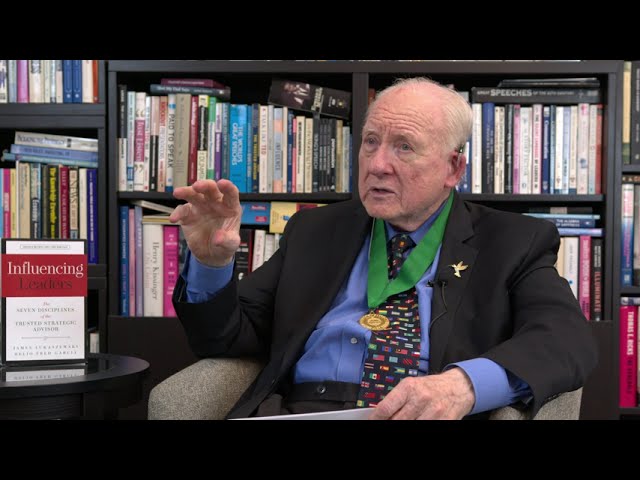
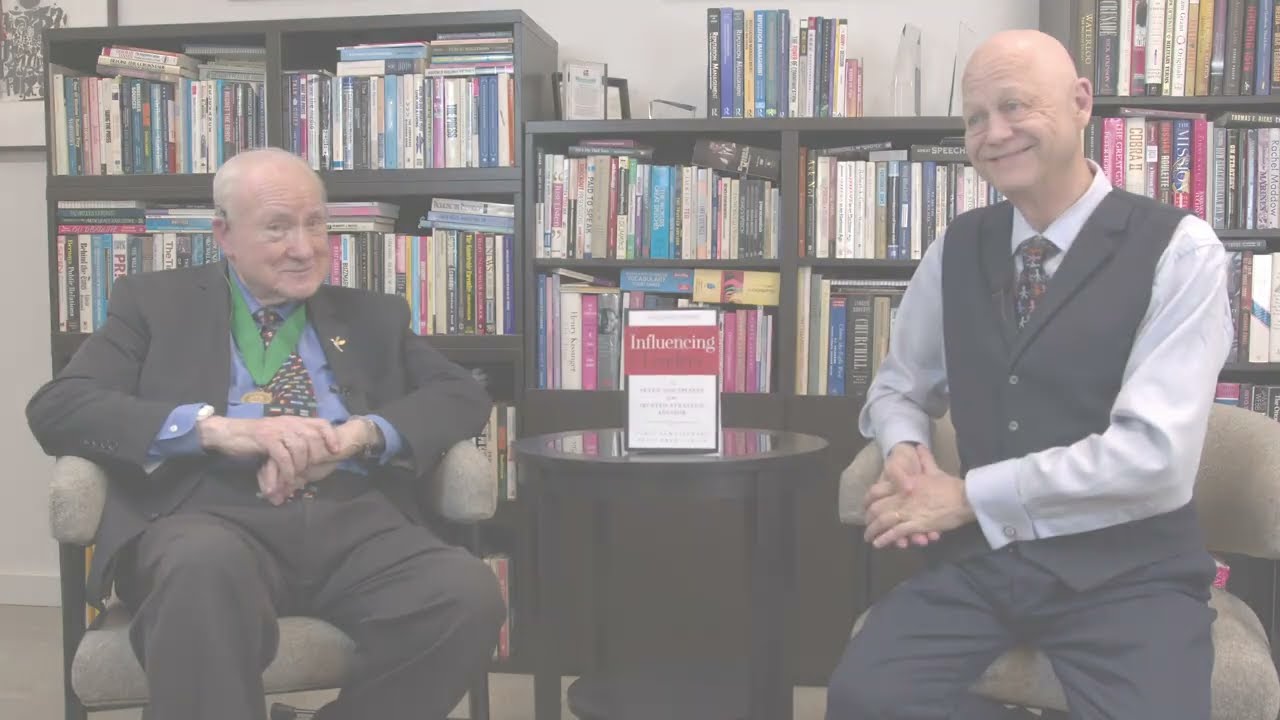
James E. Lukaszewski and Helio Fred Garcia discuss writing Influencing Leaders together