Strategy for Breakfast with Jim Lukaszewski

Jim Lukaszewski presents a victim-centric crisis strategy: stop creating new victims, manage existing ones, communicate fast to internal teams, notify affected parties, and handle media. He calls apology the "atomic energy of empathy" and stresses the critical first two hours of response, using cases like Target's breach and BP's spill.
Chapters
But I usually start these things by picking something maybe out of the news to talk about. Since none of you mentioned a burning issue getting up this early in the morning, I presume you'll get to that before the time's up. But the thing that caught my attention yesterday really was the fact that the Pope made this comment at a presentation seeking forgiveness from the victims of the Church. I actually had an extraordinary experience in the apology business. I've written a lot about it. There's actually an item in your handout called the Perfect Apology. You don't have to read it now, but it's a very helpful document. I actually, I don't know if it's going to run you. I wrote an op ed for the trivia about this issue called where's the Apology? And you know, there's a lot of, there's a lot of misunderstanding about apology if you have to make one, but if you're owed one, there is no misunderstanding about what an apology is. Right. If you're a victim, you understand what an apology has to obtain. And my most current book, which, which came out last year is about, really the first part of the book is about this victim dimension of crisis. Let me talk about it for a couple minutes and I'll open it up to the floor. But the thing that I define a crisis this way. A crisis is a people stopping show, stopping product stopping, reputationally defining event that it's actually reputationally redefining event that creates victims and or explosivism. In my experience, the number of crises that actually get visible are very few because there's just not enough people covering the stuff to cover them all. But the real issue, and the real important issue in the definition of crisis is that word victims. It's something which isn't really talked about. I see crisis plans of all kinds every year and I've never seen one. Well, I've seen a couple because they're in the victim business. But, but I've never seen a plan, a corporate plan or a non profit plan that talked about the victim dimension of crisis. When you think about this, whatever your level of experience is in this arena, I mean, you suddenly realize if you haven't before, that it isn't what you did that is the problem. It isn't even what you're doing about it. That's the problem that causes the visibility, causes the anguish. It's the fact that we have created victims and they're driving the level of media coverage. So I've been teaching for many years now a Strategy of crisis response, which I just talked. It's very brief, but accommodates this. The power that victims have. We can talk about this more if you like, but I advocate a general response. I call it the grand strategy. And it's five parts, very simple. The first ingredient of crisis response is to stop the production of victims. Stop the production of victims. A lot of things we do, a lot of things we talk about. A lot of meetings get held when bad things happen. But the real issue is it's, you know, probably the best metaphor is that pipe that burst in the Gulf of Mexico 24, 7. We're watching that thing spew junk out of there, creating all kinds of victims. The first ingredient of a crisis response is stopping the production of victims. There are three kinds of victims, okay? People, animals, living systems. Been at this a long time. When I first started, the only kind of victims we paid attention to were people. Then animals came along and environment came along with VALDEZ Bill in 1989. But it's these living systems, living entities, and our effect on them that create this environment and circumstance of victim. And this is what the media coverage is about. This is what the angst is about. And we fail to address that, which we often don't. We leave it to other people. We leave it to the firemen, security people, police. They're nice folks, they're very dedicated, they do wonderful work. But they're not the perpetrators. We are. We have a responsibility to step in and manage the victim dementia. This translates into essentially a section in your plan for what the top people should be doing from the moment they get started. The top people should be one, setting the tone of the response. The tone of the response. There's a pattern of failure. One of the first, the first incident indication of failure is the denial by the perpetrator that there's anything wrong for as long as possible. This creates even more victims and revictimizes those who are victims. The second step in the process is what I call managing the victim dimension. That's really what I'm talking about here. The prime responsibility of leaders of organizations who perpetrate problems is to manage the victim dementia. It starts by setting the tone. It starts by. It continues by being actively involved with resolving victim issues. If you think about it, any crisis that we watch covers or report about or talked about, the conversation is what are they doing about those who are injured or those who are having problems? And failure to address these two issues. Both stopping the production and managing the problems victims have is what the news is basically. About the bad news. But if you choose to be, if you choose to deny to start with, then you are in a problem. Non communication. And the one thing we know about crisis response, that silence is the most toxic strategy, just is the most toxic thing. Third step in this five step process is to communicate with your key constituents or stakeholders. And the reason is most information on these circumstances doesn't come from the leadership of the organization. It comes from within the organization. First of all, most leaders are inaccessible by choice, which is foolish. But secondly, they're not trusted anyway because you're the people in charge when something blew up, burned down or whatever. So they talk to people they know who worked there. Your employee, your shareholders, perhaps your customers. Say what are they doing over there? What do you think about this? Think about the target circumstance. Target wasn't talking in the beginning, but there was plenty of news coverage. Who were they talking to? Customers, all kinds of bankers, that sort of thing. I was interviewed several times during that, the height of that problem. And Channel nine wanted to interview me in front of a Target store. Remember the Friday when they had the 10% discount fiasco? Well, Channel Nine wanted me to talk about that on camera in front of a Target store. We could not find a place to park, okay? There were so many customers doing so much heavy duty shopping, we went back to Channel 9 and filled it in. One of their studios, so to speak. That's another whole story. But talking to employees is a crucial key because they're the ones who will be talking for you. And if they don't know, what are they going to do? They're going to talk and they're going to make it up. Whatever they make up, you won't. My strategy for internal communication is pretty simple. We operate in essentially statement mode. That is, we don't use press releases. We use statements attributed to somebody in authority. They're rarely more than 100 words long. There are studies that indicate that human beings. I work in many cultures, this is true in many cultures. People can absorb and even repeat with some accuracy about 100 words that they hear or read. So I'd rather do small bursts, frequent small bursts of information over time. And these bursts decline as the temperature of the circumstance declines. And so people inside have the information they need that is approved, that is authorized. But you know what happens? It's so funny when you start doing this. Employees don't talk anymore. They say, there's a guy, we got a guy in PR whose name is Cameron something. Call him, here's his number, which is what you want without having to order people not to talk. Because you've ordered people not to talk. They have to talk like when you were a kid and they said, don't put your finger in the outlet, do it anyway. It's so interesting how people behave, give them a little information. Nobody I've ever met in a company, except for the person who's rotation job was on the line, really cared that much about what was going on, what the circumstances were. They just wanted to know that somebody up top knew the place was on fire and was doing something. That's all they want to know. But typically what you know, what happens is there are these meetings, they call them huddling. The bosses get in the room, close the door and a couple, three hours later they're still debating the first hundred words. Keep it simple, skip all the fancy stuff, make a statement and make it now. The thing about bad news is it always gets worse, it always ripens badly.
Isn't it better to, even if you don't have all the information to say, you know, we're looking into it and we're gathering information.
Well, the reason I'm talking about this five step process is that whenever you face a situation like a crisis where you sometimes never know completely what's going on, we just never do. We can talk about the process of response, you're right. We talk about what we're doing, what doing. We're what's going on in a very sensible way. We've talked about three things so far. Stopping the production of victims, managing the victims situation, talking to employees, which is important. Fourth step is to notify those who need notification, people who have oversight of us or issue permits or just deserve to know for some reason, they might be customers, they might be colleagues, they might be flanking businesses that we work with in various circumstances. They need to know, need to talk to them. And the fifth step in this process then is what I call managing the self appointed, self anointed, the media, the bloviators, the belly acres, all those folks that we now have in our universe these days when something bad happens, when something good happens. Now what I just described to you, why this is important is this is the strategy, the steps and the strategy you need. This is a management approach, this is a leadership approach. This is what leaders should be doing and how we help them get through these circumstances. It makes sense to them. It's a process. It's not just hip shooting PR stuff. And they know in their heart that this is what they should be doing. They really do. Everybody Has a mom. Sometimes I bring mom in with a. They're reluctant to do things, but. And so what I've really described to you is what I call what I've stolen. This, I guess the golden hour. Anybody here heard of the golden hour as a concept? Some of you have. The golden hour comes from military medicine. The helicopter was invented just at the end of World War II. And still in military conflicts, the single most common reason for soldiers dying from injuries and wounds is they bleed to death on the battlefield or on the way to being helped. If helicopter was invented and the US army began applying it to the treatment of soldiers. And in the Korean War, you remember, we saw these helicopters flying around. There was hospitals. These were called Mobile Army Soldiers Surgical Hospital mashes. Remember this mash? What they did was they moved the hospital. Instead of putting away in the back somewhere, they put them on the front line, on the battle line. And in the process they decreased the treatment time from injury to treatment, serious medical treatment. These were hospitals, these were just surgeries. And they had some of the most brilliant surgeons from the country working in these things. So what happened was the helicopters flew them in. What they learned was that if you can treat a wounded soldier within an hour, 60 minutes of their wounds, their odds of survival literally are on a vertical slope. At the end of the Korean War, the data showed that 97% of those who arrived alive at a MASH left alive from a mash. I'm describing these five steps, I think are your golden hour. In fact, I'll give you 120 minutes, your golden two hours to get these things started. Because I mean, a very valid observation that we know so little when crisis happens. I mean, this is why it's a crisis. We don't know what's going on. And we're hearing all this junk from a lot of people who don't know anything more than we do after making it up. But this is a concrete, useful strategy that accommodates everything you're responsible for. When these things happen, get them all going in the first couple of hours, better things will happen and you'll have some time to learn what's going on. So, you know, going back to my initial comment, the issue that the operative word here is victim, and we know a lot about this. There is a reprint in your document called Managing a Mass Casualty Situation where the victim dimension of a mass casualty situation. I define mass casualties as two injured people in the same room together or in the same vicinity. One victim, suitably motivated, can change the direction of your company Your culture, your leadership, public policy. This country, in every country, it isn't a mob that changes things. It's two or three or four really committed people who will not take no for an answer. And ironically, in the management mentality, it's like, well, there aren't that many people who are hurt. There's only like a few. Two or three are really raising heck about this. Why should we care about those people? And the answer is because they can change your destiny. They just can. And you have to pay attention to these people. There's a reprint, there's a blog in here called Sitting down with Critics, Bloviators, Bellyachers and Complainers. Why? And the answer is very simple. The answer is because. Because you have to. It's expected of you by your employees, by the victims themselves, by the community, by people who have authority over you, by public officials. So when you debate whether we should talk to somebody or not just because they're mad at us and victim vocal about it and you don't do it, guess who's going to win? It's not going to be you. Your life is going to be miserable. And we do have management management today. This is just. We've exported this to management around the world. Actually have these very strange notions about how we manage these circumstances. And what they misunderstand is this victim dimension. So I urge you to pursue this. I've got some really good stuff here. Read about it. And the reason that they don't pursue it because victims act so irrationally. And this is what half the discussions are about that you've been involved in, right? Well, you know, we're trying to help them. Why don't they appreciate what we're trying to do? The answer is they can't appreciate it because they're victims and victims have problems. And stopping because people are acting irrelevant. When I'm in a meeting with people, they're saying, but they're being irrational. I say, yes, you get it, they're irrational. There's a different way we handle these things and process is one of them. Process approaches is one very important subject. Anyway, back to our. Back to the Pope. He's asking for forgiveness. The problem with asking for forgiveness is he and the church had done nothing to persuade. The title of the I'll give you a copy of it. We have it included in public is where's the apology? The crux of victim management is apology. Want to have a lively discussion in your organization? Talk about apologizing? I define apology as the atomic energy of empathy. It stops Things apologies stop arguments. Apologies stop fights. Apologies stop litigation. Listen up. In 1999, 1991, the VA Veterans Hospital in Lexington, Kentucky started an experiment which they called Extreme Honesty. By the way, you can look, this is a really interesting piece. If you go into your browser, look up the phrase extreme honesty, a couple things will come up. My name will come up because I've written about it. But what you're looking for is an article from the December 1999 issue of the Journal of Internal Medicine. The article is called Extreme Honesty and it talks about this 10 year experiment that the VA hospital did with essentially immediate disclosure and immediate revelation. When there's an adverse outcome in a medical situation and there's quite often an apology as well, they talk about what they did, the impact it had on patients. But more importantly, it's an article to begin to quantify the impact of some strategy to reduce litigation. That was ago. Since that time, there's a movement in American health care called the I'm sorry movement. Minnesota happens to be a leader in it. And it's about the notion of apologizing and acknowledging adversity in medical health care right away. The crux of it is if something happens that's adverse to the patient, almost no matter what it is, the medical people in charge immediately determine what happened. They meet with the patient or someone caring for the patient and talk about what happened, what was responsible or who's responsible. They usually have claims people there so they can have the patient or the people turn to them, file claims easily if it's serious enough. The smart hospital brings their attorney along and invites the patient or patients having to bring their attorney up to sit down and talk about lawsuits. What they discovered was that, you know, the more you apologize, the less people sue. They do file more claims because you're teaching them how to do that. But claims are okay because insurance companies underwrite for this. They have these, you know, mathematical stuff that figures all these things out and we're going through a major claim situation and you're covered. What often happens is your insurance arrangement changes with the insurance company because the risks with you have changed. But that's fine. And your rates may go up, even they probably should. But what doesn't happen is litigation. The National Law Journal studies this. Now every year there are a couple universities studying it in this country. In Canada, they report each year on the impact of apology and this behavior on the resolution of issues where victims are created. Very interesting, very important. Lawyers are the law. The legal business is beginning to come around and recognize that saying nothing is the toxic strategy. You want trouble, say nothing.
Jim, on that. The single biggest barrier to good counsel that I found in crisis is the attorney, often because they do adopt the strategy that you're talking about, not exposing to perceived.
I get that.
So the question I ask is, how do you get through that common barrier with this?
Because it's not the lawyer's decision. The benefit that we have over attorneys is that attorneys have canons of ethics that prohibit certain things that they can do. For example, they really can't recommend a single course of action to a client. They're obligated to provide a series of options from which the client chooses. Okay, on that score, we're much freer. We can, you know, we can recommend all kinds of crazy stuff, and we often do because we don't know what we're doing. But that's another story. I look at it this way. There's a point in every crisis, when you get to a cliff, you have to make a really serious decision. The lawyer has to stop there and say, you got my best advice, my best counsel. At this point in time, got to make your mind up and decide to jump or not. It's up to you. What do we do? Most communicators, hey, we're ready to jump on a moment's notice, right? Just grab my hand. We'll go and see what happens on the way down, okay? So what I'm telling you is this is not the lawyer's decision. He is a counselor and advisor just as we are. It's up to the boss. It's up to whoever's in charge making the decisions to decide whether they're going to do it or not do it. And I. I push this issue. If I say, let's go to the client, the lawyer has to go to the client. He can battle with me if he wants, but that's not what the client's paying him for. Not paying us to talk, he's paying, paying us to talk to them. So go to the client. Lay it on the table. The client decides. Keep the client where they belong. They make decisions. It's their destiny. It's their future, Dr. Vodera. It's their money. It's their reputation, not ours. This deal. So I take to consider myself the equal of anybody on the team in my area of communications, you know, the lawyer likes to say, I don't want racist management, Jim. But I say, tell you what, I know that you know law. I want the law for you. Okay, Chapter nine in my newest book is about law. It's very insightful. There's some flowcharts in there to help you understand what's going on in civil and criminal cases. I'm not an attorney, but I have a very ongoing civil and criminal practice. It also talks about lawyers as leakers. Lawyers are the second most frequent leakers in every crisis story. They leak because they can. They leak because journalists have learned that the weakest part of a lawyer's psychology is their desire to talk about their love for the law. So the attorney's approach, the reporter's approach, and some of your former reporters know this. You just walk up and say, hey, look, this is really complicated. I'm not a lawyer. You know, I got all this paper and stuff. I need somebody to walk through this with. Just now I realize things you can't talk about, and I understand that. I'm not looking for that. But can we have a conversation to kind of watch me through a similar circumstance or something where I can just get a handle on what's going on? When you read that article the second day of the crisis, when you don't have a clue what's happening, but all of a sudden there's this huge description of the paper and there are consultants commenting and all the rest of the. Where does all this come from? Only one. It doesn't come from the mailroom. I guarantee you that. Not coming from the mailroom. It's coming from the boardroom or from the legal department or the outside lawyer because they feel they can talk about anything. Every communications plan you have must have a description of the lawyer's latitude for speaking. In my circular, there's some models. In here, it is zero. They have a client to serve. They don't serve the media or any other circumstance for any reason. Unless the client authorizes it, they're prohibited. When the client says to them, you may not speak to anybody, I'll tell you. They have to abide by their canons, demand that they respect what the client. Unless it's illegal, immoral, totally stupid. And I can't tell you how many times I've sat in meetings. All of a sudden, the neighbor reporter comes up and one of the lawyers. I've known Bud for years, actually, with the state fraternity at university. Well, they're having a beer every Friday together. What is the lawyer telling this reporter? Because the reporter's only having the beer. Why? Because he knows the guys in the company. Well, I, you know, I don't tell him anything. I tell them we're good company, we're honorable people. What you needed his. Put a buzz on him. You can do it. Do it. They actually can't object. They can give you a shot at it, but. And their only argument is that there be an egregious amount of public misunderstanding about what's happening here if you don't allow some of the legal background to talk. What I've learned is, remember what I said earlier that people don't really care that much about the detail. They just want to know you're doing something about it that's honorable cost really, and fits your reputation. They don't care how the law works. They don't care how the law works. Victims don't even care how the law works. They really have a right to know. It's just bogus, okay? And it has nothing to do with the case. You know, judges hate this stuff. Judges have a courtroom for a reason. They want the stuff done in the courtroom. So keep it there. There's a new trend in public relations these days. It's a big one. A lot of PR people are going to law school, getting law degree number in the Twin Cities law degrees after being public relations activity. Their colleagues don't necessarily consider them lawyers like they are. They consider them lawyers who also are talkers and PR people. You can't do two jobs. You're either a lawyer or you're a PR person. Doesn't matter what all the letters beyond your name. So I've got to keep that in mind when people come and say, you know, I'm a lawyer of the PR background, quite often this is. They're performing more for their colleague than they're performing for you. It's just an interesting dimension to what's going on. I'm talking the whole time. I don't want to talk the whole time. The bottom line of the editorial is essentially, you know, failure to apologize simply re victimizes those who are waiting for one. I work with these victims. I work with victims of these circumstances. I have to tell you, you know, you ask them what, what do you, what do you, what do you look for for an apology? How big an apology can there be to compensate for the suffering you've undergone since you were eight years old? Right? I mean, what would it have to, you know, what do you imagine it looks like? And the constant comment to them, to me is, it doesn't have to be big. I just want somebody to stand up and say, I did this. I'm responsible for your pain and suffering. I did it. That's really all victims are looking for. Despite the Lawsuits and the rest of it.
Jim, have you found that this whole issue changes a lot with increased social media? Has there been any change in terms of this process?
Not really. Social media is, first of all, most of it's negative. Most of it's critical. Most of it's just people who've got the time to do it. You know, 80% of what's on the web is produced by 20% of the people who are there. Just really people have time to do this, I guess, maybe because they find an employment. I don't know. The thing about how our system works, which is so absolutely, utterly cool, is, you know, if it's in court, it's going to be handled by and large properly because peers make decisions about what happened to their peers. There's just a lot of stuff going on in the background. This is what social media has done because there's a lot of noise in the background, which can have an impact, no question about it. It has to be managed. But generally speaking, for companies and organizations and businesses and industries at risk, we really increasingly recommend, in fact, we provide the service, constant monitoring of these various platforms, looking for things, looking for language. It's amazing what you can do with these various technologies these days for understanding who's doing what to whom and who's saying what about what. But in terms of getting these things resolved, it's interesting. Those techniques really have not changed. One of the most frequent questions I get because I look the way I look is what changes in crisis management? What changes in behavior have occurred in your long career? The answer is, unless they've invented another commandment now, those of us who do crisis work routinely here are watching them break the same 10 day after day after day after day. Nothing has changed in the perpetration department, okay? There is literally nothing new to the crisis. It's stupid, it's idiotic. And the funny part about it is, when you think about it, we get to work in crisis with really smart people, people who should know better. Going in, coming out. Whenever somebody calls me about some issue, I ask them, how did this happen? See, their mom has already asked them, what were you thinking? I don't have to ask that question. But it's really, you know, how did this come about? And if they say, I don't know, then the response I have is kind of hard to help you, right? Point is, somebody there knows. What's funny is when they call me, generally all the key people are already assembled. They can't figure it out themselves. Sometimes it happens at 11:30 at night, 4:30 in the afternoon, Friday. And you know, where's your management group? Oh, they're in my conference room. Lock the doors, start serving coffee. Don't let them out. In a few hours, somebody will have to get out of there so badly they'll tell you, because somebody in that room knows. Every time somebody in that room knows. And they'll tell the media before they tell you.
Yes, Jim, you've mentioned Target, and I don't know if you're just talking about it, but it seems to me there are probably some really good lessons to learn from that, good and bad.
Actually, I have to say I do many of these. I do at least a dozen of these breach cases a year. And it's gotten to the point where breaches aren't really news anymore. Target was a breach because it was so humongous. It involved consumers and in numbers unheard of before and that sort of thing. They did stumble, fumble and mumble. But I have to tell you, on the scale of like 1 to 10 for the average client I have of the circumstance, I mean, they were probably in the 8 or 9 range for what they should have been doing. Most clients I work with, they never get above 4 or 5. They're only doing 4 or 5 because we pass so many laws now that require disclosure. You file reports with the federal government, you have to file special consultants and that sort of stuff to work your way through them. But they do the smallest amount possible. Target is. I mean, Target behaves, in my judgment, pretty much the way I'd expect a company with its reputation to behave. But one of the realities of these situations is when they do blow up as big as this one got, heads are going to roll. Now, when you talk about British Petroleum, we always like to cite pr. People always like to cite the comment that the president made, you know, I want my life back. That isn't what he got fired for. Nobody cares about PR in those circumstances. Nobody cares what those people say. That's what the media cared about, because that's what the media does. The media, if it's bad, they want to cover it. When I'm talking about the strategy, I talk about those five steps. You start doing that and you won't be covered. Why? Because you're boring. We don't cover good people. We cover people screwing things up. But the Target thing was so, so massive. But then, you know, it's sort of interesting to watch. Now, the other thing occurred, the overreaction. You know, here's. We're not going to have Like a board shuffle. I mean, they're going to change this company from top to bottom. And I have to ask the question, why are they doing that?
Do you think that they erred and that they didn't actually come forth right away and say what the problem was?
If you read the stories, and there are tons of consultants from all over the planet who are quoted in these stories, every consultant, every expert in this field, this field of digital management and security, at the very end of what they talk about is the disclaimer, well, and you know, the people who do this are doing this 24 hours a day, seven days a week. So it's almost impossible to keep up with what they're doing. You know, this is a losing game for Target no matter what. Why? Because you can't keep up with this stuff. Cyber security can't keep. They're busy. The moment. The moment you close this door, they open another one. That's what they do. So we looked for as a society, and this is not just us. You know, the simplest, easiest solution possible and we fire people. So we're firing top to bottom of this company. And, you know, the real question is, what's Target going to look like in a year or two? Are they going to be the same company in a year or two? Can they actually maintain the relationship they've had with customers in the past with all of this management shifting and reorganizing going around? It's a big question. Much bigger than the breach itself, which they're handling 24 hours a day, seven days a week. You know, they're doing a maximum job on this because they should and they have to. They're responsible. But, you know, even on the day that I was interviewed at the height of the 10% problem that target had, the only people who were complaining were the people who couldn't get their. What is it, their Xbox for a discount because the store was prohibited by contract from giving you this car getting into the Target. But you know, so many ways, they were a model company. British Petroleum, if you think about it, when this guy was fired, ultimately Tony something or other, right? Here's what he'd gotten done before he was fired. He got the oil shut off. President Obama didn't do that. No, state governors didn't do that. All the haranguing congressmen in Washington didn't do that. British Petroleum did. He set up a fund. This is the first in history to prepay. Imagine Prepay damages of $30 billion. Fund is still operating. It's controversial because trial lawyers have Been trying to chip into that money ever since the accident occurred. And they're working on it. But right now there are even lawsuits about what lawyers are doing. That's not necessarily legal either. They hired thousands of people, tens of thousands of people literally to stand on the shore and be ready to pick up the oil when they came ashore. 90% of those people never saw a drop of oil reach the shore. But they were hired nonetheless. They paid people's boat payments, house payments, car payments, salaries for years. They sold a third of the company to raise the money to pay for all of this stuff. This is what the guy they fired did. He basically put in place everything needed to resolve the issue, my five part strategy kind of thing, before he got fired. But he's going to be fired anyway. We fired everybody in these jobs. They're just toads. First question I'm asked usually is, is my job on the line? And no, you bet it is. And the odds are you need to find a successor the way this is going to go down, because it will always go down this way. The only thing that satisfies the media, shuts them up, satisfies shareholders and the folks in Washington who get into these things all the time.
Jim, can I ask a question going back to your scenario about the poll and you know, he's asking for forgiveness, this type of thing. I truly believe that those folks are also looking for an apology, that our legal systems around the world, lawyers are looking to make money. In an attorney's view, money is winning. Why are people so hesitant to give enough apology? My guess is that the Pope was advised not to apologize.
We can only really go by what he did. And the point I'm making in the editorial is I not only talk about how you do this, I'm talking about what you specifically have to do to be listened to to get forgiveness. Okay. There's a process here. In fact, it's actually based on the papal encyclical from like 1911. Interestingly enough, the strategy for gaining forgiveness, which is also in your packet, it's also in the article. But I believe that first of all, you know, what the lawyers are doing is what lawyers do. The thing you have to remember is what is the basic reason that there's a problem here? The basic reason that people are being sexually assaulted, children for the most part. And the issue has to focus on the resolution, if it's possible, of the suffering of these individuals. You know, so I don't have to worry about the lawyers making money with. I mean, that's Just the way our system and the system's evolving. And you're right on a global basis. The real issue is focusing on how do we help these people get beyond the issue before familiar with this issue at all. And we've got almost 20 people in the room. That means at least two of you probably have suffered from something like this. You never get over happens when you're nine years old. You never stop being nine. Every day you relive this new circumstance. The only similar circumstance that I think is as powerful and painful is being fired, is losing your job involuntarily. You've never been fired. You don't know what I'm talking about. But if you have been fired, this is something you live with every day of your life. At some point during that day, you relive the instant in which someone said, we don't have any work to do anymore. It's a catastrophic event in people's lives. There are very few things in life that are as catastrophic as those two. There's a document in here where I talk about victimization, and I list in there the reason what causes victimization. Of the 30 reasons for victimization, bullying is one. But bullying is only 8% physical. It's 92% verbal. Assault is another. But most people recover from assault, except for just a couple kinds of assault. We recover from that. All the other 31 items are things like embarrassment, minimizing people's fears and concerns, humiliating people. They're all behavioral and verbal. Interesting. It's a communications problem. Interesting Victimization. And part of the reason I want you to think about this is because our behavior in these situations, in our behavior, we tend to be logical. And some of the most logical things you might do turn out to be very offensive to victims. Giving them answers to their questions constantly in a kindly, helpful way is often looked at being intrusive, being controlling. Everything in a victim's life is different from that of a person who is not a victim. And since we're at the crux of victimization in our organization, we need to understand this and teach it to management. This is one of the first things I talk about with clients because I want to change their thinking. Ironically, the thinking is often, as you pointed out, we're going to blame the lawyers, we're going to blame all kinds of other actors. But the issue is not about them at all. They're just a part of a play. The driving force is with the victims and how we, the perpetrators, behave towards them. Get that right, get that moving and the rest of stuff literally no one's going to care about or report about because it's not what the media, it's not what social media is about either. It's all about pretty negative stuff. Push the hot button there. No. What can we talk about until I find a bitterest.
I have a question back to the Target example. You gave them an 8. I thought they did a good job handling, you know, the disclosure of what happened and explaining what happened, working with financial institutions to communicate what happened to their folks. What I thought, where I thought they failed was the massive layoff that happened, happened immediately after. What do you think about the timing of that? We all know that it was going to happen at some point. Their heads were going to roll. But I think their timing was bad. They just got over this issue. They were kind of looking favorable with the 10% discount. The stores were packed. And the story, the media was starting to tell the positive story about, you know, now it was about, okay, oh, people are still loving Target even though they had this breach. And two weeks later there's, you know, oh, financial issues. And then the 10% was, oh, just a way to get, you know, people into the store to, you know, beef up revenue. I, I just wonder. I feel like that wasn't.
It's. It's. Jobs are precious these days, even here where on the women and so long. And I don't really have a sense about those movements because once they start down that path and you start looking at the hemorrhage of money in an organization, you have to do something to manage it. And sadly, the easiest thing to manage is headcount. Pick a number and then you pick the number of heads and you chop them off. And by golly, things look better financially pretty quickly. If you want to look at faults in the Target case, they're the same old, same old faults that every crisis situation had. They waited to talk. Probably the biggest problem they had, they waited to talk. And you know, this is like the question about apology. Why don't they apologize sooner? The answer is we teach managers in this country especially not to do this. You apologize, you're saying, and your cohort members will call you from your MBA class and rag on you for doing this. Gotta stop doing this. This is weak. You do it and I gotta do it. Knock it out. And they talk amongst themselves about these things. It's really. Management in this country has become so dominated by earning a buck as a leader and a manager, and anything gets in the way of it that can't be quantified. In some way is not respected. And in fact, it's deterred from being dealt with. And since being a victim is the most highly emotional state you can achieve as a human being, and there's nothing metricizable about it, we don't recognize it. And I mean, questions I often get in larger audiences, sometimes maybe some of you are the idiots here. I've had people stand up and say, look, isn't an apology, Joan, an act of cowardice? Serious act of cowardice? I'm just, you know, this has happened a few times. It happens more frequently in businesses involved in like, security work and police type work and things like that. This is a key figure, a key concept because they're first responders. They're the first ones on the scene. They often set the tone by their behavior with victims as to what's going on. But the answer to the question is, I look at the apology I said, the apology I defined as the atomic energy of empathy. And empathy. I define as actions that speak louder than words. A lot of people define empathy we brought up believe that empathy is putting yourself in someone else's shoes and looking at the world from their perspective. But if you've been, if you've been raped, if you've been sodomized, whatever these things are that are bad, fired, how can you, who hasn't been put yourself in their shoes? You cannot do it. But you can do things that might help them. You can answer questions, do lots of things, help them get through the circumstances. Empathy is about what you do. Actions speak louder than words. My advice always is public relations is sort of defined as doing good and taking credit for it. In terms of empathy, my definition is doing good and letting the good speak for itself. And you have only one audience anyway. It's the victims for this goodness you're doing. Porters aren't going to cover. They rarely do. Most people don't care, really don't care about victims. They don't have to. They're not a victim. I don't care. That's another whole lecture. But as far as targets are concerned, I think for the most part they did, under the circumstances, probably the best job they could at this point in time. There are always ways to improve, but the standard, in fact, you actually have a reaper called mindless criticism, avoiding mindless criticism. And it catalogs those things that are always said by PR people. When asked about how somebody handled a crisis. The reason I got interviewed, by the way, was because on a blog someplace, someone talked to me and I mentioned that the Target was doing a good job. The media picked that up because nobody was saying that. Right. Who's this guy anyway? Funny last name. Who says they're doing a good job, got lots of interviews. But the fact is good companies generally behave pretty well on these circumstances. They're still going to get whack out of you. Bad news is messy and sloppy and awful and you're going to get whack and it's going to get worse. Get used to it.
Yes, down the back a little.
We're talking about some very important and extreme cases.
A week or so ago, maybe two weeks, the Bremer foundation had a problem.
Where.
A watchdog found that they were paying a trustee to the six figures and they had fired their executive director. And it blew up as some really crisis about a hand. There's not a real victim.
Why is there not a real victim here?
Who would the victim be?
The people not getting the money that they paid to the rich guy. That's who the victims are.
But, but.
The. A trust is a public trust, and so the public is the victim here and they deserve an apology and compensation just like just as though they sent somebody to the hospital. There's always a victim in these circumstances. Circumstances, you got to think about who it is. And I, you know, that focus tends to keep you centered on what's really important to talk about, what's really important to do. But to me, and what you talk about is not that. I mean, it's reasonably common in these circumstances. The victim is the public here, and it's those people who they might have helped had they not paid six figures to these people who were already richer than God anyway. So seems to me there is a victim here.
A couple of us in the room are involved in education, and so I'm thinking about just broadly, some, either crises that occur or potential crises. On the student side, it could be threats or violence or student things that students do. On the staff side, it could be potential teacher strikes and often those kinds of issues. There's a lot of limits in terms of data privacy, contact negotiation, law that limit how much you can say, so can you.
The thing you have going for me is nobody really cares about this except the immediate participants. Most of us don't care what the contract says, don't care about what's happening. In a democracy, 7 out of 10 people don't care because they don't have to care. So it's not a very large audience for the people you can't say things to. Okay? And so those people who care? We understand litigation and you're talking about it. If it's personnel, we understand that. No, we really do. There are four or five reasons, like you mentioned, that are very legitimate explanation as to why the information you're providing is limited. Okay, Limited by law, it's limited by contract. It's limited for these reasons. But the general approach is to say we can't talk about that or we won't talk about that, which are lies. Anytime you use the word can't, the person receiving that word says you're a liar. What they say in their brain, think of yourselves. I mean, somebody says, we can't do this for you. What do you think? Well, a guy could do it if he wanted to, but for some reason doesn't like me today. He's not going to do it. No. This is the whole other area I talk about and teach about the use of language and in education. To me, it's so interesting. You know, the average life, the average attendant. What is it? The average term of a superintendent of the United States is like under four years, like between three and four years. This is one of the toughest, grindiest, heartless, thoughtless, awful jobs in the world. But I have a fairly decent practice in education. And the issue with educators is that they're smart. And smart people tend to forget who they work for. The community is the ultimate decider of what goes on in the school system. That's the way we set it up. That's the way it happens. And when smart people come along and somehow try to drive things in a way that's too far away from where the community is because they fail to set it up for the community to come along because they're smart. Now, one of the first things I talk about is this vision of victimization. Because if we talk about victims, then we're moving away from race, we're moving away from wealth, we're moving away from all these interfering thought processes and idea spoilers, so to speak, and talking about the issue at hand. When somebody's mad, you know, it's not because they're black, it's not because they're brown. It's because something has happened to them that's made them feel victimized. So if we separate these other things out of it, then we can go to the heart of the problem, which is this victim has a problem. If they really go after us on this deal, it's going to be painful. Seriously, why don't we fix it? Today, one of the most powerful tools, I believe school boards has is public apology to say you're sorry for things and to explain apology as a process. Explain what you're. What you're being sorry for and what you're going to do to change it. And part of it's listening to the people. I mean, I can tell you that, you know, I have. I have at the moment, I think, three or four school boards who are another one I'm talking to today who are in such trouble with their communities because they can't back off from what they think the community should be doing. Why? I got a PhD. They're all PhDs. Well, I'm not a PhD. I fix cars for a living. And I don't like what you're doing in the fourth grade with my daughter. I want it to change. And guess what? I'm going to retire tomorrow, and you're going to become my sole focus for the rest of my life to change the fourth grade. Why? Only because we said no. We didn't listen. We don't change. We're the smart people. This is one of the reasons why American education is in so much trouble today. Smart people who stick to my politics is the same way. We are Balkanized. Smart people just can't change their minds or move an inch. But I can tell you, if you follow my directions and your situation. Just had one in upstate New York, this one involved actually heroin in the school. They found heroin in a briefcase in a teacher's locker area. And it came to light because it happened the second time. And the first time, the police didn't say anything to anybody about it. They started an investigation the second time the police made it public and the community blew up because they said the second time. You didn't tell us about the first time. Eight teachers have lockers in that area. The police wanted them to be drug tested. The union says, no way. No way. Seven said, oh, no, it's okay, I'll do it. And they did it. One person says they won't. We got a big fight in our hands because the union says, you can't make them do this or whatever the reason. So that gets people mad at the superintendent, mad at the school head of the school board, you know, and what they're debating when I came on the scene was all these angry people. So we had this conversation about an hour on the phone. I finally said, what is the problem here? What are we talking about? I'm asking you, you're there. Well, you know, the union guy need this, parents need that. What's the problem? The problem Is there's heroin in a grade school in your school system. I would think everyone would unite behind getting this out of the schools and keeping it out of the schools. This other stuff is just a distraction. Go to the union people and say, so are you for heroin or against heroin? That's what the question is. You decide, go to the parents and say, okay, fine, you're upset, but you know, you want heroin in the schools or shall we all get together and resolve this problem? And by the way, no, we did screw this up. We just. This was a major mess we created is our fault. We apologize and we're going to show you how apologetically we're going to handle this with all of you. There's no battle anymore. People are signing up to watch the schools do stuff in this, get the heroin out of the schools, drive up there. Are they going to be mad? Yeah, going to be mad next week about something. It's the nature of the dis. But start down this road recognizing how to de. Emotionalize these circumstances through really being, you know, just good, nice people. I was giving a talk to the school board recently and one of the. One of the senior members said after went through this discussion, she said, you are a much nicer person than I am. She said, I prefer lines, drawing lines, setting limits. I said, each line you draw is a war zone. Each war zone creates casualties and critics. Casualties and critics never die. They never die and at the worst possible moment, they decide to come and bug you and bleed all over. Your favorite idea, managing these large public systems. To me, rule number one is to stop the production of victims, critics and angry people. They aren't caused by neighborhood, they're caused by the actions of leaders. Is that an all response to blow up there? We're down to the last three minutes. Emil's got a burning issue. I'm not going anywhere, but I'm happy to stay chat afterwards if you'd like to talk. Well, let me ask you this. What do you know now that you didn't know an hour or so ago, if anything?
I would say just about everything he.
Said.
You know, I think the. What I would say, what I would say is that the power of an apology, you know, just reinforcing that and hearing you say things like one person draws lines.
In the example I gave of the town of the Herriman, they call a meeting, they were originally going to have meeting individual meetings with people. And I said just get them all in a room together. You want the. Be sure you get the angry ones there too. Call them up and make them count, okay? And they started this meeting with an apology. They started the meeting. It wasn't even the school board person there, somebody who speaks for them in this school district. Everybody knows them. They like them. They got up and did this. Really. I wasn't there. It was really hard, humble, somewhat sad, apologetic explanation of how they messed this up. It wasn't an alibi. They weren't forgiving themselves. He talked about they just sat around and messed this up. When the meeting started, this is in a room for 150, holding now 200 people. They had two microphones at every meeting, right? They had lines out the door for the microphones. By the time you finished apology, nobody at the microphone, they're all sitting down and nobody's saying a word. And he said, the funny part is the leader, the community leader of the opposition, of the school board, was about to get up and talk and I presume was his wife put his hand on her hand on his arm and said, sit down. This is what happened. This is the power of apology. You said, no, I've had reaction. You can't do this. You just can't do this. You can't just walk around apologizing. Everybody apologizing means nothing. But the fact is it doesn't have to mean something to anybody. It means something to the victim. That's what this is about. It happens to calm everybody else down. I don't care about everybody else. I care about the people we've injured. They're the ones who deserve it. You give it to them and it settles things down. It's pretty cool stuff. Anybody else want to chime in? Maybe. What's the most surprising thing today, if anything? It's 9 o'. Clock. You get to go. Okay. Thank you so much for coming. I'll sit Veronica on the chat.
More from Jim
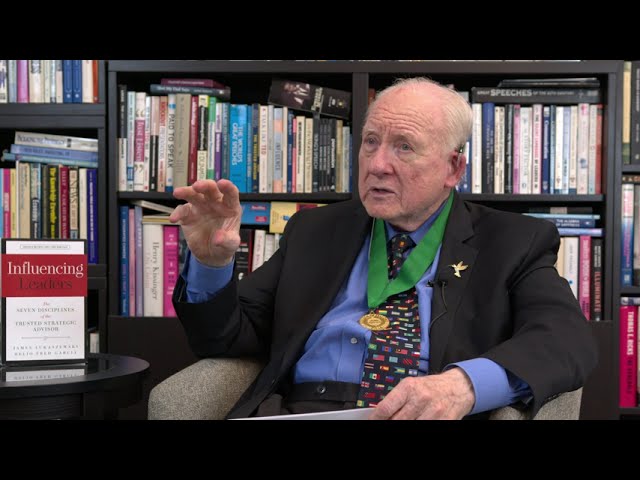
James E. Lukaszewski and Helio Fred Garcia discuss writing Influencing Leaders together