10 Steps to a LIMITLESS brain | Jim Kwik
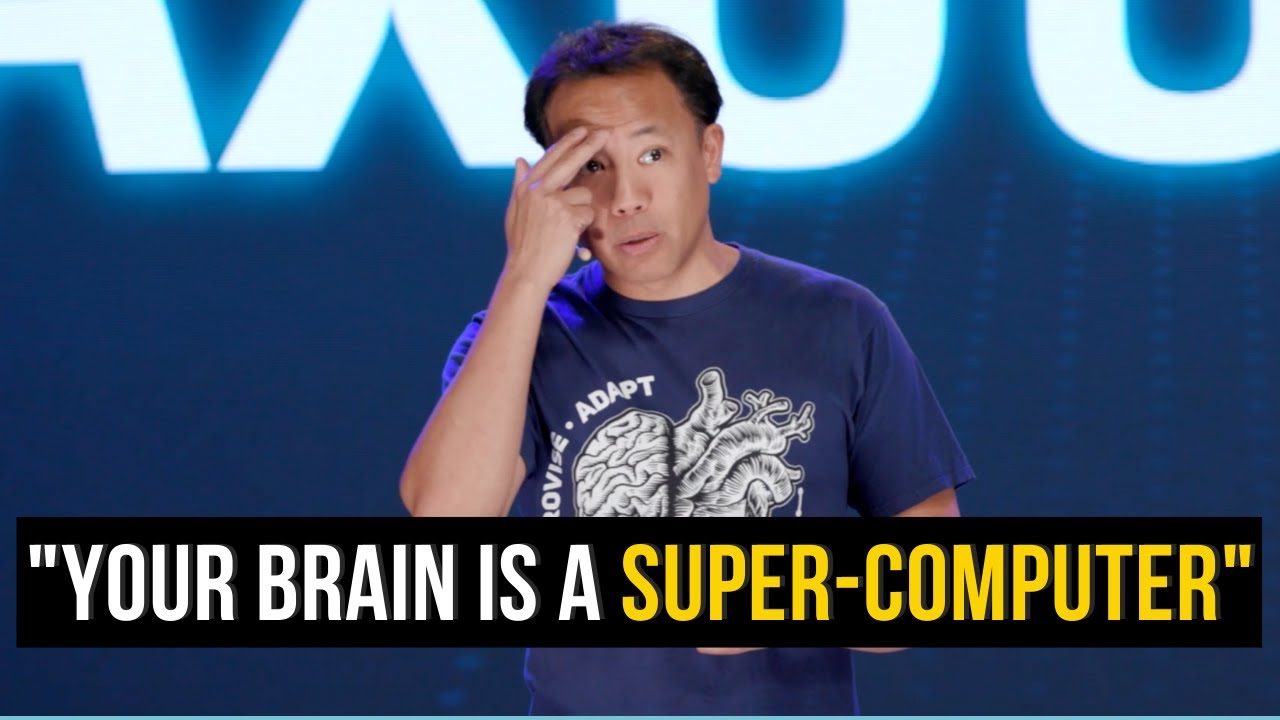
Jim Kwik breaks down ten keys to better brain performance from his book Limitless, including diet, sleep, movement, and stress management. He claims two-thirds of brain capacity is under your control, and offers a 10-day program to memorize all ten keys in five minutes.
Chapters
In Limitless, I talk about 10 keys for upgrading your brain. And these are 10 things, and I don't think anyone's gonna debate them. I'm gonna give them to you, and I want you to rate yourself on a scale of 0 to 10. How well am I doing in this area? Okay, is that fair? 'Cause we— our work is endorsed by, like, if you read Limitless, the Cleveland Clinic Center for Brain Health, the founding director, the number one Alzheimer's researcher out of Harvard. And we know that about 1/3 of your memory, for instance, 1/3 of intelligence is genetics or biology, but 2/3 is in your control, which is amazing. So let me talk about the 10 things that are going to help you to move the needle. I'm going to go through them really fast for sake of time, and when we send you this 10-day speed reading memory— so basically their team will send you an email to get access to this. You know, we'll go through and teach you how to remember all these things. So I'm gonna go through them, these 10. Rate yourself 0 to 10. How much energy and effort am I putting in these 10 things? And then ask yourself, what's one more? How do I go from a 6 to a 7? Does that make sense? Number 1, good brain diet. What you eat matters, especially for your gray matter. All right, a whole area of brain nutrition that your brain is only 2% of your body mass, but it requires 20% of the nutrients, 20% of the hydration, 20% of the oxygen, right? And so someone might, Some of my favorite brain— actually, yeah, I'll go through this. Some of my favorite brain foods: avocados, blueberries. I like to call them brain berries. Broccoli is good for your brain. Olive oil is good for your brain. Eggs, if your diet allows, good for your brain. One of my favorites, dark chocolate. How many dark chocolate? Amazing. So what you eat matters. That's the first one. 0 to 10, how good is your brain diet? On the other side, processed foods, A lot of sugar, not good for you. Number 2, killing ANTs. And this is a term I got from brain doctor, Dr. Daniel Amen. Killing ANTs is good for your brain. Automatic negative thoughts, right? Acronyms, automatic negative thoughts. And we already discussed this, the power of your mind and your self-talk. So, 0 to 10, how encouraging is it? And how positive as opposed to how negative? Number 3, Third key, exercise, which we already talked about. And I don't just mean working out 2, 3, 4 times a week. I mean, how much are you moving throughout the day? And that's what's important. They say sitting is the new smoking. And whether that's true or not, we're— when we're on screens all day, and that's why I think it's important when you take a break, you take a break. You look off into the distance, right? You move your body, and as your body moves, your brain grooves. 0 to 10, how much are you moving? 10. Number 4, 4th key to unlock your limitless brain, brain nutrients. We don't always get it from our diet, right? And so there's certain nutrients that are key for your brain, and specifically for your brain as part of your body, but it has different nutritional requirements. So whether it happens to be your omega-3s, your DHA, creatine, like there's certain nutrient supplements that are just amazing for your focus, amazing for your brain health. 0 to 10. Number 5, we're halfway there. Number 5 is a positive peer group, positive community. We talked about the power of community because who you spend time with is what? Who you become. Who you spend time with is who you become. And so it— and the reason why is you have these mirror neurons and we're always imitating the people around us. I always tell people to WATCH, W-A-T-C-H. You're like, this guy has a lot of acronyms. W-A-T-C-H. We start mirroring and imitating the words of the people around us. How many of you realize that you use a lot of the same language of the people you're spending time with? Besides that, the A, actions. We start modeling the behaviors of the people around us. That's why we tend to get the same kind of results. The T in watch, thoughts. And we know thoughts are things. And then the C, big one. Character. We start modeling the integrity or the morality of the people that we spend time with. I heard recently you can measure integrity by the distance between someone's lips and their life, right? Character. And finally, the H in WATCH, your habits. First you create your habits, then your habits create you. We have a video online that has 10 million views just like my morning routine, right? If you want to win the day, there are certain things you can do to jumpstart your brain, which I think are really important. So that's the power of habit. Ed talks about that also, also in his books, a lot of this. So that, that's the power of— that's number 5, your positive peer group. And then rapid-fire, number 6 is a clean environment. We know that your brain loves and craves a clean environment. How many of you notice when you clean, you make your bed, you clean, you put things on the folder and on your desktop, you have clarity of thought? So you want to make sure you Marie Kondo your mind, all right? 0 to 10, how clean is your environment? And then, because everyone wants the magic pill, but there is no pill, right? There's a process. Number 7, big one, sleep. 0 to 10, how well are you taking care of— how's your sleep hygiene? I think one of the most important behaviors is waking up and going outside, all right? Because your visual health leads to your mental health. And you reset your circadian rhythm because your eyes are the only part of your brain that's outside of its skull, right? And seeing that daylight helps you, even if it's cloudy and misty, will help reset. And now that's definitely gonna lead to a better sleep. And that's number 7. And we've done multiple shows on this. Number 8. 8th key, brain protection. Protect your brain. When people see me on stage, I often, if there's time, I'll have 100 people stand up and introduce themselves, and I'll memorize all your names. Or an audience will give me, pass around a microphone, give me 100 words or 100 numbers, and I'll recall them forwards and backwards. You can see it on YouTube or something. But I always tell people, I don't do this to impress you. I do this to express to you what's possible. Because the truth is, you could do this and so much more. You just weren't taught. If anything, you were taught a lie that somehow your memory or it's potential is somehow fixed like your shoe size. But we've discovered more about the human brain more in the past 10 years than the previous 1,000 years combined. What we found is we're grossly underestimating our own abilities, right? And so, and because it's not taught in school. School teaches you what to learn— math, history, science, Spanish— but no classes on how to learn. There's no class called concentration. There's no class called memory, right? And so you learn these skills. That's what you're doing right now. So that's number 8, is brain protection. I had 3 traumatic brain injuries as a child. My first one was at 5 years old, and because of it, I had learning disabilities. I had challenges. When I was 9, I was slowing down the class because I just didn't understand, and the teacher pointed to me and said, that's the boy with the broken brain, in front of the whole class, right? So my self-talk— how many of you have kids? Raise your hand. I do. How many of you once were a kid? Raise your hand. How awesome are kids in terms of learning? You know, but adults have to be very careful with their external words because they become a child's internal words. So every single time I did badly on a quiz or test or not picked for sports, this was like all the time, I would always say, oh, because I have the broken brain, right? And that became my self-image. And so we want to monitor it. But, you know, I learned how to compensate over time, and then I found my mission the past 30 years is teaching people how to have better brains and learn faster instead of learn slowly like I did. Now, that's number 8, protect your brain. Wear a helmet. How well are you protecting your brain? And by the way, remember, when I'm talking about this, what's one more? What's one more brain food? What's one more thing I could do for my sleep? Number 9, and I'll finish with this, 9, new learnings. And I'm preaching to the choir, but on a scale of 0 to 10, How much are you learning on a regular basis? I think reading— if you've seen me, you know, on social media, we're connected there with Elon or whoever these individuals are. We bonded over books, right? Because if somebody has decades of experience like Ed, a few decades of experience, and he puts it into a book and you can sit down and read that book in a few days, you could download decades in a day. Biggest advantage. And then finally, number 10 is stress management. And this is the invisible threat that's out there. We don't even realize how much stress and anxiety that we're under because we're just getting used to it. But when you're creating cortisol and adrenaline and your amygdala, for those of you who understand, you've studied this, is hijacked, your part of your brain's hijacking your survivor brain, you don't have access. It's holding you hostage to your executive thinking, for your creativity, for all the things that you need to do. So on a scale of 0 to 10, how well are you handling stress? 10. You know, and do you— are you doing something to get out of stress? Are you, you know, doing float therapy? Are you doing meditation? What are you doing to be able to lower that stress fight-or-flight response, get in that rest-and-digest kind of place? So those are the 10 keys, and I wanted to leave you with this. When you get those— that series, I'm gonna teach you how to memorize those 10 things in 5 minutes so you can give a speech without notes. You don't have to rely on teleprompters or keynotes or anything like that. Because you have that superpower. And when you were talking about the power of one more, just own this, right? There is a version of yourself patiently waiting. And the goal is we show up every single day until we're introduced. I'm your brain coach, Jim Kwik. Max out, everybody. Be limitless. Thank you.
More from Jim





The Library of Minds: Brain Coach: How to Stay Sharp When AI Does the Thinking | Jim Kwik





