10 Tips to Unlock Limitless Brain Health 🧠
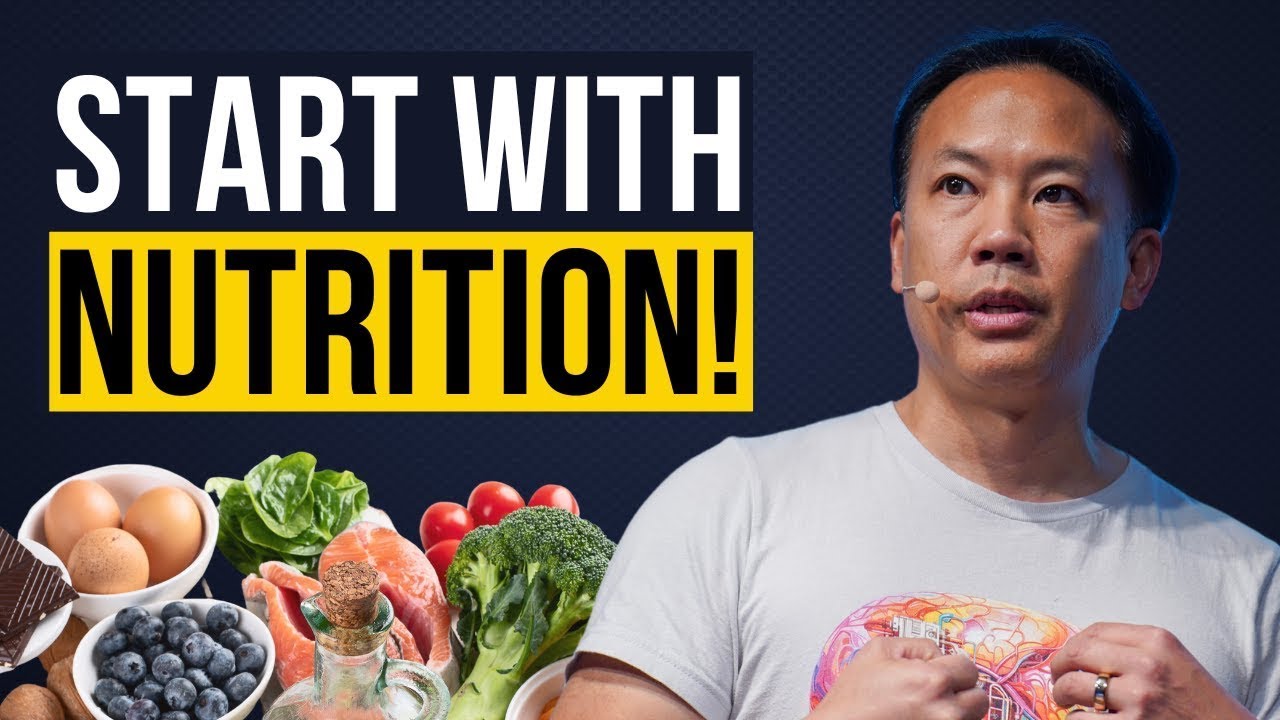
Jim Kwik presents ten neuroscience-backed practices to improve brain health, from nutrition and sleep to stress management and learning. He emphasizes that while genetics account for one-third of brain performance, two-thirds are controllable through these habits. He uses a memory palace technique set in his office to help you internalize and share the framework.
Chapters
All right, yesterday on this stage, I shared 6 keys, principles, and practices to learn any subject or skill faster. Now I have 10 minutes to do 10 keys for having a limitless brain. So yesterday we talked more about the software. Today we're going to talk more, more really optimizing the hardware. Okay, I'm going to be pulling information out of my book, Limitless, and this is a neuroscience-based book. We pull from a lot of science, adult learning theory, meta-learning, to be able to really upgrade your brain to learn anything faster. In the amount of time that we have, I want you to be able to encode this really quickly. Close your eyes, get off your device, and I'm going to walk you through a visualization exercise similar to what we did yesterday to help you remember these 10 keys. Now, we know that about 1/3 of your memory, your brain performance is predetermined by genetics, biology, but 2/3 is in your control. I'm going to talk about the 10 levers that move the 2/3. All right, so take a deep breath, exhale. This helps you to focus because your eyes are closed. All right. And I want you to take a journey with me. I'm going to take you to my office. We have an office in Westchester, New York. And I want you just to imagine you're taking a plane into Westchester County Airport, car picks you up, And I'm going to name 10 places in my office. And what we're going to do is we're going to take the 10 keys to brain optimization and put each one in the 10 places. Does that make sense? Yes. Perfect. So as we land, the car picks you up, the first place is the parking lot. I want you to imagine big glass building, trees everywhere. It's in the suburbs of New York City. And I want you to say out loud the first place. First place is the what? Parking lot. Parking lot, great, that's your verbal memory. You get out, and the first brain key is there waiting for you, and that are brain foods. So I want you to imagine a big buffet of brain foods. In fact, you're taking these foods, and you're putting it on your body. You're taking avocados and using it as a hair conditioner. Now, even if you can't imagine it, imagine you can imagine it. You could point to your nose, everyone point to your nose. Out of your nose comes blueberries, I like to call them brain berries, right? Feel that, smell that, good. Touch your mouth or outside your mouth. Broccoli, broccoli is a brain food, all right? The sulforaphane is good for brain health. And touch your ears. You're cleaning it with olive oil. There's olive oil there in the parking lot, all right? So, and then you touch your throat, and I want you to remember eggs. Just imagine eggs on your throat, the choline in eggs. Precursors, acetylcholine is good for cognitive health, all right? So from there, you go to the second place. There's a waterfall, it creates a moat around the building, and you have to cross a bridge. So the second place is the bridge. Your verbal memory, what's the second place? Bridge. Bridge. And as you're crossing the bridge, you're killing ants, killing ants. I got this from Dr. Daniel Amen, who's done 250,000 brain scans. ANTs stand for automatic negative thoughts. All right, so you're stepping on those automatic negative thoughts, ANTs. You get into the building, the 3rd place you walk into is the elevator. What's the 3rd place, out loud? Elevator. Great. And then in there, you're exercising. You have a personal trainer in there. And remember, as your body moves, your brain grooves. You create brain-derived neurotrophic factors. It's great for the brain, the neurotransmitters, dopamine, serotonin, endorphins. It lowers inflammation, helps with insulin sensitivity. So you're exercising. Imagine you're exercising in the elevator. You get out of the elevator, and you have the 4th place, which is the hallway. What's the 4th place? Hallway. Hallway. And the 4th brain tip are brain nutrients. A whole area of science called neuronutrition, brain nutrients. If you're not getting it from your diet, you might need to supplement. So imagine you're jumping over big bottles of, let's say, creatine, lion's mane, ginkgo, you know, your vitamin D, your omega-3s, your DHAs. You're just tripping on all these brain supplements going through the hallway. You open the door, immediately to your left is the 5th place, which is the closet. What's the 5th place? Say it out loud. Closet. And the 5th key to really nourishing your brain is a positive peer group. Positive peer group. Who we spend time with is who we become. We have these mirror neurons, we're imitating unconsciously words, the actions, the thoughts, the character, the habits and routines of the people around us, right? Whether you smoke has less to do with your biological networks or your neurological networks, has more to do with your social networks, right? So positive peer groups. Imagine you're in the closet, your happy friends are in the closet cheering you on. You get out of the closet and immediately there is the receptionist. 6th brain tip, imagine a clean environment. So your external world is a reflection of your internal world. You know that you clean it, like everything's in the right file folder, you have clarity of thought. Just imagine a clean environment, clean air, clean water. Fantastic. Behind the receptionist is the 7th place, which is this tropical fish tank. What's the 7th place? And the 7th key to optimizing your brain is sleep, right? I want you to imagine Nemo and Dory in their pajamas. I want you to imagine them in their bunk beds, they're snoring, and think about your best, you know, brain tips, right? Getting direct sunlight first thing in the morning to reset your circadian rhythm, no caffeine past, you know, noon or 2 PM, less temperature, less light at the nighttime, just Optimal sleep. From there, you walk to the classroom to maybe take our speed reading course, right? The 8th place is the door to the classroom. What's 8th place? Door to classroom. Door to classroom. It's locked, so you grab a helmet and you headbutt it open and it shatters and splinters. The helmet reminds you of brain protection. You heard I had, you know, 3 traumatic brain injuries, and, you know, your brain is very resilient, but it's very fragile. So wear a helmet. Brain protection. In front of the classroom is a 9th place whiteboard, and I'm drawing just 2 words in your favorite color. What's your favorite color marker? Say it out loud. Perfect. And I'm writing the words new learnings. So important for your brain. It's use it or lose it, right? Neuroplasticity. You need novelty and you need nutrition, right? It's just like with your body. You give it novelty, a workout. So You know, and my favorite workout is reading, right? Reading is to your mind what exercise is to your body. So imagine I'm up front saying new learnings. And then finally, the 10th place, on the side of the classroom, we have all these bonsai trees. What's the 10th place? Mindfulness. And this is stress management. We know that chronic stress can shrink the human brain, put you in fight or flight, keep you hostage in your survival brain, keep you away from your executive functioning, your creativity, your problem solving. So whatever you do to get out of stress, imagine you're doing it on the bonsai trees. All right? All right, stand up, everybody. Now imagine next week you have to give a talk on some of the things that you learned. This technique, everything in Limitless, is not only from the latest neuroscience and learning theory, but also ancient wisdom. And what did the ancient Greeks do 2,500 years ago? They would create a mind palace. Locations they're familiar with to store information so they could easily recall and remember and retrieve it, right? So this is exactly what we did. You could do this in your home, you could do it in your office, you could do it on your body. In fact, let's do this. The first place that you went to in my office was what? Parking lot. Parking lot. And what did you do there? What was there? What was waiting for you? The brain foods. What was on top of your head? Avocados. What was coming out of your nose? What was coming in your mouth and your teeth? What about your ears and your throat? When you understand how your memory works, you can work your memory, right? From there, you cross the bridge. What are you doing? Killing ants, automatic negative thoughts. You get into the elevator. What are you doing? Exercise. As your body moves, your brain grooves. You go into the hallway, you're going over, tripping on what? All the brain nootropics, the supplements. Great. You go inside. Immediately to your left is the closet. Inside? All your happy friends. Very good. You go to a receptionist, and the receptionist is doing what? Cleaning the environment. Very good. And even if somebody— you would have got it if somebody didn't say it right before you, right? Behind the receptionist is the? Fish tank. And what are they doing? Sleep. And then from there, you go and open a door. It's locked. You put on a? Helmet. Brain protection. You get inside. On the whiteboard, I'm writing 2 words, new learnings. And on the bonsai trees, what are you doing? Stress management. Give yourselves a round of applause. This is a gift I'd like to leave you all with. This is the basis of the research of a section in the book on brain types. If you want to learn faster, improve your memory, your team, your family, there's nothing to buy. It's absolutely free. Just like there's personalized medicine based on your genetics, there's personalized nutrition based on your microbiome, this is personalized learning based on your specific brain animal. So I hope you enjoy this. I would text it— don't do this now, but text it to a friend or family member, find out what their brain animal is. And just remember this: your life is like an egg. If an egg is broken by an outside force, life ends. But if it's broken by an inside force, life begins. Great things begin where? Inside. on the inside. And the fact that you're here means you have lots of genius, lots of greatness here, and let's let it out. Thank you very much. Thank you.
More from Jim





The Library of Minds: Brain Coach: How to Stay Sharp When AI Does the Thinking | Jim Kwik





