3 Brain Habits That Can Transform Your Life with Jim Kwik
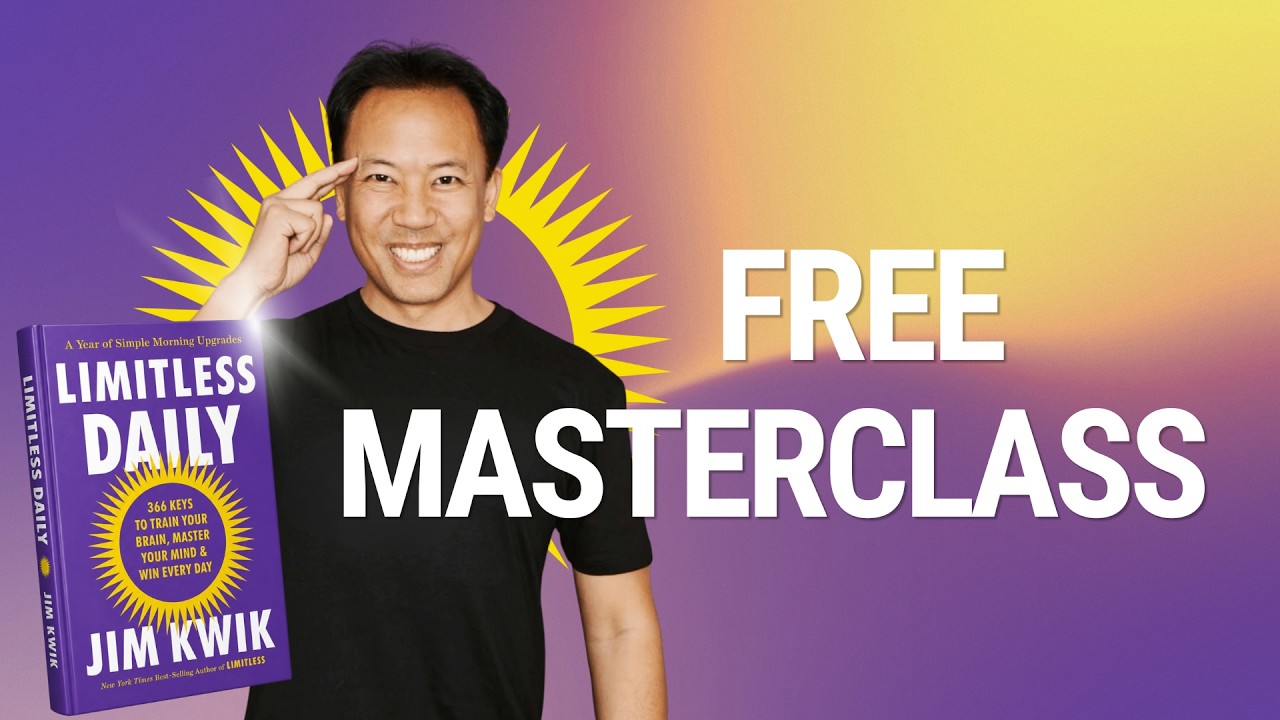
Jim Kwik shares how the brain works as a prediction machine and introduces CODE RISE, a five-minute morning protocol to rewire habits. He recovered from a traumatic brain injury to become a memory trainer, and argues that tiny, repeatable actions aligned with identity compound into lasting change.
Chapters
Great. Welcome everyone. So wonderful to see you, and thank you so much for taking the time to join us on this virtual party. And happy birthday, Jim. It's it's a very special day. If you know, a lot is going on, and I think it's a really special way to celebrate your birthday. I know you work hard and you're all over the place right now. I think you're in Estonia speaking and all of that, always working hard. But I know you have something very something you're really passionate about, and I also appreciate you for taking the time to celebrate this day with us.
So yeah, thank thank you thank you. So I I appreciate you. Yeah, two decades of a journey together.
Well, we but real quick.
Yeah.
I'm curious, like, why aren't you taking the day off and why celebrate your birthday? I mean, personally, for me, I also like to take a day to reflect and do something that will, um, set the trajectory for the following year on my birthday too. I know a lot of people want to go celebrate and do, you know, all of that stuff, but for me, I think celebration is learning and growth. So I personally appreciate that, but I want to hear your reason, and I think we can kick it off from there.
Yeah. So I am, I'm in Estonia speaking because, you know, we're on a mission to build better, brighter brains daily, every single day. And I don't know, it juices me. I'm so glad that all of you have taken some time here and just Wherever you're joining us from the world, maybe you could put it in the chat. As I mentioned, I'm in Estonia. Alexis is in Florida. I'm so grateful you're here. I recommend you get a pen and a notebook and we'll get started. But yeah, thank you for spending part of your day and part of my birthday with me today. I am— yeah, it's just something that's 53, and just feel like we're just getting started. So out of all the places you could be, out of anything you watch right now, of all the distractions competing for your attention, you know, I just really thank you for choosing to celebrate and investing also in yourself. And I'm going to share with you more than the 3 takeaways that was promised in the registration. I guess, I guess I've always believed birthdays aren't about getting older. I think for me, it's always been hopefully getting wiser. You know, there's a chance to— they're a chance to be at first be able to pause, right?
Yeah.
Now, you heard me say when you pause a machine, like a technology, like the television or the computer or whatever, it stops working. I feel like sometimes when we take a pause, we start working, we start recalibrating, we start rethinking, we start recreating, we start recovering. And this is also an opportunity To take a pause and just you know birthdays, you know gratitude, right? You look back with gratitude, look forward with intention, and I think all of us have this question. I would encourage you to write this down: Is is who am I becoming? Who am I becoming? Wow, this chat's really going. People all over all over the world right now. Thank you for all the birthday wishes. But who who am I becoming? Write that down. And today, today, I hope we celebrate something much, much bigger than my birthday. I hope we get to celebrate your next chapter, because every single person that's here, you know, no matter your age, your background, mistakes that you've made in the past, your current situation or circumstances, I truly believe every day you have a, you have a chance because you can make a new choice, right? That you're one decision away from beginning again. So new chapter. You know, so today, that's my, that's my one birthday wish. I don't, I don't need a watch or a cake even. I don't need another present. You know, my wish is that one idea that I share with you today leads to one decision. You know, maybe one simple practice that we share changes. If you're going this way, you take one new decision, you know, over time of a day or a week or a month or a year, you end up in a completely different destination. Some people would call it their destiny, um, because if that happens, uh, this, this will become my favorite birthday ever. So let me, let me start with the conversation here. Um, I am opening up the chat here so I could speed read all this. Um, you, you don't— you could answer it out loud, but I prefer if the answer is yes, put yes in the chat. Okay, and maybe you're on the same page. Like, have you ever felt I certainly felt this, you know, over, over decades. Have you ever felt like you're capable of more than you're currently expressing? If we're honest.
Wow.
Have you ever felt overwhelmed in this process? Like maybe you, you're capable more, but there's just so much information to keep up with. Too much technology, too much demands. But not enough, like, mental bandwidth? Have you ever struggled with things like procrastination? Not because you're lazy, but because you can't seem to just get started, right? Or have you ever looked at someone else's success and wondered, you know, this is an interesting conversation, you know, to have on your birthday. Why not me? You know, you hear that voice. Like maybe it whispers, maybe you're like me, you're not smart enough. Maybe it's too late. Maybe it's just who I am. You know, I honestly believe that we haven't even come close to our full potential yet. Yeah, because look in the chat, that number one, you're not alone.
Right.
Sometimes we feel like it's us and we're the only ones going through it. But, you know, I've spent more than a few decades now studying the stuff that we teach in our programs, learning, brain performance, memory, productivity, confidence, you know, human performance. And, you know, I've had the privilege of working with people of all ages and stages, you know, students struggling in school to entrepreneurs building a billion-dollar company. And, you know, the question I get asked a lot by people, and I want you to ponder this, is what's the difference between people who thrive and people who stay stuck? Who are people— what's the difference between people who are limited and act more limitless? And then when I get that question, people expect me to say education or money or talent or connections. You know, I think the biggest difference, the takeaway today, one of the takeaways isn't what people know. Certainly it's what they do. But, but here's the caveat. It's what they do every single day, because your life is not built in years. You know, thinking about this next journey around the sun, it's built in days, right? And your days are built in moments and small moments repeated consistently until one day it just becomes who you are, right?
I don't know.
You know my story, so I don't have to go through it. 5 years old, traumatic brain injury, learning challenges and disabilities. I was called slow in school. I was called the boy with the broken brain. That was my identity. But we're— and I don't know if you can relate to this. I was told I'm slow. I can't learn. I'm not smart. But let's talk about the science. So it's fascinating from a neuroscience perspective. I'm not going to get totally lab geeky about this, but your brain is constantly updating. It's a prediction machine, right? And its predictions are based on past experience. If you repeatedly tell yourself a story about who you are, your brain begins to expect it, right? And so expectations shape your attention. And so what I want to talk to you about is the kind of meta formula for really winning the day. Because expectations shape your attention and your attention shapes what your choices, your choices turn into habits. Your habits turn into who you are, right? First, you create your habits, then your habits are creating you. So your habits are always shaping your identity. Not, not because your brain is trying to deliberately hold you back, right? It wants to keep you safe, but your brain is trying to be consistent. And luckily, at the age of 18, I found a mentor, right? And he said, you know, I was telling him what I want to be, do, have, share. He was like, you're this close to everything on this list that you're writing, right? And he went like this. And, you know, meaning my brain, you know, and I really do believe intelligence— you can write this down. The other question I get is like, what does it mean to be intelligent? I think intelligence is using your brain, directing your mind to create the life you want. And for me, it's no, no simpler than that. All right. Now, and I'm gonna go through the strategies, what to do in a day, whether or not you buy my upcoming book or not. Like you'll be able to use this in a big way. And I think this is the moment when change is gonna happen. Right. And so when I learned about, so, cuz someone could be really intelligent and read all the books and quote all the books on wealth, but their bank account doesn't reflect that. How intelligent are they? Or they could read, they could be, they could be very book smart and listen to all the podcasts about health. But if they're not healthy, right? So it's about creating results in your life. And so what did I do? I just started— because this is the key, using your brain and directing your mind— I started studying the mind. I started studying the brain and how it expresses itself in memory and focus and motivation and psychology. I started studying ancient wisdom before technology, modern science. And basically everything I could find. I was a total nerd about this because I never read— I was able to read a book until I learned how to do it properly. You know, and I discovered something that really changed everything, that, that your brain is far more adaptable than most people were ever taught, that your memory, your focus, your ability— it's not fixed like your, like your shoe size, as they say. And the magic word is neuroplasticity. So I'm going to go through these 9 things. But just remember, I'm giving you the organizing principle because your, your brain could— I'm going to give you new things. It's formed and strengthened throughout your life. And that doesn't change in an instant. Right. But it does mean that your brain can continue to learn and adapt across your life, your lifespan. That means your habits are not your destiny. That means your past is not your prison. That means your, your limitations that you currently perceive may simply be your current programming. Right. Like I was called the boy with the broken brain. And so where was that imprinted? And if something could be programmed, the best news in the world is It could be, it could be reprogrammed, right? You learned, you unlearn, you learn, you learn some more. So I wanna, I don't wanna give you encouragement cuz this is, this is the lead up, right? Because it fades. I don't wanna give you just more information cuz information's everywhere. I wanna give you a practical system that you can use tomorrow morning. Something that only, I promise you, doesn't cost anything. It takes only a few minutes, but it has the potential to influence the rest of your day. As soon as you wake up, this is what you do. Because, you know, we have morning routine videos on YouTube that has millions of views. And maybe because, you know, I've learned over time, I've refined to see like where the leverage is. You know, I also have 2 young kids, right? All this makes it— makes a difference that people don't need to— people don't need another life-changing event. What they need is a life-changing morning. So that's what I want to focus on today because we're going to build it together. And so by the end of this conversation, and we'll only go to the top of the hour because it is still my birthday and it's, you know, I'm in Europe right now, you'll have a simple, simple daily morning protocol that you could start because my mission was never to, to sell, to sell books, right? Our mission is to build better, brighter brains, right? To enhance your human intelligence. And if we can improve your brain, we can improve your decisions. And if we can improve your decisions, we can improve your days. And if we can improve enough days, we could totally change your life. So here it is. Um, I'm gonna give you an acronym and I want you to write this down. Um, before that, cuz you have to, you can't just stop something, right? The only way, 4 ways of making a change is you stop something, you start something, you do less of something or do more of something. So remember that if you want to change your life, you have to stop something, start something new, do less of something, or do more of something, right? And you heard me use the example, you stop smoking, you could start meditating or reading. You could do, you know, less doom scrolling, or you could do more movement, right? And that, that's, those are, it's not sexy, but those are the things, the fundamentals that make everything better. Right. But how many of you wake up and you check your phone, right? And you get an email or voice message, or as you see a stressful headline from a social media post or a text message, and then your mood changes, your focus has changed, your energy has changed. Nothing in your life actually changed. Only what entered your, your mind changed. So type, type me in the, in the chat if you've experienced that.
Right.
And what most people don't realize, the first person who captures your attention often influences the direction of your day. Like, nobody would invite— we wake up in the morning and invite 200 strangers into your bedroom to talk about whatever the heck they wanted to talk about. But we kind of do that when we pick up our phone. So I always say mind before media, right? Intention before interruption, direction before disruption. And so most people, I don't even think they start their day. They're inheriting it. Right. And that is one of the biggest mistakes people, people make. Like when I work with these performers, what do they, what do they do? Like they, they protect their attention. Right. They focus on building their identity. So like, I don't think you rise to the level of your goals the rest of this year. You fall to the level of your story. To your state, to your systems, and you fall to the level of your self-image. You know, and if the first few minutes of your day is so influential, why don't we become intentional about that? Right? Most people have a morning routine. How many of you have a morning routine? Put it put in the chat. Right? We all do. It's it's on autopilot. If you have ever have like a morning thinking routine, you brush your teeth, you make your coffee, you check your messages, right? But we never deliberately train the most valuable asset, which is the thing that we use all day, which is our mind. And so let me tell you, let's go into the magic here. When I was writing— and I don't know if this is reverse. I don't know if it does. Does this reverse the— yeah. You see this? Is this right side up, Alexis?
No, it's reversed for me. Okay.
It's reversed. I use that for Instagram because when I do Instagram Lives, everything's reversed. Here's something fascinating. When, when you first wake up here, here's magic that I haven't taught before. Your brain isn't immediately operating at full speed. Do you get that? You're transitioning from sleep to wakefulness, and there's something called sleep inertia. And researchers— that's what the researchers call this period, right? It's a short period of waking when your attention comes online, your awareness comes online, your alertness comes online, your decision-making is still ramping up. Your working memory is empty like a cup, right? So it's not full. What does that hap— what, what happens then? It makes the early part of your day, especially when you wake up, it's what you input in that time has a disproportionate effect on 3 things: what you're gonna focus on that day, how you're gonna feel that day, and how you're gonna frame situations throughout the day. You know, and so if you're, if you, the first thing you do is pick up your phone and there's comparison and there's, doom and gloom and there's people in conflict, you start to focus on that and you start to feel that throughout the day. You start framing, you know, situations in your life like that, whether it's an opportunity or it's a, or it's a crisis, right? You've all gotten a voicemail message or a social media message or whatever, a comment that puts you in a mood for hours, right? That's because in that morning is sleep inertia. You, you're, it's not because your brain is magically more programmable. But it's because the habits and the cues that you introduce disproportionately influence how the rest of the day unfolds. Now, combine that with something in science called attentional priming. Attentional priming. Your brain is constantly asking, what should I notice today? What matters? What deserves my attention and my focus? And the answer isn't determined only by the world. It's influenced by What you repeatedly focus on first thing in the morning, right? So like, like you do this, for example, quick exercise. Look around the room. Find find everything that is red. Look around. Anything that's red. What's red? Red, red, red, red, red. See the red. See if you can name all the things that that are red. See red, red, red. Okay, everyone, you're on video. Close your eyes. Without looking, list all the, all the blue things that you notice. All the blue things. Now, there probably aren't many.
Why?
Because your brain wasn't looking for blue. It was looking for red. So simple game, right? The lesson is you don't see everything. You see what you're prepared, what you're prepared to see, what, what you've prepared your mind to notice. So tomorrow morning, if you begin your day looking at your problems or your digital device or whatever, guess what you're really good at finding? More problems. If you begin your day looking for opportunities, gratitude, like that's why that window for some people use it for prayer. Some people use it for gratitude. Some people use that first window to, to set their goals. Right? Or learning something new or journaling, right? Or connection with a family member or a loved one. Your brain becomes more likely to notice those things. So I, I wanna be clear about this. The world didn't change. Your filtering system did. So over, over a couple years when I was writing, writing this book, I've refined a very simple morning protocol.
Mm-hmm.
And you don't need my book to do it. I, I love your support and we're on a mission. You know, we donated most of the proceeds from Limitless to great charities and education for kids, uh, for Alzheimer's research in memory of my grandmother. But you don't even have to buy any special equipment. You don't have to spend a dollar. You don't need even an hour. You need 5 intentional minutes. And so here it is. Um, Code RISE. Okay. So here's an acronym. I always give acronyms in case you're driving or you wanna be able to remember it. Code rise. All right, because you rise in the morning, and I want everyone to rise. So the C in code stands for center. All right, so the first thing we do in the morning is you center before you consume. You're centering, you're connecting with yourself, right? You disconnect so you can reconnect. Like, you could do it right now. You could take, if you wanted to, take 3 slow Breaths. Nothing fancy, just breathe. Longer exhale, right? And then ask yourself, how do I want to show up today? Not what do I have to do, but, you know, who, who do I want to be? You have a to-do list. I always say, you know, for decades, have to have a to-be list. You want to be more patient. Do you want to be more focused? Do you want to be more present? Do you want to be more courageous? Do you want to be more generous? Do you want to be more calm? Because behavior always follows your state, because all learning in life is state-dependent, and state can be influenced intentionally, right? Like, when I met this mentor at the age of 18, you know, he didn't, he didn't say like, what do you want to accomplish? He always asked like, who, who do you want to become? And that question changed my life. The O in CODE stands for you need to orient, right? So orient your attention. I want you tomorrow morning to choose one guiding idea, not, not 5, not, not 10. So it's like just one idea. Maybe, maybe in the morning you're thinking progress over Perfection, right? Today I want to listen more than I speak. Today I want to protect my attention, right? Today I choose curiosity over certainty, right? Or criticism, self-criticism, right? If that's the only idea you carried with you all day, would your day improve? Yes, because you're setting that intention. You're doing attentional priming. Okay. The D is develop. The D in Code Rise is develop. This might be probably one of the most important steps. And what am I asking you to develop? Your identity. All right. Most people again ask, what do I want? I think the most successful and fulfilled individuals are asking, who do I need to become? Right? It's never the goal. It's who you have to become. To reach that goal, right? Because that's what you take with you, right? Maybe you want a healthier body. Become someone who doesn't negotiate with yourself, right? Negotiating with how you eat or how you move. You want— let's say you want a better relationship, right? Become someone who makes people feel loved and heard, right? That's how we develop. You know, be you want a better business, you know, or a better bank account. Become someone who creates value before asking for value. Identity is going to create that consistency, right? You don't want to be like, "I'm going to try to read today." Your identity is I am a reader, so it happens naturally. There's no friction, right? It's inevitable because that's just who you are, right? And and the brain, the brain loves consistency. Like when your actions align with the identity that you've chosen, then your behavior becomes easier. Because if you see yourself as a procrastinator, what's going to happen to your behavior? Right. If you see yourself, I am a smoker, what happens to your behavior? Right. And so Tony Robbins says the most powerful force in the human personality is to remain consistent with your identity. Right. So I would say you're When your actions align with your identity that you've chosen, your behavior becomes easier to sustain over time.
Why?
Because every single one of those actions, those small little things, is evidence that supports that identity, if that makes sense. The E in Code Rise is execute. And this is where so many of us have in the past— because it's not you anymore— gets it wrong, right? People, people think that transformation requires Gigantic actions. The research, though, in behavioral change suggests something different. The easier a behavior is to begin, the more likely you'll— you will repeat it. That's why in Limitless I talked about S3, small, simple steps, right? It's— the challenge is our dopamine, which is the molecule of motivation, is hijacked because we're getting— we're getting free dopamine. That requires no effort. Scrolling, no effort. Binge-watching something, no effort. Binge-eating something, junk food, no effort, right? Going onto a website, no, there's no effort there. So people think that motivation precedes action. It's actually that small, simple step, putting a little bit of effort, that gives you the dopamine that makes you continue that behavior, if that makes sense. So earn, earn, earn it through effort. So that's why I always ask myself, what is the smallest action I could take today? It's not like, like even writing a book, like it's like opening up my laptop is a small action, right? Write one line, right? So it's not like run a marathon. It's okay, put on your running shoes, walk around the block. It's not if you've never meditated, oh, I'm going to meditate for an hour or 2 hours. It's you meditate for like 30 seconds. Small actions. What does it do? It removes resistance. All right, and you know that that was the thing. Like when I when I was struggling to read, I didn't start by reading like all these books. That would be too big. I started with one sentence and then another, and little by little, a little becomes a lot because consistency compounds. The R in rise. Is reflect. I don't think people schedule enough, like, space on their calendar just to reflect. And I think something really easy, like, every, every, every evening, life, life teaches us something. Many people forgot, like, forgot it by breakfast. Reflection is what converts an experience into wisdom. And so, like, at the end of the day, I say, like, what did today teach me? Maybe it's like I— because I'm jet-lagged and I haven't slept since Sunday with the schedule that I'm on. Maybe I need more sleep. Maybe that's the lesson. Or maybe your lesson is I interrupt people a lot. Or maybe it's like I'm stronger than I thought, right? Experience alone isn't the teacher. Unless you reflect on it, reflected experience is a great teacher. The I is one of my favorite words is integrate. Integrate. So ask yourself, and you can write this down: Why does today's tiny action matter? You know, if I repeated this every day. Who becomes possible? Certainly what becomes possible, but who becomes possible? You know, I was blessed to have, um, for the book, um, the author of Tiny Habits wrote a book endorsement out of Stanford University, head of the behavioral lab there. Um, I believe he mentored James Clear, wrote Atomic Habits. Tiny habits feel insignificant. Until you connect them to like a more meaningful future. That's what I mean about integration, right? Connecting is something that you value. Maybe it's love, maybe it's growth, maybe it's contribution, maybe it's a sense of adventure, maybe it's a vision for your life. And then we're almost done. The S stands for seek. This is one of my favorites also. They're all like my favorite. Seek evidence, not for what's wrong, but for what's right. You know, seek moments of courage, seek opportunities to learn and grow. You know, what are you seeking for? Seek someone to encourage. Seek, seek beauty, seek awe, seek possibility. I mean, just remember, remember that, you know, look, look, look, look for red. Blue exercise. Your brain notices what you repeatedly train it to notice, and I love how everyone's supporting each other with questions and answering them each other. You're so amazing. I love this community so much. And finally, the E is we want to evolve, evolve. Like before your head, you know, leaves the you know the pillow tonight, you know, it's kind of like. There, ask one final question. If I repeated today— this is a big question. Are you ready? If I repeated today 366 or 365 times, who would I become? If I repeated today another 365 times, who would I become? When I started asking them that one question, it changed everything. Because the truth is your future isn't built someday. It's built today repeatedly, right? So what's what's the recap? Code rise repetition is the mother of learning. Everyone, I love this. Let's do it together, right? So what what's the C stand for? Center. How do I want to show up? What's the O? You orient, like your attention. What deserves my attention? Great question. What deserves your attention? What would your future self want you to do today? The D is develop. It's a philosophical question, but who am I becoming? The E is execute, and that's just all I ask myself. What is it? What is the smallest next step? So tiny that you know that something that gives me progress towards this goal, but I can't fail. So it's so easy. No friction. The R is reflect. What did today teach me, or what did yesterday teach me? Like you could wake up in the morning and reflect. What what did yesterday teach me? The I is integrate, which I think is going back to purpose. Like, why does this matter? The S is seek. What am I— here's the question: what am I choosing to notice even right now? And the E is evolve. If I repeat it today, For one year, who would I become? And that's it. I mean, this is 5 intentional minutes, right? There's 8 power questions right there. You don't have to— you don't have to buy anything. There's no expensive equipment. There's no complicated app. Just a better conversation with yourself before the world starts having all these conversations with you. So, Alexis and I promised in the beginning here that you didn't need to buy anything to leave with something valuable. So I hope now you could practice this right in five minutes. You have a complete morning framework that you could start tomorrow, and I would write those eight words on on your phone or on an index card, preferably an index card. I'm very analog, but um. You know, put it on your nightstand or journal through them. You could use your phone, you know, use the Notes app. Teach them to your friends, your family, your children. You know, share them with a loved one. Practice it with your team. Because our mission has never been to create dependent learners, right? It's really to create independent thinkers. You know, but over the years, I've discovered something that most people Most people don't struggle because they, they don't know what to do. They struggle because remembering to do it every day is sometimes hard. And that's the question that led me to spend, you know, over a year creating something I wish I had, you know, when I was, when I was 18. And let me, let me show you what happened when I tried to solve that problem. All right. So how many of you Have ever read a book, right? And you felt completely inspired. Maybe you highlighted too much, so your book is like glowing in the dark or something. I just want to remind you: if everything is important, nothing is important. Just like life. So don't don't don't don't highlight too much. Say, but you said to yourself, this is going to change my life, right? And then a couple weeks go by, and you didn't even just. remember any of that? Put it in the chat if you're honest. I've done it, right? I, I think like we've all, we've all done that. So the problem— I just want to, I want to presence this— isn't that we're incapable of changing. The problem is, you know, that sometimes that encouragement, it fades. Why? Because the truth is life gets busy. Meetings happen, you know, kids need you, flights get delayed. I mean, Emails pile up, right? Stress shows up. You know, everyone could perform well when they're not under pressure, but eventually the person who you wanted to become gets—it's almost like you're buried underneath, like the the person the day demanded you to become. Wow, that was really good. You're buried underneath the person that the day demanded you to become. as opposed to the one that you had intention for. So what did I do? You know, I started asking myself another question, not how do I write another book? Question is, how do, how do I help someone become just 1% better tomorrow morning? Right, in 5 minutes, not, not overwhelmed, not, not guilty, not pressured, just, just like one, one page better. And so How many of you have Limitless? Limitless was about unlocking your mental potential, right? People all over the world, we started hearing, you know, Jim, I love the book. I wish I could spend, you know, 5 minutes with you every morning to kind of kickstart my day. And that idea really stayed with me. What if instead of reading a personal development book just once and putting it back on the shelf, that you train your mind every day, just like you would brushing your teeth, just like you would exercising your, your body if you do that in the morning. What if you exercise your mind every morning before the world had a chance to own it, to influence it, to shape it? And that question became this book. And so it's called Limitless Daily. And this— and it's so funny that I wrapped this different. Let me get— let me grab the other— let me grab the actual book. All right. So this is live. I realize that.
By the way, I am highlighted here. I'm not just here. Because I have some questions for Jim. So we want to get into—
We'll go through questions. So this may look like a book, but that's not how I think about it. To me, it's a conversation that you and I have every morning for 1 year, 366 days, because even on leap years, I don't want you to break out of the consistency. But they're basically 366 opportunities for you to begin again. And imagine you hired like the world's greatest personal trainer, but instead of asking you to train, you know, for 6 hours one Saturday or Sunday, you met every morning, you know, for 5 focus minutes. You know, what would happen over the course of a year? Your body would be transformed. This book is that, but for your mind. All right. And I'll tell you what makes it different and how we apply this. There are thousands of books. Out there, great books that give you information. This one gives you a practice. All right, every page follows the same rhythm: an idea, an inspiration, an implementation, and an identity statement. Not not just because repetition is is boring, but because repetition is how your brain changes. Right? You don't you don't go to the gym over a weekend and work out really really hard six hours a day, and then you're fit for life. You don't have a great conversation with a stranger, and then You're able just— and that's all you have to do. And then all of a sudden you have this amazing, epic, romantic relationship, right? That's not how things work. You don't eat very clean or fast for a weekend, whatever, and then you're just healthy, right? And because maybe I've spent decades studying how the brain actually changes, the things I realize is that lasting transformation doesn't happen through a giant breakthrough. It's thousands of tiny reinforcements. And this book stacks the principles that research suggests support lasting behavioral change. Morning intentionality, identity reinforcement, reflection, neuroplasticity through daily repetition, tiny habits, active recall, right? Emotional engagement, immediate implementation. There's a— the implementation is a 2-minute exercise. custom for that idea that anyone could do. So none of, none of these alone is magic, but together they become an incredible system. And like one page, right? It's just one page a day to change your life. And so I'm gonna end with this and we'll answer questions because I want to invite you to something. Everyone just close your eyes for a second. Everyone close your eyes if it's safe and just imagine it's exactly one year from today. And we're back together. It's my birthday again. Hey! And you're looking back, you know, on you're back on let's say on an on on a master class like this. Only this time you're not the same person. You wake up with more clarity. Who's that person? Like imagine a year from now. Who are you surrounded by? What are people saying to you? Maybe your confidence is stronger. Maybe you're reading a lot more. That's my, that's my real agenda. If you read the Atlantic article, 16% of people read every day, like, like a book or magazine or whatever. 51% of people across age, ethnicity, gender never read anything. Uh, it, it, it is scary. Um, never, never even finished a book. So you— no. Yeah. Is this right? No. 16%, actually. No, sorry. 16% of people read something every day. 51% read nothing. Um, but imagine like you feel calmer, you're making better decisions. Imagine this. Imagine your loved ones, your friends and your family, they notice. Your coworkers notice. And what changed, right? One intentional morning repeated 366 times. Now open your eyes. Um, but look, since I told you in the beginning, you know, it wasn't just about this book, then that's true. You already have the framework. You don't have to use this book at all, right? You could create your own. I mean, it took me a year to write Limitless. I wrote it in the last couple months, but this one was— this is— I wanted every day, like, have a conversation with you every morning that really meant something. But tomorrow you could practice Code Rise just with a notebook. And if that's what you do, I'm so genuinely happy because our mission is bigger than any book, right? It's about building better minds. But if you'd like me to be your guide for the next year, this is the this is the book. This is the conversation. And since today is like you know my birthday, we want to do something special. We've put together some some birthday, some book bonuses and stuff like that. Some surprise things because I don't I don't when I want you to feel like you're buying a book. I want you to feel like you're. You're joining this movement. You know, this isn't a movement of people who have it all figured out. You know, it's a movement of people who choose growth over excuses, curiosity over just everything being certain, learning over their ego, progress over perfection. You know, people understand that the future belongs not to the people with the most artificial intelligence, but the people who continue to develop their own human intelligence. The last thing I want to just mention, because I'd be remiss if I didn't, because I want to meet you. If this book is the daily practice for the year, many of you know Alexis and I have an annual gathering called Limitless Live, and that's where this practice comes alive. And it's the highlight of my year. Maybe we could do it on my birthday and so on one time, but it's always— I've always believed something, that, that books can change your thinking, but experience drives your identity. And you know what helps you keep that identity? Community. That's what makes identity last. You know, how many, how many, how many friendships do you still have from people you've met, you know, while working towards a common goal? You know, there's something powerful about learning together and laughing together and growing together, supporting each other. And that's why we created Limitless Live. So it's not a, it's not a conference, it's the beginning of this expedition together. And, um, so we're inviting all the readers to join us September 11th and 12th. Um, we have some, we have some amazing speakers. Um, we haven't— you're the first to hear about this. We haven't even put them on the website. Um, maybe we could put— I don't know if we have an image of— Yeah. So you go to limitlesslive.com and if you use Limitless Daily as the code, you get a, you get a birthday discount. And I'm just— I would love to be able to— when you come, you're not just hearing speakers. Every speaker is specifically designed to talk about a core aspect of Limitless Daily. You know, we have— I talk about brain And optimizing your brain, you know, and we have the father of biohacking, Dave Asprey, going to talk about his latest on how he biohacks his brain. I talk about flow states a lot. So, we have Steven Kotler, the master of flow, speaking there also as well. But, it is— I talk about morning routines. So, we're bringing the person, the legend, Hal Elrod, who wrote Miracle Morning, I mean, it is, it is everything there. But every persona on that stage is a friend, but also represents one dimension of being limitless. One's going to teach you how to protect and optimize your brain. The other will teach you how to fuel your body for peak performance. The other will help you to sleep better so your brain can recover. The other will help you with cognitive resilience. The other one will help you with strengthening your relationships, to unlock your creativity, to lead with greater purpose. And these aren't random experts. These are people that many of them I paid to coach me along the way, and they bring the principles of Limitless Daily to life. And so the book comes out September 8th, and I would say when you get it, bring it with you. And, you know, so I can sign it. And one of my favorite parts every year is getting to meet you, be able to shake your hand, get a hug, hear your story, take photos, sign books. Because behind every, you know, when you get it, you know, every email, every comment, you know, I remember as a real human being. I love nothing more to celebrate this journey with you. So that's— let's want to do some questions. So it's limitlessdaily.com is to get the book. Limitlesslive.com is for the event where the expedition starts. Not required, but and we certainly don't have room for everybody. But we'd love to see you. Yeah. So I mean, my dream is that years from now someone asks, "When did your life change?" And you don't answer, "Oh, on Jim's birthday." You answer. On the morning I finally decided to become intentional, you know, and hopefully that morning is tomorrow morning, you know, and maybe tomorrow is your real birthday.
Thank you. I know we have until top of the hour, but there were some questions that I think people would find interesting. So I wanted to ask a few before we go. Um, but before we get started, I do want to say that with Limitless Live that we had last year, um, there were a lot of different moving parts, but I have to admit one thing that we did do very, very well and just nailed it is the community. The— I think every speaker, sponsors, everyone through and throughout, they all said this was the best audience they've ever been in front of, and just, you know, being part of that room was very special for everyone involved. And I know even like, you know, our— the speakers decided to stay longer, participate. So it was a very special environment. So I think anyone who attended in December, they know very well firsthand how special that was. So hope to see you guys there. I think I have no doubt. that the community in the room will be just phenomenal. So with that said, I know you shared a lot of information over the past 3 decades, and even today, you know, the code rise, there are a lot of great nuggets, you know, but as an architect, I love organizing things into weight and load-bearing ideas. So after turning 53, if you could pick one lesson that changed your life the most, what would you say that would be? What is one idea looking back today that changed you the most?
I train in a martial arts called JKD, Jeet Kune Do, which is founded by Bruce Lee and And Bruce Lee has a saying that the key to immortality is first living a life worth remembering. And maybe because I started out as a, as a memory trainer, is for me, memory is not about— it's, it's a storage system. But really what it is, is an identity system. What do I mean by that is, yes, of course, if you've gone through Kwik Recall or bought Limitless, we train you how to How to remember facts and figures and formulas and foreign languages and names and faces. But what we also try to remember is to teach and coach you, especially at Limitless Live, helping you to remember the most important thing, which is remembering who you are. You know, every time you go like this, like, you know, me, when you're pointing to me, this is built— the me, which is you, is built on memory. Right. And I like, like, as an example, your, your confidence comes from remembering your successes, right? Your, your, your, your fears come from remembering your failures. Your expertise comes from remembering your experiences. Your wisdom comes from remembering your lessons. Your, your, your habits come from remembering your, your behaviors. Right. No memory, no learning. No learning, no growth. No growth, no transformation. And so I would say, you know, if there's one thing here, like, to remember is just remembering who you really are, not other people's opinions and expectations, you know, and or even sometimes our own self-doubts that, you know, that we have about ourselves. So, you know, I would, I would ask people to remember who, who you are. Like, and that, that's one of the things I'll, I'll, I'll share this because if it's, if it's, if it matters to people, I mentioned I wrote Limitless in a couple of months. Limitless took, Daily took over a year. And when my daughter was born, she's 1 and a half now. I was in the, you know, my, my, I remember my wife holding her and, and her, you know, her older brother. And, you know, I'm in my 50s, right? And I'm thinking, wow, if I wasn't— because every morning I'll tell you something like I've always wrote for as long as I can remember. I write first thing in the morning, you know, even instinctually without the research. I would write gratitude or what I want to focus on that day or what's on my mind. But I started writing to her, my daughter, for when she's older, that God forbid I'm not there. But when she's older and she had to tackle a hard day. I don't get— this is emotional. My son and daughter, when they're older, to read if I wasn't there, to give them not just encouragement, but give them something that would, that would last. Like maybe they're, they're dealing with fear of failure or just overload, or they're burnt out, or they're putting off something that's scary, right? Or imposter syndrome or lack of belief or fear of something, right? And I started writing. And that replaced what I was writing every morning for, again, as long as I can remember. And I kept that habit every single morning. And 6 months into it, I was showing a friend that was going through a hard time. And they really read it and they were like, then I started thinking about, wow, this could really be something. And then I added the science. So where Daily Stoic, which is a great book by Ryan Holiday, references Stoicism, Or, you know, a religious book, you know, references some, some kind of some other book. I reference science. So the science of the mind, which is psychology, or the science of the brain, which is neuroscience. And so I wanted something that would give someone a new idea written in an inspiring way with the science to back it, a 2-minute implementation to give them some momentum and an identity statement. The page ends with I am something, right? And a challenge for that. And there's a companion that comes with it also as well, where, you know, we send you every day an email, or you could have it via text, one question. So set your intention. Remember that question, like, you know, what's red? You see what's red and then you see it. This question helps prime attentional priming. So you start seeing what that lesson is meant for you. So it lasts and it also becomes a reflection at the end of the day. And someone asked in the chat, well, like purple. It's interesting. When I was designing the COVID I have my morning routine, and part of it is seeing the sun come up every morning in the quiet. And you know what the sky is when it transitions from the black of night to sunrise? It's— the sky is like this purple shade. Also purple, interesting, because this was someone I saw one of the comments about the purple cover. Not only is this— it's not about branding standing on your shelf. It's about becoming. And purple has been one of the rarest colors and most valued ones because it was rare. I mean, for thousands of years, they would have to extract from a— like in the Mediterranean, like a sea snail, like shell to be able to create it. That's why royalty would wear purple. And I also think it's interesting when we did that red-blue exercise, red and blue make purple, and red gets you alert, ready for the day. And blue, blue is wisdom. Purple, actually, if you look, if you look up on color psychology, I don't believe it completely, but it's sovereignty and wisdom, sovereignty and wisdom. And so that's what I want people to have is their own sovereignty, that it's not the events in your life or the people in your life or your devices. You have agency. And giving people a little conversation in the morning for some wisdom to get them on a path, you know, is so very important. So I just saw that question in there about The Color Purple. I could go on and on about it.
Thank you. I mean, I have a lot of questions, but I know we're at the top of hours. But I do want to ask a couple more questions if that's Okay with you? Are you okay with time? I know you're— it's getting late over there.
No, I have, um, the event I'm speaking at, and you know, our hosts here, they have a little dinner prepared for me. But, um, but yeah, ask, ask. I'm here, and we can certainly do another. But yeah.
Um, so you talk about morning routine a lot. It's important. And the past year, have you noticed how your morning routine has changed?
Yeah, I mean, I do this now because I read every entry now myself. I keep it very simple, you know. I mean, I hope everyone feels like they've evolved and they're doing something or believing something different than they did 10 years ago. My morning routine consists of this and, and 10 minutes doing so. In ancient times, Babylonian, Greek times, they would think everything was made of 4 elements, fire, earth, water, and air. So I just wanna get those 4 elements in my body first thing in the morning. Doesn't cost anything. I can do it from Estonia here, and I did it this morning to reset, to, to do everything I need to do today. So I go out, I go out barefoot to get grounded. So I get the earth. I see the fire in the sky, which is the sun, which helps reset my circadian rhythm so I sleep better at night. I hydrate. Which is so very important. You can lose up to a pound of water through respiration and perspiration when you sleep. And, you know, just being dehydrated could affect so much of your brain health and brain potential and performance. Staying hydrated can boost your reaction time and thinking speed upwards of 30%. And then I do some deep breathing because I oxygen. A lot of people aren't doing their breathing exercises, but all of that takes 12 minutes max. And so my morning routine is very, is very simple. I did it the other day with my, with my son because he's up. He's an early riser like I am also as well, but doesn't cost anything, very little time investment and so beneficial. I mean, again, if you want to win the day, you want to win those first few minutes of the day before. Remember I said mind before media, intention before interruptions, you know, direction before distraction. Because if you want to win the day, you have to win that first, the first few minutes of that day.
Amazing. I have 2 more questions. This one, I'm personally, I'm genuinely interested, like from me. And then there's a second question that I want to ask. The first one is, if you were starting your brain training journey today all over again, how would you do it differently? What would change?
Well, if you're starting your journey today, I want to say, like, so I was able to fast-track. I was very behind, right? And even though I started at an early age of 18 on this journey, I also went through 13 years of daily struggle. So I was primed to make a change, right? So I didn't need motivation or willpower. I was in so much pain that You know, I was looking for a solution. And I always thought that books were the biggest difference because I wanted to save time that I felt like not wasted, but, you know, that I endured, that had some kind of meaning to it. And I mean, the good news is, you know, I've spent a fortune on my learning. I've spent— I can't even tell you how many books I've read or how many coaching calls I've done or cities I've traveled to to learn what I know. And the good news is, You don't have to spend, you know, $1 million and 30 years of your life to learn it because, you know, we, you know, like in a way, and there's other things you could do that you could do in other areas of your life. But I invested in that for you. So I would say if I was to start over— See, see, the problem with the with the questions. I I the truth is I wouldn't change anything. Like even my brain injury because it made me who I am today. The things I'm most I was most ashamed of my learning disabilities and me like are the things I'm most proud of today. I don't know one strong person that had an easy life, and so all everything that I had to learn and struggle and sacrifice. All the challenges led to change and all those struggles led to strength. And, you know, if I was to start the journey today, I don't— I, you know, I've learned a lot, but fundamentally, I would do the same things, you know. But luckily, there's so much resources people have now, so many more books, you know, somebody's— We've learned more about the human brain the past 30 years because of neuroscience, you know, than we ever knew before about the power of the mind. Now you have AI to support you in that also as well. So, I mean, it really removes a lot of friction. So, you know, I would do the same exact thing as I did, continue to learn, continue to train to make better. But now there's just greater tools for it. There's more wisdom and information easily accessible to everybody. And I'm very hopeful. Very, very hopeful.
Yeah. Yeah, it's a— I mean, I know there's a lot going on, but it is really exciting time. And I think anyone with focus and direction can really find anything. Last question, I saw that you have very interesting, like, gifts and multiple book copies. I'm curious who should buy multiple copies. What are people— what can people expect from, you know, different Getting this for other people.
I mean, I don't, I don't know if somebody— if you go to limitlessdaily.com, there's an option. You know, I, I want— we just started making it available, but we wanted to thank people who help get these books for their friends and their family members. You know, so many with this book, what I predict will happen is people will do this with a friend. this could give them— because every, every, every date in here, every entry has a date. So on July 29th, everybody in the world will be reading and starting their morning with the same information and inspiration and implementation and identity. You know, when I talk about a global movement, I really do believe you change your mind, you change your life. You change your life, you, you know, you change the world. And so You know, as a community, I feel like this movement is always the path we've been on the past couple of decades together is I'm kind of agnostic if it's people are getting the benefit through courses or podcasts or maybe they've— we have a couple million YouTube subscribers or there's supplements or more or books. I'm kind of agnostic how it, how it happens. That, that's, that's all an expression of the movement. You know, like I get juiced. Like, like right now, and I do need to wrap, but I, I, I started the day by, by thanking everybody, you know, for choosing to celebrate my birthday. But the truth is, you know, the truth is you watching this, whether it's live or recorded, you are, you are the gift. You know, my— I get choked up thinking about that. Maybe it's because birthday and the emotions rising high. You know, watching people discover they are more capable than they believed. Is still the greatest privilege of my life because, because I, I struggle with this, you know, as a kid for so long. So I just want to— I want to thank everybody for trusting us. Thank you for believing that your future can be different. You know, thank you for investing in, in your own mindset. I think, you know, whether you join us at Limitless Live or not, whether you read Limitless Daily, You know, I felt very limited as a kid, you know, and I, and I have found through personal experience and working with people almost in every country that you could redraw the borders and boundaries of what's possible, that there's a version of yourself, as you hear me say, that's patiently waiting. And the goal is we show up every single day. That's why it's daily until we're introduced.
Right.
So whether, you know, tomorrow morning you simply take, you know, 5 intentional minutes with your notebook, to do what you learned today. I would ask, yes, you could buy the book as a birthday present to support me, but you could get these different levels to be able to gift to your friends and family. This is the book I wish I had through a lot of trying times. But I would ask everybody regardless of that, and the bonuses are great, and you know, you can get our speed reading program and other things. and some coaching from me, that's wonderful if you could afford to invest in it. But I would ask the greatest birthday gift is you make a promise that you don't spend another year waiting for your life to change, right? You could train for it very easily in 5 minutes. One page, one practice, one conversation, one choice, and one day at a time. Because extraordinary lives aren't are almost never built in extraordinary moments. They're built in ordinary mornings lived with extraordinary intention that you deserve this and that you remember who you are. You know, so if you, if you're able to get the book and then I'll see you in the pages of Limitless Daily. Um, you know, I hope to see many of you. Alexis and I hope to see many of you in person at Limitless Live, September 11th and 12th. in Greenwich, Connecticut, which is right outside of New York City. And I would just say, you know, I thank you, Alexis. I thank our team who's here and thank everyone for joining. And I would say happy birthday to all of us because today we all get to begin again. So, yes.
And I agree. I think I just want to leave on one note that when we talk about action, people think it's, it's something very big and we have to have like this entire plan. But it's not it at all. It's actually the one small choice you make each moment, every moment, at any moment. You can just make a choice to do one thing differently. And even if it's just picking up a book, it sends different signal to your brain. And over time, that's the— those are the changes that compounds. Every single moment is an opportunity to make a different choice. And that's the action. That people underestimate how powerful that really is.
I would say do it for you. Like, honestly, getting the book, if you're considering getting the book, and I would say this, I'm saying this to you because I care, to the person that's here with us, is that truthfully, like, you considering buying the book, if you buy the book, it's not, it's not going to change my life. If you're an author, you know that. But it could change yours. And I say that emphatically because I wish that somebody had that conversation with me when I was there. And so, yeah, I really— you've heard me say this, that sometimes Change can be scary and growth can be real hard, but nothing is as scary and hard as being stuck somewhere you don't belong. And, um, and I know that feeling well. So, you know, if you're here and you're still watching this, then you have, you have that specialness inside of you, right? And I think this book and this journey, if you're coming to, to meet us at this event, start our expedition together with other readers, you make lifelong friendships. like happened last time and that we did in San Diego, you know, work relationships, all that, all that other stuff. I think that's, that's the greatest gift that, you know, that you're not alone, you know, and that we could, we could walk this path around the sun this next year together.
Fantastic. Thank you so much for joining us. And thank you, Jim, for spending this time. Yeah. Now go and Have birthday celebration and have dinner. Wish I could be there to celebrate with you, but we are all here celebrating with you today. Thank you. Happy birthday again, and thank you everyone for joining us, and I hope to see you very soon. Be well, everybody. Thank you. Bye-bye. Much love.
More from Jim





The Library of Minds: Brain Coach: How to Stay Sharp When AI Does the Thinking | Jim Kwik





