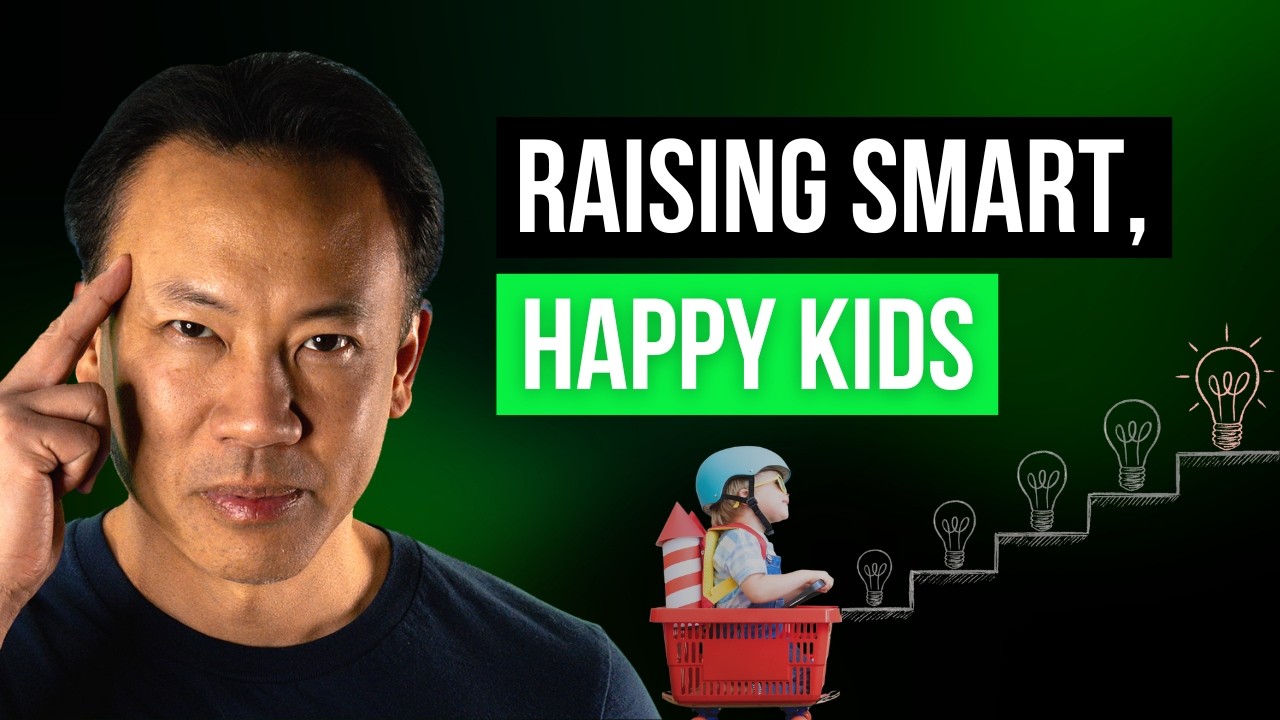
In this solo episode of the Kwik Brain Podcast, Jim Kwik acts as a brain‑coach to explain how adults can inspire children (and learners of any age) to love lifelong learning. He outlines six practical strategies: (1) link new material to a child’s existing interests; (2) turn learning into a fun, interactive experience; (3) harness storytelling to make concepts memorable; (4) model lifelong curiosity yourself; (5) praise effort and the learning process to nurture a growth mindset; and (6) expose learners to a variety of resources and involve them in setting personal learning goals. Throughout, Kwik weaves in neuroscience‑based reasoning about how the brain retains information, and he repeatedly promotes his own programs (Kwik Recall, Kwik Brain, Kwik Student) with a discount code. The episode ends with a call to share the content, tag him on social media, and remember the mantra “be limitless.”
Chapters
How do you get children and others engaged in learning and personal transformation, personal growth? That's the focus of this solo episode. Welcome to the Kwik Brain Podcast. I am your coach and your host, Jim Kwik, and this is a show all about upgrading your number one asset that you have, which is really your brain. When you understand your brain, you could work When you understand your memory, you could work it better. But how do you do that with children? How do you inspire people of all ages and stages? The focus here will be on children, but even if you don't have children or you're not a child, you'll get benefit out of this. When people seem to feel quite happy with their current level of knowledge and don't see the need or maybe even excitement in learning anything more, installing And then really instilling the joy of lifelong learning, especially in children who may not initially see its value, can be approached by incorporating a few key strategies that we're going to talk about in this episode that align with how we approach effective learning, how your brain works, and also human motivation. So you take some notes, hopefully it'll be valuable to you. And remember, learn this as if you're going to teach somebody And if you're not gonna teach it to 'em, at the very least, send them a link so they can listen to it also as well. So one of the keys is really connecting learning to their interests. What does that mean? One effective method is to link new learning opportunities to the interests and passions of the individual. When children see how new knowledge connects to the things they already love, learning becomes more engaging. That's kind of obvious, right? It becomes more engaging, it becomes more relevant, it becomes more rewarding. For example, if a child enjoys video games, introducing them to coding through game design can spark an interest in learning more about technology, learning more about mathematics. The second key I would say is you wanna make learning fun. And transforming learning into a fun and enjoyable experience, I feel especially now where there's a lot of distractions and noise, is absolutely crucial. This can be achieved through interactive activities, games, using technology that makes learning more interactive, personal, more dynamic. The goal is to make learning so enjoyable that it doesn't feel like a traditional Educational task. Another thing that I think about when I'm working with children and even adults is using the power of storytelling. Remember, if you've gone through our Kwik Recall program, which is a 30-day memory mastery course, you can find out more about it at kwikrecall.com. It's our most popular program. In one of the lessons, we talk about the power of storytelling. I mean, remember, before there were printing presses or digital devices, how would we pass on information? Through parables or stories around a campfire. Stories are a powerful tool to capture attention and communicate lessons. By using stories that are relevant and relatable, you can convey educational content in a way that resonates emotionally and intellectually. Right, it's more of a whole brain way of learning. This method helps in retaining information longer, for sure, and makes the learning process more unforgettable, more memorable. Another thing I'm thinking about designing lessons and inspiring and instilling the fun and joy of learning with children is model lifelong learning. Children often emulate the behavior of adults. Right? They don't do what you say, they do what they see. By demonstrating your own enthusiasm for learning and openly, like, engaging in new knowledge, reading, whatever the example is, you set a powerful example. Show them that learning isn't just for school. It's a lifelong adventure that continues well into your adulthood. And then when I'm thinking about Working with children, getting them to inspire and connect with the joy of learning, remember to give them reinforcement. Praise the process, not just the outcome, not just the A or the B that they're getting on their quiz. Praise the process. Encouraging effort rather than praising achievements helps to cultivate what we've talked about in the past in, in this show, a growth mindset. This approach teaches children that intelligence and skills, they are not fixed and they can develop over time through effort, strategy, discipline, helping others. Celebrate their persistence. Celebrate their curiosity. Celebrate their willingness to make mistakes and tackle new challenges. This is a special message and invitation for our students. I want to tell you about A revolutionary, unique, powerful, and proven course to be able to upgrade your learning and your life. So not only can you get better grades, but you could do it in a fraction of the time. For only 15 or 20 minutes a day for 30 days, I guarantee you, you will be equipped with the best tools, tactics, resources, and strategies to level up your learning. Go to kwikbrain.com. Use the code PODCAST15 and you'll get instant enrollment as a thank you for listening to our show. Another thing I'm thinking about when I'm working with children is how do I introduce them to diverse learning resources, exposing them to novelty, right? A variety of learning materials. It could be books, it could be documentaries, it could be experiential things like going to a museum, educational websites, the Kwik Brain, you know, Academy. Academy, if you will. We have an incredible program on— for student success. You can find more about it at kwikstudent.com. kwikstudent.com. This is really for children to get at the head of the class, and we apply all of these principles to it, making it fun, making it relevant, using storytelling, and inspiring a spirit of experimentation, of excitement. So this keeps learning fresh, but also shows that learning can happen in multiple ways, Not just in a classroom. And then, can you set learning goals together? When you involve children in setting their own learning outcomes, their own learning goals, it gives them a sense of agency, a sense of ownership and control over their learning process. This empowerment can enhance their motivation and their satisfaction as they achieve these goals, these objectives. And by using these techniques, you can help children and indeed learners of all ages and stages discover or rediscover the joy and the endless possibilities that come with lifelong learning. So I hope you enjoyed this episode. Make sure you subscribe. You could watch, remember, the extended version Of our show on YouTube. Join our 1.5 million subscribers there. We also have additional content on YouTube as well as segments of me on stages. And I hope this episode has been extremely useful to you. And I just ask you to share this, share this with somebody who has a child in their life. Maybe it will give them some insight, some inspiration. For them to implement one or more of these ideas. And if you'd like, take a screenshot of this episode wherever you're consuming it, post it, tag me on it also as well, and share like one thing you're going to do to inspire or instill into a child that playfulness, that joy, more fulfillment in the learning process. You know, people see pictures of me online with Oprah or Elon. People always ask how we connected and we bonded over learning. Right. Even especially reading, you read to succeed, right? Because if you want to make an upgrade in your change, those books and those learnings, it's kind of like the operating system to upgrade your brain, which is your number one wealth-building asset. But going, especially with children, you never know what they're listening to. And one idea, one insight, one moment, one experience, one conversation with you can It could change everything. And when you change your brain, you change their life. When you change your brain, you change the entire world. So again, this is your brain coach, Jim Kwik. Thank you so much for joining me for this episode. I look forward to seeing you in the near future. And until then, always remember to be limitless. Limitless.