A Simple Way to Create BDNF
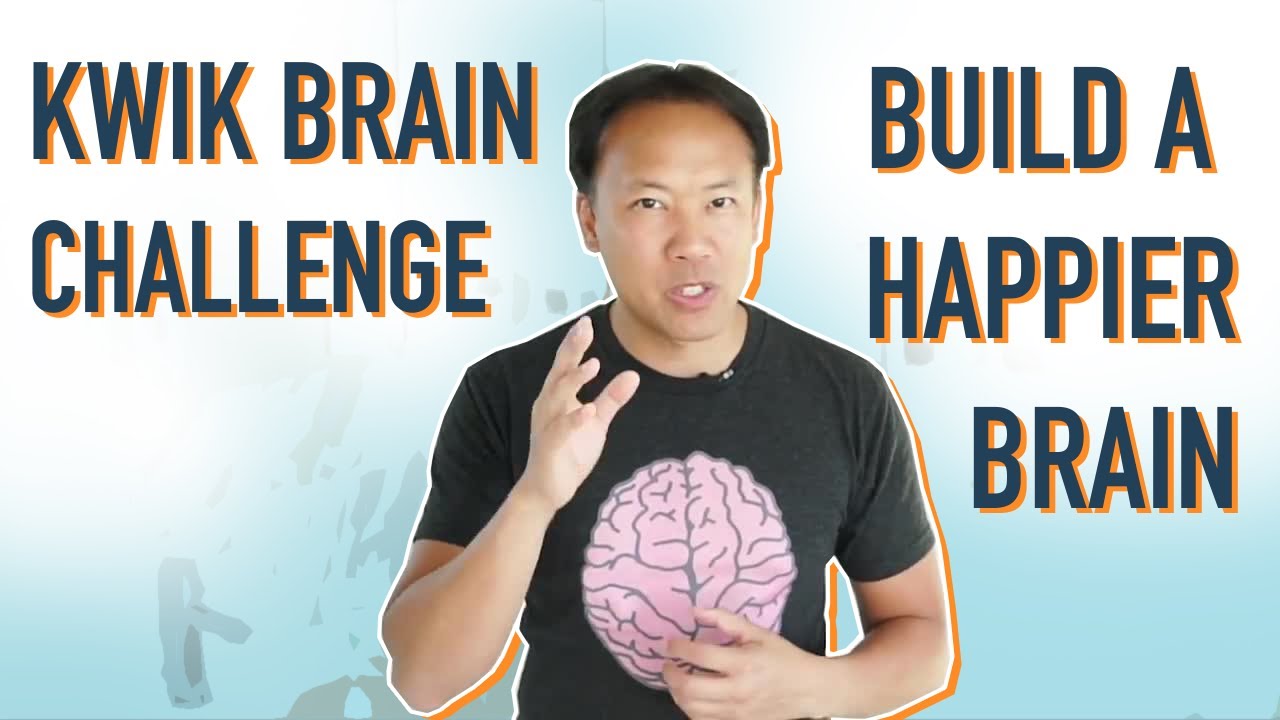
Jim Kwik explains how brushing your teeth with your opposite hand triggers neuroplasticity and increases BDNF, the brain chemical that supports memory and learning. Duke neuroscientist Lawrence Katz found that contralateral activities strengthen neural pathways in seniors. The daily micro-habit trains mindfulness, activates different brain regions, and builds grit through deliberate discomfort.
Chapters
Welcome to today's Kwik Brain Challenge. And if you're new to this, you're thinking, Jim, what is a challenge? What are you doing? What are you doing there with your toothbrush in the bathroom? Such a weird place to be able to film a podcast episode. And I'm here to say you're absolutely right. And really, it's about being different. It's not about being necessarily better, but it's about being different today. Because in order to activate your Kwik Brain, it requires novelty. Novelty and nutrition helps you to spur on neurogenesis and neuroplasticity and actually helps you to create create what they call brain-derived neurotrophic factors, BDNF. Novelty does that. And so why am I right now in the bathroom? I'm going to talk about the challenge today, which is to brush your teeth. You're like, Jim, I brush my teeth at least once or twice a week. Brush your teeth with the opposite hand. And now you're thinking, Jim, why would I want to do this? I'm going to set you up for success. So first of all, with challenge comes change, and that's what these challenges are all about, that Information by itself is not power. Knowledge is not power, it's only potential power. It only becomes power when you what? When you apply it, when you utilize it, and that's the effect you want. Because having books or just learning new things but not applying it, your life is no better. And so we wanna take knowledge and turn it into action so you can produce a result. And most of all, the purpose of these Kwik Brain Challenges is to get you to do different things every single day. They say that the average person has about 60,000 to 70,000 thoughts a day, The challenge is 90-95% of them are the same thoughts they had yesterday and the day before that. You can't affect real big change or transformation if you're doing the same thing, right? Because you know this, insanity, doing the same thing over and over again and expecting a different result. So I want to train you to activate your Kwik Brain so you automatically want to act and apply. And the way we do that is by taking simple steps. You've listened to episodes we've done in the past on the power of habits. We've done episodes with Dr. BJ Fogg from Stanford University, 2 episodes with him on how to create new habits and how to break limiting habits. I advise you to listen to that episode. We also did episodes with James Clear on Atomic Habits. Listen to that episode. But all of them start with making little tiny steps. And so what I'm going to ask you to do every single morning as part of your morning routine, as you're brushing your teeth, using that as a reminder and a trigger, to try brushing your teeth with the opposite hand. Now here are a couple reasons. Number one, it trains you to be mindfully present. Now what's the benefit of that? Most people are so distracted, but how do you maintain your focus and concentration in a world full of app notifications and social media alerts and all these different things that are vying for your attention? You train the muscle of focus and presence. So when you're brushing your teeth with the opposite hand, it forces you to be in the moment, and that power of presence, that presence of fitness, that attention muscle that you're building to make it really fit, that will show up when you need to be present when you're remembering someone's name. When you're reading something and you get easily distracted, it trains those muscles to be present with what you're reading and also studying. So that's number one, it trains your presence and mindfulness. The second reason you want to use the opposite hand is there's research done at Duke University, the Department of Neuroscience and Biology, by Dr. Lawrence Katz. He wanted to find out how to keep seniors' minds alive as they aged. And what Dr. Lawrence Katz found was simple exercises like eating with the opposite hand or brushing your teeth with the opposite hand, where you're challenging yourself. That we know that there's a mind-body connection, but there's also a body-mind connection. That as the body moves, the brain grooves, actually stimulates different parts of the brain. So what really what we're doing here, as you're trying to brush your teeth with the opposite hand, it's going to feel difficult. It's going to feel a little bit weird. But the reason why is you're creating new neural pathways and you're clearing up the metaphorical traffic jam that's in people's minds when it comes to their memory. They're slow to remember things because that freeway is not clear. And so you're moving things around, you're challenging yourself in new ways, you're making new connections because as your body moves, your brain grooves. Because we've seen research that if somebody has a stroke, for example, on the left side of their brain, If they are paralyzed, if paralysis manifests, it'll manifest on the opposite side. That one part of your brain controls the opposite side of your body and vice versa. But science is finding it's not just a brain-body connection, there's a body-brain connection. That using part of— a different part of your body will actually stimulate a different part of your mind. And that helps you to build that brain-derived neurotrophic factors, neurogenesis, plasticity, new brain cells and new connections. And that's gonna build your brain fitness, your brain muscles, if you will. So what I challenge you to do for those reasons, number one, trains your muscle of fitness, and number two, it trains a different part of your mind. And the third reason is you want to train yourself to do difficult things, because here I do believe the point of doing these challenges, with challenge comes change, that the treasure you seek is found in the work you're avoiding. And it trains you to take on little difficult things, because if you just— if you want an easy life, you don't do easy things. Right? The easy thing is to procrastinate, to put things off, but the hard thing is to do the hard things, is to do the work that you need to do. Because if you just do the easy things, life is hard. But if you do the hard things in life, life becomes easier. So you're training yourself first thing in the morning to do something difficult because you're training your muscles. So maybe it shows up in the areas where you need to make a call, a sales call, or you need to give a presentation, or maybe you need to fire somebody, even have a difficult conversation with them. And so because you built that muscle of grit, So that's the third reason. So are you up for the challenge? What I'm going to ask you to do is take a picture. You're like, I don't look good. I don't have makeup on first thing in the morning. Take a picture of you holding your toothbrush in the opposite hand or maybe in the mirror and post it if you're willing to. Hashtag Kwik Challenge. K-W-I-K Challenge. And let me know how this works for you. And then the best thing about this is this is something you do for today. But then try it again tomorrow and the next day. Because I just read this post on Instagram, many of us are connected, we're friends on Instagram and Facebook, one woman, they've been doing this challenge of brushing their teeth with the opposite hand and they're like, Jim, it's so remarkable, today I actually didn't even realize halfway through brushing my teeth I was doing it with the opposite hand. And what you've trained yourself to do is that you've trained yourself the ability to be able to create new habits. And if you want a different life, you need to change your habits because first you create your habits and then your habits create you. And so if you get really good doing new things and creating new habits, what other things can you do? Maybe you could create a habit of mindfulness, a habit of saying I love you, a habit of eating the right food, a habit of working out every single day. So at a meta level, you've developed the habit of creating empowering habits. And that will serve you. So here's the challenge right now, is to do this first thing in the morning, do it at nighttime, every time you brush your teeth, that's your reminder. It doesn't take any extra time. It will feel awkward at first because it's different, but that means it's good because you're doing something brand new. Because if it's just easy, then you just be the same person every single day. So you're challenging yourself, and with that challenge, you get change. So take a screenshot of this episode or take a picture of you using your opposite hand while you brush your teeth. And post it and let me know how it goes and continue it. Here's what you want to remember: consistency compounds. A little by little, a little becomes a lot. It doesn't seem like a big shift, but after a couple of days, a few days, you start making this gradual shift and all of a sudden you're in a different destination. Some people call it a destiny. So again, practice this oral hygiene. It also leads to mental hygiene also as well. Make sure you subscribe on YouTube and your favorite podcast channel so you get our next challenge. I'll see you soon.
More from Jim





The Library of Minds: Brain Coach: How to Stay Sharp When AI Does the Thinking | Jim Kwik





