Boundless Brain Energy with Ben Greenfield & Jim Kwik
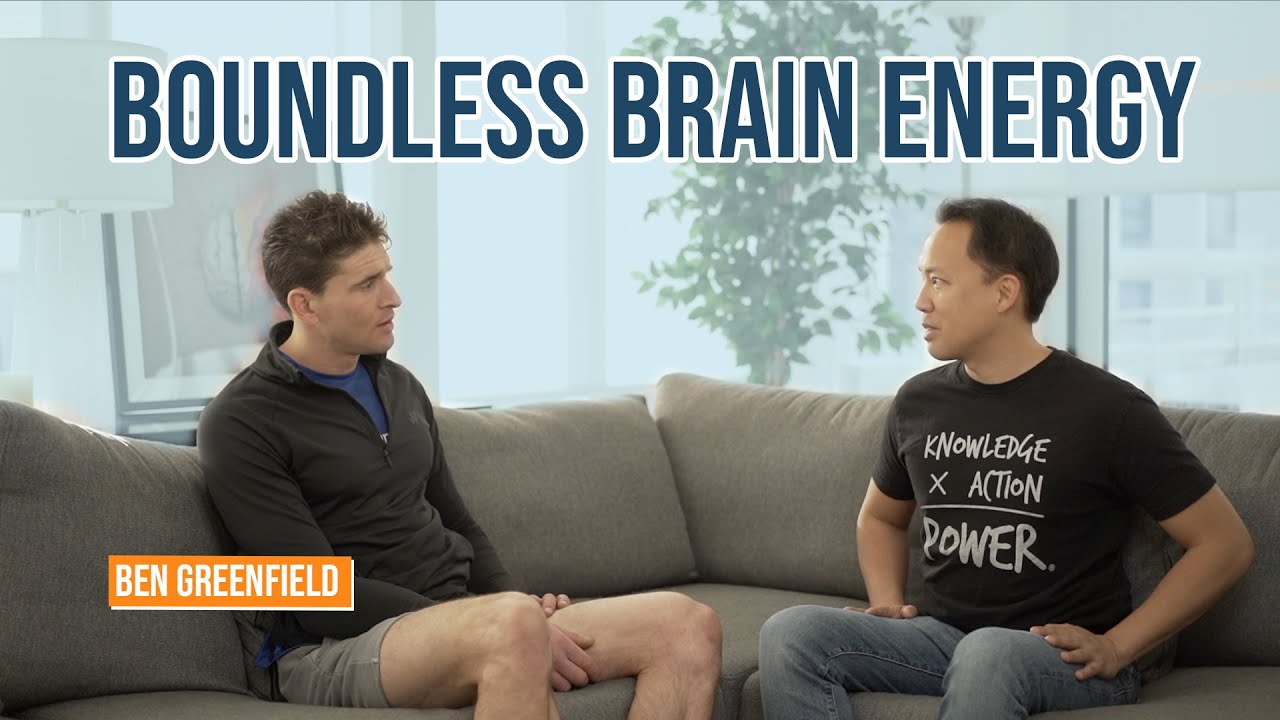
Ben Greenfield explains brain fog stems from a compromised blood-brain barrier and imbalanced neurotransmitters. He recommends NAC, ketone bodies, and magnesium glycinate to repair it, plus a rainbow diet and sunlight exposure to boost mitochondrial function. Micro-dosing coffee and tea supplies polyphenols without over-stimulating the brain.
Chapters
Welcome back, Kwik Brains. Your question for today is, how do you have boundless brain energy? And we have a very special guest back on the show, New York Times bestselling author, podcaster, world expert, coach to high performers.
Wore my most fashionable pants for you today.
You did, man.
To show off my Washington State tan.
Yeah, baby. Thanks for coming back on the show, man.
Oh, it's my pleasure, and it's a beautiful day in New York City.
Yeah, if you haven't listened to the episode on the 4 invisible supervillains, that's right, it was— that was— we talked about light, we talked about EMF, we talked about water and air. That was a powerful episode, a lot of great feedback on that. In this conversation, we wanted to get your best practices with your brand new book, Boundless. Congratulations.
Thanks.
On that, it's doing incredibly well. Let's talk about having boundless mental energy. How do you make your brain boundless? A lot of people struggling with slow thinking. Yeah, yeah.
You want and you should have and you deserve to have all the mental energy that you want at your beck and call throughout the day. Physical energy and spiritual energy too, which is the entire thesis of the book really, is boundless energy in all areas of life, mind, body, and spirit. And when it comes to the brain, I would say that particularly there, there are a few factors that would directly affect things like brain fog, fuzzy thinking, et cetera. Most people are aware that excess stress and lack of sleep will affect that function. But those 2 very important variables aside, one that comes to mind is this whole idea of A blood-brain barrier. Many people are familiar with the blood-gut barrier, right? We hear about phrases like leaky gut and gut permeability and undigested proteins passing from the gut into the bloodstream. But not a lot of people talk about the fact that there's also a barrier, a very permeable and delicate barrier between the blood and The blood-brain barrier is a barrier in the brain designed to do things like keep toxins and large proteins and things like that out of neural tissue because you can cause damage and you can cause things like fuzzy thinking, lack of blood flow to the brain, lack of nutrients to neural cells, etc., if you have a leaky or compromised blood-brain barrier. If you are doing things like drinking excess alcohol, if you have a low intake of Minerals such as magnesium, poor sleep and stress I already mentioned, high intake or exposure to toxins, and even in some cases large inflammatory proteins such as undigested gluten proteins. All of these things can essentially— the best way to think about it is rip holes in the blood-brain barrier.
Mm-hmm.
And cause the influx of things into neural tissue that should not be there.
Mm-hmm.
In there, and that can affect your cognitive function. So it's right now, in the, in the current medical state, difficult to test for a leaky blood-brain barrier. There's one test I talk about in the book for, uh, for certain types of proteins that may indicate that it's not functioning properly. But if you have brain fog, if you have fuzzy thinking, if you suffer from cognitive issues, if you suffer from poor sleep, it's usually a pretty good sign That's a sign that there's something going on with the blood-brain barrier. It's usually that and/or your neurotransmitter function. So when it comes to the blood-brain barrier, a few things that I would recommend that folks look into for healing it. One would be any of these antioxidants that act particularly well on neural tissue, with the cool side effect being that many of these same antioxidants would have an effect on the amyloid plaques. that may be a precursor for things like dementia or Alzheimer's. One very powerful one that I talk about in the book is kind of similar to glutathione but on a neural level more powerful, and that would be N-acetylcysteine or NAC. Very potent neural antioxidant. It's available in supplement form. It's available in effervescent tablets. There's not a lot of great food sources. food sources of N-acetylcysteine for the purposes of healing the blood-brain barrier or mitigating plaque formation. It's better to just go straight to a supplemental form. Another example would be the use of ketone bodies such as ketone esters or ketone salts or even mitigating your overall glucose and carbohydrate intake so you're churning out ketones yourself, nutritional ketosis.
Sure.
With the reason being That the glial cells can actually metabolize glucose and produce a lot of free radicals that can do damage to the blood-brain barrier. So there are, there are some companies that will sell ketone esters or ketone salts that can be used as a supplement. You can do things like lower overall glucose consumption or do as I do and save all your carbohydrate intake for a post-workout scenario. Or perhaps just until the very end of the day, so you're at nutritional ketosis the entire day and then you might break that with a little bit of carbohydrates with dinner and then get back into it.
Can we define ketosis and ketones for somebody who doesn't know?
Yeah, a ketone body is simply a molecule that can be used for energy. Think of glucose, think of fatty acids, protein to a certain extent, but the burning of ketones for energy does not result in many free radicals at all. It's a very stable, slow-bleed, long-term source of fuel, and it is readily taken up by the brain, the liver, the heart, the diaphragm as this quite potent source of fuel that's very stable. And your body can make it itself. Typically, your body will produce its own ketones in response to the consumption and the burning of fats. Which is why traditional ketogenic diet tends to be high fat. However, if you want to amplify your ketone levels even more, which I think is a cool strategy, especially if you are in an inflamed state, if you've been flying on an airplane a lot, if you have jet lag, if you have any of these issues related to poor fuel availability for the brain or damage to the blood-brain barrier. blood-brain barrier, I think that beyond nutritional ketosis, the use of these ketone salts or ketone ester supplements is useful. Some of them, you know, there's like a new keto pill out and it's like 1/20th of what you'd actually need to get your ketone levels elevated. But some of these, these larger like liquid drinks and powders that you can mix into coffees and teas, et cetera, are very useful. And I would say, uh, one, one final one, Uh, to think about in addition to something like N-acetylcysteine and ketone bodies would be magnesium. Magnesium is very healing for the blood-brain barrier, and the fact is that living in the type of era that we live in now where we're exposed to a lot of non-native EMF, non-native electromagnetic fields from cell phones, from Wi-Fi, from Bluetooth and enabled appliances, from smart home appliances, from 5G panels. The problem is that that opens up calcium channels in a cell, and you get an influx of calcium into the cell that can cause damage or lower the metabolic activity in the cell, because essentially what it does is it causes the interior of the cell to be positively charged when it should be negatively charged. When you take magnesium or you supplement with magnesium, such as using magnesium before bed, which is nice because it has a calming effect as well, you can actually mitigate some of that damage and it's also very healing for the blood-brain barrier. Those would be 3 things to look into, would be N-acetylcysteine, ketones or nutritional ketosis, and then also magnesium and mineral intake.
In terms of, is there a specific form of magnesium?
I like for the brain magnesium glycinate. That one appears to be taken up pretty readily And, is it through orally or some transdermal? Oral is the typical route of delivery. Some fancy people will go and get IV cocktails that have magnesium in them. You mentioned transdermal, which is interesting because there are some relatively well-absorbed transdermal magnesium creams and sprays. They're quite effective for migraines and headaches actually because they increase blood flow to the But they can also help if you put them, for example, on the carotid artery or on the side of the neck or in the temporal lobe prior to sleep. You can get some absorption. It's a little bit lower than what you get from oral magnesium supplementation, but the nice part about the transdermal effect is that it can act on those muscles. So if you're tense at night, kind of in a fight-or-flight mode, it can relax some of this musculature up here that can also, in addition to the Poor blood flow cause headaches.
Okay, so we're talking about NAC, ketone bodies, magnesium. You mentioned— you have mentioned it in a prior episode with us— the power of sleep, reducing— having coping mechanisms for stress, which could be a challenge. So, is that the protocol you would recommend the client to—
There are actually about, I would I would say 12 to 13 additional things in the book, including things such as omega-3 fatty acids, the oleic acid that you would get from something like extra virgin olive oil.
Uh-huh.
The microdosing, I call it, of things like coffee and tea. So it's interesting because excess amounts of caffeine, excess amounts of stimulants can not only exhaust or turn over neurotransmitters more readily, which can contribute to brain fog, but they can cause a leaky blood-brain barrier. However, small doses of coffee, small doses of tea, the antioxidants, the anthocyanins, the polyphenols, a lot of the components we get from an antioxidant-rich beverage, even the resveratrol in wine to a certain extent, although you need to be careful because ethanol can induce a leaky blood-brain barrier, but moderate, low to moderate amounts of Alcohol, any of these type of beverages can actually be very good for the blood-brain barrier as well.
What's a microdose? Is it like a cup of coffee?
A microdose would be 100 to 150 milligrams. We're talking about one decent-sized cup of black coffee or a cup and a half or 2 of green tea or one glass of a good organic biodynamic wine. Actually, something I talk about in the book, should you not If you want to drink, or maybe you don't have access to organic wine, of course, one of the things a lot of people are familiar with in terms of the antioxidant in wine is resveratrol.
Mm-hmm.
Granted, this study in which they tested wine and resveratrol showed a resveratrol content that would require one to drink like 1,500 bottles of wine. Resveratrol supplementation can cover some of those bases. But I'm getting into the weeds here. I realize the problem is about 85% of the resveratrol out there is made from peanut skins, not grape skins, and a lot of people have this allergenic, mildly inflammatory immune response to peanut skin proteins. So you need to be careful if you're going to supplement with resveratrol. Something I found while writing the book that is about 100 times more powerful than resveratrol in terms of the antioxidant content It's something called pterostilbene, P-T-E-R-O-stilbene, pterostilbene, and it's like resveratrol on steroids. Whether or not you're going to drink red wine, I think pterostilbene supplementation for neural function is actually a pretty smart move.
That's something people could get online?
Yeah, absolutely.
You mentioned neurotransmitters, and we're talking how does that relate to brain energy?
Yeah, in the book, I call them the brain's bumblebees because they're essentially molecules that act as As chemical transmitters and hover around and move through the body and the nervous system like little bumblebees. We're talking about things like serotonin, dopamine, gamma-aminobutyric acid, or GABA as it's more popularly known, alpha-GPC, or acetylcholine. And most neurotransmitters would fall into the category of Either being excitatory or inhibitory. And when you actually look at the profile of a lot of people, many personality characteristics are based on certain dominances of neurotransmitters. So people who are dopamine dominant, for example, would thrive in a very adventurous, exciting, thrilling type of lifestyle that involves jumping out of planes or going off to be a— Navy SEAL for your career, whereas people who are acetylcholine dominant, they would be more comfortable writing or being artists or doing something that's a little bit more stable and in fact can get stressed out by those very exciting type of situations. I think identifying your neurotransmitter dominance is important. I link to a few quizzes within the book that can help you to identify that, similar to the blood-brain barrier, it's a little bit difficult to test chemically for neurotransmitter dominances, but typically a questionnaire can help you identify. And then it's important, no matter what your neurotransmitter dominance and the lifestyle or the activity choices that you make based on your specific neurotransmitter dominances, to care for your neurotransmitters. For example, they can become exhausted with excess sensory input.
Yeah.
This would include simple things like playing your MP3 player too loud. I dial in my music player to the quietest I can get it while still being able to hear so that I'm not overstimulating my neurotransmitters. In the evening, with what you choose to watch on Netflix or elsewhere, choosing things that might be mildly intellectually stimulating but not horrific, not a lot of heavy action-based movies. Of course, there are hacks. Let's say that you do decide you want to go on a date to whatever the latest Avengers movie or whatever.
Right.
You can actually use neurotransmitters in supplementary form. You could use a GABA type of supplement to flood your body with inhibitory neurotransmitters after you've had an excitatory event so that you can get the neurotransmitters balanced again. Similarly, If you're in a state of excess sensory input, as many of us are, all of the neurotransmitters are going to be stimulated and turn over at higher amounts. Getting things into your body that are precursors for the neurotransmitters is important. Probably 2 of the most important would be a full spectrum of amino acids, so eating really good sources of protein throughout the day and making sure, especially if you're Yeah. If you're vegan or vegetarian, that you're delving into a variety of different plant sources like grains and legumes, etc., so you're getting a good complete protein profile so you have all the amino acids that you need for neurotransmitter formation. And then the other one would be a good vitamin B12 source or vitamin B complex source. And again, if you're eating a plant-based diet, this is a little bit more difficult. Typically you need to Supplement with some absorbable form of vitamin B complex. If you're eating meat, for example, or an omnivore, then usually you're getting what you need from meat. But amino acids, vitamin B complex, avoiding excess sensory input. And then if you are in a state where you've been exposed to a lot of excitatory input, considering putting things into your body that would help to support GABA levels, Mm-hmm. Help to support serotonin levels, that can be a smart strategy. And I mentioned when I was talking about GABA that you can, you can buy inhibitory neurotransmitter complexes that contain GABA from a variety of supplement companies. But the other ones to consider for serotonin would be something like 5-HTP. This is in a lot of sleep-based supplements that can help to support the serotonin levels. Another example would be something like holy basil before you go to bed at night. Ashwagandha appears to do a pretty good job of that as well. So, some of these things that are traditional relaxation type of supplements will help to support serotonin or GABA or both. And similarly, I mean, you can hack all this stuff. That's a big part of the book is just about hacking these things. Let's say you want to feel better when you're doing an excitatory dopamine-based activity and you want to amplify dopamine availability. You could do things like cacao tea, which is rich in theobromine and some dopamine precursors. You could use L-mucuna, which is a good dopamine precursor. And so there are certain things you can do that can almost make fun activities that cause a release of dopamine even more fun. So you can kind of play with your neurotransmitters in both ways. And of course, it's also very important to understand that you can't excessively exhaust them with excess I know you have, you have 2 boys.
How do you deal with the sensory input? Because we get a lot of parents in our community and their kids are growing up on smart devices with joysticks. Is there a way of applying this brain energy? Because a lot of kids, they go to school and they're falling asleep in class.
It's difficult because if you tell a child, and And I've experienced this with my own children and seen it in others, that they must have limited screen time, or they're not allowed to own or use a device, or there's a certain time limit on video games.
Mm-hmm.
In my opinion, you set up those activities to be forbidden fruit, meaning that all a child is going to want is more and more of that. And when you're not around, you know, the same as if you tell your child, you know, never touch alcohol, alcohol is bad.
Bad.
Mom and Dad are going to have wine, but you guys are not allowed to touch anything like that. Well, we see a higher incidence of things like teenage alcoholism and alcohol abuse in societies where children may not have a healthy relationship with alcohol. Maybe they haven't ever tasted a sip of wine. And I know this is mildly controversial, but, you know, I— my first exposure to alcohol was stealing a bottle of bourbon from my dad's desk. desk and getting drunk in my bedroom because alcohol was forbidden. It was off-limits. And so, it's kind of a natural human response to things that are off-limits. Well, if you look at screen time, smartphones, video games, what we do in our house is an approach called love and logic. What I mean by that is we educate our children on the biological consequences of looking at a screen a lot at night and the effect that would have on their circadian rhythm their enjoyment of the next day. We educate them about the phone being down here by their little reproductive organs and affecting things like sperm quality later in life and even the health of their future children. We educate them about the healing importance and the nature of being outdoors and how amazing it is for the body. And we surround our house with amazing outdoor activities. And finally, we set We set an example, Mom and I do, meaning that when there's downtime in the Greenfield house, we're reading actual real physical paper books, we're playing musical instruments, we're taking out board games and card games. So the fallback, the go-to, is not a stimulating device. The devices are used, you know, as an accessory here and there to get some business done or to say hello to Grandma or something like that. But I think it's important to educate your children about the biological consequences of excess technology use. Set a good example yourself and then let them make the decision and take responsibility for those decisions.
Well, we covered a lot of information here. What would you give to people who are watching at home, they're listening at home, one thing to do, maybe one additional tip from your book that you could recommend either as a challenge or as a good piece of functional advice?
Sure. I've got a cool one for people. I'm reading this book right now called Human Photosynthesis, and it's actually about how the body, including the mitochondria and neural tissue, can actually generate electrons in response to photons of light. It's almost like plant photosynthesis, and it happens all the more readily if you're eating some of these precursors that get activated by sunlight, especially Right. There are things out there like spirulina and chlorella, blueberries, anything that has a blue-green pigmentation. If you have those type of foods in your diet, dark leafy greens, berries, spirulina, chlorella, even the red wine, the dark chocolate, all these fall into that category, and you pair that with exposure to sunlight or if you're in a dark climate and you can't get exposure to sunlight, any of these fancy light panels, head-worn light devices, far-infrared, near-infrared, anything like that, you actually activate mitochondrial activity in neural tissue and you make energy in a similar manner as a plant would photosynthesize, which just blew my mind when I found this. It's in the book, but basically, eat a rainbow of colors and get out in the sunlight. It's amazing, not for your brain but for your entire body.
That's amazing. Ben, congratulations on the new book. New book is called Boundless. I recommend everybody get their copy. We'll put in the show notes as we always do, we'll put all the details and all the links there also as well. How do people stay in touch with you?
BenGreenfieldFitness.com and it's usually Ben Greenfield or Ben Greenfield Fitness on all the social media platforms that I'm trying to keep up with.
I recommend everyone, I challenge everybody to take a screen Take a screenshot of this episode or this video, tag Ben, tag myself. And what I want you to do is share one aha that you got out of this conversation. We know that when you share it, you get to teach it, you get to learn it again. And that's part of it. You learn so you can earn, so you have more to be able to return. It's like the hero's journey, right? They get separated from the ordinary world. They find mentor, overcome trials and challenges, but they come back to that world with lessons and strength.
And the elixir.
The elixir, right?
Yes, return with the elixir.
Exactly. So what, what was the magic elixir that you got out of this conversation? One thing that you're going to apply. As you see on my shirt, knowledge alone isn't going to change your life, but application and action really does. So tag Ben, tag myself, your Aha. And as always, I'll, I'll repost some of my favorites. And, uh, Ben, thanks for doing this again.
Thanks, man.
More from Jim





The Library of Minds: Brain Coach: How to Stay Sharp When AI Does the Thinking | Jim Kwik





