Building Mental Toughness with Miesha Tate | Jim Kwik
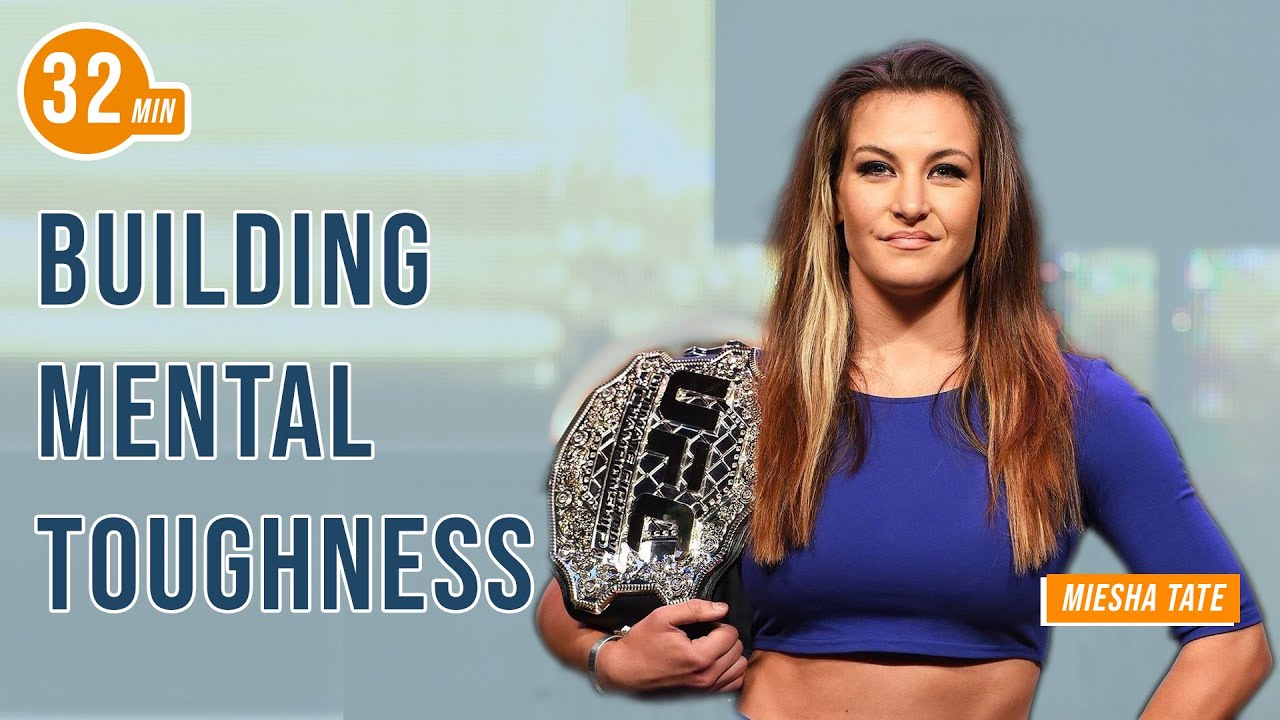
UFC champion Miesha Tate talks about building mental toughness through setbacks, depression, and motherhood. She uses a worst-case scenario thought experiment before fights and practices what she calls "building the house again" after losses. Tate emphasizes reframing risk, embracing failure as learning, and moving forward in small incremental steps.
Chapters
Welcome back, Kwik Brain. Your question for today, how do you build mental toughness? How do you create that cognitive resilience, if you would, in a world that sometimes can be very difficult and might be a little bit against you? And I'm excited to have this conversation. This is a new location. We haven't done this before, but we're going to have this conversation with a very special guest. And this is— I have a little bit of like goosebumps here because this is something that I've been looking forward to. We have a UFC champion here and she's probably one of the most recognized female fighters in the whole world, Miesha Tate. Thanks for being here.
Oh, thank you. I'm so glad that we could set up on the fly.
I know.
We made this happen and I thought here I was going to have to wait on this long list of people that you have to be on this podcast. But no, we made it happen today because that's what we do.
Yeah, exactly. We figure it out. We have Jared behind the the camera here. We're actually at an event. It's a wellness performance event around hyperbarics and using it as a recovery tool. And, I gave the opening keynote yesterday and you did this morning's keynote.
Right.
And so, we put this behind stage just to have— we're having this conversation and we wanted to be able to share this with the community. And so, I'm really excited. I followed your career and you've recently come out of retirement.
Yes.
And, maybe we'll make this We'll put this out maybe the week of July 17th. July 17th, very good. Yes, the memory kicks in. So let's talk about how to, you know, Limitless is not about being perfect. It's about advancing and it's about progressing. And, you know, we know a big part of success, you know, in performance is the mental game. And, you know, did you always have the, like, a support system in place, you know, a support team? Or were you— for like, for me, I was labeled broken. And there was, you know, a lot of people were kind of, you know, going out of their way sometimes to get in and bring me down. How about yourself?
I think I had a good combination. I'll give my mom a lot of credit because I think it takes a strong woman to raise a strong woman. And my mother always instilled in me since I was a little girl that I could do and be whatever I wanted. If I said I wanted to be an astronaut, which I did, she's like, you I mean, there was no hesitation. She's just like, if that's what you want to do, you will do it. And so I think it was ingrained in me from a very young age. But pretty much everyone else, you know, even my dad and, you know, my grandparents, which I was talking about today, my friends and casual friends, most of the things I did were not very supported. That's a good word, right? They were frowned upon and not even— Just not supported, but very misunderstood. I think people a lot of times didn't understand where I was coming from, or why would I choose fighting? You know, think back in 2006, even men's MMA was not— it was still considered barbaric and had a lot of these negative connotations, much less women trying to fight at that time. It was a spectacle, you know, that's how people viewed it.
And somebody watching now that just started maybe watching Like the UFC, you see women there, but it wasn't always like that. And I remember those initial conversations with Dana and the community and people thinking, but you were one of the people that really ushered in— I mean, your specific fight actually did that.
Right.
In my mind.
Yeah, so there was a fight that I had and I didn't win. I actually won— excuse me, I lost my world title in that fight. So it was kind of devastating, but in hindsight, I look back at it and there was so much more to be gained. You know, it was what broke down the barrier for women to get into the UFC and also enabled me to get that opportunity, which then, of course, I became UFC World Champion, which is the pinnacle of my career, and I plan to do it again.
Yes.
But it was, you know, one of those tough bumps in the road that you don't realize there's so much more that's going to come from that. And I guess if that's something that I was going to say is that it's difficult to have foresight. when it comes to mental toughness. But I think that you have to believe that if you continue to put one foot in front of the other, even if that you, you know, maybe let's use an analogy. You're driving on a dark road and it's the middle of the night and all your headlights can see is 10 feet in front of you, 30 feet in front of you, right?
Yes.
But as long as you keep going, eventually you're going to have a lot of distance that you've covered, right? And so you might not know exactly where you are. You might not be able to see where you're going. But you know you're gonna get there if you just continue on that path or wherever the path may take you, right? So sometimes you don't need to be able to see way in the future so long as you have the mindset. And I've always had this mindset that I can build it again.
Ooh, that's so good.
I can build it again. So if I know that I have those fundamental tools to create myself, whatever version of that is, and I've gone through so many versions of myself at this point. I'm 34 years old, right? So I've done a lot of growing and a lot of transition. I've always thought, what's the worst thing that can happen?
Ooh, that's such a powerful question.
When these ridiculous, you know, and sometimes it seemed ridiculous at the time, opportunities present themselves. Me wrestling on an all-boys team, that was ridiculous at the time. Not to me, but I mean, so many people thought like, how crazy. I got labeled crazy many times in my career, and I'm kind of proud of that actually. I never really refute that point. Might be other things I refute, but Crazy is not one of them because I think it takes a bit of crazy to be ambitious.
Yeah, they say before things happen, the day before it's a crazy idea, but that's how progress happens.
Yeah, so I think, you know, burn me down to the ground. If all else failed and, you know, my home, metaphorically speaking, let's say we're all in our life, we're building this house, right? If it burns to the ground, do I have the tools to build it again? Because if I do, it doesn't matter how many times it burns down to the ground. I can always build it again. And that's where my deep-seated confidence comes from, that if I lose a fight, if I fail at this, if I'm not great at that, if I'm not making a lot of money at this in the moment, if I feel like I'm going backwards, can I build it again?
Can I build it again?
And the answer for me is always yes. Maybe I don't know exactly how, or maybe I might build it differently, or maybe it might be a different color, whatever. But can I do it again? Yes, I can, because I have the mental drive and fortitude and discipline that I know if I just take that 5 feet of headlight space and I just multiply that, that I can build anything again.
Yeah. I think everybody who's listening to this or if they're watching it on YouTube, they all have their own ring or their own octagon of life. And, you know, it's different because, I mean, you literally are taking it on the chin, you know, every single day preparing. For, you know, the time that you're spending in there, you know, so the various rounds. And I like that question. So what's the answer when you're asking yourself what's the worst that could happen? What are some of the answers that come up?
Well, I've had a lot of answers. Usually there's more than one answer, of course. So I start with the very worst and I work my way backwards. So let's take my title fight with Holly Holm, for example, right? 4th round, I'm down on the scorecards by 1 round. So it's the 5th round and I'm thinking, if this continues in this trajectory, right, I'm gonna lose this fight. So if I want something different, I've got to do something different.
Yes.
Okay? So I'm thinking, 5th round, what can I do different? Game plan A was to be meticulous, methodical, Find the proper opening so I don't get knocked out. 5th round is coming. I'm going to lose this fight anyways if this trajectory continues. I'm probably going to lose this fight. That was the worst-case scenario. What's the worst thing that can happen is that I don't give 100% and I lose a decision. That's worst-case scenario for me. Second worst option, I give 100% and I get knocked out.
Yeah.
But I'm going for broke. I give it everything I have and I lose fair and square and she finishes me, but I know that I went out there and I did absolutely everything in my power to win that fight. So, and obviously then you go to best-case scenario, I win, right?
Right, right.
That's what I came there to do. So I said, okay, the first one is worst. Second one is scarier perhaps, but I can live with that. I would be a happier person. I would feel more fulfilled if I know that I took the risk.
Yeah.
Because what happened? I can build it again, right? If I go out there and I risk everything and the house burns down, it's okay. I can build it again. If I know that I'm willing to put everything I have into something, I can always build it again. So I went out there with that in mind, and I got a wild takedown. It wasn't very technical, but it was desperation. I went out there and I gave everything that I had, and I got her down, and I got her in that choke, and I was able to finish it in the 5th round. Very exhilarating moment for me. Always difficult to put those emotions into words, but that was, that was my mindset going into the 5th round.
It was historical because the, the weight of regret of looking back, I think the Stoics would have that kind of similar question, like what's the worst if they could live with the worst-case scenario? But then you do these thought experiments and you're able to make— and it paid off.
It did. In that instance, it certainly paid off. And I've had instances in my career where in that very moment, it didn't pay off.
Right.
In that moment. But there was always a bigger picture to be learned from that, which did pay massive dividends in the end. So even those quote unquote failures on the way were really just learning experiences for me to hone the best version of myself. If I could take those losses in stride, if I could take those failures in stride and add that to my skill set, my tools to be able to build a bigger, better house, then I was okay with that. You know, I was okay with that. I was always able to kind of accept that.
I find the people that actually fall and get up are much more interesting and stronger than someone who's never fallen, right, or taking those risks.
Well, people who have never fallen, we don't hear about.
Fair.
I mean, truthfully, there is no successful person in this world that hasn't fallen. And if you are somebody who really has very, very minimal failures, then you've taken probably very minimal risk, which means you're not really going anywhere in life. And I think complacency is the death of us.
Ooh, that's a powerful belief.
I really do. I think complacency is where you get— you just don't feel like there's more to do in life. I think it can be linked to depression too. I think if we're just kind of complacent and we're not pushing ourselves out there, you know, I mean, you just don't— at least for me, I'll speak for my— I don't want to speak for anybody else, so I'll speak from my personal experience. If I know that I'm not giving my best in each day, I'll find myself in darker places mentally.
Mm-hmm.
And then I've got to find a way to climb out of there. And I've been in those places. I've been in very difficult, dark places where I thought, I've got to do something different because this is not where I want to be. And I learn from those experiences and I grow. And just being willing to take risk, that's the biggest thing. Because with all— with risk, there becomes a greater risk of failure. But we need to stop looking at it like failure.
Yeah. I think there's no such thing as failure, only failure to maybe learn something from it. It sounds like that every single time you get up, you have distinctions, you have tools, you have a commitment. I read this quote that if failure is not an option, then neither is success.
So true.
Failure is not an option, not an option. So if somebody is in that dark place and they're listening to this, you know, they feel a little stuck, and what would your advice be to that person? I know it's different for every single person, you know, but it's hard sometimes to believe in yourself when you feel like things aren't going your way. And everybody goes through these dark times.
Absolutely.
We all do.
Absolutely.
Because in order to be able to, you know, while the beauty is in the butterfly, you know, everyone sees the highlights, but, you know, the growth is happening in that cocoon, that struggle phase.
Right. Yeah, the struggle phase. So we've all been there. I think the most important piece of advice that I can give is to ask yourself questions.
Hmm.
Sometimes we don't slow down enough to bother to learn about ourselves. And we're in a place and we're struggling and we're just trying to claw our way out of there, but we're not really looking introspectively. We're not really asking maybe why we feel that way. Why am I having this trouble? And you might not have the answer, because I'll tell you what, when I was in the darkest point of my life, when I walked away from the sport and I was— I really was in a difficult place, I was struggling with depression, I was having a hard time. I stepped away and I began asking myself all kinds of questions. And I was fortunate enough to be able to go on a road trip for about 2 weeks. I just took my dog and I left and I went on a road trip and I did what I would call soul searching. And I asked myself lots of very difficult questions. And at first, maybe I didn't have the answer. But I truly believe that the answer is within us. And I think that we can find it if we are willing to dedicate the time to get to know ourselves. We all assume we know ourselves.
Yeah.
I'll tell you what, when I was 19 years old and I discovered the sport of martial arts after wrestling and somebody asked me, do you want to learn the striking Absolutely not. That does not appeal to me whatsoever. I don't want to punch anybody and I don't want to get punched in the face. Like the rear naked chokes and that stuff, that's cool. But no punching. 3 weeks later I had my first fight. I've been addicted ever since.
Yeah.
I didn't know myself, right? I mean, but I, but I took that risk, right? And I just went for it. Here's the other thing, part 2 to that, because you might get frustrated asking yourself and not having answers. So you ask yourself the questions and then You allow yourself to gravitate to what you're drawn to. So if you have a feeling or a passion or a desire, put yourself out there a little bit. Talk to somebody. What, you know, what are you interested in? What do you like to do? If that means taking a road trip, if it means going to connect with a long-lost friend or visiting family, or— I mean, it could be anything. It's limitless, right? Whatever it is that you feel like might make you feel a little bit better in that situation, run at it. Go towards it.
Grab it.
Because that is one more step in finding what it is that makes you happy and whole. So follow that. Even if it's just a little pinhole of light in this darkness, like, run at that and grab it because that will eventually lead to more light, to more light, and to more light from my personal experience. Yeah.
And it's interesting because we have this one life, you know, and why aren't we running towards those things like we're We're on fire. And, we don't have to be able to see miles down the road.
Absolutely.
As you mentioned, those 10 feet, just being able to take that one little step could get you. And, I do believe you're right that part of our fulfillment here is growth. Everything in nature grows or there's a decline. Everything, you need to have the curiosity and to get to know yourself. And, that's what you're doing, right? And, It's interesting, change of place or change of people gives you a new perspective on things.
Entirely. I moved to Singapore for a year and a half and I had a very unique experience there. And that's what people ask me, what was Singapore like? It was an experience. I'm grateful for it and I'm very glad to be back home and I'm much more appreciative than I've ever been to be back here. But I had a lot to gain from experience and that's what really I think makes us up at the end of the day is an accumulation of experiences. So the more you can experience in life, the more you can learn about yourself, the more you can learn about others, the more you can be empathetic towards people in other situations. And it just is a good feeling to just be able to identify with yourself, I guess, in multiple ways and constantly be learning about yourself. Because when we get bored again, we get complacent, and then that, I think, starts a downward trajectory, right? So that's why I say whatever it is that you're drawn to, go for it. And you'll be surprised how just sometimes a 10-minute conversation with your Uber driver can be incredible. And it can be so uplifting and amazing. Or that person that you're sitting next to on the flight, maybe just say hi. See what they're about. What do they do?
Even at these events, we get to meet a lot of individuals. A new idea or a new individual could completely changed everything. You know, one step in another direction changes your destination over time.
And then, well, here we are.
Exactly right.
I mean, we just finally actually met in person this morning, and we've been friends for at least a couple years now, following each other on Instagram. So this is— and now we're doing, doing this podcast.
And, and then all these people get to hear it, and then who knows who's listening, and that ripple effect, you know, that, that, that happens. But it, it It sounds like when you get perspective, you become more— you have all those wealth of experience to draw on, you become more whole. So whole as a person, whole as a fighter, you know, whole whatever you're fighting for in your life. And now it's interesting because I was listening to an interview preparing for this, and now you're a mom. You have children.
Yeah.
Amazing. And it's interesting with your second I hope this is okay to talk about your second birth. It was different. Can you describe the two? Because we're talking about toughness and grit. But you had the other experience of having some grace in the second delivery.
Absolutely. So look, I thought I was mentally tough. And people have been telling me that since they came to terms with women fighting and me fighting and what I've displayed, I guess, is, to a lot of people, would be considered mentally tough. I thought I was mentally tough until I went to have my daughter, and I took for granted how the body follows the mind. I thought, I'm just gonna be tougher than this labor. I'm just gonna be tougher than it.
Mm-hmm.
And I was tense the whole time, and I didn't realize I was fighting it. So with my daughter, it was 3 days of labor. That's how mentally strong I was, in the wrong way. I actually prolonged my labor, and it became very difficult, and I wasn't able to dilate, and I ended up going to the hospital. and which is not what I wanted. I wanted a home birth, but I just didn't know how to relax. I'd never been into yoga. I didn't meditate. I didn't take that downtime. I wasn't into recovery. It was just, it was always harder is better, more resistance the better. That's what makes me stronger. That was where my mindset was, fight fire with fire. My second birth, I learned a lesson from my first birth. It was so tough and I thought, I was scared. I was so scared to have my second child unmedicated that I went through, I think it was about 32 weeks pregnant out of the 40 before I finally made up my mind again that I wanted to do it unmedicated because I was so scarred from my first experience. I was literally like, I could never, I can't do it. I don't know how women do it. And then I started to think, but women have done it. And I was like, women of all walks of life have done this. And if they can do it, I can do it too. And I just turned my mindset around and said, I'm— this is my last chance. This is the last child that I believe I want to have. And I'm going to do this. And I wanted to have the baby at the hospital, but I wanted to have an unmedicated birth. I did yoga. I did all the other preparation. I did yoga. I meditated. I did hypnobirthing. I did all this stuff to get my mind in the right place. place. The labor went by like that. I didn't even get a chance to go to the hospital. It was 3 hours from start to finish. I was blown away. It was the best experience of my life.
Yeah.
I didn't even use the word pain. I changed the lingo. I said, you know, that it was intensity or these surges, waves, whatever you want to call contractions because I think sometimes that those intense words lend themselves to just naturally fearing it. Women should not fear birth at all if you have your mind in the right place. It's an incredible experience. I would say if you wanted me to rate the pain, I would say maybe a 7 out of 10 at worst. And after I had dilated, I went into this euphoric place and it dropped to like a 1. Wow. Because I was already— my mind and body were producing such high levels of endorphins that actually there's a science to it that those connect, and then the pain cannot connect to the same dock, right? So I won't get too far into that, but the, the experience was incredible. 3 hours. I wouldn't change a thing. I would never fear giving birth, unmedicated birth, again. And women are just so powerful. We're so incredible. And I'm so proud of that moment. For me, the learning from my first birth, being a fighter and thinking, I'm gonna fight this with fire, to transitioning to a mother And birthing my son, and I thought of it as fighting fire with water. It was a much smarter strategy, at least when it comes to labor. Yeah.
Well, I think everyone who's watching this and listening to this, the polarity is in the context is, you know, you could have— we're talking about mental toughness. And it's interesting that while we're talking about toughness and grit, that there's the other side of it where there's harmony and also grace. That you could, that while there's a lot of strength, you get— there's also power in surrender when it comes to, you know, being more tough and resilient.
And I think it goes to show that when you invest in your mind, your frame of mind, that you get results. Because I have to invest in different ways for the career that I've chosen versus maybe labor. And it's not that there's no crossover, But it's just that the place— having the ability to take my mindset to different places to get what I need out of it, that's really important. And that's what I learned from the— maybe the failure the first time in the labor that I had, the learning experience that I had in my first labor. It was like, okay, my mind is powerful. That I know. That I've proven and that I know. But how do I harness that for this objective? Versus this objective versus that objective. And when you can broaden the horizons of what your mind can do, well, here we go. Like, it sounds like a cliché plug, but honestly, the word that came to mind is that it's limitless.
Yeah. I would— I appreciate it because you had the curiosity to get to know yourself, you know, as a human being, you know, as a champion, as a fighter. And then also, you also on the other side also have the courage to be yourself. Right. A lot of people, it's, you know, they'll go inside or, you know, everyone has a different process. They'll journal, maybe they'll take a trip and get some perspective. But once they get to know themselves, it's a different quality to actually act on that because there's so many of us, including myself, are scared of what other people will think.
Right.
You know, as you get to know yourself, being that person or other people's expectations of us. And, you know, there's a lot of noise, especially when you're a public figure. figure and people, you know, there are people that put out stuff on Twitter or whatever. Like, I mean, just, you know, keeping your focus, you know, and not caring so much what other people think because it's, you know, to all the haters that are out there, it's not their job to like, love, or respect you. It's your job.
Absolutely. And if you don't do that first, nobody else will. If you don't have that kind of love and respect for yourself, why would you think somebody who cares less than you do about yourself that they're going to, right?
Right.
So a lot of times it's the energy I think we bring into a room. I always say, you know, public speaking for a lot of people, it's a big fear. And I'm not going to say that I have zero nerves going before, but I'm pretty calm because I always put myself in the other person's shoes and I say, well, what are they looking to get out of this? Are they looking for me to fail? Like, no, actually I don't think so. I don't think you showed up today saying like, oh, let's see if Misha sucks, you know? Like, no, you just came in with an open mind to what I had to say, right?
Right.
And so I always put that, that I, whenever I'm there sitting in the audience, I'm just genuinely open-minded to hear what somebody has to say. The other thing is, if you're worried about what people have to say, social media is something we obviously have to deal with on a regular basis, and it's important, I think, to a lot of people's careers even. If you're not at a place, it's easy to say ignore it, be stronger than it, don't let it bother you, but truthfully, That's much easier said than done. It still bothers me if I read a negative comment.
Yeah.
It's always going to bother me. Maybe a little bit less as I get a little, my skin gets a little thicker, so to speak, but it's always gonna bother me. I'm a sensitive person. It just, I don't like seeing negative things written about me. So if you're not in a place where you feel like you can deal with that, then don't give that any energy. Don't read the comments. Maybe you can delegate and have somebody you support go in and read and only read the positive ones to you so that you can still have fan interaction, but maybe you can mitigate the negative stuff and it can be filtered out by somebody close to you that can help you with that.
Yeah.
I mean, there's ways to circumvent the situation if you're like me and you're still sensitive, but I genuinely want to interact with my fans and I don't think it will ever not hurt me to see a negative comment. I've gotten better at dealing with it because, well, it's happened so much that I'm certainly better. Now, when it comes to in-person context, when you hear people saying things like, oh, she shouldn't be doing that, you know, women shouldn't do that, or, you know, this is— it's not for women, whatever. I've just heard so many things. She's too buff. She's this. She's that. Things that could hurt. Those things, somehow I've always managed to channel into a better, like, I'm gonna prove you wrong. I'm gonna prove you wrong. You know, it's not that it doesn't hurt at all, but it's that I've always been able to take those situations and just turn it into, watch me.
Yeah, like, underestimate me.
Underestimate me, please do. Yeah, be my guest. You know, and there's something I think when it's a face-to-face connection or you you know who said it. For me, that's a little bit more personal, and therefore it's motivating. I don't take it quite the way that I, for some reason, on social media, because it's like a— you don't know where it's coming from, and it just feels like—
Like death by a thousand cuts.
Yeah, yeah, exactly. Just like coming at you, and you don't— you know, you can never have a conversation with that person realistically, right? So I guess there's multiple ways that I deal with it. But, um, as a girl growing up, when I had those You can't do this, or somebody imposing their limits on— Yes, their limitations for me. I always just thought, why not? Why can't I? Why can't— if somebody else can do it, why can't I? And I don't care if it's a guy that's done it. Why can't I do it? What's so different about me?
And that's another great mindset question, you know, why not me? Why can't I?
Yeah, why not me? Like, I put my pants on the same way, I'm pretty sure, you know, one leg at a time, right? Like, I don't understand why Why I can't have— and who are you to say what I can like and what I don't like?
Yeah.
You know? Bless America, because I feel like being here, I'm so fortunate as a woman to be able to pursue my dreams and goals and ambitions. You know, I know there are other places around the world that are not as fortunate for people in general, but especially me identifying as a female. I'm very blessed and grateful to have those opportunities. So I also look at that and say, I'm going to make the most out of every one of them that I can. Because I'm in a place where I can do that. And I'd like to make a difference. You know, I really would.
Yeah.
You know, this started off just for me. And I still do fighting primarily just for myself. People ask me, oh, you do it for your kids? And I'm like, no, I wish I could say that I do, but I don't. Like, this is for me. This is like the airplane scenario. I put my own mask on first so that I could better serve my children. I want to lead my children by example, not by telling them what they should do, but showing them. I want my daughter to be a strong woman by seeing her mother be a strong woman like I saw my mother be a strong woman. And I want my son to appreciate strong women like his father does.
Yeah.
And so that's where I go with setting the role model more so. And I've gotten more comfortable with that term because it was really thrust upon me. I was pretty young when I came into this sport. And when I had people, oh, you're a role model, I'm like, what? You know, I'm not trying to be— I don't want anybody to live their life according to me. And it's like, pressure's on, you know? And I didn't start this sport with that in mind. It's not like some people want to become movie stars or they want to become singers, and I guess they have that notion of like, oh, I want to be famous. Like, that never ever crossed my mind. As a matter of fact, I tend to usually run from that the other direction.
Sure.
Like, if I can fly under the radar, if I cannot be recognized, that's how I want to treat myself.
That's how I'd like other people Well, I really appreciate it because, you know, it's amazing for my perspective to be able to spend time with you and know that, like, the person that you admire, you know, that you connect with is the same person, you know, like, they're down to earth and they're real. And that means a lot. And I love what you're saying about because the life you live are the lessons you teach.
Yeah.
You know, to your children, you know, to your fans. And ultimately, that's— I think that's important for us to have, that we be ourselves, you know, we start trusting ourselves more, we love ourselves. And part of love is putting borders and boundaries around, you know, things that are important to us. And then, you know, and so be yourself unless you're a jerk, then be someone else without a doubt.
For sure.
But you inspire people with your grit and your grace.
Thank you so much.
And we wish you the best of luck, you know, in this new phase. And I encourage everybody to take a screenshot of this wherever you're watching or listening, whether you're on Spotify or iTunes or on— you should listen to the whole interview actually on YouTube. And take a screenshot and post it and share like one thing, like one gem that you got out of this conversation, one insight. Because when you share with somebody else, you never know who's watching. And then also tag Misha. What's the best place for people to—
Usually, if it's Instagram, Twitter, Facebook, it's just @MishaTait, I before E.
Okay.
So it's a really good general rule because there are a few fake fan pages out there. So that for sure. And just to top on that, you know, if it's not a social media share, which of course, you know, we love that because we want to try to get message out there. But even if this is just something for you, post it on your wall. Take a quote or something. If there's something that you like that you just need to see every day, hang it on your mirror, hang it on your wall. That's what I've done many times. I used to hang photos of other people on my wall. Just in closing, I used to have these motivational fitness photos and things like that. Now I have photos of myself.
Of you.
It sounds a bit, right, like a bit egotistical. But at the same time, it's like nobody else is my competition. I am my competition. I wake up every day motivated by knowing what I can do, and I want to see how I can do it better.
Yeah, I love that.
Yeah.
And there's a version of all of ourselves that we haven't met yet, and I think we just show up every single day until we're introduced to that person.
Absolutely.
But you, you, you could be your own inspiration and your own competition.
Very true.
And, uh, and that, that's the person in the mirror for sure. So tag us in your post if you can, and I'll repost some of our favorites. And thanks for being on our show.
Absolutely. Thanks for making it happen. Just short notice. I love it.
Hi, Kwik Brain. It's your brain coach. I want to thank you so much for watching this video. 3 things to do. Number 1, make sure you share this, because when you teach something, you get to learn it twice. Update your learning so you can update other people's learning as well. Number 2, make sure you subscribe. To this channel, so you don't miss a thing. Because if you miss a video, you miss a lot. And finally, make sure you hit that bell so you're notified and you find out when we put out the latest and the greatest. One extra thing: if you want really close attention, then text me. Here is my phone number: 310-299-9362. Did you remember that number? 310 299-9362. Shoot me a text and we'll stay in touch. Ask me your burning question, and I wish your days be full of lots of life, lots of love, lots of laughter, and always lots of learning. I'll see you in our next video.
More from Jim





The Library of Minds: Brain Coach: How to Stay Sharp When AI Does the Thinking | Jim Kwik





