Cold Therapy: Reduce Stress and Sleep Better | Jim Kwik & Dr. Susanna Søberg
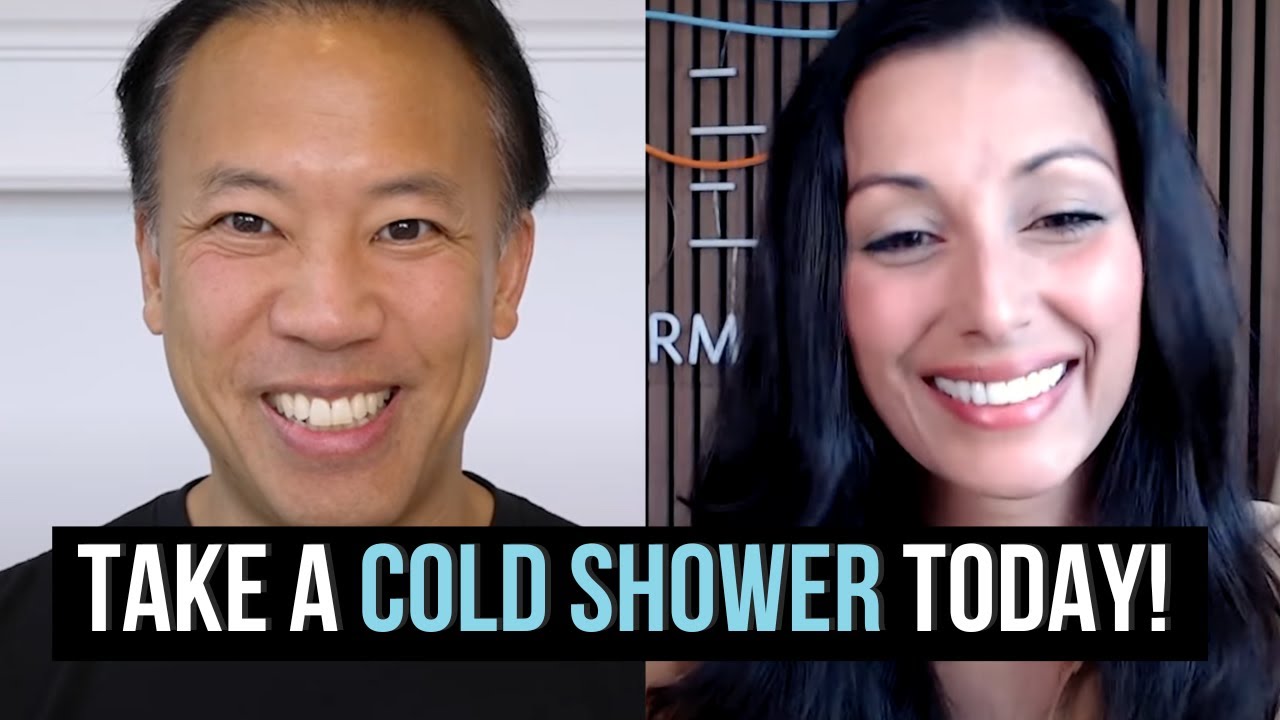
Dr. Susanna Søberg explains how cold exposure triggers brown fat activation and boosts noradrenaline and dopamine. Her Copenhagen study found that 11 minutes of cold immersion per week, done in 1-2 minute sessions, improves cardiovascular health, insulin sensitivity, and mood. Nasal breathing and gradual acclimation make it safer and more effective.
Chapters
When you tell yourself, I'm gonna go into this cold water, if you haven't really done it before, or maybe only a few times, you're gonna be a little bit anxious.
Dr. Susanna Soberg, she is the leading international scientist and expert in cold and heat therapy to help you to reduce stress, improve your health, sleep.
It's a really healthy way to look at cold plunging because if you do it like that, it's not only the exercise that you do immediately, acutely when you go into the cold water, it's also what happens afterwards.
Welcome back to the Kwik Brain Podcast. I am your host and your brain coach, Jim Kwik of Kwik Learning. And as always, we're here to help you to learn quickly. This show really is about these brain hacks, things that you could do to uplevel your learning and also your life. And today we're going to be talking about a very popular and trending topic that a lot of people in our private Facebook group, if you haven't joined that yet, please do so. We have over more 150,000 of you around the world and people ask about this specific subject. We're going to talk about cold therapy. We're going to talk about the mental and physical benefits and provide you with simple protocols, whether you're brand new to this idea and practice, or if you're more of someone who's been doing it for a while, more advanced practitioner. And so we have the perfect guest for this and someone I've wanted to interview for quite some time. We have Dr. Suzanne Anna Soberg. She is the founder of the Soberg Institute and the Thermalist Cure. Did I say that right?
Yeah, you did.
She is the leading international scientist and expert in cold and heat therapy to help you to reduce stress, improve your health, sleep, optimize your performance, and who doesn't want more of that? Since 2016, she has been dedicated to research into the effect of cold and heat exposure on human health. Let's Let's jump into this. Thanks for being on the show.
Thank you so much for inviting me.
Yeah, very much looking forward to this. So I mentioned, you know, our audience, they're very— they have a lot of questions and they submitted a bunch of them. You know, fundamental to your research is the science of this idea of micro-stressing the body, meaning that health is obtained by small incremental doses of healthy stress, whether it's cold or it's heat. And I love to do— stay tuned, make sure you subscribe because we're going to do a follow-up episode focused All on heat also. And I prefer people, if they can, to watch this on YouTube. Join over 1.2 million subscribers there, because if you miss that, you're going to miss a lot. So we're going to talk about how this healthy stress, this hormetic response, how it could strengthen the cells and also strengthen your mind. And so as we go into this, let's talk about our physiology. You know, what are some of the benefits that some of our listeners, if they haven't had experience with cold and people hear about cryotherapy, they hear about cold showers or cold plunging. Why, why should they explore this? What are some of the benefits either physically, mentally to your performance?
Yeah, I think that if people have not experienced a cold plunge before and they haven't really exposed themselves to extreme kinds of colds or cold water, cold shower, I think it's really important that you start out slow. So if you, If you do that, you get adapted in small steps. And while you do that, then your body will get adapted and your mind will get adapted to the fact that this is extremely cold. And everything in your body tells you you want to get away from something that is really cold. So it's also a mindset that you need to train before you just go into your first cold plunge and stay there for the amount of minutes that I'm going to propose for you a little bit later. But start out slow and get used to the fact that cold can be your be healthy for you, but also that you should see it maybe not as your friend, but something that is going to be healthy for you in small doses. So getting something that is potentially dangerous for you if you overexpose yourself to it is finding out how much should you do and also knowing why is it actually healthy for you.
You know, in 2013, I first met Wim Hof. You know, since then I've been doing some form of cold therapy, you know, every single day. And, you know, I love I live in the Northeast in the United States. I'm very adverse to cold. I don't like the cold at all. Yet, I can't deny the incredible benefits that come when you're doing it cautiously, you know, and intelligently using your common sense. What are some of the predominant benefits? Why should some of our listeners who haven't yet explored cold showers or cold plunging What are some of the rewards that come from it?
I think we can talk about this on different levels. So the why can really be determined by what goal you have. So you can use the cold as a way to get more focused. If you would like to get more energy, if you like to get, you can say, more driven towards something, so motivation would actually also increase. If you want more, a more positive mindset, that's also going to be affected by it. So you can definitely work on it if you need a little bit of an extra tool for your mental health, but you can also work on it for your physical health. But either way, what you do, it's gonna work on both ends, you can say. So for your physical health, it's also gonna help on your blood pressure, for example, which is a super good and very underrated, I think, measurement for how well your cardiovascular health is. So we know today that cardiovascular health or cardiovascular diseases is one of the biggest killers we have by now because it's our modern lifestyle diseases. And that is something that we would like to do something about. And we know that if we expose ourselves to cold, cold water swimming or dipping in cold plunges, just exposing ourselves to a cold water immersion is going to lower the blood pressure if you do it over several months. So studies have shown that 3 to 6 months is actually going to help with your blood pressure, even if you have a little bit of normal to a little bit high blood pressure. So it will help on your inflammation and it will help on also your blood sugar levels. So this is really, really good indicators that it helps on your cardiovascular health. So whether you want it for a better mental health or you want it for physical health, it's gonna work on both sides, you can say.
You know, I noticed, you know, for me when I do it, it helps with some chronic pain that I have in my body. I also notice, anecdotally, but And I sleep better also at night. Is that something that you've seen as well?
Yes, exactly. So there is definitely a lot of evidence also showing how cold, also cold therapy, that could also just be cold packs exactly on the spot where you have pain, but also cold water immersion is going to take away the pain if you expose yourself to it immediately. So there's an acute effect that works immediately. So if you hurt yourself, an injury, you will put ice on it, right? Because that lowers the inflammation, stops the inflammation process. But if you do it on, you can say, deliberately for a longer period of time, it's also going to lower your pain in the long run. So I think that cold water immersion can be used for so many things, but pain is definitely one of them. And lowering the inflammation is, you can say, the pathway for that.
Does it affect our or enhance our immune system in any way? Does it support our immune system?
Well, it increases the cold shock proteins and Also some of the heat shock proteins. But what it actually do is that it interferes with the inflammatory pathways. And that's maybe especially I can talk about that for the heat. So we're going to do that in the next episode. But in this episode, we can say that the cold is going to increase macrophages. So, and the white blood cells in the body. So it's going to remove the plaque inside our cells, inside our blood vessels, which will make them more elastic and also take away that inflammation and lower the risk for blood clots in your body. So because of that, your blood vessel will have a better constriction and a better way of dilating also. So the blood flow in the body will also be better because you lower the inflammation. And that's going to affect your blood pressure because if you lower inflammation in your blood vessels, the pressure against the walls of your blood your blood vessels will be lower and that's going to make your blood pressure go down. So in time, if you do this 3 to 6 months, studies have shown that you will have a lower blood pressure. So, and that's because you also lower the inflammation.
You know, I'm one of those geeks that kind of, and I enjoy going and studying your research. What about the effect of cold therapy on our metabolism, on brown fat? Maybe we could go into the benefits there.
Yeah, so specifically on brown fat, I think that that is probably what I have studied the most because I have a PhD in metabolism and brown fat was my PhD study looking at winter swimmers who was winter swimming for a season. And we looked at how much brown fat they had activated or the efficiency of the brown fat cells after a period of winter swimming. And what we see is that they increase the efficiency of the brown fat cells. And that we measured on PET/CT scanning, but we also also measured that on infrared thermography. So we measured continuously how much the brown fat was activated during the time where we cooled them. What we also found was that it had an increase in metabolism compared to the control group. And I think what is fascinating about this is that when you expose yourself to the cold, you immediately activate the brown fat because you have this pathway going directly from your cold receptors in the skin directly to the brain. In the hypothalamus, you have this temperature regulating center, which is one pathway to the brown fat. And the other pathway is directly from the skin actually to the brown fat. So there are multiple ways that the body is detecting, oh, you are getting too cold now. We have to level out and increase your heat in the body. And that is what the brown fat does. And it needs fuel for that. That's why the brown fat takes glucose and fat, fatty acids from the bloodstream as fuel to increase heat. So that is kind of the end product of activating our brown fat. And that means you get warmer in your body. So as soon as you get cold on your skin, brown fat is going to increase your metabolism, increase your calorie burning. So yeah, you don't even have to do a cold bath at 0 degrees Celsius because you will get even cold on your skin with 15 degrees Celsius. So, the temperature doesn't really matter that much, maybe in the beginning, especially if you are new to this.
I hope you're enjoying this episode. And, if you want to go deeper with many of these authors that we have on our podcast, these experts, I want to invite you to join our Kwik Success Program. This is our monthly lives that I do where I teach something brand new that we haven't taught before, answer your burning questions, and also we have something that people have been requesting for many years, a Kwik Book Club. This is your Limitless Book Club where every single month we read a book together, like a book provided by this author, and then we get the author to come online and join us for a 1-hour share going deeper in these strategies, how to put them into practice. I share my 5 tips for how to memorize things out of these books. Many people want to read a book a month or build up to that. And this would be the program. So if you want to join, just go to kwiksuccess.com and get your spot and join us live and get to meet these authors very up close and personal. And back to the episode. And maybe we could clarify for people listening, they hear brown fat. How's that different than white fat?
It is a special kind of fat, you can say, but because it's the healthy kind of fat in our body, if we can divide this We say the white fat is the unhealthy. We don't want too much of it. Of course, we do want some white fat, but we don't want too much. And that is the problem today. So we want to get rid of most of it. And we do that by activating the healthy kind of fat that is the brown fat. So white fat stores energy while brown fat uses energy, you can say, burns energy.
And in our body, maybe people could visualize this. Where are the highest concentrations of brown fat? Usually found?
Yeah, it's a good question. And it's not that many years ago we found out exactly where is it actually located because we talk about it as an organ, but there's actually 6 different places located at this time where we have these small pockets of brown fat. And I don't know if I should name all 6 locations, but I can maybe just tell you where the biggest one is. And that is actually under your supraclavicular bones. So your clavicular bones up here in the neck and up the neck, that is the biggest pocket of brown fat that we have. And it's pretty smart from nature, you can say, to put it just between the head and the body and very close to the central nervous system. And I think that's the essential part of it. Brown fat is located in the body close to the central nervous system, maybe in order for us to react very quickly if we get a little bit too cold or maybe even a little bit too hot.
And I want to jump into the mindset of this. You know, when we teach, we have a model called the Limitless Model for controlling what we can control. And we, at any time, we can control 3 things. We can control our mindset, the assumptions and attitudes, the beliefs we have about something. The motivation is the second thing we can control in terms of the purpose and the drive behind doing something. And then also the methods. And I want to go into methodology in terms of the protocol that you recommend for someone new or someone a little bit more advanced. And this is, for me, it's better than coffee. You know, it's how I start my morning. It's kind of my— It's my non-negotiable, you know, because instantly, besides the benefits, immune system, you know, helping reduce stress, you know, chronic pain. For me, it's a mood booster. You know, it elevates my mood. I have an instant burst of energy. But when it comes to our mindset, what do you notice for the people who follow through on this? Because most people's mindset around cold Probably like mine, you know, I was afraid of being cold, right? You know, it's something that I kind of avoided. And so, you know, when we're talking about things like becoming antifragile, when we're talking about building resilience and building confidence, you know, is, you know, doing— if you're watching this on video, I have a shirt on that talks about, you know, that comfort breeds weakness.
I love that t-shirt.
Yeah.
Comfort breeds weakness.
And it's important to do difficult Things, right? And you hear this a lot, but through struggle, we get strength, you know, that our body and our brain is obviously part of our body is an incredible adaptation machine. And so what is the typical mindset that you see with people who follow through? How do they see the cold? Is it their teacher? Is it like they're going for a workout? You know, how do you perceive the cold in terms of adopting? What are your attitudes and beliefs around cold?
I think that there's so many things that you can use it for. In your mindset. First of all, it's definitely a way to open your window for how much stress you can cope with. So, it's a way of overcoming a stressful situation that you can control because you have full control over how much, how long you stay in, when you go in, and when you go out. So, it's a controlled way of saying, this is my mindset training center. This is where I go in, I will have a win because I'm going to do this. And every time people succeed going into the cold water and going out again, it's a win. And this little win, it sounds like a little one, but it's actually a big win. But if you can do that, then you train yourself to getting these wins, but you have to overcome something very uncomfortable. And in that way, you teach yourself that even though it's uncomfortable, you can still do it. And you're going to win. And that you can take. with you every day when you go to work or you, you're maybe making a startup company or something that you're a leader, you have so much responsibility, but every day, you know, I can do a win if I go into the cold water. So I think this could definitely be used as a way to push your mindset and teach yourself that you can do more.
Yeah, for me, it feels like it's not only rejuvenating, but it's, it's almost the same kind of mindset when I'm doing cold and I could be different. This is just my personal experience. It feels like, like the same attitude I have about working out. You know, it's, it's, you know, I don't necessarily want to do an extra few reps, but when I push myself and get comfortable being uncomfortable, I feel like how we do anything is how we do everything. And that we could take it that when we're uncomfortable having an uncomfortable conversation, or for me getting on stage and I'm a little bit nervous, you kind of train your nervous system to find a calm. Or a peace, you know, when things in your environment, you know, are stressing you.
Yeah, exactly. And that is also how you learn to use your breath. You learn to use your breath as a steering wheel, how to lower that nervous system. I always say you use it for stressing up to learn how to stress down. So it's a way also to teach yourself, how will I act in another stressful situation, which is not here in my cold tub or out swimming? It's a way of imitating the stressful world that we actually live in. But we need to do that somewhere where we have like a more controlled environment and that you can use the cold exposure for. So I think you are completely right. Do actually doing this in the morning before the coffee is a really good solution because you don't need that coffee because you are already high on energy. You have that increase in noradrenaline in the brain and you have dopamine going up 250% Depending on how long you stayed in, of course, but also that noradrenaline is going to boost your energy so that you can use as a substitute for, for maybe a couple of cups of coffee instead. But it's also going to give you that relaxation afterwards. So you feel that you can breathe more, you can take more of the stressful day that you might have. So it's going to give you a little bit more than the coffee I would suggest.
Yeah. And it lasts, you know, I noticed that boost in mood and energy. And alertness lasts, for me, it lasts for hours.
Yeah. And there are actually studies showing also that people who do cold water swimming or cold water immersions, they have an increase in mood. And this has been tested in people. I think it's a study from the UK actually, where they had a control group also with friends and family who didn't do it. And the intervention group had an increase in both mood mood and how they perceived life. And it's definitely something that it's not only about noradrenaline and giving that energy spark at the moment and giving dopamine increase. It's also going to last for your mood on the whole day. And also, if you do this a couple of times a week, which I suggest you do, then you would probably increase that baseline for mood just in general. And oxytocin is also going up. So oxytocin is our, you could say, love neurotransmitter hormone in the body, which if that increases So you will feel this kind of like gratitude to the world, gratitude to yourself, and also more connected maybe to yourself and with others. So I think that's why, I don't know if you have heard, but many of these winter swimming clubs that we have in the north, when people gather up and they go and do this together, so the community around it, it really bonds people together. And it doesn't really matter who they are or what they do. It just connects people because I think probably it's because of oxytocin also going up. So there's different neurotransmitters and different hormones that increases that is going to make us more connected to nature, more connected to each other also. And that will also increase your mood.
We have many questions about how I do my cold process. I am a big fan of cold plunging. And if you want more information and more details to get all the benefits from cold therapy, then go to plunge. And use the code Kwik. And we've arranged with the company to get you a very generous discount. And this is the unit that I use personally for my family, my friends, my clients. And I invite you to find out more about it. Just go again to plunge.com and use the code Kwik for your special discount. I want to mention you're also the author of this book, Winter Swimming, which we will put a link in our show notes as we always do at jimkwik.com. forward slash notes. I, I notice that when I, when I travel, which I do a lot, um, you know, as you, that I, that I crave it, you know, that if I get on my routine, I, I, I have to find in the hotel, I have to find, you know, a room that has a bathtub. I'm one of those interesting people you see in the halls of the hotel where I, I'll go down the hall with, uh, an empty pillowcase, uh, for my room and I'll, I'll, I'll fill up it with ice from the ice machine and I'll walk across the hotel.
That's what you do.
And I'll do like, 5 or 6 or 7 trips. It feels like I'm cutting wood and carrying water, you know, as I'm doing as part of my, my own mindful meditation. Because I feel like when I'm doing it, I'm also completely present. You know, when you're there, you're not thinking about, you know, the future. You're not thinking about what happened in the past. You know, you're completely immersed in that experience as you're immersed in that water.
And it's— Exactly.
And it doesn't always have to be— does it always have to be water? I mean, what about going outside when it's cold in the wintertime, or maybe sleeping in the cold?
Is—
do you get similar benefits?
I think regarding mindset, I am not sure it will have the same kind of outcomes because it's very, very different and the modalities are very different. I think when it comes to going outside, for example, in a cold wind, I think you will have the activation of brown fat. You will have some increase in noradrenaline because of that, of course, but you will not have the increase of dopamine to the same extent. And the change in mood, I think, You would because you're going outside and fresh air, nature. And if you're also getting a bit cold, maybe you will feel more fresh and energetic when you come in, but I don't think it will last as long as taking a cold plunge, for example. If you take a cold plunge, you will have a full activation of all your cold receptors on your skin. And if you have that very, very potent stressor of that cold water, because it's also very much closer to your skin compared to cold air, you will have of course, more increase in the neurotransmitters. So I think there's different modalities will have different effects on this, a little bit less effect maybe if it's air and more if it's water. If you splash water to the face, that could also be a solution if you are out of time, for example, or in a hotel room. I have done that several times, just cold water to the face in the morning if you have to rush out. the door. So that's also going to give you that energy and feeling refreshed. So there are different steps you can do in this, definitely.
Okay. And so according to your research, what is the minimal, you know, viable time you're spending in the water or the temperature of the water to get the most return that you found?
So in our research, which was a study that we did in Copenhagen, published from Copenhagen University in Cell Reports Medicine, what we found in this study was that winter swimmers who were swimming 2 to 3 times per week, they had more activation in the brown fat. They had a better insulin sensitivity and also better, you can say, glucose balance in the blood, meaning that they faster get rid of the sugar in the blood than the control group who were a matched control group. So what they did, of course, we looked at that because we were thinking, how can that be? Because they were young, 24 years of age on average. And we found that 11 minutes of cold water immersion per week, divided on 2 to 3 days. So, and divided on multiple dips. So that means that if you do a cold plunge for 1 to 2 minutes, it's actually enough for you to get these benefits. And if you do it 2 to 3 times per week with multiple dips going back and forth to actually the sauna, that's going to give you these benefits. So I think it's amazing that you don't have to do more than that. So micro-stressing the body according to the theory also of hormetic is actually something that we might see in this study, that it increases our health instead of making the cells exhausted and creating a more chronic stressful situation. So it's what we call healthy stress.
And so we'll talk about that contrast, you know, between cold and heat in the next episode because, you know, I think that's very popular for a lot of people that do that. You know, I know you're also very well known for recommending to finish with cold if you're going from a cold plunge into a sauna, you know, back and forth to finish with the cold?
Yeah, I think so. It's a practice that we started because when I was like doing my research for my PhD, I needed to figure out, okay, so how do people in Denmark do this winter swimming and do they use the sauna and et cetera? And what I figured out by reading the literature around also metabolism and cold and heat and what happens actually There's so much, but also so little. I had to connect all the dots to figure out how should I explain to my winter swimmers in my study how to do this. And what I figured out was that if we continuing being cold, then we will increase the period of time where the body has to warm itself up. So the thing about doing the contrast therapy, should there then end in the sauna or should they end in the cold water? Do a cold dip and then go home. That's what I mean. And I kind of figured out that if we can prolong the time where we are cold and force the body by activating the brown fat and activating the muscles also, because it has a huge component in this. If you shiver a bit, that's going to increase a lot of heat in your body. So within a half an hour, maybe an hour, depending on how adapted you are, you're going to increase your own heat in the body and that's going to take energy. And in that way, you will increase your metabolism. So it's a really healthy way to look at cold plunging because if you do it like that, it's not only the exercise that you do immediately acutely when you go into the cold water, it's also what happens afterwards. But it's a little advanced. So maybe if you are new to this, you might start off just with one plunge, go slowly and use your breath to lower your stress and your nervous system. That is my advice. And then you can progress and you can maybe do the ending on the cold, which Andrew Huberman called the Soberg principle. So, but it's a bit advanced, of course.
Very, very, very nice. You know, so the shivering is important, you know, to end with it when we're doing this. So even in the shower, you end with cold water as well?
I think that is good. Yeah, it's a good idea. So if you do a contrast shower, for example, you can, you could do the same. So in the cold water and dry up, of course, but Yeah, just move around. That's what I always say. If you just sit down afterwards, I have tried this myself when I started my winter swimming journey. I had to try this out because of course I can't teach other people how to do this unless I really know this. And in the beginning, I just read all the literature and I watched all the winter swimmers. Eventually, I couldn't really connect with what happens until the day I actually tried. And what I found out was that if I go and take cold plunge or winter swimming and go home and just sit on the couch, then I will have a large, what is called the afterdrop. And the afterdrop is when the body is realizing, okay, you're not in the cold water anymore and your blood vessels will dilate again. The warm blood from your core is then gonna float out to the cold tissue and be a lower degree and cooler and go back to the core. And there it will send a signal to the brain that now this is really, really cold. And And of course, your muscles would then start to shiver because you need to heat up, of course. And I think many people can relate to this, that after a cold plunge and you just sit down, then you start to shiver. And that's called the afterdrop. And it's not like it's very dangerous or anything. It's you just have to know that if you move a little bit while you do it, you also activate your muscles. And it's a good thing activating the muscles by cold, but also moving at the same time. That's going to increase your metabolism and also make your afterdrop not that hard on you.
You mentioned breath, and I know you're an expert in that area as well. We've done multiple episodes with individuals like Nestor and talking about the power of breath. Are you using it that in while you're in the plunge, the cold plunge, or even before? How do you utilize the power of breath while you're, you know, in relation to your cold exposure?
The breathing exercises are really, really important in this. And it's also a mindful thing because when you tell yourself, I'm going to go into this cold water, if you haven't really done it before or maybe only a few times, you're going to be a little bit anxious because, oh, it's cold and the body just avoids it naturally. So maybe your heart rate goes up a little bit and you're really a little bit anxious about it, but you can use your breath to lower your nervous system and make yourself more prepared to go in because there's no need for you to be to be alert before you go in because you're going to be alert when you go in.
Oh yeah.
Yeah. So if you can lower your nervous system before you go in and then try to keep that breathing, which is nasal breathing, that's what I recommend. Very difficult if you're new, but nasal breathing, if you can, and you can try and build that up, of course, over time, then you will lower that nervous system and you will increase something called nitric oxide. Breathing just forward, but also it's going to help on your oxygen delivery in the body and you feel that afterwards as well. But it will lower your nervous system and make you feel more relaxed when you, you go in and you have a good experience. And that's very important too, because otherwise you might not go again.
And then when you get into the plunge and you're breathing, and maybe it's your breathing, you're doing nasal breathing, and it's kind of a maybe a slow exhale, and you're able to find that relaxation point while you're inside. How do you recommend that? Are you going up to the neck? Are you, are Are you recommending people dunk their heads? What does that look like?
There are so many things you could do here depending on who you are. And I think that if you're very anxious to do this and maybe have avoided it for years, but now you're like, okay, I'm going to try this new trend, or then use your breath to lower your nervous system. You don't have to go in full up to the neck the first time. You don't have to do that. You can also just do it up to the navel or maybe up to your shoulders just to try it out. And then you can maybe do more next time. But what I think is important is that you use your breath like a steering wheel for your nervous system and really be conscious about it. So that is also what I teach people. Be conscious about how you breathe because that is totally the control steering wheel for your mind and your body and how that is connected. And it's kind of like an exercise. So that's also what I say. It's a training center in the cold where you connect body and mind.
And is the idea in terms of temperature, is it different for each person? Or is it the lower the temperature, the less time you need to spend in, let's say you're doing a cold plunge or cold shower?
As long as it's cold. And if you're new, then you don't have to start out at 0 degrees Celsius, for example, because it's going to be cold enough for you if it's 15 degrees Celsius. So you can start out more slow and get a good experience. And then build that up. I mean, it's very different from also who you are and how you want to start this journey. So the temperature is maybe not the most important thing. It doesn't have to be ice the first time, I would say that, but it should be cold water and cold water is 15 degrees Celsius and below. So you can work on that. It's kind of like a hormetic stress training center also. So you can go up and down in temperature to create that hormetic stress and keep the cells alert.
And it should be A certain level of uncomfort, right? It shouldn't be completely comfortable. I mean, sometimes when I go in there, especially if I'm tired and or I just am a little jet lagged, I want to like maybe leap out right away. But, you know, but finding my breath definitely helps. But let's talk about risks and maybe precautions. You know, there's one thing where you want to just kind of plow through it and grit and force yourself. That also could be risky also. Right. You don't want to be so cold where you're in this hypothermia where you're just, it's dangerous. So what kind of risks and precautions do you recommend our listeners take while they're doing this? Because we want them to do it in a way that's pushing them, but also in a place where they're safe.
Yes, exactly. So I think the precautions must be that if you have a high blood pressure, unregulated high blood pressure, I don't recommend that you do this kind of cold water exercise. for the body. If you have type 2 diabetes, you should also figure out if your blood pressure and your heart is healthy enough to do this because it is a conflict for the heart to activate both the sympathetic nervous system and also the parasympathetic nervous system. And it's kind of like happening almost like at the same time. So for the heart, there will be some arrhythmias to the heart, which will not be good if you have heart problems, for example. So people with heart problems, heart diseases, we don't recommend they do this kind of cold water immersion.
And if, for our women listeners, if they're pregnant, probably avoid this, correct?
Exactly. Yeah, I think I get this question a lot. So, but I always just say, because there is no literature around how is it healthy for pregnant women or is it actually just safe for pregnant women. And for ethical reasons, there there are no studies really on this and we cannot do these studies, but we can say that, and I've thought about it a lot. So that's why I recommend that pregnant women don't do cold water immersions because we really don't know what is happening to the fetus. And we don't want them to be overexposed to stress while the mother is maybe thinking this is fine. And because we don't know the outcome of that. So I just— I am always saying that that you're pregnant for 9 months, just enjoy it. And just think about it that way. If you did this before, your body will remember this a whole year later. This has also been tested in studies where we have looked at breathing, for example. So if how much people hyperventilate the year or so when they started, and also after a year if they had a pause in the cold water swimming. And they could see that they still are adapted. This body still remembers what happened last year and you did this cold water immersion. So, when you're pregnant for 9 months, the body will still remember that. So, just take a break.
Dr. Soberg, I recommend everybody get their copy of Winter Swimming. Highly recommend it. It's also, it's a beautiful book. I'm kind of a book nerd. So, it's just, it's like a piece of art as well.
Where can people get the book and also stay in touch The book they can get on Amazon and they can also find me on social media. I'm pretty much on most of them. So especially on Instagram, I am very active there. And they can find me on my webpage also on soberginstitute.com where I also do training in this kind of cold and heat exposure and how to breathe. So I have made this health journey where people can come and take a free Fantastic.
We'll put all the links as we always do at jimkwik.com/notes. Make sure you follow Dr. Soberg on Instagram and all the social platforms to get your daily dose of, you know, your wisdom and insight. And thank you, Dr. Soberg, for being on our show. We look forward to having the episode on heat as well.
Thank you for having me.
More from Jim





The Library of Minds: Brain Coach: How to Stay Sharp When AI Does the Thinking | Jim Kwik





