Communication Skills for Better Conversations | Charles Duhigg & Jim Kwik
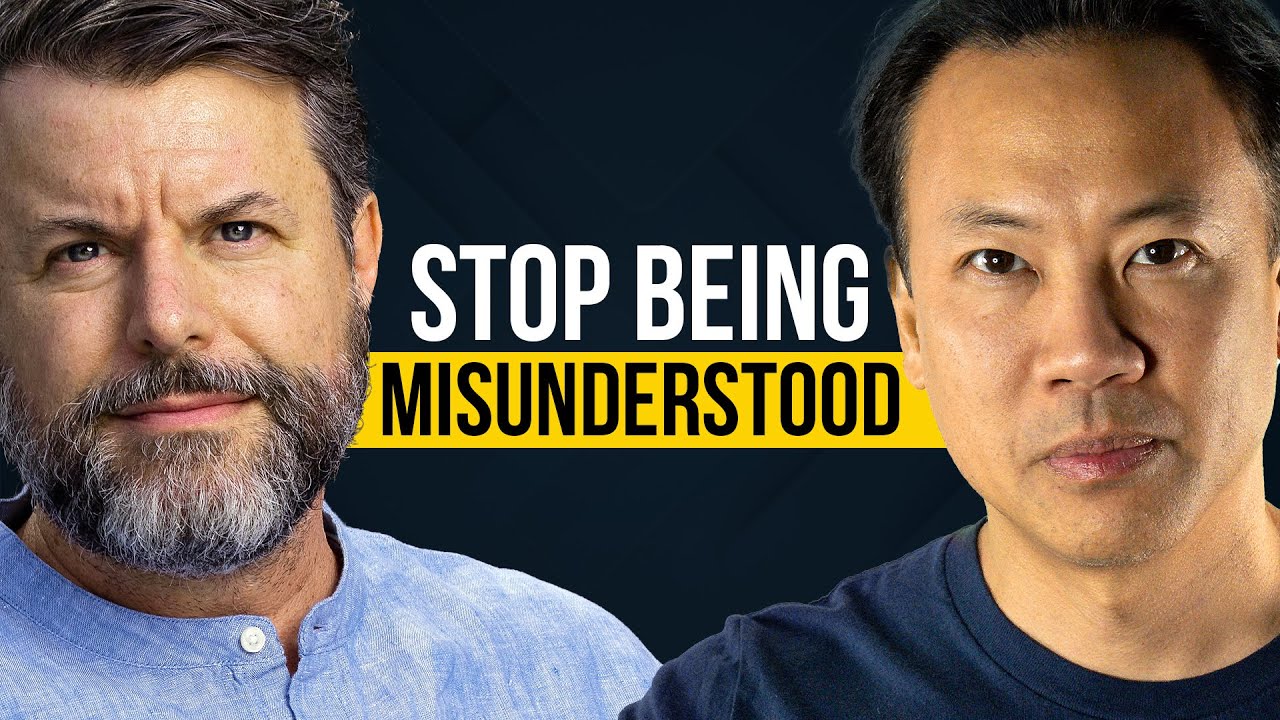
Charles Duhigg explains why great communicators ask 10 to 20 times more questions than average people, especially deep ones about values. He breaks down three habits: ask questions, repeat back what you hear to confirm understanding, and show you want to connect. Spending 10 to 15 seconds before a conversation to set goals reduces anxiety and improves how you talk.
Chapters
That's one of the really important things that super communicators do is they ask more questions and they ask the right kinds of questions.
Have you ever found yourself tongue-tied, misunderstood, or just plainly ineffective when communicating with others?
The science tells us anyone can be a super communicator. It's literally just a set of skills that anyone can learn.
The ability to truly connect is a superpower that only, it seems like, a few of people have ever really learned and trained.
Super communicators can be extroverts or introverts. They can be curmudgeonly, they can be charming. They're all over the place.
People are thinking about how they're gonna respond. They're waiting for their turn to speak. They're not really present. They're not listening. They're not asking those deep questions.
Super communicators tend to ask 10 to 20 times as many questions as the average person.
How do our brains process information differently when we're engaged, what you term as a, as super communication versus the standard interactions?
When we're in a real conversation, when we're having a moment of connection, it's reflected in both our bodies and our brains. Our breath patterns are starting to match each other. Our heart rates are becoming aligned. Your thoughts and my thoughts are becoming more and more similar. Our neural activity is becoming synchronized.
Do you see any trends, or can you predict what will be the biggest maybe challenges or even opportunities in achieving effective communication?
Just take like 10 seconds and think about how you want this conversation to go. Ask yourself, like, what are your goals in this conversation? What do you think the other person's goals are? Just having this small amount of preparation changed the conversations completely.
Are there certain key habits that super communicators are consistently putting into play and practice?
There's 3 habits in particular that we know super communicators use very frequently and that all of us can develop as habits relatively easily with a little bit of practice. The first is—
Welcome back, Kwik Brains. I am your host and your brain coach, Jim Kwik. Today we will be discussing a topic that has been highly requested by our Kwik Brain community, which is how to become a better communicator and listener. I mean, you think about it, communication is something that we do every single day, but how many of us can say we're really effective at it? It's one of those things like thinking about school and there was no classes on memory or focus and the kinds of things we teach. There's no classes like I don't remember at least going through traditional education on the power and the process of communication. And so we could find ourselves in situations where we can't get our point across clearly and truly understanding the other person or find common ground. And so luckily, our Pulitzer Prize-winning guest, Charles Duhigg, has cracked the code on the science and the art of communication through years of meticulous research and remarkable storytelling. He is the author of 2 of my favorite books, The Power of Habit. If you're watching this on YouTube, which I encourage you to do, where we put the extended version, Smarter, Faster, Better. And we're going to be discussing his most recent book, Super Communicators. Welcome to the show, Charles.
Thanks for having me on. This is such a treat for me.
Yeah, I've been looking forward to this. Been a big fan and follower of your work. I can probably talk to you for hours, and I'm sure after our community listens to this, they're going to wish it was more of time. So we definitely love to have you back. To start, Charles, I really enjoyed the book, like I have your previous works. In Supercommunicators, you explore the concept of unlocking the secret language of connection. Could you share an overview of what supercommunication entails and why it's more crucial than ever, especially in our digital age?
Yeah, absolutely. One of the best ways of sort of illustrating what a supercommunicator is, and I'll ask you, Jim, this question, If you were having a bad day and you wanted to call someone who you know would make you feel better, does the person you would call? Do you know who that is?
I do.
Yeah, yeah. And and so for you, that person is a super communicator, and and you're probably a super communicator right back. And everyone who's listening, they probably had a name pop into their mind immediately. This is the person, and it's because that person knows how to ask you the right questions. They know how to prove to you that they're listening. We are all at some moments super communicators. We are all. We know what to say when a friend calls sometimes. We know when to walk into a meeting and what to say to get everyone over to our idea. But there's some people who can do this consistently, some people who can connect with almost anyone. In the last decade, we've learned a tremendous amount about these people, both their behavior and what's happening inside their brains. And there's a couple of things that we've learned. The first is super communicators, consistent super communicators, they tend to ask 10 to 20 times as many questions as the average person.
Yeah.
Right? It's a lot of questions. And some of those questions are questions that are designed to invite us in, like, oh, what'd you think about that? Or, oh yeah, oh yeah, what'd you say next? But some of them are special questions that are known as deep questions, questions that ask people about their values or their beliefs or their experiences. And that can sound a little bit intimidating, but it's as simple as, you know, if you bump into someone who's a doctor, instead of saying, where do you practice medicine? Asking them like, oh, what made you decide to go to medical school? Or what do you love about being a doctor? And so that's one of the really important things that super communicators do is they ask more questions and they ask the right kinds of questions.
So when we're talking about the psychology of it or the neuroscience of it, how do our brains process information differently when we're engaged with what you term as super communication versus the standard interactions?
Yeah, it's really fascinating. So what we know is that when we're in a real conversation, when we're having a moment of connection, it's reflected in both our bodies and our brains. So, so right now we're separated by thousands of miles, but, but without us really realizing it, our breath patterns are starting to match each other.
Wow.
Our heart rates are becoming aligned. And more importantly, if we could see inside our brains, as we now can because of advances in neural imaging, what we would see is that your thoughts and my thoughts are becoming more and more similar. Our neural activity is becoming synchronized. Within neurology, this is known as neural entrainment, and it's at the core of how communication happens. And it, and it makes sense when you think about it, because if I describe to you an emotion or an idea, you actually experience a little bit that emotion and that idea. That's why describing it is so effective. That's why communication is so effective. And so the goal of communication is to align with each other, to be having similar kinds of thoughts so that we can understand each other more deeply. And that doesn't mean we're going to agree with each other. That doesn't mean, that doesn't mean that we're necessarily going to see things the same way. But when we become aligned, when we become neurally entrained, I can understand what you're trying to tell me. And it's easier for me to speak in a way that you can understand me.
And is there a difference between, as you're communicating through Your books, right?
Yeah.
Like whether it's text, it's written, or if it's expressed verbally, do you see any distinctions there?
Each form of communication has its own set of rules, but at the core, there's something very similar happening. And I refer to this as the 3 types of conversations. And the way that I found out about this was that before I started writing this book, I got into this bad pattern with my wife where, which might be familiar to you and many of your listeners, I would come home from like a long day at work and I'd be complaining, and my wife very reasonably would suggest some good advice, like, why don't you take your boss out to lunch and you guys can get to know each other better? And instead of being able to hear her, I would get even more upset, right? I would say like, why aren't you supporting me? Why aren't you outraged on my behalf? Then she would get upset because I was attacking her for giving me good advice.
Hmm.
And so I went to all these researchers and I asked them what's going on. And they said, well, it's interesting you You're talking to us now because we're living through this golden age of understanding communication. And one of the things that we've discovered is that we tend to think of discussions as being about one thing, right? We think that we're talking about our day, or we think that we're talking about the kids' grades. But actually, every discussion is made up of different kinds of conversations. And those conversations tend to fall into one of 3 big buckets. There are practical conversations where we're making plans or we're solving problems together.
Mm-hmm.
Then there are emotional conversations where I might tell you what I'm feeling, and I don't want you to solve my feelings. I want you to empathize. And then finally, there's social conversations, which is about how we relate to each other in society and the social identities that are important to us. And they said, what we've learned is if you're not having the same kind of conversation at the same moment, it's really hard to hear each other. In fact, it's almost impossible to connect. And within psychology and neurology, this has become known as the matching principle. That having the same kind of conversation at the same moment is at the core of achieving that neural entrainment that we just talked about. And so whether you're writing to someone or whether you're emailing them or whether you're texting them or talking face-to-face or talking over the phone, there's slightly different rules that govern how those forms of communication are most effective. But at the core is the same thing, that I want to show that I want to connect with you. And the way that I do that is by having the same kind of conversation or inviting you to match me and have the same kind of conversation as me. That's when we become aligned.
Because if somebody's in that kind of practical mode and then the other person's in that emotional or social mode, it's like 2 ships in the night. Maybe you pass each other and there's no connection.
That's exactly right. And in fact, from a neurological perspective, if you're in that practical mode, you're probably using your prefrontal cortex, right? And if And if you're in an emotional mindset, you're having an emotional conversation, then you're using the amygdala, the deeper interior structures of the brain. You know, the social conversation takes advantage of the distributed network that exists sort of at the peripheries of our brain. So literally when we're having these 3 different kinds of conversations, we're literally speaking different cognitive languages. And that's why it can be so hard to connect with someone even though you want to.
And having that cognitive flexibility and that sensory acuity to be able to even, to be able to start and having the intent of The empathy and communication. So if we're going to— I want to meld some of— I really enjoy Power of Habit. You know, I can't believe that's been out for 10 years now. Time really flies. But drawing on your expertise on habits, are there certain key habits that super communicators are consistently putting into play and practice? I mean, how can our listeners begin to incorporate potentially, you know, some of these habits into their—
Absolutely.
into their daily lives?
So there's 3 habits in particular that we know, that we know super communicators use very frequently, and that all of us can develop as habits relatively easily with a little bit of practice. The first is what I mentioned about asking deep questions, right? Finding opportunities to ask people not about the facts of their life, but about how they feel about their life. And the reason why that's important is because when we say to someone, why'd you become a doctor? Or, oh, you live in the Heights? Like, what do you love about living up there? What we're really doing is we're inviting them to share something meaningful about themselves. So we're inviting them to tell us who they really are and to let us know what kind of conversation and mindset they're in right now. So that's the first habit is asking more questions and asking deep questions. The second habit is proving that we're listening because one of the things that happens in conversations, and we've all experienced this, particularly in conflict conversations, particularly when there's some tension, or we disagree with each other, is that there's this suspicion in the back of our mind that you aren't actually listening to me. You're just waiting your turn to speak. And so what we have to do sometimes is we have to prove that we're listening. And oftentimes we think we do that through our behavior while someone is speaking. But speaking is such a cognitively taxing activity that we tend not to notice what other people are doing while we're talking. So the way you prove that you're listening is what you do after they stop talking. And there's a technique for this in particular that's been taught at Stanford and Harvard and all these big law schools and business schools that's known as looping for understanding. And this is particularly useful in conflict conversations when there is that tension or disagreement. And it has 3 steps. The first step is ask a question, preferably a deep question. The second step is that when someone has responded to that question, repeat back what you heard them say in your own words. Show them you were paying attention. Show them you're processing it. And then this third step, and this is the one we usually forget, ask if you got it right. And the reason why that third step is so important is because sometimes we don't get it right, right? Sometimes we fail to hear what someone's trying to tell us. But even if we do hear, and if we've proven to them that we hear, by asking them if we got it right, we're asking them for permission to acknowledge that we have been listening. And what we know is that hardwired into our brain is this reciprocity that when I believe you are listening closely to me, I become more likely to listen closely to you in return. So that's the second important habit is proving that we're listening. And then there's one more other habit that I can describe quickly, which is showing people that we want to connect with them.
What's an example of that?
It can be as simple as laughter. One of the things that we know is that 80% of the time when people laugh, it is not in response to anything funny. We're laughing in a conversation to show someone that we want to connect with them. And when they laugh back, they're showing that they want to connect with us. Or asking follow-up questions, saying like, oh my God, that's so interesting. Like, tell me more about X. We're showing them that we want to connect with them. That's really what super communicators do. They show you they want to connect. And that's the first and most important step.
Is it true? And there is these, And I don't know the origin of it. So I don't know if it's based on a study that 7% of communication is verbal and the actual words that you use and 38% is your voice tone, tonality, volume, timbre, and 55% is your physiology. And then the second follow-up for that is whether it is true or not, what role does nonverbal cues play, especially in an era where so much communication is now is text-based, which is really weird. How do you suggest we convey and interpret the subtleties of nonverbal cues that are maybe so critical in understanding one another?
So as you point out, the importance of verbal versus nonverbal can change a lot depending on the context and depending on the person, right? Some people are very verbal and other people are more expressive through their body. But you're exactly right that nonverbal and non-linguistic communication is really important. And so when, as a good example, when we're talking on the telephone, without realizing it, we tend to overemphasize our words and we tend to put more emotion into our voice. And that's because we know that the other person can't see us. We need to convey our emotional state through what we're saying, through our tone of voice rather than our expressions. Similarly, when we move online and we're looking at written communication, one of the things that we find is that you taking advantage of the strengths and weaknesses of that form of communication is really important. And that's what I mean when I say that every form of communication has its own slightly different rules. If I'm talking to you and I say something sarcastic, you know it's sarcastic because of my tone of voice. But if I type it to you and I don't think to myself, the rule for email is don't be sarcastic, you're not going to hear the sarcasm. You're going to think I'm being serious and you're going to get offended. Similarly, if you think about emojis, I have 2 teenagers at home. My kids use emojis all the time. And what emojis have evolved to be is an emotional language. So I can send a text to my friend if I'm 13 years old, and I can put a frowny face after it or an angry face. And what I'm doing is I'm giving that emotional messaging that normally you'd be able to see in my tone of voice or my expressions. And so you're exactly right that nonverbal communication is worth paying attention to. And the way that we should pay attention to it is to ask ourselves, with the form of communication I'm using right now, what are the rules? How do I convey my emotion through a phone call that's differently from a text that's differently from an email? As long as we remind ourselves that there are these different rules, that's when we tend to be successful at communication.
I would say also to our audience, A lot of times we talk about memory improvement. A lot of the strategies you're giving would, uh, would help people remember better also as well.
Absolutely.
You know, where you said that a lot of times, like, I feel like the same thing. If, um, people are thinking about how they're going to respond and, you know, they're waiting for their turn to speak, they're not really present. They're not listening. They're not asking those deep questions, which, you know, it could And the emotion that you could add to it, which makes things more memorable also as well. Absolutely.
It's really interesting. In the book, there's a story about a CIA officer who his first assignment, he's sent over to Europe to recruit spies and he's just terrible at it. And he eventually learns how to do it. He learns how to be vulnerable with people, how to make a real connection with them, how to trust each other. And one of the interesting things he said is I was asking him about how he practiced that, how it became a habit. Because our brains are designed to make these into habits very quickly. And he said that the weird thing that happened was not only did I get better at talking to people, my memory improved so much. And I think it's exactly for the reason you just said, is that when we remind ourselves to be in a conversation, when we train ourselves with the habits to be present, to be genuinely listening, to be asking the right questions, it makes it so much easier to remember things because we're really genuinely involved in the discussion.
If somebody's listening right now, the 2 So 2 of the common questions I think people think of, or it's unconscious, maybe when they're communicating. If we were to give a strategy or a tool or a tip is, how do I express myself more clearly and maybe assertively? Right? And then, because this thing with the second one would be resolving conflict, conflict resolution constructively, because I feel like some people avoid these conversations. And they use some kind of avoidance pattern to escape having those difficult conversations. So expressing themselves clearly, but still— and I don't know if this is a rich or dead— assertively, and also resolving conflicts. Is there a framework that you look through, a lens or an idea, a distinction that—
Absolutely. And interestingly, it's the same framework and approach for both those questions. So another story in the book is about this experiment that was done where they brought together gun rights advocates and gun control activists, and they just wanted to see if people could have a civil conversation. And so they taught them some techniques like looping for understanding, proving that you're listening to each other, and that seemed to help a lot. But the other thing that they taught them that was really, really important is before every conversation, they had said, Just take like 10 seconds and think about how you want this conversation to go. Ask yourself, like, what are your goals in this conversation? What do you think the other person's goals are? Just having this small, small amount of preparation changed the conversations completely because it gave people so much more clarity when they went into the conversation about where they hoped to get. There was another experiment that kind of builds on this that at Harvard Business School, They asked, they told a room full of students, okay, you're going to go have a conversation with a stranger. But before you do, and this is like the most anxiety-producing thing you can ask someone to do, right, is to go talk to a stranger. They said, before you have this conversation, again, take 7 to 10 seconds, write down 3 topics or 3 questions that you want to discuss. Like stupid things, like, have you seen the latest Dune movie? Like, are you going to the party this weekend? And they said, okay, write those down, 7 to 10 seconds. And they sent them off to have their conversations. People stuck the little pieces of paper in their pocket. And afterwards, when they polled the students, they said, oh, you know, those topics we wrote down, they almost never came up, but I felt so much more confident in that conversation. I felt so much less anxious. It went so much better because I knew I had these questions to fall back on, but also because I knew that like what I wanted to get out of this conversation, like I wanted it to be fun and I wanted it to be relaxing. And I wanted to learn, I wanted us to learn about each other. And this is particularly true in those conflict conversations that the thing that stops us Is our anxiety, right? It's our anxiety of the unknown. We don't know how they're going to respond. We don't know if we're going to say the right thing. We don't know if we're going to be able to, to have this conversation without collapsing into tears or anger. But if we just take 7 to 10 seconds and just sit down and think, how do I want this to go? Like, what's a question that I can ask this other person that will help me understand where they're at, where their head is at? That can make all the difference in the world.
Would you like to have an owner's manual for your brain that could help you unlock all of its powers and abilities? I want to introduce you to the Limitless Mind course, a transformative journey designed to show you exactly how to operate your brain for greater success in all areas of life. In just 21 days, you'll activate expert-level of memory, read faster than you could ever imagine, significantly enhance your focus, and gain a competitive advantage with your productivity. The Limitless Mind course is packed with easy-to-watch video lessons that cover proven tips, tools, and strategies, plus digital worksheets tailored for your ultimate learning experience. Join thousands who have transformed their cognitive abilities and open doors to incredible opportunities. Just visit thelimitlessmind.com to start your journey today. I get this question, Charles, a bunch when I'm on stage or I'm on, you know, doing media tours. It's like, Jim, what is the— with the gestalt of information that you know about learning, brain optimization, what is the future of education, the future of learning? future of performance at work. I would love to take the theme of that question and ask you, knowing everything that went into the research for Supercommunicators, as you're looking ahead, do you see any trends or can you predict what will be the biggest maybe challenges or even opportunities in achieving effective communication and for the future? And how do super communicators prepare us to face them?
It's a great question, and particularly now because it feels like so many conversations aren't happening or are hard to have. What's interesting is when I started reporting this book, I figured that super communicators would be like these really charming extroverts, that they would be these people who were born to this. And what I found and what the data tells us is that's not true at all. Like, basically, super communicators can be extroverts or introverts. They can be curmudgeonly. They can be charming. They're all over the place. And if you ask them if they were always good at communication, what they inevitably say is something like, no, like, when I was in high school, I had real trouble making friends. So I had to study how kids talk to each other, or my parents were divorced and I had to be the peacemaker between them.
Hmm.
And what they're really saying there is, Thinking a little bit more about communication is what made me good at it. And this gets to the question you're asking, and I love that you brought up education because you mentioned that we didn't have classes on communication when we were in school. For our parents and our listeners' parents, you know, back in earlier decades, our parents probably took a course called home economics or interpersonal communication.
Hmm.
We used to teach communication in schools, and we would teach things about How to connect with other people, how to connect with people you disagree with, how to have hard conversations. And as schools became more technical, that sort of dropped out of the curriculum. But the thing I see going forward is the science tells us anyone can be a super communicator. It's literally just a set of skills that anyone can learn the same way that we learned to read, the same way that we learned to dribble a basketball. When we learned those skills, when we're exposed to them, like the matching principle and asking deep questions, Our brain makes them into habits very, very quickly. We just need to practice them a little bit. And so the thing that I'm hopeful about is that going forward, I think that people take this more seriously. I think people want to connect with each other. And if we teach ourselves and our kids and our family members and our coworkers these basic skills, and then we give them the space to practice them, knowing that the first time you dribble a basketball, it's not going to be the most graceful dribble on the face of the planet, right? And the first time you ask a deep question, it might feel a little awkward. But when you practice it, it becomes a habit. And at that point, we can connect with each other so much more easily.
I love this because at the very— the awareness is a wonderful starting point. Even if I feel like I'm in a conversation with somebody or training around memory, they're going to improve their ability to remember names just because it's just more top of mind. And I think after people have listened to this episode or watched the extended version on YouTube, they're going to be more conscious. And I do feel like there's very little friction with asking somebody, with these strategies, like asking somebody a deep question?
It's really easy, right? There's a guy named Nick Epley who's a professor at the University of Chicago, and he plays this game where he'll get on a bus and he'll sit down next to a stranger, and his goal is to get them talking about their hopes and dreams within 3 questions. And usually it only takes him 2, because he'll sit down next to someone, he'll say like, oh, what do you do for a living? They say, I'm an accountant. And he says, oh, did you always want to be an accountant when you were a kid? Was that your, was that your dream?
Right.
And at that point, they're off to the races. And that doesn't seem like an awkward— like, that's not an intrusive question. People love being asked about themselves. But you're exactly right. If you think about it, communication is Homo sapiens' superpower.
Yeah.
It is the thing that has allowed our species to succeed so well, to build families and communities and villages and countries, to share knowledge. And as a result, our brain has evolved to be really good at communication. to make those skills into habits very, very quickly. We just have to give it the right skills. We have to give it the right training manuals. And then we're off to the races because we were born to do this.
Charles, who did you write Super Communicators for? And what are you hoping that when people, when our listeners go and pick up the book, what are you hoping that they would get from, they would receive from it?
You know, the truth is I wrote the book for myself because I felt like I was bad at communication. I'm a professional communicator. I'm a journalist. And I felt like there was times with my coworkers and my kids and my wife where we just— I wanted to connect so badly and we weren't connecting. And so I wrote it for myself, but I also wrote it for everyone who's a manager or an employee or has a spouse or has kids or family members. We are living in a time when it is sometimes hard to have the most important conversations. But the truth is that we want to connect with each other. Like, I want to be friends with my neighbor no matter what political sign he has on his lawn, no matter who he voted for, no matter what church he goes to. We have so much in common, so many things that we can connect and share. And the way that we do that is through conversation. When we can have conversations, we can talk about our differences and talk about our similarities. We can find ways to entrain with each other, to connect. So I really wrote the book for anyone out there who wants to connect with other people and sometimes finds that it's harder than they expect. There's a set of skills that if we learn makes it easier and the rewards are so, so satisfying.
Our community will really lean into this because one of the basis of core principles of what we share is that we have agency and everything is figureoutable. And a lot of things that we, the human beings are the ultimate adaptation machine, whether it's adding, it was the work you've done with habits, helping people to be, you know, fast, you know, smarter, faster, and better is, you know, we could learn and train the knowledge, skills, and abilities to be more effective. And it's not just, while this conversation, while this podcast is a lot on your neurological networks. It's also our social networks, not just the ideas you're learning, but the individuals that you're connecting, communicating with.
Absolutely.
Because it takes— it definitely takes a village, no doubt. Where do Charles' people find the book, or where can they—
They can find the book on Amazon, their local independent bookstore, really anywhere you buy books. It's hopefully going to be there. The audio version is on Audible, and I I recorded it myself, which was kind of fun.
Awesome.
And if folks want to find me, my website is charlesduhigg.com, or if you Google Power of Habit or Super Communicators, I'll probably come up. And I'll also mention my email address is on my website. It's charles@charlesduhigg.com. And anyone who's listening, if you send me an email, I will read it and reply to you. I take communication seriously. I take connecting with people seriously. So it might take me a couple days, But I will definitely reach back out to you. And, and I'd love to hear how people are communicating in their own life and, and the successes and the struggles they're encountering.
I love how genuine, like how you live. I believe the life we live are the lessons you teach. And I love how you put everything into practice that you wrote the book for yourself. It's similar to my work. I think we're best suited to support the person we once were, right?
Absolutely. And that's one of the things I've actually loved about your work and the show is that you are so present in it. You talk about your own struggles and your own breakthroughs. And that just means that the knowledge is real, right? It's not some dry scientific idea. It's something that someone is living. And that's really inspiring.
And when you take your challenges that you're going through with whether it happens to be your performance, the habits, The— you're— I feel like I'm so socially awkward sometimes, you know, especially growing up with my challenges, but those struggles could become strengths.
Yeah.
And that, you know, some people feel like that genius is just born, that there's people are just born with a charisma. And I loved how you talked about how— because one of the questions I had for you was, what was surprising in your research? You know, introvert or extrovert, or this is a natural-born talent or something that could be honed over time with discipline and training and mentorship.
And it's easy to think that people are born to this, but nobody is born a super communicator. We just learn those skills. And the fact that your background and the fact that you say, sometimes in the past I felt socially awkward, that's what makes you a super communicator is the fact that you have the presence and the self-confidence to say, These are things that I struggle with sometimes. I'm going to think more deeply about them. That's the thing that makes you so good at connecting with other people.
So interesting. Yeah, I have this phrase where I just say that there's no such thing as a good or bad brain or a good or bad memory. There's a trained brain or a trained memory and untrained memory. And maybe the same thing applies. It's not an absolute, but maybe the same thing applies to communication. Maybe there's no such thing as a bad communicator. Somebody's a trained communicator You know, they have the right references and research and practice mentorship from someone like yourself and someone who's just untrained. I love and proud to be able to share this, your work with our community. I encourage people to go to your website to get their copy of the book and your previous bestsellers also as well to stay connected with you on socials. We'll put the show notes. We always put not only summary and actions, We'll link to everything that is Charles Duhigg. So at jimkwik.com/notes, as always. Charles, thank you so much. I've been looking forward to this.
Me too. Thank you for having me on. This was such a treat for me.
Thank you. So everybody, thank you so much for listening to this episode. I encourage, if you're listening on audio, I encourage everyone to subscribe on YouTube. Join 1.5 million subscribers there where we put the extended version of these conversations. There's so many golden nuggets there also as well. If you want to find out more about Kwik Success, our book club and our live coaching, go to kwiksuccess.com. And until our next episode, lean in to your ability to be your own version of a super communicator and definitely always be limitless, everyone.
More from Jim





The Library of Minds: Brain Coach: How to Stay Sharp When AI Does the Thinking | Jim Kwik





