Create your Genius Network | Jim Kwik & Joe Polish
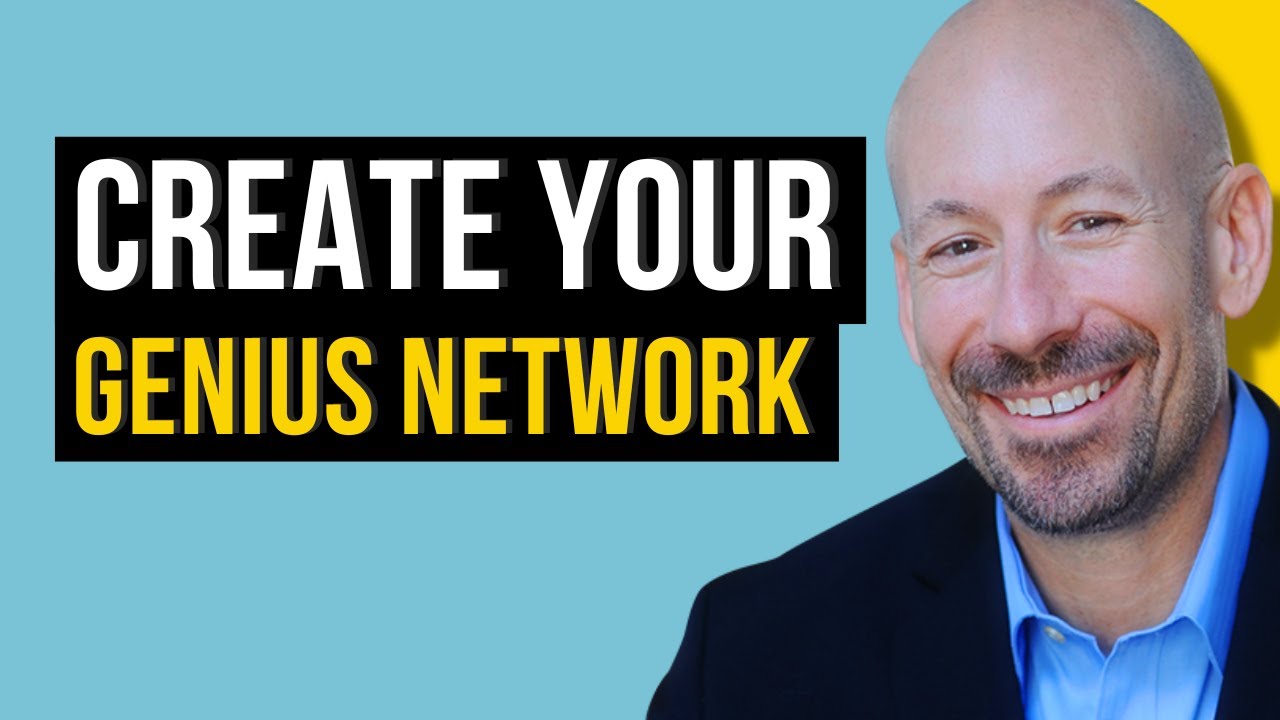
Joe Polish, founder of Genius Network, explains how to build a high-level community of successful entrepreneurs. He breaks down the Be-Do-Have mindset, introduces frameworks like ELF (Easy, Lucrative, Fun) and TAMEE (Time, Attention, Money, Effort, Energy), and argues that genuine networking means asking "What's in it for them?" before asking for anything yourself.
Chapters
Welcome back to the Kwik Brain Podcast. I am your host and your brain coach, Jim Kwik. And your question for today is, how do you build your own genius network? What is a genius network? Why should you care? And what are the action steps to be able to do so? And we are— I'm very excited. I have a longtime friend on our show today. I've been interviewed by him on stage at his event and Genius Annual.
Hi, Jim.
And also on his podcast. He's the founder of the Genius Network, which is one of the highest-level groups in the world for entrepreneurs. This guy does it all. He's co-owner of a VR company. He recently purchased a ghost town in Arizona. He's got a film called Connected. He's the host of many podcasts. He's written many books. His most recent one is What's in It for Them? And you could get that at whatsinitforthem.com. 9 Genius Networking Principles to Get What You Want by Helping Others Get What They Want. Welcome to the show, Joe Polish.
Thank you, Jim. It's great to be here, and I'm excited to share whatever we can that would be helpful to people listening, watching, whatever they're doing.
So when I introduce you to people, like I send people your way, people like Clay Bear and others, I have this thing where I say, That you are an integrator. You're an integrator of individuals, of ideas to increase income, influence, intelligence, impact. And, I wanted to do this because this conversation, often when you and I speak, I wish I was recording it to be able to share with our fans and our followers. So, I know there's always great content and takeaways, but also because you've helped me. We're going to talk about networking and the power. It's not just your— people come to us because they want to improve their brainpower. And, we know it's not just your neurological networks, it's your social networks. And, that phrase in self-help that who you spend time with is who you become, it's really those connections. And, I know how much you value connections. And also, you've been incredibly valuable to me with some of the big challenges I've faced in my life, whether it's my personal life where People know I have severe sleep apnea. You introduced me to my sleep coach, most recently to our current chief of staff helping us with business problems. And so, you're an amazing connector. I also wanted to do this. Let me back up a little bit. About a year ago, I was researching a new book and we're organizing my library. It's interesting. I came across these that I haven't seen in a few years. If you're watching this on video, you'll see I'm holding these workbooks all around phonics and reading readiness. This is something that I started my career with 30 years ago. Fundamentally, I'm a reading teacher. I couldn't read for a number of years because of my brain injury, and I started teaching reading. I think if knowledge is power, reading is really a superpower. We're organizing my library based on subject matter. And also by author. And it's funny with these workbooks, they don't have the author, you know, on the front cover. So I didn't know who authored these. And this is what I would use for working with children. They're my inspiration, my instruction manuals. And then when we're, when we're looking at the, the author, I notice it's by Virginia Polish. And I have a number of these workbooks on my desk on auditory, visual, motor skills, specifically on the area of lesson plans for reading. And I reached out to you and I was like, do you— are you by chance— are you related to Virginia Polish? Who is— who's Virginia?
That's my mother. And she died in 1972, which was even more wild because she was— she taught millions of kids how to read with her books, but she died when I was 4 years old. And it was just that moment you told me that, I was like, wow, I mean, think about how things come full circle. And in the value of taking knowledge and putting it out into the world and sharing it and how so much of it is interconnected. And, you know, as cliché as it sounds, it's a small world. And yeah, so that was fascinating. But it all has to do with learning and betterment. And I think that's where we both are always trying to do that. I mean, even what we're doing right now, it's a way of sharing capabilities and things with people that hopefully help them. It'll be a domino, you know. And so, I look at my mom as a domino, and she was a domino for you, and you're a domino for many people. And, I try to be a domino myself and just share things that— because all of us have read a book or a course or gotten an idea or met someone that, you know, changed the trajectory of our life in a positive way. And so, that was really an amazing moment when you first shared that with me when you're like asking.
Yeah.
So, and like you're doing right now. So, thank you. I appreciate it. It's just amazing.
Well, I get goosebumps even thinking about that. I call them truth bumps because the other reason why I wanted to share you with our community who are lifelong learners and they're avid readers is because she was integral to my journey. And because of it, we've taken this and brought it out to a lot of people around the world. And so, I wanted to do that for that reason also to honor your mom and thank her. So, I want to have this conversation specifically, you and I could talk for hours on this subject. You are the founder of Genius Network, and I wanted to do this because the connectiveness of ideas and individuals change people's lives. But you have a very specific approach to genius networking. And so maybe we could talk about, first of all, your group, you know, why you created it, what it involves, and then we can go into the strategies on how people could create their own Genius Network.
And so my book, which is called What's in It for Them, The question is really the approach. So there's nothing wrong with pursuing opportunities. There's a big difference, though, with pursuing an opportunity versus being an opportunist. And to give some background to people, I was a dead broke carpet cleaner as my first job. The thing is, I had a really difficult childhood and I was a very disconnected person. So today, the fact that I created one of the top connection networks on the planet for high-level entrepreneurs really came out of the fact that I was disconnected myself. And when you're disconnected with yourself, it's really hard to connect with other people. So, I learned a lot of this stuff, never thinking I would write a book about it or teach it or any of that. I did it because I needed to just function in the world, and everything comes through relationships. And so, Genius Network is just a group of people that make at least a minimum of $1 million a year or more. That's the criteria financially in order to get into the group. But we also look at other things like, are they a giver? Are they a taker? What is their reputation? So what's in it for them is the methodology. Networking is like an old word. And it often evokes like passing out business cards at networking meetings and going and seeing and meeting as many people as you can. And again, this was a word that was long before the internet. Now, you know, most people don't carry business cards, but some, some still do. But when it comes to a genius network, and it's a network of people that have skills, capabilities, uh, and just genius that you can tap into, you can collaborate. So together it expands you, it expands your community, expands what you're trying to influence. It doesn't contract it. So I don't equate it to let's have just a bunch of followers or let's, uh, you know, have a bunch of likes.
It's—
that's nice, that maybe will build someone's, you know, self-esteem or their status, uh, per se for a little bit, but it's not really deep, uh, substantive relationships. And so in order to solve any problem in the world— challenge, problem, or opportunity— it can be solved with a genius network. So people that are in your close circle, Jim, are a genius network. So in order to have a genius network, it's a be-do-have. You have to be a genius networker, and you have to do genius networking. That term you've alluded to, you know, your network is your net worth. Well, it means you have to work it. You have to do the reps. Like my friend Chris Voss says, you got to do the reps to get any skills. So, the way that I approach it is whenever I ask for something or I approach anyone and I have any time— I mean, if you get hit by a car and you're on the side of the road and you're hurting and you're not killed and your leg is broken, you're going to yell for help. You're not going to be able to give anybody anything at that moment. There are situations in life where we just need to ask for help and hope Hopefully, people will assist us. However, in the business world, we can be thoughtful about it. We can say, okay, I'd like to meet this person. I want to build a group of awesome relationships. How do I do that? And the people that annoy us the most is when their want is all want. They don't show up with a give. So, my suggestion and the way that I have spent years developing a great network of people that are very valuable to me both personally and professionally And people that have high integrity is that I don't ask for anything without creating value first. So, don't show up with a want without an equal or greater give. So, make sure that your give is bigger than your want. Ask the question, what's in it for them? Without an agenda, without trying to trick people, without fake flattery. Flattery works but only for a period of time because it's kind of BS. So, the real key is to think, you know, what is the pain that someone has in their life? Chapter 1 is all about be a pain detective, because those of you that are in the business world that actually run a business, sell something, it's real. If you think about most money in the world is made transforming other people's bad news into good news. It's looking for pain. Wherever there's anxiety, there's opportunity. The planet right now has a lot of global trauma. There's a lot of pain in the world. And if you have the ability to connect with someone, sit with someone, listen to someone, help someone, and just have the empathy to tap into their pain, you can actually do something about it. So, it's about being a pain detective. So, a genius network is simply— it can be— you need a genius network if you want to be in great physical health. If you want to be a better parent, who are the best people you know that do an amazing job at being a parent that could give you suggestions on Anything related to parenting, or I'm building a business, or I'm writing a book. And so, a Genius Network can be built for any particular area. And it's simply skills and capabilities. It's look for the dominoes. And Genius Network is what I have attempted to build, is a group of industry transformers that are the most giving, non-narcissistic people that are productive and want to be helpful and want to care about each other. And that's what we've done. That's what we've created.
Well, you're definitely the most connected person that I know. And, it's not just the quality of the people that you know and the quantity, but it's also the quality of the relationships. And, you use a lot of mnemonics and memory aids that I know our audience would appreciate, everything from ELF to HALF to— well, actually, maybe you could go through some of these. Yeah, I'd love to. Yeah. What is— because I want to talk about TAMEE, but what does ELF stand for?
Yeah, ELF stands for easy, lucrative, and fun. And I got that term from a buddy of mine named Mark Schneider, who unfortunately passed away a couple years ago. And he was a big reason I actually took a 1-year sabbatical last year so I could just really think about how, you know, how do I look at the world with what's been going on the last couple of years when it started with the pandemic. And just, I spent half my time, Jim, as you know, helping people with addictions because I have an addiction recovery foundation called Genius Recovery. And so I've spent over 20 years in recovery. And I've learned so much about connecting with people because the opposite of addiction is connection. And so, Mark actually had given me the term ELF years ago when we were playing golf, which I rarely play golf. But that's one of these rare moments in time where I was playing golf. And he said, you know, having an ELF business, easy, lucrative, and fun. And I was like, I really like that. I'm going to develop that into something. And so, early on, I was a dead broke carpet cleaner living off credit cards, and I learned a type of marketing which is education-based marketing, which makes your advertising valuable. And I had to figure out how to successfully sell something nobody wants to buy. No one wakes up and says, you know, I really hope the cat pees in the corner so I can call a carpet cleaner. Uh, no one wants to do it. So some things in life, yeah, you buy them. We buy food, we buy fun things, we buy— we go to concerts, you know, we buy music. Other things you need to sell them. And so, uh, this carpet cleaning business, I figured out a way to use consumer awareness guides and free recorded messages before the internet even existed. And I would teach people how to make a buying decision because the number one question in people's minds is, who can I trust? So how do you establish trust and rapport robotically with people that could potentially be a customer or a client of yours? And how do you do it in a fun way? So I first created all this elf marketing where I would make, you know, people would call a 24-hour free recorded message and learn 7 questions to ask a carpet cleaner before you invite them into your home, 8 mistakes to avoid when choosing a carpet cleaner, Crawling Critters and Crud, a guide to the slime, grime, and livestock that's seeping, creeping, and galloping through your carpet, how to avoid 4 carpet cleaning ripoffs. And I would teach people how to choose an ethical carpet cleaner. And it worked so well, I ended up doing, you know, a news story back in 1999 with ABC's 20/20. And then I did 5 different Stories on how to choose an ethical carpet cleaner, and I became this whole advocate for don't use bait and switch low price carpet cleaning. And that was all elf marketing. But throughout the years, and people loved it; they loved elf. And I would say run and have an elf business versus a half business, which is hard, annoying, lame, and frustrating because not all money is created equal. You know, you can have hard, annoying, lucrative, and frustrating, but you still hate it. And so people can have businesses and jobs and careers that aren't elf. And they then I started thinking, boy, there's not just marketing methods. There's people. There's projects. There's all kinds of things that we do that are half versus elf. So now, my elf meter is not just looking for the red flags. But my friend and our friend Patrick Gentempo, he talks about look for the yellow flags. Who's elf and who's half? And then, the other thing you mentioned, you can call it Tammy. You can call it Tammy. But it's T-A-M-E-E. And it's what you spend. We, we spend our time, attention, money, effort, and energy. So you want to put your, your TAMMY into the right relationships. Like in the introduction of What's in It for Them, I acknowledge and write about, uh, this amazing book that was written, I mean, so many years ago, probably 100 years ago, by Dale Carnegie, uh, called How to Win Friends and Influence People. You've read it. I mean, you've read a million books. And by the way, Limitless is an amazing book. And so it's, it's And I'm assuming everyone that would be listening to this or whatever has read Jim's book. And if you've not, I mean, obviously you got to read the book. So, How to Win Friends and Influence People is a great book. This book, What's in It for Them, that I wrote, which I spent 2 years creating the book, I put more work into What's in It for Them than any piece of knowledge and information that I've ever done. And I've interviewed over 1,000 people on podcasts over the years. I mean, I've read over 1,000 books and I'm not anywhere near as fast of a reader as you are. But nonetheless, How to Win Friends and Influence People is one of the top 10 most important books that I've ever read. What I realized, though, it's not just, you know, winning friends and influencing people, it's winning the right friends and influencing the right people. Because Zig Ziglar, who I also knew personally, he had this line that a lot of people try to adopt, which is you can get anything you want in life if if you help enough other people get what they want. And my friend Martin Howie actually taught me that that's not always true. As a matter of fact, you can help other people get what they want that won't do anything for you. Some of them will abuse you and take advantage of you because you're a giver. So, TAMI is about taking your time, attention, money, effort, and energy, which is limited. It is not limitless in terms of your time or your attention or your money or your effort or your energy. Now, if they apply the methodologies that you teach and that you share, You're going to squeeze more juice out of all of the— out of your tummy. But the bottom line is, I don't want to see givers in the world that are really authentic, caring people that ask the question, what's in it for them, getting taken advantage of by the predators and by the sociopaths and the psychopaths and the narcissists in the world. And there's a lot of them. And that's one of the challenges that I address. You know, my book is a bit of methods, techniques, tactics, strategies. But it's a capability book in many ways, but it's really a character book. And it's really designed to be a cautionary tale because I share the things that I've done that have worked and the things that have been disastrous. And had I known, you know, then what I know now, if I would have had a roadmap in a plan and a path. And that's what I wanted to create because I, you know, people ask, why'd you write the book? And I always kind of make a joke. Authors say, I just want to share my message with the world because I'm such a wonderful angel human being. And, you know, there's, there's that part of stuff, but I wrote it for myself. I wrote it as a guide to make sure to remember some games in life, the only way you win is you don't play. And no one ever wins a race they don't want to be in. So I want people to think of this analogy. If you had a million-dollar racehorse and you were in charge of this million-dollar racehorse, and every time this horse ran a race and won, you'd make a million dollars, then the question is, what would you do with that horse? You'd give them the best exercise, the best nutrition, the best coaches, the best training. You know, you would take care of this horse. You would, you would make sure this horse is in the right races, not in the wrong races. So, what wouldn't you do? You wouldn't have the horse eating crappy food, being in lousy races, hanging out with a bunch of other other loser horses. You wouldn't have the horse be overtrained or sleep deprived. You would give the horse the best of everything. And then the punchline is you're the million-dollar racehorse. And if you want to win million-dollar races, you got to treat yourself with the best of everything you can, and you got to make sure you don't take that horse into bad areas. And so I, you know, that's what I want people to do. I want them to hang out with other million-dollar racehorses, but I want them to treat themselves that way and really connect with themselves. Because again, even if you want to have a great network and know a bunch of famous people, and which, as you know, you've met a lot of famous people, it's not all it's cracked up to be. Famous people and rich people have just as many problems, in many cases more problems than people that are not that way, because it's a whole— it's just a different level of complexity. And so, there's ways to develop an ELF life and an ELF business. And there's ways that, you know, winners find ways to win and losers find ways to lose. And so, I wanted to just lay out, here's the reading formulas. But the real thing is I hope it helps build a better human and a better— and I didn't want to write a timely book. I hope this book lasts for decades. I hope it's a domino. I want— and I want people to, as they go through it and apply the dominoes that I put at the end of every chapter that are easy. I mean, nothing is super complicated or expensive or anything. It's just a way to give perspective and methodologies of what I absolutely know works for so many people. And that's why I laid it out because nobody, you know, there's too many books out there already. You don't need another difficult book. I wanted my book to be really elf too. So that's what I—
Well, the book is full of actionable wisdom and I love the wit also in terms of the stories, you know, because it really has your personality in it. And then our audience, they really value and prioritize education. So your educational approach to marketing, you know, over the past few decades, it resonates with us, you know, in terms of how we do our business. So, I appreciate not only what you do but also the manner that you do it. Now, you mentioned writing the book because this allows you to teach. I know that you would subscribe to 3 ways of learning something.
Well, and so do you, right? So, the first way to learn is to go out into the business world, to go out into the world and just bumble your way through it, get beat up, get bloodied, figure it out, make mistakes, fail, You know, win once in a while, but it's just, just trying to do it on your own.
It's the school of hard knocks.
Exactly. Yeah, it is the school of hard knocks. And everyone is going to go through some level of that. Now, that's one way to learn. Everyone's going to learn, but it's not the most efficient. It certainly is not the most effective way. The second is to learn from the giants, learn through the experiences of other people, read their books, listen to their podcasts, go to their seminars, take courses. From them or wherever you can get education and learning. So, learning through other people that have been there, done that is a very effective way. And I actually like taking advice from people that have actually done the things that they're writing about, talking about, reading, you know, and sharing. So, that's the second more effective way to learn. The most effective way to learn, in my experience, is to take what it is you've learned and then you teach it to other people. Because it really requires you to think about what's in it for them. And a good teacher asks what's in it for them. What, you know, people don't buy from you because they understand what you do. People buy from you because they feel understood. And there's this, uh, line by Robert Collier, who was a copywriter, I think in the '50s he wrote this book, uh, The Robert Collier Letter Book. And he said, you want, as a marketer, as a, as a advertiser, you want to enter the conversation that's already existing in the prospect's mind. And it's a really good approach. And what— and the distinction I try to make on this is when you're teaching other people to really put yourself in their shoes. And I, going back to being a pain detective, if you think about all the areas in your life where you've had the biggest breakthrough, in a lot of cases you were in deep Physical, spiritual, mental anguish or pain in some of those cases. And it just required you to have a level of openness or desperation or need. And if someone showed up with a solution or a perspective, pain is a messenger. And if you listen for that pain in yourself and in others, and you actually have the real empathy and the concern and the care to do something about it, I think not only is it an opportunity to make money, the analogy I use, if I'm hungry, that's bad news. If I can go get food or go to a restaurant, that's good news. If I break my ankle, that's bad news. But if I can go to a doctor that can help me, that's good news. So most money is made transforming other people's bad news into good news. And if you teach people what it is you've learned, you're helping. And that causes you to go deeper with the knowledge. And so that's, you know, everyone has some level of genius and some level of capability. The question is, can you tap into it? And if you don't, if you learn how to ask the right questions, you know, you're a master at asking questions, Jim. I've really worked hard over the years to ask questions. Questions are more important than answers, you know, and answers are important too. I mean, I love learning, but you discover things And when you put yourself in a position to teach someone, what I would also encourage people is don't make it all about monologue, make it about dialogue. Talk to people, see what they say back, make sure, you know, a great teacher is not just someone that shares knowledge and wisdom. It's someone that does it in a way to where the person that they're teaching is able to take what they've done and do something with it. You know, there's this whole notion of thought leaders. You know, people often say you're a thought leader. I'm like, oh, that's, that's great. I mean, I understand what they mean by it. You're a thought leader. There's a lot of people that are or writing books that are thought leaders. But I say, you know, any idiot can come up with a thought. What I— they can steal thoughts from other people. What I really like is result leaders. Are the thought leaders' thoughts able to be shared in a way that it produces a result for the people that are hearing it, understanding it, that they're teaching it to? Because you're either communicating with someone, you're connecting, or you're trying to escape. Those are the 3 experiences that we have. We're just talking with each other, or you're really connecting because you're on the same wavelength, Or you're trying to get out of there. And so I tell people, look at the energy, learn to read energy and feel it. And you know, when you're able to transfer energy that expands another person while expanding yourself, that's a good thing. If it's contracting, you need to take a look at what is the contraction and why that's happening. So there's—
That second way of learning things in terms of books and podcasts and taking advice from people who have done it and demonstrated with results. It's interesting because on the other side, so many people are— they get feedback from people who aren't qualified to give that feedback. I think it was our buddy Seth Godin who says, don't take criticism from someone you wouldn't take advice from. When you teach something, you get to learn it twice. Take advantage of the explanation effect. This book is amazing. Just some of the chapters here, and I read it obviously cover to cover. This is something that I highly recommend everyone gets their copy. It's like, how are they suffering and how can I help? You know, you talk about TAMIE— time, attention, money, effort, energy— being the person they always answer the phone for. That is amazing. And I know that we don't have time to go through that, but I always answer the phone when, when you call, leave a voice message or videos, and you're very good. And it's very tactical in terms of how people prefer to be contacted, having situational awareness in terms of, you know, how you're communicating to them in the context that they're, you know, receiving it.
Yeah.
Treating others as where the golden rule, you want to be treated, but as opposed to how they love to be treated, which is totally different perspective.
Yeah.
Appreciating people and getting as close in person as you can. There's so much great content here. How do people get their copy? And I highly recommend everyone add this to their to-read list. And remember that buying a book is a different skill set than actually reading that book. But we have a lot of Kwik readers here that love to complete books and put into action and teach others, where, where do they go?
The best place is, uh, whatsinitforthem.com. I mean, the name of the book is whatsinitforthem.com. My name is Joe Polish. Uh, if people have— and proceeds of this book go to my foundation, which is geniusrecovery.org. And my goal is to change the global conversation about how people view and treat addicts with compassion instead of judgment and find the best forms of treatment that have efficacy. And share it with the world. So I have a whole educational platform that educates people on addiction recovery, finds links to meetings that are all free, videos, just education that'll be helpful, because that is where I spend about half my time. We don't sell things there. It simply is just to help, and it helps me with my own recovery, and I feel really good about that. So the website is whatsinitforthem.com. If someone has the money to buy the book, I think you'll love it. I also recorded the audio version in my own voice. And as you know, Jim, that is a task to, to try to get it exactly right. That's what this is. But I did that because I like it when authors read their own books. And then if someone just doesn't have the ability to get the book, I have joesfreebook.com, which is a book I give away for free, which is called Life Gives to the Giver. And we don't put people into upsell funnels and we, you know, give a really good book. But yeah, my name is Joe Polish. But I hope people go and get whatsinitforthem.com and I hope you share it With others. Because one of the last things I'll say, Jim, unless you have other questions, is what humans want is they want more woo and less ah. So that's what we're looking for. Everything we're going to do today or tomorrow is going to be, is it going to give me woo or is it going to give me ah? And certain people, like, be the type of person you want to answer the phone for. If someone texts you or you get a message on social media or they actually call you on the phone, which a lot of people don't even use phones for phone calls anymore, And you immediately get an ah, you have to look at what's the energy about that person that's causing you to do that? Or is the problem you and you owe them money or something like that? And it's really your, your responsibility. But it's like, look for, you know, read the, the woo, the, the what gives you woo and what gives you ah. Like, I'll get into a cold plunge later today and that's gonna be ah in the beginning, but the woo that I will get out of it, we've actually done this together. So as you know, we've done some—
Not in the same cold plunge, but yes, we have.
Exactly. Yeah, we went to a facility where, uh, called Optimize, where they actually do it here in Arizona last time you were out here. Um, but, you know, basically, uh, What's in It for Them is, is the name of the book, that's the name of the website, and that's also the question, and everything's based on that. So, if you're a giver, you will love it. It will be, it will help you boundary yourself as a giver. And if someone's a taker and they happen to be listening to this, I doubt you have those people, but— You may have a few. I hope you read the book, and it actually shows you you're going to get a lot more in life taking the approach of thinking about other people without an agenda, with just being genuine and approaching life that way. You'll sleep better at night, you'll feel better about yourself, and you'll get a lot more authentic and real friends. And then finally, we do eat for people that are single. We actually have a whole section with, you know, an amazing love coach on how to You know, how to, how to utilize marketing to find true love. As crazy as that sounds, people that have gone through the process, it helps them if they're single to develop relationships, and if you're already in a relationship, how to make it even deeper and meaningful.
Amazing, everybody. And I challenge everyone to take one simple step, is take a screenshot of this episode, uh, wherever you're absorbing it right now, whether it's on Spotify or iTunes or YouTube. I'm holding up the book here. Uh, Joe, I'm sure you have a copy there also. Well, take a screenshot. I challenge everyone to take a screenshot of this, post it with my eyes open hopefully, and tag Joe on social media and tag myself so we get to see it and share one idea you got out of this conversation. Remember, the third way of learning something is to teach others. And when you teach it, you get to learn it twice. And I will actually randomly gift one copy to someone in our community just as a thank you for participating in that. Last question I have, Joe, and I know you're on a book tour right now. You mentioned You mentioned you took a 1-year sabbatical, and I remember getting that message that you sent to your friends explaining that. Can you just really briefly explain why you decided to do so? And then what did you do during that time? And what was a big takeaway that you got out of that experience? Because most people, you know, it's a rare experience most people haven't had.
Yeah, well, I'll tell you, like, one of the main reasons I took it was because my friend Mark died and he was worth about $300 million. He was 59 years old. And I got this call from his son letting me know that he— they found Mark and passed away in the morning at 59 years old, around June of 2020, I believe the time period was. And I had this idea, you know, take a sabbatical. That was the first thing that came into my head, because I, with all the work I do with people in addiction recovery, I was having a lot of conversations once the pandemic It started. Addiction is at the greatest level it's ever been in, depression, angst. And I was like, you can't fix the world with broken hands. How do you actually take care of yourself so you can best take care of other people? And the time— my friend Kathy Colby has this line, the time to quit working is when working is no longer working. And I wanted to evaluate the work that I was doing, what was going on. And then Shawn Stevenson, The year prior, our dear friend, my best friend, I was with him in the hospital when he died. And I had like a series of people that had died. And I had a lot of— my business was doing well. You know, I was, you know, obviously connected with a lot of people, but there was just this angst. And I have this line that I've said for years, which is, be willing to destroy anything in your life that's not excellent. And there were a lot of things in my life that were excellent, but there were a lot of things that were not excellent. There were relationships that just were not serving me anymore. And I'm the connection guy, right? And so, I needed to evaluate that stuff. So, I had to— in order to have the conditions we want in life, we have to set it up in order to do it. And I was thinking, how do I take a 1-year sabbatical? I have a whole business that runs around me. I mean, I run Genius Network. I'm the face of Genius Network. And, you know, through the years of applying what I teach in my book, What's in It for Them, I have a team and I have great, amazing clients. And I set it up for a few months of how— and I made a commitment to myself, no matter what, I can't be bought. And someone even offered me $200,000 to do a 1-hour podcast with them during the sabbatical, and I turned it down, you know. And if they would offer me $10 million, I would have turned it down because it wasn't about— of course, I wanted the money. But it was, it was a commitment to myself that I can't do that. And I needed to strengthen My health, my breathing. I had to smoke out the parts of me that needed and wanted external validation because I want people to like me. I grew up with tremendous low self-esteem and low self-worth, and I wanted to evaluate things. And I learned that, you know, it's hard to make personal decisions when you're burdened with so many business decisions. So, I needed to prune, I needed to edit, I needed to evaluate my life, I needed to deeper connect with with myself. And I, you know, went deeper in yoga, in meditation, and different, you know, practices, cold plunging and saunas. I never did that consistently until I took a 1-year sabbatical. But I got to read a lot, I got to learn a lot. And when I came back, I bought a 40-acre ghost town called Cleator, Arizona, and just, you know, went back into things with a completely different perspective. So, I didn't want to recharge my batteries, I wanted to replace them. And that's something I learned from my friend David Bach. And, uh, and I did, uh, to a large degree. And so, uh, I— and I actually, in the book, I share the lessons I learned from the sabbatical. And I, I even have a, uh, a website that I give out where people can watch videos of what I've learned from, uh, from the sabbatical and how they could apply it. And there's nothing to— again, that's all free. We don't charge for any of that. And, uh, yeah, that's— the sabbatical was amazing. And I, I would encourage people. It seems impossible. It took me years before I actually can bring myself to do it. And I'm glad I did it because I've inspired so many other people to take sabbaticals now because they didn't know how. I got, you know, I got kids, I got a job, I got a business. What if you don't have any money? I mean, yeah, there's certain limitations, but the more, you know, I actually think your book Limitless and What's in It for Them go really well together because I think the perspective that people would get from layering the two would actually just enhance. You know, everything about what they can pull from both of our—
Highly recommend people take time to disconnect, to reconnect, reconnect with their health, reconnect with, you know, people close to them, reconnect to their purpose. Everyone get your copy, What's in It for Them? It is useful, it's valuable. You'll be grateful that you did. Whatsinitforthem.com. And we'll put all the links as we always do at jimkwik.com/notes. And Joe, thanks again for writing this book and for showing up the way that you show up for others.
Thank you, brother. I really appreciate it, Jim. Thank you. And, I wish everyone the very best day or night ever.
Make it happen.
Thank you.
Thank you, everyone.
More from Jim





The Library of Minds: Brain Coach: How to Stay Sharp When AI Does the Thinking | Jim Kwik





