Digital Detox with Jay Shetty and Jim Kwik
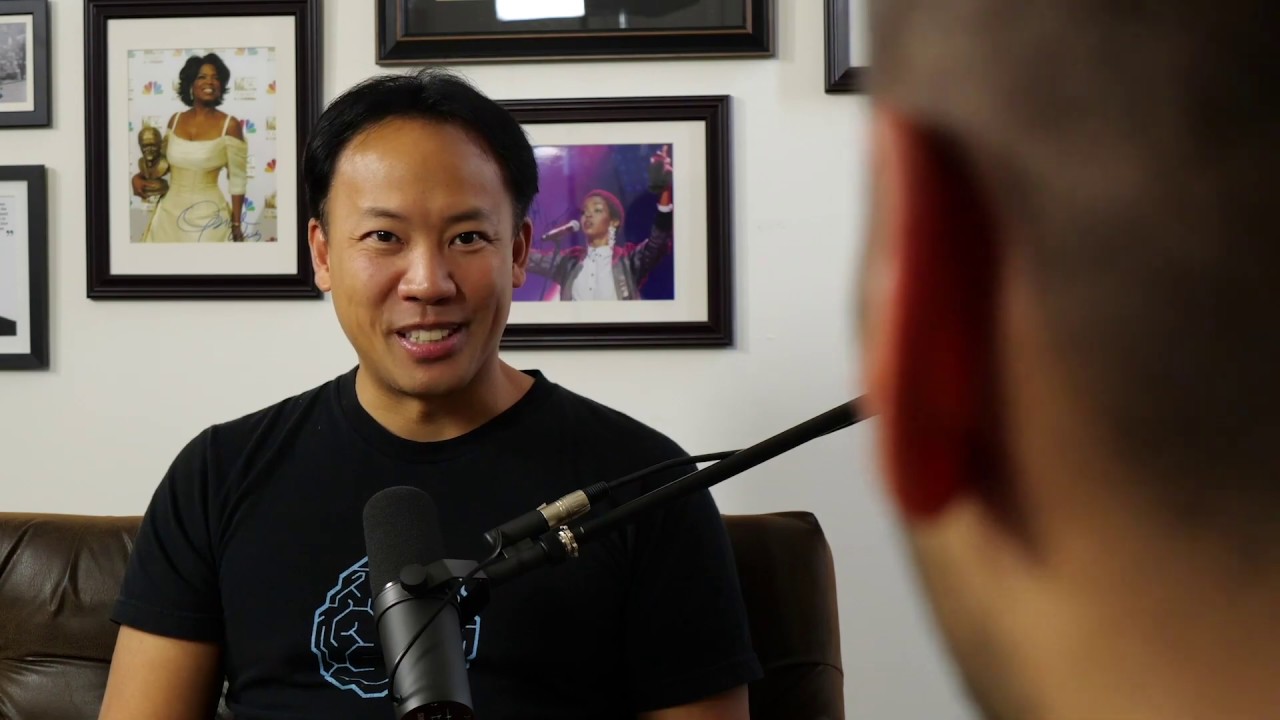
Jay Shetty explains digital detox like a nutrition plan: start by tracking screen time on a "digital diet sheet," then create no-tech zones in your bedroom and kitchen. Skip the all-or-nothing approach. Remove one platform at a time, like a gradual diet.
Chapters
Welcome back, Kwik Brains. So here's your question of the day. How do you detox digitally? How do you do a digital detox in a world where we're so connected to our smart devices and they're like pretty much implanted into our brain? It's the first thing we look at in the morning, it's the last thing we look at sometimes at night, and we're so connected to our emails and text messages. How do you disconnect to be able to reconnect? And we're really excited today to have a special guest, Jay Shetty. Hi, Kwik Brains. Acclaimed storyteller, incredible viral video creator, and dear, dear superhero friend, Jay, thank you so much for being on our show.
Thanks, Jim, good to be back on.
Jay, you know, you've created more content than so many people, and it's inspiring wisdom, and I always get so much, not just inspiration, but ideas. You know, so many people, like, they'll teach instruction, but there's no inspiration to use it, or some people get inspiration and they don't know what to do, but you combine and really blend that together. both education and empowerment. You make it incredibly entertaining. And in this world though, you know, where there's so much stuff online and we're so connected to these digital devices, you know, we were talking about this because, you know, your background as a monk, you know, now you're living in this big city, you know, we're always seeing each other at different places of the world. How do you, how do you deal with digital detox yourself?
Oh, great advice. I think one of the biggest things for me in a digital detox is just like a diet detox, right? The first step is awareness. So if you want to lose weight, gain weight, gain muscle, lose muscle, whatever it is, you would have to look at what do you put into your body.
Yeah.
And I always say to people that health isn't just what you eat, it's also what you think. And so the first step is in awareness. So what I ask people to do is build a digital diet sheet. I actually ask people to sense their awareness and actually journal their awareness of how much they're on their phone And how often.
Okay.
Because when you see that, that awareness will already do half the work, right? As soon as you start seeing, I spent 2 hours a day on Instagram, right? I spent an hour on Facebook, I spent an hour on Netflix, whatever it was. And I'm not judging you, and I don't want you to judge yourself. What I want you to do is build a genuine diet sheet for 1 day, 2 days, 3 days, right?
And there's actually on your phone, for like the iPhone, you look at the battery and Part, and then it actually tells you the actual to the minute.
Exactly.
You know, in percentage you're spending, how much is like 20 hours over that week on Instagram or something like that.
Absolutely. And Instagram Analytics is doing the same for you too. So if you really want to hone in on Instagram, you have it right there. So the first step is awareness. That's all I want you to do is take out some time to just journal down your usage. Now, if you are saying to me and you're listening to this going, Jay, I already know I spend too much time on social media, then you don't— then you can go straight to the second one. The second one is build no technology zones in your home. No technology times and no technology zones in your home. Set rules, parameters, and barriers. So I always say to people that I don't like using my phone in the kitchen or the bedroom because it's more fun to eat and sleep with people, right? So remove technology from places where you can really build up beautiful human bonds with people.
Okay.
And usually it's the kitchen in our homes and the bedroom, whether we watch the TV in our bedroom or whatever we do, let's do that with people. And whatever we do in our kitchens, eating, cooking, these activities which are great for human interaction and bond building, let's do that with people.
And also for— that's the place, but also the time also?
Yes, and the time. And set no technology times in your home. Okay, so the other— so my example being, and I genuinely did this for, for years when I was practicing this, I locked my phone in my car outdoors.
Okay.
So that it would not be the first thing I looked at in the morning.
That's beautiful.
And I replaced it with a real alarm clock.
Okay.
So I had a real alarm clock, one of the— oh yeah, exactly. They still sell them on Amazon for like $10, a Timex digital alarm clock or a real alarm clock. And that's what woke me up in the morning if I needed an alarm. I've trained myself to not need an alarm to wake up, but if you wake up to an alarm, switch it to a real alarm clock. Keep your phone in another room. Do not wake up to your phone.
Okay.
That can save you so much time and hassle.
That sounds amazing.
And the third step to doing a digital detox is don't to and fro and pendulum between lots of technology and no technology. Build a diet and slowly remove parts of it. So don't start saying, okay, for the next 7 days I'm not going to use my phone at all, because all that's going to happen is when you reduce that consumption, you're going to come straight back and want to do it. I always joke about how When I lived as a monk, I didn't eat any sugar for 3 years.
Wow.
Like none at all. And the day I left, the first thing I did was buy myself tons of chocolate and eat all of it. When you, when you starve yourself of anything, your mind wants to go to the other extreme. It's very often a trick of the mind. So one of the things I recommend is once you build your digital diet sheet, set out your parameters in your home and your boundaries, see yourself removing step by step. So don't try and remove Instagram and Facebook and Netflix at the same time. Move one at a time. Make your change a big priority and a small step. Don't try change everything at the same time. So people try and change all their digital habits all at the same time, right? Just do one every week for a month.
Little— because little things done consistently add up to big things.
Totally. Most of us try and change 4 things in one week, right? When all you have to do is change one thing One week for 4 weeks in a row. I love that. You'll have a beautiful result.
I love that. So everybody who's watching this, who's listening to us right now, what would you recommend in terms of digital detox? Like, start— they can start it today.
Yeah, start today. Just make that awareness right now. Just get that awareness down. Start creating that digital diet.
Beautiful. How do people stay in touch with you?
You can find me on Instagram, Facebook, and YouTube @JayShetty.
Beautiful. Everybody, your assignment, your challenge right now is to take on this digital detox. Take a screenshot of this episode, of this video, post it online, tag Jay, tag myself on it. As always, if you want to learn it deeper, you want to be able to share it and teach it to somebody else because when you teach it, you get to learn it twice. Post what you're going to do for this digital detox. I would also love to see people's progress because when people are accountable to that and they're putting it publicly, then And they're more likely to be able to follow through. So enjoy your digital detox, and I'll see you in the next episode. Thanks, Jay.
Perfect. Thanks, Jim.
More from Jim





The Library of Minds: Brain Coach: How to Stay Sharp When AI Does the Thinking | Jim Kwik





