Discovering Deeper Purpose & Happiness At Work with Jenn Lim & Jim Kwik
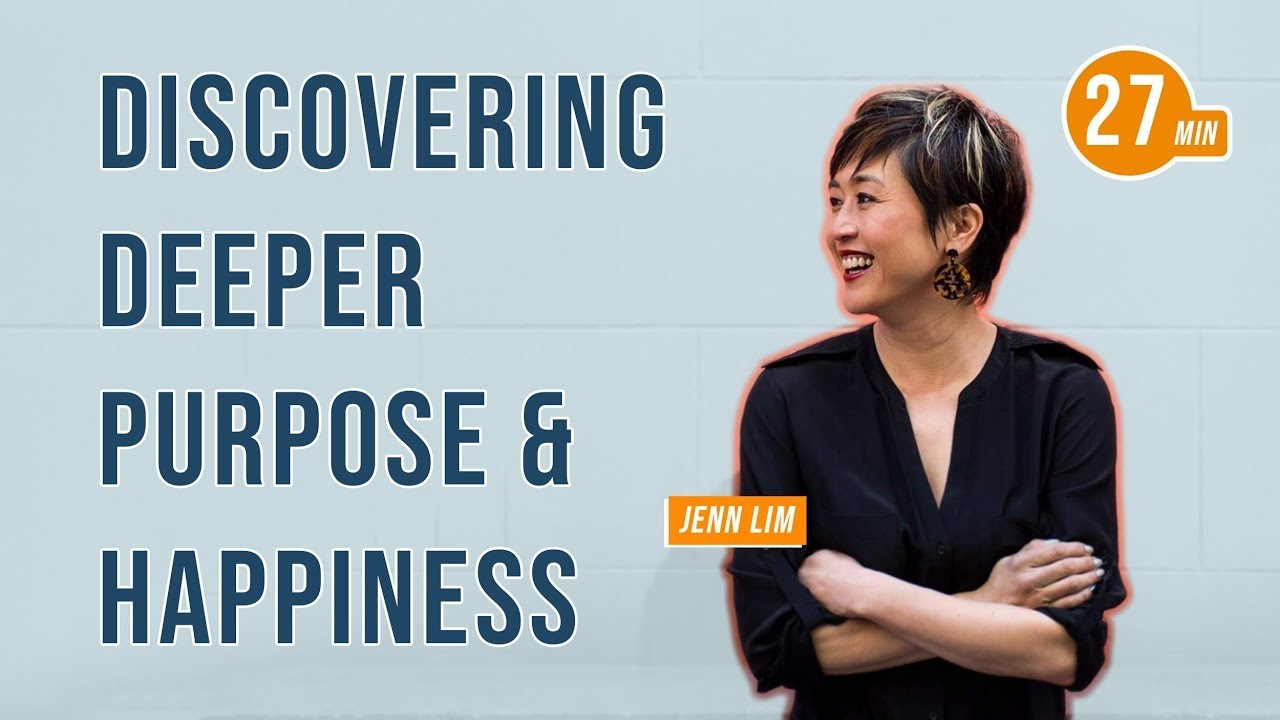
Jenn Lim, CEO of Delivering Happiness, explains how leaders can shift from chasing pleasure to building purpose-driven fulfillment. She breaks happiness into three layers: self-awareness, short-term pleasure, and meaning tied to purpose. Personal loss, including her father's death and Tony Hsieh's passing, clarified her values and shaped her resilience approach.
Chapters
Welcome back, Kwik Brain. Your question for today is, how do you live in a state of where you are actually beyond happiness? And this is gonna be a great session because happiness is, I mean, why do we do what we do? And so to have this conversation, I have Jenn Lim, who's been a friend of mine for over a decade. She's co-founder and CEO of Delivering Happiness.
Hi.
which is a company she and Tony Hsieh, the late CEO of Zappos.com, co-founded to champion science-based happiness, passion, and purpose at work. And she's also the author of the brand new book, Beyond Happiness: How Authentic Leaders Prioritize Purpose and People for Growth and Impact. Thanks for coming on, Jenn.
Yeah, of course. Thanks for having me. I know that was a long subtitle there, so thanks for working through that.
I appreciate it. This is such an important work right now because before we get started, I was wondering, like, has the pandemic, has it changed how we approach happiness?
Yeah, I mean, the short answer is yes. I think I've had so many conversations now, given especially we've been in it a year and a half plus. And everyone has their pandemic story. Everyone has their, as I call it, like 2020 BC, before COVID and after COVID stories. And they're all so rich in terms of like what everyone had to go through. And it was just this stark reality of, we knew that a pandemic could come. We knew that recession can come globally. We knew there could be social unrest and inequalities and what that looks like. in society. We just didn't know it was going to come in the same year. It was basically, what does that mean for humanity and how we live being as connected as we are? So from that, of my own personal experience, and like having worked on and researched this book, there's been definitely questioning of what is happiness really anymore, and the reframing within ourselves and self-reflection and the questions that you just posed, you know, Like, why do we do what we do? Why do we wake up in the morning and feel amazing? 'Cause we have a sense of happiness or purpose meaningfully, or we don't. And what are the things that we can do as human beings and help each other support as we're still going through it right now?
So just as context, I mentioned you're co-founder of Delivering Happiness. What's your mission, your work there?
Yeah, so Delivering Happiness, it was spawned from a book that, as mentioned, the late Tony Hsieh and I launched in 2010. Yeah, that's the OG. I can't believe it's been 11 years. But so there we didn't know how the book was going to do. And lo and behold, there was a search for happiness in the world, both in work and outside of it. So the mission has been evolving since then, and we really wanted to focus on workplace happiness, knowing that a lot of examples in the book were about Zappos and Tony's own journey of understanding what he did there, what he learned along the way, and also principles around scientific happiness. So he and I connected on many different things, but part of it was just because there's a science to happiness. We're like, what? Like, this is something bigger than just Zappos. So the mission has been basically distilling all the lessons learned there, adding on scientific happiness levers of what we know to increase our happiness and focus on what's right with us, not just what's wrong with us. And be able to create different frameworks and methods that companies and organizations and now governments and hospitals and all that have been able to take in and actually increase meaningful sustainable happiness within their employees so that their customers or patients, citizens could be happier. And then you actually create a more sustainable and profitable, if that's what you're into, if you're a for-profit. And but the most important thing in that whole equation, from happier employees to customers to more profit, is you're creating more meaningful lives by instilling purpose and values and what that actually means inside and outside of work. So that's been the mission. And yeah, now we're 11 years in. So it's been one of my I think, inspirations to see how it's worked in all these different places. And really amazing that it's been regardless of geography, country, industry, size of company, to know that there is a universality of what scientific happiness can mean to essentially what can run a business in not just more profitable ways, but also more purposeful and, you know, prioritizing people all at the same time in, in sort of a nice equity around those things that we all care about, but all at the same time in equilibrium. So that's what we've been doing.
It's amazing. Do you have a working definition of happiness and Subsequently beyond happiness?
Yeah, so again, we base it on scientific concepts. So there's number one is— I'm going to be using layman's terms instead of this, like psychological things, psychological terms. But number one is just being true to yourself, and having that sense of self-awareness of what's, you know, going well, what's not going well, what are our strengths, but what are our blind spots that we can be courageous and brave enough to acknowledge that that's all part of who we are. So that level of being true and authentic and self-aware. And then the next 2 things come from a sense of, I would say, as we talked about in these books, a sense of like pleasure, because we all love our pleasures, like that can bring a more immediate form of happiness, whether it's like going out and buying a new car or getting a raise or hanging out with your buddies on a weekend on the golf course or in the park. Those are all meaningful in some ways, but they're fleeting. You buy that, you get that, and then the high comes up really quick and then you hit that low. It's not as sustainable. So the third form is where more Aristotle talked about this in eudaimonistic happiness, which is really drives back to the purpose. What he said was, happiness is the reason for our existence. But most importantly, happiness is dependent on ourselves. And so extrapolating that and making more current is just like, what is really what we are doing now that is bigger than ourselves, that provides that sense of meaning that is more connected to the greater world and the, you know, The unknowns around it. So it could be your family, number one, that's a big thing. But it could be a lot of different things that when we are self-aware and true to ourselves, driving into our strengths, acknowledging our weaknesses, what else can we bring within ourselves to the world? And that kind of starts building your purpose statement of what's bigger than just ourselves.
And in terms of beyond happiness, that, that's part of the definition then?
Yeah, it's part of it. I think that so in Delivering Happiness, the book Tony and I launched in 2010, the build on that is that what we had, we had a conversation actually during the book tour, we did this cross-country book tour and to launch the book and spread the message. And what we had this conversation about was like, you know, what we missed is that we didn't really drill down on the connection of the self. as much because it was about Zappos, it was about organization and companies and businesses and all that. But the, the drill down on ourselves and being so real with that, I think that really got heightened and spotlight, you know, the spotlight was put on that, especially after COVID and all that. So Beyond is basically, I think we all have notions when we hear the word happiness, But going beyond it is that it's actually not understanding just our highs and what we can learn from that, but understanding our lows. And in those low moments that we all have had, not just in the last year and a half, but the lifespan of our lives, understanding what those lows mean. Like, so for me, as an example, my low was— well, prior to last year was when my dad passed away. So the lows of that made me understand what my true values were. Because at that time I was like in the dot-com days, I was like, money, title, status was super high, but I didn't really feel meaning inside. My dad passed away, 9/11 happened, and I got fired from my job. And all these things happened within one year. And it made me realize that I really wanted to take a step back and say, what did I learn from this? And forever from then, my purpose and values shifted to a much more meaningful place. So that's about people. It's about being— having a sense of freedom and autonomy. And it's about being true to who I am, etc. Those are the values that I live by now. So beyond happiness is just taking what was defined before into a more current environment of the fact that, you know, someone, an Olympian, can say, I'm not going to do this. Simone Biles to say, I'm not going to do this because I'm not mentally feeling safe, psychologically safe, and I can hurt myself. And she can do that on a grand stage. And we're not Olympians, but we are in our own way, because we are being our own self and people and, and trying to live our best life. So I think that, especially in the last year and a half, has expanded that whole concept of what that can mean, of what is beyond like what we think about, like normally what happiness is. And make it more authentic in our conversations within ourselves, with each other, in our interactions with our workplace, and of course with our community and society at large. And I think that's what we all really need right now is that sense of honesty with each other and ourselves.
Yeah, it's interesting because I was gonna ask you this question about why it's important. And why is it important, like, right, needed right now?
Mm-hmm. Yeah, I think that it's Now more than ever, like, we have those different circumstances that we've all been presented with. And whether it's because we're a parent and we had to juggle working in Zoom land at the same time, like, you know, homeschooling our child, that, that, that's a different circumstance. We've all— I think, I think I can safely say this now. I don't think I could have said this a year and a half ago, but we've all lost someone. whether it's someone super close in our lives, or someone at work, or someone, you know, that we know, to this pandemic, or just because of a cause of something else. And so all these different things that are coming to us left and right, looking at your backdrop, left and right, left brain, right brain, it's coming left and right. And it's coming in a way that I feel like the frequency has been accelerated. So it's been dialed up. The volume has been dialed up, the rate of how we get hit gets dialed up, and in most unexpected ways sometimes. So for me, you know, just speaking very transparently, after the series of events of 2020, the most unexpected thing was Tony passing away for me. So that really caused me to— and I was supposed to be writing this book. He passed away day after Thanksgiving, and this book was supposed to be due like 5 weeks after. And so I was just like, how am I going to be able to write this book? And luckily, I have a, like, you know, understanding publisher, but it just really forced these questions in a compressed way that I just, you know, really wanted to capture that everyone in the world is going through these things. And to paraphrase a quote is just, you know, be kind, be human. Because everyone is going through their internal battle. We just don't know what that is. And having that reflected in our society, in the workplace, and the simple ways of just saying, hey, you look like you're a little off today, or, you know, like, you're kind of being like a, you know, a-hole or bitch or whatever. I don't know if I can cuss on this podcast. But, you know, whatever that word is, it's like, are you okay? Instead of assuming like, dang, this person is like, totally, like, you know, an a-hole. But going to that space of like, look, we've all gone through these emotions, especially in the year and a half, is why I think it's so important just to like flatten out those walls of what true communication and connection means. Because as human beings, like, you know, scientifically, socially, we need to be connected. It's like a modern-day village. Our workplaces are monading villages, our teams are villages, this whole world is a village in some ways. And if we choose to see it that way, then no matter where we are in our own lows, we can feel supported in a different way.
You use this concept in the book about greenhouses. So why, why is tending to greenhouses so important now? And can you relate it back to maybe what happened with Tony?
Yeah, so Tony actually used to talk about greenhouses and like, as a leader, he felt that as a leader, you wanna build others' greenhouses and grow and nurture them, but you don't have to be the tallest tree or plant or whatever you're growing. Like the leader doesn't have to be, like you want others to grow. And he said that like way many years ago. So in my processing of this passing and all that, I just saw there was a connection there that yes, this is true. As true leaders, we're here to grow others in their own greenhouses. But the reality is that so many of us, because we want to help, because we want to help grow other people, we forget about ourselves. It's like that, you know, the whole saying with the oxygen mask in the plane, like make sure you put it on first, even though it's so counterintuitive and it's so hard to remember. because not many of us are flying planes anymore. So it's a reminder that that is true, but it's so hard to execute and actually do on a day-to-day basis. So as I talk about in the book, it's like, you know, Tony was an amazing— one of the best greenhouse builders in the world. And I think that in reflection, like, he sometimes forgot about his own. in ways that I think we can learn from because there's, you know, there's, it's sad to talk about it, but there's something that he left in terms of what he wanted to try and grow. So that's why I really tried to distill that whole concept of, look, yes, as leaders, we grow greenhouses. Like we see, we love seeing things build and progress and make change in the world. But so often, and we forget about ourselves and what that really means. And that's where the honest talk is, what I talked about earlier, of like being true to our— not just like what we can celebrate, but also our shadow sides and sometimes our inner demons or resistance within ourselves. So really just wanted to open that conversation up and be— and just say it's okay.
So what do you do when, when the pursuit of happiness, when we get derailed? Something's going on at home, something's going on at work. Is there a way of getting back on the, on the path, or is there a path to beyond happiness?
Yeah, so what I've really wanted to instill in the book and what I've learned along the way from Well, basically, like back in the days, Zappos to delivering happiness. And what I've seen not only in the workplace but society is that if we as human beings— and this is where resilience comes in— but if we as human beings can actually ground ourselves in having that authentic real talk within ourselves, what are our true purposes? Maybe there's more than one, or maybe just one. What is our true purpose? What are our true values? And actually, and it doesn't have to be this like huge, like lofty exercise. It can be really simple in naming those things for yourself. And just, you know, put it on a piece of paper, write it on the wall, whatever it is that you can just remind yourself, this is who I am. And then that becomes like a snapshot of you as individuals, us as individuals, no matter what swirls around, like we're in this, you know, crazy sandstorm in the middle of, you know, Nevada, whatever. And yet, we can ground ourselves as we see the things swirl around us. And we ground ourselves in those purpose and values. And it just works time and time again, like your decision-making, it becomes more clear, asking yourself, what can I control of this circumstance? What can I not control of the circumstance? And let it go. And then that's when we see that we can actually adapt to not just say, don't feel the emotions, feel the emotions, ask yourself these more logical questions of control and not control, and then actually create actions to do something. And then it becomes eventually behaviors and rituals within our lives.
Yeah, I think a lot of these emotions, we feel them because These emotions are like signposts, signposts to take some kind of action. And part of living is just discovering who we are and then also being that person that's willing to take the steps and walk the path. So in terms of when we're talking about beyond happiness and we're talking about leadership, prioritization, We're talking about things like purpose and people. These are words that are more and more used, which I guess is a good thing, than it was a decade ago. Where do you see purpose at work? Where do you see things moving towards?
Yeah. I mean, you're exactly right. Back then, it was a novel idea. People were like, oh, that's cool for Zappos, but it never can happen for me. even like from CEOs to frontliners, they would say the same thing. And that was like, oh, okay, that's interesting. And so like, maybe that's been my battle cry for myself of just like, no, I'm going to prove you wrong. Like, you can actually have that for yourself. And, you know, it's been great to see the progress made on that. And in terms of where it's going to go from here, because it's becoming more household words, because it's becoming more boardroom lunchroom words and seeing it at the level of whether it's BlackRock CEO talking about it, like, this is how you control trillion dollars or billion dollars of like, oh, it's really about purpose. It's like, oh, that's interesting. And then to different CEOs of what we see with Airbnb or Starbucks or whatever, to the small companies that we all love and want want to be around and support. That is, I think, the next, the next phase or turning point of all this is that it's not, it can't be just put on the wall or put in a PR release or a press release or, you know, in some sort of social media post. It's cool to say it right now. And because, you know, there's a great resignation going on, there's a great awakening going on, people are just like quitting their jobs even without, you know, 4 million people quit their jobs in April, even without a second choice, you know, they didn't even have anything lined up. And there's a lot of different reasons for that. But I think it's been a product of these last year and a half plus of having the time to ask those questions. So I think the next step is actually doing something in a way that makes those words applicable, practical, and executable in our daily lives. And that, like, as let's just say, like, senior leadership or CEOs, that's on our onus. If that's what we believe in, and we're actually saying that, hey, what these are our purpose and values, how do you actually live that on a day-to-day basis? And how do you actually create the environment so people feel psychologically safe to live those values and walk that talk so that they can see you? Oh, well, CEO is actually doing this, or whoever my leader is. And therefore, I can feel safe and do that too. So I think that, like, I, you know, we've been big on the workplace type of, you know, scientific happiness, but I think that just ripples down to our lives, and then just creates a bigger impact, because then therefore, people as individuals are being more true to that themselves, purpose and values, and living it on a day-to-day basis, and impacting society in a different way.
Yeah, and you actually illustrated with a wheel going from me to we and how it expands. Who's, who's the book for, for our listeners?
Um, yeah, there's a— I think I used the word leader. And I think that, you know, like, a lot of people are using that word too. But I use authentic leader. So anyone that chooses to be authentic leader, And then you don't have to be that CEO. You don't have to be a manager. Like, there's stories in the book about a guy that, like, does— like, he cleans bathrooms in Mexico for, like, a Cineplex, to a janitor or custodian in Northwell Hospitals in New York, where they found purpose and they actually, like, live and breathe it. It's kind of like that JFK story of, like— I don't even know if that's true. It might be folklore of asking the janitor, what do you do for a living? Or what do you do here? He's like, I'm putting a man to the moon. Who knows if that's real? I know these stories are real, that these people are saying like, this is, this is my purpose. And it's not because anything outside of like how I find meaning and providing that to others in a way that enriches their lives too and connects them. So to your question, I would say like anyone that wants to be an authentic leader can choose to be at work or in life. And so I think that's the audience.
Amazing. Amazing. Where can people get the book? I know a lot of our listeners, they want to champion science-based approaches to happiness, to purpose. Highly recommend everybody to our Kwik readers to be able to get their copy also as well. Should people go to Amazon or a website?
Yeah, if you actually just launched it not too long ago, we just did a website to support the book, but basically it's just jennlim.com. So J-E-N-N-L-I-M.com. And you can, yeah, you'll find more information there. And if you choose to like, you know, get the book, we have freebies of exercises. Like, so these concepts I'm talking about aren't so like, what? It's actually like very practical ways to say, okay, this is actually my purpose statement for now. These are my values. And you might be surprised if you go through those exercises and see where you are in life and take that snapshot for yourself.
Yeah.
Well, I want to take you— thank you so much for taking the time and putting your talents into creating this book. I highly recommend everybody gets their copy. They go to the website. I will put links in our show notes at jimkwik.com/notes. Make sure you subscribe to our YouTube channel where we have the extended version of this interview. And Jen Lim, thank you so much for being on our show again.
Thank you, Jim. So good to be here. So good to see you.
Yeah, absolutely. Everybody take a screenshot of this, tag me in it. I'll actually gift a few copies to our listeners. And what's the best place to reach you on social media?
@byjenlim. So @byjenlim.
Perfect. All right, thank you everybody for, for being on this episode, and we'll see you on our next show.
Hi, Kwik Brain, it's your brain coach. I want to thank you so much for watching this video. 3 things to do. Number 1, make sure you share this, because when you teach something, you get to learn it twice. Update your learning so you can update other people's learning as well. Number 2, make sure you subscribe to this channel so you don't miss a thing, because if you miss If you miss a video, you miss a lot. And finally, make sure you hit that bell so you're notified and you find out when we put out the latest and the greatest. One extra thing, if you want really close attention, then text me. Here is my phone number: 310-299-9362. Did you remember that number? 310-299-9362. 919-9362. Shoot me a text and we'll stay in touch. Ask me your burning question, and I wish your days be full of lots of life, lots of love, lots of laughter, and always lots of learning. I'll see you in our next video.
Bye.
More from Jim





The Library of Minds: Brain Coach: How to Stay Sharp When AI Does the Thinking | Jim Kwik





