Do This Powerful 3-Step Morning Routine in 2025 | Rangan Chatterjee
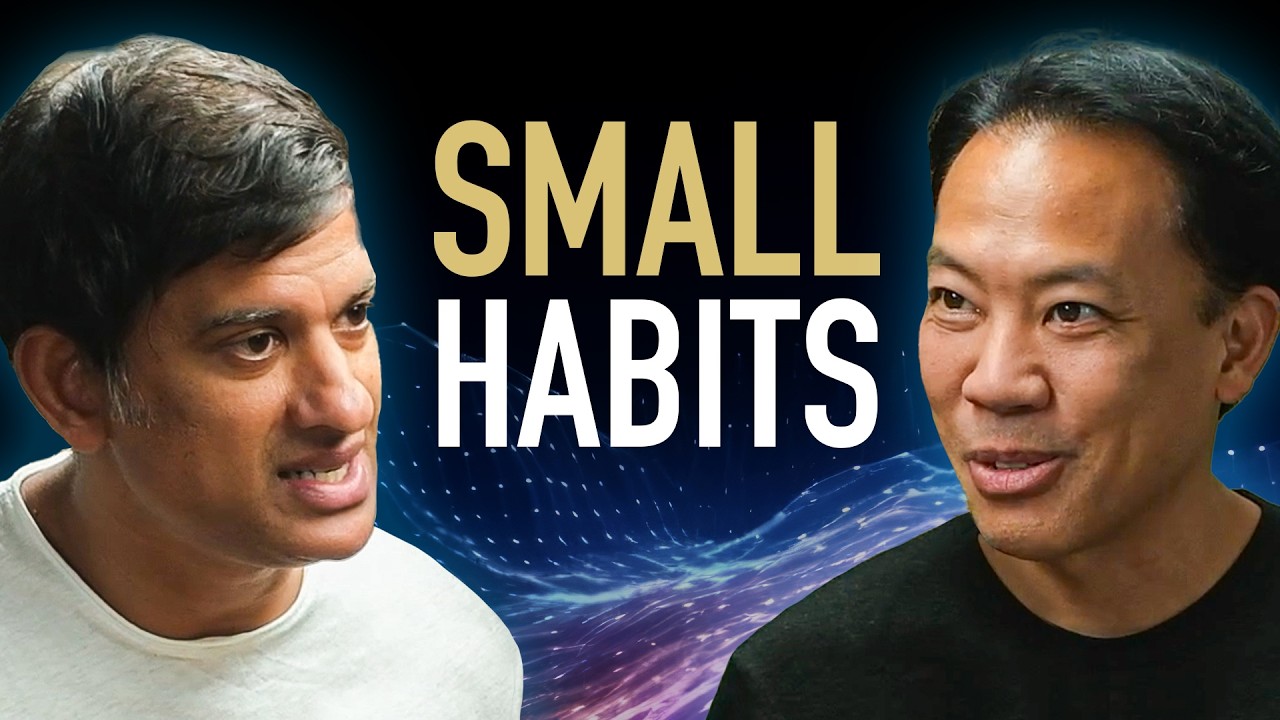
Dr. Rangan Chatterjee lays out a 3-step morning routine: 10 minutes of mindfulness, brief movement, and a 3-question journal on gratitude, priorities, and desired qualities. He argues that intentional mornings reshape your identity and improve mood, productivity, and relationships. The whole thing takes 5 to 45 minutes depending on how you stack it with existing habits.
Chapters
What are the 3 keys to winning the morning so you can win the day?
We all have morning routines. The question is, are we aware of it or not?
Sometimes something sounds so simple, and that's the excuse some people use to not do it.
One of the most valuable things you can do for your health and well-being is to make one small promise and keep it.
From habit design, it becomes a trigger.
If you start off your day with negativity, you're increasing the chance that Everything else that day is also going to be negative.
You're validating the person that you are, that you want to become.
You're showing up for yourself. You're saying to yourself, yeah, I can trust you. I can rely on you.
And the real benefit for you is the sense of calm.
So I feel you've lost a really powerful opportunity to be with your own thoughts.
If you're that busy, you should probably spend an hour in mindfulness.
And it's basically the 3 most powerful questions you can ask yourself.
Little things that can make a big difference. Especially when it's done consistently.
The most powerful daily habit that any one of us can do for our health and happiness is have a daily practice of—
Welcome back to the Kwik Brain Podcast. I am your host and your brain coach, Jim Kwik. And as always, I'm here to help you to learn quickly and really master your learning to master your life. I'm so excited to have back on this show a dear friend. We are in his studio. We just recorded an episode for his amazing podcast. One of our team's favorite. Dr. Chatterjee is a medical doctor. He's a bestselling author. He's an incredible presenter. If I was to read his CV, it would take the whole episode. And welcome back to the show.
Thanks, Jim. Thanks for having me.
Yes, I enjoyed very much being on your show and we're in your studio. And I would be remiss if I didn't ask you this question because I love Your thinking process. Morning routines—we hear a lot about morning routines, and everybody has Oprah has hers, and Tim Ferriss has his, and Tony has his, and mine—I have mine. I'm curious because you have so much on your plate, right? You have your family, you have this amazing career, you're—you're writing another book. How do you look at morning routines to win the day? Like what are the components, and what's your frame of mind in terms of your attitudes towards? Routines.
I think the key thing for all of us to remember, Jim, is that we all have morning routines. The question is, are we aware of it or not? Right? Most of what we do each day is habit. We're just repeating the behaviours from the day before. And you could be repeating the behaviour of waking up late, looking at your phone, doing emails, looking at negative comments on the news, on social media, That could be your morning routine, right? It is a routine. You're doing it day in, day out, and that is leading to a particular result. So, everyone's entitled to live their life the way they want to live it. Okay? That's always the approach I take when trying to help people. It's always the approach I take with my patients. They are adults. They are individuals. They can choose. But I think there's something incredibly powerful about starting off your day in an intentional way. Now, I think sometimes morning routines get a bad rap because people say, I don't have time for a morning routine. Okay? It's okay for you guys who have time. I've got a busy life. But I, as you mentioned, Jim, like you, I also have a busy life. I've got a lot of things I need to get done. And I've found over the years that when I start my day with an intentional morning routine, dare I say it, a ritual, then The benefits last for the entire day. I get that time back. And that's something I think people don't realize. They say they don't have time, but you absolutely will get that time back. And look, they don't have to take that long. You know, I've been working on my morning routine for several years now. It's been changing. It's been iterating, right? So now, yeah, it takes about 40 minutes or so, 45 minutes, sometimes 30 minutes. But 5 years ago, it didn't. 5 years ago, it took 10 minutes and it still gave me benefits. And I have had patients in the past who said to me, I'm too busy for a morning routine. I don't have time. And with the framework I use that I'm going to share with you, I helped her create a 5-minute morning routine that had a huge impact on her health, her happiness, her wellbeing, and the way she parented.
Hmm.
Right? So, I think no matter who you are, no matter what you have going on in your life, Your day is absolutely improved by starting the day intentionally. So, when I think about morning routines, I think about the 3 M's. Okay? I know you love your mnemonics.
Yeah, I do.
And you've got many. My 3 M's are mindfulness, movement, and mindset. Okay? These are the 3 components I look at ticking off first thing in the morning, every morning.
Okay, so what does— let's start with mindfulness. What does that look like for you?
Okay, so that's been changing over the last few years. Okay. But mindfulness is essentially any practice of mindfulness. Okay, that could be meditation. It could be breathwork. It could be drinking your coffee intentionally, like literally taking the time to sip it and savor it and not doing it whilst also reading the news or doing emails. Okay? It's some practice of mindfulness, which is essentially you being in the present moment and paying attention to what you're doing. So, what does that look like for me? At the moment, it's 10 minutes of meditation.
Okay.
Okay? So, I get up in the morning. I live in a house. I come downstairs in my pajamas, And I will start off with 10 minutes of meditation.
And are you sitting? Are you laying down?
I'm sitting. I go into my living room, I sit on the floor against the sofa, and I sit there for 10 minutes. Now, I used to use apps many years ago when I was learning meditation, and I think there's lots of brilliant, cost-effective apps out there, but I'm at the stage now where I don't like to use apps myself for my own meditation. Okay. I feel that I can meditate now without the use of apps, and I prefer it. So, again, just 10 minutes, and I feel a real sense of calm at the end of it, usually. Okay? But I never regret doing it. The second M is movement. Okay? And before I move to movement, Jim, I just want to make it really clear for people. Choose the practice of mindfulness that works for you. Okay. I'm less about people copying what I do and more about helping them understand the principles behind what they're doing. Okay. Choose, if you don't like meditation, for whatever reason, you prefer breathwork or you prefer something else, I'm completely okay with that. But I think starting your day with a mindfulness practice is an exceptional way to start each day.
And the real benefit for you is the sense of calm.
Well, yeah, it's I think with this entire routine, it's not only about what it gives me, it's also about what would I be doing and accumulating if I wasn't doing this? I think it's a really key point about morning routines.
It's a great question.
Right? So, if I wasn't doing that, what I could well be doing is be on my mobile phone in bed scrolling Instagram. Okay? Which isn't necessarily the worst habit in the world. But the point is, is that I think the morning is a really powerful part of the day where we've got an opportunity to be with ourselves, to plan our lives, to think about our lives, to reflect, to gain perspective on what's actually going on. Once you jump into emails or social media or the news, you're now consuming content from the outside. Okay, so I feel you've lost a really powerful opportunity to be with your own thoughts. And I still believe today that the most powerful daily habit that any one of us can do for our health and happiness is have a daily practice of solitude. Because I think without a practice of solitude, which is intentionally being by yourself, you start to get caught up in the lives of other people. What do they want you to do? What does the world want you to do? And you've lost an opportunity to reflect on your life, take that big picture view on your life. So my morning routine, these 3 Ms, are one way in which I practice solitude every day. It gives me— it basically says to me, Jim, that no matter how busy I am, I've still made time to nourish myself. And the busier I get, the more I need to do my morning routine. That's the irony. And I've learned that through failure, right?
Mm-hmm.
I've learned that from several years ago, thinking I was too busy. I got, you know what? It's all very well when I have time, but I've got too much work on today to do my morning routine. So, I would skip it. And you know what I noticed? I noticed that not as much work got done. I'd feel more stressed at the end of the day. I also felt that my relationships weren't as close. There was less intimacy because I was a bit wired. And I've realized through experimentation with myself that actually when I make time, even just 10 minutes in the morning to nourish myself, every part of the day gets better. I'm a better doctor, I'm a better husband, I'm a better father, and frankly, I'm a better human being. So, yes, going back to your question, what does that meditation give me? It gives me a sense of calm. It gives me a sense of peace. And it allows me and helps me reflect on what I want out of life.
And it makes sense, like, because what you're doing is also what you're not doing. You're not reinforcing, let's say, on your phone distraction or reaction, fighting fires first thing in the morning. In the morning, you're very suggestible. You know, the first thing you do is grab your device and you have the digital depression, digital distraction. That could be a challenge. And some people listening could say like, well, exactly what you just said. I'm so busy. I don't have 10 minutes to be mindful. If you're that busy, you should probably spend an hour in mindfulness to be able to get that benefit. Sometimes you disconnect to reconnect. But I love that.
And here's the thing, Jim, for me, and I've seen this with many patients over the years, of course, could I meditate at a different part of the day? Yeah, I could do. It just so happens that I never do.
Yeah.
Right? If I don't do that first thing in the morning, I just find I don't do it. And I found that with patients as well. So I really strongly feel that the things that you think are important for yourself, you should really do first thing in the morning. I say should, I don't like the word should. I think there's a benefit to doing the first thing in the morning. Because, and also there's a, there's a something I don't talk about much is this idea of what does that say to yourself? What does that do for your self-identity?
Yeah.
And that's why I do my morning routine each day, because it says to me that no matter how busy my life is or what else is going on, I've still found time to prioritize myself. You know, Jim, whenever we meet a new person, we're asking ourselves 2 questions. Do I trust them? And can I rely on them? But those are the 2 questions we're also asking ourselves each day. And I think one of the most toxic things we do is make promises to ourselves that we don't keep.
Hmm.
And I think one of the most valuable things you can do for your health and wellbeing is to make one small promise and keep it. Because each day then you are showing up for yourself. You are saying to yourself, yeah, I can trust you. I can rely on you. And that's why I would say to people, even if you just have a 5-minute morning routine that you do every day, you will change your image of yourself. Yes, I can talk to you about what it does for your brain, what it does for your physical health, what it does for your emotions. But I would argue more importantly than anything, it changes your perception of yourself. You are someone who does what they say they're going to do.
Even if it's hard.
Even if it's hard.
Yeah. That you could do difficult things consistently.
Yeah. So the first M is mindfulness. The second M is movement. Okay. And I think we touched on this first time I came on your show, but I will literally go from my living room into my kitchen in my pajamas. And I keep saying that because it's important. And I will make myself a coffee. Now I'm very intentional with how I make coffee. So I weigh it out. I put it in the cafetière.
You're mindful.
I'm very mindful about it. And in the 5 minutes that the coffee is brewing, because I've got a timer on for 5 minutes, in those 5 minutes, I don't go on email. I don't go on Instagram. I do a workout. It's just a 5-minute workout in my pajamas. It used to be bodyweight stuff like press-ups and lunges and things. Now I've got a kettlebell in my kitchen. And it's not much, right? But brushing your teeth for 2 minutes a day is not much.
No.
Right? But it adds up. And so I keep in, I think, pretty good physical shape. And one of the things I do is I do a 5-minute strength workout every day. Sure, it's not 40 minutes in the gym, but you know what? It works. And because it's only 5 minutes, it happens. So the second M I suggest to people is a form of movement. That could be a walk around your block if you have time. It could be a high-intensity workout. It could be you on your bike. It could be yoga, whatever you want. But I think starting off your day with a form of movement is incredibly beneficial. And as you well know, it helps your brain function.
Without a doubt, as you know, as your body moves, your brain grooves. I love that you do it first thing in the morning. Also, I've noticed when I started to do some exercise in the morning, even if it's not my full workout, I sleep better at night also as well and have clear head, I have more energy to be able to tackle the things I need to do, you know, in my work. And so you wake up, you're, you're, you do your meditation, or people could do their breath exercises, whatever their mindfulness practice is, they could choose on their own. And then you move while your coffee is brewing. And I love how you stack it because from habit design, it becomes a trigger, right? 100%. Every time you make coffee, you do your 5-minute exercise while you're waiting.
And that's why I don't miss, you know.
Yeah.
Everyone listening to this, Jim, they brush their teeth every day, I hope, right?
Yes.
That wasn't a habit when they were 2 years old, or 4 years old, or even 6 years old. Their parents probably had to nag them and remind them, right? But because it's simple, it doesn't take long. And because it's done at the same time every day, there's a sequence, it starts to become automatic. My 5-minute morning workout I don't have to think about it. It's— I don't even feel I'm working out. It's just part of what I do. For Rangan to get up and actually exist in the world, that's just one of the things I do. I brush my teeth, I have a 5-minute workout.
And it's not just what you do, going back to identity, it's who you are. It's who I am. You show up, you're providing evidence that you are the person that you say that you are, you're a person that does the things that you're—
that are important. Some days, and here's the thing, I keep it small. Right. But some days, if I've got extra time, I'll plunge the coffee at 5 minutes in the cafeteria and I'll keep going for another 5 minutes or 10 minutes. The workout will be a bit longer, right? But on other days, it will just be 5 minutes, but it always happens. That's the key. And then I move to the 3rd M, which is mindset. Now, I know you're passionate about mindsets just as much as I am. You always talk about this idea that behaviour is belief-driven. I think that's fantastic. I completely agree. And I kind of feel that so many of us live at the mercy of the world, right? We let other people, news headlines, emails, social media posts impact how we feel. And a thought experiment for anyone who's watching or listening, Jim, is just imagine if you start off, let's say just 10 minutes in the morning, If you start off with 10 minutes looking at negativity, is it a surprise to you that later on in the day you might feel low? You might be a bit short with your partner, a bit irritable at work. It is, when you look at it like that, it's no surprise. So much of the time, our thoughts and our feelings and our emotions are downstream of the content we consume. So here's the point. There's a lot in the day you can't control. When you're at work, yeah, you may be consuming things that you don't want to be consuming or put you in a negative frame of mind. Great. There may be nothing you can do about that. But for most of us, first thing in the morning, we can control that. So I kind of think of it as the ultimate upstream thing to do. If you start off your day with negativity, you're increasing the chance that everything else that day is also going to be negative. There's such work you need to do to pull yourself out of that state and that inertia. So I'm like, well, why don't you just start the day with some positivity? Right? So yes, the meditation does that. The movement does that. But when I'm specifically talking about mindset, I take my coffee that's been brewed the way I like it. Okay? And I sit there and I'll journal. Okay? So I like to ask myself some powerful questions every day. I put all of those questions in something called the 3 Question Journal, which loads of my audience now have picked up and are using every day. And it's basically the 3 most powerful questions you can ask yourself. in the morning and in the evening. Okay? So, just thinking about the morning for a moment, I'll sit with my coffee, open up the journal, and the first question is, what's one thing you deeply appreciate about your life? Super simple, right? And by making it only one thing, it's not— by making it so simple, I can never say, Jim, that I don't have time.
Right.
Right? I can never say, I don't have time to answer those 3 questions. How busy would I have to literally be to not have a minute and a half to answer these 3 questions? Okay? I do have time. I've got time to drink my coffee. I've got time to do that. So, as you well know, gratitude has been shown to lower anxiety, lower depression, improve our moods, improve our ability to make decisions, can improve sleep quality, all kinds of things. We've got scientific studies to show that gratitude can do. So you start off the day in a positive frame of mind. What do I appreciate about my life? Second question, what is the most important thing I have to do today?
Good question.
Simple question that's very, very effective because it forces you to prioritize. Now, it may be that you've got 3 or 4 things that are important. That's not the point. By making a decision every day, you're training your decision muscle. And I think that's a really important point. So yeah, some days I may have 2 or 3 things, but I'm forced to choose one. And some days it will be, I need to go for a 20-minute walk at lunchtime. Some days it will be a work project. On other days, and quite a lot recently, it's been when my children come home from school, I'm going to make sure my computer's shut and I'm present to listen to what they have to tell me.
Hmm.
Right? It is a deceptively simple question. If you answer that every single day and you act on it, just one thing, right? At the end of the year, that's 365 important things that you've done. Don't tell me the quality of your life will not change if you do that.
Right.
Right? And one of the most important things about that question is this idea that these days our to-do list is never done. Right? There's always something else that we feel we have to do. And one thing I love about this question is it means that if I answer that this is the most important thing and I have done that by the end of the day, that's a win, right? You know that even if you have 10 emails that you didn't get to, you still did the most important thing. As you say, Jim, you've kept the most important thing the most important thing because you wrote it down. And you did it. The 3rd question and the final question is, what quality or qualities do you want to showcase to the world today?
Oh.
And it's all about intention, right? It's simply about saying, recently I've been putting things like, I want to show the world the quality of compassion, or I want to show the world the quality of patience. And it is incredible how powerful it is by writing that down in the morning in a pen on paper, and I can see it looking back at me. It means that throughout that day, I've got it front and center. If I'm tempted to rush or get snappy with someone, I remember, oh, you said you want to show patience there. Okay, show patience. And again, so much of what we do is we're just repeating past behaviors without any intention. We think that's who we are, but it isn't necessarily. And so, I could talk to you a lot more about, um, these, these questions and, and why I've created a routine like this. But for the purpose of this, of your show, Jim, I know it's a short-form show. Like, I hope that provides the framework, the 3 Ms: mindfulness, movement, and mindset. You don't have to copy what I do. Mindset could be reading an uplifting book for 5 or 10 minutes in the morning.
Hmm.
You know, a spiritual book or a philosophy book or a health book, one of your books, one of my books, whatever it might be, but something where you're learning something that's putting you in a positive frame of mind. And as I say, I have used that framework with patients. I always remember this one patient who had health problems related to stress, and she said she didn't have time. And we ended up creating a 5-minute 3M routine for her. 1 minute of 3-4-5 breathing, which is breathe in for 3, hold for 4, breathe out for 5. Okay? So 1 minute of that. 2 minutes of her favorite yoga sequences, and then 2 minutes of affirmations where she would write and repeat how she wanted her life to be. Literally life-changing for her. So for anyone who says they don't have time, even 5 minutes and you will start to feel a difference.
I love that because there's this— it's a force multiplier. You do that and you get multiple rewards for that investment of 5, 10, 15 minutes. Yeah. And I want to underscore that sometimes something sounds so simple, and that's the excuse some people use to not do it, right? It's like, oh, that's too easy, that's too simple, and then they just neglect it. But the profound rewards that come from that time for yourself to reinforce, especially I love what you're saying about identity. I haven't heard others talk about morning routines as a reflection of you're validating the person that you are, that you want to become, and that you're not breaking those promises to yourself.
And Jim, if anyone who's skeptical, I say this, right? Don't believe me. Try it for yourself, right? For 7 days, right? For 7 days, either do the full 3 Ms or pick one of them. Let's say a 5-minute workout in the morning, your favorite movements, whatever it is, skipping, Pilates, yoga, whatever, Right? Do it first thing in the morning for 5 minutes for 7 days and just see how you feel. If you don't feel any different, yeah, feel free to ignore me and say, yeah, he doesn't know what he's talking about. No, I've got no problem with that. But I would submit to most people that if you do that for the next 7 days, you are going to feel incredible benefits, which in turn is going to motivate you to do it more.
Yeah, I doubt anybody who really does it and not say they do it, but they do it for those 7 days, they're gonna get net positive results. Nobody's gonna— nobody's life is gonna be worse because they spent the first few minutes of their day, you know, in mindfulness and movement and getting their mindset right so that they could win that day, right? The whole idea behind, you wanna win the day, you have to win that first, you know, that first hour of the day. And this doesn't even come close to taking an hour to do.
Yeah.
And you could do this even, You know, potentially with your kids. You know, you could do this even when you're traveling.
I do this when I'm traveling. I've shared on my podcast many times how I do this in a hotel room. It's just a part of what I do. Here's the thing. I don't not brush my teeth when I'm in a hotel room. Right? Right. So these things for me are just like brushing my teeth.
It's a non-negotiable.
It's a non-negotiable. You know, brushing your teeth is for your oral hygiene. Well, this is for my body, mind, and soul hygiene, basically.
I absolutely love that. Little things that can make a big difference, especially when it's It's done consistently. Yeah, that's absolutely remarkable. Now, this journal, 3 Question Journal, where can people find this?
Online, if they go to the Intelligent Change website. I partner with this great company called Intelligent Change, so www.intelligentchange.com, and type in 3 Question Journal. And, you know, all over the world, people can check it out if they want to.
That's fantastic. And this is one of my favorites, Happy Mind, Happy Life. Yeah, where can people get This, your books?
That's my 5th book. It's my latest one and it's available all over the world in all the usual places. So Happy Mind, Happy Life, Amazon or your local independent bookseller, wherever you want.
Amazing. So everyone who's listening, remember, you have to take one action. I always ask our guests to give something that's very practical and you got that in abundance today. What I'd recommend everybody to do is Do this and post it online and tag Dr. Chatterjee, tag myself, and give us your feedback also as well. This because I'm curious our community if you're willing to take on this challenge for the next seven days. I mean, we're talking about like ten fifteen minutes max, and share your results. Tag us so we get to see it, please. I'll as always you know reshare because you're tagging us in that post, and then and also. Check out Dr. Chatterjee's podcast. Where do people find the podcast?
Yeah, it's called Feel Better Live More. It's been going for nearly 7 years now. You know, very blessed with how many people listen each week all over the world. And it's in the usual places, Apple Podcasts, Spotify, and everything is filmed in high definition. Yeah, it's all there on YouTube as well.
Absolutely love it. Dr. Chatterjee, thank you so much for being on the show. I want to thank everybody who's watching. Make sure you subscribe. To our YouTube and also Dr. Chatterjee's YouTube, which is absolutely phenomenal. Check out his podcast. We'll put a link as we always do to the journal, to his books, his podcasts, his website at show notes at jimkwik.com/notes. And I want to thank you for listening to this episode. And until our next episode, remember to—
Be well. Be limitless.
Be limitless.
More from Jim





The Library of Minds: Brain Coach: How to Stay Sharp When AI Does the Thinking | Jim Kwik





