Eat Smarter: How Relationships Impact Eating Habits | Shawn Stevenson
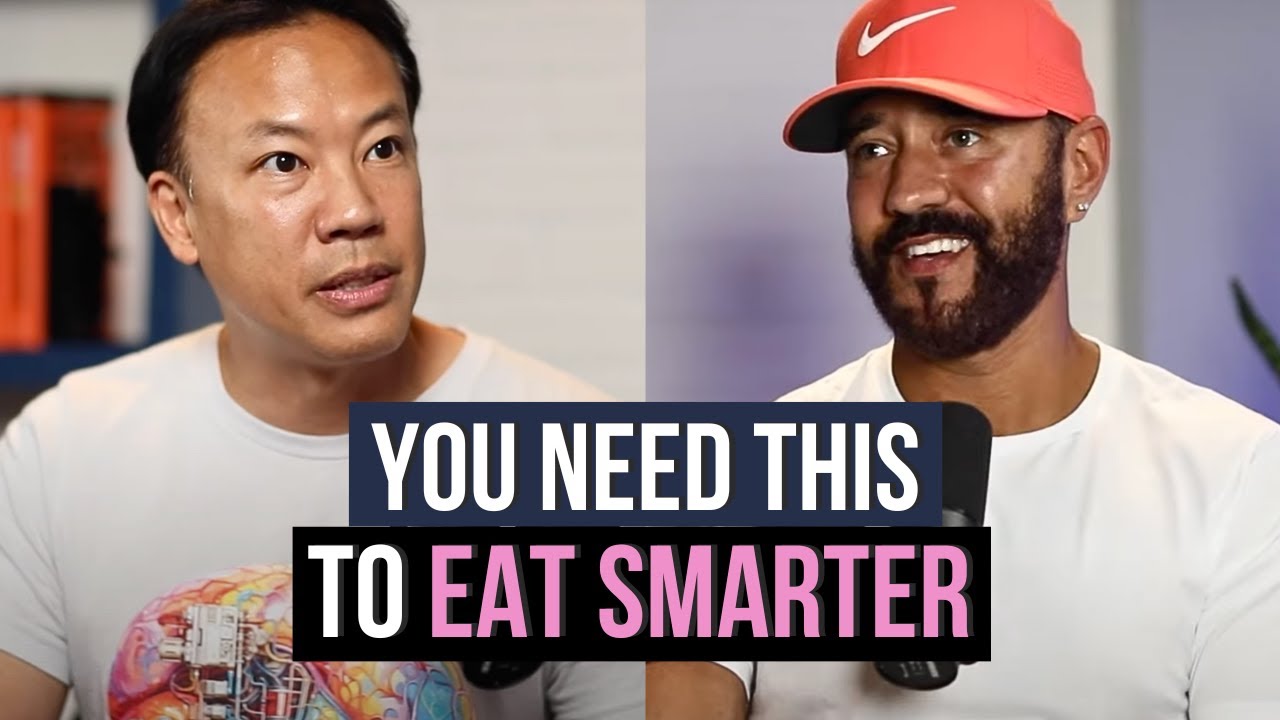
In this episode of the Kwik Brain Podcast, host Jim Kwik interviews bestselling author and nutrition scientist Shawn Stevenson about his new family‑focused cookbook, Eat Smarter. The conversation moves beyond recipes to explore how the social and cultural environment of meals—who we eat with, where we eat, and how we eat—profoundly influences nutrition, chronic disease, mental health, and brain performance. Stevenson cites multiple large‑scale studies (Harvard family‑meal research, Pediatrics and JAMA child‑obesity studies, IBM employee morale data, a Brigham Young meta‑analysis of 148 studies) that show consistent family meals reduce ultra‑processed food intake, increase fruit and vegetable consumption, lower obesity and disordered‑eating rates, improve stress and productivity, and cut all‑cause mortality by 50%. He explains the biological mechanisms: shared meals trigger oxytocin release, which counteracts cortisol and shifts the nervous system from sympathetic “fight‑or‑flight” to parasympathetic “rest‑and‑digest,” while also fostering brainwave synchrony and microbial exchange. The hosts discuss practical behavioral levers—scheduling a minimum of three family meals per week, creating device‑free zones, using gratitude rituals, rewarding meals with games or creative activities, and tailoring approaches to each family member’s personality. Stevenson also highlights the concept of a “macroculture” (the broader societal food environment dominated by ultra‑processed foods) versus a “microculture” (the intentional, health‑supportive habits a household can cultivate). Personal anecdotes about his own impoverished upbringing, his mother’s resilience, and his son’s reactions illustrate how resourcefulness and attention can reshape a family’s food culture. The episode ends with promotional plugs for the Eat Smarter cookbook, a family health summit, and Kwik’s own Limitless Expanded program, while encouraging listeners to share their favorite meals on social media.
Chapters
60% of American adults now have at least one chronic disease. 60% have at least one. 40% have 2 or more.
Shawn Stevenson is a bestselling author. We're gonna talk about not just what to eat, but the environment you eat in.
Right.
And the people you're eating with.
Families that eat together on a consistent basis tended to eat significantly less ultra-processed foods and significantly more whole real foods, namely fruits and vegetables. And as a result, significantly higher rates of essential nutrients that help to prevent diseases in those family members. And I was just like, that is nuts.
Welcome back to the Kwik Brain Podcast. We are dedicated to building better brains. Our goal is 1 billion brighter brains, no brain left behind. The topic of today, we're going to talk about social connections, nutritious foods for brain optimization and for greater performance. And I can't think of a Yeah. And what better guest to have than the guest that we've had more than any other time on this show, Shawn Stevenson. Many of you know, if you're watching this on our YouTube channel, I encourage you to subscribe. We have over 1.2 million subscribers there. If you're watching this on video, we happen to be at, uh, at his set right now, uh, the Model Health Show, which is the number one health podcast, one of our favorites. on the team for sure. He's a bestselling author. We've had him on the show talking about sleeping smarter, eating smarter, and he's just one of the best guys out. And this guy's got the most amazing voice ever. Welcome to the show, Shawn.
Thank you. I've got to live up to the hype now, man.
Thank you. Thanks for being back on the show. So we've had you on more than any other person, and I'm very, very, very proud. You have a new book coming out called Eat Smarter, which is a family cookbook. It's so much more than just a cookbook. Yes, there's great ideas on meal prep and foods that are great for your own performance, your mental health, your brain health, you know, your personal performance. But we're going to talk about not just what to eat, but the environment you eat in and the people you're eating with. So what was the impetus for this new book?
Yeah, this is obviously a very unique cookbook. It has over 250 scientific references in a cookbook, which has never been done before. But all in a way, and you know this, in a way that's entertaining, that's inviting, empowering, Laid out in a very beautiful way as well. This is going to be a staple really in people's kitchens. We're already seeing it happen, which is just mind-blowing. And, the driving force behind writing this book was for many years working as a clinician and being a research scientist and doing all this work in teaching and speaking and all this stuff, it was really interesting because a lot of times we mean well when we're advocating for people to make behavior changes.
Yeah.
Right? We can tell them, do this thing to get this result. And, we give them that behavior change and then they go into an environment that might counter that behavior change or that might even belittle that behavior change or overall just make that behavior change much more difficult to do in the first place. And, what that environment is is the culture.
Hmm.
The culture that we exist in is what's impacting our choices more than anything else. But, our culture is sort of like an invisible hand. We don't really understand or realize what's guiding us. And, we make choices based on what we're exposed to. We make choices, even cravings are cultural. We're not going to crave— in Cambodia, they're eating some delicacy is deep-fried tarantulas.
Wow.
People are eating tarantulas out there. And, Iceland, fermented shark is a thing. Here in the United States, we're going to crave different things, namely ultra-processed foods, as you know, is the dominant part of our diet. And, this is according to the BMJ. Again, we talk about that in the book. And so, instead of treating the symptom, which is unfortunately what we're doing in modern medicine, we have this model for symptom focus instead of removing the root cause. Instead of doing that with behavior change target, which is targeting a symptom, I'm working now giving people the data and the empowerment to be able to change the culture so that the behavior Becomes automatic, right? So that there's no longer a struggle to do the thing that you deem to be the right thing for you. And with that being said, you already brought this up. How we eat, who we're eating with has a huge impact on our food choices and our health outcomes. I'll share a couple of studies with you. I'll just rattle them off really quickly. This blew my mind. So one of them was a bunch of researchers at Harvard were collecting data on family eating behaviors, like how frequently they're eating together. And their food choices. And this was going on for years. And I was just like, how do people not know this? Like, this should be on billboards. And what they found was that families that eat together on a consistent basis tended to eat significantly less ultra-processed foods, namely chips and soda, and significantly more whole real foods, namely fruits and vegetables. And as a result, significantly higher rates of essential nutrients that help to prevent diseases in those family members.
Wow.
And, I was just like, that is nuts. Does this apply in other contexts? Can we get some specific things that get reduced as far as disease outcomes? And, I found 2 studies. Well, I found a bunch more, but I'll share with you 2. One of them was published in Pediatrics. So, we're looking at outcomes for kids. And, another one was published in JAMA. This is the Journal of the American Medical Association. This is one of our top-tier journals here in the United States. And, these researchers found that, and I'm also going to share a minimal effective dose, which I'm a big fan of that. They found that eating together with your family 3 times a week, 3 times a week led to a plummeting rate of obesity outcomes in those children and significantly lower disordered eating in those children as well when they ate with their parents 3 times a week. And now, also, of course, I wanted to give a minimum effective dose because we got a lot of stuff going on.
Right, right.
And, we want to find the leverage point. Where do we actually see that tipping point to where we get these benefits? But, another barrier to entry, which I'm uniquely qualified for, is, is this going to apply if we don't have resources, if we don't have access? Because, a lot of that, even saying eating with the parents, is that applicable? What if you only have one parent in the household? And, what if they're working and all these things?
Mm-hmm.
And so, for myself, I grew up in the inner city and in poverty. And, in the United States, I always say this with a caveat, poverty is very different here in the United States versus other places.
Sure.
In the United States, if you're living in poverty, you still probably have a TV. We would get the video game system a year later, but we still would get one.
Right.
My mom would get— this is a true story— she'd get cars from a place called OK Junk Cars. And so, she kept buying these Ford Escorts and one breaks down, she gets the next one. And, it's actually how I learned how to drive a stick shift, by the way. But, we were getting by. We were getting by. And, it wasn't so much about resources but resourcefulness, of course. And, most importantly, and here's what the data indicated, does this apply when it doesn't fit into this kind of white picket fence narrative? And so, another study was looking at minority children who generally live in a low-income context. And, by the way, we were getting food from charities. There's a place called the Hosea House where government assistance. My mom was trying to find a way to provide for us. She would sell her blood sometimes to get money. She worked overnight at a convenience store. And, one of those nights, she was actually attacked. She was stabbed 8 times fending off somebody who's trying to rob the store. And, my mom is different though. And, my son is here in the studio with me. He knows she's different. She actually not just survived that, but she actually—
She fought back.
Was able to subdue the guy until the police came. Yeah, it's crazy. But, when she went in to get stitched up and go through the procedures, the physician afterwards told her that if you weren't overweight, if you weren't a heavyset woman, as he put it, you would've died. Basically, her being overweight, and she was right there teetering on obesity at the time, saved her. And so, what do you think she's going to attach to that?
Yeah.
Right? So now, that's her protection. And so, I'm setting all this up to say this is the environment that I come from. I come from this very volatile environment. But, had my family known what I'm about to share with you, we would have put into place because my mother wanted to do well for us, she just didn't know. So, as you said many times, knowledge is not power, knowledge applied is power. But, that knowledge, that awareness is kind of that first domino. It's what you're going to do with it. And so what these researchers found was that for these children in this low-income environment, if they ate with their family members, whatever meal, breakfast, lunch, dinner, didn't matter, 4 times a week, those children ended up eating significantly less ultra-processed foods, namely chips and soda, they identified significantly less. And they ended up eating 5 servings of fruits and vegetables daily, 5 days of the week. All right. There was something special about eating together. With the family that led to these outcomes. And, by the way, the researchers noticed specifically when the TV was never or rarely on during mealtimes. And, before I pass it back to you, this is not an advocation for— my family and I, my son is here, we love a good movie night or grabbing some snacks and watching the game, something like that. But, we also need that face time in the real world to actually see each other and to connect because the dinner table in many ways is a unifier. And, I'll just share really quickly and then pass it back to you. We can talk a little bit about what's happening behind the scenes, like why is it leading to these different outcomes. And, one of those reasons is when you're around people that you care about, we start to make different chemistry. And, as you know, we've talked about this before, your thoughts create chemistry in your body instantaneously. The most powerful pharmacy in the universe is in your own body. And, I say that because it's not just bioidentical, It is made for you. It is tailor-made with the chemistry you're creating, is made for your receptor sites, and it's based on your perception. And when we're around people that we care about, we start producing— one of the compounds we start to produce is oxytocin. And oxytocin has been found to basically counteract cortisol. And so, we're switching over from this fight-or-flight sympathetic dominance that we're all just kind of habitually in today, the average person, We can go to 0 to 100 really quick, but we're not very good at going from 100 to 0 and downregulating unless we get around people that we love. So, we're switching over to the parasympathetic rest and digest is the nickname nervous system when we're around people that we care about under the umbrella of good food.
So, let's unpack that. This is amazing. And, I want to commend you on having the focus on behavioral change because that's a big part of our listenership. They want to— they realize again that knowledge is only potential power, only becomes power when we change a behavior, right? And, um, and so you're saying it's not just our neurological networks or our biological networks. A big part of our performance and our health comes from our social networks, right?
Absolutely, yeah.
And so when you're in that parasympathetic rest and digest, it's not just what you eat, it's, it's how you're eating, the state you're eating in, and also The environment.
Yeah. And so, that specifically, let's give this a label so we can talk about this. We have a larger culturescape or a macroculture. And, here in the United States, and this is according to the CDC, their last published statistics, 60% of American adults now have at least one chronic disease. 60% have at least one, 40% have 2 or more. We now have a culture, a larger culturescape, where if you're healthy, you're not normal. You're no longer in the average. You're no longer in the majority. And so, you see where I'm going at here?
Yeah.
That's the larger culturescape. And, we do exist in that. We're kind of like in a glorified snow globe here on planet Earth in many ways. But, what we can do is create microcultures within our own household namely and in particular, but this is a caveat, the microculture starts with you. You are a reflection of your culture. The culture is coming from within. And, I realized this recently after completing this book, I started to see more real world. What you're attuned to, you'll start to see it. And, we went to Hawaii recently for the first time. And again, coming from where I come from to even go to Hawaii in the first place is mind-blowing. And, I saw, and my son being here, he saw this multiple times as well, people would come over to us and talk to us. Even on the plane, we're just sitting on the plane, people would walk by and just like, I love your family. We take our culture with us everywhere that we go. You can plant me into this new culture, but I'm a reflection of my culture. And, there's an energy behind that as well. And, that energy— and, I'm a big fan of the work from HeartMath Institute. And, for many years, even when I didn't have much money living in Ferguson, Missouri, I would kind of tithe where I was getting my Education from, my spiritual food. And so, I would tie to the Institute of Noetic Sciences, HeartMath Institute. And, we now have innovations where we can see some of the energy that we can't see with our particular range of vision, which we know that some animals see very differently than we see, for example. But, there's a lot of things that we can't see. And, as you know, everything is energy, but there's a field, there's an electromagnetic field that radiates really from the human heart several feet, up to 8 feet. And, they call this a tube torus. And so, truly when you're in the space with another person, our energy fields are interacting.
Sure.
Right? So, when we're talking about vibes or we're talking about how our brains sync up, and this is from researchers at Yale, just sitting in a room with a person that we don't even know and having a little bit of rapport for maybe 10 minutes, our brainwaves start to sync up and mirror each other. Right. And, it's just like we are social creatures. We're evolved to do that. We see it in other species. We see how do those birds know how to do that V? Who's the leader? How do bees know? No, we can do that too. But, a lot of times, we're so distracted from the fact that that's happening. And so, saying all this to say that by intentionally creating a microculture where you have healthier social interactions, where we understand the power of proximity and even microbial. There's a microbial data exchange whenever you're in proximity with another person. It's kind of like music file sharing back in the day. This catalog is getting more expansive. And so, we have that. We have something that we can't see. The microbial cascade is a little bit more tangible for us, I think, as the average person thinks. But, At the end of the day, when we create this microculture, and I have my son right here in the room with us, and can you just shout out, what did we do today together outside? We worked out as a family. That's right, that's right. He just turned 12, so he's got the voice now. He's got to be— but, we worked out together and it's just a part of our culture. And, so much of what we've done, we've created a physical culture in our household and also finding joy in it, finding an opportunity to make sure we're doing things that he loves to do. Even when we're driving over here, I ask him like, so, what did you enjoy most about the workout? Just taking those mental notes so I can add to it for the culture. And also, knowing— and this is just some tips for parents in general. A lot of times when we're wanting to change the microculture, it's hard because we all— children, we're just big adult babies. But, a lot of times we resist change. Because we're comfortable. Even if we don't like where we are, we're comfortable with it. And there's something kind of soothing for the mind to have automation.
Hi, this is Jim Kwik, author of the New York Times and Wall Street Journal bestseller Limitless. And today I am thrilled to share with you some exciting news. It is Limitless Expanded. It's an updated and brand new edition of my transformative guide, and now it's enriched with new insights, and new tools to help you navigate our post-pandemic world. For a limited time, when you preorder your copy of Limitless Expanded, you're going to get exclusive free access to my 13-day Quick Start 2.0 training. It's a brain training, plus a bunch of amazing bonuses. Just go to limitlessbook.com and pick up a copy for you and pick up a copy for Or a friend.
And so, one of the most practical things we can do, and this should be obvious, but it's to pay attention. Just pay attention to your child or to your significant other because you know what motivates them. You know what pisses them off. You know what excites them, what de-excites them. You know what evokes creativity, and the list goes on and on. We know those conditions, but a lot of times we make ourselves suffer Because— and I heard this from my mother many times. A lot of times she just kind of forfeited relationships with her kids. She would say this, she said, Shawn, I'm tired. I'm tired. I'm tired. And because we're tired, we don't want to or don't have the mental energy to be patient, to be observant. And so that microculture starts with us starting to fill up our own cup and starting to— it's not even add energy, but to activate, to remove blockages so that we have access to more energy for us to pay attention, for us to use as a benevolent leader those psychological leverage points so that we can create a more cohesive unit. And, last point I'll share. So, it's like I know that my son loves basketball. And so, being able to tie things into that, what he loves, I can't just make this about me. And, I didn't have that. I didn't feel as seen as a child. And so, it was really like, you do what I say or else kind of thing.
Right.
And, it's still out of love. It's still out of an intention for me to be a well-adapted human, but my mom is going to do the best that she knows how to do at the time. And so, for me, I'm practicing presence and being able to see what he's interested in and tie our culture into that for his own good and for our cohesiveness as a family. That it is harder, but we get to choose our hard because the outcomes of him rebelling or having behaviors that end up hurting him or hurting other people That's going to be hard as well. So, it's like we get to choose our hard and start to stack conditions. And so, really the advocation with this new project is for us to feel empowered to control the controllables in creating our own microculture to make healthy behaviors more automatic. And, this is a crazy F-word, but make it fun as well. And, finding the fun in it, finding the joy, and also challenging ourselves too. And we could even find fun in that.
And you're, you know, I see you interacting with your family. You could be the same parent but also be a different parent for each child based on their purpose, based on their interests. You know, when you're tailoring these conversations around, you know, their personal passions, you know, there's a depth of it. I love how you anchor everything into science. Like with this book, you know, you're pulling into not only nutritional science, obviously, but also the social sciences. We've talked about how we become the people we're around with our mirror neurons and how you, the neurotransmitters that are being, especially oxytocin, the parasympathetic rest and digest. So all these things, and when you mentioned heart math, who you eat with affects your blood pressure, affects your heart rate variability, all these different things. So when people are listening now, What are— we always talk about these small, simple steps because I love how you anchor everything into behavioral change. That's a very cheetah thing to do for people who are familiar with our brain animal types, right? And also you have a very strong owl, you know, in terms of logic and you want to know, you know, all the different studies that back this up and your recommendations, you get results because of that and you make it very interesting. So what would be a— if we're going for behavioral change, What are some suggestions or starting points for someone listening that they could take to make this a little bit more effortless and enjoyable?
Great question. I'm going to preface this with one more little nugget for parents, for adults, because I shared a lot on children's health outcomes. There's another study that I cite in the book looking at office workers at IBM. And, working in tech can be stressful, but they found that Worker morale, productivity, stress all stayed in healthy ranges when they were able to make it home for dinner.
Hmm.
But, as soon as work obligations and other things started to cut into their ability to have dinner with their families, work morale plummeted, productivity went down, and their stress levels began to elevate significantly. And, that matters because, and this was published in JAMA as well, 60% to upwards of 80% of all physician visits today are for stress-related illnesses. Stress is like a seed of so many of the health outcomes that we're seeing today. And so, how do we get these advantages? How do we get this kind of protective force field around our families in transition? Maybe right now, that's not a part of your culture. Maybe you don't have those 3 days, that minimum effective dose. And, the first step here is one of the things that you talk about, schedule it. Schedule it. When we had a conversation earlier, you mentioned scheduling. I was just like, that is so practical and Captain Obvious, but we don't do it. And so, so many other obligations that are less important than our family go on our calendar.
Yeah.
And so, this is a call to arms because a lot of times if we don't schedule it today, it's not real. So, pick those 3 days, whatever they are. It could be different meals. It could be Monday family dinner, Wednesday family dinner, brunch on Sundays. Figure out based on your schedule, your unique lifestyles. Could be breakfast, whatever days a week, whatever it looks like for you and your family right now. By the way, you don't even have to stress yourself out trying to get 3. If you're going from 0 to 3, that's quite a task. Even just having 1 or 2, right? But 3, according to the data, is that minimum effective dose. So that's number 1, schedule it. Pick those days, literally put it on your schedule so that it gets some tangibility right out of the gate. Another strategy here for this kind of transition is we have to really understand something about us as humans today, we're addicted to our devices. And so, the fact that we have this addiction, and we're in a safe space, so we could say it. I'm Shawn Stevenson and I have a problem. We can be honest about it that our tech is so integrated into our lives.
Yeah.
Our devices can divide us, and it is what it is. And so, again, I said this earlier, this isn't an avocation for you to not have a family movie night or to watch a show or whatever while you eat. This is to make sure we're getting real face time with the people that we love. And, I'll share why in just a moment. But, how do we go from my kid is gaming with his friend, I'm like, we're having family dinner, get off your device.
Right.
You're coming in with the brute force. You could force somebody to do something, but that rebellion is innate in humans. We want to be free. And so, my son, I know their characters as well. My older son is much more easy breezy, so we could just tell him last minute like, oh, family dinner, whatever. My youngest son, he wants to know that it's coming. If he has it already mentally checked off, then he's cool with it. But, even today, our workout, because he was out of school, I was like, B, we're headed outside at such and such time. I try to give him some advance notice.
Hmm.
Right? But, I could see the resistance there because it wasn't already on his schedule planned. So, paying attention to our kids' personalities and the same thing with our significant others. So, with that being said, how do we transition that? I look for ways to— if we have any kind of addiction and just strip it away, we're going to have withdrawal and it can get ugly.
Hmm.
So, a much more advantageous thing to do is— because that addiction, by the way, oftentimes get filled filled with something else, whether we're conscious of it or not. So replace it with something of equal or greater value intentionally. All right. And so I want to make sure that his dopamine that's getting dabbled with by gaming, that we bring in some kind of a reward for our dinners as well. Right. And so with that being said, this could be after dinner, we play a game that he likes. And, this could be literally we game after, we can play a video game together, or this could be a family classic board game.
Right.
This could be a lot of times we end up, for whatever reason, our family has rap battles or freestyle together, or you never know, some kind of a creative thing tends to happen at our dinners. And so, that's our unique kind of family modus operandi. So, find out what that is for your family. Give yourself permission and grace to experiment and find out what are those reward things that the family knows, even subconsciously, to look forward to after dinner or within the context of that dinner. Last one I'll share, and there's many others, is a lead-in to that, which is having some kind of a practice a unifying thing at the beginning of the meal. For us, it's gratitude.
Mm-hmm.
We've done different things over the years, but we generally go around and share 3 things that we're grateful for from that day. And, there's a couple of reasons why. Of course, you focus on what you filter for. And so, our days are now more filled with looking for things because we're going to have this conversation later that we're going to be grateful for and to be able to articulate those. That's part of it. The other part is when we're sharing, we're opening up innately. So, we're getting conversation going because we might all be in our respective places. And, this could be simple things, by the way, like, I'm grateful for this food, or, I'm grateful for my family, or, I'm grateful for turning my homework in today, or whatever it is, or it can be big things. And so, sometimes you're going to celebrate bigger things, sometimes it's small things. And, you can also see the temperature of where your family member's at when they're sharing.
Yeah.
Maybe there's— it's a tough day. Maybe they really got to dig deep to find something to be grateful for. And, we can be able to catch things before it turns into something later on down the line. So, get that real face time and most importantly, allowing your family members to feel seen.
Right.
And, know this, we have a deep need to feel significance. So, they feel seen, we feel heard, And, being able to— one of the things that's come from this, and my youngest son, man, I love you so much. He doesn't know this, but the last couple of days, I've done, I don't know, maybe 40 interviews in the last whatever weeks. And, it was a lot. It was a lot. And, he felt that energy in the house.
Yeah.
And, he would come over, he'd give me extra hugs and just like, Dad, hey, I want to make sure that you're Really kind of take it easy today or whatever. The reason that he's able to do that is because I opened up in a way that I didn't get exposed to as a man, especially growing up where I grew up at, where even showing emotion sometimes, you could get killed. You really have to put up this energy, this facade in a sense of protection. And so, when we're sharing what we're grateful for, I'm opening up a sensitivity. Or, sometimes we go around and share something we failed at that day. And so, he gets to hear, oh, my dad failed at something? Superman had a hard time? That was painful for you? So, it humanizes me instead of our parents kind of being these figures, these kind of action figures. It really helps to humanize us so that we all can Become more compassionate and empathetic for each other as a family unit. So, there's several strategies in this. Again, finding some lead-in things culturally. People have been saying prayers together, for example, for thousands of years. There's something unifying about that moment and being able to stop, to be present, to make that switchover. The dial is starting to change into that parasympathetic when you're doing this. Again, especially with the people that you love the most.
You know, growing up, you know, uh, you know, child of immigrants, my parents had, uh, many jobs, but you know what they would always prioritize would be those— our dinners. You know, I didn't get to see my, my parents a whole lot just because they were working so much, but it was always that time, and we always had this ritual of going around, you know. And I, I love what you say about prayer or blessing and gratitude exercise because it puts you in that kind of parasympathetic rest and digest. You know, sometimes, you know, we didn't spend a lot of time as a child— me, you know, later on it got a little bit easier, you know, as they were able to kind of elevate. But, um, but it was sacred. So it wasn't the amount of time they were spending with us, but it was the quality of time. You know, they were very present, and I thought that was very important. You know, also we had an interview with Simon Sinek, um, who wrote Start With Why, and he was saying just having your device Even if it's face down or in your— who's off created anxiety just at the dinner table or in meals when you're out at a restaurant because you have this— it's a trigger to you feeling like you have to pick it up because we're so conditioned to get that dopamine, you know. And so it's nice to have a little bit of a detox, you know, if, if possible, to be able to, to be able to do that.
I shared that study in the book as well. And just again, having it in eyesight Pulls away our attention because our brain knows there's all kinds of goodies in that device. So, this is something years ago we stopped bringing our devices to the table. For my older son, literally he keeps it in his bedroom downstairs. And, he's been doing that for years because, again, our devices divide us. And, that aspect of it. And, even if it's on your person is what the research indicated. So, being in the pocket.
Yeah.
Right. So, the researchers had on the table or in somebody's pocket or in another room. Being in another room really helped for them to be more focused and present and attentive. But, just again, being on your person or being close to you, you know the association. But again, we're not villainizing the fact that our phones are awesome. Us being able to do this wouldn't be possible. And, we've got to be able to compartmentalize because we've been missing out on something deeply embedded in what our genes expect from us to protect our health, our physical health, and our mental health. We need each other. And, last study I'll share on this note. This was a huge meta-analysis that I detailed in the book. This was from research at Brigham Young University. A meta-analysis is multiple studies. This wasn't just 10 studies or 5. This was 148 studies looking at relationships and human health. And this was about 300,000 study participants, by the way. So it's a huge dataset. They found that having healthy social ties led to a 50% reduction in all-cause mortality. All right. So said it in other words, having healthy relationships Led to a 50% reduction from dying from everything, everything prematurely. They said it was more powerful than exercise, than beating obesity, than smoking. Our relationships are that cultural shift. Why? Last thing here, most important takeaway today, our relationships determine so many of those other things. There's nothing more impactful on our food choices than our relationships. There's nothing more impactful on our mental health than our relationships. There's nothing more impactful on our success, our exercise habits. If our relationships are tattered and we're struggling in those, it automatically affects all that other stuff. So this is really the tip of the spear when we're talking about cultural change. If we can focus on creating healthy, supportive relationships, it makes those behavior change, those positive things more automatic.
I love that. You know, um, and we'll put all this, these, some of the studies and links to your books and your podcast, everything in the show notes at jimkwik.com/notes. Um, a few months ago, I have a new newborn, he's, he's, uh, 8 months, and I started, uh, a few months ago sketching out like a little family crest on, on a sketchpad, you know, in terms of our values for our family. But what I started putting on there And you could— you should take this idea. It started putting around it questions to ask, you know, for the family, and it's like a placemat.
Mm.
So imagine having like a— like, you know, when you just— you have like a little like eating mat, you know, to put the plate on. Everything else has like our kind of family building out, like started drawing a kind of a struggling illustrator, but a little crest and then talking points of things, you know, like what are you grateful for? So many times you ask somebody, how was your day? And they're like, good. But things like, what's something you learned today? What's something you did for somebody else? And, it starts these kind of deep conversations.
I love that so much. We've been talking about, funny enough, and my oldest son just mentioned this maybe a week ago about creating a family crest. And, we swim in the same circles a lot of times, but To add questions into the—
that is—
I gotta do that. That's so powerful.
I mean, he's thoughtful. We talked about in, you know, for your show, the power of questions, you know. And so questions that aren't open-ended, but they really get people to, to share at a deeper level, you know, and connect. And as you mentioned, to feel seen, you know, also. You know, it's, it's funny— it's not funny, huh? It's, it's, it's, it's sad that You know, less of these meals or gatherings are happening out there. You know, even at restaurants, sometimes we'll gamify it, and I'm sure other people do this also, have done this, where, you know, we're at a restaurant and everyone will take their phone out, like maybe it's a business lunch, but we'll put it— we'll stack them together and like, okay, whoever touches their phone first pays for the meal or something like that.
Oh, okay.
But it's— there's some kind of consequence, but it gets it— it really emphasizes like, hey, this is our time for For the next 45 minutes or an hour or whatever, this is something where we get to spend time and really investing in those relationships. I would imagine a lot of those longevity studies, it's not just the food they're eating, it's the fact that they are— how they're eating and the environment they're eating, you know, when they're eating and who they're eating with. I hope you're enjoying this episode. And if you want to go deeper with many of these authors that we have on our podcast, these experts, I want to invite you to join our Kwik Success Program. This is our monthly lives that I do where I teach something brand new that we haven't taught before, answer your burning questions. And also we have something that people have been requesting for many years, a Kwik Book Club. This is your limitless book club where every single month we read a book together, like a book provided by this author, and then we get the author to come online and join us for a 1-hour share going deeper in these strategies, how to put them into practice. I share my 5 tips for how to memorize things out of these books. Many people want to read a book a month or build up to that, and this would be the program. So if you want to join, just go to kwiksuccess.com and get your spot and join us live and get to meet these authors very up close and personal. And back to the episode.
So what is the state that we're in right now, by the way? Because we evolved doing this together. As a species, we would hunt together, gather food together, prepare food, eat together, celebrate. That's, again, it's super fresh for me coming from Hawaii recently and seeing this dramatization of something we used to do together being in the form of this luau that we're all just sitting watching us. This is how we evolved. And, this was a big time of learning as well, storytelling.
Yeah.
Passing on really important tenets and insights that our ancestors had picked up from one generation to the next. And really, that's what culture is, by the way. It's the attitudes, values, beliefs, and behaviors of a group of people passed on from one generation to the next. Now we have books to be able to do this, but there's something very primal about being able to connect and to hear people's voices and stories. And so, we evolved doing that. 100% of people were doing it. And, more recently, so the latest statistics show that only about 30% of American families eat together on a regular basis.
Alright.
So, it's on the endangered species list big time right now.
Yeah.
And, even when we kind of removed the tribal construct and we start to have communities, neighborhoods, we still had family close by. Now, that's even more fractured.
Yeah.
And so again, your genes evolved, we're talking hundreds of thousands of years in this kind of form, very close to doing this certain thing. It's an epigenetic controller. And suddenly removing that just in the last few decades, of course, we're going to have some ramifications from that. And, we're seeing it, we're seeing the dysfunction. And so, we've got to invite that back in now. So, friends and family, by the way, it's not just family, friends are included in this. Because we humans, we do certain things really well. We oxytocin it up when we're around people that we love, when we're around people that we care about. And so, being more intentional about this, inviting people back together. If you don't know somebody who's doing it, be that person. Get your friends together. I've got a friend out here in LA, he's always been that guy just like, where are we meeting for brunch?
Right.
He's already made the reservations, he's already done the thing. He does it to create the environment so that you pretty much can All you can do is say yes in a sense. And, you want to be a part of it because you feel good after. So, be that person in your group. Help to create a culture where everybody's connecting. And also, this is— I can't say it's the most important, but it's very important. When you do this with delicious food—
Yeah.
I mean, it just takes things to another level because this is something else we evolved doing. And there's recently, because of our different health issues, there's been some kind of— people started to get more divided in what is the best diet. There are some camps, and I know the people who are the face of every diet framework, they're my friends. And they all mean well. And I could tell you they're all right and wrong. One of those camps is eat to live, don't live to eat. Eat to live. Don't live to eat. Mouth pleasure? That's for cavemen. Here's the thing. We have a very sophisticated flavor palate and our nose as well, as we talked about that integration. Have you ever thought about why certain animals eat certain things? Why does a cheetah eat That. Like, why does a cheetah go and try to eat that animal? Or, why does that bison go and nibble on that grass one day and then go nibble on these weeds over here another day? Like, what is driving them to do that? We're driven to eat things that taste good to us, that they're attracted to. That's what drives them to do it. And, the same thing with humans. We have very sophisticated flavor palate that drives us to eat tasty things. We evolve with it. Now, of course, food scientists have manipulated our desire for tasty things. Absolutely. But, that doesn't negate the fact that we enjoy food. And, it's a big part of what unites us as a species. Everything revolves around food, everything, whether it's the first date, whether it's the celebration, a new baby's coming into the world and the baby shower. after the game is over. The list goes on and on. It revolves around food. It brings people together. But, we've become more isolated and our food choices have become more ultra-processed.
Right.
And so now, oftentimes, we're eating ultra-processed food in front of a device. And, if we can check these 2 boxes at one time, real food and real people, we are going to have this huge impact on our genetic expression. Last part, And, this is what's so special about this. I'm a huge foodie. I'm a nutritionist. I'm a nutritionist. I've been working in this field for 21 years as of this month.
Wow.
And, being that I'm somebody who loves the science around food and I love food, that's a superpower right there. And, working so many years, I've taught all these different nutrition classes and cooking classes before getting into the podcasting and writing books. I was on the ground. making sure that food tasted delicious so that people would eat it and enjoy it and go home and make it themselves. And so, being able to put all this together, and first of all, of course, I identified a little over 40 of the most science-backed foods for improving your sleep quality, your metabolic health, your cognitive performance. What are those top 40+ foods? And also, because we have an emoji culture as well, we do this as well. when we text, we can put— we can even have a conversation with just emojis. But, once you find out that these anthocyanins in cherries have been found in this peer-reviewed study to shrink fat cells, I'm going to put the muscle emoji next to cherries for metabolic health. I'm going to put the sleep emoji next to cherries because it's one of the few natural food sources of concentrated melatonin ever discovered.
Right.
The list goes on and on. Whatever those emojis are with that particular food, you'll be able to eat for a purpose. And now we take that cherry and it's cool, you could eat some cherries as a snack, but what if we take this cherry and make an amazing meal or some kind of food item with that cherry, with those cherries? So, the frozen yogurt pops, for example, or the heart health shake that's just like this chocolate ice cream basically. You know, it's just so delicious. That now you can go back to the recipes and see those emojis and like, I want to make sure that I'm doing something for— I'm trying to get better sleep quality and get these good sleep nutrients in my body in a delicious way. Last, I'll share a couple more really, really quickly.
By the way, there's going to be a huge spike in cherry sales. This is the Shawn Stevenson effect.
It's a real thing apparently. But, I can't talk with you and not mention this, but something for brain health and cognitive performance. A lot of people over the years, we've talked about this, we know about DHA and EPA, these omega-3s. Listen, for years in my clinical practice, when I found out about omega-3s, because I was educated in a conventional university, I wasn't taught a distinction between them because there's multiple forms of vitamin C, there's multiple forms of magnesium, the list goes on and on.
Yeah.
And the omega-3s as well. And so, I would tell people to have flaxseeds and hemp seeds and borage oil and all this stuff, get your omega-3s in. That's ALA, the plant form. And, your body can convert a small amount into DHA and EPA, which your brain needs, but you can lose upwards of 80% in that conversion process depending on your unique microbiome, your genes, the list goes on and on. So, it's not efficient to be able to meet your needs. And, we know what the needs are.
Yeah.
And, I talk about this in the book. So, these researchers used fMRIs to look at people's brains and to see their intake of DHA and EPA and the impact that it had on their brains. They found that people who had less than 4 grams of those omega-3s had the highest rate of brain shrinkage.
Wow.
So, the brains were atrophying. 4 grams was that minimum effective dose to keep the brain robust and healthy. We do not want shrinkage. Of any type really, but especially for your brain. And so, the question is why? Why are omega-3s so remarkable for keeping the brain volume where it needs to be? And, what makes them different than ALA? And, ALA can primarily be used as an energy substrate, like with carbohydrates or ketones. DHA and EPA are used as structural fats. There are gates in the blood-brain barrier that shuttle DHA and EPA to the brain in vast amounts whenever it's available to help to ensure signal transduction of your brain cells, plasticity. Our brain cells oftentimes have to live for years, sometimes decades. And it's not like other cells. So, if there is metabolic waste left over and the glymphatic system is pressing out, like we've got some old— Kind of shoddy windows, like there's— it was kind of boarded up on these brain cells. Now we got some omega-3s in, we can help to rebuild that cell, right? But what if you're deficient in them? You're not going to be able to rebuild and restructure, remodel your brain as you were remodeled through life. So that's why they're so remarkable. Where do we get them? A lot of times we go right to supplementation, which is cool, but that should supplement an already dominant diet for your Cognitive function. And so, there's a variety. The most popular food out there, of course, is going to be salmon, but there's also mackerel, sardines. There's a ton of different fatty fish that are rich in DHA and EPA. But, even within salmon, there's a range. There's king salmon, there's coho salmon. But, 1 serving of king salmon, which is the most omega-3 rich, 1 serving, we'll just say 6 to 8 ounces, you're going to hit that 4 grams. And because it's from that salmon that has astaxanthin in it, which is that reddish pigment, it's going to protect it through cooking. All right. We don't want to deep fry the salmon, but just a gentle cooking process, usually, you know, maybe you grill it or whatever, you're going to get those omega-3s. All right. So you can meet that. We got it in egg yolks, grass-fed beef as well. But if somebody is doing a vegan or vegetarian protocol, please get yourself some krill oil. Which is a microscopic, keyword microscopic, microscopic shrimp. All right. Incredibly rich in astaxanthin. This is what the salmon are eating to get the omega-3s in their tissues. Or if you want to go full-on, full-on vegan, algae oil. Get yourself a concentrate of algae oil. We don't have the peer-reviewed data on that though. We know that it's in there, but The robust data on— and, this was published in the journal Neurology, they found that eating 1 seafood meal per week, people do in fact perform better on cognitive skills tests than people who aren't eating it. Alright. So, there's something about it. There's an affinity towards the brain. And so, we take that and I'll share my favorite meal probably right now is the salmon burgers in the Eat Smarter Family Cookbook.
Hmm.
They're fire. They just are. They're amazing. So, it's not, okay, cool, we can have a salmon fillet. But, what if we turn this into an experience where everybody is flipping out just like, oh, this is so good. And, having that energy around the table with the people that you love, that's getting logged in your brain as well. Like, wow, when I get together with these people, I have these amazing pleasurable experiences that my genes evolved having. So, yeah.
Does this work if you don't have a family unit? Like, uh, years ago, I lived between New York and LA. When I moved to LA and I didn't have my family, I moved out to Los Angeles for the work we do in Hollywood. But I would, you know, I would miss them and I would host these dinners like every, every week. And we would have these rituals. And one of my favorite holidays is Thanksgiving, right? So I would host like a Friendsgiving because I, you know, I was a transplant in LA like most people are, but I didn't have a, you know, a family. And so— You know, and we would have these conversations. People would share a personal or professional success or a challenge that we're dealing with, or we'd go through a rosebud thorn exercise. You're familiar, like rose, everyone shares a rose, you know, something that's happy in them currently, or a bud is like an opportunity, or a thorn is something that's challenging them, those kind of things. But does it work? Does the people get the same kind of benefits if they're communing and it's not family and it's friends and coworkers?
Great question. Absolutely, yes, yes. And, I've been to a couple of these dinners with you. One of them resulted in that book that's over on the shelf right there, Sleep Smarter.
Yes.
By having that dinner with you and that time with you and the incredible people you were bringing together, magic happens, man.
Yeah.
Incredible things happen when humans get together in the real world and connect. As we evolve doing. Yes, our technology can unite us in other ways, but it can also divide us. And so, making sure that we have in the real world some real face time. And like you just said, especially if— what if you don't have your family nearby? Be that person. Bring people together. Get a couple of friends together. One of my friends here in LA, he has this men's group that he put together. No one else was kind of getting together for the guys. So, every Sunday, they get together and they go for a hike or something, or they go to brunch. He decided to be the person because he saw his friends starting to isolate and separate. So, yes, friends are invited. Do this for our little ones and our elder ones as well whenever we can. But again, it's a superpower to schedule it because that's an action. You're taking an idea and making some tangibility out of it. That's really the first step. Make the decision. Right, get the awareness that this, this matters in a big way and take an action by putting on the calendar.
Hmm, I have to recommend this book. This is Eat Smarter Family Cookbook. It's not only nutritious, but it's delicious. And the photos in there, we were talking about it, absolutely amazing. And it's such an easy and enjoyable read. And I love all the references for the family. So, and it's just not nutritious for your mind and your body, but it's also It's nutritious for your spirit.
Yeah. That's what it's all about, man.
Where do people get the book?
Anywhere books are sold, Amazon, Barnes& Noble, your favorite local bookstore, of course. But, if you go to eatsmartercookbook.com, of course, you know how we do it. And, just for everybody listening, truly, my first books being over there on that shelf is because of you. You're a bridge. You didn't write the book, albeit, but you are somebody who unites superheroes like nobody else, and you do it so effortlessly. And, for all of us to understand, you truly, man, you overdeliver every single time. And, I just appreciate that so much about you, and I strive to do the same thing. And so, with this book, we've got some amazing bonuses. We put together a conference a family health and fitness conference where I'm bringing in these superheroes in their respective fields who have kids and families to share their strategies. How do they create a culture of wellness in their household? So, you don't just hear it from me. I'm talking if we're looking in the realm of fitness, we've got Gabby Reece.
Yeah.
Icon. She actually— there was a time when her sports shoe with Nike outsold Jordans. It was a small time, it was a few months.
Mm-hmm.
But, because her fame in volleyball. But, she's really, really about that life, man, and just has created some amazing things. We've got Dr. Will Bolsewitz, who's a specialist on gut health and award-winning gastroenterologist. Same thing. How did he create a culture of wellness in his own family and his unique perspective on gut health and supporting our kids' gut health? Because the microbiome is having a moment right now, for example. But, you get access to all these superstar experts as well for free with this summit. The ticket to the summit is $297. You get free access virtually from anywhere. So, we're making this truly— the reason that they're doing this and all the giveaways we have is that these different companies, these different individuals are on this mission too to rekindle families, to unite families, to really be an advocate for family wellness because that's how we're going to drive into the future and really Create a tipping point so we can normalize health again.
I love it. I absolutely love it. Everyone go to the website. Do you want to get the website again for the book?
EatSmarterCookbook.com.
EatSmarterCookbook.com. And I challenge everybody to take a screenshot of this episode wherever you're consuming this, whether it's on YouTube or Spotify or what have you. Tag Sean. Tag myself. What social media?
@SeanModel. S-H-A-W-N-M-O-D-E-L.
Yes, and post it. And then what do you want people to put in the post? Maybe we could ask them a question or something that they could, uh— so they'll post it, they'll tag you and I so we get to see it. Do you want to ask them a question to add to it?
What is their favorite— what is their favorite meal? And I mean, is it breakfast, lunch, dinner, brunch? Dessert. What is your what is your favorite meal?
I love it. All right, so that's the challenge. Everyone take a small, simple step and then go get the book again. It will not only nourish your your mind and body, but it'll nourish your your your spirit. We'll put all all the links again in our show notes at jimkwik.com/notes. Sean, buddy, thank you.
My man, I love you.
Thank you.
Me too.
More from Jim





The Library of Minds: Brain Coach: How to Stay Sharp When AI Does the Thinking | Jim Kwik





