Finding Work that Lights You Up with Jonathan Fields
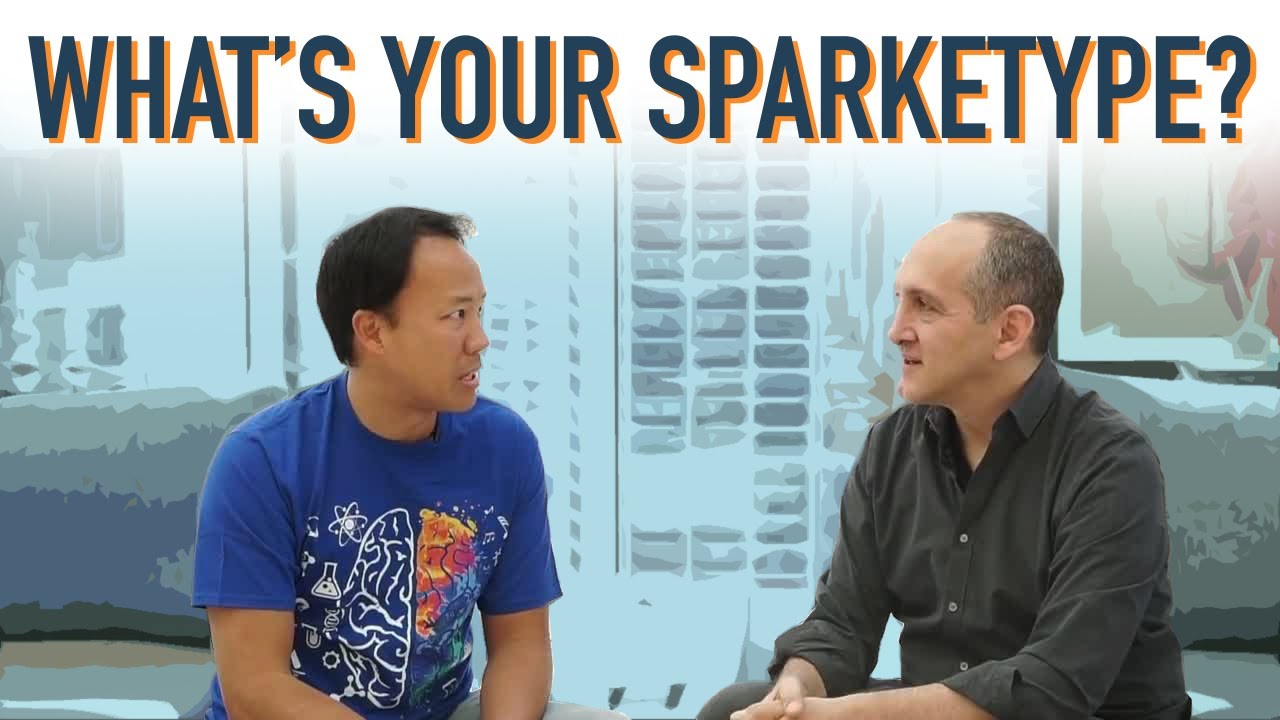
Jonathan Fields describes the Sparketype framework, which identifies ten archetypal sources of motivation like Maker, Scientist, and Advocate. Knowing your primary type and shadow type can clarify career choices and improve relationships. Fields is a Maker; Kwik is a Maven/Scientist.
Chapters
Hi, Kwik Brains. Your question today is, how do you find work that lights you up, that really ignites your fire? And we're back with Jonathan Fields, my buddy.
Hi.
We're having this conversation. Many of you know Jonathan as a bestselling author. He's host of the incredibly wildly popular podcast, Good Life Project, and also the founder, the creator of Sparketypes, which is really the source code, what we're gonna be talking about. to a number of things in terms of getting into your vast performance expression, your flow. How do you do it all? Now, we've had a deep conversation. If you haven't listened to it yet on passion and purpose in a previous episode, I would highly recommend you listen to that episode, and we'll continue the momentum right now. Jonathan, we touched on sparkotypes. What is a sparkotype related to passion and purpose And why did you create it?
Yeah, so a spark type for me is based on the belief that we all have a unique imprint or source code. You can call it your DNA. That for work that allows us to feel like we're on purpose, allows us to feel fully expressed in the world, and allows us to drop into a state of flow where we become absorbed, time fugues, we can work really hard, but it feels like almost effortless effort, right? Hmm.
And that—
I think that state, that Venn diagram— purpose, expression, and flow— is the place where when you work from that place, whether it's the thing you get paid to do, whether it's the thing you do on the side, but when your primary contribution is at the intersection of that place, you come fully alive. You feel like you're doing the thing that you're here to do. And I was curious for a long time, you know, like, can you identify this? Is there a set of universal imprints or archetypes or source code that crosses, you know, like every culture, every, every age, and that stays with us for a long period of time? Because there's so many different ways that you can sort of, you know, like wander around and try and figure out what am I here to do. And I see so many people hitting the middle and later years of their lives still having no sense for what that thing is. The quest became, can we create Can we create a tool that allows people to identify this deeper level driver at a much earlier point in life so that then you can start from there and start to look out at all the potential ways you can contribute to the world and do it in a much more informed way by saying, okay, will this allow me to do the work of my— and I call these things sparketypes, the archetype that sparks you basically. Will this opportunity allow me to do the work of my sparkotype? You know, if we deconstruct that, will this opportunity allow me to engage myself in work that gives me a strong sense of purpose, that allows me to be fully expressed on all levels and work in a place of flow as often as possible? Because when we can do that work, what we get out of it is this feeling of just being utterly lit up. being sparked. And the more we exist in that state in life, the better it is for us, the better it is for the people we're in relationship with, the better it is for the world around us, because we are operating at our highest potential. We're performing at a level where we feel like there's nothing left inside to give, like it's all coming out.
Mm-hmm.
And whatever benefit we have to bring to our work is being created in the world. And that's a place that we all aspire to. I mean, your opening question was like, how do we find work that lights us up? I think one of the big mistakes that people make is, is we start that exploration focusing externally. We start looking at lists of jobs and lists of industries and all these different lists rather than starting internally and saying, What is that thing for me? Not the job, not this sort of granular expression. What is the deeper driver for me where I feel like the reason that I'm here is being channeled through and released out into the world? And once we identify that, it actually gives us freedom because now we can probably find thousands of jobs or industries or careers that allow us to express that And we can run far fewer experiments and get to that place way faster.
Maybe one of the things when you're describing this, I'm thinking about their, their purpose, this driver, their spark type if you will. Sometimes they are aware of it, but it's buried down below a pile of other people's opinions and expectations and life conditions that happen when they were children. And it keeps them from their truest nature.
Yeah, there is definitely a lot of societal and familial baggage that we all carry around with, you know, like what we should be doing and what we shouldn't be doing with our lives. One of the sparkotypes— so there are 10 of these archetypes. So when you complete an assessment which we built, there are 10, and each person, I believe, is sort of a blend, but there are 2 that come up to be sort of like at the top. We call them your primary sparkotype and your shadow. Shadow sparkotype. Your primary is really— it's, it's the, it's the primary driver of the work you're here to do. And the shadow is something that you've probably become really good at, you enjoy doing, you have skills at. But if you're really being honest, very often you do it in service of doing the work of your primary better. So when we look at this, one of those 10 is a sparkotype I call the performer.
Okay.
Now a lot of people think that word and it's like, well, that's somebody who sings and dances on stage. And very often performers are drawn to those traditional career paths, but they don't have to be. The performer is really about doing work where you have the ability, you have a drive, a compulsion to transform any experience or moment into something that is demonstrative, illuminated, where whatever needs to be conveyed is conveyed with far greater energy and it's illustrated and demonstrated in a way where everyone just gets it. It sort of like bypasses all the defenses. And so, so this can come out in all those traditional roles as an actor, a dancer, a singer, a performer, and any— but it can also come out in almost any other job or career. You can be a bartender and be doing this behind a bar. You can be in a meeting room. You can be in sales. You can be in conversation. So it's not about being limited by a particular career. It's about understanding what is the deeper drive.
So in effect, and we're gonna go through really kind of a quick review on what these 10 sparketypes are. You could have any career, but they could be expressing different aspects of these sparketypes.
And coming full circle to the question you asked, which is, you know, the performer in particular I brought up because it's, it's represented, it's the smallest representation in society. We have a pretty big data set now that tells us preponderance of the different ones, and And it makes sense that actually the performer is very often the one with the most familial and societal baggage, because very often a family says, oh, you shouldn't be a dancer or a singer or an actor because you'll never make a living doing it, so that shouldn't be your identity.
And then it's buried underneath those expectations, you know, in terms of really their—
It doesn't change the fact that it is, right, this thing for you.
And maybe they went through life and they have urges or interests in that field, but then they were maybe pushed towards a different way, but it's still core who they are.
Yeah, and there are often cultural associations with that person too. And you shouldn't stand out. You shouldn't be the one where you're the center of attention. A lot of Aussies are told, don't be a tall poppy. So it's fascinating to see the constructs that are overlaid and how so many people will almost pretend that this is not actually what that deeper driver is for them. Simply because it triggers so much of shame or blame or expectation or a desire to avoid confrontation.
Amazing. So we're gonna go through the 10 Sparketypes right now. As always, I put my personal notes at jimkwik.com/notes. So for all our episodes, you can see my personal highlights of every single— and takeaways from every single episode. And then you could also get a link to the assessment, which is actually sparketypes.com/assessment.
Yeah, sparketype.com.
Sparketype.com.
Sparketype.com.
Sparketype.com. So we'll put those links as well as the highlights of what I get out of this conversation on the notes. And let's jump into it. Can we start with the— in an actual particular order, can we start with the maker and go through the spectrum?
Yeah, so there are 10 of these, right? And I'll move through them pretty quickly so that everybody can kind of—
And I think a lot of people can identify different parts of it. What I like about this, because we're talking about self-awareness, is it takes away judgment and shame in terms of so many people question and they doubt some aspect of themselves. And also, you know, I had my— I had family and our team take this also as well. So it's also a great explanatory schema for why they— people behave the way that they do also as well.
It's tremendous. I mean, not only is it great for self-knowledge, but also for those who are in a role where you're leading or managing. It really helps you understand how to relate to people and how to bring people together to work in a really constructive way.
To be able to lead them, to be able to coach them, to be able to co-create with them also as well.
Yeah, exactly.
So let's talk about the maker.
So, so the maker is basically— the work of the maker is to make ideas manifest. It's the person who wakes up in the morning and just looks around saying, I need to create. Very likely you have felt this from the youngest years that you can imagine. As a kid, I grew up in a small town with a junkyard. Like, on Sundays, I would beg my parents to take me to the junkyard. We would throw pieces of old discarded bikes into the back. I would take them home. I would duct tape them together to create Frankenbikes and ride them around the neighborhood until they broke. So I have been— I am a maker.
Mm-hmm.
And I have been this person from the earliest time that I can remember. It's expressed itself in art, in structures, in companies, in books, in media. The part of all of those things that I love is going from idea to something. So that's the maker.
So number 1 is maker. Number 2?
So number 2 is scientist. The work of the scientist is to solve problems, to figure out puzzles. What's interesting is like the scientist is driven by curiosity. The energy of the scientist is curiosity. It is like, I need to figure the thing out. So a lot of people with the spark of the scientist become scientists. But they don't have to be. This can exist like every other spark type in every profession and every career path. It is the person in the room that says there's a complex problem right here, there's a puzzle that needs to be solved, and I am just like, I wake up in the morning and I just want to figure it out. The drive— you may figure out something that has incredible societal value, that may solve problems, that may build companies, that may change the world, which is awesome to you. But when you're really being honest, the reason you do it is just what, what, you know, famous physicist Richard Feynman called the kick of figuring the thing out.
Yeah.
So next up we have the Maven.
Now, by the way, I happen— my shadow or my secondary sparketype actually is a Scientist because I constantly want to solve problems. Maybe because I grew up with learning difficulties and I was struggling. I'm always thinking, how do I make this better? How do I fix that? And it got ingrained at a very, very early age. Now I'm thinking about how do I solve the education challenge and how do I crack high performance and get people to follow through. And I'm constantly— I stay up at night wanting to know those answers to those questions.
And what's interesting is what you create helps millions of people, but the deeper driver for you is the kick of figuring the thing out. Your compulsion is, this is so hard, this is so big, And that's awesome because it's gonna take me my lifetime to really like figure this whole thing out. It's the figuring out that drives you.
Hmm.
So, Maven. So next up we have the Maven. The Maven, the work of the Maven is learning. It's knowledge acquisition. The Maven is the person who wakes up in the morning, they just want to learn. They very likely have specific fascinations and they will devour every bit of knowledge they can in this particular field or area. until they have exhausted it. You also see it manifest often in just very generalized interest in learning about everything. They may not care at all about figuring a thing out. They just want to know everything about it.
Mm-hmm.
Right? So mavens very often are the ones where if you have like 4 degrees and 9 certifications and you're only using 1 or 2 of them, safe bet you're a maven because you just You want to keep learning. You love devouring. It's about knowledge acquisition.
I love that. My primary when I took your assessment is actually a Maven.
Yeah.
Because, and I don't know where it came from, it may be because of my head injury when again when I was just learning challenged, labeled a boy with a broken brain. I wanted to learn. I just didn't know how to do it. So now years later I'm reading a book a day and I'm just, learning lights me up.
Yeah.
And teaching other people Passing that on has that same similar effect. Okay, so we have number 4.
Yep, so number 4 is the essentialist. The essentialist, the work of the essentialist is creating order from chaos. It's somebody who looks at something and there's mass information, stuff, whatever it needs, and they're all about organizing, simplifying process and systems. So this shows up in a lot of different ways. So our main ops person in our company who does all of our spreadsheets and processes and systems and organizing, she keeps our project management and she keeps everything running. When she was a little kid, she's an essentialist, and a lot of essentialists find themselves in that role. When she was a little kid, she used to organize and line up her stuffed animals in height and color order. So the essentialist very often expresses itself in a very outward, observable way very early in life. The essentialist also, for people who are not essentialists, very often is one of the spark types where people cannot understand how someone would want to do that because it's so foreign to so many other people with different drivers. But there are actually people who wake up in the morning and their favorite thing to do is organize, turn chaos into order.
I would challenge everybody as they're listening to this to— you think about for yourself, but then also think about the people people close to you, because it would kind of like— oh, I guarantee when you're explaining these archetypes, certain people are popping in other people's minds when they're doing that. So you have your essentialist, number 5, right?
The performer, which we talked about, is the person who brings— approaches any moment— like, the work of the performer is to bring an illustrative, demonstrative energy to any moment or experience. That can happen on stage, on screen, performing in a musical environment, but it can happen anywhere also.
It can be a teacher, a doctor. 100%.
Right, you can— it's the idea of taking a moment, experience, or idea and demonstrating in a way that allows the experience, the wisdom from it, to just completely be transferred and be brought to life in a way that everybody just gets it. And, and it's sort of like it sneaks past the shields.
Okay, performance number 5. I'm memorizing this also, by the way. Number 6 is the warrior, right?
Yeah, so the warrior, the primary work of the warrior is to lead. It's the person who very often this shows up very young in life also. So if you were the six-year-old where after school every day you're like rounding up the neighborhood kids and being like, "Let's go on an adventure." This tends to show up often. There's one really fascinating societal overlay with the warrior too, which is that a lot of people create this very masculine and aggressive overlay with the role of being a leader, of being that person who leads others. a desired end as like together. And that is just— it's pure societal stuff. What we see is that truly there is no need to be masculine in energy. There's no need to be aggressive. Very often the most effective people who play that role are quiet.
Mm-hmm.
They're sensitive. They have a really powerful balance of masculine and feminine, or more towards feminine. It's completely unrelated to those energies. So some people will sort of, you know, in the assessment we've seen people say, discover that their primary is a warrior. They're like, I'm not that person. And then when you tell them, well, actually it doesn't mean you have to be this bold, aggressive, sometimes arrogant, very heavily masculine. You can actually be gentle, you can be sensitive, you can be quiet and be astonishingly good at bringing, organizing people and leading them towards a desired outcome. They're like, oh yeah, that's me, I've been that my whole life. So it's interesting to sort of deconstruct that a little bit.
Okay, now the Sage, number 7.
Right, so the Sage, the primary energy there is teaching, right? So it is about transmitting wisdom, information, in a way that people really understand with clarity and can embody it. A lot of Sages end up being teachers, or they end up being speakers. They love to, and very often the Sage is about Transmitting to groups of people. It's about the transfer of information and seeing the light bulbs go on. So if you're constantly finding ways to tell everybody what you know, you know, you may spend a lot of time in Maven mode. In fact, Maven and Sage is a very popular pairing because you're devouring knowledge. The perfect combination. But the real reason that you're doing it is because you want to turn around and share it with everybody so that they can know what you know.
I love that. Advocate?
So the Advocate is all about giving voice to the voiceless. It is about being— playing the role of the advocate. So here's an interesting thing about the Advocate though. Very often we think of an advocate as standing up for other people. Very often they are people who don't have a voice, people who are disenfranchised.
Or animals, or the environment.
Well, that's the thing. It can be animals, it can be environments, it can be the planet. It can also be ideas. You can be the champion for ideas. You can be somebody who loves to champion and be the advocate for ideas in a room. And as long as you have that ability to give voice to something that you feel is not being given voice, and you find yourself— very often advocates find themselves in that role and playing that role from the very earliest points in their lives. They can sometimes be the kids who a parent would be like, can you just stop talking already? You like stop and it's like, no, but this isn't fair. I see injustice. Like, this has to be changed and I'm gonna make it happen. And that— so that tends to show up very often very early in life as well.
Astonishing. Number 9, I think, is the Advisor.
Yeah, so the Advisor has some similarities to the Sage. The Advisor is about guiding very often an individual or a small group of people through a process towards a desired end. The primary difference between that and and the sage is it tends to be a much more intimate expression of work.
Mm-hmm.
And rather than being somebody who's just teaching people how to do it, or being a warrior where you're leading a group that you are part of to do it, the advisor rides alongside. Their job is to guide others along a process to a desired outcome. They're not one of those others. Like, they— the joy you get from that is the process of advising them along the way as they make the journey and developing intimate, very often sustained, longer-term relationships. You find this in a lot of therapeutic professions, you know, like whether you're a therapist, sometimes the practice of law, sometimes— so a lot of sort of professional practices that create long-term sustained relationships. People who are advisors find themselves navigating into those types of professions.
Interesting. And finally, the nurturer.
So the nurturer is all about giving care. You are somebody who's very likely wired to feel You probably have a high level of empathy, so you may feel other people's unease or suffering or pain or discomfort in a way that, you know, you can't understand how others don't feel on the same level as you.
Mm-hmm.
And you are moved to do something about it. You're moved to give care. You're moved— you're moved to help people not feel that level of unease or pain or suffering. The risk with this— this, I think, is one of the most powerful archetypes in terms of outward effect on other people. The thing you have to be super aware of as a nurturer is very often nurturers are so focused on giving that they end up empty, that the self-care goes out the window. And just, I don't have time to take care of myself. My job is to give care to others, is to help ease the suffering of others. So like, it's, it's, they almost view it as hubris or arrogance or ego.
Interesting.
If they set aside time to take care of themselves, not realizing they can't actually do the work of the nurturer unless they're full also.
Filling their cup. It's kind of interesting when you're explaining this because I see— I would imagine some people are listening see the progression along the spectrum where it starts more internal and then that as you go on to an advisor, an advocate advisor, and nurturer, more External?
Yeah, so there's, there's absolutely— and they're actually listed in that order. They follow along a gratification spectrum. So the ones that we started with tend to be much more internally gratified. So you're fulfilled simply by doing the work, whether it affects other people or not. And as we move along the spectrum to the other side, ending with nurturer, the shift tends to be fulfillment and gratification involves more and more Being directly of service, externally of service to other people. That doesn't mean that, like, you know, the internally gratified ones don't create things or experiences that are very service and have a huge external impact. It just means that a lot of their satisfaction can actually come simply from the act of doing the thing rather than the way that it actually lands externally with other people.
As a— you just sparked something in my mind. What's— how do you— what's your views on introverts and extroverts? We seem to have a lot of chats in our forum. We have tens of thousands of people in our Facebook group, and one of the things people— they label themselves introverts, extroverts, ambiverts.
Is—
do you subscribe to that model? And then if it does— if you do, does it— how does it relate to a performer or to a maker who Is the maker more introverted? Are scientists, they could just be by themselves as opposed to—
Yeah, it's such a fascinating question. And this is actually one area that I'm really fascinated by. So we are about to start initiating sort of like second and third level surveys and research to actually dive deeper and see if we can tease out correlations between social orientation and Sparkotype and how people are feeling. Able to express the work of their spark today. Because I think, I think there's definitely a relationship there. So I can talk just sort of like through conversations anecdotally. Yeah, I do. First, I do 100% believe in social orientation, the spectrum between introvert, ambivert, and extrovert. I am very much on the introverted side as well. That said, that doesn't stop me from doing the work that I'm here to do. Now, I happen to be introverted. Right? And I'm a primary maker, secondary scientist, which are 2 things that lie on the fulfillment side of the spectrum that are very internal. So that all works really, really well for me.
Mm-hmm.
But here's the thing. I also speak, and I love to be on stage.
Yeah.
I love to create, to make an experience that moves people.
Mm-hmm.
I love to create that moment and that sort of like, you know, awakening. But I also know that as an introvert, as soon as it's done, As soon as I can leave, I don't want to be around people. I know myself well enough to know that, well, as much as I love it, as much as it like lights me up in the moment, it leaves me energetically low, and I need to go and be away from large numbers of people to refill.
I'm very similar, being an introvert. You know, when you— when I'm— mine, as a maven and a scientist, I could sit in my, you know, my library all day and just solve problems and learn all day. But I could see where the other sparkotypes come into play because they're, you know, where I'm an advocate for, you know, education, where I'm an advisor working with individuals daily, and I get to see their progress, you know, over time. And then as a nurturer and as a maker, you know, making shows and videos and such, this has been extremely, extremely enlightening. I really, you know, when I was on your show, You end, and you've done hundreds and hundreds of shows, which I'm a big fan of. You ask people at the end, because of Good Life, what is it? For me, my answer was having the curiosity to know yourself and then having the courage to really be yourself. This has been a very powerful conversation for me to have with you because this archetype, once you understand who you are, it takes away judgment and allows you to find, make decisions based on what sparks and what ignites your soul, if you will. And this has been incredibly enlightening. I really recommend everybody, again, I'm actually gonna put in the show notes very quickly, 'cause I know people are gonna ask how to memorize these 10 so you have it in your mind. So I'm gonna actually record a video when Jonathan leaves, like a 60-second video, and I'll put it in the show notes at jimkwik.com/inspiration. notes of how to memorize these forwards and backwards so you can have them at your mental fingertips. And also, again, I recommend everybody— we'll also put links to your assessment, and then the direct link is what?
sparketype.com. So S-P-A-R-K-E-T-Y-P-E dot com.
And that's for you, your team, your family also as well. And our challenge— what could we challenge people to do besides take the assessment? Maybe take a screenshot of this, tag Jonathan, tag myself, and And maybe share your Sparketype.
Yeah, I mean, take— so my Sparketype is Maker Scientist. Yeah, take the assessment. It takes about 10 minutes to do. There's no cost for the assessment. And then share your Sparketype and invite one person that you either are close with personally or you work with to do the same and then share it with each other, because the conversations that we're seeing started around awakening to the deeper drivers of those that you are working with and living with on a day-to-day basis has been incredibly illuminating. I think it may really, on a relationship level, it can be really powerful to help understand each other.
Amazing. So do that. Take, tag me in it also as well. I'll repost some of our favorites for the show, and I'll see you next episode. Thanks, man.
More from Jim





The Library of Minds: Brain Coach: How to Stay Sharp When AI Does the Thinking | Jim Kwik





