Foods that Support Women with Fasting, Hormone Balancing & Fat Burning | Dr. Mindy Pelz
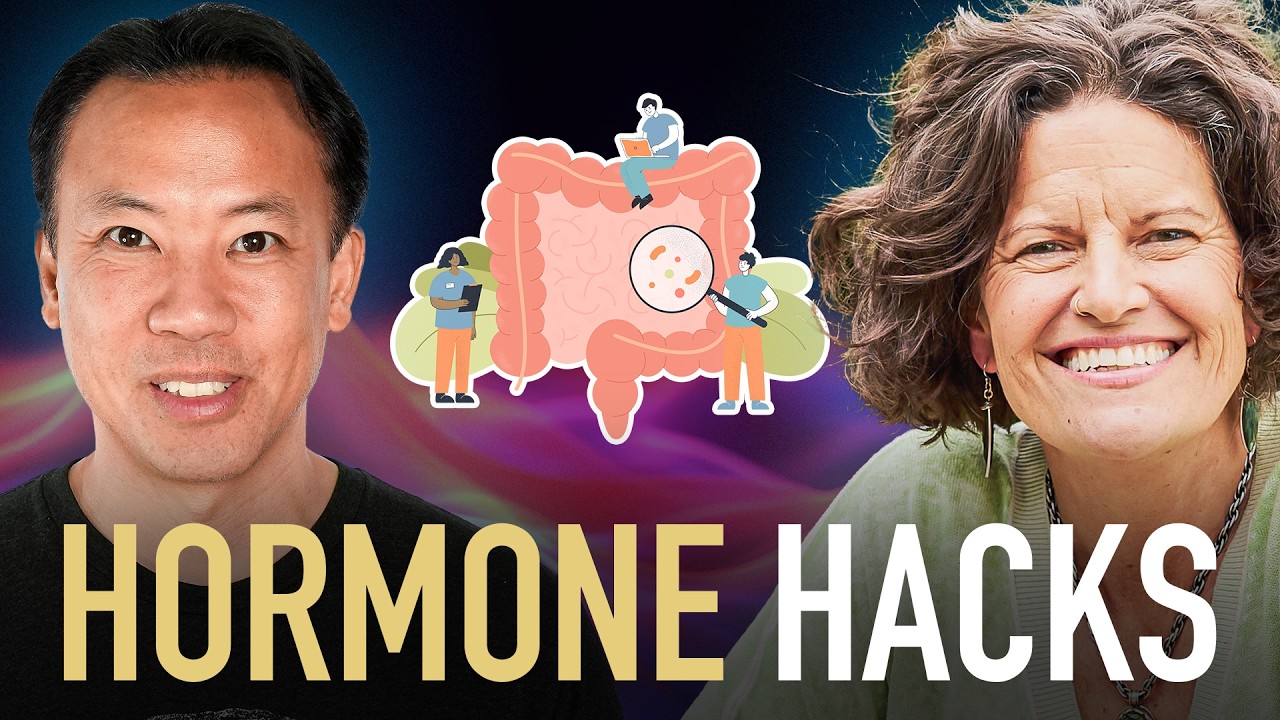
Dr. Mindy Pelz explains why women's bodies respond differently to fasting and food based on estrogen and progesterone levels. She describes how a compromised microbiome from birth control and antibiotics traps estrogen in fat tissue, and why post-menopausal brains become ketone-dependent and benefit from fasting. Her daily routine includes 15-17 hour fasts and a nutrient-dense first meal with avocado, eggs, and fermented foods.
Chapters
There is a chronic poor health loop that so many women find themselves in.
Food is your friend. And when you take unworthiness, mix that with making choices based off of dopamine and based off of cravings, you have dysfunction for women.
A loop that is keeping them sick and making it incredibly hard for them to get their health back on track.
You have a metabolic switch, and your job is to go from sugar burner to fat burner and go back and forth.
Between poor Food choices, a dieting culture, the pressures to keep pace.
Estrogen wants low glucose. Progesterone wants higher glucose.
So many women are finding that their metabolic, their nervous, their microbial systems are in a massive state of chaos.
We live in the most toxic time in human history.
The average woman, like, leaving her home to go to work is exposed to a couple hundred different toxins.
There's a lot we can do with food when you start to see it through a new lens.
How can women improve their overall gut health?
There's several reasons why the microbiome of women is in horrible shape. The first reason is—
Welcome back, Kwik Brains. I am your host and your brain coach, Jim Kwik. Countless women fell in love with fasting after Dr. Mindy's last book, Fast Like a Girl. Many of you heard our interview. I encourage even our YouTube where we put the extended version has over 1.6 million views with that episode. And so we'll put a link to that in the show notes. Highly recommend that book and that episode. Struggling with finally getting weight loss and health results that women couldn't get with diet changes alone. As exciting as that was, many women still struggle to easily move in and out of their eating and fasting windows. This led Dr. Mindy to write her brand new book, Which is Eat Like a Girl, which we'll be talking about today. It examines why so many women still struggle with the relationship they have with food and how they can achieve a healthy, nourishing, and positive relationship with it. So welcome back to the show, Dr. Mindy.
Oh, thank you, Jim. That was quite an intro. I appreciate your kind words. And I, it's like, it's like coming home to have a conversation with you. So I'm so happy to be here.
Yeah, you're one of my, one of my favorite people. You know, I really enjoyed being on your podcast. We'll link to your show also in the show notes. Everything's at jimkwik.com/notes. Why don't we start here? And this, I wanna stress that this episode is for men and for women, you know, especially for men who wanna be able to support the women in their life. Why don't we start with this question that I think people are curious about? And we have a community and a book club, and we had so many people suggest questions. They were so excited that you're coming back on the show. Why do so many women struggle with healthy eating habits? And how do we— how can you help women break that? I don't know what to call it, the dieting cycle. Like, what is the difference between the messaging between men and women that they've received over years or decades here?
Oh, that's such a loaded question. And I think there's some definite through lines that will help people understand this. I think in general, as a culture, we have not been looking at food like we would look at medicine, and we don't we don't give food enough credit for the healing power that it has. So this is why, like with Eat Like a Girl, I'm like this is your Bible for food as hormonal medicine. So the first thing is we don't look at the benefit food can have on our bodies. We only judge it off of our taste buds. And so, when you think about it, when you go out to eat, everybody goes, oh, what are you in the mood for? Well, if you actually unpack what controls cravings, if you unpack what controls the food choices we make, there's a lot. You said it in the intro, it's part of it is the microbes in our gut. And part of our, our, our, our food choices are based off of the dopamine reaction that we get from food. It's a neurochemical response. Yeah. So our relationship to food is incredibly dysfunctional because all we're doing is walking around choosing what we want to eat, not for our taste buds, not what our body wants. Now, the second part of your question is we have a culture that says a woman is worthy when she is a certain size, and that is a major problem. So throughout Eat Like a Girl, I have so many statements to help women understand Their worthiness, to help them understand that food is your friend. And, when you take unworthiness, mix that with making choices based off of dopamine and based off of cravings, you have dysfunction for women.
And, I love how your work, because we teach something called a Limitless Model where it's 3 Ms, it's mindset, motivation, and methodology. And, everybody wants to go to the methodology, like, how do I do it? But, you know, I realize that when we teach speed reading or focus or memory skills, that you really have to address mindset. And so I'm glad— I'm so glad that your work is really embedded in that. So maybe you could broadly share, like, some of the philosophies that you've outlined in your book and how it could help with this mindset change.
Yeah. So when I discovered fasting, I had this aha after years of research and diving into all the studies, and that was that women are going to fail at every single diet that's put in front of them. And the reason they're going to fail is because nobody ever told them they have 2 metabolisms. One that— and this is for both men and women, but women are really ingrained in this diet culture. So one metabolism kicks in when we eat And one metabolism kicks in when we go an extended period of time not eating, which is what we call fasting. So, what happened with Fast Like a Girl is that all of a sudden, women started to see, oh, if I take all the food that I'm eating and compress it into one eating window, leaving a longer rest period for my body to recover and heal itself, now, actually, I don't have to worry so much about what I eat. Now, I'm gonna— I wanna unpack that here in a moment because I'm not saying eat just everything. I'm saying that you have a metabolic switch and your job is to go from sugar burner to fat burner and go back and forth. With Eat Fast Like a Girl, I showed you fat burner. I showed you 6 different length fasts that you can time around a woman's hormones. With Eat Like a Girl, now we're diving into how do you create this healthy relationship with food. And I think one of the biggest challenges that I see is that there's no education on food. The ultra-processed foods are— have hijacked our taste buds. We've become food addicted. So for women, what I'm hoping is that they are going to bring back this healthy relationship and start to use food as As a tool for making themselves, uh, happier. You know that one, you and I have talked about the superfoods, um, that can improve brain function and, and that we can balance hormones, we can balance the nervous system, we can rebalance the microbes. Like there's a lot we can do with food when you start to see it through a new lens.
I love that. And, and so there's really a one-size-fits approach to To anything, right? Even with our training, we have different— we identify different brain types and provide tools based on their dominant brain type, if you will.
Mm-hmm.
But there are certain types of foods. Are there certain types of foods that suit women better than men? I mean, to follow this, like, we already know from our previous interview that women, they need to navigate their hormones a lot more, you know, does this also mean that, that women would need to adjust the way that they eat during different hormonal moments in her cycle, in her life?
Yeah, yeah, absolutely. So it's the same concept that I introduced in fasting in our conversation before. There are 2 hormones that I call them twin sisters, estrogen and progesterone. They look the same, We call 'em both sex hormones, but they have vastly different personalities. With men, you don't have progesterone. You actually have one hormone to focus on, it's testosterone. Testosterone then goes up to the brain and converts into estrogen. But for women, we have to think about all 3 sex hormones, estrogen, testosterone, and progesterone. Through the lens of food, estrogen wants you to be insulin sensitive. This is where versions of the ketogenic diet, low-carb living, can be really, really helpful if somebody is— their estrogen system is out of balance. Like, estrogen dominance is very common because of the amount of endocrine disruptors that are in our food and in our system. So, if I put a woman on the front half of her cycle in more protein, more vegetables, Lower carb fruits like blueberries, I know, which is one of your favorite foods. Then you know now I'm working with her estrogen system, whereas in the back half of her cycle, when progesterone comes screaming in, progesterone wants the opposite. Progesterone wants you to bring glucose up. In fact, you are more insulin resistant the week before your period, which is why you crave carbs, why you crave chocolate, because your intelligent body is like, "Hey." We need to bring glucose up so that we have enough fuel here to make progesterone. So, through the food lens, they're opposing. Estrogen wants low glucose, progesterone wants higher glucose. So, in Eat Like a Girl, I wanted to show women, like, how do we do this through a healthy way? Like, what's a healthy way to bring glucose up? And what's a— how do you bring glucose down and still support the microbiome? These are the kind of questions that I looked at.
Want more from Dr. Mindy? Would you like to meet her in person? We are putting together the most amazing faculty for our annual Brainpower Conference. This is like an experience that is like no other that you've ever attended. I am curating and putting together the Justice League, if you will, of high performance so you can truly become limitless. For more information, just go to jimkwik.com. to get full details on our 3-day annual Brainpower Conference called Limitless Live. And your book is full of not only all that data and the research and suggestions, but also has recipes. I'm wondering if, as an example, do you have a favorite kind of go-to or a really highly beneficial meal for women to break their fast with to make sure that they maintain their metabolic health?
Yeah, you know, one of the things I did in this book that I'm so excited about is I hired two chefs. I hired a plant-based chef because we have a lot of women that do plant-based living when they went through the cycling process. She's a master chef for the Four Seasons, and then I hired an omnivore chef who had like trained and learned how to make meat and cook meat from the elder women in Spain. Super cool combo, and one of theirs—I have a couple favorite recipes—but to break a fast, hands down. My favorite recipe is the kimchi edamame bowl. And the ki— it's kimchi has that fermented probiotic rich quality to it. It has a little bit of spice. So you're now getting good bacteria in, you're getting a little capsaicin from this, from the heat in kimchi, that's gonna raise your metabolism. It, you also in this edamame bowl, you're bringing in edamame, which soy is a phytoestrogen. And then we put it on a bed of quinoa. Quinoa is a better, it's better than rice because it has more protein. So in each recipe, we, my, me and my chefs, we looked at it through a hormonal lens. And then what I did at the top of every recipe is tell you, this is what it's hormonally doing for you. So that one's my favorite, um, uh, in general, but especially for breaking a fast.
And kimchi is, uh, has, uh, those, those probiotics. And when we were thinking about Probiotics and the gut microbiome. Yeah. So, uh, it's so important. Uh, why is it important for balancing, uh, hormones? And why do so many women struggle with, with gut issues? You know, how can women improve their overall gut health?
Yeah, so there's several reasons why the microbiome of women is in horrible shape. The, the first reason is birth control pills. So I have a whole section in the book about what a chronic using birth control over and over again, years, decades, what it depletes. And one of the things it depletes is your microbiome. So that would be the first thing. Second thing for both men and women, antibiotics. That you know when you're eating, taking a lot of antibiotics, eating meat with a lot of antibiotics, then you know you're going to have a bigger problem. But then the third is that. Stress. I mean, I've got a 24-year-old daughter. I have a 22-year-old son. I sit and listen to their friends. I listen to the culture that they're growing up in right now, and all they've gotta do is pick up their phone and all of a sudden they're stressed. And that chronic stress is destroying the microbiome, and the microbiome breaks estrogen down. So there's a whole set of bacteria called the estrobolome. So if you're not eating foods that replenish your microbiome, you're not breaking estrogen down. And if you're not breaking estrogen down, guess what happens to estrogen? It gets stored in fat. So now you've got, you know, you're, you're getting the belly weight. Um, we see it with breast cancer where now it's going straight into the breast tissue. So breaking estrogen down is incredibly important, and the only way you can do it Hmm.
So, you have birth control, you have antibiotics, either through medication or through the— what the food is being fed, right?
Yeah.
And then you have the chronic stress, which is really everywhere. I'd love to move into— since this show is about brain, let's talk about the brain, you know, more specifically about the changes that happen when women And let's say enter menopause. Yeah. What is the relationship here? And then, you know, whether it's, if you wanna talk about ketones or glucose, estrogen, what's going on in with the brain?
Oh, this is one, Jim, that the next time we're together, I wanna sit down and, and go into detail with you on this because I think you'll really geek out on this. So when we go through those perimenopausal years, the brain becomes less sensitive to glucose and starts to favor ketones. So this is a part of menopause that is not being discussed enough. So a woman in 45, 50, even in her, her mid-50s, will, we've heard over and over again, say, I have brain fog, I have ADD, I'm anxious, I'm depressed. And so there's what I call the brain remodel project, that this is Dr. Lisa Mosconi brought us this information that the brain is actually taking neurons and pruning away the neurons it doesn't need anymore, and then it's growing new neurons so that it can be this new version of a brain in the postmenopausal years. In that process, what ends up happening is the brain is becoming less and less sensitive to glucose and more and more sensitive to ketones. So one of the greatest things that a perimenopause or even a postmenopausal woman could do is learn how to make some ketones. And that's really the fasting window. And that, you know, we— there's a lot of fasting in Eat Like a Girl as well. But then the second thing is watch your hemoglobin A1C, because hemoglobin A1C is a marker of that glucose system over 90 days. You want it to stay around 5. If it's going, you know, if it's 5.5, even 5.3, I've seen people, it's up in the 6s, Now, you've got so much glucose in the system, it's all going into the brain, and now— or a good part of it, and now you're not thinking straight, your memory's going. So, I think the ketone, it was like an evolutionary part of the menopausal journey so that women could lean into that as the brain was remodeling itself to go into those postmenopausal years.
So could you give our listeners an example of like what a 24-hour day is for you in terms of what you're consuming? None of the ingredients contained in the Quick Mind product are claimed to treat any disease or health condition. Consult your own physician before commencing a nootropic regimen to ensure that this product is appropriate for you. Do you struggle to stay focused or find that your mind wanders when you need to be sharp? Are you looking for an advantage or an edge that can allow Eliminate sluggishness and elevate your cognitive performance. That's why after decades of research and development, I'm thrilled to bring you Kwik Mind. It's more than just a supplement. It's a key to unlocking your cognitive freedom on a day-to-day basis. Just imagine having the clarity of thought, sharp focus, better memory, and being calm under pressure. Every capsule of Kwik Mind is a blend of 5 pristine ingredients, each backed by research and chosen for its ability to support specific cognitive functions. So are you ready to meet the sharpest version of yourself? It's just a click away. We have it all at kwikmind.com, K-W-I-K mind.com. Place your order for Kwik Mind today and join a community that's redefining what it means to live a life of Mental abundance.
Yeah. So, and just for, so everybody knows, I'm 55, postmenopausal for 2 years now, just cuz it makes a difference on where you are in your hormones. Um, I usually fast, usually about 15 to 17 hours on most days. Uh, depends if I'm working out or not. In my fasting window, I'll have a cup of coffee. Uh, I'll do it with raw milk because raw milk has those probiotics in it. Sometimes I put collagen in it. I've been putting creatine in it lately, so I kind of make it a nice healthy and a little bit of MCT oil. And that's what I'll drink during my fasting window. Then the most important meal to me is that first meal. In fact, in Eat Like a Girl, I have a whole section on why that first meal matters. But usually the first meal will have some avocado in it, sauerkraut. Some protein. I love eggs. I'll put some hemp seeds. I'm a big seed fan, hemp seeds and chia seeds. So I really go in on making that first meal really my biggest meal. I'm in a new phase right now where I like my biggest meal to be in the middle of the day. And then as the day goes on, I might snack a little bit. I'm— I eat meat, so I snack on beef sticks. And then a typical dinner for us would be Grass-fed steak, sweet potato, and a salad. And so, it's kind of my day, but I really like to eat in the light when I can, because when you're eating when there's no melatonin around, you're more insulin sensitive.
Okay.
I like to go for a walk after dinner, so the light helps with that to help me use the glucose that I brought in. But yeah, I don't, you know, I don't feel deprived. Once I open up that eating window and I've nailed that first meal, I just, Eat what I feel like eating. Um, but I usually will get about 2 solid meals in, the biggest one being at lunch.
And it's interesting, 'cause it's not just what you eat and when you eat, but it's how you eat. Yeah. You're, you're, you're outside in nature, you're relaxed. So many people, men and women, they're, they're eating while they're working or they're on their phone and their devices, and they're not in that parasympathetic, you know, rest, rest and, and digest. That, that first meal is about what time for you?
Uh, usually it'll be about 1 o'clock.
Okay. And then your dinner ends at about what time?
Yeah, I'll have— now that the kids are out of the house, we try to have dinner by 6, a little bit earlier. So, but when the kids were in the house, dinner was at 8. It was, you know, everybody had to get home from all their activities.
Yeah. And you have over 100 different recipes here, so there's a lot of variety. And, you know, my wife and I, we, we've already Tested out a bunch of 'em and it's, it could be nutritious and delicious. That's right. You know, those, those things could go hand in hand.
Yeah. You know what's interesting? My plant-based chef, Chef Leslie, she, um, when we, when I first interviewed her to make recipes, she told me there are 23,000 edible plants on our, on our earth. And her, what her mission in life is to figure out how to make delicious recipes. with those 23,000 edible plants. So, and, and then Chef Jeff is just super passionate about— we, we went down, one of my principles that you'll see in the book is that I think we just need to look at our food choices with much more diversity. So I wanted to make sure, like, he's got a sardine tostada in there, which at first glance might not seem like it would be really yummy, but try it because it is yummy. And now you're getting those really dense omega-3s from the sardine plus vitamin D. So it, like every recipe had some serious intention with it.
It's so good. Like, I mean, my mouth is watering, so I haven't broken my fast yet this today. And so I'm looking forward to this. The, you speak about toxins and how they affect female hormones and how specific toxins during menstruation can help women determine the toxic load their body is Caring. Maybe you could expound on that a little bit.
Yeah. And thank you for asking the question. Um, so one of my biggest ahas from so many women picking up Fast Like a Girl and then sending us messages is how many 20 and 30-year-olds don't have a cycle. Um, this is really concerning. I, I dove into the research on what is actually in menstrual blood, and there are 4 major chemicals, pesticides being one that's sprayed on foods. Plastics, phthalates, which are found in, in meats, and forever chemicals, which are, believe it or not, found in our water. So we need to be able to just have that menstrual blood shed every, every month. And, and so in Eat Like a Girl, we had to address that. The second thing we had to address is this concept of obesogens. And I got a ton of lists in the book, and the problem with obesogens Is that they are a chemical that goes to your stem cells and changes it from making whatever cell it was gonna make. And, the study I found is the stem cells that were gonna make bone, actually, it reprograms that stem cell and tells it to make fat. Now, think about this for a moment. We've got an obesity epidemic of our children are gaining weight for whatever, and everybody seems shocked that they don't understand why. Yeah. But kids have a tremendous amount of stem cells, and we're seeing research in places like the UK that the height of children is getting smaller and smaller because these chemicals have literally reprogrammed our cells to start to make fat cells. So this obesogens are are are a massive problem, and they are chemicals in our food, and they're chemicals that we're breathing in, and they're chemicals. In our clothing. I mean, we live in the most toxic time in human history. But understanding that toxins isn't just for— detoxing isn't just for hippies. It's not like, oh, you're an earthy crunchy and you're into detoxing. Like, detoxing is a mandatory situation for humans right now. And the first thing is, and number one rule for detox is stop putting toxins in. And so, we address that in the book.
Yeah, and I, I, somebody told me recently that the average woman, like, leaving her home to, to go to her work is exposed to a couple hundred different toxins through personal care products and through, through fragrances and, and, you know, you name it.
Yeah.
Um, I could talk to you for hours. I highly recommend people continue this by getting their copy of, of your new book, Eat Like a Girl. Where can people get their, uh, They're a couple.
Yeah, you can go anywhere that books are sold. But what I really try to encourage people to do is go to your local independent bookstore, help them out. And if they don't have it, ask them to order it. Another place you can go is bookshop.org so that they can— that's all through the indies and helps the independent bookstore. But if that's not in your wheelhouse, of course, Barnes& Noble online and stores and Amazon, there's lots of places. And if you go to my webpage, we do have bonuses and giveaways and fun things we're doing around the book as well.
Amazing. And what's that website?
drmindypelz.com.
Perfect. I highly recommend it. Everyone, make sure you do that. How about on social media? Can they connect with you there?
Yes, all social media platforms. I always say my passion project is YouTube. I'm putting out 4 new videos every week on topics like this. Yeah, so I pour my heart and soul into my YouTube channel.
In the show notes, we'll put links to Dr. Mindy's book, to her website, to her social media, her YouTube also as well. So I just want everyone to just remember that your health journey is unique and it's crucial to listen to your body and make informed choices that work best for you, whether you're looking to optimize your fasting routine, improve your gut health, Balance your hormones. You know, the strategies that we've discussed today with Dr. Mindy can serve as very powerful tools on your path to wellness. And as always, we, you'll find much more about how to fuel your brain's potential on our YouTube channel, where we'll put the extended version of this conversation. You can join 1.7 million subscribers there. And, and also there we'll link To Dr. Mindy's YouTube also as well. And make sure we're connected. Make sure you follow Dr. Mindy on social media. For us, it's @JimKwik. You can even take a screenshot of this episode, tag us both in there so we get to see it and share one thing that you learned today. Because remember, when you teach it, you get to learn it twice. So make sure you hit the subscribe button, leave a comment under the episode, let us know what you thought. This is your brain coach, Jim Kwik. Thank you. Jim Quick. Until next time, be limitless.
More from Jim





The Library of Minds: Brain Coach: How to Stay Sharp When AI Does the Thinking | Jim Kwik





