From Limited to Limitless: How to Live a Life Beyond Limits | Amy Purdy
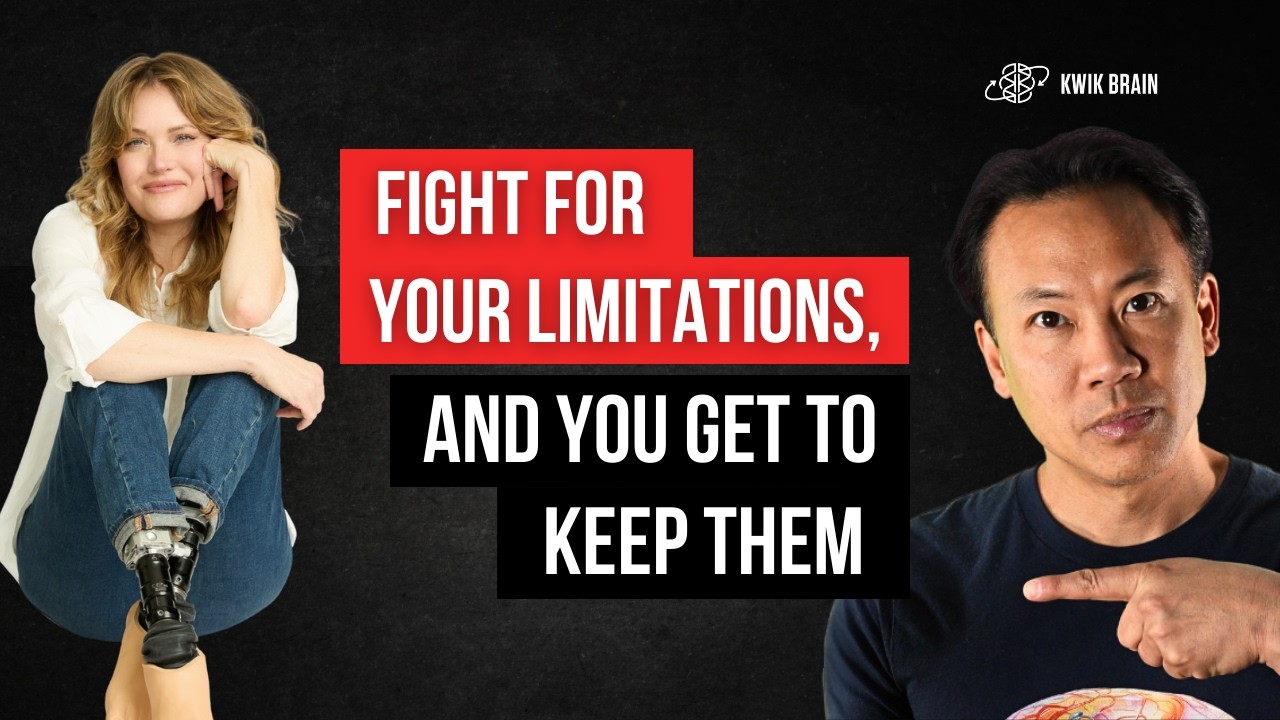
Amy Purdy lost both legs below the knee, a kidney, and nearly died from infection. She rebuilt her life through visualization, gratitude, and creative problem-solving, inventing custom prosthetic feet to dance and snowboard competitively. Her approach: accept what you can't change, then bounce forward into a better version of yourself.
Chapters
Whew. Let me see. Emotional, but—
What does acceptance mean to you?
There's things that we can change in our lives and there's things that we can't. I cannot change the fact that I lost my legs. Having a kidney transplant, my dad gave me a kidney the week of my 21st birthday when I was in kidney failure. It's like, I cannot change this no matter how hard I try. The resistance, like trying to change it, wishing you were something different, that's the hard part. It's not the challenge itself that's It's the resistance against it. Visualization is huge for me, and I would visualize myself snowboarding so real and so strong that I would feel the wind against my face. You don't even know your strength that you have until you're forced to use it. It's visualizing your greatest potential. A lot of people think that they're just born resilient or you're not. Taking the challenge that you're given and figuring out how you can use it. So that you can learn from it, so you can grow from it.
Bouncing not only back, but how do you bounce forward? I mean, that's the ultimate victory. If you are going through some struggles right now, some adversity, you feel stuck in some way, maybe even losing a little hope, this episode will not only give you some hope, but some real help. And so I'm really excited about this episode. We are live here at our Limitless Live conference in San Diego. And our guest just recently came off stage and she's been rated the highest right now, the most acclaimed speaker here. Welcome back to the Kwik Brain Podcast. I am your brain coach and your host, Jim Kwik. And today we're gonna talk about bouncing forward in your life. And I'm so excited to be here with a friend. She's a bestselling author. She's a medalist also as well in the Paralympics. I got to watch you perform years and years ago on Dancing with the Stars. And if I was to read your whole resume, it would just be the whole 20 minutes. Amy Purdy, thank you.
Thank you.
Yeah.
I'm so excited to be here. This is great.
Yeah, our audience, our clients, and our community, they were really, I was sitting in the audience. It was unfortunately the only one that I've sat in the past few days. But the range of emotions. I mean, people in one breath, they went from crying to laughing, and it's kind of that transformation, right? In life, we have these ebbs and these flows. And I'd love to start for people who aren't familiar with your story. Where did it begin?
Gosh, you know, really it began 20 years ago. I lost both my legs below the knees when I was 19, And at the time I was a competitive snowboarder. I grew up in Vegas, which isn't where people expect a snowboarder to come from, but we had ski resorts outside of Vegas. And my goal was to travel the world, snowboard, and just live this full life. And all of a sudden, one day I started to feel sick. Within 24 hours, I was in the hospital on life support. I was given less than a 2% chance of living. I fought for my life. I went into septic shock, ended up losing my legs below the knees. I lost my kidney function. I lost the hearing in my left ear, and I lost the life that I knew. And so I had to really figure out how to find myself again, like find where I fit in the world again, and also how to do the things that I loved again. And I went on this crazy mission of just trying to do the things that I love, just trying to get back into snowboarding. I was a massage therapist, so I Went back to work and then really just, you know, tried to figure out where I belonged and what I, who I was now and went on this journey that took me so much further than I ever could have imagined, including onto your stage here at your event. And yeah, I mean, there's so much to talk about of, you know, how I got there, but it's been a journey that I never could have expected.
Now, when you go through adversity, 'cause I don't wanna give the, not the end, but where you currently are. Because for me, my struggles turned into a strength, you know, a brain injury, learning difficulties, losing loved ones to Alzheimer's. But with challenge comes the change. But also the change of how you see yourself.
Oh yeah.
Right? Like you're on this path and then there's an incident But it's interesting, like in the movies, it's always like it kind of shapes who you are.
Oh, it completely does. I mean, exactly. I love that you said what you just said, which is, I mean, you went through what you went through and being told that you had learning disabilities and now here you have an empire teaching people how to learn. Like you used your challenge to get ahead. And that's exactly what bounce forward means to me. It's, you know, not bouncing back to like who you think you're supposed to be or who you were. Taking the challenge that you're given and figuring out how you can use it so that you can learn from it, so you can grow from it, and so you can actually, you know, be a better, stronger version of yourself. And that's what I had to do with my legs. I mean, my legs are a huge disability, and yet at the same time, they've been my greatest asset. They've been my greatest strength. Like, they've made me into the person that I am today. They're what's given me the fuel to figure out challenge, to figure out how to snowboard again, to figure out how to do the stuff I love, to figure out how to dance on prosthetic legs. Like, it's the challenge that fuels us. And then you really figure out what you're made of, and you realize you're made of so much more than you ever could have imagined.
I just got goosebumps. I call 'em truth bumps.
Yeah, oh, I love that. I love that. When I get goosebumps, I always say it's because, you know, because I just felt the truth. Like someone said something or I thought something, whatever it is that just gave me a sense of truth. So I love that, truth bumps.
Truth bumps. The, maybe we could go into a little bit more detail about a specific story arc that really kind of defined, not defined, but maybe, put you on the path? We always, we have these throughout life, right? I'm sure people watching, or if they're listening, they've had something that sparked, you know, different stages. 'Cause it's never just this kind of easy path. I don't know. I don't know one strong person that had an easy life.
Yeah.
You know, at all.
I agree. I mean, that's how you find your strength. You don't even know your strength that you have until you're forced to use it, until you're forced to find it. You know, I think a lot of people come up to me too, and they say, how have you done it? Like, Not like, how did you get through losing your legs and everything that came with that? And I mean, and people say, there's no way that I could do that. You know, I couldn't, I couldn't handle that. Well, you don't think that you can handle it, but you just don't know until you're, you're forced to deal with it. And then you find strength and you, you know, resilience is pulled from different places. So we oftentimes think that people are just born resilient, like, oh, that's a resilient person, or wow, that person has a lot of grit. Like it's kind of just an internal thing that we innately have. But I feel like, at least in my case, it's, I've pulled from different things that have helped me become resilient. So, you know, pulling from support from my family or, you know, different experiences I've had that, like gratitude, like just one of my biggest things when I was in the hospital that helped me get through the initial shock of losing my legs was just being so grateful to be alive because I was so close to losing my life.
Yeah.
I mean, I was, you know, I was in a coma and had a near-death experience and given less than a 2% chance of living. And so to be alive, just to kind of pull from that of like, oh my gosh, I have a second chance at life. Like just to allow myself to feel the gratitude of that that helped give me resilience to just continue on another day. And I've leaned on that gratitude throughout my whole life.
And then your perception of it, just 'cause a lot of us, and I'm guilty of it also, is it's easy to go into a spiral of darkness, right? Despair, depression, losing a sense of hope. and what keeps you going, like, in terms of purpose? 'Cause without reasons, you're not, a strong enough reason, we're not gonna get the kind of results.
Yeah.
You know, and for me, when I was going through my challenges, I was called the kid with the broken brain, right? The boy with the broken brain. That was my, that's my identity. But how do you change that identity? And also, you used a word during the presentation that really stood out. It was acceptance. Like, what does acceptance mean It's, you know, it's—
there's things that we can change in our lives and there's things that we can't. And for me, it's very distinct. It's like I cannot change the fact that I lost my legs. Having a kidney transplant, my dad gave me a kidney the week of my 21st birthday. You know, that's something when I was in kidney failure, it's like I cannot change this no matter how hard I try. And the resistance, like trying to change it, wishing you were something different, that's That's the hard part. It's not the challenge itself that's difficult, it's the resistance against it that makes it so hard. So acceptance really is a choice, and it's choosing to embrace what is and try to lean into it and use it. Like, these are the cards I've been dealt, how can I use them? What can I do with them? And for me, I have realized, oh my gosh, I can do so much. You do not need legs to snowboard. You do not need legs to dance. You do not need legs to travel the world or, you know, do the things that you want to do. But luckily, you know, I allowed myself to explore that instead of just immediately putting limits on myself, like, oh, I lost my legs. I cannot do those things. It's, you know, for me being limitless, it's visualizing your greatest potential. Like, it's who would you be if you didn't stop yourself and if you didn't get in your own way? Like, what would you be? You know, what would you do? What do you see yourself doing? Visualization is huge for me. In fact—
Mm-hmm.
I have a second book coming out called Bounce Forward. And I realized—
I love the title.
And it's tools. It's the tools that helped me survive my greatest, my worst days really. But then it's also the tools that helped me thrive to my greatest moments as well. I actually realized the same tools that were helping me survive were the same tools that were helping me reach my goals as well. And so—
Was visualization one of those tools?
Visualization is one of 'em. And also the name of that chapter Is limited to limitless. I love that. And I love it because—
I had the truth bumps again.
Well, and, you know, and I was thinking, being here at your event too, like, what makes you limitless? And I think for me, it's, um, it's being able to visualize a grander version of yourself, like what you really, really want to be in your heart before you get in your own way, before you tell yourself you can't do it. And visualization was huge for me when I was in the hospital and I lost my legs. I would visualize myself snowboarding and I would visualize it so strong, not even knowing how I would do it, not even knowing if I'd ever be able to do it again. But I would visualize myself snowboarding so real and so strong that I would feel the wind against my face.
Mm-hmm.
I would feel my heart beating. I'd feel my muscles twitching. It would be so real to me. that I didn't know how I would do it. I just knew that I was going to do it again. And that I think made it real to my brain, right? And I went on this path of belief that some way I'm going to figure it out. And I had to build my own feet to be able to do it because there weren't any feet out there for snowboarding. I had to like, you know, it didn't just happen. Like I had to work really hard to figure it out. But just the fact that I felt it.
Right.
And I saw it like that was enough to believe that I could do it. And so I think, you know, visualization's key to being limitless. And it's one of the tools that I talk about in this book as well.
So you imagined it, you know, you stepped into it, you felt the movement, you felt the wind, the sun on your face. So you kind of see it, you imagine it, you see it, You believed in it. And then, but then you also, you work daily for it.
Yeah.
Right. 'Cause that's often, some people will stop at just visualizing something, but it wouldn't inspire necessarily action sometimes.
Absolutely. I mean, that's, you know, that's really the next step, right? Is, so you have this vision, which I think when we're young, we allow ourselves to daydream all the time. And I think we all daydream, right? But we don't always believe our daydreams or we don't always chase our daydreams. we talk about chasing our dreams, but I think it's really chasing or allowing even our daydreams to become reality. Because, you know, you sit back and you see yourself doing something, but then you immediately get in your own way and you say, well, I can't do that.
Right.
I don't have legs. I can't snowboard. I can't do that. Or I'm too old. Or like, you know, my— I'm past my prime. I can't do— I can't chase this thing. I can't do the thing that I want to do. Like, we get in our own way. But if you just allow yourself to actually like get lost in that daydream and believe like, what if I actually can do this? Like, what would it take to do this? And start kind of coming up with that game plan. Like, well, first I gotta, I gotta take this first step. And for me it was, I gotta take this first, I gotta take this first step actually.
Right.
And then it's like, okay, now I gotta figure out if there are feet so that I can do this. And oh, there's not. So now I gotta figure out how to make my own feet so I can do this. And then I gotta get on a board and figure out, is it gonna work? And, you know, it's, you have to take the action.
Right.
And, but it's amazing because once you do, once you realize that you take action on this belief that you have in yourself, not even the belief in the outcome. So it's not the belief that you necessarily can do it. Like, I didn't know that I could do it. It's more the belief. It, it's believing in the possibilities of it.
Yeah.
So when you believe in the possibilities and then you go on this like curiosity mission of just figuring out if it's possible, and then you do it, right? And you go, oh my gosh, like we are capable of so much.
And then you think, what else can I do?
Totally. So once you do it once, then exactly. And so for me, you know, just when I think about speaking, like being on stage speaking, I mean, I'm, I'm an introvert and I love you so much because I think you're an introvert as well, right?
I think so.
But yet look what we do. And it's like totally outside of our comfort zone. But the same with me. So, you know, I'm very much so like a learner and a thinker and not really someone who likes to speak in front of people.
Right.
And yet the first time I got invited to speak on stage, I, well, not the first time, but actually the first few times were rough. The first probably 100 times were rough.
Yeah.
But then I got invited to speak at TED and do just the 8-minute TED Talk. And it was one of the hardest things I've ever done. But I visualized myself in the hospital when I, when I was in the hospital. I saw myself on stage telling people everything's going to be okay.
Yeah.
Even before I knew that everything was going to be okay for myself, I just had this knowing everything's going to be okay. And I, I want other people to know this. about themselves. And then here I found myself on the TED stage, you know, not necessarily sharing that exact message, but just like, oh my gosh, I made it here. Like, I saw myself doing this. I took the steps to get here, and now here I am. So once you do it once, it's, you know, then you realize the power of it.
Yeah.
You can replicate it throughout your life, and you just realize truly how limitless and powerful You are.
Yeah, it's one of those things where it's, it's, it's sad in a sense because then the opportunities where, where we shrunk, right? Or we dimmed our light because we're so concerned about what other people think or because it's shining in somebody else's eyes. And the, the imagination is interesting, being able to get out of that because if people truly understood how powerful their mind is, they wouldn't think, imagine, think, like, say something they didn't want to be true. Like, that's how powerful our mind is. I mean, so many, you know, the default is like, in a situation, is to shrink what's possible to fit their minds, as opposed to talking about what you're talking about, using your imagination, your creativity to expand your mind to fit all that's really possible.
Yeah.
Right. I mean, especially when it comes to your health, because there's this phrase that says, you know, a healthy person has a Yeah. But a sick person or an unhealthy person has one, just to get healthy again, right? And I imagine I was at this season's Dancing with the Stars premiere live as a guest with Derek and Jules. And I remembered, actually, you popped in my head and maybe my heart because that's such an extraordinary story. Story, right? Like, how did, how did that happen? And how do you, how do you train to— I mean, you're, you're an athlete, snowboarder, right? But how do you do that to dance? Because I'm very— also, if you're an introvert, how do you even do that live with millions of people watching with a live studio audience?
Yeah, I mean, first, you know, I never could have imagined I'd get asked to do the show. I had never danced before. I didn't grow up dancing. I didn't even do ballet as a kid, so I had no idea that I could dance.
But why do you say yes? So why do you say yes to that then? Like—
Out of curiosity.
Wow.
Really out of the curiosity of what was possible, just, and plenty of fear. I, you know, at first I said no, I was excited about the opportunity, but at first I said no because I was like, I can't even point my toes and I don't wanna make a fool outta myself. You know, I don't wanna go out there and actually show that you I can't do this. Now I just told the world and everybody out there who has a disability, this isn't possible. Now I just told the world, like, to believe what you already believe, which is that you can't do that much when you have a disability. And I didn't want that. I wanted to confirm the possibilities. And so I ended up then saying yes and just deciding, you know what, this is a journey and it's an adventure and I'll figure it out. And we did. We figured it out. Every single week you're given, you know, a different dance, a different dance every week with different movements that are required in your legs and your ankles. You actually have to use your ankles and stuff for some of these dances that I don't have ankles. And, um, and so Derek and I was— I mean, we were scrambling every week to, you know, order feet. We would be on the phone with different prosthetic companies.
And also the preface to that You were competing—
Yeah.
Right before the show even started, right?
Right.
You have to share that.
Yeah, so I was asked to do Dancing with the Stars 2 weeks before my first Paralympic race, which was in Sochi, Russia in 2014. And we didn't think it was possible for me to do the show because we were like, well, I'm gonna be in Russia. And they said, well, we'll fly Derek out there. And they actually flew Derek to Russia. I would snowboard, I had 4 days to practice on the Olympic course. course and the Paralympic course, I'd practice for 4 hours in the morning and then I would meet—
Wait, were you, you a dancer before this?
No.
Okay.
No, there was no dancing before this. Actually, Derek and I met in a studio in Colorado where I live in Summit County, in this little town where I live. And we just met in a studio with cameras. I didn't even think there was, I didn't even think I was going on the show until I showed up to the studio one day after snowboarding and they had cameras on me. Derek was there, and I was like— I was still in my beanie. It's so funny if you go back and watch the very first episode. I'm in my beanie fresh off the mountain. I had just told my parents, I think I'm going to be on Dancing with the Stars, and, uh, walked into the studio, met Derek. There were all the, you know, the whole camera crew, and I was like, this is happening. Like, I'm on Dancing with the Stars. This is crazy. And then I flew from there to Russia, um, Derek flew there as well. And I would snowboard for 4 hours each morning on the course that we were competing on. And then I would meet Derek in this old Russian hotel in the basement of the hotel and dance with him for like 3 hours each night. We only did that for either 3 or 4 half days. And then he flew back to the States. I competed. And then 72 hours after I competed, I was live on Dancing with the Stars.
Wow.
in LA dancing my first dance and totally jet-lagged, you know, couldn't feel my feet, had only like 3 half days to learn my very first dance. Um, the other celebrities on the show get about 3 weeks to prepare for your first dance. And so, I mean, I was flying by the seat of my pants and, um, just didn't want to be the first one eliminated.
Okay.
And every single week was incredibly challenging at learning a new dance, trying to figure out my feet, trying to figure— for both of us, trying to figure out what I could do. He would create these amazing, gorgeous dances around the things that I could do. He's genius, you know that?
Mm-hmm.
Because, you know, he would look at my strengths and really lean into those instead of trying to force me kind of too far out of my comfort zone. He would actually like just You know, I'm— I'd be like standing in a certain way and he'd like the way that I was standing and he'd say, okay, let's add that into the dance. It's like, let's add the things that you can do.
He was creative, right? You talk about creativity.
Yeah. Oh, so creative. You know, he'd piece— he'd literally create these dances around the things that I could do and that, that, I mean, it pushed me big time out of my comfort zone. But at the same time, he was, he was genius with how he decided to create these dances. But Every week was so hard. Every week was a different dance. Every week—
Did that require different feet?
Different feet.
Right.
Yeah. So, I mean, for example, one of the hardest dances that I did, and you'd be surprised probably because people will think that the fast dances are really hard. The hardest dance for me was the slowest dance of all, which was the waltz. And it's because you actually have this rise and fall of your ankles. And that's what That's what allows you to get this, like, movement that you're trying to get with the waltz. Well, my ankles don't do that, so I had to lunge and kind of create this look of this rise and fall. And my quads were so sore, my legs were so sore by the end of the week because I was literally doing, you know, you practice like 7 hours a day. So I would be lunging for like 7 hours a day, but also balancing on my feet. Really slowly. And I only have one piece of carbon fiber. So, you know, the average foot has 150 bones and muscles for balancing. I've got one piece of carbon fiber and that's it. So I'm trying to balance, you know, on this one thing that doesn't— it's like I'm balancing from my hips and from my core instead of balancing from my feet.
Hmm.
And going really, really slow and trying to look really graceful and not look like I'm kind of hanging on. And I mean, that dance was so hard. And, and but every dance was, you know, once we get through that week, then the next week would be a whole different dance with a whole different requirement of ankle motions. So we would get creative and I would— I— there was a dance where I had to point my toes, the Argentine tango. And you actually get judged on how well you can point your toes. And I can't point my toes. But I saw these swimming feet in a magazine and I called the company, ordered them. At first they didn't give them to me because they were like, these are made for swimming. They're not, you know, made for dancing. And so I called back and I said, well, can I get these feet for dancing or can I get these feet for swimming?
Right.
And they sent them to me and I was like, yes. And then realized I could balance on the very tips of the toes and get these really pretty, you know, pointed toes and straight lines that I needed. And I believe that was my first 10 on the show. And so, you know, going back to the beginning of this when you were talking about like using our challenges, like here, that was my greatest maybe disability on the show is that I couldn't point my toes.
Mm-hmm.
And then we found out a way for me to point my toes and then I, it ended up, you know, getting me 10s and to where I almost won the show. It's like we used the thing that, was the most challenging and we figured it out.
It's kind of like a limit became, helped you become more limitless.
Yes.
'Cause it forced you to look at and be more creative and look at possibilities, use your imagination.
It really did. It really did. It, yeah. Instead of just kind of accept, I mean, and then going back to accepting, yes, there's accepting what is, there's accepting the things you can't change and you just have to go, this is what it is. You know, I can only do what I can do. But then there's a trying to find those limits. Like, but maybe we can figure this out. Like, maybe there's something out there, maybe, you know? And that's kind of the exciting part of life, right?
Yeah.
Like, if we can look at every challenge like that, whatever it is, not just the challenges that hit us, but like the challenges that we go after, those are hard. And they challenge you. Like, if you wanna start a business or start speaking or write a book or whatever it may be, it's like, you are gonna be deeply challenged.
Yeah.
But the fun part is like, maybe there's a way, like maybe we can figure something else out here. Like maybe there is something we can do. You know, there's all these, I just think there's all this possibility in life that we get blind to when we're just a little bit too, you know, tunnel vision on what we believe we can do and be. We have to kind of break that down and go, wait a second, there's this whole world of possibility that we can be. And there's no real, you know, there's no real, like, the only truth is like what you feel inside it. There's no truth of like, oh, you lost your legs, you can't do this, or you have a learning disability, you can't do that. Like, that's just, okay, let's just put, none of that is truth. You know, I think truth is what comes from the inside of what you feel.
Yeah.
You can do.
Are you a high achiever constantly seeking that next level of success? Welcome to the Kwik Success Program. It's a deep dive and support system to master your life and scale to new heights in personal and professional achievement. Included is our exclusive monthly book club where we process transformative ideas from amazing books to level up your learning and your life. We also bring the author to the club to answer your burning questions. You can also participate in monthly live coaching calls with me where your questions meet my decades of expertise. Simply go to kwiksuccess.com, that's kwiksuccess.com, and choose the plan that works best for you. And then trusting that also, because it takes the acceptance and then the trust, right? Like, I was doing— I was having a conversation with someone about intuition and the it came up where intuition speaks to you in statements, fear and anxiety speak to you in questions. Ah, I like that. And it's almost like what you're explaining to me, I interpret it's almost like the problem is not always a problem. The problem is how we're approaching the problem, our attitudes about the problem.
Yeah.
You know, our perception, our assumptions about the problem.
Exactly. Yeah. And I mean, and problems are hard. I mean, I want to get that across to you because it's not like, I mean, Like, I have gone through a lot of challenges, and in fact, a recent injury that was major, even for me, more major than losing my legs in the first place, which was, it happened 6 years ago. I injured my popliteal artery and my femoral artery, and it was all during COVID I ended up having 10 surgeries, fighting my way back to walking again. I'm still in that journey, actually, of trying to get back to where I was.
Wow.
And so, you know, challenges, that was an incredibly dark time in my life, but it also taught me the most. It's how I learned to get through grief. It's how I learned to get through anxiety. It's how I learned to believe again in the possibilities, not knowing what I'd be able to do, but I realized kind of in that journey, and I, the book is actually a lot about that journey, is that healing and recovery journey that I was going through with this injury. But I realized at that time that we actually need problems because when you do that act of problem solving, that's actually what fires you up.
Mm-hmm.
I realized in some of my darkest days, I would have moments of happiness. And I would think, why am I happy? Like, what just happened? How am I happy today? And I'd look at it and I'd think, oh, it's because I was actively going after— I was actively problem solving. I was actively trying to solve a problem, and I would get so lost in it, and it would be fulfilling just by the act of trying to solve the problem, not necessarily even solving it. So anyways, I, yeah, it's, I think that, I actually think we need problems in order to kind of find happiness in different depths of ourselves, if that makes sense.
Problems is pure evidence that we're alive. And I don't think the goal has ever been to not have problems. Yeah. You know, but you're right. It's kind of like the emotional, mental weights that make us, Stronger.
Yeah.
You know, and that's— you're a living example that your struggles can become strengths, right? Adversity could be almost an advantage.
Yeah.
Like when you—
Big time.
I mean, would you— people hear a lot about post-traumatic stress. We don't hear a lot about post-traumatic growth coming on the other side. And I'm sure some of our listeners or viewers, they've been through a situation they wouldn't wish upon anybody, but yet there's a grace that they wouldn't change it for themselves. Like, I wouldn't change, I mean, I didn't want my brain injury when it happened. I didn't wanna be bullied every day, called slow every day and different, and the challenge and not be, you know, I always shrink down 'cause I didn't wanna be bullied or I wouldn't be called on class 'cause I never knew, like, but I wouldn't change it now.
Right.
There's a grace to that, right? Like acceptance. There's a grace to that acceptance.
Absolutely. Yeah, there is. And that's, I mean, I wouldn't change my situation Either, you know, losing my legs. And it's, it's been a lot. I mean, I lost my legs. I had a kidney transplant the week of my 21st birthday, then went through 20 years ago injury again. And, and as hard as it was during the time, for sure, going through all of that, at this point I can look back and say that I wouldn't change it because all the things that I learned along the way.
Yeah.
And, and you can choose to learn those things. Like those are skills. And that's kind of going back to what I said initially. Like, I think a lot of people think that they're just, you're either born resilient or you're not, or you're born strong or you're not. But no, you can learn the skills and kind of make the choices to help you see challenges as opportunities.
Mm-hmm.
To see your problems in a little bit of a different way, to reframe situations so that you can get through them easier. There's, there's a whole kind of toolbox there and skill set there. So, and it's something that I, I've just learned through experience, but then I've found that it's also backed by science, which is so cool. And, and yeah, and that's, it's all the stuff that have helped me and that I'm excited to help others with too.
So what would you say as we wrap up, if somebody's going through a dark time, they're going through a storm, you know, some kind of difficulty or a demand, some kind of big, maybe an adversity, a struggle, you know, and they're maybe at the point where they're just losing a little hope. What would you say to that person? And I know your book has 21 tools, so I highly recommend that you get your copy.
Yeah. Gosh, I, you know, and there's so many things that I could say, but I think first of all, just give yourself grace.
Mm-hmm.
Because A, problems, like we were saying, that is, they are the human experience. It's not like we're supposed to be on this perfect straight path and then you're knocked off your path and that's a bad thing. It's like, this is part of the human experience. Detours are. So first, give yourself grace to be where you are. And actually be present in where you are and pull as much strength as you can from where you are. So whether that's your family that's helping you or this doctor that you really like or whoever it may be who's around you that you can be grateful for, try to find some gratitude in just where you are and then allow yourself to believe in the possibilities.
Mm-hmm.
Even not knowing the outcome. Just believe, allow yourself to get lost and daydream. And for once, just allow yourself to believe maybe, maybe that is possible. I don't know how, but, but if you feel it inside, you'll find a way. So it's just kind of having this belief that there's more out there for you, that this isn't the end of the road and allowing yourself to get curious and, and kind of follow, kind of follow those, and those beliefs and that whatever makes you kind of feel good.
Yeah.
You know, eventually you find your way through it. It took me 6 years after this injury to walk again. And, you know, I lost snowboarding, I lost dancing. Whew, that makes me emotional, but maybe not forever, right? But I've found so much through it.
Yeah.
I threw myself into speaking.
Yeah.
I found that I can do that, you know, and, and there's just, there's so many other detours.
Yeah.
So it's, it's knowing that when you're challenged, it's not the end of the road.
Yeah.
And there's so much worth fighting for.
You know, if everything happened the way we wish it would happen, then you wouldn't be the person that you should be proud to be, helping millions of people. Because I think the life you live are the lessons that you teach, you know. So, um, and you never know who's watching or listening, you know, and needs to hear that exact message. I saw that with people. I talked to people viscerally. I get the truth bumps again last night when you gave your keynote, that people's lives are gonna be totally different because you're here, that there's a world that exists solely because Amy Purdy is in it. And just wanna thank you so much. I really encourage everybody to get their copy of the book. In fact, go out there and get 3 copies, one for yourself. And you have to give this gift to 2 other people because these are the things that, I mean, what matters more than this? I mean, you talk about acceptance, gratitude, belief in yourself, creativity, you know, your imagination, your persistence, right? And a reminder that if you, like anybody who's listening to your story, they would've been, they would fine if, if you just wanted to not do any of this, right? 'Cause like, because, and you'd be totally good with that story and nothing would be different. But if you fight for your limitations, you get to keep them.
Absolutely.
Right. And, you know, and you embody what it means in my mind to be limitless. Where can people get their copy of the book?
So you can get the copy at my website. Yeah. So it's, amypriddy.com/bouncingforwardbook. And it also will be available at bookstores as well.
Fantastic.
Yeah.
Well, thank you so much for, for me, for me, for the gift of you. There are people struggling right now. We never even know the battles people are facing.
Yeah.
You know, especially on social media. And I'm speechless. I could talk like, but I'm, I'm done. I just want to say thank you so much.
Well, thank you.
And thank you for the community. Please everyone support this book because it's gonna, it's gonna change the person you love and it's gonna change— I think it's gonna change the world also. And I believe it.
More from Jim





The Library of Minds: Brain Coach: How to Stay Sharp When AI Does the Thinking | Jim Kwik





