Healing Emotional Wounds with Guy Winch | Jim Kwik
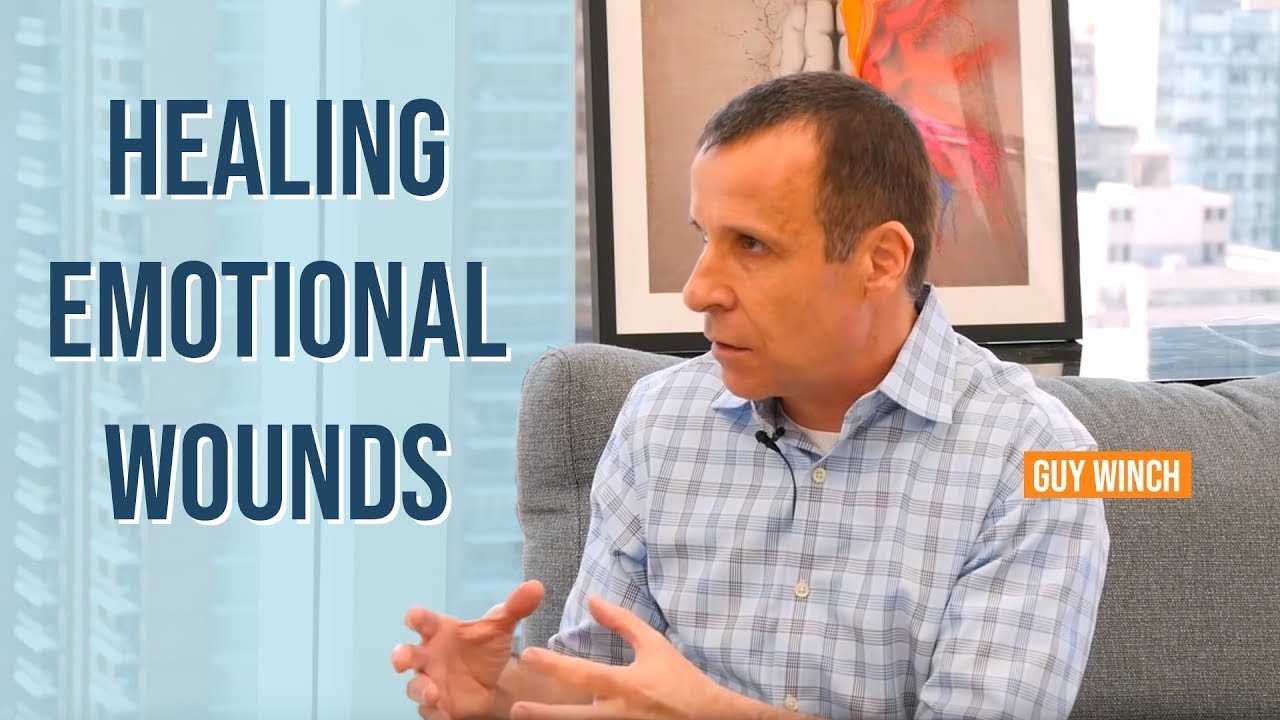
Psychologist Guy Winch explains how emotional wounds like loneliness and rejection drain mental energy and cognition. Chronic loneliness raises early-death risk by 14-25% and dementia risk by 40%. He offers concrete steps: initiate contact with others, use positive cues, have curiosity-driven conversations, and reframe failure as a diagnostic problem to solve.
Chapters
Welcome back, Kwik Brain. Your question for today, how do you heal emotional wounds? I mean, even the word wounds, it's like you're injured. It's like maybe you have a broken arm, but if not, something— your heart is different. At least with your arm, you know, after a few days you're like, okay. But these emotional wounds, sometimes they linger. And I'm excited to have back a very special guest, Dr. Guy Winch. He's written multiple books. that have been translated into 26 different languages. His TED Talks are— they went viral. Millions of people watched you around the world. And he's a psychologist, and we're gonna go, you know, something very important for us. It's not just about mental intelligence. Yes, using our techniques, you can learn languages and facts and figures at lightning speed, but it's not just mental intelligence. It's about mental health also as well, and that's so important right now. So welcome back, Guy.
Thank you. Thank you very much for having me.
Yeah, so we're talking about emotional wounds. I mean, we've talked about in previous episodes about the wound of rejection, about how do you fix a broken heart. What are kind of the wounds that you see some of your clients, your patients dealing with nowadays?
So I like the term wounds because when we experience things like rejection, as you said, or failure, or even loneliness, there's an emotional wound there in that same sense that there's something that hurts, something that can get worse if we don't address it, and something that's actually impacting us in all kinds of surprising and unconscious ways that we're not aware of. But actually, there's a big impact, and it's affecting us. And so unless we think of it as a wound, we'll brush it off. We'll say, oh, you just pull yourself up by your bootstraps, or just keep going and ignore it. And it's a bias we have, right, in the sense that you'll never break your leg and go, oh, ignore that. But when we experience emotional wounds, our first thought is like, oh, let's just move on with things. But there are ways to address them and to make sure that they don't impact us in unconscious ways that are detrimental.
Because there could be a huge negative ripple effect, you know, in terms of your productivity, your peace of mind, your level of prosperity even, how it could affect— like if I— Last year I tore a rotator cuff, you know, so I go to the doctor and they do an X-ray and such, and I can look at it and now I know how to treat it. But people don't do that when they have maybe emotional harm. There's no emergency room, if you will. Maybe there's— they could come and see you.
Probably not on an emergency basis, but yes. Look, you know, it's an interesting thing. We have a finite amount Mm-hmm. And emotional distress of any kind takes up a significant amount of that, leaving less for us to use for work, for engagement, for productivity, as you said. And there are certain things like that that have a big impact. I'm going to give you one example of a study that they did. They asked people who are not lonely to imagine being lonely in 5 years' time. And then they gave them an IQ test. And they saw massive drops, significant drops in IQ, just from a thought experiment about imagining being lonely. And what's illustrative about that is it really makes the point that when we are in emotional distress, it is impacting our ability to think, to process, to think creatively, to function in the most basic ways. It's not that we're nonfunctional, but our functioning can drop. By significant percentages. That's something we would want to be aware of. That's something we would want to be able to address. And that's why I think this topic of emotional wounds is so important.
We talked about in a previous episode about fixing a broken heart, how our heart could sometimes hijack our mental faculties. And that I know that loneliness, going back to loneliness, could increase your chance of dementia. 40%. And so, which is, which is, which is hard. So the heart-brain connection, if you will— people could see my shirt has a heart also and a brain on it— they're, they're, they're deeply related.
Loneliness is actually a really dangerous condition. A year ago, the American Psychological Association issued a press release in which they said that loneliness was a bigger public health risk and danger than smoking and obesity combined.
Wow.
Now, cigarette packs come with warnings. They say to you, oh, this is— this can kill you. But loneliness can increase your likelihood of an early death by 14% to 25%, depending on the study. You will die sooner. You will get sicker if you're chronically lonely. It's an actually dangerous condition to have, and we do not think about it that way. If there were other things that could increase our likelihood of death in that way, we'd be like, ooh, we need to know that and we need to know how to address it. And yet when it comes to emotional wounds, we don't. So loneliness is a very dangerous thing for people to experience. And ironically, when it comes to smoking cigarettes, if you're a smoker and I'm your friend, I can say to you once, hey, Jim, you know, maybe quit with the smoking. That's pretty much all I can do. It's up to you to do something about it. And it's the same with obesity. Loneliness is something that actually I can impact if I'm seeing you experience it. I can connect with you. I can initiate dialogue. I can deepen our relationship. And so loneliness is something not only the people who are lonely have to take very seriously, but those around them can be empowered to assist, to do something.
And it's our survival, right? As a hunter-gatherer, We're drawn to community because that's how we stay alive, frankly. Right.
In our hunter-gatherer past, you couldn't survive outside of a tribe because you needed, you know, the protection of the tribe, the warmth of the hearth, the sharing of the different duties in order to survive. And they're still a part of us. Now, I want to be clear about something. There are people who are loners. There are people perhaps who are more introverted and who don't feel the need from, you know, a lot of social connection. And there's nothing wrong with that. Those are not lonely people. The definition of loneliness is purely subjective. It depends solely on whether you feel emotionally or socially disconnected from those around you. And that's why we also see that a significant proportion of people who are lonely are actually married or in relationships or in families.
Mm-hmm.
But there's this disconnect. You know, they come home, this one's on their screen, the other one's on their screen. The conversation is transactional. Did you get the milk? Did you pay the electric bill? Did you talk to the kids? But there's no real connection. And people can experience significant loneliness and be unaware that that's what they're feeling.
So they're surrounded by individuals, they might even have a partner, and yet they feel like they're alone.
Yes. And that feeling of loneliness— again, it's subjective— defines them as lonely and then, you know, has a cascading effect for their mental health and their physical health that can be extraordinarily damaging.
And it's— is this something that's on the rise? I mean, you think you have social media and you're flipping through. Is there a connection there, or is it—
There is a— we think there's a connection because it's very much on the rise. With social media, people are connecting to all kinds of different people and might— it has the appearance of, I have all these friends. But these are not actual interactions that you're having with someone. And to the extent that they are interactions, they're not sufficiently meaningful. Liking someone's post is not a meaningful interaction at all. The other thing that we know about social media is that a lot of— there are a lot of studies that show that this can make us feel lonely or depressed. But it's more nuanced than that. It depends how you use social media. If you use social media very passively, you're just scrolling through other people's feeds, seeing their lives, liking something once in a while, that is putting you more at risk for feeling depressed or for feeling lonely because you're not really engaging. If you're posting, if you're commenting, if you're having conversations, if you're using social media more actively, you're less at risk for that. The problem is when we're feeling lonely, then we are very risk-averse. And so We don't want to reach out and start a dialogue because what if that person doesn't respond? So we're much more likely to scroll passively.
Which makes it self-perpetuating because the more lonely you feel, the more you're going to isolate yourself. And that can be a challenge.
And it comes with a real hook that's very devilish. And that is that loneliness induces 2 perceptual distortions. Perceptual, like on the level of perceptions. We experience the people around us as caring less about us than they actually do.
Hmm.
We minimize that, you know, people who love us, you know, they don't really care. They don't really care as much. And the second one is that we devalue the relationships unconsciously in a way, oh, that relationship wasn't worth that much. It's not going to be that great seeing that person. And those 2 things just sap our motivation to initiate contact. to reach out. And we're already risk-averse. We really— we're feeling so emotionally raw, we certainly don't want to set ourselves up for rejection. So assuming that the person doesn't care, why should I reach out? Or assuming that even if I do, it's not going to be worthwhile. Those are the things that really trap people.
So it keeps us stuck.
Very much.
What's one thing you would recommend to our listeners who might be experiencing this themselves?
So to break out from loneliness, It's really a leap of faith. You have to take the action, and you have to initiate the contact, even if you feel they're not interested, they're not likely. The problem is, when you feel that, you're likely to reach out in a way that's either too self-deprecating or too hostile. Why haven't I heard from you in a month? Or, you probably don't have time for me. Both are not inviting. And so I have one suggestion, which is— Straightforward. Stupid, but it's actually effective, and that's emojis. In other words, add a smiley face at the end of the sentence because ambiguous sentences, you know, like, I haven't seen you in a month, is a little unpleasant to begin with. But if there's a smiley face at the end, it actually reads like, and I want to see you. Without the smiley face, it looks accusatory. So I know, like, so many years of graduate school, and that's my go-to emojis. But I do believe that, you know, Look at the electronic communication, not how you interpret it, how it might be interpreted, because we misinterpret those things all the time. And then reach out in a positive way. Think back to the last time you hung out with that person and the fun thing that you did. And when there's a smile on your face, then message them.
Right. Because somebody could receive a message, and if they're in that state and they have that altered perception, they can misinterpret it, certainly. They can distort it, or they could delete something.
Right.
This person really does care about me. So I guess an emoji is worth a thousand words.
Sometimes. And the same thing with a spouse. In other words, you're sitting side by side and you've got your noise cancellation earphones on and you're looking at this and they're looking at that. Take them off and just scooch up next to them and take their hand and say, let's watch that together. Now they're going to be horribly suspicious, right? Because what's it like? What did you do to the car? What happened there? Like, and you're like, no, no, no. The car's fine. I didn't crash the car. I just— it's been a while since we've watched something together. Let's do that. So initiate, even with a spouse, like a move to closeness. Say, let's close all our screens and have a conversation. You know, you see these couples at dinner. I see them all the time around me. They're sitting there and there's nothing. Nothing is being said.
Right.
Surely you have something to say. Find something in the news, a newspaper, comment on the food. Like, do something. But initiate a contact that's deeper and that's more meaningful. Go back to the discussions you used to have. Ask questions about how they see the future or what they reminisce about from the past. Get a little deeper there and start to forge those connections in a deeper way.
Curiosity goes a long way. Asking questions, seeking first to understand what's going on. So if they see people— it's so interesting because a curator can really The B, taking an interest in somebody else and taking the focus off of us and onto somebody else, make sure they feel seen and also feel heard. What about— you mentioned loneliness. What about failure? How do you heal that emotional wound? What is failure?
So look, we fail all the time. It's part of how we learn when we grow up. It's by repetition, by failure, by, you know, trial and error. But as adults, when we fail at things that are significant to us— I'm not talking about failing a level of Candy Crush, though you'll see some people smash their phone down in frustration from that. But as adults, when we fail to get this promotion, or we failed, you know, we pitched this presentation at work and it failed to happen, or we failed to get the round of funding, you know, for our startup, there's a big consequence that happens. And the more meaningful the failure, the more meaningful the consequence. And one of the first things that happens to us— and this happens to 80% of people, roughly— is they begin to feel powerless and they begin to feel helpless. And there are experiments in which they gave college students 4-letter anagrams that were impossible to do. Now, they seem possible because they're 4 letters. And then they gave them another round of anagrams that was very possible, and they failed at them. Because even though they were very much within their ability to do, you know, doable 4-letter anagrams, that first experience taught them, I'm not good at this. I can't do this. And so they weren't able to bring forth the intellectual resources to master a challenge that was very much within their ability. And that's what failure does. It teaches us that we are not up to the task potentially. All these people that, you know, people say, I fail at so many diets, say.
Mm-hmm.
You know, people say that to me a lot. And I'm like, great. Tell me at what point do you fail? And there's usually a very specific point at which they fail. And that's not about the diet then. That's about their system. You know, it's the same if you have a kid who's in school. If they didn't get the grade they wanted to get, it doesn't say a thing about their intellectual ability. It says only something about their system of studying not being sufficient. So it's not something we need to take personally. It's something we need to look at, oh, something in my approach wasn't successful. Let me find what that is and fix it. But it's hard to do when you're feeling paralyzed and—
Unable. Sometimes when you're in the jar, it's hard to see the label on the outside. We deal with this a lot with our students because they all feel like they are a failure, and they don't realize it's not a failure of self, it's just a failure of a system. They didn't have a system for studying or for reading or for focusing. And when you put it on a system, there are 2 benefits. It's not, you know, still using self-compassion, it's not— you're not beating yourself up on that subject. But also on the second thing, there's something you could do, because a system implies that it's— there's a process or a recipe to be able to empower yourself, to be able to—
And the tricky part there is that what most people do, their default is, yeah, you know, I'm going to try again. And that means I'm just going to do the same thing I did but harder in some kind of way. And no, no, no, don't do the same thing you did. That system, you know, maybe effort was an issue, but it's probably not just effort that was the issue. There was something about how you were going about it. You need to do it differently. You need to— and I always say, do it like a detective, right? Because I don't know detectives, but I'm assuming they don't go to a crime scene with outrage. But can you imagine that blood spatter pattern on the wall? They just note it. And you need to note it in that same way. Analyze where those failures happened in a way that's not self-critical, because that's going to distract you from actually understanding where the failures happened.
Right.
What didn't I do adequately? What could I do differently? And then think creatively about it. Some people say, I can't get a promotion. My boss doesn't like me. I'm saying, then the challenge is how to improve your relationship with your boss. In other words, there's always a way around the hurdle. You just have to define what that hurdle is and then brainstorm how you get around it.
Amazing. We talked about loneliness. We talked about failure. At a high level, we're saying that there's hope. There's not only hope, but there's help. If people are suffering from emotional wounds, that they don't have to just be a victim. They could step up, but it does require effort and maybe even being a little kind to yourself and understanding that the curiosity of even coming out and just thinking about, it's interesting why I think this way or why I'm behaving this way, and that doesn't lead to that judgment. Self-judgment leads to self-growth, self-awareness, potentially even Some self-improvement, self-esteem maybe.
All of those things are very, very true, and I would add one thing to them. To deal with emotional wounds, by definition, you are going to have to be emotionally uncomfortable. What's comfortable is to withdraw. What's comfortable is to avoid. What's comfortable is to not address things. That's what's emotionally comfortable. It's not a great emotional place to be, but wading into that bog is emotionally uncomfortable, and you have to be able to tolerate it and say, it is worth it for me to really get into that, even though it might be emotionally uncomfortable, even though I might need to use a lot of self-compassion to kind of get through it, because that self-compassion piece is very important, because that's where the answers are. That's where the Band-Aid is. That's where I can get better and move forward. That's where the growth is.
That's where the treasure lies. Usually in what we're avoiding, what we're scared of.
Correct.
And so on the other side, that even if someone's going through a storm right now, that there are— if people persevere, if they put down the effort, if they just— if they feel lonely or depressed and they go for a nice walk and they do some self-care, because, you know, falling in love with that person in the mirror who's been through so much but is still standing, acknowledging yourself for it and giving yourself credit, And taking little actions, little tiny little steps to be able to create a different direction or maybe even different destination, if you will.
And doing it with the right mindset. With lonely people, they often say to me like, I know I should be going to the party, but I went and no one spoke to me. Now, if you see them at the party, they park themselves by the hummus and the dip and with a scowl on their face, they look scary. And I've seen these people. They look— no one's going to approach you. You look scary. Just going for the sake of it is not sufficient. You have to go with the right attitude. You have to go with the right mindset. And you have to build yourself into that mindset. Pump yourself up like you would before a big game, in a way. Like, you know, remind yourself of all the good interactions you've had with people. Remind yourself of how— of all the people that do care about you. Remind yourself of that time you told that hilarious joke. Whatever it is, pump yourself up and then go with that attitude, even if it's brief. I'd rather somebody go and hold it together for 20 minutes smiling and chatting with people, work the room and leave, than stand there for an hour on the side looking like this.
Exactly, because you're just going to see more evidence to put that— justifies your state. And so maybe that we could even dream a little bit bigger for ourselves and have something more inspiring, that it's not just our current reality, that we don't downgrade to our current reality our dreams, but we upgrade with our discipline, with our effort, with our our attitude, with our skills, something we desire and something we deserve. This is extraordinary. My challenge for everybody here is take a screenshot of this episode or of this video, tag Guy on social media, whether it's on Facebook or Twitter, Instagram, and myself, and share your big aha. Remember, when you teach something, you get to learn it twice. It doesn't stay just information or inspiration, it becomes implementation and integration. Which is really the goal, because knowledge by itself doesn't change anything at all. It's when we apply it and it becomes more part of us that we can really benefit. Guy, how would people stay in touch with you?
They can find me through my website, guywinch.com, and they will have links to social media, to talks, to books, to other things.
And the book specifically for this one, which one would you recommend?
Emotional First Aid.
Emotional First Aid.
It's in 20-something languages. Should be available most places.
Wonderful. Everybody get a copy of that book. Make sure you— when you take a picture of it, you know we have our One Book a Week club, so #OneBookaweek. And I'll repost some of my favorites. And also, I'm going to get a number of Guy's books and gift it out to some of our favorites out there as a way of just leaving no brain or heart behind. Thanks, Guy. Thank you.
More from Jim





The Library of Minds: Brain Coach: How to Stay Sharp When AI Does the Thinking | Jim Kwik





