How do You End Mental Illness? Interview with Dr. Daniel Amen & Tana Amen | Jim Kwik
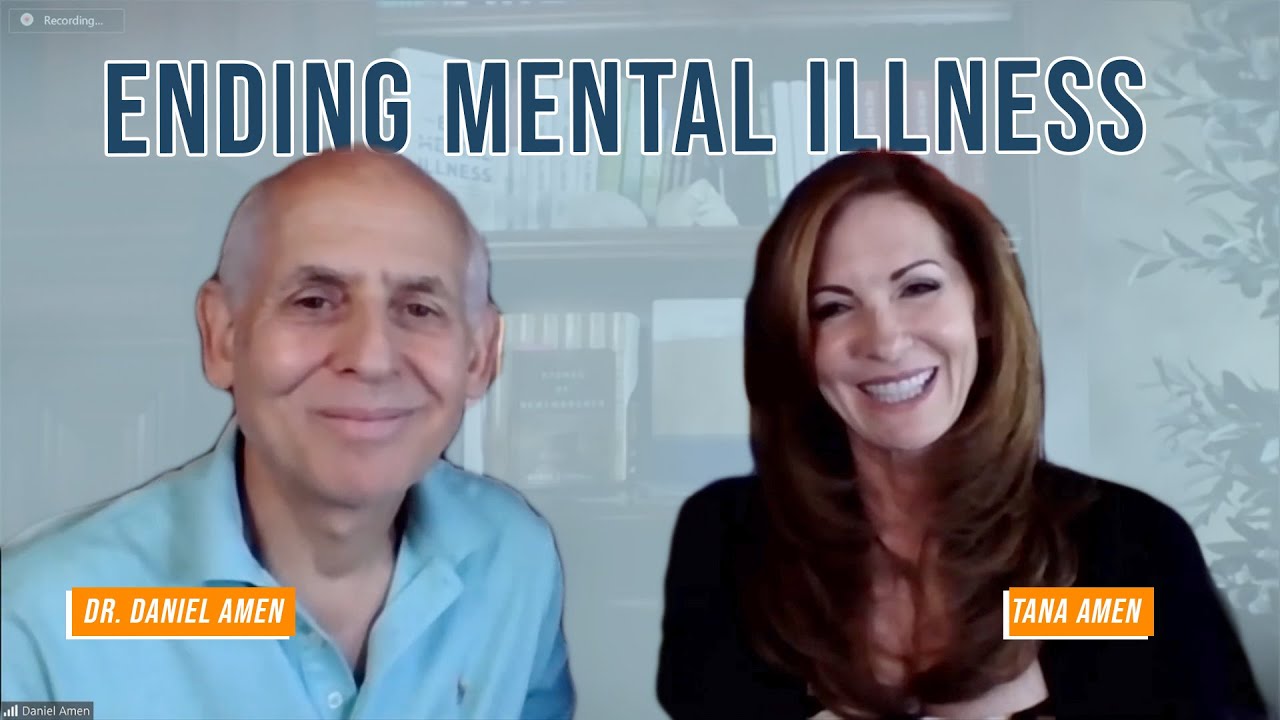
Dr. Daniel Amen and Tana Amen argue mental illness is a brain-health problem, not a psychiatric one. They outline eleven risk factors through the "Bright Minds" mnemonic and recommend three daily habits: a morning affirmation, nightly gratitude review, and checking whether actions help or hurt your brain.
Chapters
Welcome back, Kwik Brains. My question for you today, how do you end mental illness? This is such an important episode, so thank you for tuning in. And I have 2 special guests, 2 dear brain warrior friends, 2 mental superheroes, Dr. Daniel Amen, Tana Amen, bestselling authors. And you've been on my show before. You've, uh, you've graced our stage and shared so much of your knowledge. I wanted to talk about one of your newer books, which is The End of Mental Illness Here, because right now with everything that's going on in the world, I mean, you must see— what are you seeing and what are you recommending for people who are going through some real struggles right now?
You know, I think of it as pandemic squared. Is, yes, we're in the middle of a global pandemic. But it's going to cause another pandemic with people who've lost their jobs, who've lost their loved ones, who are frightened and afraid. Calls to suicide hotlines have gone up nearly 1,000%. And the way out of this is surprising that many people don't know. I titled the book The End of Mental Illness because I hate the term mental illness because it's wrong. Based on our brain imaging database now of 160,000 scans on people from 155 countries, what we realized is most mental health issues are not mental at all. They are Brain health issues that steal your mind. And this one idea changes everything. Get your brain right and your mind will follow.
Well, and I love our work because people will come to us and we really do a thorough assessment on people. And it's like, you know, they think we hear the word crazy a lot. And what is crazy? If your hormones are off, you're going to act in a way that's, that is not your normal rational way, right? If your hormones are off, if you've had Lyme disease, if you've had a head injury, So there's so many complexities to it, but the term crazy could encompass a whole bunch of stuff. You could have an infection. You know, you can have so many things going on that lend to this idea of mental illness when— and we're putting Band-Aids over bullet holes with all these medications without actually fixing the root problem, the root cause of the problem. So does that make you crazy because your hormones are off? It can make you feel crazy.
Well, depression is a symptom cluster. It is not, I think, a diagnosis that will be fixed with Prozac or Zoloft or Lexapro. We want to get to the root and the— if you want to keep your brain healthy, so if you buy this idea that it's brain health issues, if you want to keep your brain healthy, you have to prevent or treat the 11 major risk factors that steal your mind. And we know what they are. There's a mnemonic in the book called Bright Minds, and it's prophetic in the sense— and I wrote this before the pandemic— those same risk factors increase your mortality from COVID-19.
So weird.
So for example, B is for blood flow. Low blood flow is the number one brain imaging predictor of Alzheimer's disease. It's caused by things like hypertension, and hypertension is a risk factor for mortality. R is retirement and aging. The older you are, the more likely you are to die. I is inflammation, which we now know is associated with both depression and dementia.
Absolutely.
But if you have inflammatory— an inflammatory process already brewing in your body because you have low omega-3 fatty acids or you have gum disease or your gut's unhealthy, you're more likely to be vulnerable to the inflammation storms that kill people with COVID-19. The N is neurohormone deficiencies. Low testosterone has been found to be a risk factor for mortality from COVID-19. Oh, by the way, it causes depression and low libido and low motivation. The D is diabesity, which is rampant in our society. High blood sugar, also being overweight or obese, another big risk factor for COVID-19, but they're big risk factors for mental health challenges. And what nobody's talking about, and it irritates me, is the United States has 4% of the world's population. It has a third of the cases of COVID-19. And we have more mortality than many other countries, even though we have— we're the richest country in the world.
Great technology.
And why is that? We are sick as a society. 75% of our healthcare dollars are spent on chronic, preventable illnesses. If we don't get serious about getting healthy, this pandemic is going to last a long time.
Wow. And so what would you, knowing this, for people who have a lot of stress, they're having a lot of anxiety, they're lonely, I mean, there's so many symptoms for this. What would you recommend to people who are listening or watching this at home right now if they feel like they're really struggling with this scenario? I mean, there's one or two things that you would say that would give them— I know everyone's a little bit individual.
You said something the other day that blew my mind. You said that for every, for every percentage that unemployment goes up, the use of opioids goes up 3%.
Opioid addiction goes up 3.5%. And so, you know, when you and I talk, we talk about small, simple steps or tiny habits. 3 of them. When you wake up in the morning, say to yourself, today is going to be a great day because then your unconscious mind will find why it's going to be a great day because where you bring your attention determines how you feel. When you go to bed at night, what I do is I say a prayer and then I go, what went well today? I always put myself to sleep by reviewing my day from a positive standpoint. And like you, I'm busy. And I have lots of good things that happen during the day, but I don't focus on them. I do at night, which sets my dreams up to be positive. And then as I go through the day, this takes 3 seconds. Whenever I go to make a decision, I just ask myself, is this good for my brain or bad for it? And if I can answer that question with information and love, then I tend to do the right things.
I'd love to add something. I love that because I love, I think this is his best book, in my opinion. I wanna add something to that. So I've thought about this a lot during this time. It's like, why are people behaving so radically? They're just so different in how they're taking all of this, right? Like, we're using this as a time to cleanse. I'm teaching the kids, you know, how to meditate. We're like, no, it's stressful. Don't get me wrong. I mean, there's 3 kids. It could be overwhelming if I didn't discipline that. But I practice martial arts, and it's so interesting. I've often watched this, and I've studied it, and I read a ton of books on this, 'cause that's one of my favorite topics. Why do 2 people who get attacked respond so— or 3 people who get attacked respond so differently? Some of them will just stop and stare at you like a deer in the headlights. One will freeze, curl up in a ball, and just let someone beat them to death. And the other one will fight to the death. And it made me start to wonder, like, why do people react so differently in stressful situations? And so that's been something that I— before, way before the pandemic, But that I studied. It's like, what is it that makes people fight to do, like, for their lives, to fight not just for their lives, but for, for the things they love, for what they want, rather than just being a deer in the headlight or freezing and shutting down. And when the pandemic hit, that came back to me. So I've spent like years studying that, like, what do you do? And I think a lot of it goes back into what we were talking about in the podcast we did with you. A lot of it is mindset, but there's a huge component of it that you're talking about that is training. It is, you have to train and you can't wait till fight day to start training. You have to train every day. You cannot wait until you all of a sudden need these skills. You gotta be training every single day. And it doesn't have to be this overwhelming thing, like you guys both have talked about. It can be tiny steps. And that's what martial arts is all about. It's about, you do something 1,000 times, when you're faced with it, it's just gonna be automatic. Right? So you automatically, when the pandemic hit, I'm a prepper. But when the pandemic hit, my first thing was, oh, we need to make sure we have everything. Like, I went through my, like, immediately went into action. I watched some of my friends just shut down and flip. And it's like, why? But I think a lot of it's training. It's not just inherent.
I love that. And, and what your suggestions for training is like, when you wake up in the morning, you know, you ask these questions, or you say these things, you go to bed at night, you train yourself. And how you do anything is how you do everything. So when you need it, you have it to call for, especially even when you're going throughout the day. Is this good for my brain or bad for my brain? You've trained yourself to have that. So when, when you're pushed under pressure, it shows up because you've done it 10,000 times already.
Yeah.
Little by little, a little becomes a lot. Thank you both so much for being back on our show. I recommend everybody take a screenshot of this episode, tag the 3 of us on social media, And, and post it. And what's one thing that they could share online? What's one thing that you want them to, to put in the description? One, uh—
On End of Mental Illness, I would just be great. And the end of mental illness will begin with a revolution in brain health. And we're recruiting, uh, brain warriors, uh, because, you know, if you're going to create a revolution, you have to have warriors, and we just dearly love for people to share this book with anybody they care about.
I love that. So that, you know, even with the martial arts, you're not— it's not fight, you know, it's you fight, you don't freeze, and you don't just go into fear.
You're proactive.
Yeah, or flight. Absolutely. You're a warrior for your brain, which is the most important thing. And then if you get your brain healthy, your mind and your life will follow. Thank you both so much for being back on our show.
Thanks, Jim.
Great.
Thanks, Jim.
All right, amazing. Thank you both. We'll get this out and we'll put everything—
Hey, it's your Brain Coach. I want to thank you so much for watching this video. 3 things to do. Number 1, make sure you share this because when you teach something, you get to learn it twice. Update your learning so you can update other people's learning as well. Number 2, make sure you subscribe to this channel so you don't Miss a thing because if you miss a video, you miss a lot. And finally, make sure you hit that bell so you're notified and you find out when we put out the latest and the greatest. One extra thing: if you want really close attention, then text me. Here is my phone number: 310-299-9362. Did you remember that number? 310 299-9362. Shoot me a text and we'll stay in touch. Ask me your burning question. And I wish your days be full of lots of life, lots of love, lots of laughter, and always lots of learning. I'll see you in our next video.
Bye.
More from Jim





The Library of Minds: Brain Coach: How to Stay Sharp When AI Does the Thinking | Jim Kwik





