How do you Overcome Self-Doubt? Interview with Lewis Howes & Jim Kwik
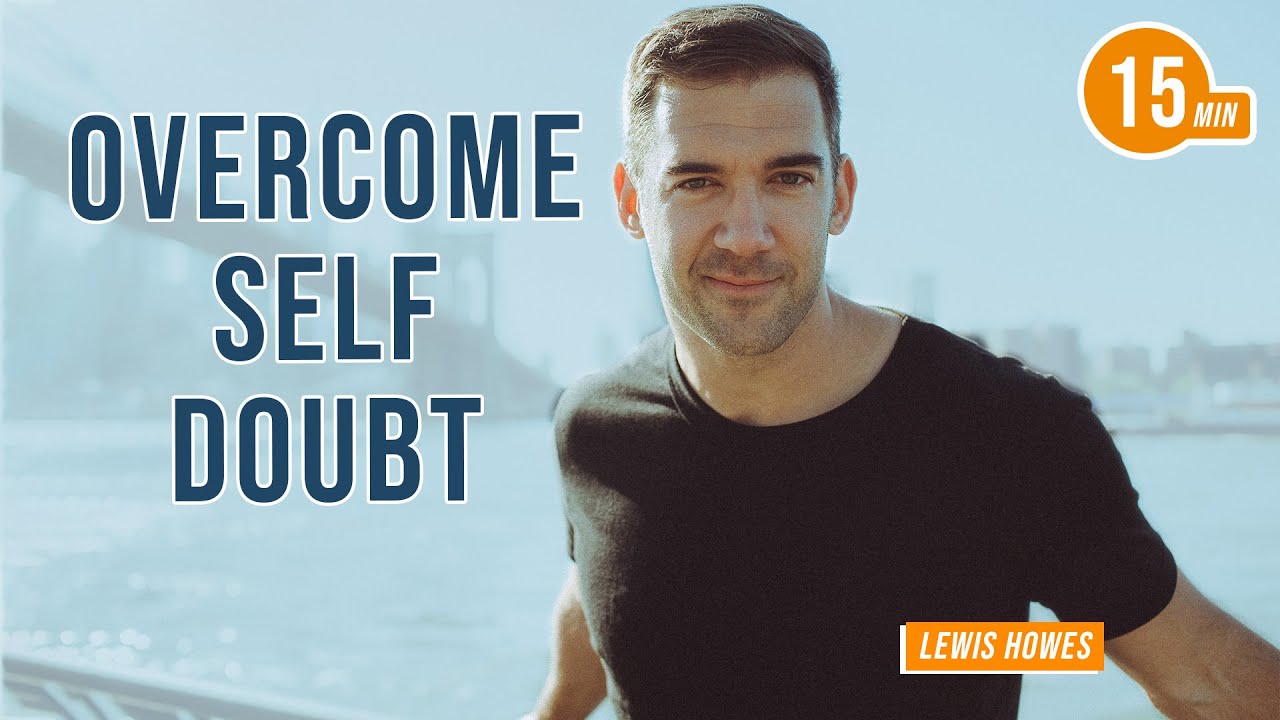
Lewis Howes overcame dyslexia, bullying, and deep self-doubt by tackling his three biggest fears: failure, success, and judgment. His method: write down every fear, rate it by intensity, then face the worst one first. He used this to conquer public speaking, rejection, and dancing.
Chapters
Welcome back, Kwik Brain. We have a very special episode for you today. Your question of the day is a question that comes up in our private Facebook group. People text it all the time and on social media. How do you overcome self-doubt? How do you gain or regain your self-confidence? You know, I think a lot of us have this fear of not feeling like we are enough, and because of that, we mitigate you know, our mindset and the results in our life. And I have a very special guest today, and we are actually in his studio. We are with New York Times bestselling author and host of The School of Greatness, Lewis Howes.
My man, thank you, brother.
Thanks for coming.
Appreciate it, man.
Dude, this is— thanks for having us in your studio.
Of course, man.
I was just on your show.
Yeah, mind-blowing, almost 2 hours long interview.
Yeah, so definitely go over there.
So you have quick content in yours, I have long content. So if you want more, You can get there.
Exactly. So here we were chatting off camera about one of the challenges people have right now is they feel like they're not enough, that they've lost their confidence, they've lost their step. We live in very, you know, challenging times right now. There's a lot of turbulence and it's, it's shaking up the market, it's shaking up the people's certainty, but especially the certainty not just externally but the certainty about themselves. Can they perform? Are they enough? Are they capable to survive and thrive, be there for their kids, run this business? And, you know, you have a unique story. I mean, were you born— when people see you on stage, you're very extroverted and, you know, you own the room and you also encourage people. You give that courage to other people. Were you born with this before we got into this?
I think we have a similar story in the fact that we both had learning challenges growing up. I'm still dyslexic, I guess, but I grew up just fearing reading aloud, fearing speaking aloud because I would stutter or stumble or I just didn't understand the words I was reading. Even today, like I was reading something out of your book and when I read it aloud, still sometimes, like I was reading exceptional. When I was reading your subtitle of Limitless, upgrade your brain, learn anything faster and unlock your— I had to pause 'cause I was like, is that exceptional or is that— exponential. Like, the way the word looks to me, it's like it's— something is in my brain where I'm like— so I have to slow down certain learning processes. So for me, um, that was a challenge. And when you're made fun of a lot as kids, you know, whether you had the broken brain or for me it was just like I couldn't read, right? I got made fun of a lot. So I was in the special needs classes all through the end of high school. I was in a special class for learning in a special way.
Hmm.
So, you know, that level of feeling less than or feeling like I'm not good enough or not smart enough as the rest of my peers was challenging. I was in a public school until I went to 8th grade, and I was in those special needs classes all the way through public school. Then I begged my parents to send me away to a private school. I was from Ohio, and I moved to St. Louis, Missouri, lived in a boarding school. I lived in a dorm with all guys. And in the private school, when I got there, they tested me for the first time, and I had a 2nd grade reading level going into 8th grade.
Okay.
So I had all these confirmations of why I wasn't good enough, why I wasn't smart enough as a kid. And then I was in tutor classes throughout high school just to be able to graduate so I could get into college. So for me, that was a struggle in thinking that I was never going to be good enough. I was never going to be smart enough. And kids aren't going to like me, teachers aren't going to like me, girls aren't going to like me. And I just felt like I was struggling a lot as a kid and I was riddled with fear and insecurity because of it. So that was kind of my story. And as a, I guess, a way to survive emotionally and mentally, I finally got to a point where I said, I'm sick and tired of feeling this way. And when I was in my teen years, I said, I'm just— I'm not going to allow fear to hold me back from putting myself out there, from feeling like I'm worthy of connection, of love, intimacy, of trying new things. Because I was so afraid of— well, I'll break it down. I realized that there was 3 fears that we all have.
Okay.
And 2 of the fears were not a problem for me. The first fear that a lot of us have is the fear of failure. Failure. We don't want to fail.
Right.
We've been conditioned or trained not to fail, right? Sara Blakely, when I had her on, she said that every day when she got back from school, her dad would ask her, what did you fail at today? And would celebrate the failure because it meant she was trying, she was learning. We talked about this in the interview we did. For me, I knew from sports that failure was the key to success. I always wanted to succeed, and therefore you had to fail in order to succeed. So failure was not a fear of mine, but a lot of people, when you ask them, what are you afraid of? They're afraid to fail. The second fear is success, believe it or not. A lot of people are afraid of the responsibility when you have great power, right? When you have success come your way, now I'm responsible. I have to be able to show up consistently. And a lot of people are afraid of success. I always wanted to be successful because I thought that would give me more attention and love, and therefore—
Interesting.
And therefore I was like, well, that's what I want. I want to be successful. So if I've got to get there through failure, I'm happy to do that to get what I want. So I was never afraid of those 2. The 3rd fear is what really crippled a lot of my life, and that's the fear of judgment. It's the fear of other people's opinions, fear of other people's thoughts, conversations, gossip. This is one of your 3 truths that you talked about, which is really not letting other people's opinions hold you back from going after what you want in your life. And judgment was the thing that held me back because when I would open up a book and read it aloud in the class, kids would laugh and make fun of me or whatever. So it was always the opinions of other people that would hold me back. And those 3 fears are something that I started to learn about, and I said, I no longer want to be afraid. So when I was a kid, I started making a list of all the things I was afraid of.
Really?
Of course, yeah.
What are some of those?
One of the things was I was afraid to speak in public. because I would just get made fun of. Again, the judgment fear. It was like, why am I afraid of speaking in public? Because people are judging me. Another thing was talking to girls because they would laugh at me.
Right.
When every time I would say hi to a girl that I was interested in as a 12 or 13-year-old boy, you know, it's just like they would laugh at me, they would run away. So like that opinion, that feedback was emotionally crippling for me. Another thing was dancing, 'cause when I would dance, people would laugh and make fun of me. And so I just started making a list of all these things I was afraid of. Based on the judgment side of things.
And that created a lot of self-doubt.
Well, it's just like, I was like, wow, I've got a big list here, you know? It's like I'm afraid of a lot of things, right? And so as an athlete, I learned quickly that in order to grow, we must take action. In order to grow, we must take action. And I just said, you know what, I'm sick and tired of feeling this anxiety. I mean, I couldn't sleep at night as a kid, not because I had sleep apnea like you, But because my mind was constantly in fear and anxiety mode of like, what are people thinking about me? What's gonna—
Like ruminating.
Ruminating constantly. It would take me about 2 hours to fall asleep every night until about 7 years ago. And now it takes me about 5 minutes.
What happened 7 years ago?
I opened up about being sexually abused for the first time, and I started to address all my insecurities and fears of the past that I'd never addressed. So I started to essentially fully accept who I am Everything I've been through, challenges with parents, girlfriends in the past, friendships in the past, mistakes. I accepted all the things about me that I was ashamed of, embarrassed of, afraid of, and essentially just said, okay, I'm never gonna— I'm not gonna allow my past to hold me back from my present or future anymore because I'm accepting it, I'm acknowledging it, I'm talking about it all.
Was there an impetus, something that triggered it?
I went to a workshop that— well, there was a lot of things. I had a business breakup. partnership about 8 years ago that wasn't working anymore. I had a relationship breakup that wasn't working, and I started just kind of reacting in different areas of my life where I felt triggered, where I felt like someone was attacking an insecurity of mine or a fear of mine, which was this feeling of abuse. Whenever I felt like someone was abusing me, it was like I had to react and respond in a negative way to protect myself. But I was unaware why it was triggering me. I just thought, this is who I am, don't try to change me. And I eventually started to go to reach out to all my therapist friends and start doing work on myself. And I went to a workshop that got me to a place to finally open up about sexual abuse as a kid. And then that just took me down a path of more work and more discovery and healing over the last 7 years. But I started to make a list of all these fears in my teens, my 20s, and just started checking them off my list. So the The first key to building self-confidence and eliminating the doubt and insecurity is to make a list of your biggest fears, for me. And write them all down. Think of everything you can think of. Talking to girls, even if it sounds silly, write it down. Public speaking, talking to girls, dancing, salsa dancing, learning to play guitar was a fear of mine.
And what is writing it down and making it explicit? What do you think that does to the process?
I think for me it was just like, I just thought I was afraid of everything, and I was like, okay, let me actually get it out on paper and see what this is so I can actually see how many things I'm afraid of.
Yeah.
And be aware of it and see it. I think when we can see it, then we can realize how to unsee it by breaking it down and by taking it on. And so I had this big list, and I just said, okay, what's the thing that gives me the most anxiety? And I rated them.
Wow, you consciously actually—
Top one, I was like, this one gives me the most fear. Like, do I feel like dying? if a girl rejects me? Yes. Do I feel like dying if 1,000 people are watching me on stage? Yes. At what level of death do I feel? You know, I would just create a list.
Or which one am I more afraid of?
Most afraid of. And what I started to do is I said, I'm gonna do the thing that scares me the most and go backwards.
Starting from the one that's most—
Most scary, which I don't know if that's the best way to do it, but for me, I think that was the athlete mentality in me. And I was just also at a place where I was sick and tired of feeling like so, So much insecurity, so much fear, so much worry that I was just like, I don't want this thing to control me anymore. I don't want to have power over me. So I'm going to go all in on breaking it down, on mastering it, on at least to a level of neutrality so it doesn't control me.
You, you interview a lot of people on your show, and I noticed like when I'm— the commonality a lot of times is sometimes people's inspiration is their desperation. Yes, they're sick and tired of being sick and tired. Pain. Yeah, they get— it becomes unbearable, so they have to Yes. And sometimes they do.
And I think, you know, when people say, well, how do you find your purpose? I think you figure out what you're either passionate about and you lean into that, or you figure out what the most pain is for you and you lean into that.
Ooh.
And so you can go either way. It's like, what do I love the most? Go do that thing, and that could turn into a purpose. Or what's the thing that I hate the most, or what hurts me the most? And lean into that, your biggest pain. For me, I had lots of pain, lots of insecurity, lots of doubt, and I just didn't want it to control my life anymore. I didn't want to control my thoughts, my emotions. I mean, I remember going through a breakup in high school, and maybe this is normal for most people, but it took me about 2 and a half years to get over this breakup. And I would literally be in the fetal position for hours on end almost every night, crying, sad. Like, I didn't know how to be alone. I didn't know how to be okay without being in that relationship. And I remember I said after 2 and a half years, like, I am like, this is not okay to feel this type of fear and insecurity and pain out of breaking up with someone. Something else is off here. I need to go on. And so that was on my list, like being alone.
Hmm.
Being by myself was a huge fear. So I said, I'm going to fall in love with myself alone. I'm gonna go out only to lunch by myself, only to dinners by myself. I'm gonna go to the movies by myself. I'm gonna go salsa dancing alone. I'm gonna do all these things by myself, not bring a group of friends, not call people up, I'm going alone. I did that for like 2 years until I said, wow, I really like being with myself. I didn't like it the first 6 months. I didn't like the thoughts I had. I didn't like who I was. But eventually I fell in love with myself by myself, and that was a big fear to overcome. And so creating a list of the biggest fears for me was really helpful. And then I tried to do that still every year. I'm like, what am I afraid of still?
Because those are like the limits of what we're—
Where I'm at to the next level. I've still got fears to get to the next level. I might have mastered certain things, but what's next?
Right.
Creating a list of all the fears, and then for me it was taking action on the biggest one until it got to a place where I was like, I feel really comfortable. It's kind of like, you're a big superhero person, you know, Batman. For me, it's like he was afraid of the bats, he was afraid of the dark, he was afraid of being alone with, you know, being underground, wet, all these things. And so he said, I need to master this by becoming the bat. How does a bat live? Let me live with bats until they're my friend. Until we become friends with our fears, I think we're always going to be a little insecure because that fear still has control over us.
This is awesome, man.
Thanks, man.
Yeah, I challenge everybody right now to take a screenshot of this episode and tag Lewis, tag myself in it. And what would the challenge be? What can they— what can they share?
I would say create a list of your 3 biggest fears right now. Um, you know, write it down on the screenshot and say, these are my 3 biggest fears. And then make a commitment. Say, I'm committed to taking action on this fear today. And what's the one step you want to take towards making that fear a friend of yours? I love that. And turning the fears into friends. So you can take an action step today, but then also say, I'm going to give myself 3 months to overcome this fear.
Turning— that's interesting, turning fear into friend, because like you think about all the things that you're struggling with, that you're fearful about. Whether it's Latin— Now I'm in love with them. Wow.
Now I love them all. Speaking in front of people, it's like I love serving, whereas before I would never get on a stage. Dancing in front of people, there's no way you would see me on the dance floor ever. Now it's like, have me find someone, I'll dance with anyone anytime.
Dude, I'm telling you, with the languages, I want you to feel the same way.
I want to get that. I want that. I want to be able to speak in front of all Spanish-speaking audience and be fluent, confident in their language. That's the key.
It's happening. It's happening, man.
It's happening.
Awesome, man.
Thanks, brother.
Hi, Kwik Brain, it's your brain coach. I wanna thank you so much for watching this video. 3 things to do. Number 1, make sure you share this, 'cause when you teach something, you get to learn it twice. Update your learning so you can update other people's learning as well. Number 2, make sure you subscribe to this channel so you don't miss a thing, 'cause if you miss a video, you miss a lot. And finally, make sure you hit that bell so you're notified and you find out when we put out the latest and the greatest. One extra thing. If you want really close attention, then text me. Here is my phone number: 310-299-9362. Did you remember that number? 310-299-9362. Shoot me a text and we'll stay in touch. Ask me your burning question. And I wish your days be full of lots of life, lots of love, lots of laughter. And And always, lots of learning. I'll see you in our next video.
More from Jim





The Library of Minds: Brain Coach: How to Stay Sharp When AI Does the Thinking | Jim Kwik





