How Gratitude and Community Make You Smarter (and Happier)
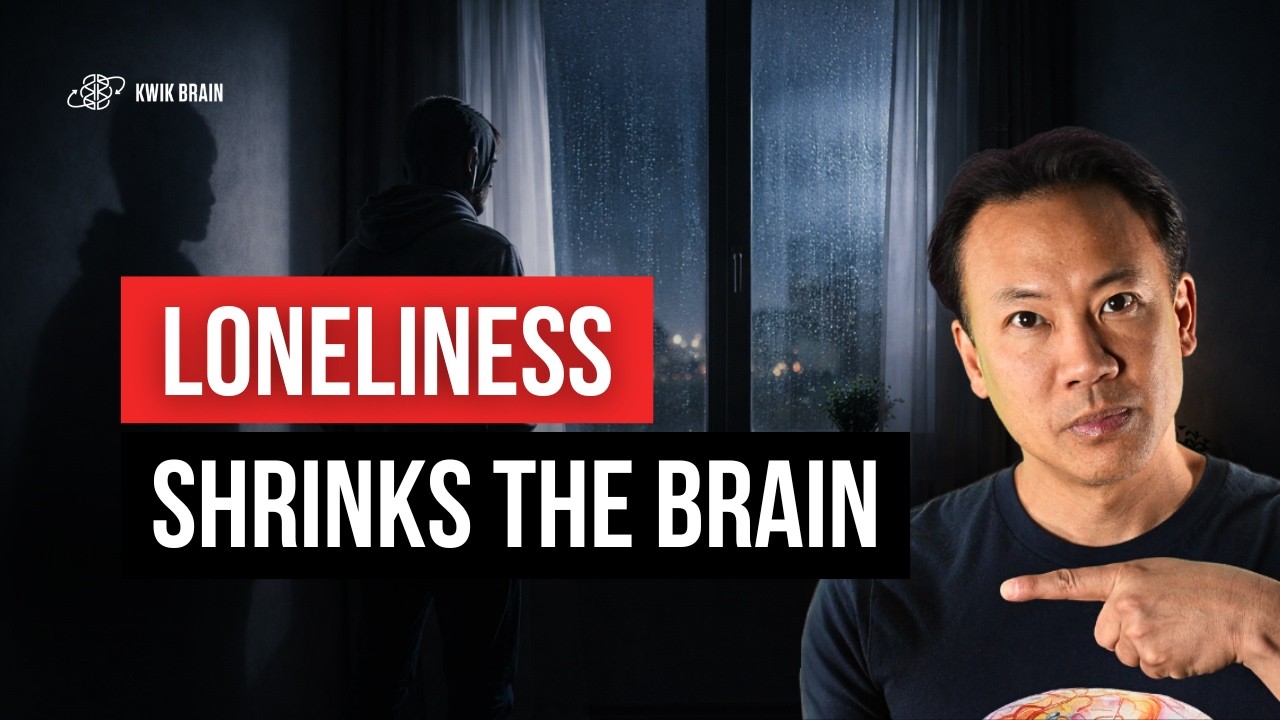
Jim Kwik explains how loneliness damages health as much as smoking, while gratitude and real connection release dopamine and strengthen memory. A Harvard study tracking people for 80 years found strong relationships predict longevity and cognitive resilience. He offers a 7-day gratitude challenge with daily practices like gratitude walks and boundary setting.
Chapters
There's a quote on my office wall that says, gratitude is the memory of the heart, by Jean-Baptiste Massu. We're living in the era of loneliness. Think about it. With technology at our fingertips and social media connecting us to thousands of people instantly, we've been sold the idea of being hyperconnected. But are we really? More people today report feeling lonely than ever before. We scroll through endless feeds, message dozens of contacts, and still Still go to bed sometimes feeling alone. We've built a world where we're constantly plugged in and yet emotionally disconnected. And it's not just a feeling, it can be a real health epidemic. Did you know that lacking social connection can actually raise your risk of premature death as much as smoking up to 15 cigarettes a day? Loneliness increases the risk of heart disease and stroke, and it's been linked to anxiety, depression, Even dementia. When you feel isolated, it's easy to take things for granted. Gratitude becomes a distant concept, something we talk about occasionally instead of something that we're living every day. But here's the good news. If you're listening to this, you've already taken the first step to protect yourself and others, awareness. Gratitude and human connection don't just make you feel warm inside, they actually restructure your brain. They can boost memory, improve focus, Regulate your stress, help you sleep better, and protect your long-term cognitive health. So in today's episode, I want to help you reconnect, not just with others, but with that part of your brain that thrives on gratitude, love, and community connection. So stay with me, because in this episode, you'll learn what gratitude and human connection actually do inside your brain. How to build a simple, repeatable gratitude and connection routine, even if you're busy. A practical step-by-step action plan to boost your memory, mood, and attention, and exactly what to say and do to deepen bonds, sleep better, and remember more. This is a simple but powerful guide that you could start today. No special apps, no fancy tech, just your attention. Your heart, and a willingness to try. So let's dive in. Here's what the science is saying about gratitude and connection and why they're so powerful for your brain. Researchers have found that when you express or even feel gratitude, your brain releases a blend of feel-good chemicals. Like dopamine and serotonin, which boost mood and motivation. But it doesn't stop there. It also can activate your prefrontal cortex, the part of your brain responsible for focus, decision-making, and emotional regulation. In one study out of the University of California, participants who wrote down just a few things they were grateful for each week reported feeling happier, 25%. They slept better and they exercised more consistently than those who focused on their daily The gratitude group didn't change their circumstances. They changed their focus. They changed their assumptions and attitudes. And brain imaging studies show that regular gratitude practice literally strengthens the neural pathways that are associated with joy, empathy, and memory. That means the more you practice gratitude, the easier it becomes to access those positive emotions, even during stressful times.
You know, I'm always looking for more ways to support my brain and body. Seed just launched Co-Biotics, a new line of supplements built to support both your body and your microbiome. And because your microbiome drives so much of your energy, focus, mood, and recovery, that felt like a big unlock. Fun fact, about 70% of your immune system and almost 90% of your serotonin are actually made in your gut. So, supporting your microbiome is kind of a big deal. So I started taking Seed's new cobiotics: DM02 Daily Multivitamin, AM02 Energy and Focus, and PM02 Sleep and Restore. What I noticed pretty quickly was how much more energized and focused I felt throughout the day, and at night I got better sleep and woke up feeling clearer instead of feeling groggy. And the best part? The best part is that it felt effortless. I didn't have to overhaul anything in my routine. Your brain is only as strong as your gut. So if you want to feel clearer, refreshed, and more energized, Seed is giving you 20% off just for listening. Just head to seed.com/kwik and use the code KWIK20. That's seed.com/kwik, code KWIK20. Now back to the episode.
Now pause and think and feel for just a second. When was the last time you truly felt grateful for something? Maybe it was someone holding the elevator open for you, your partner making you coffee, your child's laughter in the background. How did that moment make you feel? Did you notice it? Or were you focusing on something else? Did it shift your mood for the rest of the day? Maybe it made you more patient in traffic or more focused at work. That's not a coincidence. That's pure brain chemistry. Gratitude rewires your brain really to look for what's, let's say, right instead of what's wrong. And connection works the same way. In one Harvard study that followed people for more than 80 years, we did a podcast episode with the director of that study, The researchers found that the single strongest predictor of health and happiness, it wasn't money, it wasn't fame or success, it was the quality of their relationships. People who felt more connected to others, they lived longer, had better memory, and handled stress more effectively. Now think about, think about your own life. When was the last time you saw A close friend, maybe that dearest friend, the person who always makes you laugh until, until you cry. Or when you help someone who needed you, even something small. Do you remember the warmth, that glow that you felt afterward? It strengthens trust and emotional memory. Those moments, they don't just feel good, they keep your brain resilient, flexible, and more youthful. So whether it's journaling about what you're thankful for, or simply spending time with someone you love, these small consistent acts are literally changing your brain. They boost your mood, sharpen your memory, and help protect your mind for the years to come. Now let's talk about what's really happening in our modern world. We live in a time where we're more digitally connected than ever, yet somehow More mentally and emotionally disconnected than we've ever been. Has this ever happened to you? Maybe you're on your phone, a friend messages you, you see their name pop up on the top of the screen. You tell yourself, I'll reply in a bit, but then you open up another app, you scroll for a few minutes, check one more thing, and suddenly it's bedtime. A few days go by and you never replied, not because you didn't care, But because your brain is just distracted and overwhelmed. Every day we are bombarded with notifications, messages, endless feeds. Our brains chase quick hits of what? Dopamine from the likes and the updates. We're overstimulated, but maybe underconnected. It's like we're running on mental autopilot, busy, distracted. Maybe exhausted. And under that constant load, your brain narrows its focus and it goes into survival mode. Gratitude and relationships, the things that actually can restore your brain, get pushed to the bottom of the list. That's when the mental fog sets in. You forget things, you feel drained, you lose your motivation. Now think about it. How do you feel after scrolling for 20 minutes versus how you feel after a real conversation? Or a walk with a close friend or family member. One leaves you overstimulated and maybe empty. The other leaves you calmer. You feel lighter, you feel more energized, you feel maybe even more alive. It takes more effort, but the reward is priceless because human connection, it feeds your brain in ways no screen ever can. So how do we fix this? It's kind of obvious. I'm always looking for ways to keep my brain and my body performing their best. And the older I get— I'm in my 50s— the more I care about my cells, because your cells are where your energy, your strength, and your focus actually comes from. If your cells are slowing down, everything slows down with them. So recently I started taking Timeline's MitoPure Longevity Gummies. They're yummy, and I've noticed a big difference. These are the first gummies designed to support your cellular energy, so you feel stronger, clearer and more vibrant throughout the day. For me, the biggest shift was energy. I could actually feel not the quick spike and crash, just steady sustained energy that helped me focus longer and even recover better after my workouts. And because they're gummies, they're very easy. I look forward to taking them every morning. Mitopure is backed by gold standard clinical research, and it targets a key area of healthy aging, mitochondrial decline. Think of it like charging your internal batteries every day so you can stay active and mentally sharp no matter your age. If you've been feeling a little sluggish, tired, or you're not recovering the way you once used to, I really encourage you to try these. And right now, Timeline is giving our listeners 35% off your 1-month subscription of MitoPure gummies. So it's a real no-brainer. Just go to timeline.com/kwik35. That's timeline.com/kwik35 while this offer lasts. Your cells will thank you. Now back to the episode. I would start small with what I call micro rituals. These are tiny moments of intentional gratitude and connection that you could build into your day, into your routine. Maybe it's like sending a quick voice note While you're making coffee, you're taking a minute to name one thing you're grateful for before opening up your phone, texting an I'm thinking of you message to someone maybe you haven't talked to in a while. These small, consistent moments, they're training your brain to focus on connection, calms your nervous system, and it can strengthen your ability to retain more positive memories. Let's talk about one more Important piece, the right kind of connection. What's the right kind? Because not all connection may be supportive, may be good for you. Have you ever been surrounded by people and you still, you feel drained? So you're surrounded by people, but you feel loneliness. The quality of your relationships matter just as much as the quantity, maybe even more. Some people lift your energy. They remind you of your potential. They help to see what's possible for you. Others maybe are doing the opposite. Maybe you know somebody close to you that they criticize, they complain, they focus constantly on what's negative or what's wrong. Maybe they leave you feeling maybe smaller, maybe feel heavier, emotionally tired. Your brain absorbs the energy of the people around you. I mean, this is almost quite literally. These emotions are contagious. When you spend time around negativity, our brains, they start to mirror that stress response, right? It raises cortisol, brain fog, compromises your focus. It could drain your motivation. But positivity and performance are contagious also. When you surround yourself with positive, supportive people, People that encourage you, people that are kind to you, people that cheerlead for you, that tell you what you need to hear, but in a kind way, your brain releases oxytocin and dopamine, which are chemicals that can strengthen learning, memory, creativity. So here's the truth. Connection matters, but the right connection matters even more. Here are a few ways to protect your peace, because I think peace is high currency nowadays, and the other high currency is energy. Number 1, identify the energy drainers. Think about who or what consistently leaves you feeling tense or depleted. If every time you share your dreams, someone tells you why it won't work, then you could also pay attention. That's your cue to create maybe some mental or physical distance or boundaries. Number 2, set healthy boundaries. Boundaries aren't about pushing people away. They're about protecting your, the things that matter, your time, your energy, your emotions, your mental health. They're not walls, they're doors, and you get to decide who walks through. You could say things like, I'd love to talk, but I'd really rather change the subject right now. Or, I appreciate your opinion, but I need to focus on what feels right for me, right? You could be kind, you could be clear, and you could be confident. Number three, choose your company wisely. Right? Who you spend time with is who you become. Spend time with people who make you, who light you up, help light you up. You feel lighter. You feel inspired. You feel recognized, seen, and heard. The ones who listen, who encourage you, remind you who you are. Even one positive interaction can lower your stress hormones and shift your entire day. And remember, if you haven't found that person. Be that person for somebody else, especially be that person for you. Remember, the people around you, they often act like mirrors. They reflect parts of who you become. So choose mirrors that help you see your best self more clearly. Now, I want to leave you with a challenge, a 7-day gratitude and connection challenge. Remember, with challenge comes change. You can start it any day. You can start it anywhere. But just start. Here are my suggestions, and you don't have to do these in order. Day 1, a morning gratitude roll call. What is it? Before you check your phone, just name and present 3 specific things that you're grateful for. What you do repeatedly gets wired. This trains your brain to focus on what's right, not necessarily always what's missing. Just do that. It's very, very simple. Day 2, evening gratitude message. Before bed, text, maybe leave a voicemail, call someone, and just express gratitude. Thank them for something specific, how they showed up in your life, the manner in which they did it, something maybe they supported you with. This strengthens both your memory and your relationships and helps you calm and go in that parasympathetic rest-digest so you can sleep better. Day 3, next time you're with, Friends or family, share one memory of them that you're grateful for. And also, if you're willing, it takes a little courage to explain why. The why makes the memory stick deeper in your brain, but also in theirs also as well. Day 4. This is something I've been doing for years. It's like a gratitude walk. What if on this day you just take 10 to 15 minutes for yourself and while you're walking, think of 5 things That you appreciate about your life right now. Often we don't realize how far we've come. You know, there's these things that we've achieved that we would've really excited about, but once they happen, we kind of lose that connection. Gratitude plus movement can help you also with your focus, with your clarity, and certainly with, with your calm. Day 5, let's talk about setting boundaries. Reflect on what's draining you. Right? I often say that sometimes we're burnt out or exhausted, not 'cause we're doing too much, but we're doing too little of the things that, that make us come alive. But what's draining you? Write down one boundary that you're willing to set this next week and one way you'll honor your own energy. Day 6, make some time for some real connection. Check your screen time. How many hours have you spent scrolling this past week? Now imagine using just 10% Of that time to connect with someone, maybe to call someone you care about. Maybe you're meeting with somebody for coffee. Your phone gives you that short-term, easy dopamine. Human connection gives you more of that long-term, let's just call it fulfillment. Day 7, make gratitude and connection a non-negotiable. And how do you do that? You have to schedule it. Put gratitude and connection in your calendar. What a concept. When something's scheduled, it's, it's more real. And you schedule work and meetings and doctor's appointments, parent-teacher meetings. But if we don't schedule what keeps your brain and your heart healthy, then what are we doing? There you have it. I hope that this episode, it just reminds you of the incredible power that you have called gratitude and connection. We know this, right? It's not what we have, but who we have that makes life more meaningful. So tell me in the comments, what's one specific thing that you're grateful for today and why? And don't just have it in your head, you know, just allow yourself as an exercise to feel it. And I'll go first. I'm grateful for you. So thank you for being here, for spending time with us. I feel very blessed. We have an amazing community of lifelong learners, and I hope what we're sharing Over the years, whether it's been decades or, or just days, helps you create more focus, more fulfillment, and more joy in every area of your limitless life. So until next time, stay connected, stay grateful, and as always, stay limitless.
More from Jim





The Library of Minds: Brain Coach: How to Stay Sharp When AI Does the Thinking | Jim Kwik





