How Mindfulness can Save Your Life | Tim Larkin & Jim Kwik
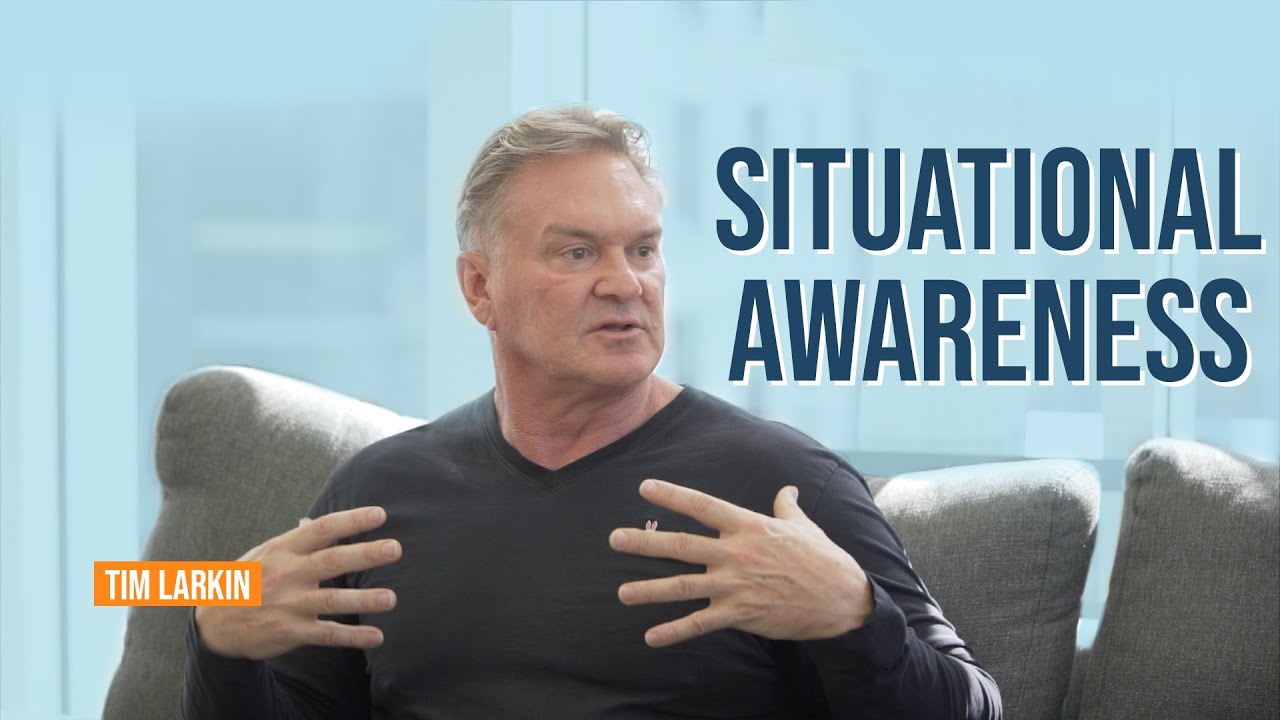
Tim Larkin, a personal-protection expert, explains how mindfulness and situational awareness can save your life. He shows how smartphones distract us into danger, then offers concrete drills: counting plane seats, hide-and-seek games, and family escape procedures. The key is turning awareness into habit through practice.
Chapters
Welcome back, Kwik Brains. Here's your question of the day. How do you enhance your situational awareness? And we're going to define what that is to you. And I'm really excited because we have back on our show personal protection advocate and expert Tim Larkin.
Thanks for having me.
Yeah, this is great because now if you haven't listened to our previous episode of us talking together, It's a must-listen to. It is a must-listen to because we talked about how to learn anything faster by going slower. But that wasn't just it. We talked about breaking things down and always having a beginner's mind. And we talked about giving yourself permission to be able to make mistakes. And we talked about a little bit about fear and violence. And the reason why we're having these difficult conversations Is you— just because we people want to ignore it doesn't mean it goes away. And when it comes to your brain and that amygdala fight or flight or freeze, and we're talking about fear, personal safety, and being proactive. When I've gone through your trainings for my own personal safety, it was because of something that someone very close to me went through. It was a violent act.
Yeah.
And it really sensitizes you that this could happen to anybody. Yeah, I mean, regardless of demographics, maybe you could give maybe 30, 60 seconds on how you, you know, made this your mission. And then I want to go into situational awareness.
We were talking about how the people that really love what they do love the foundational aspects, the basics on it. And, you know, I got into it because, you know, I I had a long history of learning martial arts. My grandfather was very influential in getting me to learn how to protect myself, and that was great. And then I went through the military, and then it was after 9/11. It was actually— I had a course 2 days before 9/11 here, and it was right down by the financial district. And the place where we'd been training on the 11th was destroyed. It was there. 3 of my guys were in the building. They got out.
Wow.
But it was a seminal event for me. And that's when I realized that it is fantastic training military law enforcement, and I love to hear that these guys, you know, do well, but I expect them to do well. That's their job. That's where they volunteered. What's, what's hard is when, you know, you have people who are living great lives, they're great people, and then violence comes into their life. And I realized a lot of it was because they just weren't looking at things correctly. They weren't taught, you know, they didn't have any skill sets for this. And we had these great skill sets, but we were keeping them in this very specialized world. And once I started sharing that and seeing the behavioral changes you get from learning, like situational awareness, it makes a huge difference in people's lives.
You know, I know a big focus for what you do is similar to what I do, not only teaching methodology to accelerate learning. So I appreciate that as a peer, is also the result is behavioral modification is to get people, you know, to take it from, you know, information and inspiration to implementation and also integration. So it's, it's, it's who they are. And you train that. Now, when we're talking about situational awareness, is that something that could be trained? And why is it even important for people who are listening and watching?
Situational awareness is, it's just an essential skill set. That in the society we live in right now, it's not as necessary as it used to be until you need it. And when you need it, it's absolutely necessary. So it's learning skill sets that, especially the challenge, you know, that we have these days with our smartphones, you know, they're taking all of our senses. We're willingly giving up our senses.
You see people walking around like this on the streets of Manhattan.
Oh yeah.
You know, crossing traffic like this.
Oh yeah. And I have a— I have this amazing tape. When I, when I talked at Google, I opened up with this tape. It shows a bus robbery in Seattle. And this guy is literally walking down the middle of the bus calmly robbing people left and right. They're all on their phones. The one guy, the one guy gets a gun put right in him. He looks up, he redirects the gun, which you think, oh good, he did a good thing. And he charges towards the guy, has his phone in his other hand. And I'm thinking, oh good, he's going to hit the guy with the phone. No, he's slipping the phone into his pocket of his overcoat. He was more concerned about cracking his screen than saving his life.
Wow.
That's because these things have, you know, taken away. Now, that's not going to change. We just need that awareness that, you know, are you going to willingly give up your senses? I mean, here in New York, when I'm walking around, I'm shocked at the numbers of people walking down the streets where they're giving up, you know, their ears and their vision, you know, to these very addictive platforms.
And people who— predators— is not a comfortable conversation, but they, they, they, they hope you do that, right?
Absolutely.
You're setting your—
They don't want to challenge, right? And so if you, if you ask yourself what, what's the number one benefit of situational awareness, it is the fact that you, um, you are less likely to be targeted by a predator because you're aware. You know, it's not about— I was just having a conversation with a friend of mine who's a Former SEAL, and he talks about— he lives here, and he talks about getting on the, on the subway. He goes, it's amazing how many people don't notice the predators. He said, what's interesting is when I get on and I, I just do my scan, once the predator sees that I am aware of them, right, I'm no longer somebody they look at. And he's a very well-trained person, but physically he doesn't look like, you know, anything. He blends in very well.
Right.
The way people can do this, a really easy way, what I try to do with people is I try to gamify it for people. I try to make it fun. And if you make something fun and aware, it's much easier to be that way. So when you're out on the street, like a real easy thing for people to go back to their childhood and remember what it felt like to do hide and seek, to play hide and seek.
Right.
And I always ask people, hey, how did it feel like when you, when you were looking for somebody? How did that feel? Oh, it feels great. It was so much fun. You're eagerly looking, where could they be? I said, how did it feel like when, you know, you were hiding? Well, I was just hoping they're not going to find me. I'm trying to get smaller and I'm trying just to make sure that I, I'm not seen. And it's a defensive feeling.
Reactive.
Reactive. And so what I want people to do when they're living in the real world, I want you to be that seeker. I want you to be that person who's having a great time, just really aware. Hey, look where I'm at. Oh, look. And, and then you start thinking like I tell— I have people play the game of thinking like a bad guy. Well, hey, if I was going to pop out on somebody here, where would I do it? Oh, I might go over here. So now your brain's actively looking for areas of, you know, where a predator might be, but not in a fearful way, in more of a fun way that you learn. And the byproduct of playing that game is you start getting really good situational awareness.
Right.
You know, I have people like— I have a lot of people that travel. around the world. And oftentimes, like, little things, you know, disaster preparedness stuff, stuff we don't like to think about. But as I was telling you, you get on a plane, you sit in your seat, first thing you should do is just look around. Where are the exits? And people are like, well, yeah, I know that, Tim. No, there's a little more to it. I know the exit's right up there, and now I count my seats. I sit there and say, okay, there's 7 seats to get to the exit. And now I physically know, okay, all I have to do is I have to touch 7 seats and I know. Why am I talking about touching? Because I'm assuming if there's gonna be a problem, it might be smoky, there might be vision, you know, clarity. I don't want to rely just on that sensory system. I know if I just touch 7 seats, I can get to my exit. And it's amazing when you talk to people that have survived anything, any disasters or anything, there's some base form of situational awareness. And these aren't highly trained operators, these are just people That are aware. And attention is probably our most valuable commodity. And we should, we should give ourselves the gift of giving ourselves attention and our— to our own, you know, awareness and our own protection.
In time and space. In time, I— in the byproduct of this, I could tell you from, from the work that we do, the cognitive training that we do, these thought experiments are also great exercises in being mindful. People always Mindfulness. People are always talking about mindfulness training, but this is one of the exercises and practices people could employ to be more present. And because most people are everywhere else, and also a great exercise in focus and concentration. Yeah.
And that's the other thing, the criminals and the predators are extremely adept at this. Why? Because this is how they, you know, how they choose to have you know, make their living.
Right.
And they look for the easy marks on that. And merely having your own awareness about and walking around as an aware person— and what do I mean by that? Just that you're not completely immersed, that you don't have that victim profile where you're just kind of hunched over and, and, you know, just, just giving up, you know, parts of your sensory system to these predators, basically. It changes your whole mindset. I, you know, coming to a new city like— well, I've been coming here for a long time, but I love every time I come to New York. Why? It's sensory overload. It is situational awareness. Just, it's, it's like the, uh, it's like the Super Bowl of situational awareness.
Pretty much.
It's just fun, you know? And I, I learned so much more about the city also when I walk around. I remember I was in Toronto and I was walking around, and just because I was playing that game I learned more about parts of the city and saw things that I never would have seen.
And that's the reason why a lot of people, yeah, they complain about their memory, but it's not their retention, it's just their attention.
And the problem is with situational awareness, even saying situational awareness, people get on edge, right? They're like, oh, something's gonna— you know, you immediately think— people that haven't trained their minds correctly, when you think situational awareness, you think, oh, Something's going to happen to me, right? And I need to be aware so it doesn't happen to me, rather than saying, "I'm going to embrace the world. I'm going to see what's out there. I'm going to be proactive in this world." And it's amazing. It's just a much more positive way to go through the day. You end up learning a lot more about not only your environment, but you can pick up cues. Even if it's not a predator, you can kind of see, hey, there's something sketchy going on over here. This individual is acting kind of. strange, somebody you probably wouldn't have thought of before, because you're paying attention to your environments. You can see things long before it gets bad. Yeah, just get yourself out of there.
A couple months ago, we had a big blackout in the city here. And people didn't know what to do because they didn't have— just like when you're talking about on the airplane, there's smoke and you— people aren't prepared, even doing those thought experiments of what they're going to do in certain situations. What people don't realize is our brain primarily is a real— is a deletion device. At any given time, it's trying to keep a lot of information out unless you take control of your mind, because there's a billion stimulus we could be paying attention to. So what determines what our reticular activating system is going to focus on and let in? And when you're more open to it and you're asking proactive questions about your environment, you're going to see and be aware of a lot more. So that, that's really exciting. Do you prepare even when you're talking about self-protection, your home, in case, you know, at any given time that somebody came in? Like, do you have like mental rehearsals for you?
And it's a great place to start. I was going to suggest that, that, but oftentimes people go, well, how do I get started? Well, start at your home.
Yeah.
You know, really the idea, you know, I was telling you, my wife and I, we went through a whole scenario with it. We have 3 children, 3 small children. And when we got to our house, our latest, the new house that we have, the first thing we did was we just said, okay, if, you know, if something's to happen, what's the procedure? And we had a procedure where she goes off with the children to a certain part of the house. I know she's there. And then I know I can go through the house and I know that I am able to take action knowing exactly where my family's at. And we've just done this. And she knows that, you know, her thing, she has her cell phone by her. She has You know, we have weapons that protect ourselves. With the kids, she knows who she's going to call while I'm going through seeing where the things are. And it just gives you that— the brain is good if you give it information ahead of time, you know, if you take it somewhere. And, you know, we'll talk more about that on the fear side of things, but don't make it hard on yourself. And the problem is in my industry when people talk about situational awareness training, They make it extremely fearful. They make it very scary where it should be the exact opposite. It should be fun. It should be proactive. You should eagerly want to see, oh, I didn't think about that. Oh, look at this part of my house I didn't realize.
You turn it into a game.
Yeah, and you gamify it. And it really is because we learn better that way. And that's where I'd start. I'd start right in your home first and then take it out in the world.
And then pay attention to when you're walking around in environments. I know one of the presence exercises we do just to focus people's attention on the now as opposed to people's minds always in the past or they're always, you know, in the future is just looking around and just pointing out 3 things that you didn't see before or 3 smells or through your senses. Like, get in touch. A lot of people, they're very desensitized.
Yeah.
They're so cut off from their senses. So if you were to point out 3 things you could hear right now, you know, I could hear the siren outside, I could hear the blow of the air conditioning, I guess you'd hear somebody walking around downstairs, but it brings you in the present. And because if you're not there, you're, you're not anywhere really.
Yeah, it's funny, people have kids, you know. I have a friend Rebecca, and she was telling me when she went through training years ago, she came up to me and she said, you know, you made me feel a lot better because What she would do with her small kids, it was when they got in the car, she'd play a game with them. She goes, hey, you know, I see 3 cars, what are the colors? And they'd look around, so the kids would start playing the game. And they— she got there, she goes, they had no idea that I was training them in situational awareness. She said, but I just realized I'm gonna be focused on driving. I need my kids to be aware and, you know, help me with things. Not from a paranoid standpoint. But just, she recognized she— if there was gonna be a problem, she needed to know ahead of time because she's a single mom with kids and was gonna have to take action, you know. And so she said, how can I get my kids to start the awareness process? And it was really, you know, it was kind of like a game of almost like I Spy, right? She took it to the next level with it.
And that's like Jason Bourne kind of.
Yeah, it's there. And people sit there and they'll say, Oh my God, that's paranoid, or I'm living a life. No, actually, you're living a full life. You're actually, you know what's in your environment. You know what's going around because the one thing I tell people all the time is you don't want to be, you don't want a predator to surprise you. You know, that's the one thing. And if you can do that through situational awareness and just take that out of the mix, yeah, then that's just, that's a huge step up to living a much more peaceful And one with more personal power. Absolutely.
And then in the next episode I want to talk about that we publish with you is talk about when you get cues and how it makes you feel, whether it's fear or something else, to be able to trust that because fear could really be a gift.
Absolutely.
Amazing, Tim. How do people— I know people are going to want to go deeper with you. Where do you recommend that they go?
Easy way, a lot of people like Instagram. I'm on Instagram and Instagram has all my My websites and everything. For people that are watching this or listening to this, if you want some information on basic self-protection, really good information that I put out for free, surviveviolence.com.
surviveviolence.com. We'll put a link at our show notes at jimkwik.com/notes as well to all of Tim's websites. His— he's done multiple books also as well, and also social media. And speaking of taking action, I challenge everybody to take a screenshot of this episode like we do at the end of most episodes. Tag Tim, tag myself, and share your big aha. Just one thing that you took away from this. What's one thing you're going to do moving forward? Because the ultimate goal of both our works is behavioral modification. We want you to, to not just learn something for knowledge's sake. We want you to be able to act on it. Act, because knowledge times action gives you real, real power. And as always, I'll repost some of my favorite. Thanks, Tim.
Thanks so much.
More from Jim





The Library of Minds: Brain Coach: How to Stay Sharp When AI Does the Thinking | Jim Kwik





