How to achieve LIMITLESS Performance
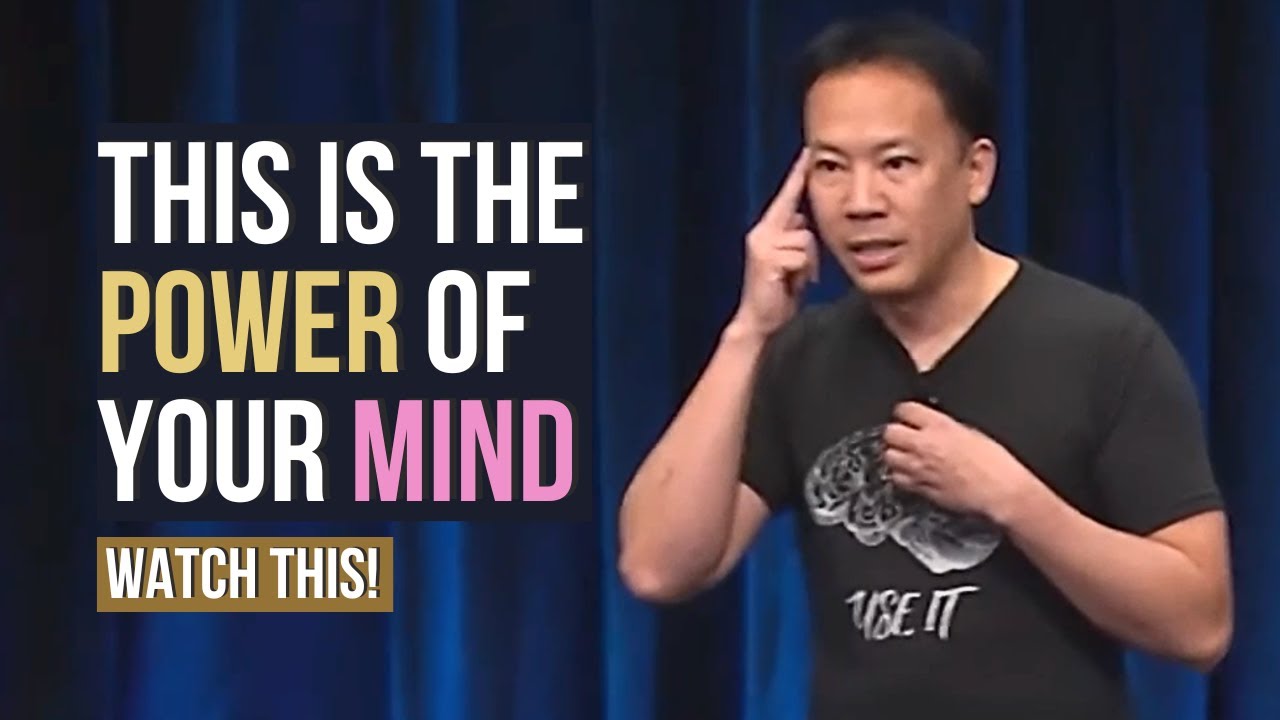
In this 2023 presentation Jim Kwik shares the research‑backed, practical system he calls BE FAST for unlocking "limitless" mental performance. He begins by emphasizing that all behavior is belief‑driven, illustrating the power of belief with a simple turning‑and‑visualization exercise that shows how mental expectations limit physical output. Kwik then walks through each element of the BE FAST acronym: - B – Belief: Define belief as a certainty that fuels energy; demonstrate how shifting belief expands capability. - E – Exercise (practice): Knowledge alone is potential; only repeated, intentional practice turns it into power. He cites habit‑formation timelines (21‑66 days) and the concept of meta‑learning – learning how to learn. - F – Forget: Empty the mental cup, discard prior assumptions, and eliminate multitasking. He references the forgetting curve (80% loss in 48 h), the myth of multitasking, and the cognitive cost of task‑switching. - A – Active: Learning is not a spectator sport. Active engagement through creation, co‑creation, and especially handwriting notes (which filters information) outperforms passive consumption and digital note‑taking alone. - S – State: Memory is state‑dependent; pairing information with emotion (hippocampus‑amygdala link) dramatically improves retention. He offers a “to‑feel” list and body‑posture tricks to raise emotional arousal. - T – Teach: The explanation effect – intending to teach forces deeper encoding and double learning. Throughout, Kwik interleaves research findings (e.g., multitasking energy cost, state‑dependent memory, visualization in elite performance) with interactive demonstrations, encouraging audience participation to embody each principle. The talk concludes that these simple, common‑sense actions, when consistently applied, can dramatically boost productivity, learning speed, and overall mental well‑being.
Chapters
Today, in today's session, I want to share with you some of the research we've been— that led to this book and share with you how to unleash what I call your limitless mind to be able to— my area of expertise is in that of brain optimization and accelerated learning, but I really want to give you some tactical things that you here, people watching, you know, on video, that they could do that are science-based ways to be able to improve your productivity, your own personal performance, maybe give you even some Some peace of mind also as well. So I tend to go in acronyms, and I— because I feel like in a short period of time I have somebody, you know, having these like kind of mnemonic kind of tricks, you know, very simple ways of encoding information and just kind of retrieving it out again. So I'm gonna give you a very quick one, and it's— this is— I just want you to remember BE FAST. All right, so you can spell BE FAST. I'm gonna turn it into an acronym, and these are some of the fundamentals. You know, we're gonna talk about tips that could dramatically improve your performance. So the B in BE FAST stands for— you have to start with belief, right? If you believe you can or you believe you can't, either way, what? You're right, right? Henry Ford said that. So what would you define as, as a belief? Like, how would you define the word belief? It's a— it's, it's an idea that you have some kind of certainty. It's something that you're giving energy that you hold as, as true. Let me show you what a belief is real quick. Stand up, stand up for me. And I know some of you have computers, just put it to the side. And you're like, oh, he's one of those guys. And just make some distance from the person next to you. And you can do this wherever you're watching this right now. I encourage you to do this because learning is not a spectator sport, right? And so I really wanna get into your body, right? You could get lectured to all the time, but there's a learning curve, but there's also a forgetting curve. If you learn something passively and you hear it just once on a podcast or from a presentation or from a book, Within 48 hours, how much do you forget on average? What does research show? Just guess a percentage. What would you guess is forgotten? 80. Yeah, 80%. Yeah, 80%, right? And so one of the ways to mitigate that is to get— create an experience for yourself. So this is what a belief is to me. Shake out your body, keep your feet stationary, and what I want you to do with your right hand is point forward with your right hand. And do this on video also, wherever you're doing this, so you can own this. Right hand. Good. What I want you to do without moving your feet, turn to your right and go as far as you could go and notice where you're pointing. Like, take a mental screenshot of where you're pointing. Snapshot. As far as you can go. Great. All right, come back center. Now empty your hands and just put your hands by your side. Don't hold them together, don't put them in your paga, but just keep them by your side. I want you to take a deep breath. Exhale and close your eyes and just breathe normally. And I'm gonna walk you through a quick 30-second visualization, a mental exercise. I want you, as you're breathing normally, to imagine you're pointing forward with your right hand, but this time see and feel yourself going twice as far as you did the first time. See and feel in your body what it feels like to go twice as far, like you're made out of rubber. And if you can't imagine it, imagine you can imagine it. All right, now again, with your eyes closed, see and feel yourself going 3 times around. 1, 2, 3. And then one more time, with a big smile on your face, thinking, what does that have to do with my memory? See and feel yourself going 4 times around, like you're, uh, Mr. Fantastic or you're Gumby. 1, 2, 3, 4. Creating a great stretch. All right, watch this. Open your eyes, point forward with your right hand, and now turn to your right as far as you could now go. Wait. Wow. Clap if you went further the second time. All right, have a seat. So my question for you— raise your hand, look at your neighbors. How many of you went further the second time? Raise your hand. Look around. Now my question for you is the obvious. Were you physically capable of turning that far the first time? Like, nobody took a yoga class when my eyes are closed, right? You're physically capable. Where was the limitation, if there was one? In your mind, right? And you could say, I didn't have a belief on how far I could turn. How many beliefs do you think you have, right? You have these countless beliefs. And then please write this down. So one of the first principles of this research, of the book, of performance, it's All behavior is belief-driven. All behavior is belief-driven. If you wanna create a new result in your work, in your life, you need to do a new behavior. In order to do that new behavior, you need a belief that allows that to be possible. Does that make sense? You know, somebody in the hallway before I got on, so it's like saying, yeah, you know, I'm glad I know you're a memory coach. You know, I have a horrible memory. And I was like, stop. If you fight for your limitations, you get to keep them, right? That makes sense, right? Your brain is this incredible supercomputer, and your self-talk is the program it will run. I'm not good at remembering people's names. You will not remember the name of the next person you meet because you program your supercomputer not to. Does that make sense? So we've discovered more about the human brain probably in the past 20 years than the previous 2,000 years. What we found is we're grossly underestimating our, you know, our own potential, right? Our own capability, what we could really— what we're really capable of. And so, you know, when we're talking about this, part of this is just understanding our thoughts, that we have 60,000 thoughts a day. And the problem is 95% of the thoughts we have today are the same thoughts we had yesterday and the day before that. So it's really hard to make a new change in your life if you have— if you're doing the same level, same, same thinking, right? So that— because that would be insanity. So the goal is to be able to reframe this a little bit. So maybe you find yourself saying, I don't have a great memory, but then you say like the word yet. Some of you went 25, 50% further when we did the turning exercise. Did you work harder the second time? No, but you went 25, 50% further. And so you didn't work harder. It didn't require any more effort. But I'm curious, because it was a belief issue, in what area could you go 25, 50% further without exerting more effort and resources? Right. Where is it— could there potentially be a mental block, what I call a lie, a limited idea entertained that, you know, whether it's in your impact, whether it's in your performance, your happiness, your reading speed, you know, your income, whatever it happens to be, where do you feel kind of contained in a box. So this exercise also we did, this turning exercise, this visualization, it's not just, uh, you know, athletes also do that, right? They don't just physically train, they do what? They do mental training. You know, what did Roger Bannister do in the early '50s? He broke the what? The 4-minute mile. Throughout human history, thousands of years, nobody could run a mile sub-4 minutes, and, and he was able to do it. And if you saw the ESPN special, he did it not just through physical training. He would visualize and see himself crossing the finish line Looking at the clock, and the clock says 3 minutes and 59 seconds, because he knows what you know, that is, that, that all— everything out here starts, starts in here, right? That it's not you'll see it, you know, that you'll believe it when you see it. It's the opposite. You'll actually see it when you start believing it. Roger Bannister does this. That wasn't the impressive part, you know, the power of the mind. What was impressive for me was what happened afterwards. Nobody could break a 4-minute mile. All of a sudden, one person does it. What happens after that? Yeah, a bunch of people started to break the— but now what happened? Was there a big evolution in shoe technology, training methodology, nutritional support? Where was the change? In people's minds. Yeah, in people's minds, right? So that's why we, you know, that quote, if you believe you can or believe you can't, either way you're right. That's the power of your mind, right? So if there's a stopgap between where you are and where you wanna be, maybe it's a mindset issue. You have assumptions or attitudes about something that might not be true. Right, just like about how far you could turn. Going back to the BE FAST, I'm gonna go through rapidly. The E is exercise, and I don't mean physical exercise. I mean, even though physical exercise, you know, moving your body, we talked about, helps you to learn better. As your body moves, your brain grooves. But I mean, I mean putting things into practice, because it's a lie that knowledge alone is power, right? There's a lot of people who know a lot of stuff that they don't have power or performance, right? Knowledge at best is potential power. It becomes power when we what? Put it into action. when we apply it, when we, when we utilize it. And so I'm really good at remembering names, but I haven't gotten much better after I learned how to do it. You know, after 30 days of practice, once you know how to drive, you know how to drive, right? Once you know how to type or code, you know how to do these things. Once you know how to tie your shoes, you know how to do it. Same thing with your ability to read 2 or 3 times faster, right? Same thing with your ability to remember names or learn a language or remember facts or figures or formulas, right? Once you know how to do it— now, how many of you would say, like, this would have been very, very valuable back in school? Right, to be able to do this. So the whole science of this is all about brain health for Limitless Expanded, and also the— what they call meta-learning. Meta-learning is the science and the art of learning how to learn, right, which is the most important skill. And then so the E is, remember, you have to put in effort. But so that's the bad news. The good news, it's not that much, right? After you practice something for what, 21, 30, maybe 66 days, you know how to do it, right? And so I wanna, I wanna give you some of these tips, but I encourage you to put some exercise into it. All right. Now going into FAST, I'm gonna go through this really quickly. The F stands for, if you wanna learn something faster, I would say it helps to start by forgetting. And you're thinking like, you know, Jim, you're the memory guy. Why would I wanna forget? I think sometimes what slows us down is this idea that we know this already. Does that make sense? Because it's hard to learn something new if you feel like you know something already and you're certain about it. And so I, I say you have to empty your cups, right? to be able to put new information in, because your mind is like a parachute. It only works when it's opened, right? And so even if you know what the subject matter happens to be, it helps to be able to entertain 2 new ideas at the same time, right? 'Cause as human beings, you could do that, right? And then also, then you just judge. You could judge by results. But I would say forget about what you know so you can learn something new. Also forget about distractions, 'cause how many of you find yourself day in and day out, you have to multitask? Yeah. To keep up? Raise your hand. A lot of multitasking, right? Now, now, now the research is showing that multitasking is actually a myth for the most part. Few people could really pull it off well. It's kind of like texting and driving, right? Because what you're really doing is task switching. All right, you're actually not going from this activity to this activity. You can't do 2 parallel cognitive activities at once, right? You could, you could walk, you know, and, and think about stuff. But 2 different activities is very, very difficult. So you're— what you're doing is task switching. And I think you think the thing you think you're gaining, which is time, you're actually losing because it could take anywhere from 5 to 10 minutes to regain your focus when you go from something to another thing. Does that make sense? Also, we work with a lot of doctors. And did you know surgeons make more errors during surgery, during operations, if they try to multitask? Right? Same as we would if we were trying to multitask, texting and driving as an example. But not only that, If that wasn't reason enough just to focus on one thing at a time, losing time, making more errors, it actually burns a lot of brain glucose. Like, when you are working on a specific cognitive task, a certain part of your brain is lit up. And then in order to switch that over, you have to shut this down and open something else up. That requires a lot of sugar, a lot of energy, right? And so how many of you sometimes feel just mentally drained? Like throughout the day, right? Do you have this mental fatigue? Maybe feel a little bit of burnout, maybe because you're trying to do too many things at the same time and you'd be much more effective focusing on one thing. So I'm saying is forget about what you know so you can learn something new. And when you're here, forget about distractions, right? And just really kind of focus. Now, the A in FAST stands for if you wanna learn faster, you have to make it active. And I mentioned learning is not a spectator sport. One of the reasons why is because the human brain doesn't learn best through consumption. It learns better through creation and co-creation and cooperation, meaning that it's an old model where a teacher is like pushing information inside your head. You know, it's easier actually for us to pull information in and then pull it out, you know, and being active. So how can you be more active in your learning? Like what you're doing, you're taking notes to mitigate that forgetting curve. By the way, between— because I see people— what's your preference when you take notes? Is it digital note-taking or how many prefer— or handwriting? How many prefer digital note-taking? Raise your hand. Yeah. How many people prefer handwriting? So, okay. So when students are tested for the comprehension and retention, handwriting notes actually performs better. Now, if you could do both, that's great. Like, digital is great for storing information. Digital is great for sharing information, certainly. But there's something about handwriting notes. Part of it is also, most of you could type pretty fast. So you could pretty much type as fast as a speaker could speak. But you can't possibly handwrite that fast. So it forces you to get active and filter the information. You know, what's most important in what I'm hearing? How does this relate to what I know? The S in FAST, this is a big one, state. Remember this, all learning is state-dependent. What do I mean by state? It's like a snapshot of your mood, of your mind, and your body, how you feel. So the key, raise your hand again if you'd like to have a better long-term memory. All right, raise your hand. Most of us, right? Do this, do this and say it, right? So put your hand out and say information. Information. Information. Okay, everybody, 1, 2, 3. Information. And do this at home. Information combined with emotion become long-term memories. So that middle brain that we have, 2 of the areas that I want to highlight there. First of all is your hippocampus. It looks like a seahorse, and the function is memory. And attached to that is this almond-shaped part of your brain called your amygdala. Which is kind of like a switching station for emotions. So it's interesting that emotions and memory are so closely linked. And you know this anecdotally. How many of you, there could be a song that you could hear a few notes that could take you back to when you were a teenager, right? Or a food or a fragrance that could take you back to when you were a child. Because information by itself is forgettable, but when you tie emotion, it becomes unforgettable. The challenge is when we learn something in a bored state, because that's how most people felt back in school, right? They were either confused or they were bored. Now, on a scale of 0 to 10, what's boredom? Emotionally? Zero, right? And if it's information times emotion, and the emotion is boredom or zero, what's anything times zero? Zero. Zero, right? And you wonder why you forgot the periodic table or things you'd learned back in school, because of the emotional state that you were in. So you never want to learn— if you want to learn something faster, never learn it in a bored state. Now, who controls how you feel? Who controls it? Yourself. Yeah, you do, right? Because you're a thermostat, you're not a thermometer. I just want to remind you that if there's a thermometer on the wall, a thermometer, what's its only function? It reacts. Yeah, it just knows it reacts to the environment. Whatever the environment's giving it, it reacts. And sometimes human beings, we react to the economy, to how people treat us, to the weather. But some of the happiest people and more fulfilled people tend to identify more with a thermostat. A thermostat doesn't react to the environment. It gauges. It knows what's going on. the temperature. But what is it— what's the difference with the thermostat? What does it have the ability to do? Adjust. Yeah, adjust and set a temperature. You know, and as human beings, you set a standard, you set a vision, a goal, KPIs, whatever it is. And what happens in the environment? The environment reacts to you, right? And same thing with your emotional state. You know, reminding us that we have agency about how we feel. You know, everybody has a to-do list. Do you have a to-do list? Yes. But you know, what if you started your day with a to-feel list? Like, these are 3 emotions I wanna cultivate today. Because here's a secret, you do not have emotions, you do them. So a big part of what we're talking about today is taking the, the nouns in our life and turning 'em into verbs. So you don't have focus, you do it. You don't have a memory, there's a process for memorizing. There's a 3-step process for memorizing anything, right? You encode it, you store it, and you retrieve it, right? You don't have motivation. There's a process for motivating yourself. You do not even have energy. You're like, Jim, this is the problem. I have no motivation, no focus, no energy. But you don't have energy. You generate energy, right? There's a process for energizing yourself with the foods you eat, with the sleep, you know, managing your stress, and so on. So going back to this, you don't have feelings, you do them, right? And so if you could cultivate like 3 feelings that you want to feel throughout the day and you express them, the behaviors take care of themselves. Right? And so, like, right now, this is the example, going back to S, all learning is state-dependent. Sit the way you'd be sitting if you had the feelings of excitement. If you're really excited about, about me being here right now, sit the way you'd be sitting if you're very interested. Now, why do you even have to move, right? But notice though, you know that changing your physiology will affect your psychology. So whenever you want to learn something, be, be clear that if you're in a kind of a flatline emotional state, A lot of it's not going to be retained, right? And you can up your own emotion. You can even gamify this. Like, on a scale of 0 to 10, how excited and interested am I? And you say 3, and then you could say like, okay, I control my emotions. How do I make it a 5? And then you could change your body, put a smile on your face, think about something you're looking forward to, and you could just up that emotion, and you're more likely to remember the information better because you're encoding it with more, more sensations, more feelings. And then finally, the last letter, T, be fast. Is teach. If you want to learn something way faster, learn it with the intention of teaching it to somebody else, right? If I was to share with you my favorite, uh, you know, speed reading hacks and, you know, brain optimization sleep hacks, and you had to give a TEDx talk next week on it, would your— would you focus better? Yes or no? Yeah. Would you take more thorough notes? You know, you ask more, more detailed questions, right? You would own that because you're taking advantage of something called the explanation effect. The explanation effect says that if you learn it with the intention of explaining it to somebody else, you're gonna learn it better. Because when you teach it, you get to learn it twice. All right? So those are just, you know, simple 6 things to think about, you know, when you wanna be able to learn a subject or learn a skill better. And, you know, the reason I bring these up is, you know, these are so simple. It's common sense almost. But common sense is not common practice. Like, you know what you should be doing a lot of the times, right? You know movement is good for your brain, you know, but are we doing it? You know, you've seen this, the research probably on meditation and how it can manage your stress and get you out of that fight or flight, you know, and get you out of that chronic stress that shrinks your brain. But are we doing these things?
More from Jim





The Library of Minds: Brain Coach: How to Stay Sharp When AI Does the Thinking | Jim Kwik





