How to Develop Long-Term Thinking & Leverage Existing Systems | Seth Godin
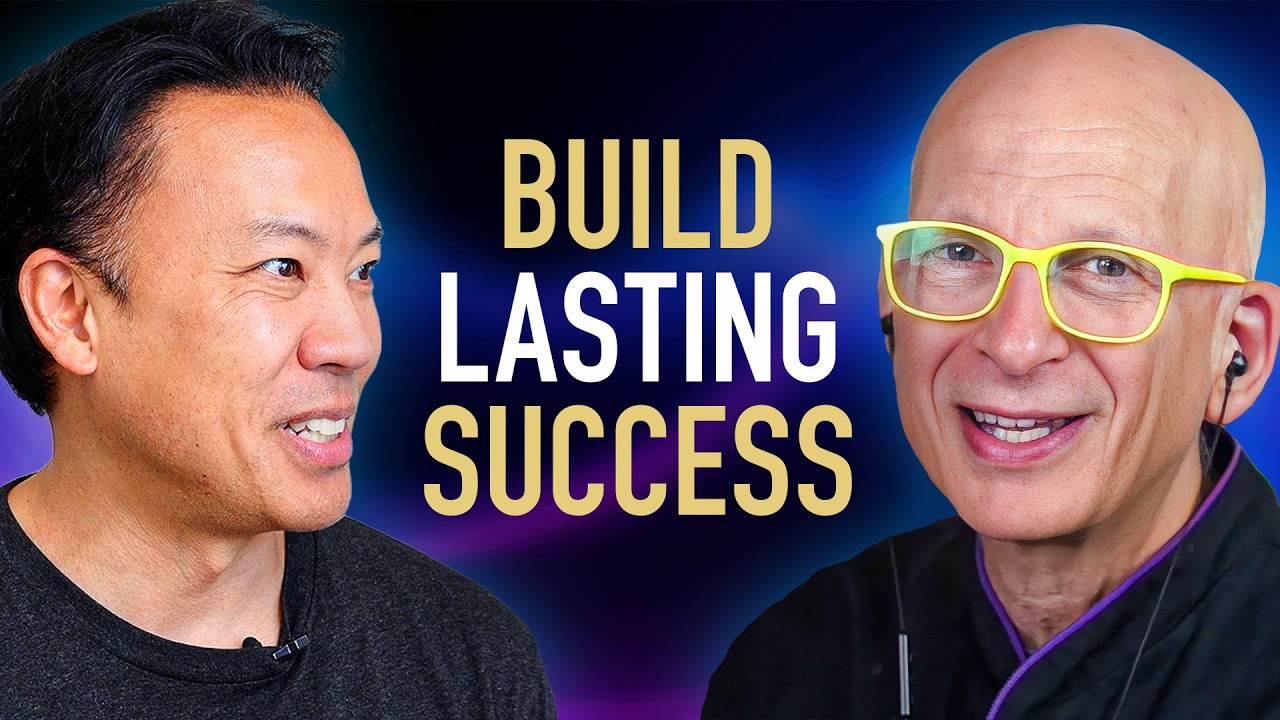
Seth Godin breaks down strategy as systems, empathy, time, and games, not just speed and tactics. Western Union missed buying AT&T, Yahoo refused Google, and recumbent bikes were banned because people ignored existing systems. Target a specific audience, not everyone, and build small habits that create systemic shifts.
Chapters
Are you tired of quick fixes and short-term thinking?
It doesn't matter how good you are and how fast you're going if you're going in the wrong direction.
Do you wanna make a lasting impact, but you feel stuck with outdated systems?
What is the change we seek to make, and what are the indicators that will tell us that we're on the right path?
Trying to figure out your business and your life systems and strategy, it could leave you feeling like you're endlessly spinning your wheels without the results you desire and you really deserve.
A strategy looks at the future. It's uncertain, that you can influence it, you can dance with it, but you can't manage it.
Today we're giving you the opportunity to learn from one of the world's greatest speakers and thinkers. This isn't just another business talk, it's really almost a, a masterclass, if you will, in how to achieve results doing the right things for the right reasons.
So what you have to do is be confident and calm enough to embrace the small changes that will lead to to the systemic shifts that you're seeking to make.
Welcome back, Kwik Brains. I am your host and your brain coach, Jim Kwik. I'm thrilled to have with us a true visionary in the world of marketing and strategy, the iconic Seth Godin. Seth is the author of over 20 international bestsellers. He really has revolutionized the way that I think, and a large part of the globe has thinks about work. And we're gonna be talking about his latest book, This Is Strategy, and it promises to be another game changer. It's an essential guide for anyone looking to make a lasting impact in our complex, ever-changing world. So I highly recommend all our Kwik readers get their copy. In this episode, we'll dive deep into Seth's approach to strategic thinking that will challenge us to think in bigger, ways, act bolder, and really prioritize the work that truly matters. Welcome to the show, Seth. Boom.
Thank you, Jim. It's good to see you. I'm just doing a little bit of math in my head. 100 million plus downloads, 400 episodes. The number of lives you've changed and the way you've changed them, it's something to be proud of. Well done, Seth.
It means a lot. You know, one of the highlights has been getting to know you over the years. I have a photo of us back in Mexico City in 2013. Yeah, I am the memory guy. Yeah, it's a real privilege. And so I really wanna thank everybody who's tuning in for this brainy and heartfelt conversation. Why don't we start with your approach? You know, people often use the word strategy and systems interchangeably. I would love to know your perspective in terms of how you define each, and then we could go into your work. Sure.
And remind me to tell you about the Mexico City thing, 'cause there's a lesson there too.
Okay.
Strategy is a word that lots of people use and almost no one really understands. It's not tactics. It's not a hustle. It does involve systems. Strategy involves 4 things: systems, empathy, time, and games. And the way you can tell if someone's a good surfer is that they're choosing good waves, that you can't fight the wave, but you can surf it. And one of the challenges that we have when people put the work in to do the kind of thing you are teaching is it doesn't matter how good you are and how fast you're going if you're going in the wrong direction.
Hmm.
And so what it means to understand strategy is to see what is already there, to see where the wind is at your back, where the current is flowing. in a direction that you want to go and not to play games you can't win. But the world we live in indoctrinated us to do well on a test, indoctrinated us to fit in, because it doesn't want us to challenge the status quo. But the kind of person that's listening to you is willing to put in the work, but they might not see the place where they're doing the work. And that's what this book is trying to help people do, is to see That strategy is a choice, a philosophy of becoming. And then the tactics and the tools that folks like you teach people, then they pay off.
So we have, as part of strategy, we have systems and empathy, time, and these gains. And then is that how your approach to strategy would be different than traditional business or life strategies?
Okay, so businesses like to have a strategic plan. But Roger Martin has pointed out those words don't go together because a plan is executable. You are in control. You are managing it. A strategy looks at the future. It's uncertain that you can influence it. You can dance with it, but you can't manage it. So where we begin is to realize that time cannot be seen, but it can always be experienced. Your strategy is about what will I do today so that 6 months from now is better? What are the investments I will make now to get to be of service to where I want to go soon? And it might not work, but it's always going to be better than insisting that the world do what you want it to do.
You're one of my favorite storytellers. And maybe you could give an example of where, whether it's systems or strategy, have had a significant impact on a successful outcome.
Sure. Well, I'll give you a couple vivid ones from 100 years ago, and then we can move forward in time. Western Union, which owned completely the telegraph business, had a chance to buy AT&T for almost nothing. And instead of doing that, they decided to make better telegrams.
Hmm.
And we know what happened, right? They didn't understand that the world wanted to change. Charles Mosher in the 1920s invented a much better bicycle, safer and faster. And this was in Paris, which was the epicenter of bike racing. He went to A couple famous bike racers, they wanted nothing to do with him. So he found one of their brothers and paid the guy to ride this recumbent bicycle, and he broke the world record for the farthest pedaled in an hour. He broke it by a lot. And the high-status bike riders of the time saw what had happened and realized that it was a threat to everything they stood for. So they got together with the manufacturers and they banned— recumbent bikes from bike races. And this has kept up for more than 100 years, and it has affected the life and health of people around the world. Because even if you're not a bike racer, you want to look like you could be one. And so the entire thing shifted because Charles didn't understand that how he launched it and who he launched it with would alter what would happen after that. And then to go all the way up to the future, I was at Yahoo as VP in 1999, and the company had the chance to buy Google for $10 million.
Wow.
And they didn't do it because they said, we want to be in charge of how everyone experiences the internet. We don't want to send them to other sites. That's what Google does. They didn't see the system. They didn't see the power of networks. They didn't understand that they were playing A game with limited resources. But it's not just big companies, little companies, individuals, families, the way our nonprofit raises money. These are all strategic decisions before we put in the effort to do that work.
Those are great examples. And because we touched on time and games, empathy, systems, you know, as part of strategy, I think one of the— we have a lot of entrepreneurs or marketing executives who listen to our show, and they're often met with just too many choices.
Right.
And they tend to prioritize marketing problems. How do you— how would you recommend or advise them on how to zoom in on what's important, you know, and when— why should they focus on strategy before tackling Like marketing situations or challenges or problems?
Okay, so marketing means a lot of things. I wrote the book This Is Marketing, so I get to decide what it means. Marketing doesn't mean hype or hustle or spam or promo. Those have names— hype and hustle and spam and promo. So, if you're spending your time crafting your Mailchimp emails, you could probably hire someone to do that better than you. The question is, should you even be sending them? And who should you be sending them to? What is the change you seek to make? Most people who think they have a marketing problem actually have a strategy problem. Most people who think they have a marketing problem have as their slogan, you can pick anyone and I'm anyone. So, they hope to be like everyone else, right? So, the magic of the Jim Kwik enterprise is you didn't show up and say, I'm a slightly different version than Anthony Robbins. If Tony Robbins's books are sold out, you should buy mine. That's not what you did. You said, I am the only one. I am the one and only. If this is what you're looking for, this is what I do. If it's not what you're looking for, it's not what I do. So back to the Mexico example. So I think this was the same talk. I've only given a talk in Mexico City twice. So let's pretend it was. I don't like talking to audiences that don't speak English because I feel it's disrespectful to do the translation with the little headphones because I wish I could speak their language. Plus, if you say something sort of funny, they don't laugh for 7 seconds in the whole— it's like a feedback loop. Okay, so of course it's a convention center, 2,500 people, simultaneous translation. It's the worst venue for a speaker you could imagine.
Yeah.
And I'm up there and I'm really bringing the energy, and in the 3rd row there's a woman on her cell phone. Now, in those days, that was sort of rare. But she wasn't listening. She was talking. This woman was talking during my presentation. And I decided I was going to change her. And I aimed all my stories, all my attention, everything I had right at her. And after about 3 minutes, I said to myself— maybe it was only 3 seconds. It felt like 3 minutes. I said, What am I doing? There are 2,900 people who came to hear me and one person who doesn't want to. Why am I depriving the people who are here so that I can change this person? Where's my empathy? Why don't I just be here for people who want me? And that shift, that marketing strategy shift, is incredibly powerful. So here you are with one of the most popular podcasts in the world, and yet more than 95%, 99% of the people on the planet have never heard of you and have never listened. That's fine. Ignore them. It's not for them. So when a marketer tells me they have a problem, I say, well, who's your stuff for? And they say, everyone. I need to get it to everyone. It's important.
Mm-hmm.
Like, no, it's not for everyone, but it might be for someone. So let's spend an hour thinking about your strategy before you run around trying to write better emails.
Fair. Now, I imagine people listening, they'd be thinking about, how do I map out a new strategy? Where does helping advising them to identify and maybe leverage existing systems in their strategies, does this give them any advantages at all or? Where would you start?
Okay, so what's a system? The most famous system is the solar system. We can debate whether Pluto is a planet or not, but the rest of the planets orbit the sun. They don't do it because they want to. They do it because of an invisible thing called gravity. Gravity runs the solar system. So what is the gravity where you are and what you do? If you're a high school student, In a wealthy suburb, the educational industrial complex is driven by some very expensive, fancy, famous colleges. They might not be for you, but there is a system here, the college industrial complex, that is changing your life. You can not like it, that's fine, but you can't deny it exists. And if you want to get into a famous college, There are ways you can use the system against itself to benefit you, but the system is not going to say, oh, we were wrong all along, we're going to redo the system. The system is here. There is a system for Fortune 500 companies that want to make corporate growth, to buy stuff. There is a system called the military-industrial complex. If you want to make a big order to the Pentagon, you have to rhyme With McDonald Douglas or whoever else came before you. So seeing the systems that are in place— podcasting is a system. Okay, we're not going to copy everyone. We're going to restate the genre, but we're going to get there by using the system to help us get there.
And that's interesting. When we came up with Kwik Brain back in 2017, you know, a lot of your friends like Tim Ferriss, they have long form and they focus on different areas. For us, we want to do short form, quick, right? In 20 minutes and focused on, you know, people's challenges cognitively. And we have no sponsors as of 400 episodes. So we just want to democratize that so people could binge listen to it. And you often— our team is— they're big fans of your blog. And You know, I know you've been doing the blog consistently for a very long time. We'll put the links again in the show notes at jimkwik.com/notes. Some of the, you mentioned in there and in the book that small actions can lead to bigger results. And I'm curious, when we're talking about mindset, is there a mental shift or a mindset change that you recommend for someone who feels a little stuck? stuck maybe in the, in the planning stage. They're just ideating, but they're— they struggle with, with taking action.
This is a great question. So I'll start with this: big problems demand small solutions. Oh, and it just feels backwards, but it's completely true. Don't get back surgery before you adopt a regimen of swimming, putting insoles in your shoes, losing 20 pounds, and going for a walk every day. Because each one of those steps is only going to take you 5 or 10 minutes a day. But you're right now ready to go invest years of your life for surgery. Well, let's start with a small solution first. Let's build a different kind of approach to the system that you seek to change. Let's figure out what's the smallest habit change that would lead you to create The conditions for the system to support you in where you are going. Not, let's figure out how to raise as much money as we can and get as much hype and hustle as we can to fix this thing in 3 days. Nothing gets fixed that way. And the discipline to do this is tiny compared to the discipline it takes to remember Mexico City in 2013.
Hmm.
But it's an emotional challenge. Because what you have to do is be confident and calm enough to embrace the small changes that will lead to the systemic shifts that you're seeking to make.
One of the challenges, I imagine, is besides taking those small steps is we— you talk about making decisions that align with their, you know, people's long-term vision rather than what people gravitate toward, you talk about gravity towards short-term gratification. So how can someone, in your opinion, train their minds to think more strategically for the long game, especially in a world with shiny objects and people, you know, this predisposition for immediate satisfaction? You know, they want that dopamine fix.
Yeah, this is a great hack. Thank you for bringing it up. Okay. I don't know if you've talked about false proxies before. A false proxy is something that is easy to measure but not useful. How many TikTok views you got yesterday is a false proxy.
Hmm.
Whether the person you're interviewing for a job looks like you or went to a college like you is a false proxy. How fast a programmer can type in words per minute is a false proxy. These are easy things to measure and not helpful. So, when we think about what is on our mental dashboard, is it coming from the watch on your wrist? Is it coming from the sales force? What are you doing that's cycling? So, in the early days of Google, at least the first year, maybe more, they had zero revenue. Because if they had had a little bit of revenue, if they'd been running the wrong kind of ads, I guarantee you the people in that team would have been looking And how much money were they making from ads? If you have no money you're making from ads, you've ignored this proxy, and now you can focus on a different thing that you can make go up that would be useful. And so the biggest hack of all is to decide. So when Twitter came around, I realized I was in early enough. I could have had a big Twitter following, but if I was going to do that, I would have to get mediocre. at something else because my time doesn't scale, right? That I refuse to read my Amazon reviews. I haven't read one in 8 years because you can't read the 5 stars if you're not going to read the 1 stars. And no one ever got to be a better writer by reading their 1-star reviews. So by not looking at that data, I insulated myself from a false proxy because a 1-star review, all it tells an author is, This book wasn't for the reader. Oh, okay, got it. That's all I needed to know. It wasn't for you. As long as it's for someone, it was worth writing. And so the world keeps pushing false proxies in front of us because they're trying to hack us. They're trying to get us, you know, the New York Times sends me an email, breaking news. And then the thing they're listing is not breaking news. It's, you know, it's obvious that that was going to happen. But they have to call it breaking news because we've established that if the New York Times says breaking news, we have to look at it. We can insulate ourselves from these things and we can decide what is the change we seek to make and what are the indicators that will tell us that we're on the right path.
A lot of our listeners, they come from the speeches that I do. So this week I'll be at YPO and Archangel, which is entrepreneurs. And so if Many of our listeners are entrepreneurs or the business leaders. One of the things that come up in conversation is how they deal with uncertainty, you know, on a daily basis. And I'm wondering, how does your new book help those individuals create strategies that are adaptable, maybe even resilient in rapidly changing environments? Are you tired and frustrated of struggling with forgetfulness and longing for greater mental retention and clarity? I have a special invitation for you to watch my free 3-part memory power video training where you'll discover the secrets to effortlessly recall crucial information, details, experiences, remembering what you read, giving speech without notes and remembering names, transforming you into an exceptional mental achiever. You'll also discover 10 powerful ingredients to supercharge your brain. So don't miss out on this life-changing opportunity. Simply click the button or go to jimkwik.com/power.
Yeah, how do we deal with uncertainty on a daily basis? What a good thing that there's uncertainty on a daily basis.
I like that.
Because if there wasn't, you'd be a coal miner. You know, I have a friend who's a professor and she says all of her students are now using AI to do all of their assignments. And what I would say to those students, I just recorded something for them, is, uh, terrific. What company is going to pay you money to do that? Because they can use AI without you. That what we're looking for are chances to use judgment. What we're looking for are opportunities to face uncertainty because that is actually what we do for a living. And so I'm not going to be able to give you a shortcut to make the uncertainty go away. What we might be able to do is create the foundation, the resilience, so that when you're wrong, you get to play again tomorrow. And so, you know, nobody wants to play poker where the cards are the same every single hand. That's not poker. The idea is you have data, so do other people. You get to make decisions, so do other people. But you might be able to make better decisions because you're clear about the change you want to make.
Do you struggle with these common mental barriers? Like, let's say fear or self-doubt? And what role do you think that these play in preventing our listeners to executing strategies? Because they might have good strategies, you know. Is it possible to rewire our thinking to overcome that fear or, or self-doubt?
I have more fear and self-doubt than the average person.
Really?
But I'm not sure I struggle with it because struggle implies a lack of acceptance. And a bunch of years ago, I wrote, uh, some people drop out of the marathon at mile 20 and some people finish.
Mm-hmm.
Both of them get tired. The only difference is the people who drop out don't know where to put the tired, and the people who do know what to do with it. So you don't go to a coach and say, how can I run a marathon without getting tired? You go to a coach and say, can we do some training so that when I get tired, I can keep going? And so I relentlessly quit projects. I relentlessly say no to things because I say to myself, that will involve a struggle that I don't want to deal with. But when I want to do the work I'm going to do, I've signed up in advance for the fear and the self-doubt. And I'm not going to struggle with it. I'm just going to experience it.
And one of those borders or guardrails you put on is travel, right? You must get speaking engagement opportunities on a regular basis every day, I would imagine. And so what was your decision-making process in terms of getting on a plane?
Well, it changed. For 30 years, I got on a plane. I was home for dinner most nights to feed the kids. I was a full-time dad. But I gave 1,000 speeches in 30 years. I was in a lot of places.
Wow.
And then I worked on— a couple things happened. I got sick with COVID a couple times, and then I organized The Carbon Almanac, which is a groundbreaking book I wrote with 1,900 other volunteers about climate. And the combination of those 2 things made me say, you know, Me not getting on an airplane probably isn't going to save the world. But if I can model for organizations that you can run a conference without flying people in from all over, I might keep 100,000 people from getting on a plane. And for 3 years, I haven't gotten on a plane for work, and I'm not going to start soon. It has made my life better. It has been very expensive in the short run, but it's worth it because We don't want a job. We want a mission, a practice, a way to do our work. So I had a job flying on airplanes. I don't want that job.
This is strategy. You talk about bold decisions, and I don't know if that would qualify under the umbrella of a bold decision, but how can our listeners cultivate? Because they, I would feel like they have the self-doubt, they have this lack of confidence. So is What would you recommend that they could do to maybe even cultivate that confidence to make bold steps, especially when a lot of their nervous system is wired for safety, to avoid risk, their survival?
Yeah. How was the first talk you gave? How'd it go?
Not the best ever.
Exactly. They call them toddlers for a reason, because 2-year-olds toddle. But you rarely see a healthy kid grow up to be a toddler when they're 30, unless they're drinking a lot. So what happened? Well, they stopped falling so much. So we're not, I'm certainly not proposing to people that they go BASE jumping from scratch. I'm not proposing to people that they write a novel today. I am saying you probably have one blog post in you, and if you need to write it under an assumed name, please do.
Hmm.
And then tomorrow you could write a second one. And you probably have a 1-minute talk in you or a 30-second joke. And you could probably do it a little better tomorrow. And so, big problems demand small solutions. What is the stepwise method to get from here to the Land of Oz? Step by step by step. Because that's the only way you're going to get there. If you can go with the Tin Man and the Scarecrow, that's fantastic. But step by step by step, each step isn't that frightening as long as you don't treat it like you're jumping off a cliff, 'cause you're not. Very few people are watching you when you get started.
Right before we started this conversation, we had our virtual all-hands for our team, and it was inspired by— the focus was on values. And you mentioned that being clear about your values is really important in making better plans. Do you have a process for helping people kind of, you know, where your mind is cluttered with a lot of outside noise or internal noise? How would you recommend somebody clarify their own values in terms of what they treasure, you know, as it can be linked to their purpose and help them get through these difficult times?
You know, I've become more and more a fan of slogans, not carefully crafted mission statements with corporations that let themselves off the hook, but simple slogans. And it's hard to find honest ones that you're willing to say out loud, but they could include, I hate this, but I'm doing it for the money. They could include, this would make my mom proud of me. They could include, nobody better see me doing this because I'm a little embarrassed by it. You need to be able to say out loud a sentence like that about your strategy, about your plan. That when you read about people who are ripping folks off with debit cards or doing some other sort of shady thing, I am betting they have incrementally backed themselves into that corner. They never said, Yeah, I'm going to devote the next 2 years of my life to ripping off old people, selling them worthless coins. But if you're not willing to say it, then you're not willing to talk about your strategy. So let's be very clear about our slogans, about the work we seek to do and why we are doing it.
During that team call that we had right before this, they had 3 questions, kind of rapid fire. I would love to ask you really quick, and I know you could go on for an hour on each of these. The first one was, how can someone identify when their current strategy is no longer effective?
I would say the best strategies have a dip, a moment when they get hard that keep most people from doing them. And if you get through the dip, they should get easier after that. When they stop getting easier— so the Cincinnati Dispatch or whatever the newspaper was in Cincinnati, starting around 19— '92, it got harder and harder to make a newspaper work. That would be a sign that you should probably be building something other than a newspaper because they got through the dip 100 years ago and now all of a sudden the wind has changed. What are you going to do instead? When you hear people whining about, uh, I've worked very hard to be a mid-level author and now AI is writing mediocre books as well as me, that's a signal.
The second question was from the team, and they're really excited that we're gonna be able to have you on our podcast. It was something to the effect of, what are some of the small solutions that can effectively address big, big problems?
All right, so let's do a simple climate solution. 25% of climate change is caused by cows. 25%. And that includes, uh, the land they need and includes the respiration and farting and burping and stuff. So you giving up meat 3 days a week would be fine, but it wouldn't be enough. But what happens if you organize 6 other parents and get Meatless Monday in the high school? That's a small step forward. If Meatless Monday happens in the high school and the whole place doesn't fall apart, Maybe you could have Meatless Thursday too. And maybe once you figure out how to do it in your high school, you could train people in 4 other high schools to do it. And you can see how this can snowball. And so that is the kind of approach I'm talking about. Small, incremental network steps where you organize other people, declare victory, and do it again.
It's kind of like that slogan where you think globally but act locally.
Yeah.
The final question from the team was something to the effect of, How can individuals identify these unseen systems that is impacting their work or their lives?
Yeah, it took a really long time before Isaac Newton invented gravity. What you're looking for is something you can't explain, right? Why do they make dermatologists go to all of those years of medical school?
Right?
Well, I'm not picking on dermatologists here, but you get the idea. What are the things that if we were starting over wouldn't be there? Now let's figure out why they're there. Who benefits from that system sticking around? Where is the status quo paying off the people who maintain the status quo? Because if no one is maintaining the status quo, the status quo goes away.
That makes sense. Seth, I could talk to you for hours. Me too. What, um, you're great. I really appreciate your time, your talent. People don't realize what goes on kind of behind the scenes to just— I mean, you embody the work that you teach. One of the things I respect about you is that alignment. And who did you write the book, this new book, for? And why should they potentially read it?
Love this question. I wrote it for people who have 2 things going on. One, they want to make a change happen, and 2, they're frustrated that it's not happening as well or as soon as they want.
That's perfect. So I want to thank everybody who's listening. Here we discussed the importance of understanding and influencing systems and strategy and why long-term thinking really trumps These kind of quick fixes. And Seth, I want to thank you for your insights on, you know, even turning effort into impact. You know, they're truly game-changing. Where can people get the book or stay plugged in with you, maybe your blog?
So I built a shortcut page, seths.blog/tis, and there you'll find excerpts and some videos and all the links you need.
Outstanding. Are, um, are, are you on any social media?
Uh, just my blog and it gets reprinted on, uh, Instagram and maybe Facebook, but you will not find me on those sites.
I love it. I love it. Uh, for so many reasons. Um, everyone who's listening, if you feel inspired to rethink your approach to strategy, remember that your journey, it starts right now. And so pick up your copy of This Is Strategy to dive deeper into these concepts. And don't forget to check out Seth's daily blog, sethgodin.com, for more wisdom and insights. And Seth, thank you so much for being on our show.
What a treat. Thank you so much. Keep making a ruckus, Jim.
Absolutely. Um, I'd love to hear how you're applying these ideas in your work, in your life. Uh, please share your thoughts with us on social media. You can find me at @JimKwik or @KwikLearning. And as always, you can find more ways, uh, to fuel more of your Mental Potential on our YouTube, where you can join 1.7 million subscribers there, where we post the extended version of this episode. You'll definitely want— if you miss it, you'll miss a lot, especially from this conversation. So make sure you hit the subscribe button and leave a comment under the episode to let us know your thoughts. And this is your brain coach, Jim Kwik. Until next time, be limitless.
More from Jim





The Library of Minds: Brain Coach: How to Stay Sharp When AI Does the Thinking | Jim Kwik





