How to Live LONGER and HEALTHIER | Jim Kwik & Sergey Young
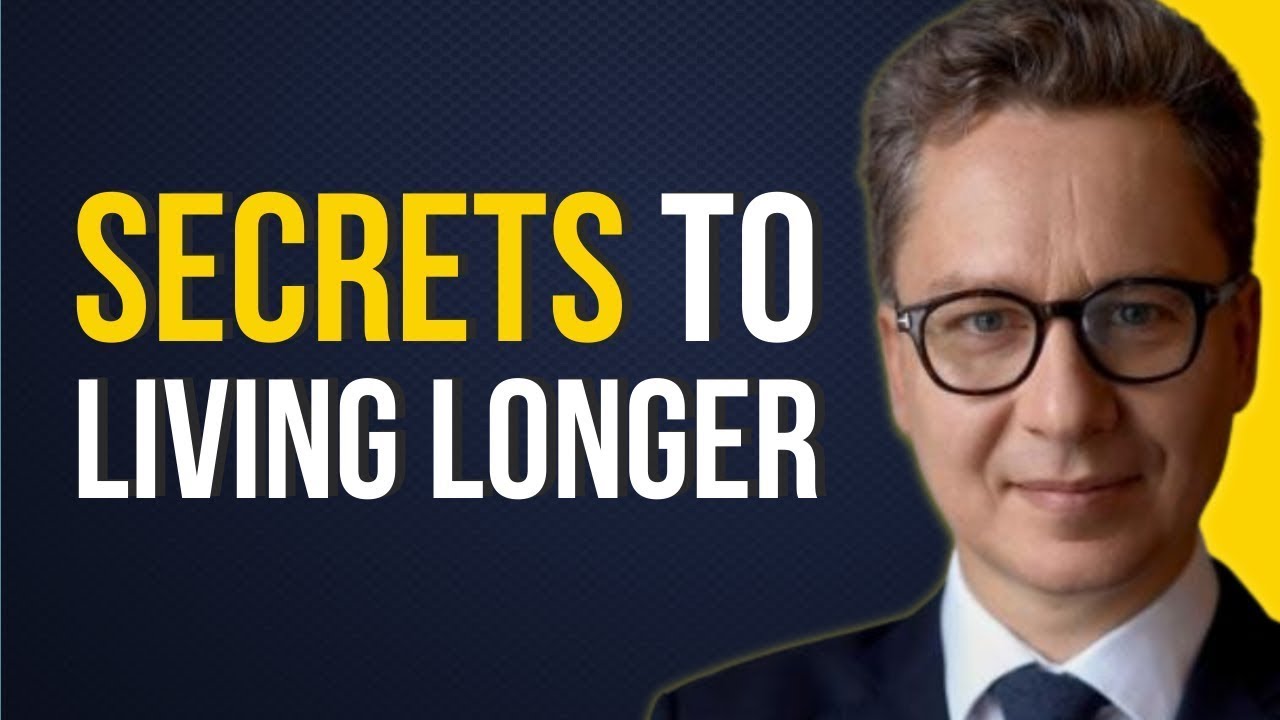
In this episode of the Kwik Brain Podcast, host Jim Kwik interviews longevity investor Sergey Young about extending healthspan and lifespan. The conversation begins by emphasizing a "longevity mindset"—taking personal responsibility for health, recognizing the limits of symptom‑focused medicine, and integrating mind‑body health. Sergey debunks common myths: longevity is not just adding years but adding high‑quality years; it isn’t solely a future tech promise because lifestyle changes can already make a difference; and many think it’s impossible today. He outlines near‑horizon (gene editing, senolytics, longevity pills) and far‑horizon (brain‑computer integration, replaceable body parts, Internet of Bodies) technologies that could reshape human life. Sergey then shares his practical framework of five longevity buckets: (1) regular medical screening, (2) passive longevity (avoiding risky behaviors), (3) diet and fasting (plant‑based, calorie restriction), (4) consistent physical activity (10,000 steps, walking meetings), and (5) peace of mind (sleep quality, meditation, kindness, social contribution). He highlights a 21‑day mindset experiment using a daily mantra visualizing living 100‑200 years in a youthful body. The episode closes with a call to read Sergey’s book The Science and Technology of Growing Young, which is positioned as an accessible guide for billions, and provides links to his website and social media.
Chapters
Welcome back to the Kwik Brain Podcast. I am your brain coach and your host of the show, Jim Kwik. And in this show, we are all about distilling and giving you bite-sized information, interviewing some of the amazing individuals, authors, people that I am researching and studying to share some golden nuggets with you. And the topic of today is something that in our private Facebook group, which many of you are a part of, you're a part of our app, In our private Facebook group, we have 150,000 people in that group alone. Please make sure you join us. All the links are at jimkwik.com/more. We have a lot of questions about longevity. Is it possible to live to 150 healthy years and beyond? So, in this episode, we're going to talk about the longevity mindset. We're going to go into deep some of the limiting beliefs that we might hold. We know that all behavior is belief-driven and even give you some small simple steps to add not only years to your life but also life to your years. I want to just upfront say I am not a doctor or health practitioner. Make sure we're not diagnosing or treating any health condition. Make sure you talk to your health practitioner. On this episode, we have Sergey Young, and he is a longevity investor. He is a visionary with a vision, right? He has a mission to extend human healthspan to 1,000 years. Billion people. We're on the same kind of track. We want to positively impact 1 billion brains. In order to do that, Sergey founded Longevity Vision Fund to accelerate life extension technological breakthroughs to make longevity affordable and accessible to all. He's also the development sponsor of the Age Reversal XPRIZE, which is a global competition designed to cure aging. Many of you know that I've been on the board over at XPRIZE for a number of years as well. So, he has a book that I read a year ago, and it's called The Science and Technology of Growing Young. This is an insider's guide to the breakthroughs that will dramatically extend our lifespan and what you could do right now. Sergey, thanks for being on our show.
Hi, Jim. Hi, everyone. I'm so excited to be here with you today.
Yes, I love your— I love your energy. You and I got to spend some time recently at an XPRIZE gathering. With Peter Diamandis. I know Peter and our mutual friend Ray Kurzweil did the foreword for your book. Actually, I was going through your book and I highly recommend it. We'll put a link also. You could get it where books are sold. Peter, Dave Asprey, Dave Perlmutter, these are all individuals that have been on our show. Greg McKeown, Keith Ferrazzi, Tony Robbins. And so, it was inevitable that you and I would have this conversation.
It's overdue.
Very, very much so. And so, you and I were talking before we started recording about my Limitless model that I write about, that a lot of people might hear methods for something, methods for reading, memory, investing, managing leadership, even to live longer. But, you know, in order to be able to do those things, common sense is not often common practice. A lot of people know what to do, but they're not doing it. So, I wanted to have a conversation with you around mindset. What I really enjoyed about your book when I first went through it, and again, I highly recommend all our Kwik readers get their copy, get actually 2 or 3 copies, make the perfect gift. It starts with mindset, right? These assumptions and attitudes we have around aging. So, when you're doing your research and you're speaking, and you and I have spoken at similar events together, where do you start when we talk about a longevity mindset?
Well, first of all, and this is why I found so many people who actually use Limitless the framework from your book to change their lives. And I just want to say that so often we start with how, right? There's a lot of temptations to start like, what are the 5 steps that I need to do for that, that, and that? And this is what we have in common. I think changing our mindset, changing our self-imposed restrictions in our mind, this is the way to start. Okay, so if you want to live 10, 20, 30 healthy more healthy and happy years, where do you start? Well, number one, we need to understand that we need to take responsibility for our mental and physical health and performance. There's this whole notion specifically in developed world like in the U.S. that we just delegate their responsibility to hospitals, medical practitioners. Insurance companies, big foods, big pharma, et cetera. You are in the center of that, okay? Obviously, both of us are not doctors, but it's enough curiosity that you can demonstrate in terms of taking responsibility and being part of this dialogue and part of this journey, okay? So, you are responsible. This is number one. Yeah.
I like that also because that gives us more agency. Meaning that, you know, we're able to be able to respond. We're not putting that onus on a teacher or somebody outside of ourself. That's wonderful. So, people start by taking personal responsibility and agency so they can be accountable.
Yeah, exactly, exactly. So then, well, number 2 for me is we just need to realize the paradigm of today's healthcare and medicine is sometimes focused on symptoms, not on the origins of disease. We just need to realize that our body has its self-running, self-healing capabilities within the immune system. Okay? So it's not only doctors who should give you certain drugs or prescriptions for you to take pills and treat the symptoms. Sometimes you need to complement it. With just supporting your body. So if you look at the Limitless framework, right, you— so you have what, you have why, and you have how. And then as you said, in why, you have a part called energy. That means that you, through different means, we can discuss it later today, you need to support your level of performance, your level of energy. So you need to take care of your body and mind and rely on immunity, on self-healing capabilities. Et cetera. This is not against healthcare. This is in addition of healthcare. And then, number 3 for me is just recognizing this whole connection between mind and body. Well, look at your book, right? You're talking about our brains and our mental health, but there's so many things that we can do through our physical health, right? Because they're so interconnected. Some of our diseases are basically psychosomatic. in a way. And it's a two-way road. So we need to take care of our body for our mind to be healthier, quicker, and happier.
Going back to the power of mindset, you know, when I'm defining it, it's kind of the assumptions and attitudes we have about something. And you talk about some of the myths, maybe the— I call them lies, which stands for a limited idea entertained. So what are some of the myths that people are holding around longevity and aging that might hold them back, that they might not even realize it's unconscious?
When we think about longevity, people have this picture that we add 5, 10, 15 years in the end of their life. So, they look into their loved ones who are older and suffering in the last 3, 5, 7 years of their life when they're in, you know, in fragile condition and need a lot of support. So, people think, okay, well, these are the crazy guys. Sergey Young, he just wants me to be older for so many years. Well, it's not. If you look at technologies and science that we're supporting through Longevity Vision Fund, right, which is defined in the book and what we're working on in longevity community, we're actually looking at for you to be as young as you want. in a few decades from now, some people would actually choose their biological age that they would like to support. If you ask me, I'm 51 today. I want to be 45 almost forever to the extent I'm enjoying life, to the extent I have my what and why to fight, to enjoy my life, et cetera. So number one, we just need to realize we're not talking about adding your kind of better years to your life. We're speaking about high-quality years. where you are full of energy, aspirations, and a lot of great things that you can do. So, that's one thing. Second thing, people think of longevity as something which will arrive either from science or technology. But there are so many things in terms of our lifestyle change that we can do personally to live longer, healthier, and happier lives. So, well, let's talk about food. You talk about food in the energy bucket again. right, of motivation part of the framework.
Yeah.
You know, if you made wrong food choices, your level of energy is suffering, the quality of your life is suffering, and you're not going to live as long as you want. So, that's important as well. So, we just need to realize food and so many other things can actually define your longevity, the healthy and happy parts of it. And then, final myth is People just don't think it's possible even today. And, you know, what I define in the book as a near horizon of longevity innovation, when we talk about gene editing, organ regeneration, longevity in a pill, well, this is the only things that we can enjoy in 5, 10 years from now. But even today, there are a number of studies has been done. If you change, you know, your food routine, physical exercise, and sleep, Only with those 3 components, you can actually turn back your biological clock by 3 years. In the course of 8 weeks, it's not me, I think it's Kara Fitzgerald with her amazing book, Younger You. She talks about this experiment that she's done with a lot of scientific minds and friends. 8 weeks, you change your food, you change your sleep, you change your physical exercise, you'll become 3 years younger. Well, that's amazing. And, it's possible today, whatever you think.
And, it's not only adding years to your life but also life to your years.
Exactly.
So, somebody who lost their grandmother to dementia when I was a child, this is something I think more and more people are concerned about as we grow older, losing our cognitive facilities, faculties. And so, in the book, you talk about, you mentioned like a near horizon and a far horizon when it comes to longevity technology. Maybe you could give a quick kind of summary of what those things are.
So, again, we just discussed the near horizon. Wait for 5, 10 years from now, actively wait, you know, wait as we discussed. If you look, you know, 25, 50 years from now, what are the technologies which would change the way we live? Would make our life longer, healthier, happier, and probably will change definition of humans. Well, I'm always talking about brain-computer integration, and people are really afraid of it. Well, think about this. So that's technology number one for me. I'm actually integrated with my computer today, right? That's that's my smartphone. Okay, I'm just using very inefficient interface to do that, right? I'm using my eyes to look at my phone. You know, ears, fingers to type. type. So this in the future will change. And while a lot of people think that human intelligence and artificial intelligence are mutually exclusive and competing, I actually think they're very complementary. We just need to solve the ethical, social side of acceptance and regulation of this thing. So that's one for me. Second, well, think about your car today. And actually funny fact, we spend more on our cars Than on our mental and physical health every year. Isn't it crazy? Okay, well then coming back to car metaphor, you know how do you expand the life of your car? You're replacing spare parts, and that's exactly what will happen with human body and mind at certain point of time. Again, for me, it's twenty, twenty-five years from now. So what's going to happen? You will have the options to replace some of our body parts. We actually do it today with. you know, some of the body parts. But today it's more like exotic, right, rather than the norm. But in the future, it's all gonna change. So replaceable body parts is, is another technology. And then finally, uh, we're gonna have Internet of Bodies. Today we have Internet of Things. In the future, we'll— we're gonna have Internet of Bodies. You know, all these nanobots, different sensors that we use and we will use in the future will make us more us humans more interconnected. So that's for me the future that's a ways for us. But again, I'm aware of the ethical side of it. It's really important. I have a separate project called Morality of Immortality about the fact that how we need to change our life for us to embrace the idea of longer living.
I like the comparison you make with a vehicle. It's kind of— imagine everyone who's listening that when you are of age to be able to drive, you were given a car for free, but this car was your vehicle for the rest of your life. This is the only vehicle that you would have. And, it stands with our body and our brain as part of our body that this is the one vehicle you have to get through it. And, how well will you take care of it? And, just having that ownership where people are investing more to take care of their cars or other things than they do themselves. And, we know that self-care is not selfish. So, definitely, you want to be a pilot of of your body and your mind rather than its passenger. So, we talked about mindset. What about your personal longevity lifestyle? Are there certain choices? I talk a lot about the power of choice in the book where life is the C between B and D. B is birth, D is death, speaking of longevity, and C in between is choice. The daily decisions that we're making that lead up to big habits and routines that help create who we are. So, what are you doing on a daily basis yourself to live longer and healthier?
So, I'm always talking about 5 longevity buckets and then this more expanded version of it. And actually, in the last chapter of the book, which is twice as longer as any other chapter, okay, it's called 10 Longevity Choices. Here, I'll give you the very short version. 5 things. Number 1, the most important day of your life every year, is the day of your medical screening, of medical checkup. Okay? It is very important. You have it in the book, Jim, right? When we talk about don't die stupid, right? Just be careful not to repeat your own experience, your dramatic experience of your early life. You just need to be careful not taking unnecessary risks. Okay? So number one for me is medical screening. We have amazing technology today. Like 20, 40 years ago, cancer was a case of death. Right now, I know a lot of people who actually cured themselves from cancer with the help of doctors, but because this cancer was detected at extremely early stage. So that's one. Second is what I call passive longevity. Don't die stupid. You know, smoking, irresponsible driving, even like driving motorcycles is 17 times more mortal, more risky than driving car, right? Let's all of us be responsible for our life. So then thing number 3 out of 5 is actually about your food choices, right? My diet is very plant-based focused, but I do like fish, meat protein as well. It is extremely important to work not only on quantity of food, but the quality of food as well. So whenever I have a choice, I do organic as well. It is important to actually to replace some of the toxins like sugary drinks, some other not necessarily healthy drinks with the water, with herbal tea, etc. So I do this as well and it applies to alcohol. Then I also do fasting. That's for me part of this third bucket related to diet because when you talk to scientists today, there's a lot of disagreement what actually extends our life. But there's one agreement, decreasing the calorie intake, decreasing the number of calories that you take every day actually extends your life. That's like a positive mini stress for your body. Number 4 is physical activity. And then we humans, we have this binary view of physical activity. So you either like do nothing or you need to run a marathon. No, you're not. Again, small, simple steps like in Limitless book. Use your Apple Watch or whatever the gadget you use to measure your steps. And I do 10,000 steps a day. I integrate my walking in so many parts of my life. When I'm doing calls, I'm walking. I have walking meetings as well. So it is very easy and you don't need to prepare yourself to marathon. I mean, you're doing the steps and then you increase your level of health and the quality of your life as well. And then finally, number five, and that might be the most important one, is what I call a peace of mind. It's meditation, the quality and quantity of your sleep. It's act of kindness, your level of integration to society. Are you giving back more than you take? You've seen a lot of happy people. You've seen a lot of spiritual people, right? And on your show as well, they all radiate. They live longer. They look younger. These are the type of people that we want to be associated with. Right? So, you know, make sure you're a good person and then you meditate and you sleep well. Final, I just want to finish this with a quote. I know one guy in London. He runs amazing longevity clinic and it's really expensive clinic. I don't use it, okay? So when I met him, I asked him like, what are the number one advice that you give me? And he said, well, Sergey, every evening we can visit the most powerful clinic in the world. We go to bed and we sleep. To reconstruct the effect of 8 hours high-quality sleep that you have every day will take a lot of supplements, a lot of dietary choices, physical exercise, medical routines, scientific discoveries. And all of this you can get by just making sure the quantity and quality that I measure by Oura Ring and Apple Watch of your sleep is amazing. So, that's important.
Outstanding, outstanding. Highly recommend everybody gets their copy of The Science and Technology of Growing Young. I was actually going through it in prep for this one. I reread those bonus chapters towards the end. And, you go through 5 of those things, but that bonus chapter alone I feel like is just so worth it. It's going from you better check yourself to quitting your bad habits to not doing the not-so-smart things. Eating early and less often, let food be thy medicine. You talk about supplements for nutrition and making sleep your superpower, mindfulness, and so much more.
Think and grow young. Remember that?
Yes. I love that. Think and grow young. What the mind can conceive and believe, it can achieve, you know, as the quote says. Wherever people are listening to us, whatever age or stage they are in life, you know, know that we can grow older, but in some ways, we could certainly grow better. And certainly wiser. You know, I think we're all on this journey together, all of us, you know, to realize and reveal our fullest potential. And so, Sergey, parting words to our audience. You know, if there is one takeaway, who should get the book? Who'd you write it for? And where can they find it?
So, the book is designed as a very simple guide to the world of longevity, right? So, it's not super technical, super scientific. It's actually for billions of people and billions of mindsets that I want to change. Okay? That's a very affordable and engaging book in itself. So, the book, again, as you said, The Science and Technology of Growing Young, Wall Street Journal bestseller, USA Today bestseller, changed a lot of lives in this world. So, you go to Amazon, enter my world, and change your life with that. Okay? So that's number one. The easiest way to find me is sergey young dot com. Sign up for newsletters. Go to sergey young two hundred, where two hundred stands for two hundred years. Sergey young two hundred on Instagram. And then finally, for all of us, if you want to make a change, do a little experiment in the next twenty one days. Every morning when you wake up, start with mantra. We're changing your mindset. So my mantra is, I'm going to be living 200 years in a body of 25 years old. Well, actually 25 years. Yeah. Choose whatever number of years you want. Let's start with something modest. 100 years. Repeat every morning. I'm going to be living healthy and happy 100 years in a body of 25 years old man or woman. It doesn't matter. And look how your body will respond to that. Okay. Well, that's the power of changing mindset.
You change your mind, you change your life. Your mind is always eavesdropping on that self-talk. If people really truly understood how powerful their mind is, they wouldn't say or think something they didn't want to be true. And so, I want to thank you, Sergey, for sharing your warmth and your wisdom with our audience. I highly recommend everyone go get their copy. Get a copy also to be able to gift to somebody else because what greater gift can you give somebody than the gift of knowledge and also of empowerment to give people some agency in a world that, you know, might not be the one that people think about when they're thriving the most. So, Sergey, thank you so much for being on our show. We look forward to having you back on again soon.
Thank you, Jim. Thanks, everyone. Stay healthy and happy, please.
Absolutely. Everyone, thank you so much for listening to this episode. Make sure you subscribe. Make sure you follow Sergey. We'll put His links to social media, his website, his books, his TEDx talks, all that in jimkwik.com/notes. And make sure you subscribe because if you missed this, you missed a lot. This is your brain coach, Jim Kwik. Until next time, be limitless, everybody.
More from Jim





The Library of Minds: Brain Coach: How to Stay Sharp When AI Does the Thinking | Jim Kwik





