How to Recover for Better Performance with Miesha Tate | Jim Kwik
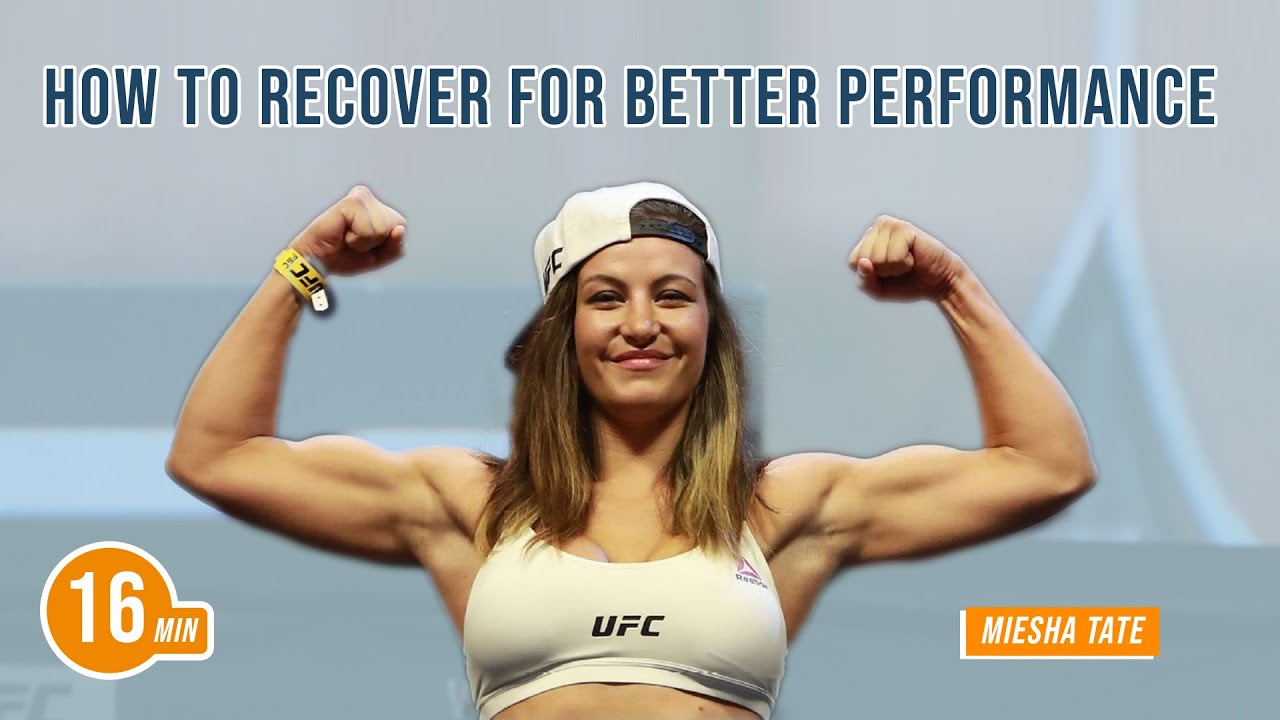
UFC champion Miesha Tate used hyperbaric oxygen therapy to recover from a severe knee injury, seeing rapid swelling reduction and pain relief. She now does daily sessions and treats recovery as essential to performance, alongside meditation, red-light therapy, and low-intensity fasted workouts.
Chapters
Welcome back, Kwik Brains. We're going to talk about today reaching and recovering and repeating. I think that's the success formula. Now, we're actually backstage at an event and this is part 2 with my conversation with the UFC champion and amazing individual, Miesha Tate. Thanks for being on our show.
Yeah.
Everybody should listen to the previous interview.
That was a good conversation.
Yeah, about mindset and mental toughness and developing resilience and the questions you ask yourself to be able to not only bounce back but also bounce forward. And, that was all on mindset. But, I wanted to chat with you a little bit because we're at a hyperbaric conference.
Right.
And, we each gave a keynote at this event and there's so many things kind of geeking out over recovery here. And, I know you're a fan. You mentioned in your talk about hyperbaric and how it helped you overcome injuries. And, you must be like, I mean, you're taking it on the chin every single day in preparation and you're coming out of retirement after 40-plus years.
Yeah, 40-plus years.
Amazing. And so, I'm so excited for you. So, what does your preparation and your recovery look like nowadays?
Well, the preparation—
Is it the same as it was years ago?
No, it's not the same. There are parts that are the same, but as a whole, I think I understand it on an entirely different level. You know, as I've mentioned before, I've been pretty open that, you know, people in general, but for sure fighters, we think sometimes more is more, right? The harder you go, the stronger you'll be, the better you'll be. You've got to get in there and just train as hard as you can, 7 days a week, 24, you know, hours a day if I could. It's like, it was just not realistic. And I felt like I was a candle kind of burning at both ends. And I wasn't really stopping to slow down and see what can I do to recover so that then I can move forward again. Instead, I was kind of digging this hole, which I just wasn't aware of, right? I just lacked the knowledge.
Right.
And I had my first experience with hyperbaric coming off of a very very bad knee injury. I had torn my MCL, a grade 3 tear, and I had bursitis. My leg was huge. And this is when I got my introduction to hyperbarics. And I didn't know what it was, but I went in the hard shell chamber and I came out 2 hours later and I was like, whoa! I was like, is this magic? Like, what just happened? Because my leg had gone down to about half the size, half the swelling it was, and the pain, it was way better. It was just an incredible experience, truly incredible. So, I said, whatever that is, I want more of that. Can I come back tomorrow? And so, I did and eventually invested in my own hyperbaric chamber that I have in my room that I get to annoy my fiancé with each night as I turn the machine on. I mean, it's not that loud. It turns into white noise, but it is in our bedroom. But, that's how serious I take it.
Wow.
Every day, I look at that and I go up into my room. And, if it's 30 minutes I can get in, then it's 30 minutes. If it's, you know, the full 2 hours, then I do the full 2 hours. But I stayed dedicated and consistent because recovery is so important. People overlook that, you know, it's not just for professional athletes. We're talking about quality of life here.
Yeah.
Do you want a better quality of life or not? Because if you have the opportunity to take care of yourself, and I'm not saying you have to, I mean, I know hyperbarics can be pricey, right? So, but there's still things you have to take moments, you have to take pieces of your day to dedicate towards slowing down and allowing yourself that recovery even if it's just a state of mind.
And, slowing down could actually speed us up also as well. My talk about hyperbarics was— and it's not a conversation, this is not the episode all about hyperbarics, but you're talking about the physical benefits. There's an immense amount of cognitive benefits also. I had 3 traumatic brain injuries when I was a child and that was a big part of my recovery. And, if people don't have access to this, it's actually— they have them in most cities.
Was it meditation or what you're talking about? Hyperbarics.
I did 40 sessions because I've had a number of TBIs and I was just not very well supervised as a child. And so, I took some pretty bad falls, but that was a big part of my adult recovery. The brain, we don't really look at it as much as we look at other things. You know, if somebody has a heart issue, they'll look at your heart. But, you know, if somebody has some, some, you know, mental health challenges, they'll look at the brain. Because I think that some, some of mental health is obviously brain health also as well. And, and if it's not hyperbaric, it could be deep breathing exercises.
Sure.
Taking time to meditate. And so, what are some of your non-negotiables? Because even if people are watching, they're not, they're not in the ring fighting, but they're, they're, they're going through in their career, they're stretching themselves, maybe they feel like they're burnt out because they're putting so many hours in, they're not taking care of their body. I know with this body, you're given a body when you're born and it's like somebody given a car when they could drive but they're only given this one car and they can't get any other car. How well would you take care of that car? Oh, yeah.
That's the one that had to last your whole lifetime.
Exactly. This is our vehicle that has to last us a whole lifetime. What are some of your other non-negotiables besides Hyperbaric?
So, I try to dedicate at least 20 minutes a day just to myself. To just mentally decompress because I have a very busy life. I have two small children, and it's go, go, go, go, go, go, go. And I struggle a lot of times just feeling like where's my down? So I really focused on trying to give myself at least that twenty minutes a day because again, I better service myself and I better service my children when I give myself a break.
Yes.
I don't want to be the mom. What? You know because they're just. on me all day and it's, Mom, Mom, Mom, and I just, I haven't given myself that time to just be a human, right, for a second. Let's just relax for a second. And I know people are busy. I get it. I'm a very, very busy person. But if I don't do that, I feel like I'm actually a little further behind in the day because my mentality for the whole day is just downward trajectory because I'm just like Natalie said, that candle burning from both ends. It's like eventually you just don't have a lot more to give. You give yourself that 20 minutes, 10, you know, whatever it can be for you, but just give yourself a little bit of downtime.
Yeah.
And that means like collectively, like not necessarily being on your phone. That's not necessarily the downtime I'm talking about. Sometimes I just like to close my eyes and I do breathing techniques. These are things I learned when I birthed my second son. But just taking my body into a state of relaxation, deep breath, focus on relaxing all the muscles from my head to my toes, and just getting my body into a relaxed state and my mind into a relaxed state and seeing how far. I almost get competitive with it. How relaxed can I get? How relaxed can I get? And sometimes I literally feel like my body's melting. It's so cool.
And you could turn it into a game. And it's so important for people to disconnect so they could reconnect to something. And also, And scheduling it because we schedule meetings like PTA meetings and meetings with, you know, clients or partners or everything, but we don't always schedule that downtime for ourselves.
We don't. It's very common not to.
And then we mean, you wonder why it doesn't get taken care of because your day just slips beyond it. You don't do the thing, you don't work out or you don't meditate or you don't do the things.
People don't take that serious at all. And it's sad because that's what I think at the end of the day could actually make us more productive. But people want to think more is more, but truly less is more. Less is more. Like, a little bit less, a little— like, a little bit of your day taken away to give to yourself is going to pay dividends at the end of the day and at the end of the week and at the end of the year and at the end of your life.
Yeah.
I truly believe that. I'm not at the end of my life, I hope. But, um, just since I've been doing that, I feel like I'm a much more complete person, and I feel like I can, I can conquer so much more as opposed to feeling, like, burnt out and just over it. At the point when I was When I retired, that's where I was at. I was in a very dark place. I was suffering from depression. And I just was just beating my head against the wall, just staying on the grind, just never giving myself that moment to come to terms with who I am or how I could be a better version of myself. I was just too busy, you know, bullying my way through life. I just, I needed to take a step back is what I needed to do, not a step forward in that moment in time. Yeah.
It's sometimes we get addicted to the hustle. And even sometimes, you know, I find myself saying, you know, people ask you how you're doing and you say you're busy. And you— we sometimes wear it as a badge of honor. And then we just design everything to be frantic and stressful. But I think it's hustle, but then it's also— there's times to hustle and, you know, to focus and work hard. And then there's time for harmony also. So that they—
Yeah.
You know, so that— and then you're living proof that when you're in that And, it's never perfect. So, that's also— let's get rid of that standard. But, you could have productivity and performance, but it also gives you a little bit more peace too.
Yeah, absolutely. And, I throw in red light therapy if I can, if anybody's interested in that. That's really been interesting for me sometimes as I hop in the bed. And so interesting learning about the mitochondria and the cells and how that can recharge that and energy. So, there's definitely some good science and research to support that if you have access to that or you can buy the little at-home ones that can go just on your face and things like that, which I also have.
And, Oh my gosh, get some sunlight first thing in the morning.
Yes. And, be mindful that you don't get vitamin D through a window. You got to go outside first thing in the morning.
A lot of people don't know that.
Yeah. A lot of people think sitting by their desk that they're absorbing vitamin D, but a lot of people are very vitamin D deficient because we don't live a lifestyle that was meant for us. We were meant to be outside primarily all day.
And, not on screens 10 hours a day.
So, we do a lot of things that are unproductive. So, if you could take that 10 minutes like you said and just Just get outside for a second. The amount of light you actually absorb to wake your brain up is better. And then, you're actually going to get some vitamin D if you get a chance. On your lunch breaks or whatever, go outside, roll your sleeves up, let yourself get a little bit of vitamin D. So, I'm big on that. I do intermittent fasting.
Mm-hmm.
And, I do fasted low-base workouts, which means it's not very intense. My heart rate's around 120, and I'll do that for 30 minutes. That again helps the mitochondria stimulate to make more and to get rid of the old extra stuff that doesn't need to be hanging around wasting space in my body. But there's a lot, you know, and, and this is why I've kind of coined the term Tate 2.0.
Yeah.
Because I truly believe I'm an upgraded version of myself. I have all the same skill sets and drive and desire. I'm so much smarter this time around in that I The recovery is essential, and I figured it out.
Yeah. I think everybody— I don't know who needs to hear this, but to prioritize your self-care because self-care is not selfish. So, maybe if you got anything out of this quick conversation is just to do one little thing. Maybe it's going for a walk because those little— or maybe it's getting some oxygen. Maybe it happens to be meditating or Getting some sunlight, you know, playing, playing with your children, something that brings you joy.
And don't try it just one time and be like, this isn't for me. Like, give yourself some time to get used to scheduling that in. I think sometimes people will try something one time and be like, that didn't work. No, it's got to be something that you stay consistent with for a certain amount of time to give it a real try, a real feel. You can't just do this one time and be like, oh, I couldn't even— I can't meditate. Well, you haven't practiced. That'd be like saying, like, oh, you know, you've never thrown a basketball into a hoop before too, but, you know, try it one time, and if you can't do it, it's not for you. It's like, no, maybe if you work at it a little bit, you'd be able to do it.
Like a child learns how to walk. You know, they probably fall a lot of times, and then till— but they don't say, okay, I'm not gonna walk.
My son's at that stage, 1 year old.
Yeah, exactly. So learn from children, because consistency, as you mentioned, is It compounds little by little. A little becomes a lot, you know. And you're talking about 2.0. I think there's a 2.0 version of ourselves, you know, there. And I just feel like that—
Just tap into it.
Yeah. And do something a little bit each day because it really does add up a lot. And sometimes subtraction is— subtracting something actually multiplies, you know. It's kind of weird.
That is exactly right. That's so true. Sometimes subtracting It, like I said, it pays dividends. It multiplies. And I don't even think it's sometimes. I think it's almost all the time.
It's more elegant, you know, as we grow older and we learn and everything that, you know, we don't have to do everything, but there's certain things that really pay dividends, as you mentioned.
Yeah, I'm with you. I'm the walking proof of it. Now I know, you know, what do they say, that youth is wasted on the young or whatever? It takes us a while to figure it out, but Take our word for it. Whether you're younger or older, it's never too late to start. And there's certainly a lot of things to be gained that if you can make self-care a regular part of your day, a regular part of your life, I believe you will be a happier person and better off for it.
100%. So regardless of your age, life is too short to just live just in our own box, to try new things and experiment. And as you mentioned, bring some joy into it. You know, we could all— and it's not a commentary on careers, but we could add— most people, we, you know, we look forward to just 2 days out of the week. But if you could do what you love or find the love in what you do, you could add 5 days extra, you know, every year in a week.
And magically, yeah, it doesn't mean you have to love everything that you're doing. I think we've all been in places where we all have things that we don't want to do, but we have to do it. So, um, it's, it's balancing that, right? Life is a balancing act, and it's all about putting it on the weigh scale, I think, as evenly as possible. So take that time to put a little more on this side for yourself so you're not, you know, tipping the scales in a direction that's taking more away from you than you realize.
Yeah. Well, thank you for giving us some of your time on that scale. That means everything. And I would recommend everybody please follow Misha Tate on, on social media. You know, root for her. And I believe it's amazing. This is— we're cheering for 2.0.
Yes.
And beyond. We're all in this process together, right? And we just kind of keep on showing up, that these little things that we do every single day add up to big things. And it's a reminder that every champion was once a beginner, that every expert was, you know, started out somewhere.
Boy, was I ever. I remember that first day of wrestling, the first day of practice. You know, I certainly wasn't good. That's just Yeah. Let's put it that way, but you know.
And everyone starts the same place, you know, and you're the greatest project you're ever gonna get to work on. So take time, make time, and create magic.
Yeah, what he said.
Hi, Kwik Brain, it's your brain coach. I wanna thank you so much for watching this video. 3 things to do. Number 1, make sure you share this, 'cause when you teach something, you get to learn it twice. Update your learning so you can update other people's learning as well. Number 2, make sure you subscribe To this channel, so you don't miss a thing. Because if you miss a video, you miss a lot. And finally, make sure you hit that bell so you're notified and you find out when we put out the latest and the greatest. One extra thing: if you want really close attention, then text me. Here is my phone number: 310-299-9362. Did you remember that number? 310 299-9362. Shoot me a text and we'll stay in touch. Ask me your burning question, and I wish your days be full of lots of life, lots of love, lots of laughter, and always lots of learning. I'll see you in our next video.
More from Jim





The Library of Minds: Brain Coach: How to Stay Sharp When AI Does the Thinking | Jim Kwik





